



Fauvism Art: Appraisal and Auction

Pure color and a free, unrestrained brushstroke: the value of Fauvist art varies greatly depending on the artist, the year the work was created, and the painting’s provenance.
Below you’ll find all our valuation guides dedicated to Fauvism—paintings, watercolors, and drawings by the Fauvist masters. Each guide details the price ranges observed at auction and the factors that determine a work’s value before it is entrusted to our state-certified auctioneers.
Guides on this art movement
See all guides >
Rating and value of drawings and paintings by René Seyssaud
René Sayssaud was a pioneering painter of Fauvism who produced numerous works that command high prices and are highly valued at auction.
Learn more >

Rating and value of drawings and paintings by André Planson
André Planson is a 20th-century painter inspired by Fauvism, whose works command high prices and are highly valued at auction.
Learn more >

Rating of value of drawing and paintings by Auguste Chabaud
Auguste Chabaud is a Fauvist and Expressionist artist who has produced numerous paintings that command high prices at auction.
Learn more >

Rating and value of paintings by Roger Marcel Limouse
Roger Marcel Limouse is a Post-Impressionist and Post-Fauvist painter who has produced canvases that are highly valued at auction.
Learn more >

Rating and value of paintings by Reuven Rubin
Reuven Rubin is an Israeli modernist artist who has produced many works that are highly rated and valued at auction.
Learn more >

Rating and value of paintings by Adolphe Monticelli
Adolphe Monticelli was a 19th-century painter admired by Van Gogh, who produced a number of highly valued paintings.
Learn more >

Rating and value of paintings by Louis Mathieu Verdilhan
Louis Mathieu Verdilhan is a twentieth-century figurative painter who produced
Learn more >

Rating and value of paintings by Henri Matisse
Henri Matisse is a Fauvist painter who produced works that are highly valued at auction. 24h estimate.
Learn more >

Rating and value of paintings by Anne Redpath
Anne Redpath is a Scottish artist who has produced works that are highly rated and valued at auction. 100% free estimate.
Learn more >

Rating and value of paintings by Martiros Saryan
Martiros Saryan is an Armenian painter influenced by Fauvism and Symbolism, who has produced paintings that are highly regarded and valued.
Learn more >

Rating and value of paintings by Othon Friesz
Othon Friesz is a modern painter of landscapes and still lifes who has produced many works of high value.
Learn more >

Rating and value of paintings by Alexej von Jawlensky
Alexej von Jawlensky is a twentieth-century Russian artist who produced many works that are highly valued at auction.
Learn more >
Understanding the Value of a Fauvist Painting
What Is Market Value in the Modern Art Market?
The market value of a Fauvist painting refers to the benchmark value assigned to it by the secondary market at a given moment, based on the artist’s identity, the period of creation, the subject matter, the condition of the work, the strength of the documentation, and the current state of international demand.
Fauvism occupies a unique place in the history of the modern art market: an extremely short-lived movement, with a collective existence of barely five years, it nevertheless produced some of the most iconic and sought-after works of early 20th-century art.
Paradoxically, this brevity is one of the driving forces behind Fauvist prices: each artist’s strictly Fauvist output—generally limited to a few years before the artist moved on to other aesthetics—is numerically limited and therefore structurally rare on the market.
An authentic Fauvist painting by Matisse, Derain, or Vlaminck—created precisely during the period when these artists shared this common chromatic explosion—is thus considered part of a closed and finite body of work, which sustainably supports its value.
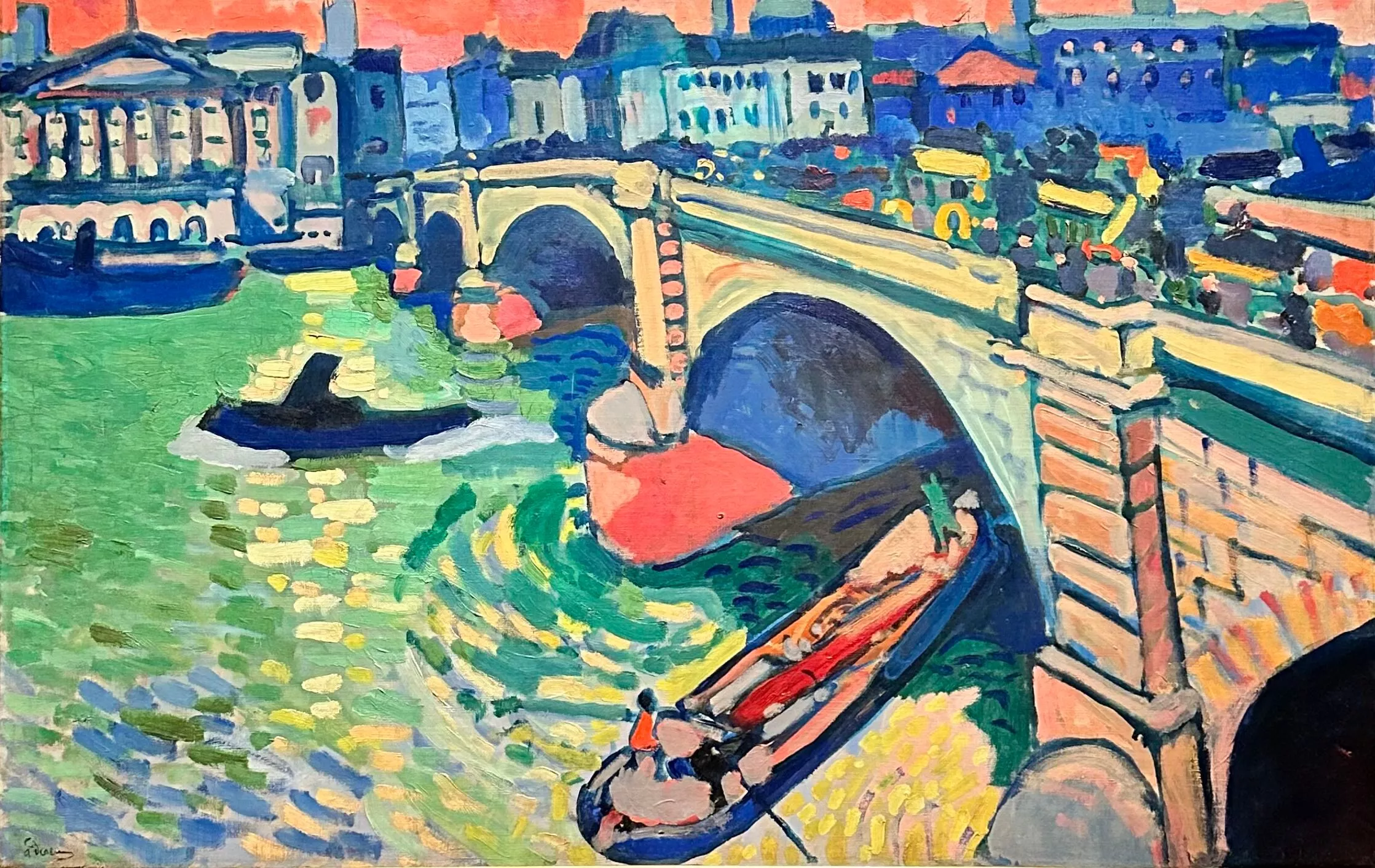
Fauvism, 1905–1910: A Brief Movement That Left Its Mark
The term “Fauves” was coined by the art critic Louis Vauxcelles at the 1905 Salon d’Automne, where the vividly colored, non-naturalistic paintings by Matisse, Derain, Vlaminck, and their companions caused a scandal that immediately brought them fame.
This first wave of Fauvism, between 1905 and 1907, represents the movement’s most sought-after period: pure colors applied in flat areas or juxtaposed brushstrokes with no concern for fidelity to reality, simplified compositions, and a chromatic boldness unprecedented in the history of Western painting.
The movement continued until around 1910, with a gradual sophistication of formal experimentation among certain artists, before each set out on distinct personal paths: Matisse toward an increasingly masterful decorative style, Derain toward a return to classical order, and Vlaminck toward a darker form of Expressionism.
This diversity of individual trajectories explains why the market value of each artist—though united by this shared Fauvist phase—subsequently followed its own market logic, strongly influenced by their later work.
Period | Characteristics | Artists and Works | Market Demand Level |
Pre-Fauvism (1900–1905) | Preliminary studies, Neo-Impressionist influence | Matisse, Derain, Marquet (early works) | Strong, specialized collectors |
Classical Fauvism (1905–1907) | Pure color, 1905 Salon d’Automne, founding scandal | Matisse, Derain, Vlaminck, Dufy, Marquet, Camoin, Manguin | Exceptional, very high auction prices |
Late Fauvism (1907–1910) | Gradual sophistication, transition toward other aesthetic styles | Matisse (toward the decorative), Derain (toward classicism) | Very strong, institutional |
Fauvist influence and legacy | Chromatic legacy among later artists | Various artists of the École de Paris were influenced | Active, related segment |
Estimate in less than 24h
The criteria that determine the value of a Fauvist work
The market value of a Fauvist work is determined first and foremost by the artist’s identity, which has a considerable impact: Henri Matisse occupies the very top of this hierarchy, followed by André Derain and Maurice de Vlaminck, whose Fauvist paintings from the 1905–1907 period command very high prices.
Raoul Dufy, Albert Marquet, Charles Camoin, and Henri Manguin—sometimes referred to as the “second-tier Fauves”—enjoy very strong market value, though it is structurally lower than that of the three major figures.
The period of creation plays a decisive role: a painting from the strict Fauvist period, 1905 to 1907, is consistently worth several times as much as a work by the same artist created a few years earlier or later.
The price ranges observed on the secondary market illustrate this variation. A drawing or watercolor by a second-tier Fauvist can range from 3,000 to 30,000 euros. A medium-sized oil on canvas by Dufy, Marquet, or Manguin ranges from 50,000 to 800,000 euros, depending on the period and quality.
Large Fauvist canvases by Derain or Vlaminck from the classical period frequently exceed one million euros, while major Fauvist compositions by Matisse, when they appear on the market, can reach tens of millions of euros.
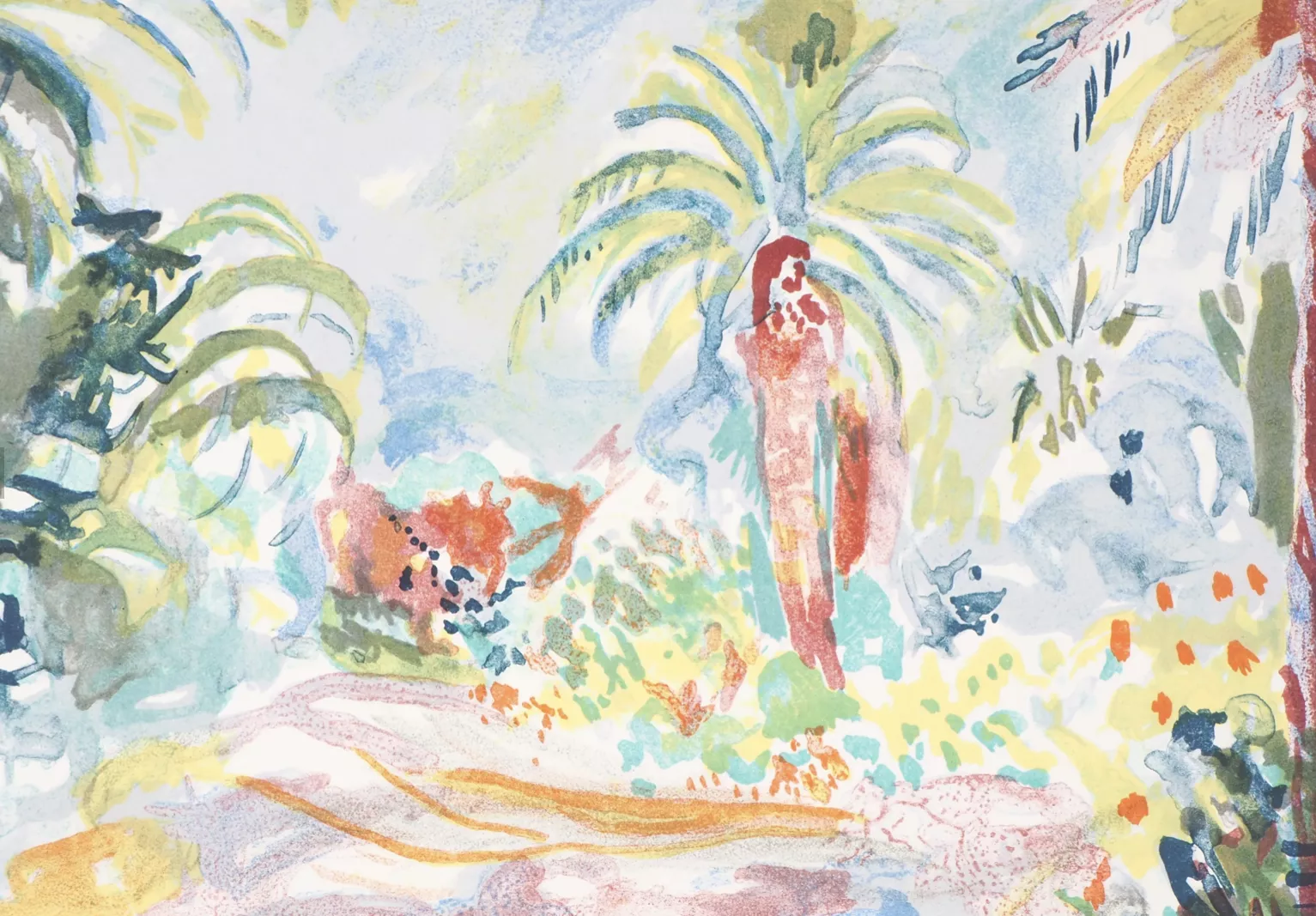
Oils, drawings, watercolors: all Fauvist works appraised
The hierarchy of Fauvist works and its impact on market value
In Fauvist art, oil on canvas holds a dominant position, as it is in this medium that the movement’s chromatic boldness finds its fullest expression.
Medium and large formats, which allow for the use of ambitious blocks of color, are the most sought-after by collectors and institutions.
Drawings and watercolors—often created alongside the canvases or as preparatory studies—occupy a more modest place in the hierarchy of value but offer a unique insight into the artists’ creative process, making them a popular segment among discerning collectors with more modest budgets.
Engravings and the rare sculptures produced by Fauvist artists—Matisse, in particular, developed a significant body of sculptural work alongside his painting—constitute categories of their own, whose valuation follows criteria specific to the medium rather than strictly to the Fauvist phase of the artist’s career.
For these works, chronological affiliation with the Fauvist period is less decisive than it is for painting, where it constitutes the primary criterion for valuation.
Category | Characteristics | Indicative Price Range | Market Demand |
Oil on canvas, classic Fauvist period (major artist) | 1905–1907, Matisse, Derain, Vlaminck, large-scale work | €1 million — tens of millions | Institutional, exceptional |
Oil on canvas (second-tier Fauves: Dufy, Marquet, Manguin, Camoin) | Top-tier quality, well-documented Fauvist period | €50,000 — €800,000 | Very strong demand, specialized collectors |
Oil on canvas, non-Fauvist period by the same artist | Earlier or later work, varying quality | €10,000 — €200,000 | Active market, depends heavily on the artist |
Watercolor or gouache from the Fauvist period | Spontaneity, vivid colors, small format | €10,000 — €150,000 | Strong market, knowledgeable collectors |
Drawing and preparatory study | Insight into the creative process, intimate format | €3,000 — €60,000 | Growing market, entry-level collection piece |
Engraving or sculpture (Matisse in particular) | Distinct medium, unique valuation logic | €5,000 — €300,000 | Active, specialized segment |
Landscapes and scenes in vivid colors: the most sought-after works
The Fauvist landscapes, painted en plein air in the Midi—in Collioure by Matisse and Derain during the pivotal summer of 1905, or along the Seine by Vlaminck and Derain—rank among the movement’s most iconic and highly sought-after works.
These compositions, in which color entirely replaces naturalistic depiction—pink skies, blue trees, orange water—embody the very essence of the Fauvist revolution and, as such, are the benchmark works most sought after by museums and major collectors.
Urban scenes—particularly views of harbors and docks rendered by Dufy and Marquet with this same chromatic freedom—as well as still lifes and portraits in bold colors, round out this highly sought-after body of work.
The rarity of these subjects within each artist’s strictly Fauvist body of work, combined with their value as historical testimony to the birth of modern art, explains the sustained strength of their market value over the past several decades.
Estimate in less than 24h
Get a free appraisal of a Fauvist artwork
A certified appraisal by a licensed auctioneer in less than 24 hours
Appraising a Fauvist work requires a precise understanding of each artist’s chronology—an essential prerequisite for determining whether a painting actually belongs to the strict Fauvist period or to an earlier or later phase of the artist’s career, a distinction that has a significant impact on its value.
A certified auctioneer has the necessary training to precisely place a work within this chronology and to assess its place within the Fauvist corpus, which is by nature limited and already extensively documented by art history.
Auctie’s offers this appraisal free of charge, with a certified response within 24 hours.
Whether you have inherited a painting attributed to a Fauvist artist, wish to have a drawing or watercolor from this period appraised, or are considering compiling an inventory of your art collection, the process is the same: submit your piece to a trained eye capable of accurately assessing its value.
What You Need to Provide for an Online Appraisal
For a Fauvist painting, clear photographs of the front and back of the work are essential, as well as a close-up of the signature and any inscriptions on the back of the canvas, the precise dimensions of the composition and the stretcher, and any known provenance information: an old gallery label, a purchase receipt, a reference in an auction catalog, or a specialized publication.
Any information regarding the place and date of creation, when known, must be specified, as it allows the work to be placed within the artist’s chronology with a level of precision that is crucial for its appraisal.
For drawings and watercolors, the condition of the support must be precisely documented: pinholes, foxing, creases, discoloration.
In cases of doubt regarding attribution—which is particularly important in this segment, where confusion between the Fauvist period and later works can have a significant impact on value—a physical examination of the piece will be offered before any steps are taken to put it up for sale.
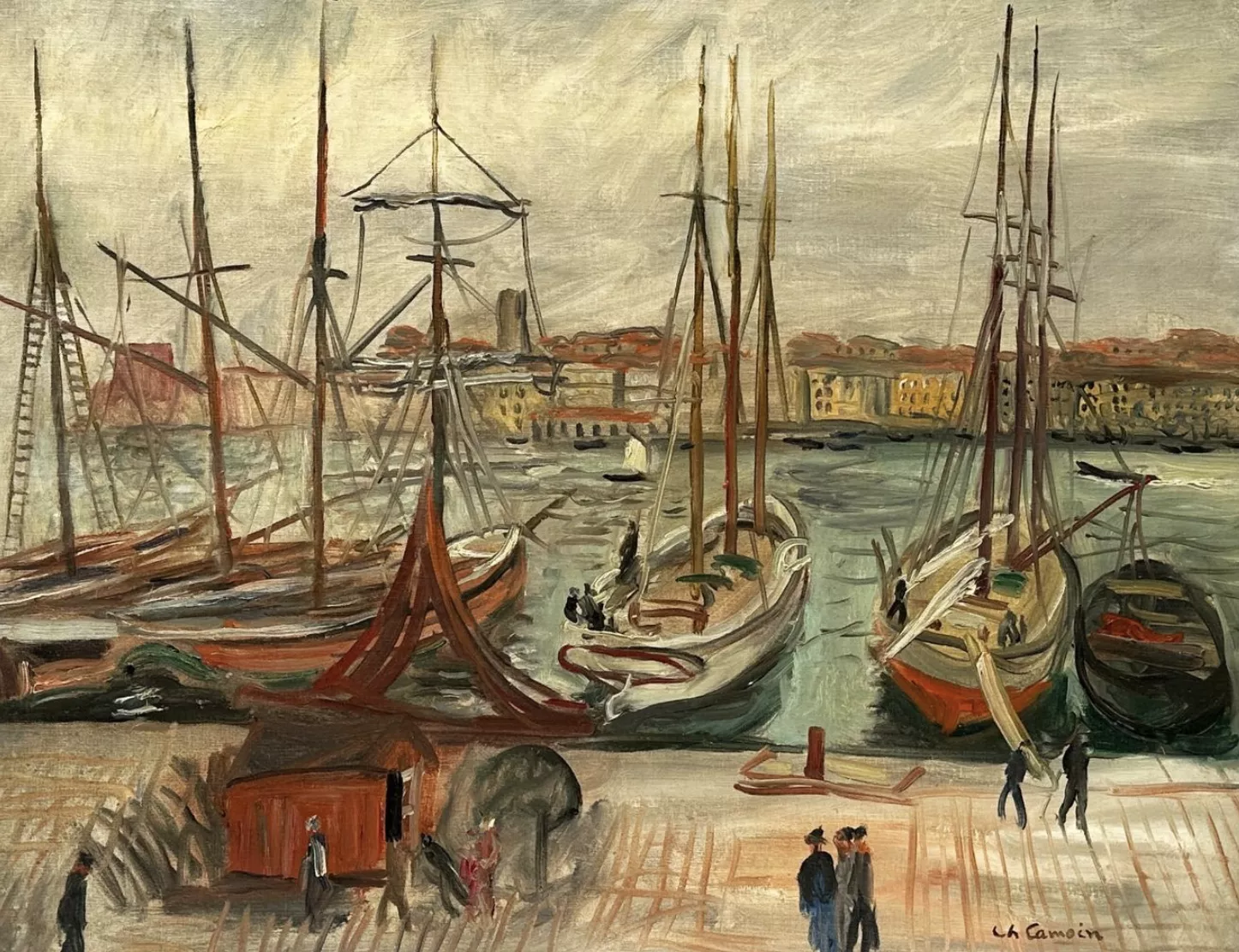
Signature, provenance, and authenticity: the pillars of valuation
Signatures and Attributions: Their Impact on Value
The authentication of a Fauvist work relies on a set of converging clues. The signature is a primary element, but it is never sufficient on its own to establish a precise date within the Fauvist period: comparison with documented works from the same period, detailed stylistic analysis, examination of materials and pigments, and consultation of available archives are essential steps in any serious appraisal, particularly when distinguishing a Fauvist painting from a slightly earlier or later work by the same artist.
For the movement’s major artists, authoritative catalogs raisonné serve as the standard of reference in the market.
Works dedicated to Matisse—notably those by the Wildenstein Plattner Institute—as well as Michel Kellermann’s studies on Derain and research on Vlaminck’s oeuvre, serve as the attribution tools that the auctioneer systematically employs.
A work listed in one of these collections benefits from the highest level of scholarly credibility, which is directly reflected in its valuation.
Level of Documentation | Impact on the valuation |
Work listed in the artist’s catalogue raisonné | Maximum assurance; very significant premium on value |
Work precisely dated and located within the strict Fauvist period | Strong impact; maximum valuation within the artist’s body of work |
Work published in specialized literature or exhibited in a retrospective | Strong scholarly endorsement; significant appreciation in value |
Work accompanied by a written appraisal from a recognized specialist in the artist’s body of work | Good guarantee; facilitates the sale and provides security for the buyer |
Work with a legible signature and documented provenance | Solid foundation; reliable estimate and a narrow price range possible |
Work without documentation or precise dating | Greater uncertainty; estimate based solely on stylistic analysis |
Provenance and Condition: Their Impact on the Estimate
The provenance of a Fauvist work is a decisive factor in building confidence in the market. A piece whose history can be traced through historic dealers associated with the movement—such as the Berthe Weill Gallery, which exhibited the Fauves from their earliest days, or the Druet Gallery—or through a well-documented historic private collection, enjoys a legitimacy that buyers directly reflect in their offers.
This traceability reduces the risk of misattribution and greatly facilitates the sale.
Condition is the other key factor. Fauvist paintings, often executed with generous layers of paint and pure colors applied rapidly, may exhibit cracking due to uneven drying between the different layers of paint, or color changes if the work has been exposed to excessive light.
Examination under raking light and ultraviolet light reveals these interventions and allows for a precise assessment of their impact on value, as the intensity and purity of color are central to the aesthetic and commercial appeal of these works.
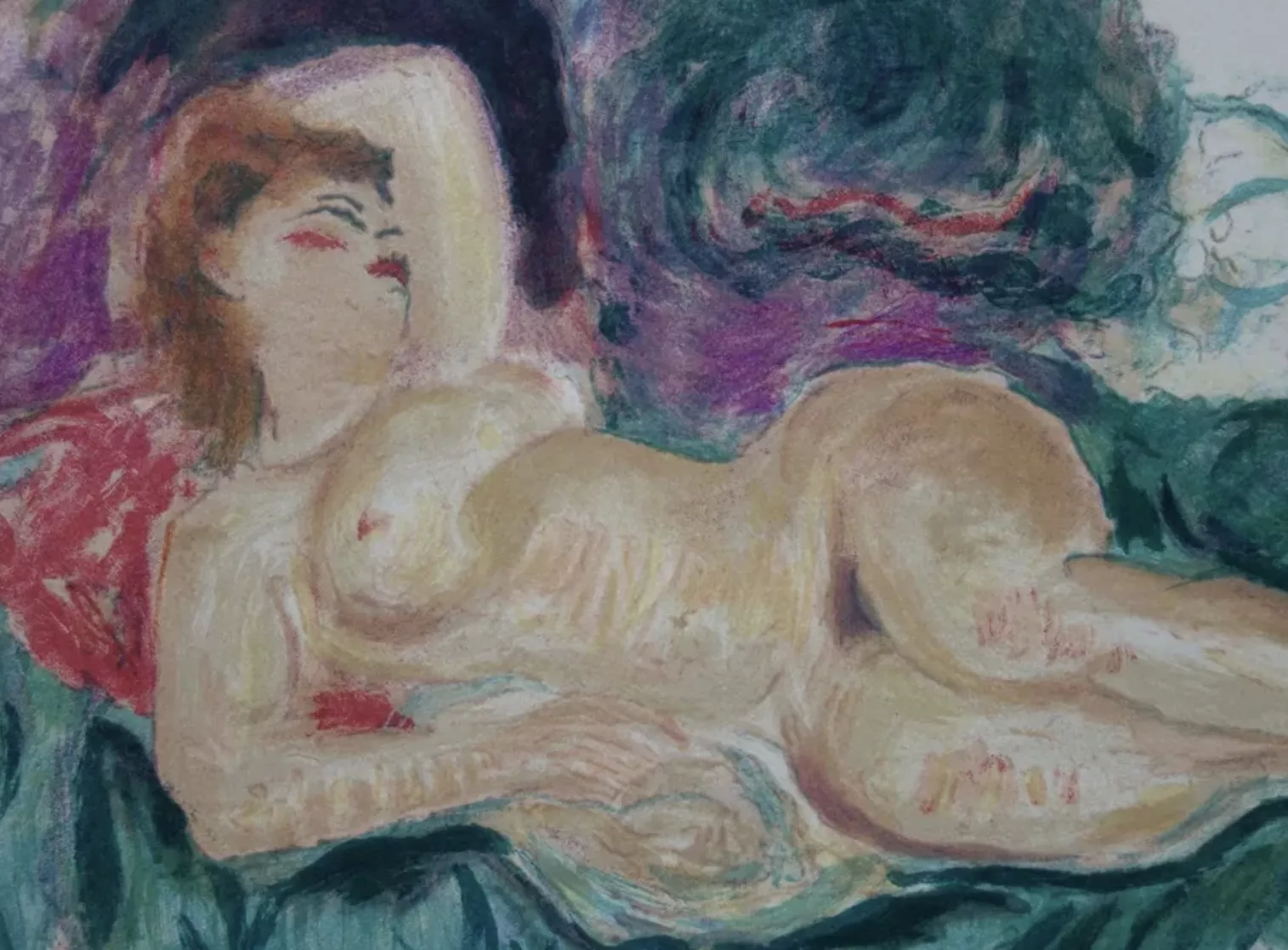
Sell a Fauvist painting at auction with Auctie's
From the reserve price to the hammer price: how the price is determined
Auctions are the most advantageous method of sale for high-quality Fauvist works, in a market where the inherent scarcity of each artist’s Fauvist output can generate fierce competition among multiple collectors interested in the same piece.
The reserve price, set in consultation with the seller, must be carefully calibrated, taking into account the work’s precise place in the artist’s chronology: an imprecise assessment of this point could lead to the piece being significantly undervalued or overvalued.
For major, well-documented Fauvist works, the dynamics of the auction can lead to final prices far exceeding initial estimates, as several collectors are prepared to engage in intense competition to acquire iconic pieces from this seminal moment in modern art.
The auctioneer plays a decisive role here by structuring the auction in a way that fosters this competitive environment.
Hôtel Drouot and Online Auctions: Reaching the Right Bidders
Auctie’s holds its auctions at Hôtel Drouot, the leading auction venue in continental Europe, founded in 1852 and frequented by a dense network of dealers, collectors, and specialists in modern art.
For a Fauvist work, Drouot offers optimal visibility among French and European enthusiasts of this seminal movement, complemented by an online presence that significantly broadens the reach of each auction on an international scale.
Auctie’s auctions are also accessible online in real time, allowing an American collector passionate about the early days of modern art, an Asian museum seeking an iconic work of the movement, or a European art lover drawn to the Fauvist freedom of color to bid from their home country.
For Fauvism, whose historical renown extends far beyond the circle of specialists, this international dimension is often decisive in securing the highest hammer price.
Estimate in less than 24h
Estate Planning, Inheritance: Valuing an Inherited Fauvist Artwork
Inventory and Distribution of an Estate
Fauvist works are sometimes found in the estates of families whose collections were assembled in the early decades of the 20th century, a time when these artists, though already recognized, remained accessible to collectors with substantial but not exceptional means.
A painting or watercolor acquired in the 1920s or 1930s may today be worth considerably more than the heirs realize, making a preliminary appraisal all the more essential before any division of the estate takes place.
Auctie’s regularly works alongside notaries to compile comprehensive estate inventories that include modern artworks.
Each piece is appraised individually, with particular attention paid to precise dating within the artist’s career—a key factor determining value in this segment. The resulting report is an official, legally binding document that can be included in the estate file without reservation.
Confidentiality of the process and preservation of anonymity
The circumstances leading to the appraisal of a Fauvist work are often personal and sensitive: discovery as part of an inheritance, reorganization of a family collection, or a decision to sell after a long period of ownership. Auctie's handles each case with absolute discretion.
The owner’s identity is never disclosed to third parties without their explicit consent, and the works may be offered for sale under complete anonymity if the owner so desires.
This confidentiality is a core commitment of Auctie’s, valid at every stage of the relationship, from the initial contact through to the receipt of the proceeds from the sale.
Entrust the appraisal of your Fauvist artwork to Auctie’s
A Fauvist work deserves an appraisal that reflects the brevity and intensity of this seminal moment in modern art.
The chronological precision required to situate a painting within the artist’s career, the inherent rarity of authentic Fauvist works, and the strength of consistently robust international demand: these are all factors that only a licensed auctioneer, well-versed in the specifics of this segment, can assess with the rigor they require.
Auctie’s guides you from the initial appraisal through to the final auction, with the expertise of a state-certified appraiser and the discretion your financial decisions deserve. The appraisal is free, confidential, and non-binding, and you’ll receive a response within 24 hours.
Discover in the same theme
Rating and value of paintings by Louis Mathieu Verdilhan
Louis Mathieu Verdilhan is a twentieth-century figurative painter who produced
Learn more >

Rating and value of works, drawings, paintings by Emile Bern...
Emile Bernard is a symbolist artist of the early 20th century, who produced drawings and oils on canvas listed at auction. Estimate in 24h
Learn more >

Rating and value of works, drawings, paintings by Marc Chaga...
Marc Chagall is a twentieth-century artist who leaves behind a substantial body of work, including drawings and paintings that are highly prized at au...
Learn more >
Estimate in less than 24h
Frequently asked questions
-
Quelles sont les fourchettes de prix pour une œuvre fauve selon son type et son artiste ?Les prix varient considérablement selon l'artiste et le médium. Un dessin ou une aquarelle d'un fauve de second cercle se situe entre 3 000 et 30 000 euros. Une huile sur toile de Dufy, Marquet ou Manguin oscille entre 50 000 et 800 000 euros. Les grandes toiles de Derain ou Vlaminck dépassent fréquemment le million d'euros, tandis que les compositions majeures de Matisse peuvent atteindre plusieurs dizaines de millions d'euros.
-
Comment faire expertiser gratuitement une œuvre fauve ?Auctie's propose une expertise gratuite et sans engagement réalisée par un commissaire-priseur agréé, avec une réponse certifiée en moins de 24 heures. Il suffit de soumettre des photographies nettes du recto et du verso, un cliché rapproché de la signature, les dimensions précises, et tout élément de provenance connu (étiquette de galerie, facture, référence catalogue).
-
Quels sont les facteurs principaux qui déterminent la valeur d'une œuvre fauve ?L'identité de l'artiste est le critère premier : Matisse occupe le sommet, suivi par Derain et Vlaminck. La période de création est déterminante : une toile de 1905-1907 vaut systématiquement plusieurs fois une œuvre du même artiste réalisée avant ou après. L'état de conservation, la provenance documentée, l'appartenance au catalogue raisonné et la période précise au sein de la carrière de l'artiste influencent également fortement la cotation.
-
Pourquoi maintenant est-il un bon moment pour vendre une œuvre fauve ?Le fauvisme occupe une place singulière dans l'histoire du marché de l'art moderne en raison de sa brièveté : mouvement de seulement cinq ans (1905-1910), il a produit certaines des œuvres les plus emblématiques et recherchées du début du XXe siècle. La production strictement fauve de chaque artiste est numériquement restreinte et donc structurellement rare, ce qui soutient durablement et activement la demande internationale.
-
Comment se déroule la vente d'une œuvre fauve chez Auctie's ?Auctie's, maison de ventes aux enchères, accompagne le vendeur de l'estimation initiale jusqu'à l'adjudication. Après l'expertise gratuite réalisée par un commissaire-priseur agréé, l'œuvre est cataloguée, photographiée professionnellement et mise en vente aux enchères publiques. Les experts de la maison assurent l'authentification, la datation précise et la valorisation auprès des collectionneurs et institutions.
