



Rating and value of paintings by Reuven Rubin

Key takeaways
- Reuven Rubin’s oil paintings on canvas fetch between €1,400 and €475,600, with his colorful landscapes showing particular upside potential.
- Works from the 1920s–1940s depicting the Land of Israel or Mediterranean landscapes constitute the most sought-after and highly valued segment of the market.
- Drawings and watercolors range from €45 to €77,600, forming a more accessible secondary market with less liquidity than that of oil paintings.
If you own a work by artist Reuven Rubin or based on his work and would like to know its value, our state-approved experts and auctioneers will guide you.
Our specialists will carry out a free appraisal of your work, and provide you with an accurate estimate of its value on the current market.
Then, should you wish to sell your work, we will direct you to the best possible arrangement to obtain the optimum price.
Artist's rating and value
Reuven Rubin's work is common and highly rated on the auction market. His works arouse interest among collectors and art lovers, particularly those who appreciate painting attached to Israeli production.
The most sought-after pieces are landscape paintings. Thus, a work signed by Rubin can fetch hundreds of thousands of euros at auction, such as his paintingThe Road to Meron, dating from 1924, which sold for €475,600, whereas it was estimated at between €365,000 and €550,000.
High upside potential is detected in his works, particularly his colorful landscapes done in oil paint.
Order of value from the most basic to the most prestigious
Technique used | Result |
|---|---|
Estamp - multiple | From €10 to €6,800 |
Drawing - watercolor | From €45 to €77,600 |
Oil on canvas | From €1,400 to €475,600 |
Estimate in less than 24h
Artist's style and technique
Reuven Rubin (1893 - 1974) was a major painter of Israeli modernism, fusing European influences (postimpressionism, fauvism, symbolism) with local Levantine iconography. His style is immediately recognizable for its Mediterranean luminosity, simplified forms and a poetic dimension dominated by harmony and gentleness.
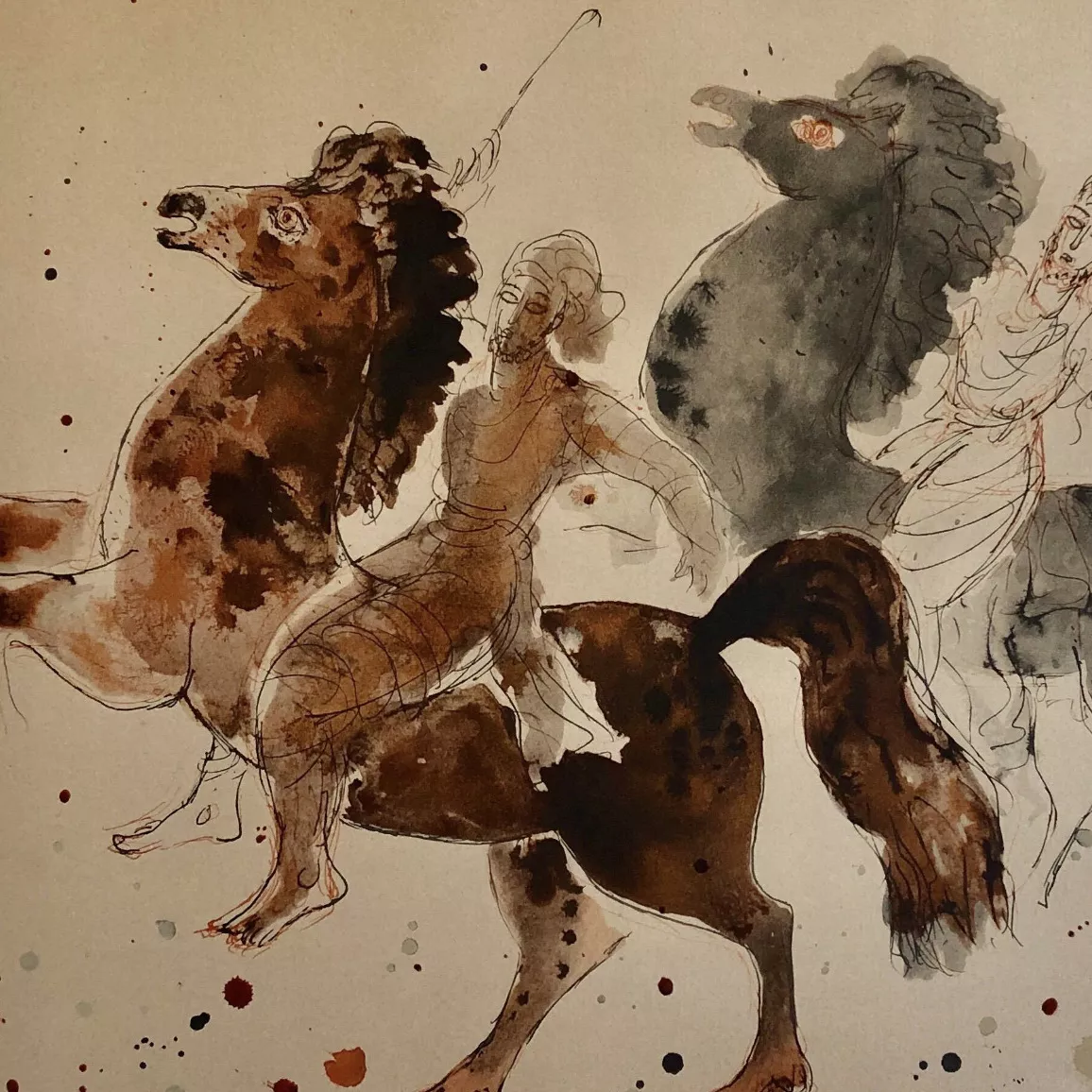
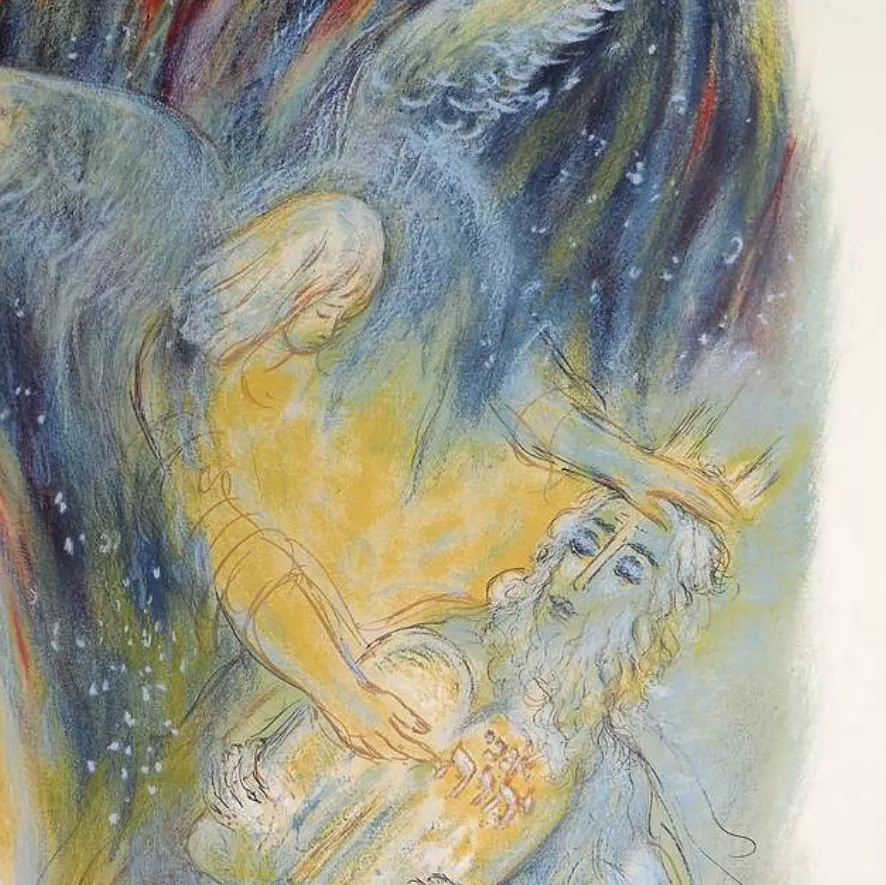
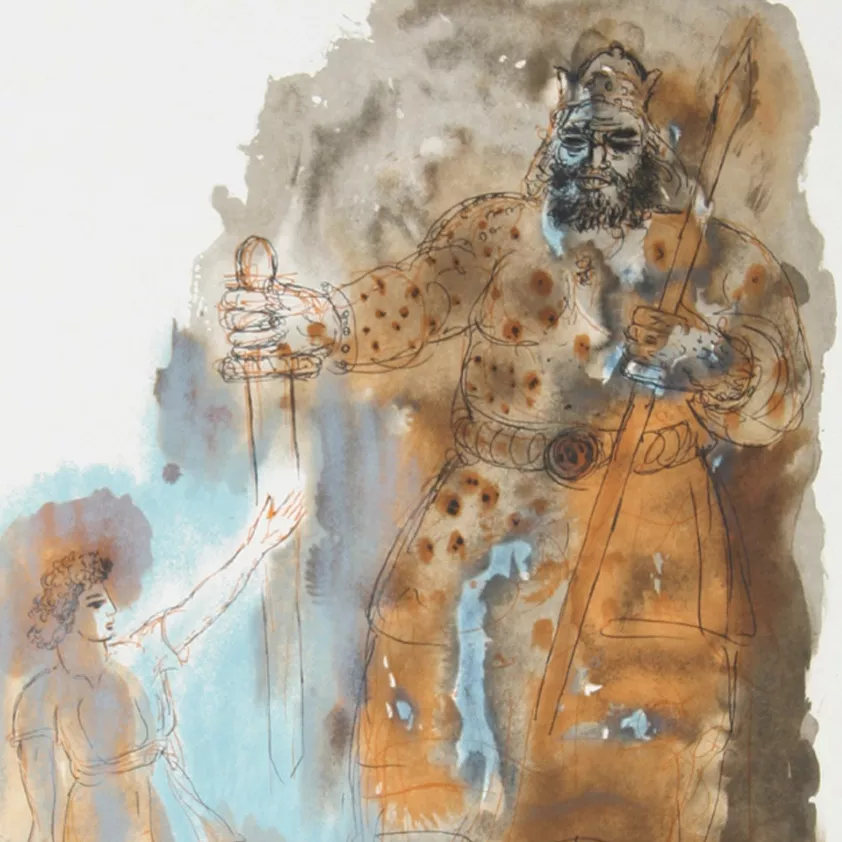
His preferred themes are Galilean landscapes, Arab villages, biblical scenes, portraits and idyllic compositions combining people, animals and nature. The figuration is stylized, with elongated silhouettes, simplified volumes and an absence of strict naturalism.
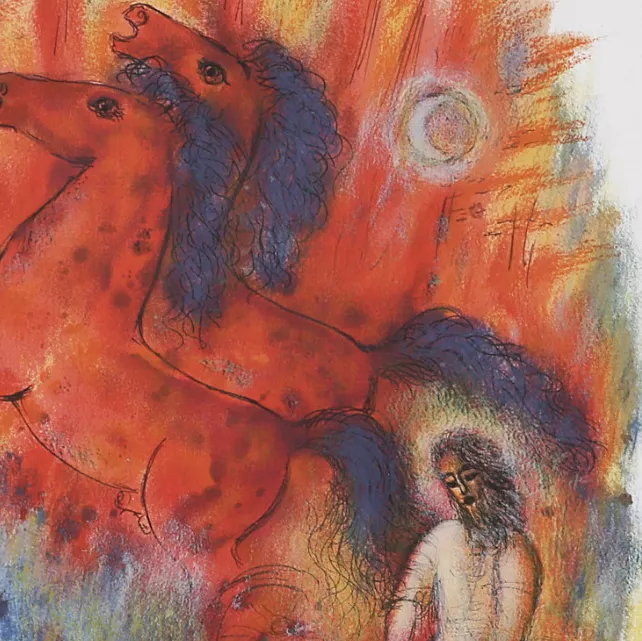
He attaches great importance to landscape, often treated as a symbolic rather than mimetic space. His palette is characterized by warm tones, ochres, pinks, turquoises, deep blues and milky greens. His style is close to that of Chagall of the École de Paris (Soutine, Gottileb).
He layers light hues, creating an effect of translucence and luminous vibration. He makes recurrent use of soft contrasts, without strident colors but with a continuous chromatic harmony. His structures are simple, hierarchical, often frontal, with an absence of excessive spatiality.
He works on the balance between the horizontality of the landscape and the verticality of the figures. Scenes are organized according to an almost musical logic, with repetitions, motifs and alternating colored masses. Human figures are simplified, sometimes hieratic, recalling Oriental icons or certain Symbolist approaches. Expressivity is restrained, with gentle gazes, sparsely detailed faces and suggested interiority. He integrates the figure into the landscape to create a visual and emotional continuum.
Rubin works in oil on canvas, with a relatively thin paint layer. His brushwork is supple, and his lines clear, without massive impasto. He uses slightly modulated flat tints, reinforcing the legibility of the scene. He builds gradually with light glazes, giving a luminous, ethereal atmosphere.
The artist seeks a modernized " oriental " pictorial identity, with a blend of Jewish tradition, local culture and European modernist sensibility. His scenes are often imbued with lyricism, peace and pastoral idyll. The landscape or figure becomes a vehicle for pictorial utopia.
He is part of modernity, but is far removed from the radical avant-gardes, favoring a poetic, accessible modernity. He formed a central pillar of the " Erets-Israel " style of the 1920s-1940s, and his influence is enduring on Israeli painting (cf Yoël Benharrouche), which adopts his chromatic schemes and idealized treatment of landscape.
The life of Reuven Rubin
Reuven Rubin (1893 - 1974) was born in Galati, Romania, into a modest Jewish family. His childhood was marked by traditional Jewish culture and the Romanian rural environment, which influenced his biblical and pastoral representations.
He studied art in Bucharest, then left for Ottoman Palestine in 1912, where he discovered the Mediterranean light that would have a lasting influence on his work. He continued his training at the Beaux-Arts in Paris and was exposed to the European modernist movements (Fauvism, Expressionism, Post-Impressionism).
He set up a studio in New York during the First World War and developed a synthetic style that blended European influences with Jewish iconography. His first major solo exhibition took place in New York in 1921, and was hailed for its originality and lyricism.
He returned to Palestine in 1923, and became one of the central figures of local modernism, helping to define the " Erets-Israel " style, a fusion of Western modernity and Eastern identity. The landscapes of Gallilee, Arab villages, biblical scenes and the fishermen of Tiberias became the emblematic motifs of his pictorial vocabulary.
He founded, with other artists, the first modern school of painting in Palestine. Between 1930 and 1950, he took part in numerous exhibitions in Europe and the United States. His visual language (luminous colors, hieratic figures, orientalized landscapes) quickly became an identifying symbol of modern Jewish art.
After the creation of the State of Israel in 1948, he played a major cultural role. In 1948, he became Israel's first ambassador to Romania, a symbol of prestige for the fledgling state. In 1950, he created the " Biblical Visions " series, consolidating his international reputation.
From the 1950s to 1970, he developed an even more refined, luminous style, imbued with a peaceful mysticism. His paintings are marked by a gentle fusion of figure and landscape, pastel tones and extreme simplification of volumes.
He continued to exhibit in major museums such as the Whitney, MoMA and various European museums. He died in Tel Aviv in 1974. In 1983, the family home became the Rubin Museum, an institution dedicated to the preservation and study of his work. Today, he is considered one of the founding fathers of modern Israeli painting, with a central place in the artistic historiography of the Levant.
Market segmentation and artist rating
Oil paintings on canvas are the main vector of value and demand. Drawings, watercolors, studies and lithographs constitute a secondary market, more accessible but with less liquidity. Large-format works or works from the so-called " classic " or " mature " period (1920s - 1930s) constitute a high-end segment.
The most sought-after themes and subjects are biblical or Mediterranean landscapes (Land of Israel, Galilee, Jerusalem), which are Rubin's stylistic signature. Folk scenes or depictions of local life (peasants, villagers, everyday scenes) are highly prized.
Portraits, nudes and stylized figurative compositions are often appreciated for their balance between modernism and tradition. Valuation criteria include period of production : works from the 1920s - 1940s are often the most sought-after, state of preservation, authenticity, presence of signature, provenance, and documentation.
Size and complexity of subject matter are also important, medium to large canvases with rich composition are more valuable. The market is strongly centered on Israel, but also extends to Europe and the USA among collectors of Mediterranean painting.
Rubin's work is present in several public museums and institutional collections : Rubin's work is present in several international museums, reinforcing recognition and demand.
Reuven Rubin enjoys a high and stable quotation, especially for works from his iconic periods (1920s - 1930s). The market clearly distinguishes between small formats or secondary (accessible) works and major works, for which demand is strong and value high.
Works depicting the land of Israel or Mediterranean landscapes form the core of international demand, and are often seen as representative of a unique style. The challenge is therefore to target mature periods, good provenances and significant sizes to maximize value.
The distribution of catalogs raisonnés and presence in renowned museums further reinforce the legitimacy and longevity of Rubin's rating.
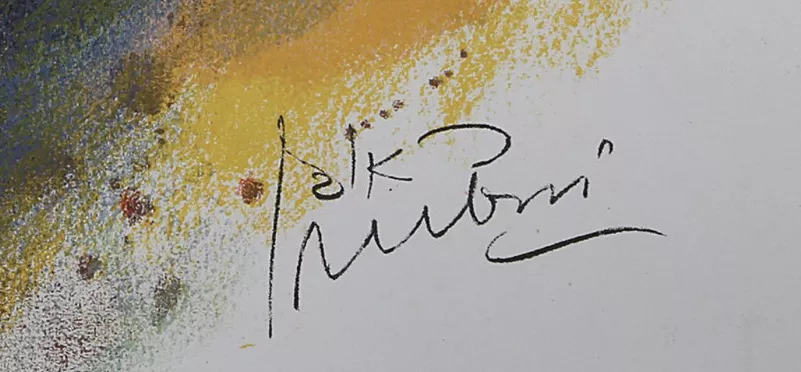
His signature
Not all of Reuven Rubin's works are signed. It is also possible that it is a copy or that the mention has faded with time, which is why expertise is paramount.
Expertise your property
If you own a work by Reuven Rubin, don't hesitate to request a free appraisal by filling in our online form.
A member of our team of experts and certified auctioneers will contact you to provide an estimate of the market value of your work.
If you are considering selling your work, our specialists will also guide you through the various alternatives available to obtain the best possible price, taking into account market trends and the specific features of each work.
Estimate in less than 24h
Discover in the same theme

Rating and value of works, paintings, drawings by Victor Tar...
Victor Tardieu is a French painter and draughtsman who co-founded the Beaux-Arts d'Indochine. His works are appreciated and his stock is on the rise.
Learn more >

Rating and value of paintings by Louis Mathieu Verdilhan
Louis Mathieu Verdilhan is a twentieth-century figurative painter who produced
Learn more >

Rating and value of paintings by JonOne
JonOne is one of the world's leading street art artists, and has produced numerous works that are highly rated and valued at auction.
Learn more >
D'autres tableaux modernes figuratifs vendus aux enchères

Estimated 800 - 1.500
Jean Roger SOURGEN (1883-1978) Trees and dunes Oil on panel

Estimated 3.000 - 5.000
Georges LAPCHINE (1885-1951) The port of St Tropez Oil on canvas

Estimated 18.000 - 30.000
Charles CAMOIN (1879-1965) "Le Port de Marseille, 1928" Oil on canvas.

Estimated 1.500 - 3.000
Jean VANDEN EECKHOUDT (1875-1946), Basket of persimmons, Oil on canvas

Estimated 2.000 - 4.000
Charles LACOSTE (1870-1959) Starry night, Oil on paper mounted on canvas

Secure site, anonymity preserved

Auctioneer approved by the State

Free and certified estimates
Frequently asked questions
-
Who is Reuven Rubin, and what is his artistic style?Reuven Rubin (1893–1974) was a leading painter of Israeli modernism who blended European influences (Post-Impressionism, Fauvism) with local Levantine iconography. His distinctive style combines Mediterranean luminosity, simplified forms, and a poetic dimension, using a palette of warm tones (ochres, pinks, turquoises) and depicting Galilean landscapes as symbolic spaces. He is considered one of the founding fathers of modern Israeli painting and the “Erets-Israel” School.
-
What is the price range for Reuven Rubin's works at auction?The value depends heavily on the technique and format. Prints range from €10 to €6,800, drawings and watercolors from €45 to €77,600, while oil paintings on canvas—the most sought-after—range from €1,400 to €475,600. Large-format, well-documented landscapes from the classical period (1920s–1940s) command the highest prices.
-
How can you authenticate a work by Reuven Rubin?We recommend that you request a free appraisal from Auctie's by filling out our online form. A certified expert or auctioneer will examine your artwork and provide you with an accurate estimate within 48 hours, verifying in particular its authenticity, signature, provenance, and condition, as some of Rubin’s works are unsigned or have signatures that have faded over time.
-
Is this a good time to sell a work by Reuven Rubin?Yes, this is a favorable time. Reuven Rubin enjoys high and stable market value at auction, with growing interest from Israeli, European, and American collectors in Mediterranean painting and Israeli modernism. His landscapes of the Land of Israel remain in high demand, and international museums continue to recognize his work, reinforcing the legitimacy and longevity of his value.
-
How does the sales process work at Auctie's?Auctie's guides you from appraisal to auction. You start with a free, no-obligation appraisal of your artwork by our experts and certified auctioneers, who will provide you with an accurate estimate within 48 hours. If you decide to sell, we’ll guide you toward the best possible sales approach, taking into account market trends and the unique characteristics of your artwork to secure the best price.
