



Rating and value of paintings by Othon Friesz

Key takeaways
- Othon Friesz’s works sell for between €10 and 1.7 million, with oil-on-canvas paintings fetching the highest prices.
- A Fauvist artist trained in Le Havre, Friesz (1879–1949) combined chromatic freedom with a rigorous composition inspired by Cézanne, distinguishing himself through a balance between spontaneity and precision.
- *The Port of Antwerp* (1906) sold for 1.7 million euros in 2007, illustrating the market value of the artist’s harbor landscapes, which are highly prized by French buyers.
If you own a work by or after Othon Friesz and would like to know its value, our state-approved experts and auctioneers will offer you their appraisal services.
Our specialists will carry out a free appraisal of your work, and provide you with an accurate estimate of its value on the current market.
Then, should you wish to sell your work, we will direct you to the best possible arrangement to obtain the optimum price.
Rating and value of the artist Othon Friesz
The artist Othon Friesz leaves behind a unique body of work, composed mainly of paintings stemming from the influence of the Fauves. Now, prices for his works are rising under the auctioneers' gavel.
His paintings are highly prized, especially by French buyers. The price at which they sell on the art market ranges from €10 to €1,700,000, a very substantial range but one that speaks volumes about the value that can be attributed to Friesz's works.
In 2007, a painting entitled The Port of Antwerp,dating from 1906, sold for €1,700,000 while it was estimated at €1,159,500 to €1,739,300.
Order of value from a simple work to the most prestigious
Technique used | Result |
|---|---|
Estamp - multiple | From €10 to €950 |
Drawing - watercolor | From €25 to €80,000 |
Oil on canvas | From €120 to €1,700,000 |
Estimate in less than 24h
Style and technique of artist Othon Friesz
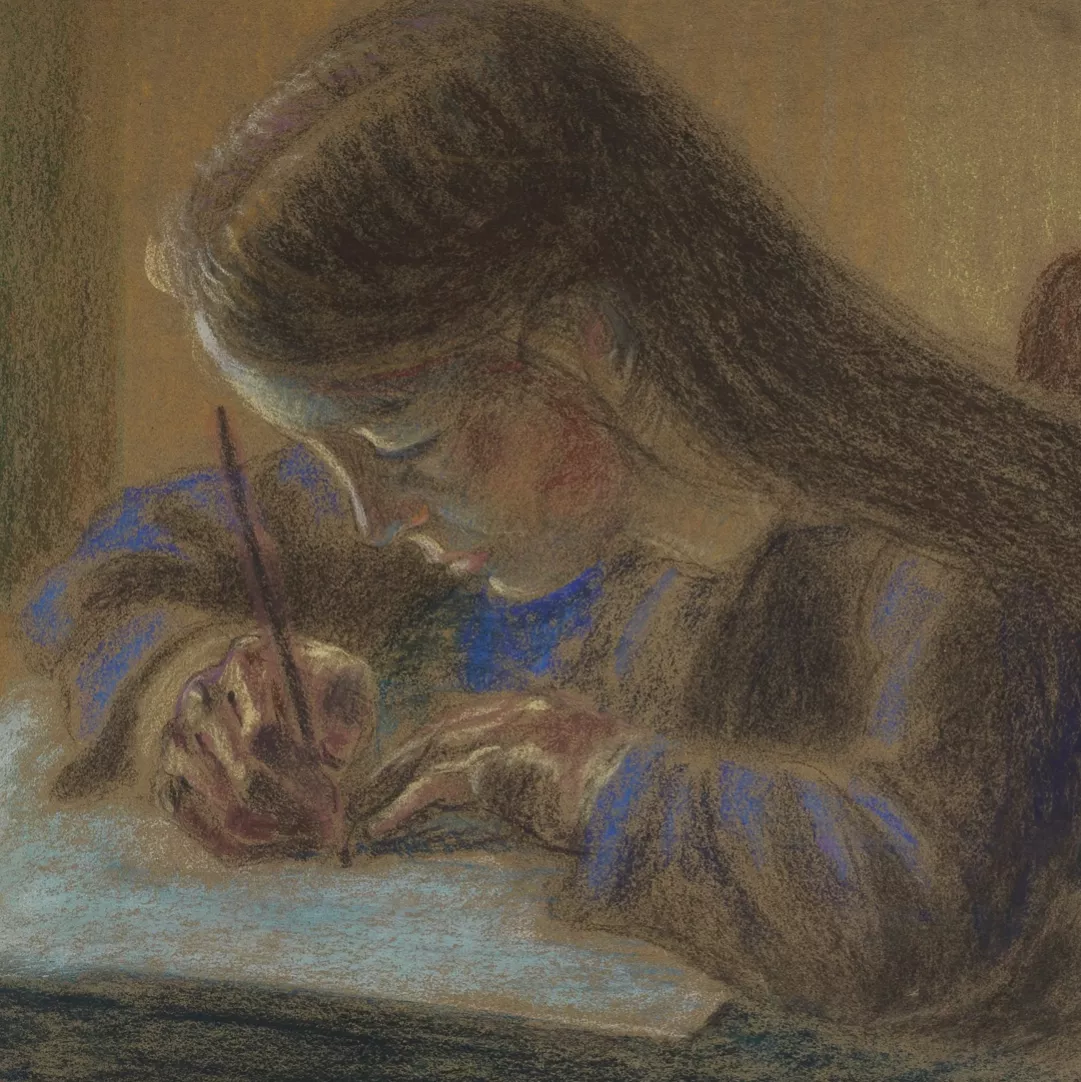
Trained at the École des Beaux-Arts in Le Havre before joining Léon Bonnat's studio in Paris, Othon Friesz developed a style in which the vigor of line and colorist power inherited from Fauvism combine with a more classical construction of space.
Like Matisse, Marquet and Dufy, he first adopts a rapid, nervous touch, where color, laid down in frank flat tints, exalts the light and energizes the composition.
However, from 1908 onwards, he moved away from the bold Fauvist chromatics and returned to a more structured approach, inspired by Cézanne.
The shapes solidify, the volumes organize themselves into clear masses, and the rigorous ordering of the canvas takes precedence over expressive effusion.
In his landscapes and still lifes alike, he favors an energetic style in which the brushstroke remains visible, asserting the painter's gesture without sacrificing overall balance. His drawing, powerful and supple, traces contours that simplify shapes without ever freezing them.
While his palette softens after the Fauvist period, it retains an intensity of its own, alternating deep earths and luminous skies, with a marked taste for contrasts of warm and cold tones.
Far from the cubist experimentation that marked the avant-garde at the time, Friesz remained attached to an expressive yet legible conception of painting, where the brush's impulse translates emotion as much as the underlying structure of the motif.
The life of Othon Friesz
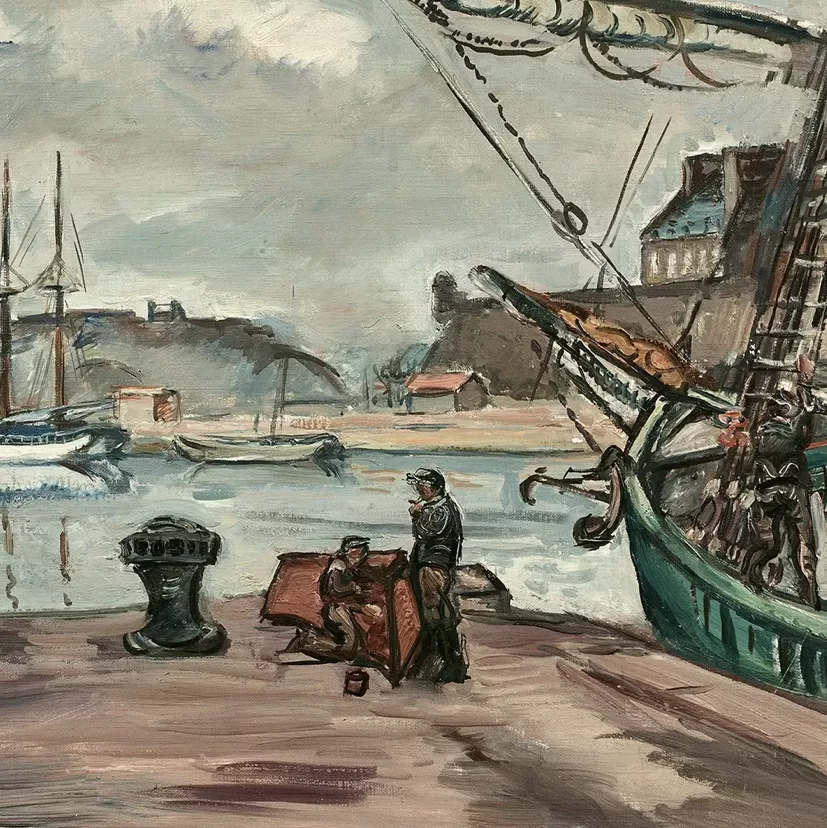
Born in Le Havre in 1879, Émile Othon Friesz trained at the École des Beaux-Arts in his hometown before moving to Paris, where he joined Léon Bonnat's studio. It was there that he met Marquet and Dufy, with whom he shared an attachment to the harbor landscapes of Normandy.
At the turn of the century, he moved closer to Fauvism, adopting a bright palette and free brushstrokes that transcribe the intensity of light and the vitality of the motif.
But by 1908, he was moving away from colorist exuberance and returning to a more orderly conception of painting, where Cézanne's influence was making itself felt. During the First World War, he was mobilized and interrupted his artistic activity.
Returning to Paris, he pursued a recognized career, teaching notably at the Académie de la Grande Chaumière.
A painter of landscapes, still lifes and figures, he favors a structured approach in which the construction of space and the balance of form take precedence over experimentation.
Attached to tradition while remaining attentive to the evolutions of his time, he established himself as a singular figure on the French art scene. He died in 1949, leaving a body of work in which the expressive force of gesture dialogues with a rigor inherited from the classical masters.
Focus on Le Port de La Ciotat, Othon Friesz
In Le Port de La Ciotat, Othon Friesz deploys a composition where the vigor of the line and the breadth of the flat tones of color convey the power of the maritime landscape.
The simplified yet dynamic forms build a vibrant space where sky, water and boats seem to articulate in a common movement.
Nothing is fixed, everything breathes in a subtle orchestration of sinuous lines and sweeping curves that lend the scene an almost organic expressiveness.
The palette, dominated by deep blues and powerful ochres, testifies to his attachment to Mediterranean light, not treated in a search for illusion but exalted by frank contrasts and bold harmonies.
The reflections on the water, barely suggested by a few nervous strokes, are integrated into a construction where light and shadow do not oppose but respond to each other, in a skilfully mastered balance.
While the fauve influence shines through in the intensity of the tones and the freedom of gesture, Friesz tempers its exuberance with a rigorous structure where the drawing imposes its framework.
Here, color doesn't just exalt sensation, it organizes composition, poses masses, energizes space.
Far from the pure chromatic explosion of the early Fauves, he refines his language by drawing on the tradition of the great masters, between the classicism of a Poussin and Cézanne construction.
This double tension, between spontaneity and rigor, finds expression in the work itself: the brushstroke, broad and decisive, sculpts the volumes without ever weighing them down.
The momentum of the brush, at once free and structured, lends the painting a vitality that stems not just from the energy of the line, but from the accuracy of the construction.
The port motif, which he loves, becomes here a pretext for a personal vision where nature is less reproduced than recreated, transfigured by the energy of the gesture and the coherence of the composition.
The water, the sky, the boats, far from fitting into an academic perspective, are captured in an overall movement that confuses the planes and makes the surface vibrate.
It's no longer a question of simply representing a place, but of capturing its rhythm, of restoring a deeper truth, that of the relationship between the artist and his subject.
Othon Friesz's imprint on his period
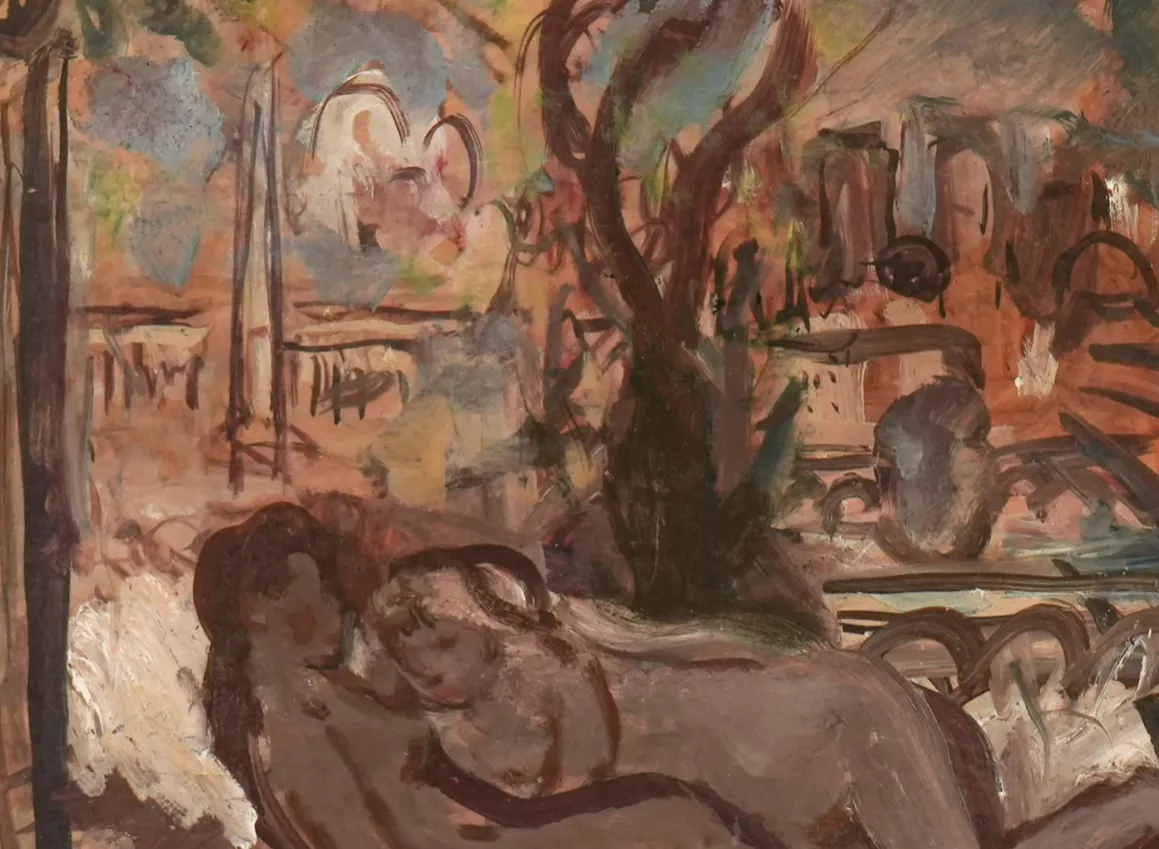
Othon Friesz marked his era by infusing Fauvism with a new foundation, where chromatic freedom is never totally abandoned to instinct, but is articulated in a construction where line retains its authority.
Alongside Matisse and Derain, he participated in this liberation of color that overturned academic conventions, while integrating a rigor inherited from tradition.
Where others push boldness to the point of dissolving forms, he maintains a balance between spontaneous élan and the organization of space, renewing the classical heritage without denying it.
His influence extends far beyond the Fauvist circle: his structuring of the plan and his search for harmony heralded certain trends towards a return to order that would mark the post-war period, without yielding to the dryness of an overly rigid construction.
While Friesz gradually distanced himself from Fauvism after 1908, his impact did not diminish. He leaves behind him a lesson in synthesis, where color remains sovereign without becoming arbitrary, where ardor rests on a solid framework.
In this search for a balance between instinct and mastery, he opens the way to a painting where expressive vigor does not clash with compositional clarity, thus prefiguring certain approaches to modern landscape.
His teaching, notably at the Scandinavian Academy, perpetuates this heritage among a generation anxious to combine freedom and rigor, and his work remains an essential milestone in this evolution of pictorial language where color, freed from mimetic constraints, dialogues with form without dissolving it.
The stylistic influences of Othon Friesz
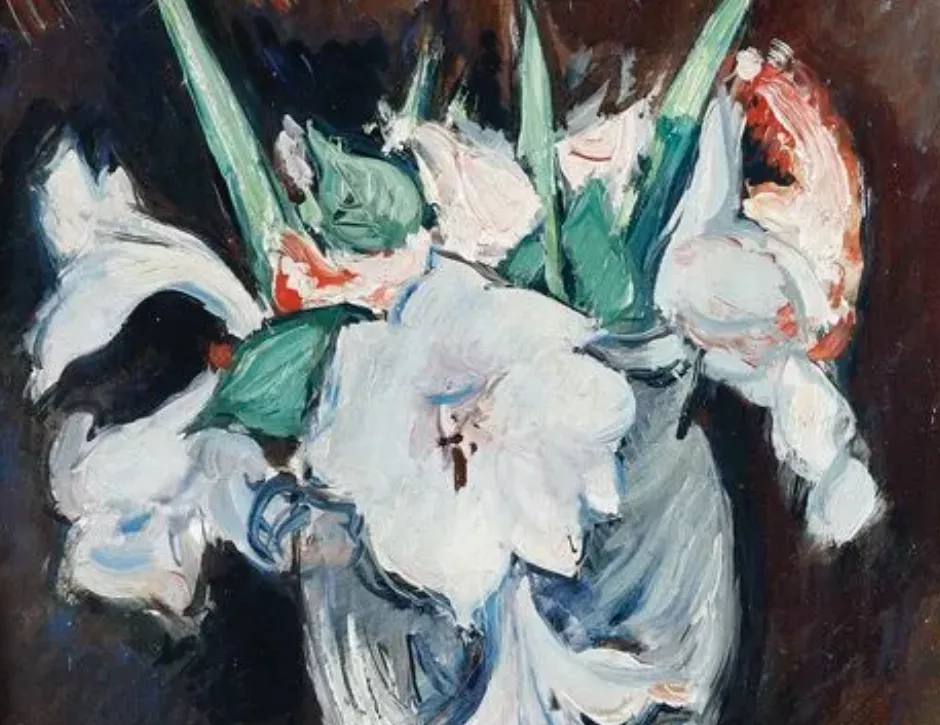
At the turn of the 19th and 20th centuries, the influence of Impressionism, and even more so of Cézanne, became obvious to him.
The study of Cézanne landscapes, with their interlocking planes and solidly constructed volumes, led him to conceive of pictorial space differently: no longer as a simple recording of atmospheric effects, but as a structure where form and color respond to each other.
This Cézannean lesson he combined with the raw energy of the Fauves, whom he joined in 1905 alongside Matisse, Derain and Vlaminck. The palette is set ablaze, contours are liberated, but Friesz, unlike some of his fellow travelers, never completely renounces a certain organization of the image.
He thus distinguishes himself by a singular synthesis, where expressive ardor is tempered with a concern for construction inherited from his academic training.
After his passage through Fauvism, he turned to the legacy of Corot and Courbet, whose dense matter and powerful atmospheres he rediscovers.
In his landscapes of Le Havre or Provence, he claims a fidelity to nature that brings him closer to the great 19th-century landscape painters, while retaining the colorful energy that characterizes his language.
He thus crosses currents, assimilating them without ever becoming locked into them, constructing a body of work that oscillates between tradition and modernity, where the influence of the ancients constantly nourishes the invention of his own style.
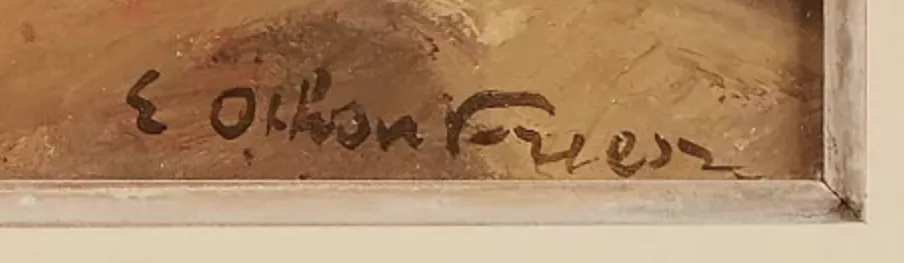
Recognizing the artist's signature
Not all works by Othon Friesz are signed. They may be at the bottom of the painting, but if you think you own one, it's best to have it appraised to be sure of its originality.
Knowing the value of a work
If you happen to own a work by or after Othon Friesz, don't hesitate to request a free valuation using our form on our website.
A member of our team of experts and certified auctioneers will contact you promptly to provide you with an estimate of the market value of your work, as well as ad hoc information about it.
If you wish to sell your work, you will also be accompanied by our specialists in order to benefit from alternatives for selling it at the best possible price, taking into account the inclinations of the market.
.Estimate in less than 24h
Discover in the same theme

Rating and value of works, drawings, paintings by André Mass...
André Masson was a 20th-century Surrealist artist who produced drawings and paintings that were successful and highly prized at auction.
Learn more >

Rating and value of sculptures and bronzes by Mahmoud Mokhta...
Mahmoud Mokhtar is an Egyptian sculptor who has produced many works that are highly valued at auction. 24h estimate.
Learn more >

Rating and value of paintings, drawings and sculptures by Lo...
Louise Bourgeois is a twentieth-century artist who worked mainly in sculpture, and whose value is exploding at auction today.
Learn more >
Works from the same period sold at auction

Estimated 8.000 - 15.000
Maurice de VLAMINCK (1876-1958), Still life with jugs and leeks, oil on canvas

Estimated 4.000 - 6.000
Pierre HODÉ (1889-1942) Vue de Port, Oil on canvas

Estimated 2.000 - 4.000
Jean DUFY (1888-1964) Vase of anemones, Watercolor

Estimated 18.000 - 30.000
Charles CAMOIN (1879-1965) "Le Port de Marseille, 1928" Oil on canvas.

Estimated 3.000 - 5.000
Georges LAPCHINE (1885-1951) The port of St Tropez Oil on canvas

Estimated 800 - 1.500
Jean Roger SOURGEN (1883-1978) Trees and dunes Oil on panel

Secure site, anonymity preserved

Auctioneer approved by the State

Free and certified estimates
Frequently asked questions
-
Who was Othon Friesz, and which artistic movement did he represent?Othon Friesz (1879–1949) was a French painter from Le Havre who trained at the École des Beaux-Arts before joining Léon Bonnat’s studio in Paris. He became associated with Fauvism in the early 20th century alongside Matisse and Dufy, developing a style characterized by a vibrant palette and a loose brushstroke, before gradually incorporating a more rigorous structure inspired by Cézanne beginning in 1908. His work represents a unique synthesis between the Fauvists’ freedom of color and a classical construction of space.
-
What are the price and value ranges for Othon Friesz's works?The prices of Othon Friesz’s works vary considerably depending on the medium and size. Prints sell for between €10 and €950, drawings and watercolors for between €25 and €80,000, while oil paintings on canvas—the most prestigious works—range from €120 to €1,700,000. This wide range reflects the diversity of his body of work and the French market’s particular interest in his major paintings.
-
How do I have a work by Othon Friesz authenticated and appraised?To authenticate a work by Othon Friesz and determine its value, we recommend that you request a free appraisal from Auctie's using our online form. A state-certified expert or auctioneer will contact you shortly to verify the authenticity and estimate the market value of your item, with no obligation on your part.
-
Is this the right time to sell a work by Othon Friesz?Yes, now is a good time to sell a work by Othon Friesz. Prices for his paintings are rising steadily on the art market, particularly among French buyers. Demand remains strong for his paintings representing Fauvism and his transition toward a more structured approach, which supports strong price appreciation.
-
How does the sale of a work of art work at Auctie's?Auctie's supports you every step of the way: after a free, no-obligation appraisal of your artwork, our specialists will guide you toward the best options for selling it at the highest possible price, taking market trends into account. You’ll benefit from the expertise of our specialists and licensed auctioneers throughout the entire sales process.
