



Rating and value of drawings and paintings by André Planson

Key takeaways
- André Planson's works sell for between €50 and €31,250 at auction, with significant variations depending on the subject and technique used.
- The period from 1935 to 1955 represents the artist’s creative peak and commands the highest auction prices, particularly for his flower and nude paintings.
- A French painter (1898–1981) associated with the Poetic Reality movement, Planson is known for his bold colors and broad brushstrokes inspired by Fauvism.
André Planson’s paintings and drawings sell for up to €31,250 at auction. An appraisal allows us to accurately determine the current market value of your André Planson artwork and, if applicable, optimize the sale of the piece.
If you own a work by André Planson and would like to know its value, our state-certified auctioneers will provide a free appraisal based on authenticity, market rating, and recent market results.
Market Value and Appraisal of Artist André Planson
Maurice Joron is a French painter associated with the Realist movement who primarily creates portraits and mythological scenes, both in oil and watercolor.
Today, his works sell for between €50 and €31,250—a significant range that speaks volumes about the value that can be attributed to the artist’s works.
For example, his 1944 oil on canvas titled *Matinée provençale* sold for €31,250.
A range of values from a simple work to the most prestigious
Technique used | Result |
Drawing - watercolor | From €20 to €7,730 |
Print - multiple | From 5 to 1,150€ |
Oil on canvas | From 50 to 31,250€ |
Estimate in less than 24h
Placing the Artist in Context
Period
André Planson (1898–1981) was a French painter whose career spanned both world wars and the major transformations of modern French art. His artistic training combined provincial roots with a Parisian outlook.
After receiving guidance from the landscape painter Paul Meslé, he studied at the Académie Ranson in Paris from 1917 to 1919, and later studied under Maurice Denis, the direct heir to Nabi Symbolism. Beginning in 1923, he exhibited in all the renowned Parisian art salons.
His stature as a public artist is evidenced by numerous government commissions. He was elected a member of the Académie des Beaux-Arts in 1960; today, some twenty museums hold his works, attesting to enduring recognition that extends beyond his own era.
Current
Planson was the central figure of the Poetic Reality movement: along with Roland Oudot, Maurice Brianchon, Christian Caillard, Roger Limouse, and Raymond Legueult, he formed this group—a term coined in 1949 by art critic Gisèle d’Assailly.
This movement occupies a unique position in the postwar art scene: it is characterized by a style imbued with reverie, running counter to the abstract avant-garde movements that dominated the Parisian art scene at the time.
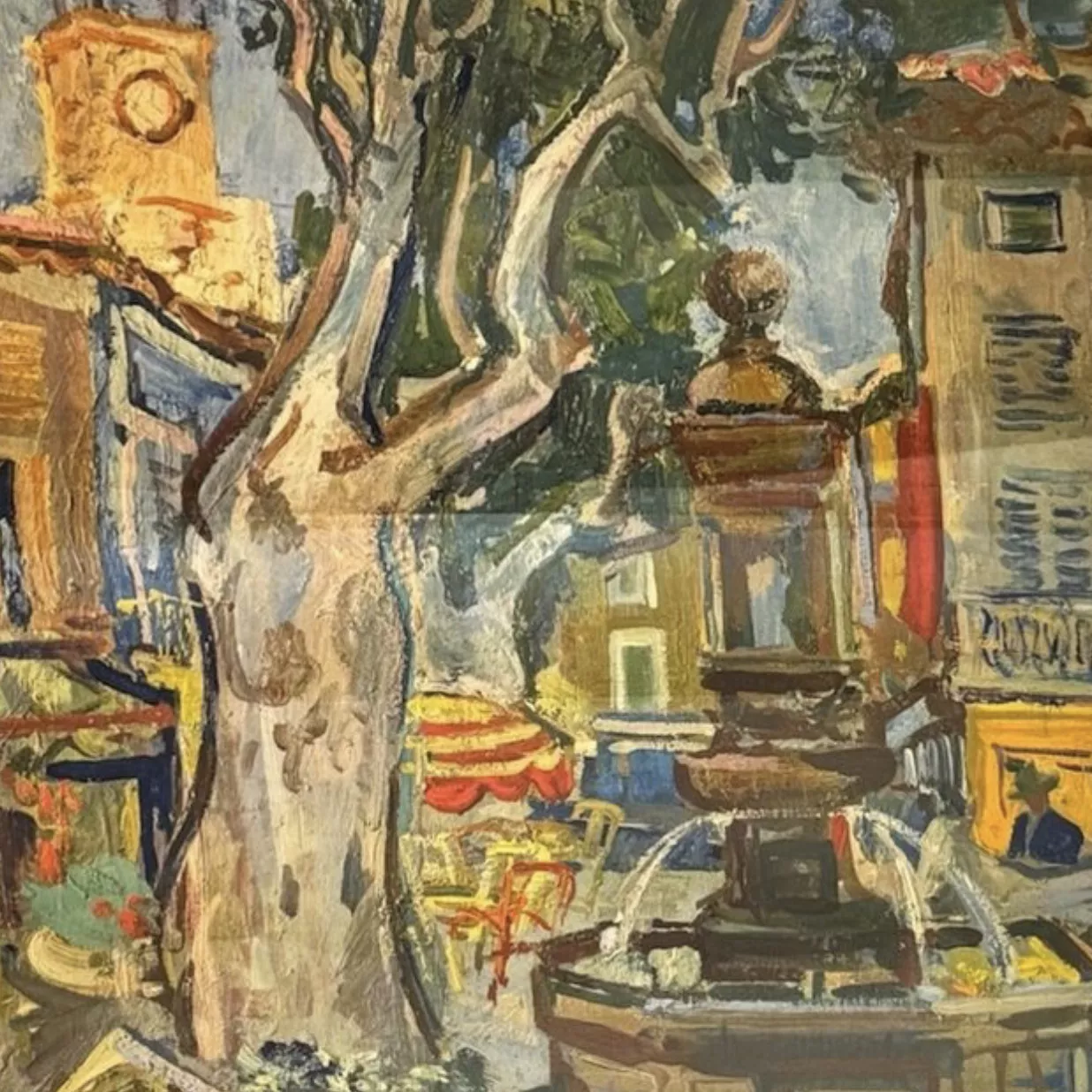
Its artistic connection to Fauvism is explicit and proudly asserted: the group is distinguished by bold, cheerful colors inspired by the Fauves, broad, impasto brushstrokes, and, above all, an optimistic spirit.
The Life of André Planson
Cultural Background
An excellent violinist, Planson wavered for a long time between music and painting before finally choosing the visual arts. This formative indecision shaped his relationship with color.
In 1915, he was drafted during World War I and was seriously wounded. After his recovery, he began studying architecture before devoting himself entirely to painting.
He received several government commissions: the Palais de Chaillot (1937), the Enghien High School (1954), the Louis-le-Grand High School (1957), and contributed to the decoration of ocean liners between 1952 and 1966.
Artistic and Intellectual Circle
Before moving to Paris, he received guidance from the landscape painter Paul Meslé, who was then living in Champigny, and was impressed at the Louvre by the works of Nicolas Poussin—a dual influence from a local master and monumental classicism that permanently shaped his conception of landscape and composition.
He also took classes with Maurice Denis at the Académie Ranson; Denis was a leading figure of the Nabi movement and a theorist of the relationship between color, decoration, and spirituality—teachings that profoundly influenced his generation and explain the resolutely non-naturalistic approach to light in his work.
In 1923, he met the painter Roland Oudot, who became his friend and artistic companion. Together, they helped form the group known as the Peintres de la Réalité poétique.
Techniques by André Planson
The Artist’s Style
Planson openly embraces his Fauvist heritage, with bold colors and broad brushstrokes. He belongs to the Réalité Poétique group, whose program is based on the lyrical celebration of everyday life, nature, and the human figure—in direct opposition to the abstract avant-garde movements.
His figurative work is deliberately stripped of intellectual pretensions. He renders landscapes, still lifes, and female figures in a pictorial style that is both passionate and balanced, sharing his generous vision of existence.
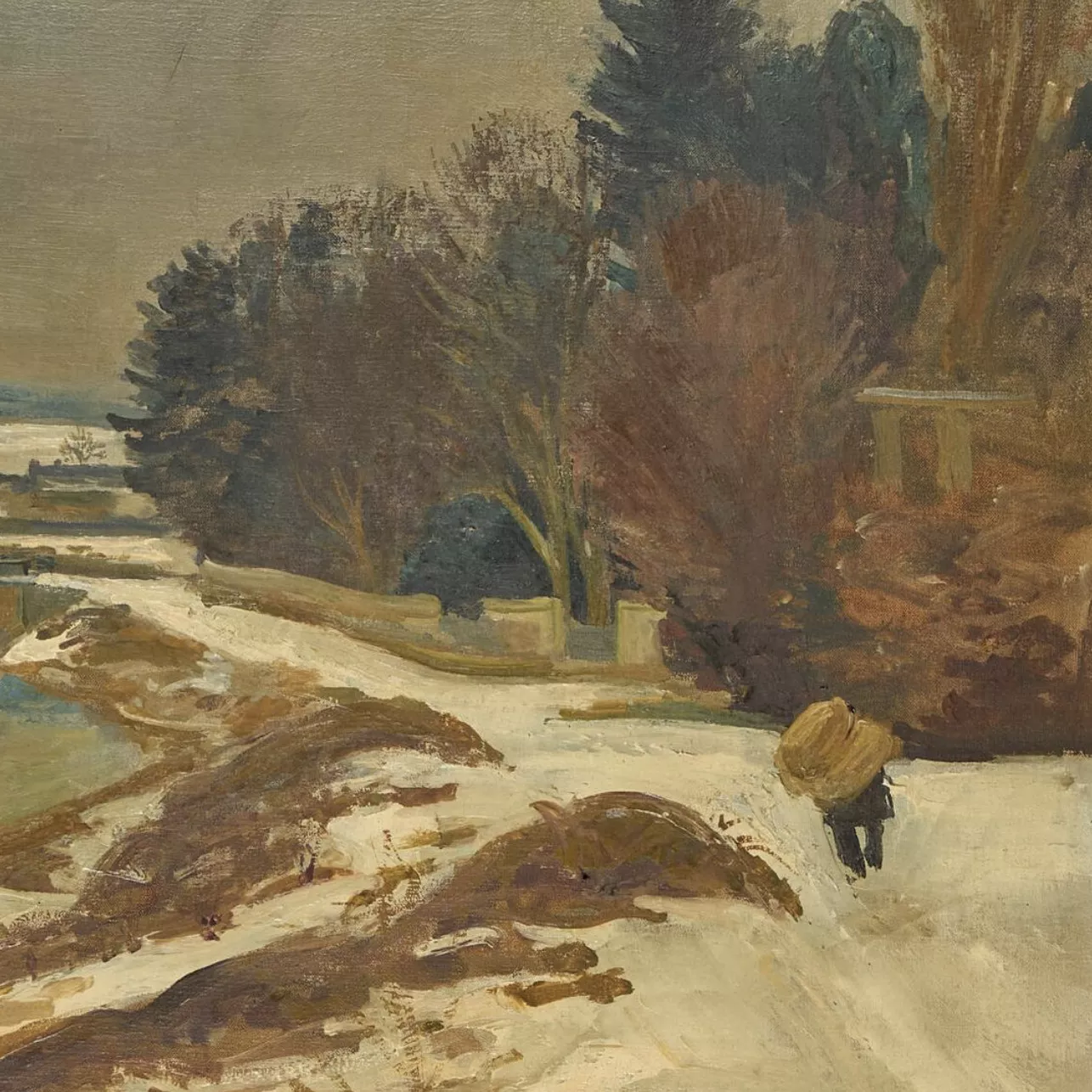
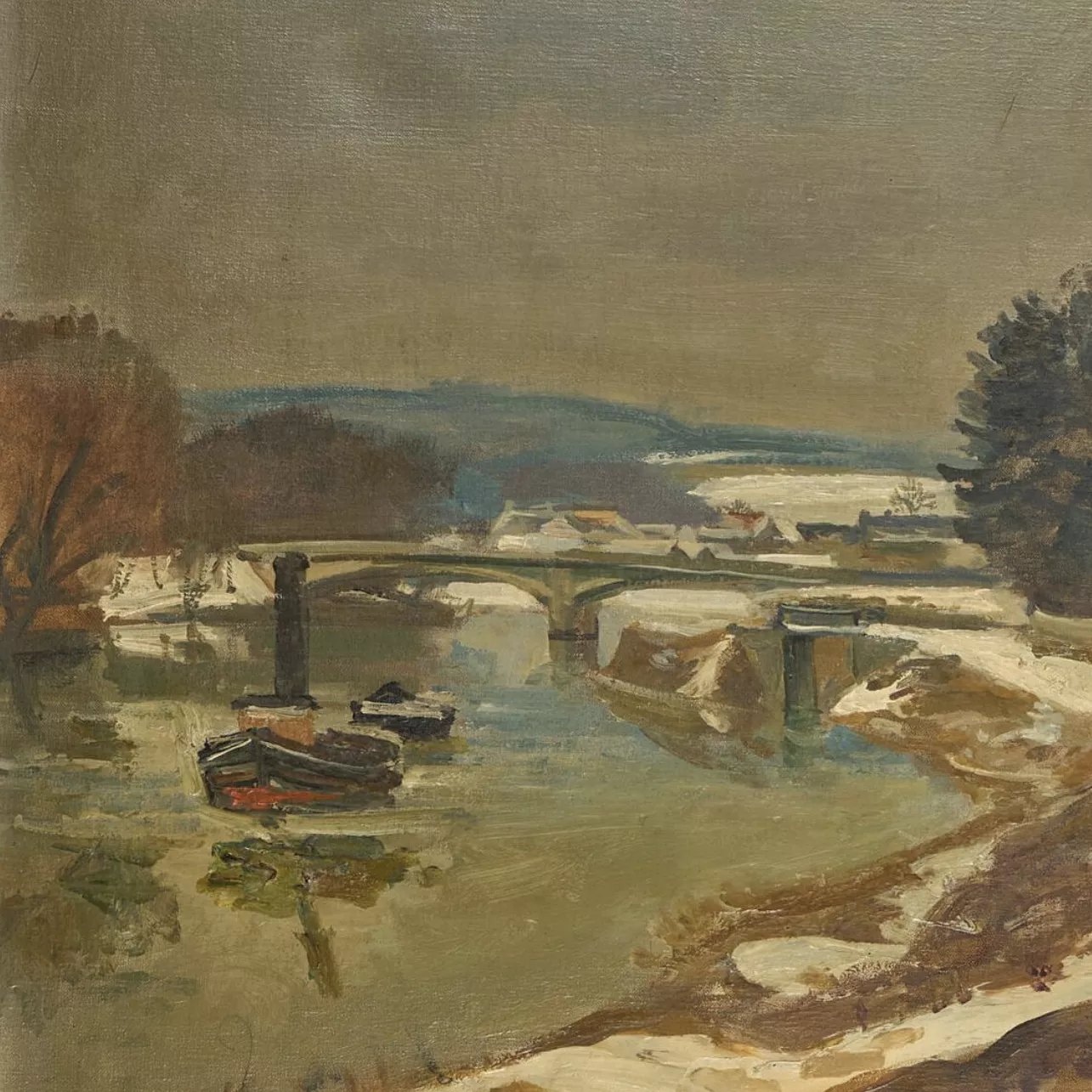
It is primarily in the Marne Valley that Planson draws his inspiration, making this region of his childhood the center of his sensibility as a landscape artist. He is also an excellent engraver and lithographer.
Spotlight on a Key Work
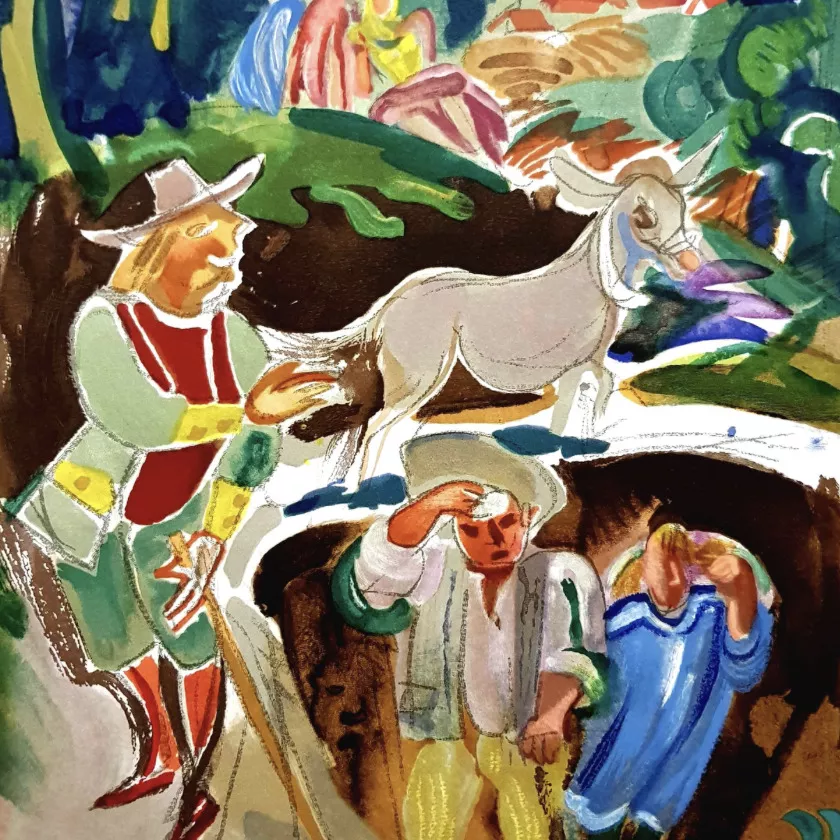
Mural decoration of the Théâtre du Palais de Chaillot, 1937
The decoration of the Palais de Chaillot was part of a revival of mural painting in France, driven by the Popular Front’s public art programs, which commissioned leading figures of modernist figurative art to adorn major national cultural institutions.
The mural commission required Planson to adapt his personal style—broad brushstrokes, warm colors, and subjects drawn from everyday life—to the demands of the architectural space, prompting him to consider visibility from a distance, chromatic integration with the building, and the monumentalization of everyday motifs.
FAQ – How do you appraise a work by André Planson?
1) What is “Poetic Reality,” and why does this artistic movement influence the valuation?
Together with his painter friends, Planson founded an informal movement united by a shared desire to explore figurative art, using bold, cheerful colors inspired by the Fauves and broad, impasto brushstrokes. It is one of the most active French figurative movements of the postwar period.
2) Are all of Planson’s subjects equally valued at public auction?
The difference can be considerable. Value is closely tied to the subject matter. The paintings by André Planson most sought after by collectors are those featuring flowers and nudes, while landscapes are less in demand.
3) Are all decades of Planson’s work equally valued on the market?
The decade from 1935 to 1955 represents the artist’s creative prime and generally yields the highest auction prices. This is the period when his style—rich colors, broad brushstrokes, and Mediterranean light—is most fully developed.
Recognizing the Artist’s Signature
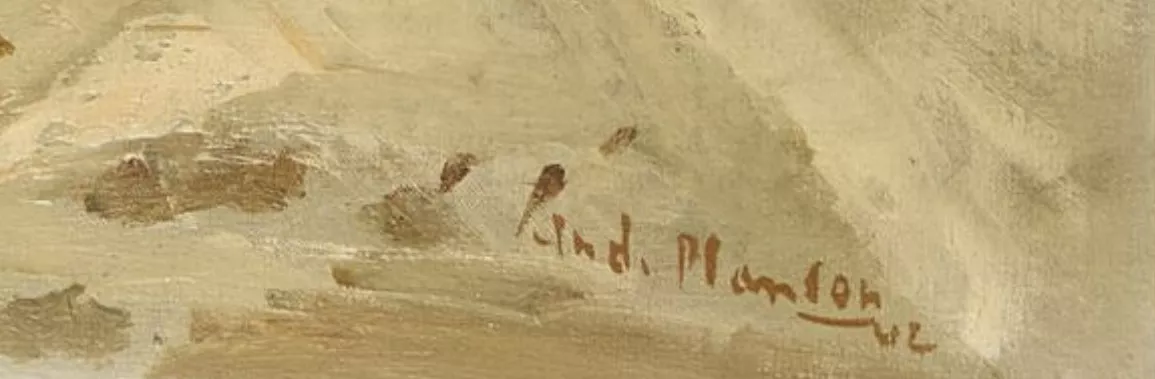
André Planson signs his works at the bottom of his canvases with his name in a relatively fluid and rounded handwriting.
Estimate in less than 24h
D'autres tableaux de fauvistes vendus aux enchères

Estimated 8.000 - 15.000
Maurice de VLAMINCK (1876-1958), Still life with jugs and leeks, oil on canvas

Estimated 18.000 - 30.000
Charles CAMOIN (1879-1965) "Le Port de Marseille, 1928" Oil on canvas.

Estimated 200€ - 400€
André DERAIN (1880-1954) Decorative project, black ink (insolation),...

Estimated 2.000 - 4.000
Jean DUFY (1888-1964) Vase of anemones, Watercolor

Estimated 2.000 - 4.000
Jean DUFY (1888-1964) Vase of anemones, Watercolor
Discover in the same theme

Rating and value of paintings by Tadeusz Makowski
Tadeusz Makowski is a twentieth-century Polish painter who produced works of considerable value at auction.
Learn more >

Rating and value of paintings by Vladimir Velickovic
Vladimir Velickovic is a painter of narrative figuration who has produced works that are highly rated and valued on the art market.
Learn more >

Rating and value of Jacques Villon's works
Jacques Villon was a Cubist painter and engraver who produced many works that are highly valued at auction.
Learn more >

Secure site, anonymity preserved

Auctioneer approved by the State

Free and certified estimates
Frequently asked questions
-
Who is André Planson, and what is his artistic background?André Planson (1898–1981) was a French painter trained at the Académie Ranson under the influence of Maurice Denis and Nabi Symbolism. A central figure in the postwar Réalité Poétique movement, he was known for his lyrical figurative style featuring bold colors inspired by Fauvism, in contrast to the abstract avant-garde movements. Elected to the Académie des Beaux-Arts in 1960, his works are held in some twenty French museums.
-
What are the price ranges for André Planson's paintings and drawings?Planson's works sell for between €50 and €31,250. Oil paintings on canvas range from €50 to €31,250, watercolor drawings from €20 to €7,730, and prints from €5 to €1,150. The range in value depends heavily on the subject: flowers and nudes are the most sought-after, while landscapes generally sell for less.
-
Which period of Planson's work commands the highest prices on the market?The decade from 1935 to 1955 represents the peak of Planson’s artistic maturity and generally yields the highest auction prices. It was during this period that his distinctive style—rich colors, broad brushstrokes, and Mediterranean light—was most fully developed and sought after by collectors.
-
How can I have a work by André Planson authenticated and appraised?Auctie's offers a free, no-obligation appraisal conducted by state-certified auctioneers. Based on the work’s authenticity, its market value, and recent market trends, this appraisal accurately determines the current value of your painting or drawing. You will receive a response from an expert within 48 hours.
-
Is this the right time to sell a work by André Planson?Yes, Planson’s works remain highly sought after on the auction market, particularly those from his mature period (1935–1955) depicting flowers or nudes. Auctie's guides you from the free appraisal to the final bid to ensure the best possible sale of your artwork based on current market conditions.
