



Cote and value of paintings by Jacques Villeglé

Key takeaways
- His most sought-after period began in the 1960s; his signed works fetch several million euros, notably *Boulevard Saint Martin* (1959), which sold for €260,000 in 2010.
- Paintings range from €80 to €260,000, watercolor drawings from €80 to €47,750, and multiple prints from €10 to €37,000, depending on the technique used.
- A leading figure in New Realism since 1949, Villeglé uses the décollage technique, directly salvaging torn posters from urban walls without any direct pictorial intervention.
If you own a work by artist Jacques Villeglé or based on his work and would like to know its value, our state-approved experts and auctioneers will guide you.
Our specialists will carry out a free appraisal of your work, and provide you with a precise estimate of its value on the current market.
Then, should you wish to sell your work, we will direct you to the best possible arrangement to obtain the optimum price.
Artist's rating and value
Throughout his career, Jacques Villeglé produced a great deal. However, his most popular period began in the 1960s. His international renown opened the doors of numerous museums in Paris and New York.
Today, Jacques Villeglé retains his high standing and is a sure bet on the art market.
A work signed by the artist can fetch millions of euros at auction, as demonstrated by his oil on canvas Boulevard Saint Martin, dating from 1959, adjudged €260,000 in 2010, whereas it was estimated at between €150,000 and €200,000.
Order of value from the most basic to the most prestigious
Technique used | Result |
|---|---|
Estamp - multiple | From €10 to €37,000 |
Drawing - watercolor | From €80 to €47,750 |
Painting | From €80 to €260,000 |
Estimate in less than 24h
Style and technique of Jacques Villeglé
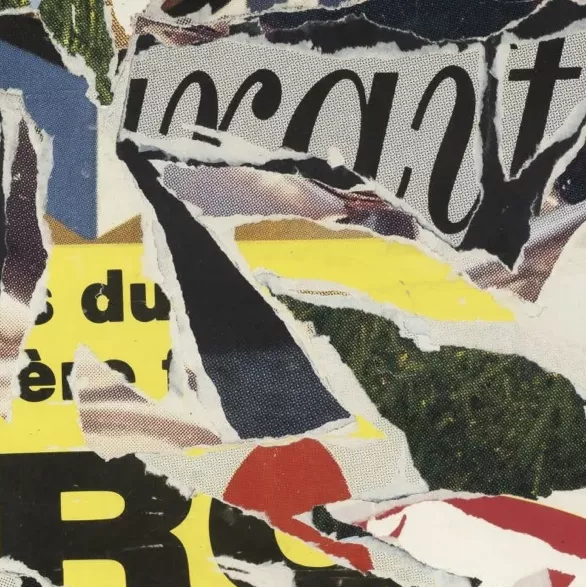
Jacques Villeglé, a major figure of Nouveau Réalisme, left his mark on art history with a resolutely innovative approach based on the recovery and reinterpretation of torn posters from the public space.
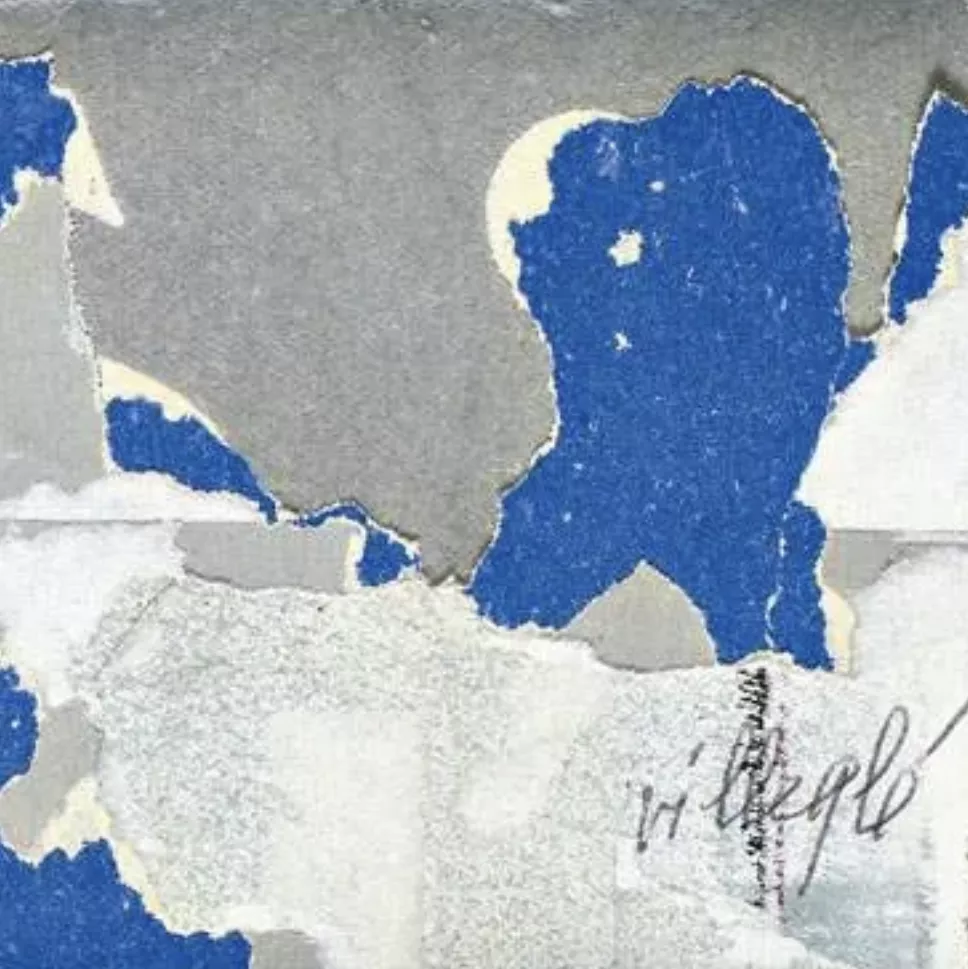
He made his mark with his technique du décollage, a process in which poster fragments, already altered by time and human intervention, are taken directly from urban walls.
These torn pieces, torn from their original context, become the starting point for a visual rereading, where each superimposition or tear tells a story rooted in collective memory.
Villeglé refuses any direct pictorial intervention, preferring to let the raw material of the posters speak for themselves. Typography, saturated colors, irregular tears and traces of wear become the building blocks of his compositions.
This radical choice gives his works a unique expressive force, capturing the chaotic, vibrant energy of urban landscapes.
Through his take-offs, he not only documents his times; he transforms these remnants of everyday life into autonomous works of art, where instinct and randomness take center stage.
The career of Jacques Villeglé
In Jacques Villeglé's world, the city itself becomes a workshop, a place of creation and experimentation. Born in 1926 in Quimper, France, Villeglé began to reflect on the changing nature of urban space in the 1940s, seeing it as a matrix for images and narratives.
Villeglé's eye soon turned away from academic practices to explore the visual dynamics of the street. The choice to pick up torn posters, abandoned to the contingency of anonymous gestures and the erosion of time, was an obvious one.
This initial, seemingly simple gesture operates a radical re-reading of the work of art: the material found becomes text, texture, the imprint of a society in motion.
It was in Paris, in 1949, that Villeglé developed his artistic language, working alongside Raymond Hains, with whom he signed the first décollages.
These seminal works are not reproductions of reality, but condensations of a collective memory in perpetual transformation, where advertising traces, political slogans and accidental interventions mingle.
Far from a purely iconographic approach, Villeglé claims an aesthetic of the fragment, where each tear, each superposition, draws an autonomous visual territory.
Through this approach, the artist inscribes his practice in the Nouveau Réalisme current, while asserting his independence from fixed theoretical frameworks.
What Villeglé initiated in the 1950s was not just a plastic revolution, but a silent manifesto for the inscription of the ephemeral in art history.
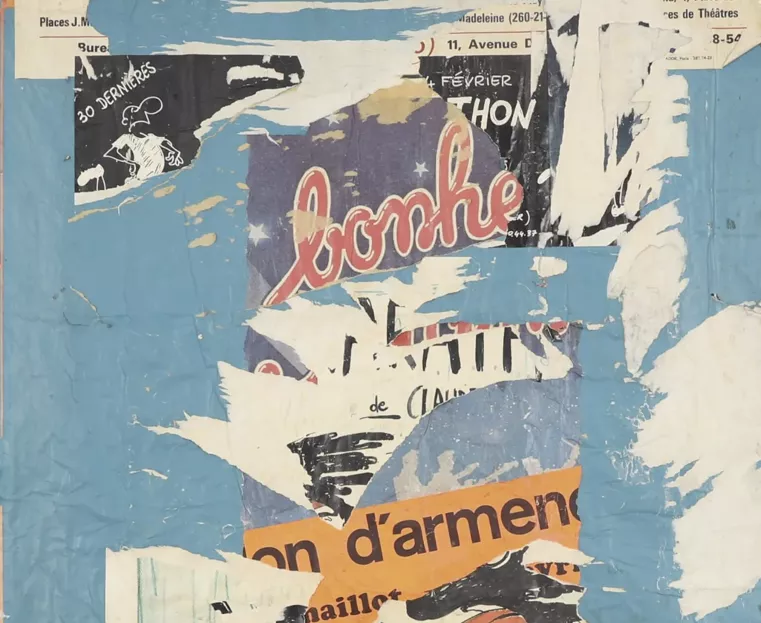
Focus on Rue des Halles, Jacques Villeglé, 1961
In Rue des Halles (1961), Jacques Villeglé condenses into a single surface the visual tensions of post-war urban space, where advertising and political posters, already mutilated by time or anonymous passers-by, become relics of an era.
Here, the lacerated material is organized into a chaotic stratification, where fragments of garish typography, saturated colors and abrupt tears cohabit in a precarious equilibrium.
The composition, though seemingly random, testifies to an intuitive mastery of space. Every tear, every shred of torn paper evokes a latent violence, a struggle between the gesture of destruction and that of preservation.
This contrast lends the work a vibrant, almost sonorous quality, as if the hustle and bustle of the street were still reflected in it. Truncated letters and fragmented images become symbols of an exploded language, where communication mingles with abstraction.
"Rue des Halles" goes beyond the simple collection of found material: it transforms the ordinary into an object of contemplation, redefining the boundaries of art.
In this assemblage, Villeglé questions the relationship between collective memory and the obsolescence of messages, revealing a raw, singular poetry in the ephemerality of public space.
Jacques Villeglé and the Nouveau Réalisme
Jacques Villeglé, a central figure of the Nouveau Réalisme, introduced a radical break in the artistic landscape of the 1950s.
Beyond simply collecting objects or materials, he proposed a profound reflection on how to read the city and public space as sources of inspiration and transformation.
By reappropriating torn posters, lacerated by time and anonymity, Villeglé fashioned a visual language in which fragments of an ever-changing world become witnesses to an era.
His work, rooted in both social and aesthetic research, has made the torn, the fragmented, the accidental process a veritable mode of expression.
The torn and salvaged posters, presented as works of art, question consumption, politics and ideologies, offering a critical reading of urban society.
It's not surprising that his research found echoes among other Nouveau Réalisme artists, who shared the desire to hijack everyday objects, transforming them into art and thus questioning their place in popular culture.
Arman, for example, whose practice of accumulating objects and "cutting" found materials resonates with Villeglé's approach, particularly in highlighting waste and the ordinary.
Yves Klein, with his use of color and quest for total art, also influenced Villeglé, though their approaches differed; while Klein was interested in the invisible, Villeglé favored the expression of the forgotten, the fragmentary.
Raymond Hains, his accomplice in the early décollages, shared this same vision of art as a form of reading the world, exploring the relationship between signs and their context.
Other abstract artists in France such as Hans Hartung or Jean Dewasne shared these same issues.
New Realism, of which Villeglé was a part, was not just about aesthetic rebellion; it was about reinventing the relationship between art and society, breaking away from convention and exploring the limits of representation.
His works have paved the way for a practice that, by capturing the ephemeral, the fragmentary and the everyday, has overturned the very definition of the art object. ¡m
Through his influence, Villeglé helped break down the boundaries between art and life, a rupture that even today inspires artists to rethink our visual environment.
Jacques Villeglé's imprint on his time
Jacques Villeglé's legacy is part of a profound redefinition of artistic boundaries, where the creative gesture no longer resides in elaboration ex nihilo but in selection and appropriation.
His torn posters, fragments snatched from the hustle and bustle of the city, impose a new reading of the everyday as aesthetic material.
This approach, which transcends traditional categories, has paved the way for contemporary practices exploring the tensions between art and society, between the trivial and the sacred.
Through his work, Villeglé instilled a reflection on the ephemeral and memory, reconciling destruction and creation in a single dynamic. He showed us a living city, in perpetual change, where every tear bears the trace of a bygone era.
His influence, palpable in artists working with media or found objects, bears witness to a constant topicality, making him an essential player in twentieth-century art, whose impact still resonates in today's practices.
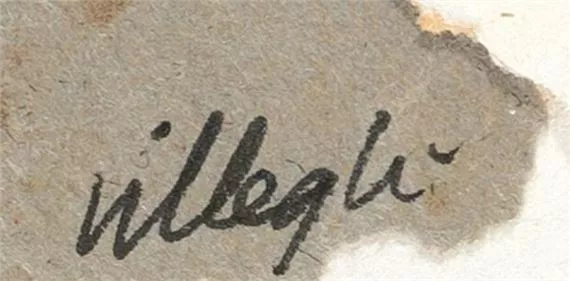
His signature
Not all of Jacques Villeglé's works are signed.
Although there are variations, here is a first example of his signature:
Expertise your property
If you own a work by Jacques Villeglé, don't hesitate to request a free appraisal by filling in our online form.
A member of our team of experts and certified auctioneers will contact you to provide an estimate of the market value of your work.
If you are considering selling your work, our specialists will also guide you through the various alternatives available to obtain the best possible price, taking into account market trends and the specific features of each work.
Estimate in less than 24h
Discover in the same theme

Rating and value of works, drawings, paintings by André Duno...
André Dunoyer de Segonzac is a twentieth-century neo-realist artist who produced paintings, watercolors and prints that are highly prized and sought-a...
Learn more >

Rating and value of Fernand Dresse's paintings and furniture
Fernand Dresse is a Belgian artist who produced paintings and furniture that are highly valued at auction. 24h estimate
Learn more >

Rating and value of paintings by Léon Zack
Léon Zack is a Russian abstract painter who produced works that are highly rated and valued at auction. 100% free estimate!
Learn more >
D'autres tableaux abstraits vendus aux enchères

Estimated 2.000 - 4.000
Serge POLIAKOFF (1900-1969), Composition en rouge et bleu. 1965, Lithograph

Estimated Between €5,000 and €8,000
Jean MIOTTE (1926-2016), acrylic on canvas

Estimated 3.000 - 5.000
Roberto MATTA (1911-2002), Composition, Gouache on canvas

Secure site, anonymity preserved

Auctioneer approved by the State

Free and certified estimates
Frequently asked questions
-
Who is Jacques Villeglé, and what is his artistic movement?Jacques Villeglé (1926) is a leading figure of New Realism, an artistic movement of the 1950s that revolutionized the concept of the work of art. He developed the “décollage” technique, removing torn and fragmented posters directly from urban walls to transform them into self-contained compositions, without any direct pictorial intervention. His approach redefines art by attributing aesthetic value to the remnants of everyday life and the ephemeral nature of the urban environment.
-
What are the price ranges for Jacques Villeglé's works based on the medium used?Prices vary considerably depending on the medium: prints and multiples range from €10 to €37,000, drawings and watercolors from €80 to €47,750, and paintings from €80 to €260,000. For example, his oil on canvas “Boulevard Saint Martin” (1959) sold for €260,000 in 2010, exceeding its initial estimate of €150,000 to €200,000.
-
How do I have a work by Jacques Villeglé authenticated?To authenticate a work by Jacques Villeglé, we recommend that you request a free appraisal from Auctie's by filling out our online form. A member of our team—composed of experts and state-certified auctioneers—will contact you to evaluate your artwork and provide you with an accurate, no-obligation estimate.
-
Is this the right time to sell a work by Jacques Villeglé?Yes, now is a good time to sell a work by Jacques Villeglé. The artist continues to command high prices and is established as a safe bet in the art market, with an international reputation recognized by museums in Paris and New York. Demand for his works, particularly those from his most sought-after period (beginning in the 1960s), remains steady.
-
How does the process of selling a work of art at Auctie's work?Auctie's supports you from the appraisal to the auction. After a free, no-obligation appraisal of your artwork by our experts, our specialists will guide you through the various options available to help you achieve the best possible price, taking into account market trends and the unique characteristics of each piece.
