



Expressionism Market: Valuation and Auctions

Vibrant colors, anguish, and modernity: the value of Expressionist art varies greatly depending on the artist, the period, and the technique used in the work.
Below you’ll find all our valuation guides dedicated to Expressionism—paintings, woodcuts, and drawings by the Brücke and Blaue Reiter groups. Each guide details the price ranges observed at auction and the factors that determine a work’s value before it is entrusted to our state-certified auctioneers.
Guides on this art movement
See all guides >
Edvard Munch (1863–1944) Market Data – Estimates and Values...
Discover Edvard Munch's market value: prices, auction records, and appraisal criteria. Auctie's will appraise your artwork for free in less than 24 ho...
Learn more >

Rating and value of drawings and paintings by Louis Boulange...
Louis Boulanger was a 19th-century Romantic painter who produced numerous works that are highly valued and command high prices.
Learn more >

Estimate and value of paintings, drawings by Hans Thoma
Discover the prices and values of works by Hans Thoma (1839–1924), a German Symbolist painter. Appraisals, art market trends, and expert advice.
Learn more >

Rating and value of drawings and paintings by Horace Vernet
Horace Vernet was a French Romantic and Orientalist painter who produced numerous paintings that are highly valued and command high prices.
Learn more >

Rating and value of drawings and paintings by Ary Scheffer
Ary Scheffer was a 19th-century Romantic painter whose works command high prices at auction. 24-hour estimate
Learn more >

Rating and value of drawings and paintings by Arnold Böcklin
Arnold Böcklin was a 19th-century Symbolist painter who produced numerous paintings that are highly prized and valuable.
Learn more >

Rating and value of sculptures, drawings, and engravings by...
Max Klinger is a German artist and a pioneer of Symbolism who produced numerous works that are highly valued and command high prices.
Learn more >

Rating and value of drawings and paintings by Édouard Pignon
Édouard Pignon is a French painter of the New School of Paris who produced a vast number of paintings that are highly valued and command high prices.
Learn more >

Rating and value of drawings and paintings by Nicolas Eekman
Nicolas Eekman is an original painter from Brussels whose style defies categorization. His work is reminiscent of the School of Paris and is highly va...
Learn more >

Rating and value of drawings and paintings by Frédéric Benra...
Frédéric Benrath is a painter associated with the French lyrical abstraction movement (nuagisme) whose paintings command high prices and are highly va...
Learn more >

Rating and value of drawings and paintings by Arbit Blatas
Arbit Blatas is a painter from the School of Paris whose paintings and sculptures command high prices at auction.
Learn more >

Rating of value of drawing and paintings by Auguste Chabaud
Auguste Chabaud is a Fauvist and Expressionist artist who has produced numerous paintings that command high prices at auction.
Learn more >
Understanding the Value of an Expressionist Work
What Is Market Value in Expressionism?
The market value of an Expressionist work refers to the benchmark value assigned to it by the market at a given moment, based on the artist’s identity, the specific movement to which the work belongs, the technique used, the period of creation, and the strength of the documentation.
Expressionism, the movement that laid the foundation for 20th-century artistic modernity, is characterized by the primacy given to the intensity of subjective emotion over fidelity to the appearance of the visible world: the distortion of forms, the intensity of colors, and the freedom of the painterly gesture all serve an inner vision that the artist seeks to communicate with maximum force.
This movement, which emerged simultaneously in Germany with Die Brücke (The Bridge), founded in Dresden in 1905, and Der Blaue Reiter (The Blue Rider), founded in Munich in 1911, produced some of the most powerful and sought-after works in all of modern art; its most iconic figures— Ernst Ludwig Kirchner, Emil Nolde, Franz Marc, and Ernst Barlach, who today enjoy full international institutional recognition.
In France, Expressionism found specific expressions through artists such as Chaïm Soutine, whose heart-wrenching intensity of colored surfaces constitutes one of the most original contributions of the School of Paris.
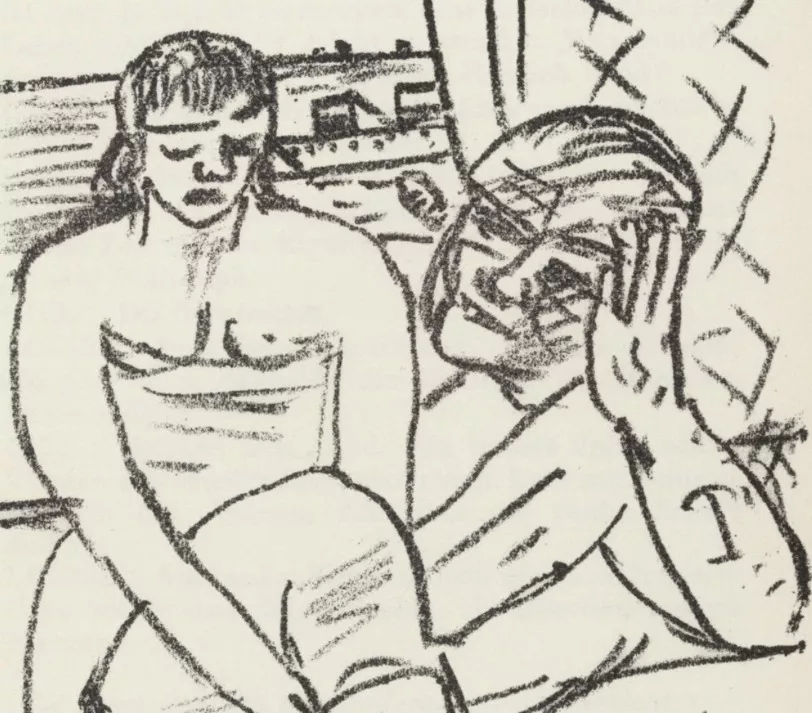
German, French, and Abstract Expressionism: What Are the Market Values?
Historical German Expressionism, embodied by its two founding groups, occupies the top of the market hierarchy; its major works are now largely held in museum collections and therefore rarely appear on the open market.
When a major work by Kirchner, Nolde, or Kandinsky appears at public auction, competition between major institutions and private collectors can lead to spectacular hammer prices.
French Expressionism, less stylistically homogeneous but no less intense, finds its strengths in the figure of Soutine and in certain aspects of Rouault’s work, whose “Christ” series and “Pitreries” constitute major milestones in this tradition.
Finally, American Abstract Expressionism, which carried forward the legacy of Expressionist emotional intensity into the postwar American era in a non-figurative vein, constitutes one of the most active and spectacular segments of the modern art market, with major paintings by Rothko, de Kooning, and Pollock regularly setting records that make them some of the most expensive works ever sold at auction.
Trends | Leading Artists | Characteristics | Market Demand Level |
Die Brücke (pioneering German Expressionism) | Kirchner, Nolde, Heckel, Schmidt-Rottluff | Vivid colors, expressive distortion, woodcuts | Exceptional; rare pieces on the open market |
Der Blaue Reiter | Kandinsky, Franz Marc, Macke | Toward abstraction, the spirituality of color | Very strong, institutional |
French figurative Expressionism | Soutine, Rouault | Expressive texture, intense colors, spiritual dimension | Very active, international |
American Abstract Expressionism | Rothko, Pollock, de Kooning, Kline | Large scale, radical gestures, physical impact | Exceptional, record auction prices |
Neo-Expressionism (1980s) | Basquiat, Baselitz, Kiefer | Return to expressive figuration, cultural references | Very strong, active international market |
Estimate in less than 24h
The Criteria That Determine the Value of an Expressionist Painting
The market value of an Expressionist work depends first and foremost on the artist’s identity and their place in the history of the movement; the difference in value between a Kirchner from his peak period and an anonymous Expressionist painting of comparable quality is several orders of magnitude.
The medium and technique also play an important role: woodcut, a technique favored by many German Expressionists for its ability to convey the dramatic contrasts they sought with striking energy, constitutes a specific category whose value depends on the rarity of the print’s condition.
Size is also a key factor: large compositions that allow the artist to fully deploy his formal vocabulary command a systematic premium.
The price ranges observed on the secondary market span a very wide range. A drawing or watercolor by a second-tier German Expressionist can range from 2,000 to 20,000 euros.
A woodcut by a member of Die Brücke or Der Blaue Reiter ranges from 5,000 to 80,000 euros, depending on the rarity of the print state.
Oil-on-canvas works by the leading figures of these groups frequently exceed several hundred thousand euros for well-documented pieces, and large canvases by the most renowned American abstract expressionists fetch tens of millions of euros at international public auctions.
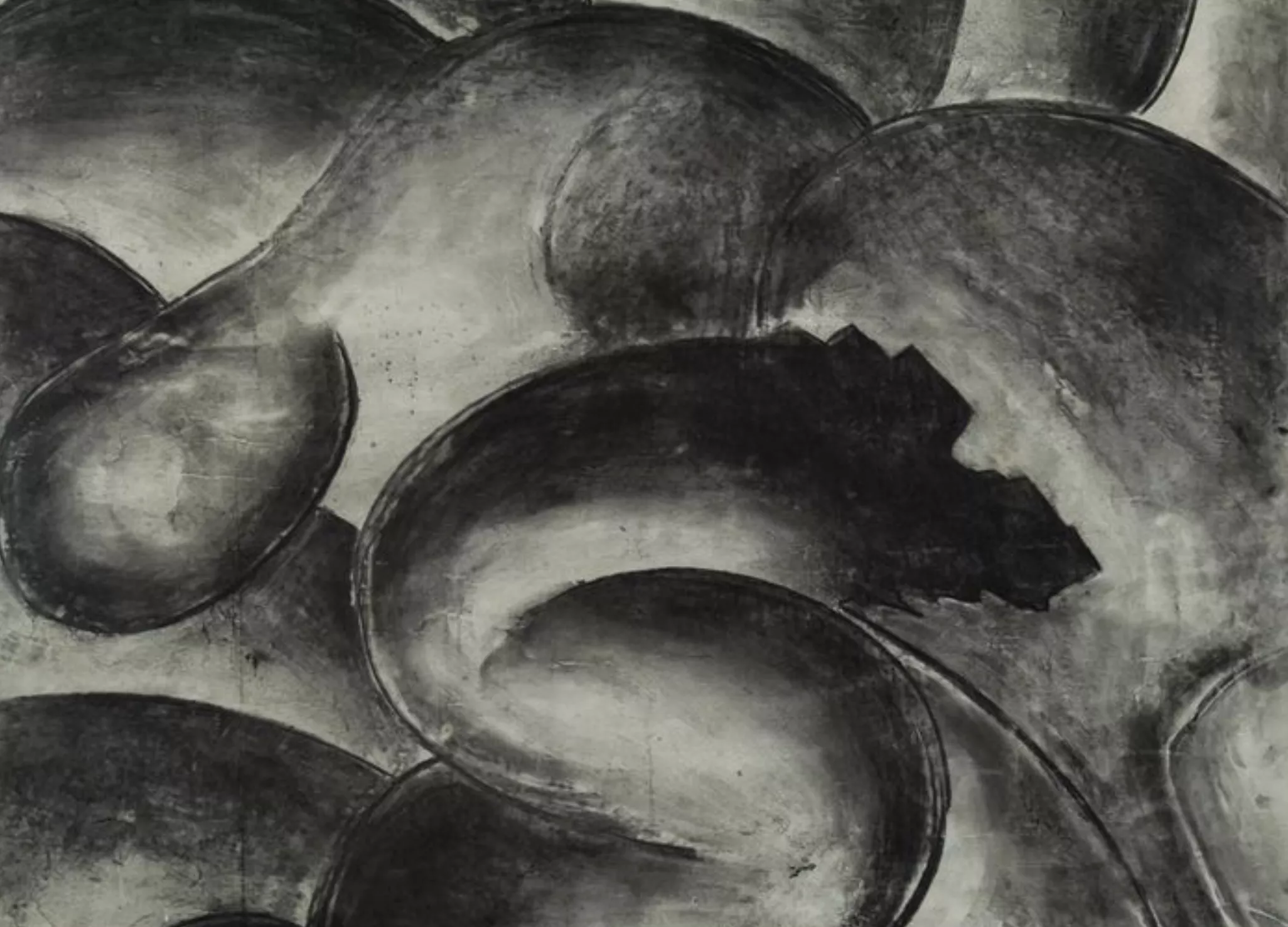
Paintings, Drawings, and Prints: Appraised Works
The hierarchy of Expressionist works and its impact on value
Within Expressionist art, oil paintings on canvas naturally occupy the top of the hierarchy of value, particularly large-scale compositions that capture each artist’s most characteristic and intense moments.
But Expressionism also produced graphic works of exceptional quality and importance, particularly within the German tradition, where woodcut—inherited from Dürer and the artisanal tradition of medieval Germany—was reinvented as a medium of expression characterized by radical brutality and effectiveness.
Drawings, watercolors, and works on paper constitute an equally sought-after category, often providing a more accessible entry point into the bodies of work of the most highly valued artists.
For Kirchner, for example, whose large canvases fetch very high auction prices, drawings and watercolors offer a valuable entry point into a collection of German Expressionism, as their graphic quality is often as striking as that of his most ambitious compositions.
Category | Characteristics | Price Range | Market Demand |
Large painting by a master of Die Brücke or Der Blaue Reiter | Extensive documentation, characteristic period | Several hundred thousand to several million euros | Institutional, exceptional |
Painting by a second-tier Expressionist or Neo-Expressionist | Solid attribution, representative quality | €20,000–300,000 | Very active, international |
Woodcut or etching (major artist, rare condition) | Early print, vivid impression | €5,000 — €80,000 | Highly sought-after, specialized collectors |
Drawing or watercolor (major artist) | Insight into the creative process, graphic quality | €3,000 — €60,000 | Active market, broad buyer base |
Expressionist work of average quality | Artist with limited documentation, uncertain attribution | €500 — €8,000 | Active, accessible |
Oil-on-canvas paintings and prints: the most sought-after mediums
Expressionist woodcuts deserve special attention from collectors, both for their intrinsic quality and the opportunities they offer.
First-state prints by Kirchner, Heckel, or Nolde—characterized by fresh ink and crisp lines—can fetch high auction prices that their modest size might not immediately suggest.
Verifying the print’s state, often based on comparison with catalogs raisonnés, is the most critical step in appraising this category.
Estimate in less than 24h
Get a Free Appraisal of an Expressionist Painting
A certified appraisal by a licensed auctioneer within 24 hours
Recognizing an authentic German Expressionist work among the many pieces that claim to belong to this style requires specialized training: the ability to interpret the formal vocabulary unique to each artist, knowledge of the techniques used during different periods, and mastery of the catalogs raisonné specific to each body of work are skills that are acquired over time.
Auctie’s auctioneer possesses this in-depth expertise, which they offer to you free of charge with a response in less than 24 hours.
Whether you’ve inherited a painting whose attribution is unknown to you, wish to know the current value of a work acquired several decades ago, or are considering putting a piece up for sale, contact Auctie’s for an accurate and confidential appraisal.
What You Need to Provide for an Online Appraisal
For a painting, clear photographs of the front and back, a close-up of the signature, and the exact dimensions are essential. For an engraving or drawing, please specify the technique, the dimensions including margins, and the condition of the paper.
Any documentation of provenance, a catalogue raisonné, previous auction results, or prior appraisals will be taken into account and will allow for a more accurate estimate.
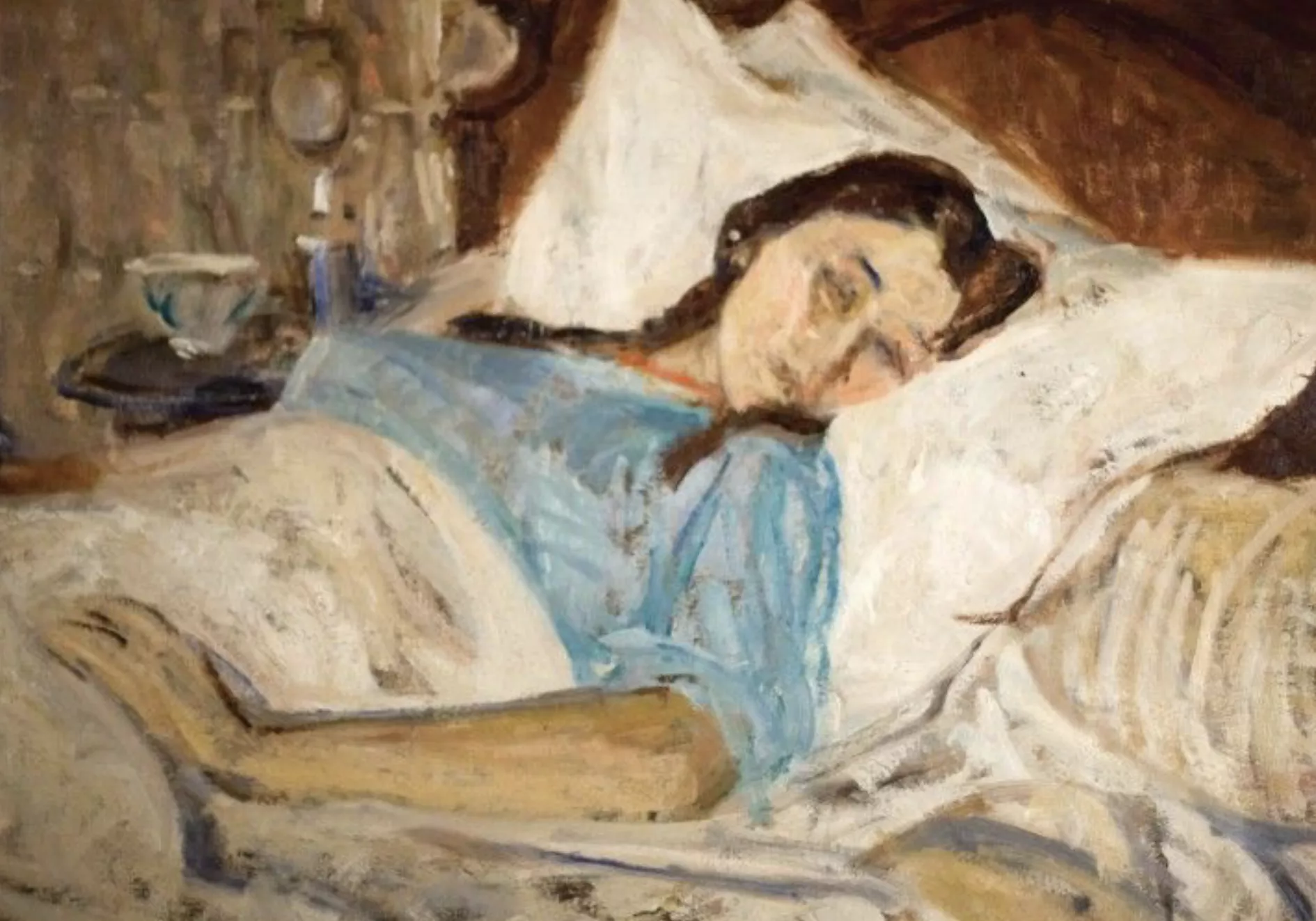
Signature, Provenance, and Authenticity: The Pillars of Valuation
Signature and Catalog Raisonné: Their Impact on Value
The authentication of an Expressionist work relies on comparing the signature with the artist’s documented signatures from various periods, as well as consulting catalogs raisonné.
The catalogs of Die Brücke, published since the 1950s by specialized German institutions, and the works devoted individually to Kirchner, Nolde, Schmidt-Rottluff, and Heckel, constitute the standard attribution tools on which auctioneers systematically rely.
For Neo-Expressionism, the artists’ foundations and the galleries that represented them are considered authoritative sources.
Level of documentation | Impact on value |
Work listed in the artist’s catalogue raisonné | Maximum guarantee; very significant premium on value |
Certificate of authenticity from the artist’s foundation or gallery | Essential guarantee; significantly increases value |
Work published in a monograph or major exhibition catalog | Strong scholarly endorsement; significant appreciation in value |
Written appraisal by a recognized specialist in the artist’s body of work | Good guarantee; facilitates the sale |
Documented provenance from the original gallery | Solid foundation; direct traceability to the artist |
Work with no documentation or means of verification | Increased uncertainty; conservative estimate |
Provenance and Condition: Their Impact on the Estimate
The provenance of an Expressionist work is an essential factor in building trust, all the more decisive given that this market was directly affected by the confiscations and destructions carried out by the National Socialist regime as part of its campaign against so-called “degenerate” art between 1933 and 1945.
A work whose provenance can be traced both before and after this period—demonstrating that it circulated legally—enjoys legal certainty and commercial legitimacy that buyers value particularly highly in this segment.
The condition of the artwork requires special attention for oil paintings from this period—which were sometimes painted on makeshift supports—and for works on paper, which are sensitive to humidity and temperature fluctuations.
Sell an Expressionist Work at Auction with Auctie's
From the reserve price to the hammer price: how the price is determined
Auction is the most suitable method for selling high-quality Expressionist works in a market where the emotional power of these paintings can simultaneously spark a desire to acquire them among multiple collectors, leading to fierce competition.
The reserve price, set in consultation with the seller, must be attractive enough to spark a bidding war, without, however, limiting the ambitions of sellers who possess a major, well-documented piece.
Hôtel Drouot and Online Auctions: Reaching the Right Bidders
Auctie’s holds its auctions at Hôtel Drouot, which regularly hosts specialized sales of modern art and Expressionism, attracting German, American, and Asian collectors who are particularly active in this segment. Real-time online streaming makes it possible to reach bidders from around the world—an essential aspect of such a globalized market.
Estate Planning, Inheritance: Valuing an Inherited Expressionist Painting
Inventory and Distribution of an Estate
Expressionist works are sometimes found in the estates of families whose ancestors may have acquired these pieces directly from the artists or their galleries in the first half of the 20th century, a time when these paintings had not yet reached their current market values.
An inherited Expressionist painting may be worth considerably more than the heirs realize. Auctie’s works alongside notaries to compile rigorous estate inventories, paying particular attention to questions of provenance, which are crucial in this historically sensitive field.
Confidentiality and Anonymity
Auctie’s handles every case with absolute discretion. The owner’s identity is never disclosed to third parties without their explicit consent, and works can be offered for sale under complete anonymity if the consignor so desires.
Estimate in less than 24h
Glossary of Expressionism Ratings and the Market
Term | Definition |
Valuation | The estimated market value of a work, determined based on auction results and demand. |
Expressionism | An artistic movement of the early 20th century that prioritized emotional intensity over faithful representation. |
Die Brücke | An Expressionist group founded in Dresden in 1905 (Kirchner, Nolde, Heckel, Schmidt-Rottluff). |
Der Blaue Reiter | An Expressionist group founded in Munich in 1911 (Kandinsky, Franz Marc, Macke). |
Engraving | A printing technique using a plate engraved in intaglio or relief (wood, metal). |
Attribution | The degree of certainty regarding the author of a work, which is a determining factor in its value. |
Provenance | The history of ownership of a work, which is a key factor in determining its authenticity and market value. |
Sold | The awarding of a lot to the highest bidder at the conclusion of an auction, establishing the final sale price. |
Have your Expressionist painting appraised by Auctie's
Expressionism, a founding movement of modern art, continues to fascinate collectors worldwide with the emotional power of its works.
Accurately identifying a composition’s place in an artist’s chronology, verifying the consistency of a signature with documented works, and assessing the rarity of a print’s condition: these are all specialized skills that Auctie’s offers you free of charge.
The appraisal is free, with no obligation, and you’ll receive a response within 24 hours.
Discover in the same theme

Rating and value of paintings by Pekka Halonen
Pekka Halonen is a Finnish national-romantic painter, close to Impressionism, who has produced works that are quoted at auction.
Learn more >

Rating and value of paintings by Gabriele Münter
Gabriele Münter is an Expressionist artist who has produced many works that are highly valued at auction. 24h estimate
Learn more >

Rating and value of paintings by Pierre Grieud
Pierre Grieud is a painter of the first half of the 20th century, who worked with several currents. His works are listed at auction.
Learn more >
Estimate in less than 24h
Frequently asked questions
-
Quelles sont les fourchettes de prix pour une œuvre expressionniste ?Les prix varient considérablement selon l'artiste, la technique et le format. Un dessin d'expressionniste allemand de second rang se situe entre 2 000 et 20 000 euros, une gravure sur bois entre 5 000 et 80 000 euros, tandis qu'une grande peinture d'un maître comme Kirchner ou Nolde dépasse plusieurs centaines de milliers d'euros. Les expressionnistes abstraits américains majeurs atteignent quant à eux plusieurs dizaines de millions d'euros en vente internationale.
-
Comment authentifier une œuvre expressionniste et connaître sa valeur actuelle ?Contactez Auctie's pour une estimation gratuite et confidentielle réalisée par un commissaire-priseur agréé spécialisé. Nous analysons la signature, consultons les catalogues raisonnés de référence, vérifions la provenance et examinons l'état de conservation. Une réponse précise vous est apportée en moins de 24 heures sur la base de photographies nettes et des dimensions de votre œuvre.
-
Quel est le rôle de la provenance et de la documentation dans la valeur d'une œuvre expressionniste ?La provenance est déterminante, particulièrement pour les œuvres de cette période affectée par les confiscations entre 1933 et 1945. Une traçabilité établie avant et après cette période garantit une sécurité juridique importante. L'inscription au catalogue raisonné de l'artiste, un certificat d'authenticité de la fondation, ou une provenance documentée depuis la galerie d'origine valorisent significativement l'œuvre.
-
C'est maintenant le bon moment pour vendre une œuvre expressionniste ?Oui, le marché de l'expressionnisme reste très actif et international, notamment pour les gravures sur bois, les dessins de maîtres reconnus et le néo-expressionnisme. La demande institutionnelle et celle des collectionneurs spécialisés restent soutenues. Auctie's accompagne le vendeur de l'estimation gratuite à l'adjudication, maximisant ainsi l'exposition de votre œuvre.
-
Comment se déroule la vente d'une œuvre expressionniste chez Auctie's ?Auctie's gère l'ensemble du processus : estimation gratuite et sans engagement par un expert commissaire-priseur agréé, conseil sur la préparation et la documentation de l'œuvre, puis mise en vente aux enchères avec visibilité auprès d'acheteurs nationaux et internationaux. Nous veillons à la traçabilité et à la conformité légale, particulièrement importante pour les œuvres expressionnistes.
