



Rating and value of drawings and paintings by Édouard Pignon

Key takeaways
- Works by Pignon sold at auction for between €10 and €65,550, with oil on canvas being the most sought-after segment of the market.
- An Expressionist painter (1905–1993) who was close to Picasso for three decades; his involvement in the Resistance and his serial themes enhance his appeal to collectors.
- Valuation requires expert assessment of authenticity and the specific series, as value depends largely on the identifiable series and the work’s position within it.
Édouard Pignon’s paintings and drawings sell for up to €65,550 at auction. An appraisal allows us to accurately determine the current market value of your Édouard Pignon artwork and, if applicable, optimize the sale of the piece.
If you own a work by Édouard Pignon and would like to know its value, our state-certified auctioneers will provide a free appraisal based on authenticity, market rating, and recent market results.
Artist’s Market Value and Reputation
Édouard Pignon is a highly regarded Expressionist artist; his works fetch significant sums on the auction market.
Today, the prices at which his works are sold at auction range from €10 to €65,550—a considerable range that speaks volumes about the value that can be attributed to Pignon’s works.
Sought after by collectors, Édouard Pignon’s works can fetch tens of thousands of euros at auction, as evidenced by his 1975 oil on canvas *Le nu blanc écartelé*, which sold for €65,550, having been estimated at between €22,000 and €30,000.
Ranking of value from the most basic to the most prestigious
Technique used | Result |
|---|---|
Print - multiple | From €10 to €2,200 |
Drawing - watercolor | From €30 to €18,500 |
Painting | From €10 to €65,550 |
Estimate in less than 24h
Placing the Artist in Context
Period
Édouard Pignon (1905–1993) was a painter, ceramicist, and communist resistance activist. His career spanned nearly the entire 20th century, reflecting all of its major political and artistic movements.
His journey was marked by a defining break with the working-class milieu; born in Pas-de-Calais, he worked in the mines during his youth, then in a factory from 1920 to 1927. After completing his military service, he moved to Paris in 1927, took painting classes at the École du boulevard Montparnasse, and began studying applied arts at the Université ouvrière.
His artistic training was nourished by his self-taught and assiduous study of the great masters: at the Louvre, he copied works by Delacroix, Tintoretto, El Greco, Veronese, Rubens, and Rembrandt, thereby building a visual culture rooted in the European tradition.
Two pivotal encounters shaped his career: on the one hand, his commitment to communism in 1933 and his meeting with Picasso in 1936 were decisive for his painting, which he conceived from that point on as a quest for reality.
Artistic Movements
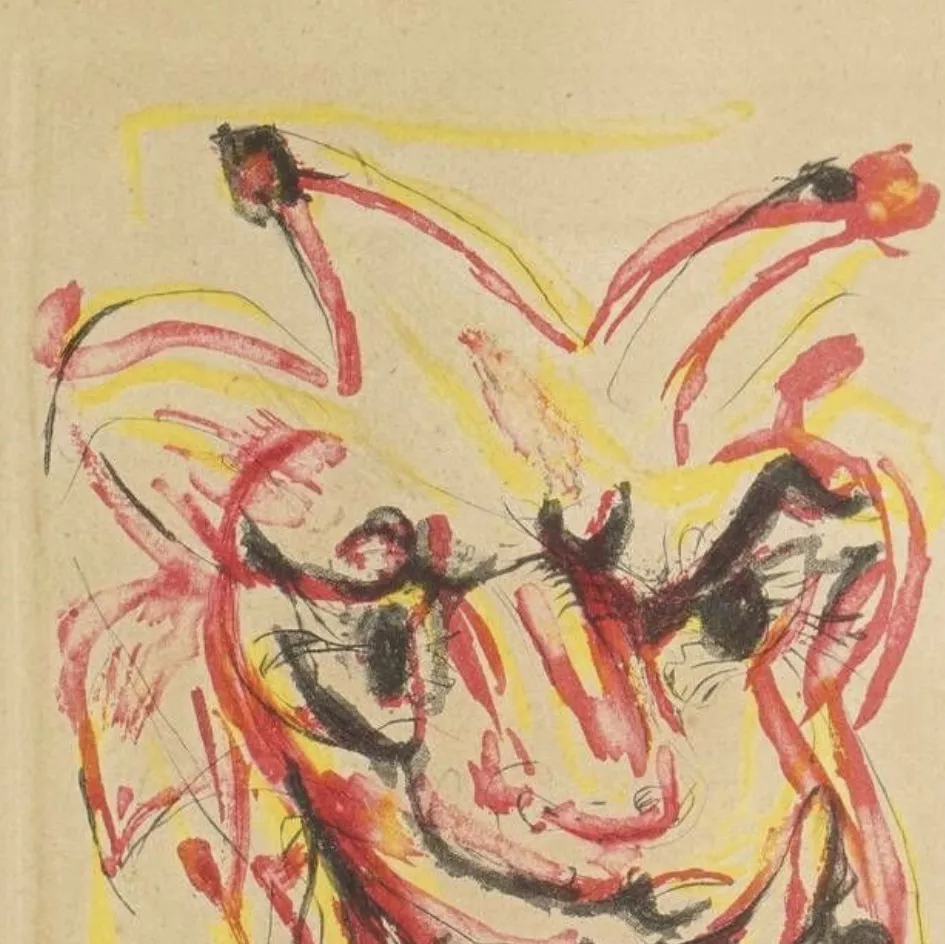
Pignon occupies a unique and uncompromising position in the debate between figuration and abstraction that dominated the postwar Parisian art scene. Alongside Picasso, with whom he remained close for three decades, he fought in the 1950s against the dogmatism of Socialist Realism, without, however, aligning himself with his non-figurative painter friends with whom he frequently exhibited.
His stance was that of a critical figurative artist, a position he theorized himself: he asserted that he had not “returned” to figuration under any influence, but that he had always remained within it without actually being there, since the term itself meant nothing.
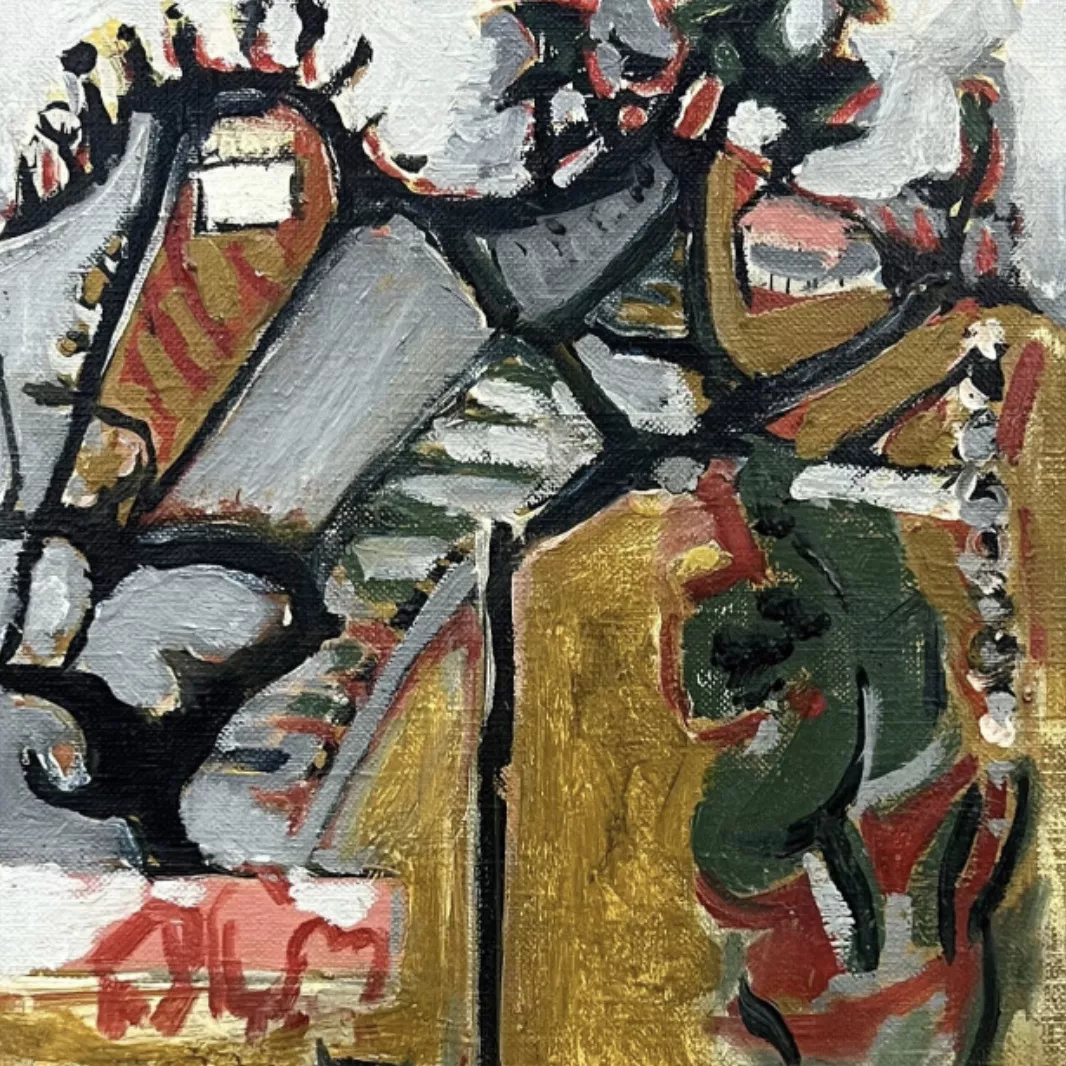
His early work was part of the Cubist movement, before evolving into a personal synthesis: at age 30, when he painted his *Meeting* series or his first *Dead Worker*, he drew on Cubism, using flat areas of color, thick outlines, and the golden ratio.
He was one of the “Twenty Painters of the French Tradition” who exhibited at the Braun Gallery in Paris in 1941, a group that practiced a form of art close to abstraction while remaining rooted in visible reality. His political commitment had a lasting influence on his subject matter without ever reducing his work to propaganda.
The Life of Édouard Pignon
Cultural Background
Born into a family of miners, he worked as a miner himself before taking on other manual labor jobs in the construction industry. Upon arriving in Paris in 1927, he held various odd jobs—as a skilled laborer and a photo retoucher—while taking evening painting classes at the Montparnasse School.
His initial reaction to modern art was to turn to Cézanne, then Picasso, Matisse, and Fernand Léger—whom he discovered in Parisian museums and galleries—and who would steer his painting toward a colorful and structured figurative style, far removed from both academic naturalism and pure abstraction.
He joined the Communist Party in 1933 and became involved with the Association of Revolutionary Artists and Writers, focusing on “social art,” with a deep political commitment that permeated his subjects (miners, workers, those executed by firing squad, dead workers), though this did not lead him toward socialist realism.
Intellectual Circle
During the Occupation, his home became a gathering place, a waystation, and a shelter for members of the Resistance. Aragon and Elsa Triolet stayed there for a time, making him a hub in the network of communist intellectuals involved in the cultural Resistance.
In 1947, he became friends with Jean Vilar, whom he met regularly along with Léon Gischia and Mario Prassinos. That same year, he moved to the 14th arrondissement with Hélène Parmelin, a communist journalist and novelist who was the director of the cultural section of *L’Humanité*.
In 1951, at Picasso’s invitation, he traveled to the Fournas studio in Vallauris, where more than two hundred ceramic pieces were created; these were exhibited as early as 1954 at the Maison de la Pensée française, in direct collaboration with Picasso on the claywork.

FAQ: How do you appraise a work by Édouard Pignon?
1) Why does Pignon work in series, and how does this principle influence the valuation of his work?
This principle of seriality becomes clearly evident starting with the Ostend period. In all his series, across all his themes, Pignon sought to depict the articulations of the visible. Each work belongs to an identifiable series, and its value depends largely on the specific series and its place within that series.
2) How did Pignon sign his works?
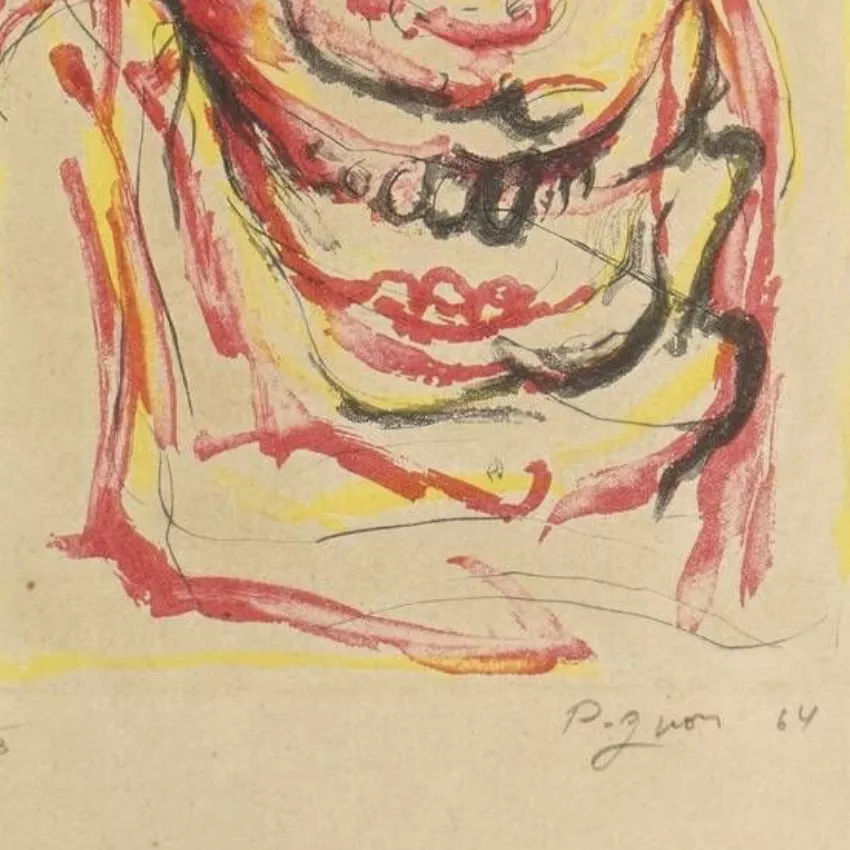
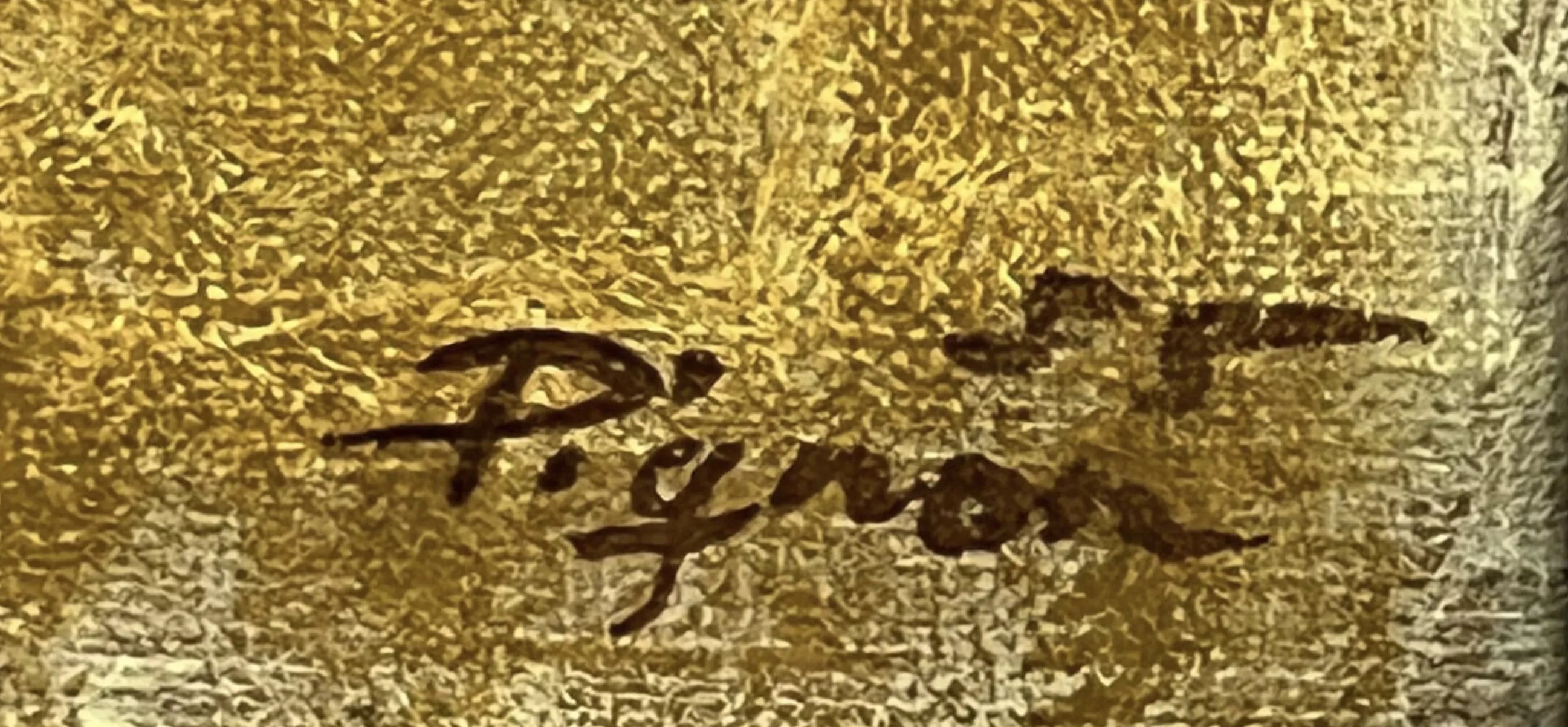
The artist’s usual signature is “Pignon,” handwritten in the lower right or left corner, sometimes accompanied by a date. Some canvases bear the series title, the date, and notes by the artist or his wife on the back.
3) Why is Hélène Parmelin an important figure in documenting the artist’s work?
Pignon was married to the art critic Hélène Parmelin. The author of several books on her husband and on Picasso, she documented, dated, and annotated a large portion of his body of work. Her publications are essential bibliographic references for identifying and dating the series.
Market Segmentation and Figures
Prices of Works
The market for Pignon’s works shows a clear price stratification based on the medium: signed and numbered prints sell for between €300 and €1,500, depending on rarity and condition. Oil-on-canvas works, the premier medium, constitute the most competitive segment at auction.
The presence of 921 lots recorded in auction databases—465 of which have realized prices—attests to a robust and well-documented secondary market. French auction houses clearly dominate transactions.
Factors Driving Value
His close personal relationship with Picasso, maintained over three decades, is the primary source of critical and commercial legitimacy: Pignon fought alongside Picasso in the 1950s against the dogmatism of Socialist Realism, and it was thanks to Picasso that he moved to Vallauris.
His documented involvement in the Resistance, including the clandestine founding of the National Front of the Arts in 1943, lends his work an ethical and historical dimension that is likely to enhance its appeal to institutions and collectors sensitive to the legacy of the Resistance.
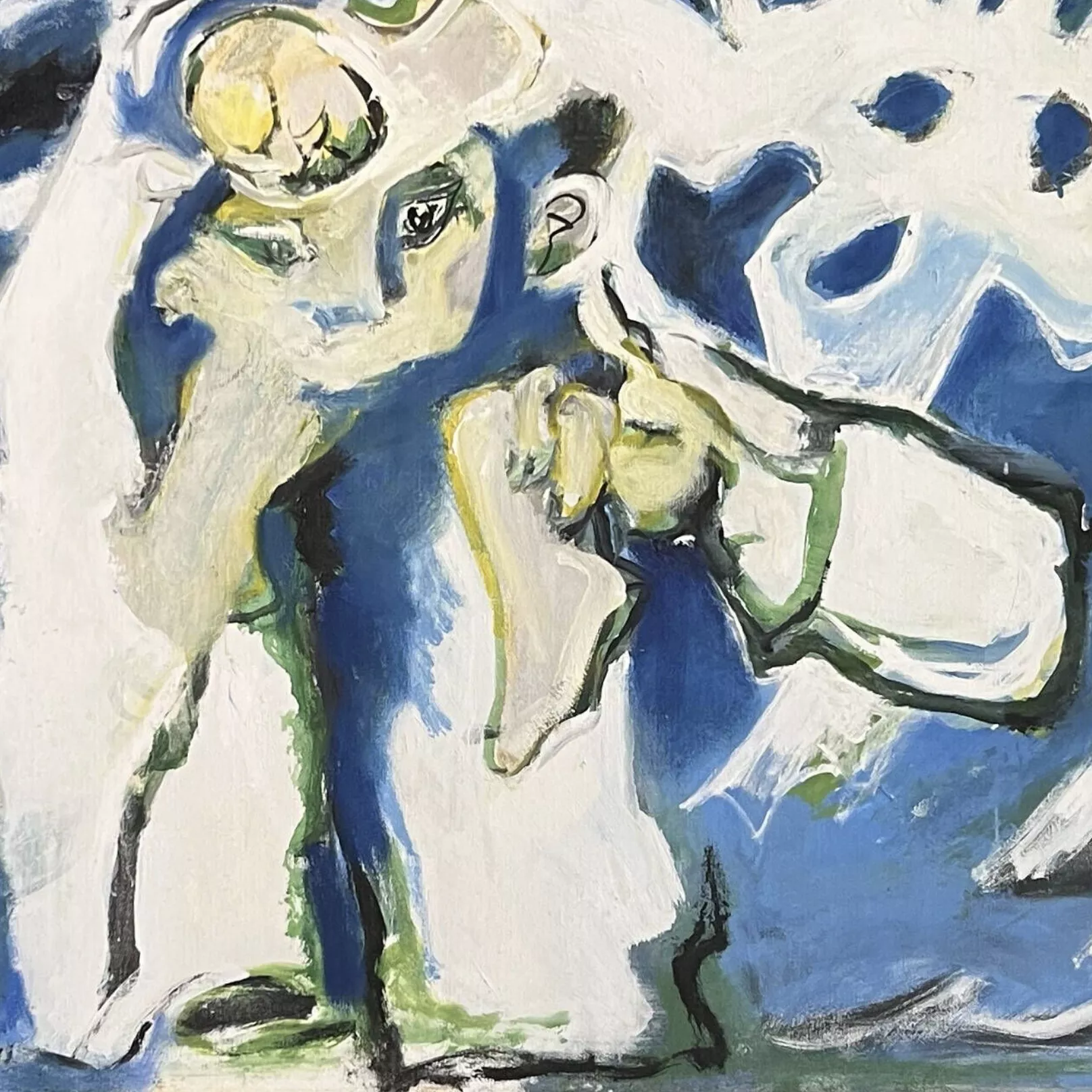
The serial nature of his work, centered on the hardships of the working class, ship sails, olive tree trunks, cockfights, and divers, ensures immediate iconographic clarity and a thematic diversity that broadens the spectrum of potential collectors, from lovers of expressionist figurative art to specialists in socially engaged art.
His signature
Not all of Édouard Pignon’s works are signed.
Although there are variations, here is an example of his signature:
Get Your Édouard Pignon Artwork Appraised
If you own a work by Édouard Pignon, an appraisal will help you determine its current market value.
Using our online form, our experts and certified auctioneers will conduct a free appraisal and provide you with a reliable estimate of your artwork’s market value.
If you’re considering selling it, we’ll guide you through the process to ensure you get the best possible price.
Estimate in less than 24h
Nos records d'enchères à l'hôtel Drouot

Estimated 10.000 - 15.000 €
Ebridge Ayer BURBANK(1858-1949), Young African-American boy, Oil on panel.

Estimated 20.000 - 30.000
EXCEPTIONAL LARGE OVAL DISH IN VINCENNES SOFT PASTE PORCELAIN FROM THE "BLEU CÉLESTE" SERVICE OF KING LOUIS XV AT THE CHÂTEAU DE VERSAILLES

Estimated 20.000 - 30.000
MANUFACTURE ROYALE DE SÈVRES, 18th century "L'Empereur de la Chine" - Portrait of the Emperor Qianlong, Hard porcelain bisque, 1775

Estimated 1.500 - 3.000
HERMÈS, "Kelly" 32 saddle bag in black box calf

Estimated Between €5,000 and €8,000
KRACHKOWSKY (1854-1914), Before the storm, oil on canvas

Estimated 40.000 - 80.000
Alexandre ROUBTZOFF (1884-1949), Portrait of Arbia, oil on canvas
Discover in the same theme

Rating and value of Andy Warhol's works, collages, silkscree...
Andy Warhol is an American artist who worked with pop art. He produced many of the collages and silkscreens prized at auction.
Learn more >

Rating and value of sculptures and bronzes by Georges Lavrof...
Georges Lavroff is a twentieth-century Russian animal sculptor whose works are highly prized at auction.
Learn more >

Rating and value of paintings by Louis Icart
Louis Icart is an Art Deco painter who produced works that are listed and valued on the auction market. Estimated in 24h.
Learn more >

Secure site, anonymity preserved

Auctioneer approved by the State

Free and certified estimates
Frequently asked questions
-
Who is Édouard Pignon, and what is his artistic background?Édouard Pignon (1905–1993) was a painter, ceramicist, and communist resistance activist whose career spanned nearly the entire 20th century. Born into a family of miners, he moved to Paris in 1927 and developed a unique form of critical figurative art, influenced by his encounter with Picasso in 1936 and his deep political commitment. He maintained an uncompromising stance between figuration and abstraction, working in thematic series (miners, workers, ship sails, olive trees) without ever reducing his work to propaganda.
-
What are the price ranges for Pignon's paintings and drawings at auction?Pignon’s works range in price from €10 to €65,550, depending on the medium and series. Multiple prints sell for between €10 and €2,200, watercolor drawings from €30 to €18,500, and paintings (the most sought-after category) from €10 to €65,550, with oil-on-canvas works regularly fetching tens of thousands of euros. This variation reflects the importance of the series, the technique, and the work’s place within the artist’s body of work.
-
How can you authenticate a work by Pignon and determine its value?To authenticate a work of art and determine its exact value, request a free appraisal from Auctie's. Our state-certified auctioneers will conduct a no-obligation appraisal based on authenticity, the signature (usually “Pignon” handwritten in the lower right or left corner), the series, the date, and recent market trends. The documentation provided by Hélène Parmelin, the artist’s wife, serves as an essential reference for identifying and dating the series.
-
Why is now the right time to sell a work by Pignon?The Pignon market shows significant trading activity, with 921 lots recorded in sales databases, 465 of which have documented results, attesting to sustained demand. Collectors’ interest in Expressionist figurative art, socially engaged art, and the legacy of the Resistance remains strong, while Pignon’s historical and artistic ties to Picasso and his role in the cultural Resistance continue to enhance his appeal to institutions and collectors.
-
How does the appraisal and sale process work at Auctie's?The appraisal is free and non-binding: you fill out an online form, our experts conduct the appraisal, and provide you with a reliable estimate of your artwork’s market value within 48 hours. If you’re considering a sale, Auctie’s will guide you from the appraisal through to the auction to ensure you get the best possible price for your Pignon painting or drawing. We tailor our sales strategy based on the series, the condition of the work, and recent market trends.
