



Rating and value of drawings and paintings by Frédéric Benrath

Key takeaways
- Frédéric Benrath’s works sell for between €15 and €12,500, with prices rising steadily since the 1990s.
- He was the founding painter of Nuagism, a French lyrical abstract movement of the 1950s, recognized by André Malraux and René Char as early as 1956.
- Oil-on-canvas paintings are the most valuable category (€50 to €12,500), while drawings and watercolors sell for between €30 and €2,000.
Frédéric Benrath’s paintings and drawings sell for up to €10,000 at auction. An appraisal allows us to accurately determine the current market value of your Frédéric Benrath artwork and, if applicable, optimize the sale of the piece.
If you own a work by Frédéric Benrath and would like to know its value, our state-certified auctioneers will provide a free appraisal based on authenticity, market rating, and recent market results.
Artist’s Market Value and
Reputation
A versatile painter, Frédéric Benrath won over critics, art dealers, and collectors of his time. Since then, the artist’s works have established themselves as safe bets in the art market.
Starting in the 1990s, his market value skyrocketed and has shown steady growth, particularly for his works created from the 1950s onward.
As a result, the prices at which Benrath’s works sell range from €15 to €12,500. In 2009, an oil on canvas from 1961 titled *Les grands itinérants du songe* sold for €12,500, despite an estimate of between €3,500 and €4,000.
Ranking from the most basic to the most prestigious
Technique used | Result |
|---|---|
Print - multiple | €15 to €200 |
Drawing - watercolor | From 40 to 1,200 € |
Painting | From 50 to 12,500 € |
Estimate in less than 24h
Placing the Artist in Context
Period
Philippe Gérard, known by the pseudonym Frédéric Benrath from 1954 onward (1930–2007), was a painter whose career spanned the second half of the 20th century, a period marked by the flourishing of lyrical abstraction in France and Europe.
The very choice of his pseudonym reveals a deliberate stance regarding his identity and aesthetic: in 1953, during his first trip to Germany, Benrath Castle inspired his artist name; he chose the first name Frédéric as a tribute to Friedrich Nietzsche and the painter Caspar David Friedrich.
His artistic training followed a path that blended classical tradition with an openness to modernity: he studied at the École des Beaux-Arts in Toulon, developed an interest in classical painting, and studied the work of Paul Cézanne in Aix-en-Provence.
Artistic Movements
Benrath is primarily associated with Nuagism, a movement within French lyrical abstraction of which he is one of the leading figures; in 1973, he himself organized the exhibition “Le nuagisme même” at the Musée des Beaux-Arts in Lyon, bringing together the movement’s leading figures, such as René Duvillier, René Laubiès, Marcelle Loubchansky, and Beauford Delaney.
His work lies at the crossroads of German Romanticism and American abstraction. Drawing on his admiration for German Romanticism and his fascination with the serial music of Pierre Boulez, he created a body of work directly influenced by Rothko.
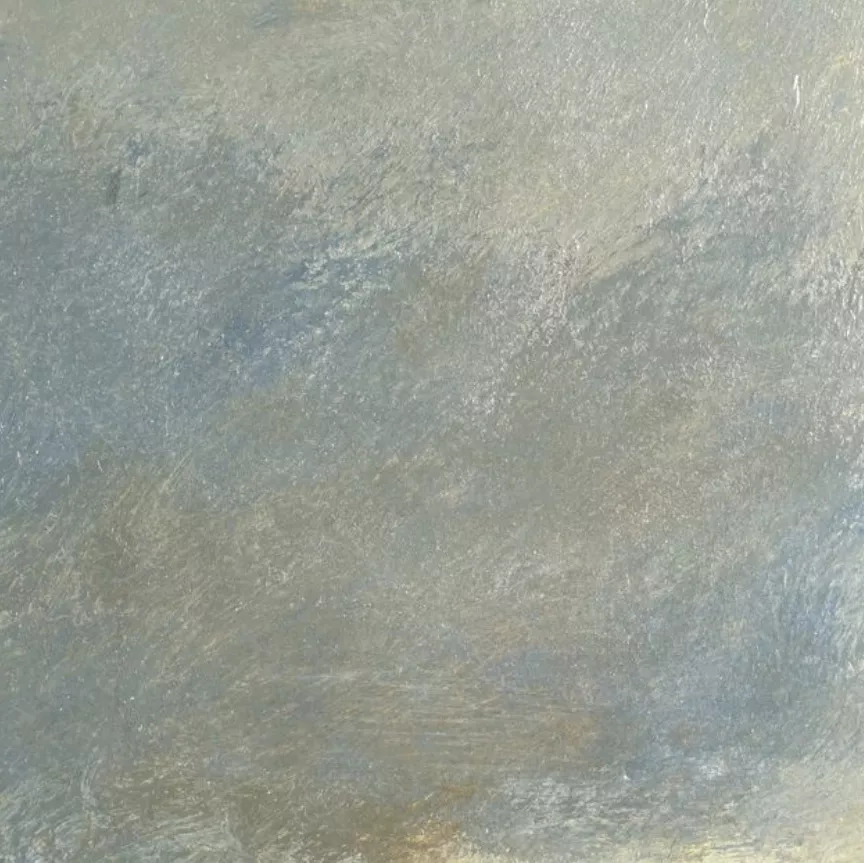
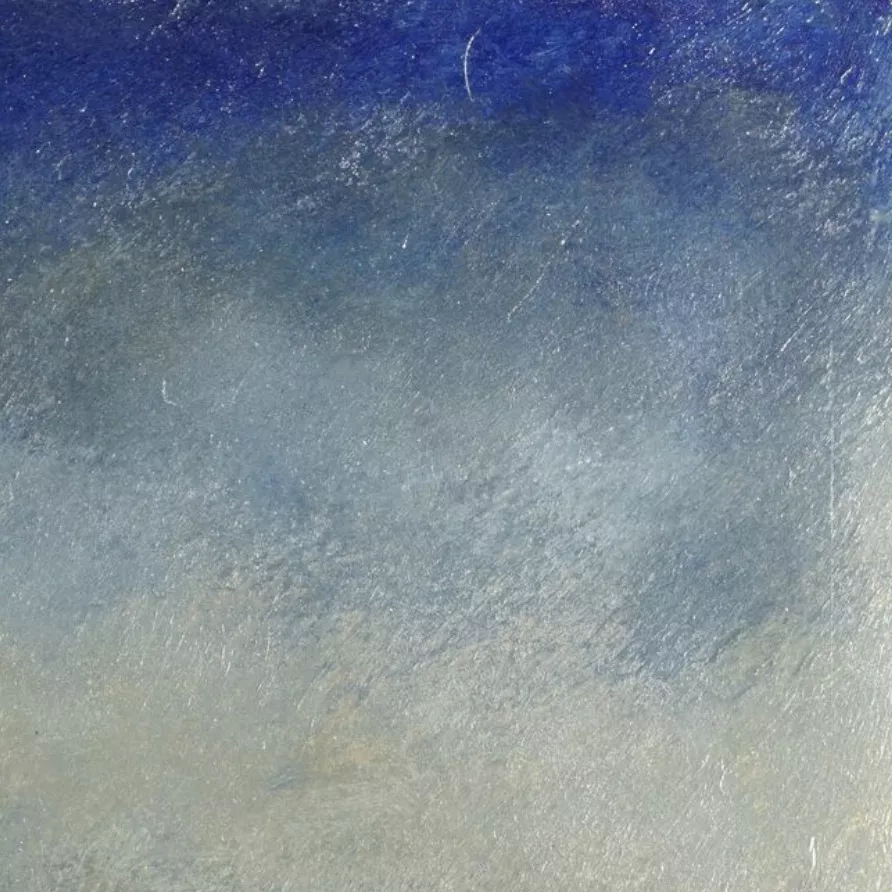
His approach stems from a philosophical conception of color as interior space. As early as the 1950s, his thinking touched on the “Formless”—the absolute realm of painting and color—devoid of graphic signs or narrative elements, but filled with colored vibrations.
In the 1960s and 1970s, he evolved toward a deliberate chromatic radicalization, creating paintings through broad, diffuse brushstrokes using warm, luminous colors that contrast with darkened backgrounds.
The Life of Frédéric Benrath
Cultural Background
Born in Chatou, he studied at the École des Beaux-Arts in Toulon, developed an interest in classical painting, and studied the work of Cézanne in Provence—a southern education that preceded his definitive establishment in the world of postwar abstraction in Paris.
He adopted the pseudonym Benrath in 1953 at the age of 23. He struggled to make a living with odd jobs in Parisian theaters, a milieu that provided him with numerous encounters and immersed him in a vibrant artistic and intellectual scene, at the crossroads of the performing and visual arts.
In 1959, the “Yann” exhibition at the Galerie Breteau brought together Benrath, Manuel Duque, René Duvillier, and Fernando Lerin: it was on this occasion that the term “nuagisme” first appeared, initially used by a critic to mock this style of painting, before being adopted by the group as a defining label.
Artistic and Intellectual Circle
In 1953, he met Julien Alvard, a critic for the magazine *Art d’aujourd’hui*, with whom he remained very close until Alvard’s death in 1972: It was Alvard who offered to write the preface for his first exhibition at the Galerie de Beaune, run by Suzanne de Coninck, who introduced him to the Parisian abstract art scene.
In 1956, he met René Char and the philosopher Stéphane Lupasco, who would write the preface for his exhibition at the Prismes Gallery, drawing a connection between the dialectical concept of energy and the practice of painting conceived as a field of contradictory forces.
He later met the philosopher Jean-Noël Vuarnet, who encouraged him to revisit Nietzsche and guided him through an in-depth reflection on his painting, extending—until the end of his life—the dialogue between pictorial practice and philosophical thought that characterizes his entire body of work.
Market Segmentation and Artist Rankings
Prices of Artworks
The market for Benrath’s works shows a wide range of prices depending on the medium and format: the selling price of a canvas ranges from €50 to €13,000, while drawings and watercolors sell for between €30 and €2,000—a stratification that reflects the hierarchy of media in this market segment.
Medium-sized oil paintings, such as *Blanc sans espace* (120 x 120 cm, 1998), estimated at between €3,000 and €5,000, regularly find buyers, confirming stable demand for the artist’s later works.
Factors Influencing Value
His founding membership in the “Nuagistes” group is the primary source of the work’s critical legitimacy. Benrath remained faithful to abstraction throughout his career, striving to capture the atmospheric qualities of transparency and depth that characterize this movement.
His recognition by his contemporaries, beginning in 1956 with a first exhibition at the Prismes Gallery praised by André Malraux and René Char, has firmly anchored his work in the history of postwar French lyrical abstraction and legitimized its appeal on the secondary market.
His posthumous institutional visibility, evidenced by solo exhibitions at leading heritage venues, helps maintain the artist’s critical reputation and sustain demand at auction.
FAQ – How do you estimate the value of a work by Frédéric Benrath?
1) Why is it important to know the artist’s real name for the valuation?
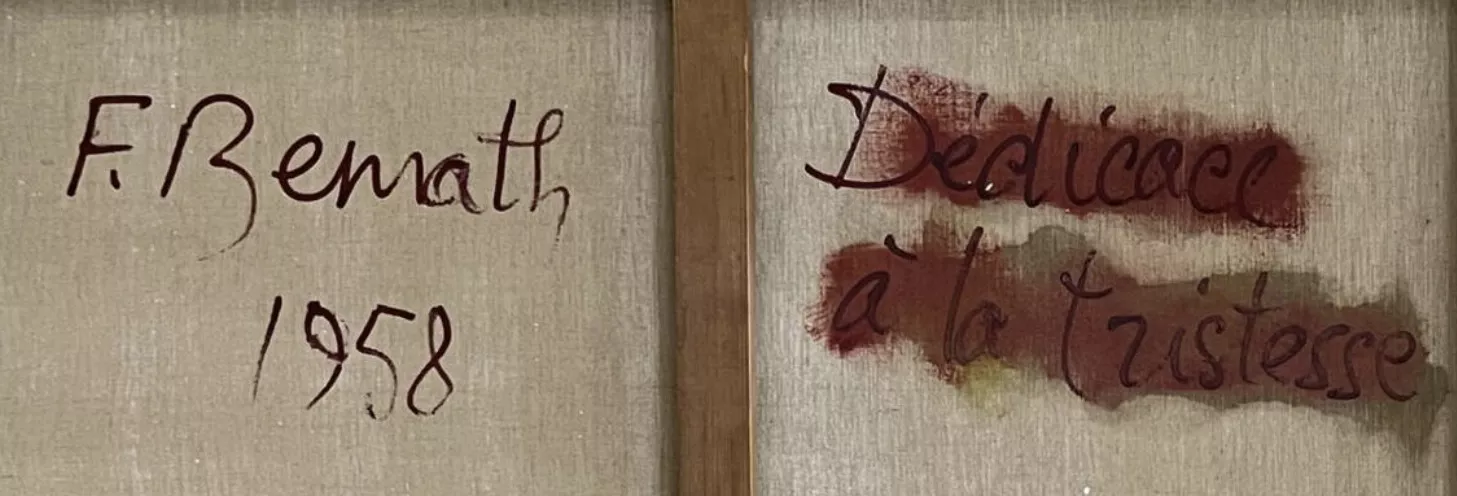
Philippe Gérard is known by his pseudonym, Frédéric Benrath. All of his works are signed “Benrath” or “F. Benrath,” and never with his real name.
2) What is Nuagism, and how does this movement influence the identification of a work by Benrath?
In 1959, an exhibition titled “Yann” was organized in Paris by the Galerie Breteau. It featured Frédéric Benrath, Manuel Duque, René Duvillier, and Fernando Lerin. It was on this occasion that the term “nuagism” first appeared, initially used by a critic to mock this style of painting.
3) Do the titles of Benrath’s works play a role in their valuation?
Titles serve as indicators of authenticity and cultural context. Benrath draws many of his titles from the poems of Arthur Rimbaud, Victor Hugo, Gérard de Nerval, and Rainer Maria Rilke.
His signature
Not all of Frédéric Benrath’s works are signed.
An example of his signature can be seen in the drawing below.
Get Your Frédéric Benrath Artwork Appraised
If you own a work by Frédéric Benrath, an appraisal will help you determine its current market value.
Using our online form, our experts and certified auctioneers will conduct a free appraisal and provide you with a reliable estimate of your artwork’s market value.
If you’re considering selling it, we’ll guide you through the process to ensure you get the best possible price.
Estimate in less than 24h
D'autres tableaux abstraits vendus aux enchères

Estimated 2.000 - 4.000
Serge POLIAKOFF (1900-1969), Composition en rouge et bleu. 1965, Lithograph

Estimated Between €5,000 and €8,000
Jean MIOTTE (1926-2016), acrylic on canvas

Estimated 3.000 - 5.000
Roberto MATTA (1911-2002), Composition, Gouache on canvas
Discover in the same theme

Rating and value of works, drawings, paintings by Suzanne Va...
Suzanne Valadon is a 20th-century artist who produced Impressionist and Naturalist works that are highly prized and sought-after at auction.
Learn more >

Rating and value of paintings by Gustave Loiseau
Gustave Loiseau is a twentieth-century post-impressionist painter whose works are highly prized at auction.
Learn more >

Ratings and values of paintings by Elisabeth Chaplin
Elisabeth Chaplin is a Franco-Italian artist who has produced works that are highly valued at auction. 24h estimate.
Learn more >

Secure site, anonymity preserved

Auctioneer approved by the State

Free and certified estimates
Frequently asked questions
-
Who is Frédéric Benrath, and what is his role in art history?Frédéric Benrath (pen name of Philippe Gérard, 1930–2007) was a leading French painter of lyrical abstraction in the second half of the 20th century. A leading figure in Nuagism, a movement founded in 1959, he created a body of work at the intersection of German Romanticism and American abstraction, particularly in dialogue with Mark Rothko. His work is based on a philosophical conception of color as interior space, without narrative elements or graphic signs.
-
What is the price range for Frédéric Benrath's works?Benrath's works range in price from €15 to €12,500, depending on the medium and size. Prints sell for between €15 and €200, drawings and watercolors for between €40 and €1,200, and paintings for between €50 and €12,500. This range reflects the hierarchy of media in the market for French lyrical abstraction.
-
How can you authenticate a work by Frédéric Benrath?To authenticate a work by Benrath, you can request a free appraisal from Auctie's, which allows our state-certified auctioneers and experts to verify its authenticity. They examine the signature (Benrath or F. Benrath), the titles—which are often taken from poets such as Rimbaud or Rilke—and compare the work with recent market results and its documented provenance.
-
Is this the right time to sell a work by Frédéric Benrath?Yes, this is a favorable time. Since the 1990s, Benrath’s market value has shown steady and consistent growth, particularly for his works from the 1950s onward. His posthumous institutional visibility and solo exhibitions at heritage venues maintain his critical reputation and consistently drive demand at auction.
-
How does the appraisal process work at Auctie's?The appraisal is free and non-binding. Simply fill out an online form with photos and information about your artwork. Our experts and certified auctioneers will analyze the artwork’s authenticity, technique, format, and recent market trends to provide you with a reliable estimate within 48 hours. If you’re considering selling, we’ll guide you through the process from the estimate to the auction.
