



Rating and value of paintings by Marcelle Loubchansky

Key takeaways
- Paintings by Marcelle Loubchansky (1912–1988) sell for between €80 and €10,500, with prices rising sharply since 2021.
- Her abstract oil-on-canvas paintings are particularly sought after by American buyers, especially her works from the 1950s and 1960s that explore transparency.
- The artist developed a unique technique involving the mixing of paint and gasoline directly on the canvas to create remarkable effects of light and shadow.
If you own a work by artist Marcelle Loubchansky or based on her work and would like to know its value, our state-approved experts and auctioneers will guide you.
Our specialists will carry out a free appraisal of your work, and provide you with an accurate estimate of its value on the current market.
Then, should you wish to sell your work, we'll direct you to the best possible arrangement to obtain the optimum price.
Rating and value of artist Marcelle Loubchansky
Marcelle Loubchansky is a well-known artist among contemporary art enthusiasts. Now, prices for her works are rising at the auctioneers' gavel.
Her oils on canvas are particularly prized, especially by American buyers, and the price at which they sell on the art market ranges from €80 to €10,500, a significant delta but one that speaks volumes about the value that can be attributed to the artist's works.
In 2021, his oil on canvas Abstract Composition dating from 1969 sold for €10,500, whereas it was estimated at between €1,000 and €1,500. Its value is rising sharply.
Order of value from the most basic to the most prestigious
Technique used | Result |
|---|---|
Drawing - watercolor | From €80 to €2,300 |
Painting | From €140 to €10,500 |
Estimate in less than 24h
The works and style of Marcelle Loubchansky
Marcelle Loubchansky (1917-1988) was born in Paris into an educated family. She first became interested in the sciences before turning to painting. She began with simplified figuration, influenced by the École de Paris, then rapidly evolved towards abstraction.
She frequented post-war artists and exhibited with Hans Hartung and Pierre Soulages. From the 1950s onwards, she superimposed layers of paint, creating plays of transparency and light. She sought to capture a space in motion, between balance and erasure.
Her works, often dominated by muted harmonies punctuated by brighter flashes, seem shot through with an inner breath. In the 1960s, her palette became purer, she worked in glazes and favored airier forms.
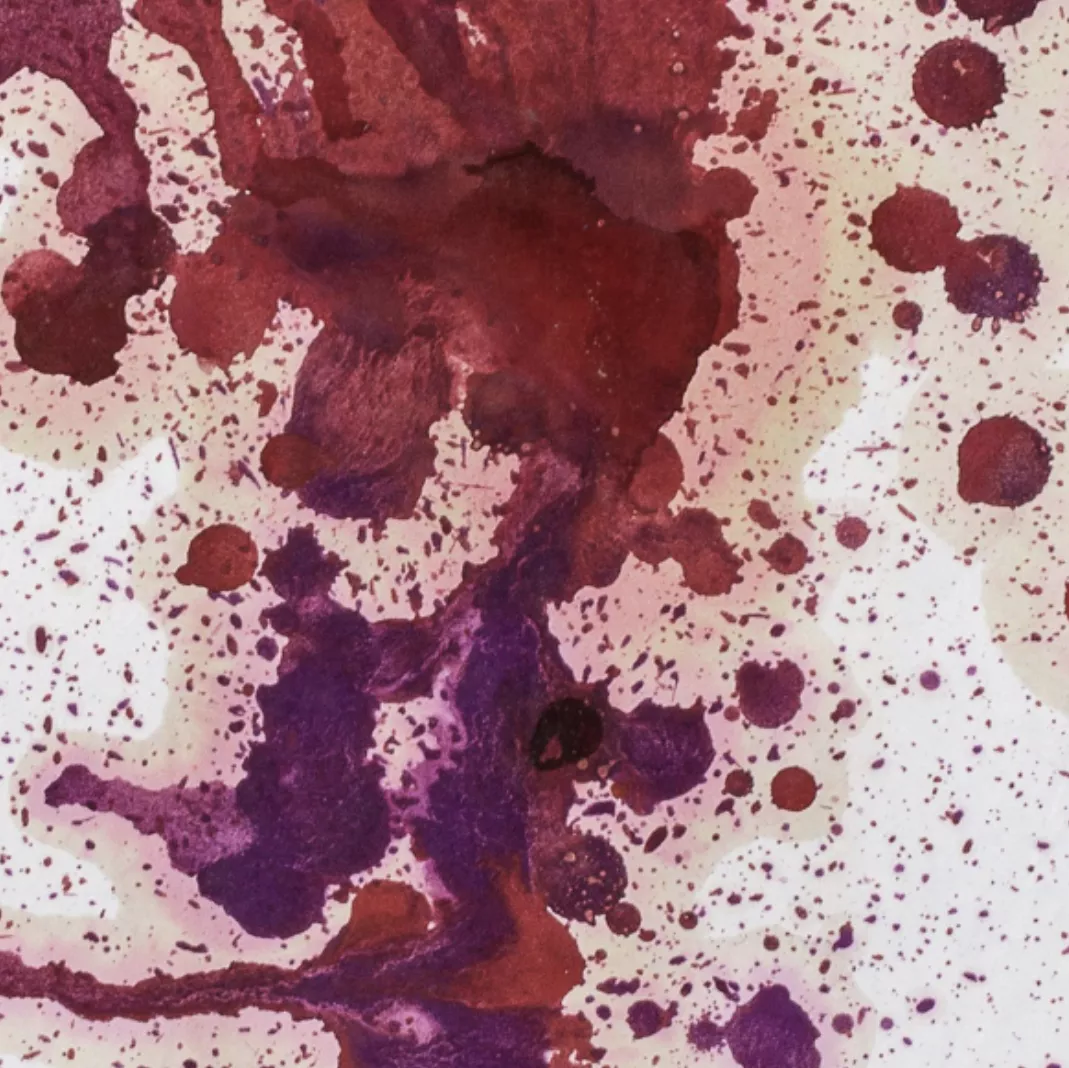
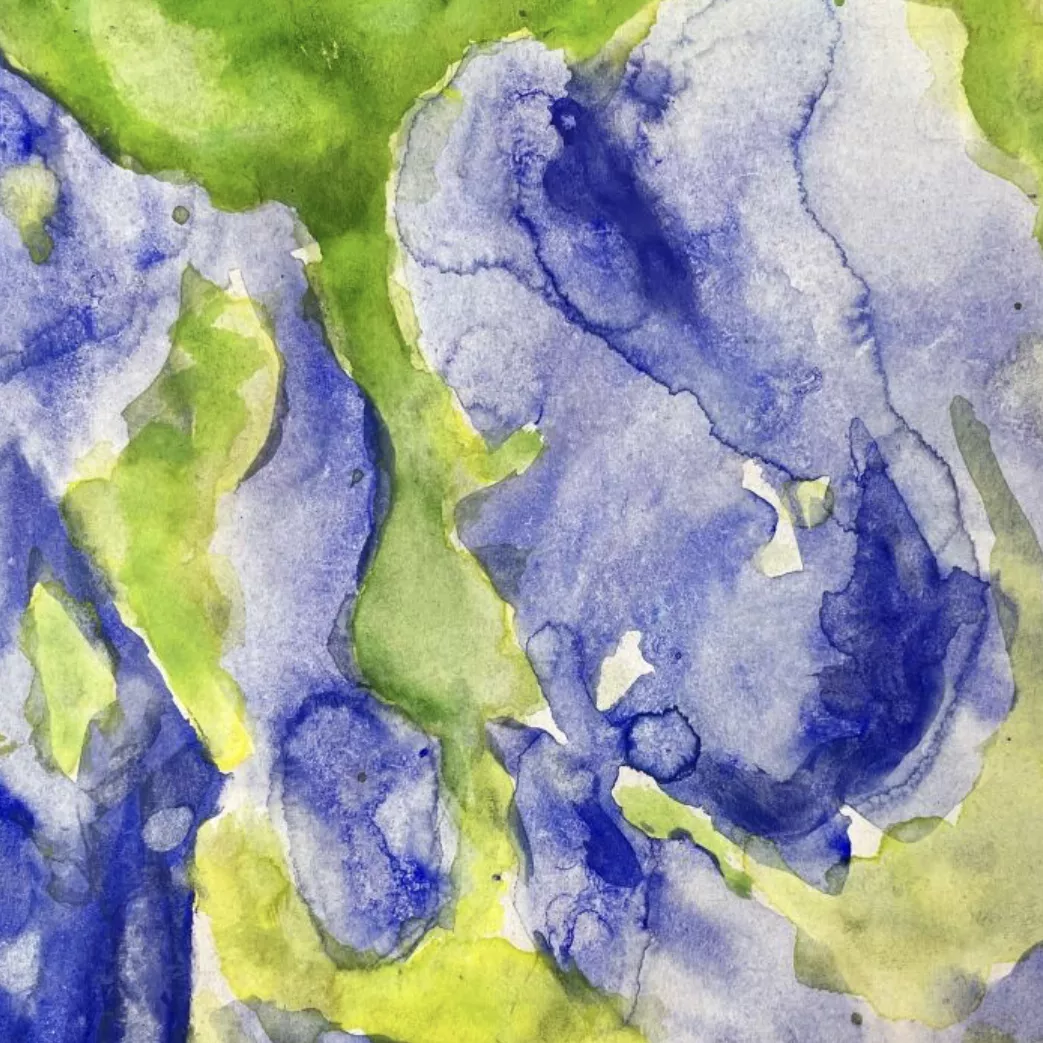
She also experimented with ink and wash on paper, where she explored the dilution of pigment and the impact of gesture on the material. At the end of her life, she favored more minimalist compositions, where matter almost disappeared behind the light.
The life of Marcelle Loubchansky
Marcelle Loubchansky (1912 - 1988) was a French artist who worked mainly in Paris, known for her lyrical abstraction.
She trained at the École des Beaux-Arts de Paris and then at the École supérieure des arts décoratifs. However, her studies were soon interrupted by the Second World War. She moved to Cannes during this period, where she became interested in working with ceramics.
Returning to Paris in 1946, she began producing abstract paintings again, and frequented many artists of her time, especially the Surrealist circle, including André Breton. Her work and connections brought her to the attention of art critic Charles Estienne and gallery owner Jean Fournier, who represented the artist throughout her life.
She first exhibited in Paris in 1948, thanks to the support of Camille Bryen. In 1950, she took part in the Salon des réalités nouvelles, and her first solo show was organized in 1951 at the Galerie Beaune, by Suzanne de Coninck.
In the early 60s, she developed a certain fluidity in her works and worked on transparencies - having first experimented with the superimposition of forms and uncertain graphics. From then on, she received international recognition.
In 1952, she helped organize the Salon d'octobre alongside Jean Degottex, René Duvillier, Alexandre Istrati, Jean Messagier and James Pichette. Although successful as a solo artist, she regularly exhibited collectively, notably at Galerie Babylone, but also abroad, in Edinburgh and then New York.
Charles Estienne, who was promoting tachism at the time, included her in large-scale exhibitions such as La coupe et l'épée, and Nouvelles propositions du réel.
She defended painting as first and foremost a form of self-expression, and promoted Surrealism, which she described as " one of the fundamental currents of our time ". Nevertheless, she builds her artistic approach within abstraction, which she sees as a necessary passage.
The artist wishes to achieve a synthesis of content and form, in the same process as the synthesis of surrealism and classicism. Her creative energy is high, and she produces works at a steady pace.
In 1954, she exhibits again for Alice in Wonderland at the Craven gallery. André Breton, who prefaced the catalog, wrote: " No one has been able as she has to liberate and give full expression to these forms born of the bosom of the earth and at the same time participating in the humidity of the flame, which attest to a new generation. "
She then developed a quite singular technique, consisting of mixing petrol and paint, which she would then pour directly onto the canvas. This enabled her to visually manipulate light and shadow, to obtain a result that would further deceive the viewer's eye.
Julien Alvard brought her into the Nuagiste group at the end of the 1960s, and she exhibited with them in the exhibition Le vide et l'obscurité, as well as in the exhibition Antagonismes, presented at the Musée des Arts Décoratifs in Paris.
The 1960s saw Loubchansky's work more intensely stripped down, while drawing closer to nature, particularly the themes of sun and sunset. She then worked with transparent colors, fairly intense pinks, yellows and reds.
In the 1980s, she took part in numerous group exhibitions, thanks in particular to Geneviève Bonnefoi. She died in 1988.
Marcelle Loubchansky's imprint on her period
Marcelle Loubchansky (1912 - 1988) was a French artist who belonged to the lyrical abstraction movement and whose work was characterized by a focus on transparency and fluidity of form.
As early as the 1950s, she developed a technique of mixing paint and gasoline to obtain particular material effects. She exhibited regularly thanks to the support of Charles Estienne and Jean Fournier, who accompanied her throughout her career.
In 1952, she took part in the Salon d'octobre alongside Jean Degottex and René Duvillier. From the 1960s onwards, she refined her compositions and moved towards brighter hues, with a predilection for yellows and pinks. Julien Alvard integrated her into the Nuagiste group, and she took part in several group exhibitions, including Le vide et l'obscurité.
Her work is recognized for its ability to capture the ephemeral and play on optical effects where color seems to float on the canvas. She influenced several artists of the following generation, notably those who explored the relationship between light and abstraction.
Her attachment to research into matter and the dissolution of form links her to a pictorial tradition in which gesture takes precedence over structure. Today, her work can be found in several public and private collections in France and abroad.
In the 1980s, she continued to paint and exhibit, thanks in particular to Geneviève Bonnefoi. She died in 1988, leaving behind a body of work marked by a constant search for fluidity and light.
Focus on Untitled, 1960, Marcelle Loubchansky
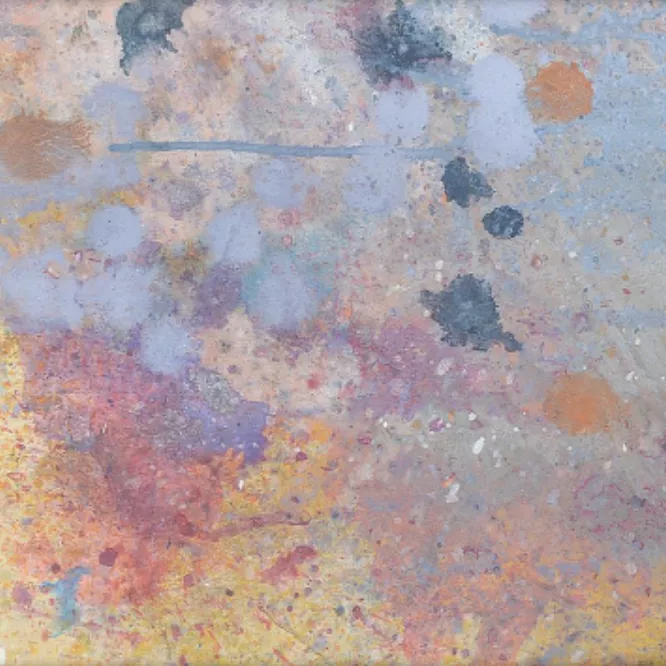
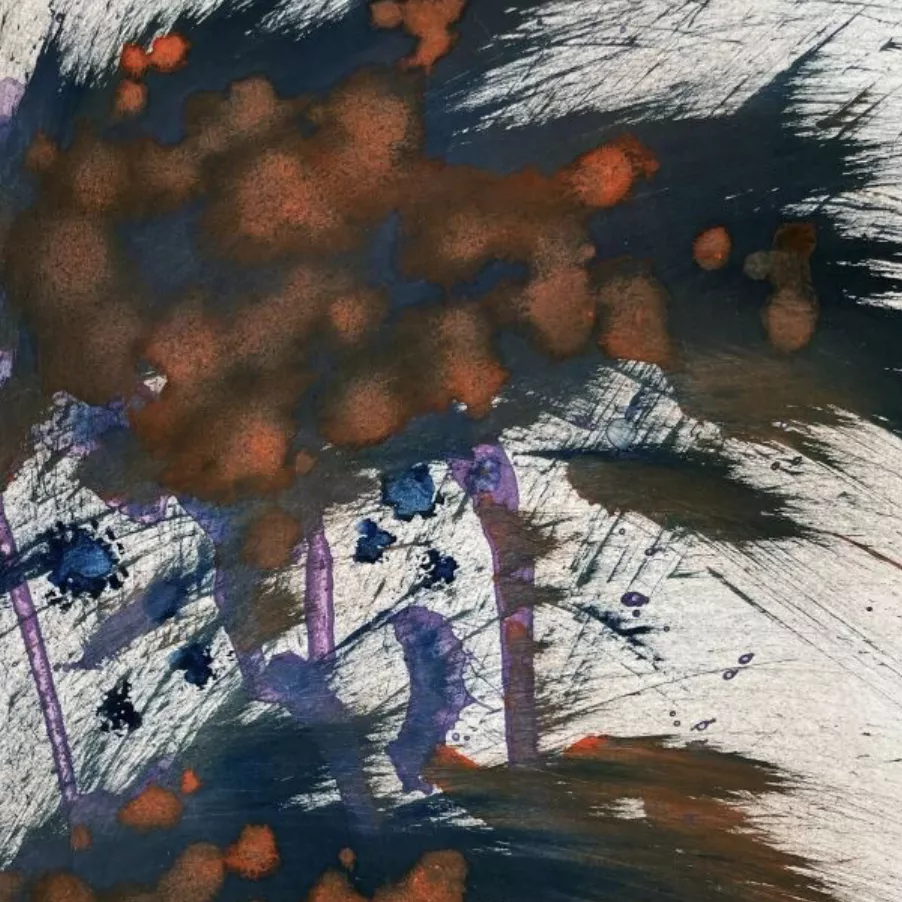
In this painting, the artist takes a constructed, meditative approach to abstraction. She develops an abstract language in which the composition seems to obey a very rigorous organization, which does not prevent the flexibility of forms and textures from unfolding to maintain a sensation of floating.
She plays subtly with color and light. The shades she chooses are dominated by muted tones (grays, ochres, blues) - which evoke silence. She makes the light seem to emanate from within the forms rather than from an external source.
The forms fall somewhere between the geometric and the organic, as the artist chooses to incorporate blurred contours and subtle transitions, enabling her to create a tension between rigor and spontaneity.
His gestures are mastered even if the touch remains discreet, the pictorial matter retains a fairly tangible presence. The superimposition of layers and nuances creates a depth that helps structure the viewer's gaze.
This work resonates with informal and lyrical art, and the research of artists such as Jean Bazaine or Maria Helena Veira da Silva.
This canvas among his other achievements evokes intuition and balance, demonstrating that just because a painting is abstract doesn't mean it doesn't need to be structured.
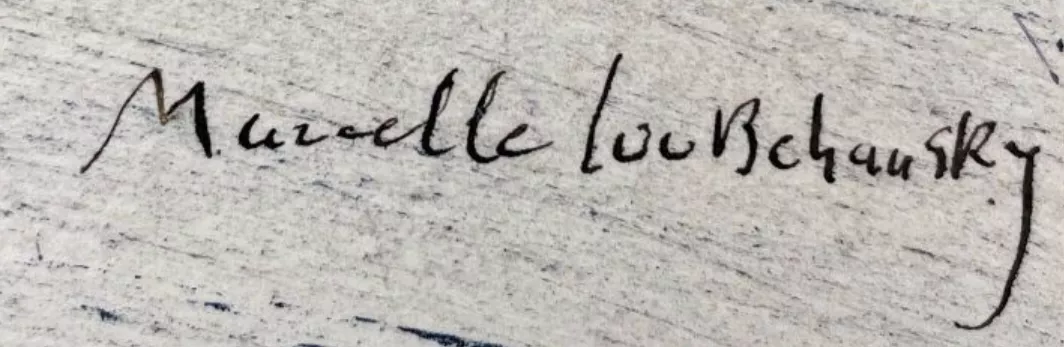
Her signature
Not all Marcelle Loubchansky's works are signed.
Although there are variations, here's a first example of her signature:
Expertise your property
If you own a work by Marcelle Loubchansky, don't hesitate to request a free appraisal by filling in our online form.
A member of our team of experts and certified auctioneers will contact you to provide an estimate of the market value of your work.
If you are considering selling your work, our specialists will also guide you through the various alternatives available to obtain the best possible price, taking into account market trends and the specific features of each work.
Estimate in less than 24h
Discover in the same theme

Rating and value of works, objects and drawings by Erté
Erté is a 20th-century furniture and fashion designer who is highly prized at auction. His works are highly prized.
Learn more >

Cote and value of works, drawings, paintings by Alfred Manes...
Alfred Manessier is an artist and painter of expressive abstraction who has produced paintings, drawings and other works listed at auction.
Learn more >

Rating and value of paintings by Zeng Yilu
Zeng Yilu is a Chinese artist who has produced numerous works whose value has recently increased at auction. 100% free estimate
Learn more >
D'autres tableaux abstraits vendus aux enchères

Estimated 2.000 - 4.000
Serge POLIAKOFF (1900-1969), Composition en rouge et bleu. 1965, Lithograph

Estimated Between €5,000 and €8,000
Jean MIOTTE (1926-2016), acrylic on canvas

Estimated 3.000 - 5.000
Roberto MATTA (1911-2002), Composition, Gouache on canvas

Secure site, anonymity preserved

Auctioneer approved by the State

Free and certified estimates
Frequently asked questions
-
Who is Marcelle Loubchansky, and what is her artistic background?Marcelle Loubchansky (1912–1988) was a leading French artist in the field of lyrical abstraction, trained at the École des Beaux-Arts in Paris. After World War II, she made a name for herself in Parisian art circles by associating with André Breton and the Surrealists, while developing a unique abstract style. Gaining international recognition in the 1960s, she became part of the Nuagiste group and exhibited regularly thanks to the support of art critic Charles Estienne and gallery owner Jean Fournier.
-
What is the price range for Marcelle Loubchansky's works?Prices for Marcelle Loubchansky’s works vary significantly depending on the medium and the market: drawings and watercolors range from €80 to €2,300, while paintings range from €140 to €10,500. The artist’s market value is rising sharply, as illustrated by the 2021 sale of a 1969 *Abstract Composition* that sold for €10,500, despite an estimate of between €1,000 and €1,500. His oil-on-canvas works are particularly sought after by American collectors.
-
How can you authenticate and appraise a work by Marcelle Loubchansky?To authenticate and appraise a work by Marcelle Loubchansky, we recommend that you request a free, no-obligation appraisal from Auctie's. Our team of experts and state-certified auctioneers will examine your artwork and provide you with an accurate estimate of its market value within 48 hours. This is the best way to determine the current value of your piece and explore the best options for selling it.
-
Is this the right time to sell a work by Marcelle Loubchansky?Yes, now is a good time to sell a work by Marcelle Loubchansky: her value is rising sharply on the contemporary art market, particularly among American collectors. Demand for her abstract paintings and works featuring transparencies is growing, a trend reflected in auction prices that regularly exceed estimates. We recommend taking advantage of this favorable trend by contacting us for an appraisal.
-
How does a sale work with Auctie's?At Auctie's, we support you every step of the way: after a free appraisal and an accurate valuation of your Marcelle Loubchansky artwork, our specialists will guide you toward the best sales strategy, taking into account market trends and the specific characteristics of your item. We optimize the presentation and marketing conditions to secure the best possible price for you at auction, with no prior commitment required.
