



Rating and value of drawings and paintings by Nicolas Eekman

Key takeaways
- Works by Nicolas Eekman sell for between €10,000 and €45,000 at auction, with a record set by the oil on canvas *Les pêcheurs* (1950), which sold for €45,000 in 2024.
- Paintings constitute the highest-valued segment (€70 to €45,000), while watercolor drawings and prints sell for €12 to €5,330 and €10 to €900, respectively.
- Fantastic compositions in the Flemish style, featuring multiple figures and carnival scenes, represent the pinnacle of the market, followed by the expressive portraits and nudes that won awards at Deauville in 1956.
Nicolas Eekman’s paintings and drawings sell for up to €45,000 at auction. An appraisal allows us to accurately determine the current market value of your Nicolas Eekman artwork and, if applicable, optimize the sale of the piece.
If you own a work by Nicolas Eekman and would like to know its value, our state-certified auctioneers will provide a free appraisal based on authenticity, market rating, and recent market results.
Artist’s Market Value and Reputation
Nicolas Eekman is a highly regarded Expressionist artist; his works fetch significant prices on the auction market.
Today, the prices at which his works are sold at auction range from €10 to €45,000—a considerable range that speaks volumes about the value that can be attributed to Eekman’s works.
Sought after by collectors, Nicolas Eekman’s works can fetch tens of thousands of euros at auction, as evidenced by his 1950 oil on canvas *Les pêcheurs*, which sold for €45,000 in 2024.
Ranking of value from the most basic to the most prestigious
Technique used | Result |
|---|---|
Print - multiple | From €10 to €900 |
Drawing - watercolor | From 12 to 5,330€ |
Painting | From €70 to €45,000 |
Estimate in less than 24h
Placing the Artist in Context
Period
Nicolas Eekman (1889–1973) was born in Brussels, in the house where Victor Hugo, then in exile, began writing *Les Misérables*. His career spanned nearly the entire 20th century, embracing all of its major artistic shifts, from Expressionism to the abstract avant-garde and on to the fantastical.
His training combined artistic and architectural disciplines: a renowned painter, draftsman, and printmaker, he studied at the Royal Academy of Fine Arts in Brussels while also painting and sculpting; this dual foundation gave his work a unique structural rigor.
A decisive turning point occurred during World War I: he stayed in Nuenen, the Netherlands, where he immersed himself in the landscapes of Brabant and developed a particular interest in farmers, fishermen, and laborers.
Artistic Movements
Eekman was a nonconformist and unclassifiable painter, whose uniqueness stemmed precisely from his rejection of orthodoxies. His work might seem anachronistic; it is neither fundamentally Expressionist, Cubist, or Surrealist, nor does it fall into the realm of naïve realism or tormented Symbolism.
His relationship to the avant-garde is one of selective and critical absorption: he shows an interest in specific artists rather than artistic movements, yet remains free and selective in his choice of influences—and, as a result, remains profoundly true to himself.
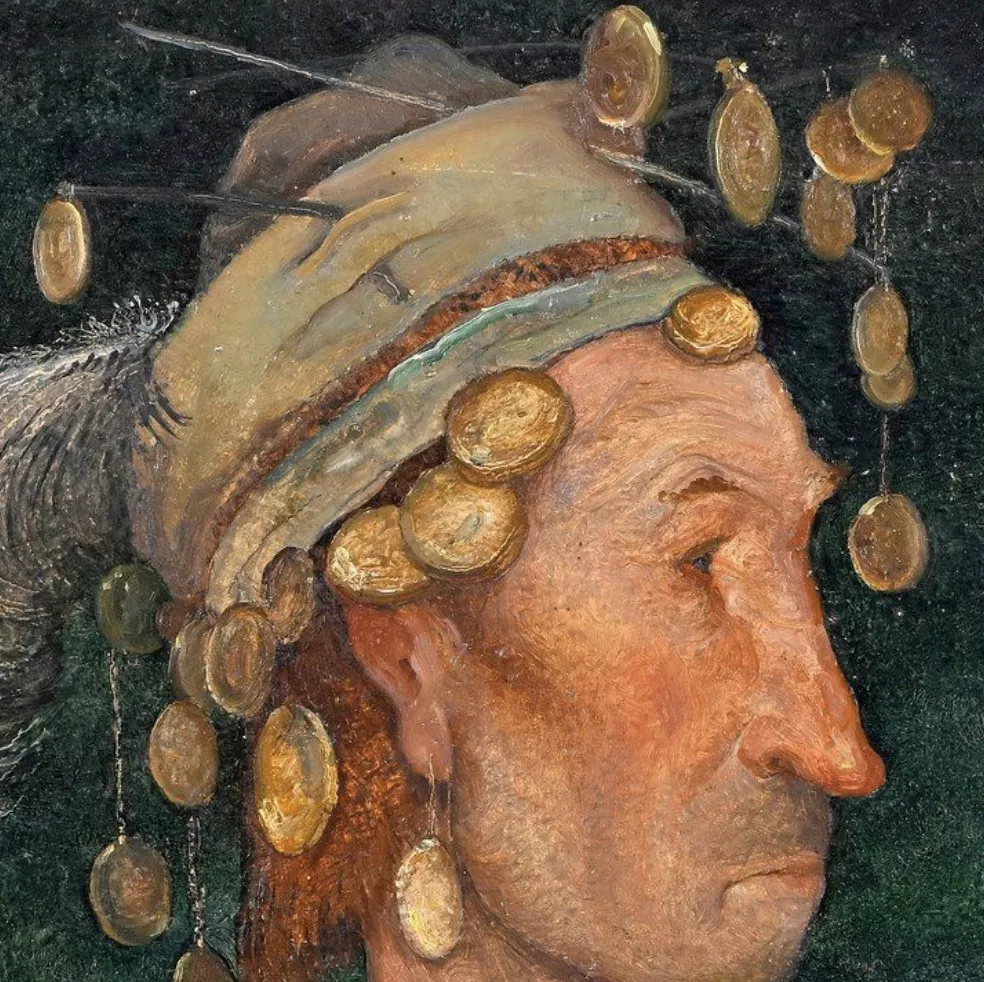
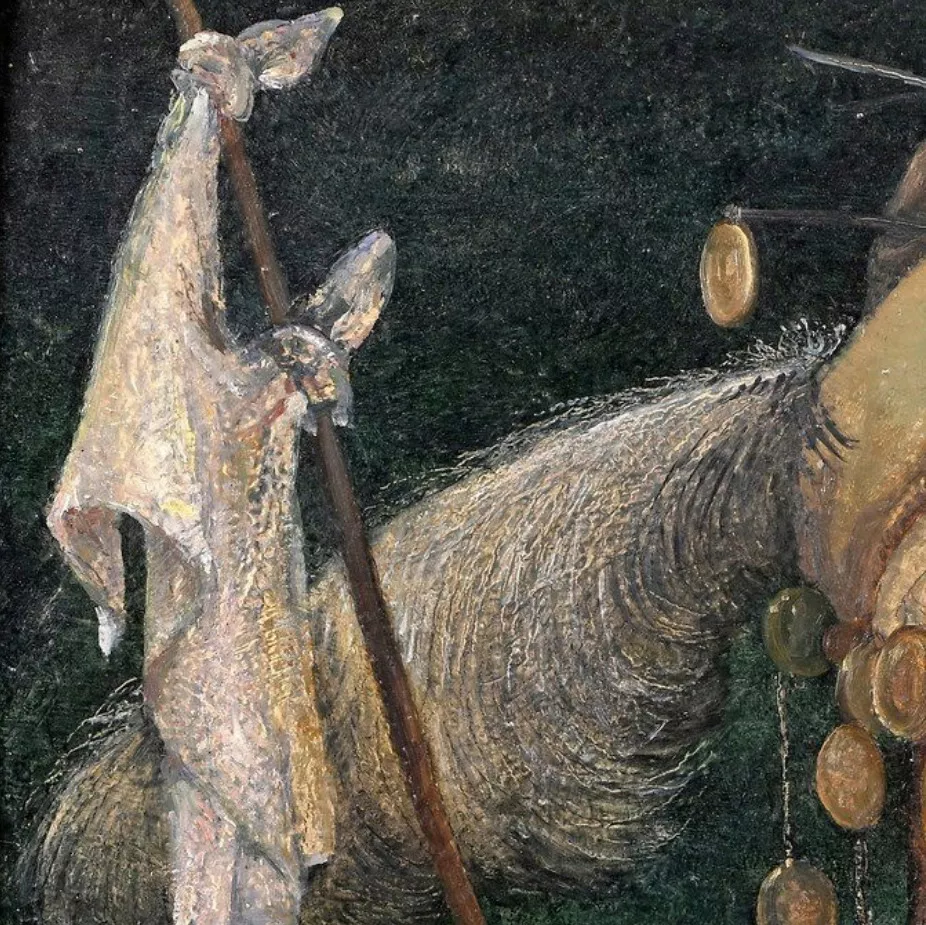
Her roots in the Flemish tradition serve as the guiding thread throughout her entire body of work: beginning in the 1950s, he gradually steered his painting toward a more fantastical world, reconnecting with the Flemish tradition inherited from great masters such as Hieronymus Bosch, Pieter Brueghel the Elder, and James Ensor.
The Life of Nicolas Eekman
Cultural Background
Born in Brussels to Dutch parents, he earned a degree in architecture from the Royal Academy of Fine Arts in Brussels. He consistently applied this training to his painting practice; the influence of architecture on his work became evident very early on, as Eekman constructed each of his paintings with meticulous precision, before shifting toward an expressionist and then fantastical style.
In 1907, at just 18 years old, he gave a lecture on Van Gogh—who was still largely unknown to the general public—whose realist work deeply inspired him, an early gesture by an artist who immediately established himself as a conduit and defender of a style of painting that was both popular and visionary.
Perpetually rebellious, he openly attacked the “nonsense of abstract art,” which he considered merely an evolution of decorative art—a nonconformist stance that isolated him from the official art scene but gave him a radical uniqueness.
Intellectual Circle
Having settled in Paris in 1921, he became a prominent figure in the artistic life of Montparnasse. During the interwar period, he associated with Chagall, Dalí, Picasso, Léger, Ernst, Signac, and others, and was at the heart of the cosmopolitan network of the École de Paris without ever aligning himself with any of its movements.
He became friends with the gallery owner Jeanne Bucher, who regularly published his prints beginning in 1924 and exhibited his work alongside Mondrian’s in 1928. This was the only time Mondrian exhibited his paintings in a Paris gallery, and these two artists—who were aesthetically worlds apart—would remain close throughout their lives.
He moved with his wife into a house in Boulogne-Billancourt, a neighborhood then highly sought after by artists, in the immediate vicinity of the studios and social circles of Paris’s Left Bank, where he would live and work until his death in 1973.
FAQ: How do you appraise a work by Nicolas Eekman?
1) How can you place Eekman’s work chronologically?
Influenced by Cubism, to which he devoted several significant years, Eekman gradually returned to realism in the 1930s, then turned to the fantastical in the 1950s, reconnecting with 15th- and 16th-century Flemish painting.
2) What is Eekman’s glazing technique, and why is it important?
At a time when his contemporaries were painting on modern materials, Eekman often opted for wood panels, applying oil paint in the form of glazes—a technique inherited from the old Flemish masters.
3) Which subjects or series are most sought after by collectors?
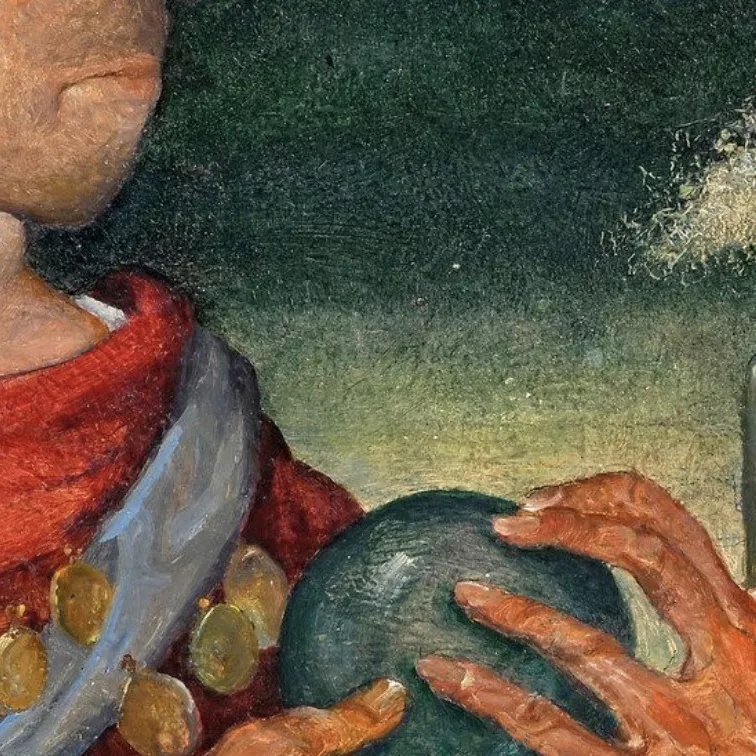
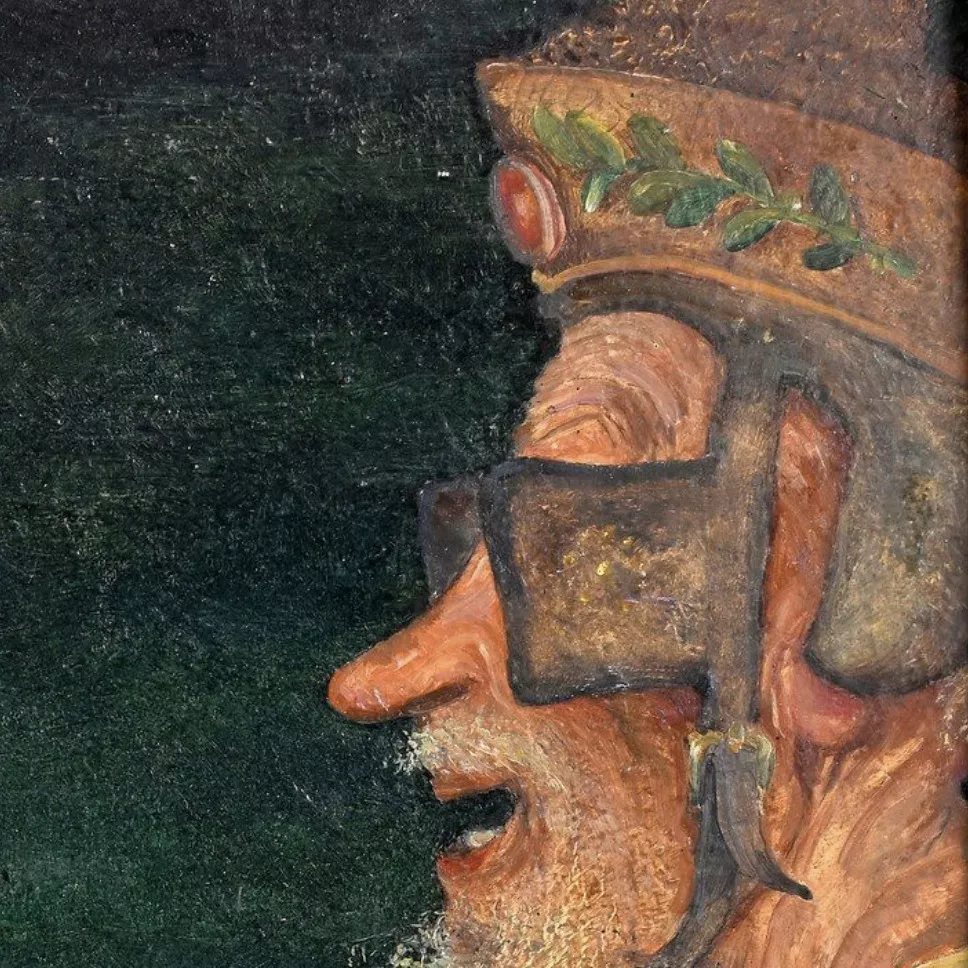
The hierarchy is clear. Fantastic compositions in the Flemish style (small scenes with multiple figures, carnival scenes, masks, chimeras, and bestiaries) command the highest prices on the market. Next come expressive portraits and nudes (which won awards at Deauville in 1956), followed by Brabant or Norman landscapes populated by peasants, and finally still lifes.
Market Segmentation and Figures
Prices of Works
The market for works by Nicolas Eekman is characterized by modest prices and is highly segmented by medium: oil paintings on canvas or panel generally sell in price ranges between €500 and €8,000, while prints, woodcuts, and drypoint engravings fetch significantly lower prices.
Small- and medium-sized oil paintings on hardboard or canvas illustrate the predominance of cabinet-sized works in this market segment, with estimates generally remaining below €3,000. The market’s low liquidity also reflects the artist’s relative obscurity on the global market, despite the intrinsic quality of his body of work.
Factors Influencing Value
Early institutional recognition is the primary driver of market legitimacy: at the 1937 Paris International Exposition, Eekman was awarded a gold medal for *La Pelote bleue*, which was acquired by the French government for the Musée du Jeu de Paume.
The density of Montparnasse’s artistic social network is a major factor in his market value. Having settled in Paris as early as 1921, Eekman was close to many artists, including Mondrian, with whom he held a unique joint exhibition that cemented his place in the history of the Parisian avant-garde between the two world wars.
His presence in institutional collections attests to recognition that extends beyond France: Eekman’s work, for example, was included in the exhibition *Onze Kunst van Heden* in Amsterdam in 1939.
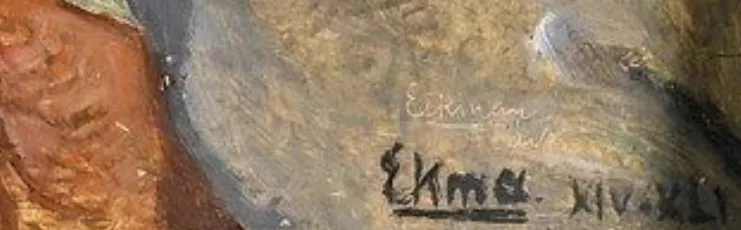
His Signature
Not all of Nicolas Eekman’s works are signed.
Although there are variations, here is an example of his signature:
Get Your Nicolas Eekman Artwork Appraised
If you own a work by Nicolas Eekman, an appraisal will help you determine its current market value.
Using our online form, our experts and certified auctioneers will conduct a free appraisal and provide you with a reliable estimate of your artwork’s market value.
If you’re considering selling it, we’ll guide you through the process to ensure you get the best possible price.
Estimate in less than 24h
Discover in the same theme

Rating and value of paintings by Sydney Thompson
Sydney Thompson was a Dutch painter who lived in France. His postimpressionist works are highly regarded and valued.
Learn more >

Rating and value of paintings by Max Beckmann
Max Beckmann is one of the best-known and most famous German Expressionist painters. His value is very high.
Learn more >

Rating and value of paintings by Roger Edgar Gillet
Roger Edgar Gillet is an abstract and then figurative painter who has produced many works that are highly valued at auction.
Learn more >
Nos records d'enchères à l'hôtel Drouot

Estimated 10.000 - 15.000 €
Ebridge Ayer BURBANK(1858-1949), Young African-American boy, Oil on panel.

Estimated 20.000 - 30.000
EXCEPTIONAL LARGE OVAL DISH IN VINCENNES SOFT PASTE PORCELAIN FROM THE "BLEU CÉLESTE" SERVICE OF KING LOUIS XV AT THE CHÂTEAU DE VERSAILLES

Estimated 20.000 - 30.000
MANUFACTURE ROYALE DE SÈVRES, 18th century "L'Empereur de la Chine" - Portrait of the Emperor Qianlong, Hard porcelain bisque, 1775

Estimated 1.500 - 3.000
HERMÈS, "Kelly" 32 saddle bag in black box calf

Estimated Between €5,000 and €8,000
KRACHKOWSKY (1854-1914), Before the storm, oil on canvas

Estimated 40.000 - 80.000
Alexandre ROUBTZOFF (1884-1949), Portrait of Arbia, oil on canvas

Secure site, anonymity preserved

Auctioneer approved by the State

Free and certified estimates
Frequently asked questions
-
Who is Nicolas Eekman, and what is his artistic background?Nicolas Eekman (1889–1973) was a Belgian painter, draftsman, and printmaker born in Brussels and trained at the Royal Academy of Fine Arts. A leading figure in Montparnasse beginning in 1921, he rubbed shoulders with Chagall, Dalí, Picasso, and Mondrian without aligning himself with any particular movement. His body of work spans the 20th century while rejecting orthodoxies: it combines Expressionism, Cubist influences, and—beginning in the 1950s—a fantastical world inspired by the Flemish tradition (Bosch, Brueghel, Ensor).
-
What are the auction prices for Nicolas Eekman's works?Nicolas Eekman’s paintings and drawings sell for between €10,000 and €45,000 at auction. Oil paintings on canvas or panel generally sell for between €500 and €8,000, while prints and engravings fetch lower prices (€10 to €900). Fantastic compositions in the Flemish style command the highest prices on the market, followed by expressive portraits and landscapes.
-
How can you authenticate a work by Nicolas Eekman?To authenticate a work by Nicolas Eekman and determine its exact value, we recommend that you request a free appraisal from our state-certified auctioneers. Our expertise is based on an analysis of authenticity, market valuation, and recent market results, and you will receive a reliable estimate within 48 hours, with no obligation.
-
Is this the right time to sell a work by Nicolas Eekman?Yes, now is a good time to sell a work by Nicolas Eekman. The artist enjoys well-established institutional recognition (gold medal at the 1937 Paris International Exposition, works in museums and public collections) and is a leading figure of the École de Paris, which sustains demand from collectors despite a relatively niche market on the global stage.
-
How does the appraisal and sale of a work of art take place at Auctie's?The appraisal is free and non-binding: simply submit information about your artwork via our online form, and our experts will conduct an appraisal and provide you with a reliable estimate within 48 hours. If you decide to sell, we’ll guide you through the process from the appraisal to the auction to ensure you get the best possible price.
