



Rating and value of paintings by Ramiro Arrue

Key takeaways
- Works by Ramiro Arrue (1892–1971) sell for between €40 and €200,000, with oil-on-canvas paintings commanding the highest prices (€110 to €200,000).
- A major Basque regionalist painter, Arrue developed a refined and synthetic style as early as the 1920s, characterized by geometric forms, a limited color palette, and an absence of narrative pathos.
- After being marginalized following 1940, his market value has seen a modest and steady rise since the 1980s, thanks to retrospective exhibitions and renewed interest in peripheral modernist movements.
If you own a work by or after Ramiro Arrue, and would like to know its value, our state-approved experts and auctioneers will offer you their appraisal services.
Our specialists will work to carry out a free appraisal of your work, and provide you with an accurate estimate of its value on the current market.
Then, if you wish to sell your work, we will direct you to the best possible device to obtain an optimal price.
Ramiro Arrue artist's quote and value
The artist Ramiro Arrue leaves behind a characteristic body of work of modern painting, he is famous for his canvases and drawings. Now, prices for his works are rising under the auctioneers' gavel.
His paintings are particularly prized, especially by French buyers. The price at which they sell on the art market ranges from €40 to €200,000, a substantial gap but one that says a lot about the value that can be attributed to Ramiro Arrue's works.
La Mère, an oil on canvas sold for €200,000, whereas it was estimated at between €50,000 and €80,000.
Order of value from a simple work to the most prestigious
Technique used | Result |
|---|---|
Estamp - multiple | From €40 to €9,700 |
Drawing - watercolor | From €40 to 155,000 |
Oil on canvas | From €110 to 200,000 |
Estimate in less than 24h
Style and technique by artist Ramiro Arrue
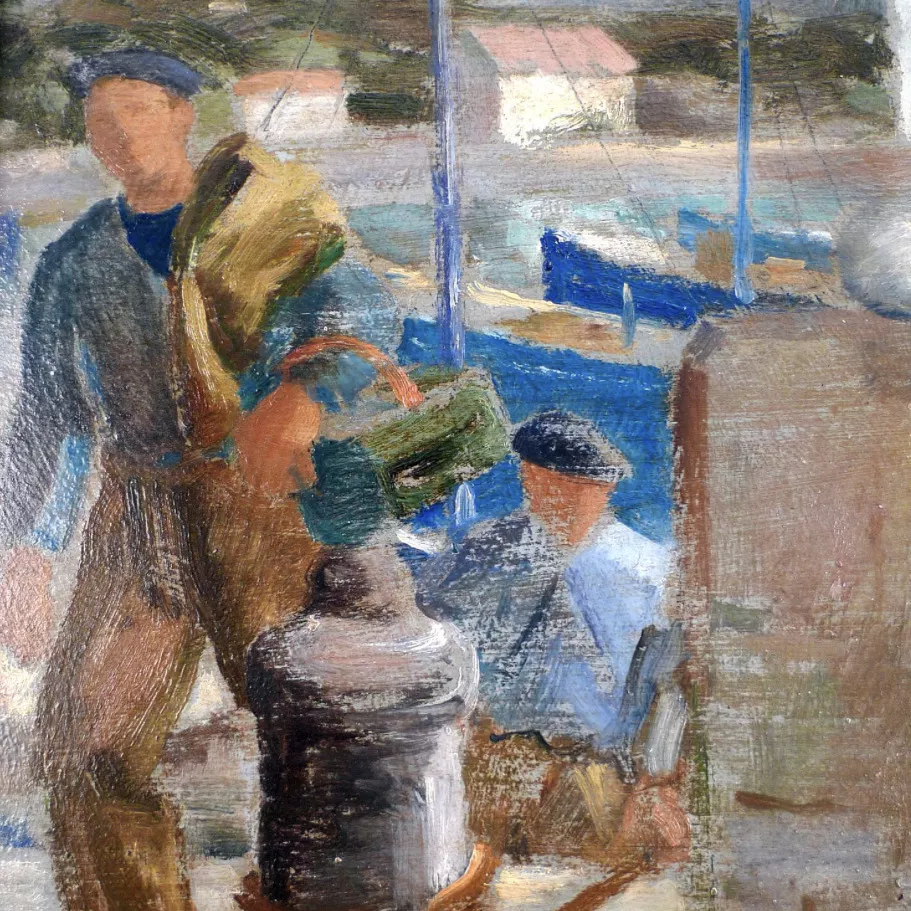
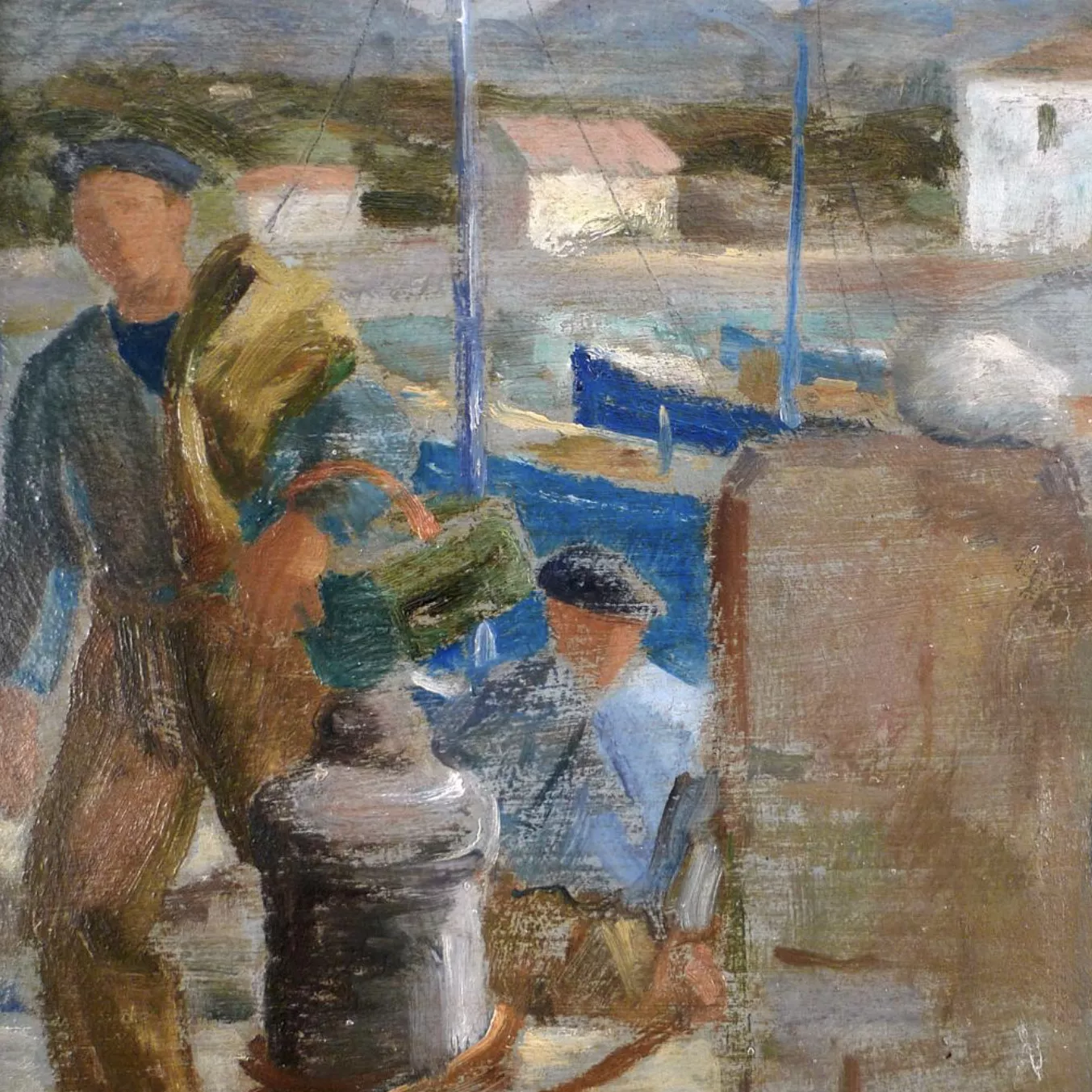
Ramiro Arrue is a painter with a regionalist aesthetic and a synthetic language. From the 1920s onwards, he developed a refined, constructed and immediately identifiable style, in the service of an idealized representation of the Basque Country.
His work is part of a modernized regionalist vein, where attachment to the territory is combined with a search for formal abstraction. His painting is characterized by a reduction of forms to their essence, through clean drawing, outlined contours and an absence of anecdotal details.
Architectures, bodies and animals, as well as landscape elements, are stylized according to a logic of plastic schematization, close to the canons of 1920s decorative art.
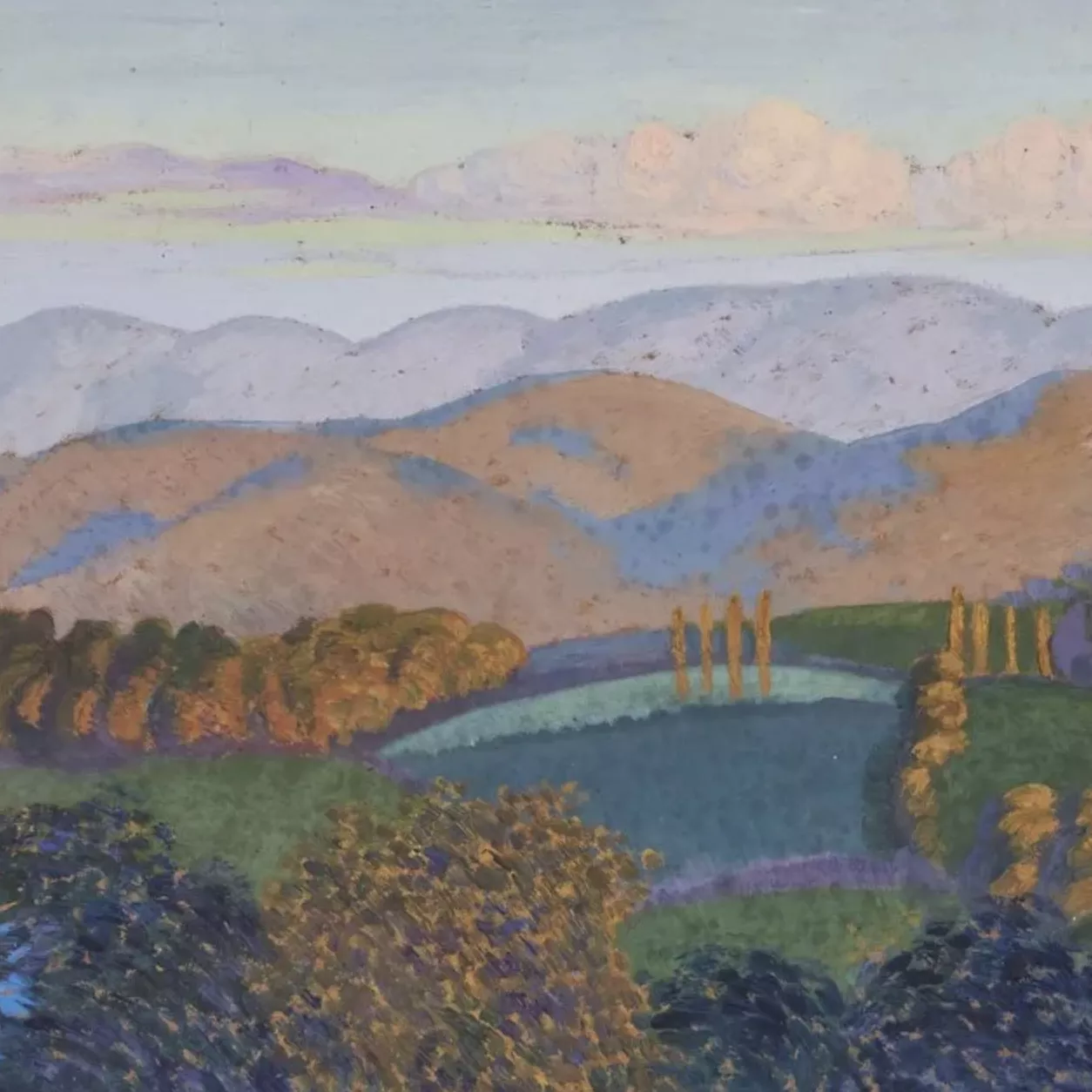
Each composition is structured according to a rigorous organization of space and built by successive planes, colored masses and orthogonal axes. Arrue's visual geometry gives the image a monumental character, with human figures and buildings standing out like volumes carved out of the light.
The palette is restrained and the harmonies muted. This sober yet harmonious color treatment contributes to a contemplative atmosphere, in which the absence of luminous or dramatic effects reinforces a sense of calm and timelessness.
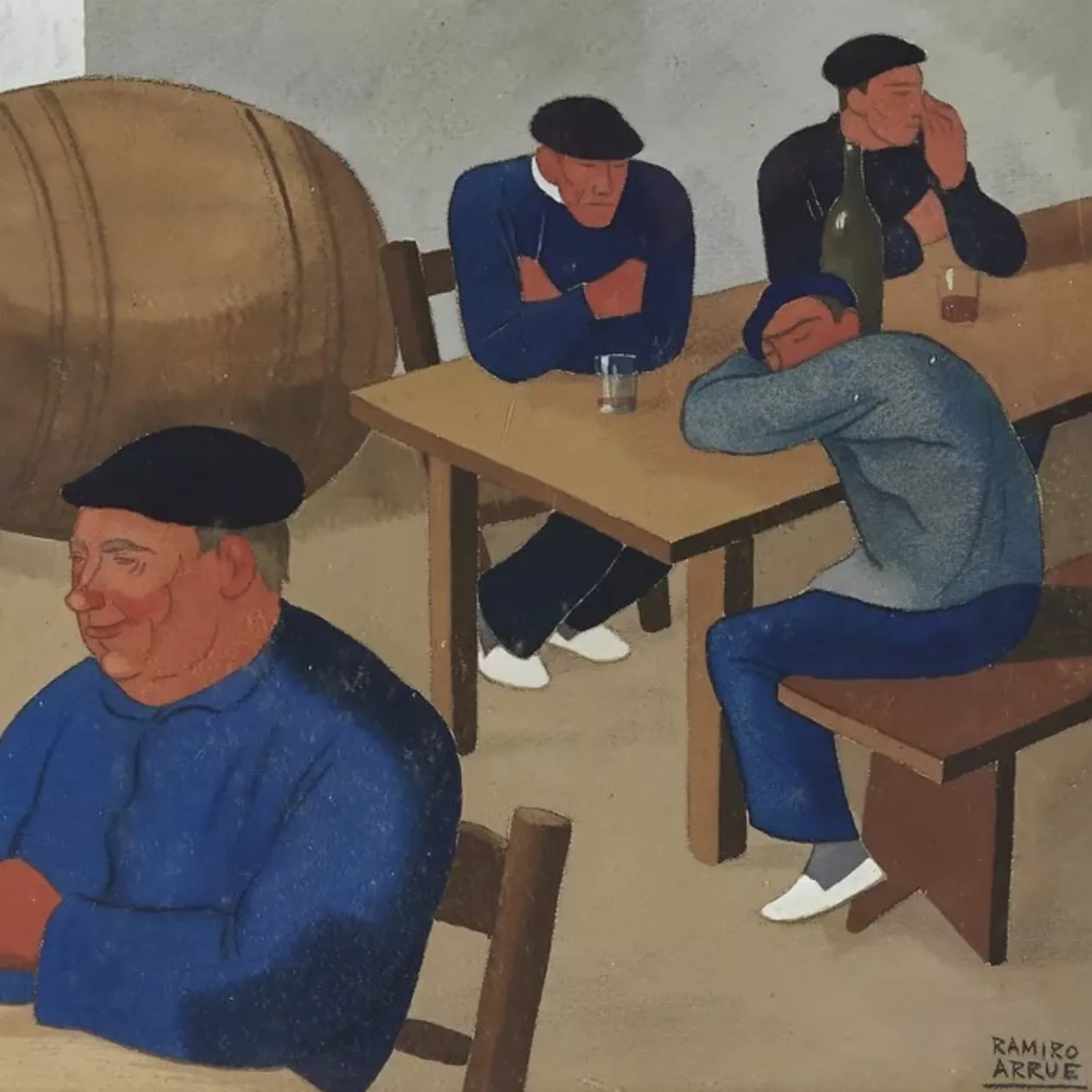
Explicit narration is absent : his genre scenes, portraits of Basque peasants or dancers are devoid of narrative pathos. The iconic status of the figures, often frontal and silent, refers to an idealized vision of Basque culture.
Arrue developed a style close to that of the decorative Paris School (influences of Lhote, Léger or even Derain in his classical period) while distinguishing himself from them through his asserted regional roots and a more restrained aesthetic, without formal rupture or radical abstraction.
The artist is a rigorous draughtsman, who transposes his plastic principles into his works on paper, maintaining a linear sobriety and a taste for visual rhythm that translates the same desire for stylization and immediate legibility.
The whole of his work can be read as an attempt at the plastic transcription of a regional identity. Architecture, clothing, landscapes and attitudes are treated as constituent elements of a coherent visual system, at once poetic, ethnographic and symbolic.
The life of Ramiro Arrue
Ramiro Arrue (1892 - 1971) was born in Bilbao, into a family of Basque origin deeply committed to the arts. He was the youngest of four brothers, all artists, including Alberto Arrue, a painter, and José Arrue, an illustrator and sculptor.
This family configuration fostered a creative environment from an early age, marked by a strong sense of Basque identity. He began his artistic training in the Spanish Basque country, before moving to Paris at an early age, where from 1911 he attended the Académie de la Grande Chaumière.
There he completed his training in the teeming context of the École de Paris, while maintaining a critical distance from the radical avant-gardes. In the years 1910-1920, Arrue joined the networks of decorative, regionalist and modernist artists, while asserting a singular plastic identity nourished by the figurative tradition and a constant attachment to Basque culture.
He exhibited regularly at Parisian Salons, notably the Salon d'Automne and the Indépendants, where his works were noted for their sobriety and formal solidity.
In 1922, he settled in Saint-Jean-de-Luz, which became his artistic anchorage.
He found an inexhaustible source of inspiration in the Basque landscape, local traditions, vernacular architecture and rural figures, which he consistently depicted throughout his career.
Even though he was relatively marginal in relation to the major currents of modernism, Ramiro Arrue benefited from significant regional support and helped to create the Musée Basque in Bayonne in 1924, for which he designed the decor, affirming his role as a cultural mediator.
He also worked as an illustrator, decorator and sculptor, collaborating on literary works and public commission projects. He designed theater sets and murals, and participated in various architectural embellishment projects, in a total art approach.
After the 1940s, his work experienced a gradual decline in visibility, against a backdrop of rapidly evolving artistic taste. He went through a period of relative marginalization and isolation, and died in 1971 in Saint-Jean-de-Luz, without immediate posterity.
From the 1980s onwards, several retrospective exhibitions and publications contributed to a re-reading of his work, outside strictly regionalist aesthetic grids. He is now considered one of the leading representatives of a peripheral modernity, whose plastic rigor and thematic coherence justify renewed attention.
Market segmentation and artist rating
Ramiro Arrue is today known as a central figure in 20th-century Basque regionalist painting, at the crossroads of modern art and identity affirmation. He occupies a special place on the art market, where he enjoys a strong symbolic capital in southwest France and Spain, while remaining relatively undervalued compared to the museum quality of his production.
The majority of transactions take place in local or national auctions, with regular forays into sales specialized in Basque or regionalist art. The market remains relatively uninternationalized, although his name is well known to Spanish collectors and institutions dedicated to Basque culture.
His oil paintings depicting scenes of Basque life form the core of the market. Large, well-preserved formats dating from the 1920s to 1940s with an architectonic composition and a reduced palette reach the highest bids.
Ink or wash drawings, often preparatory or freer form a more affordable but followed segment. Illustrations and lithographs are more marginal, except when they belong to identified bodies of work.
Oils on canvas fetch between €5,000 and €25,000, depending on format, provenance, iconography and state of preservation. Peaks in excess of €40,000 are occasionally reached for museum works.
Drawings and works on paper fetch between €800 and €1,200, depending on print run and rarity. Works from historical collections in the Basque country (families, institutions, studio sales) or appearing in exhibition catalogs or reference monographs benefit from additional legitimacy, valued on the market.
Interest is also shown by certain modern figurative art enthusiasts, sensitive to the graphic and constructed dimension of the work. Local institutions and regional museums have also contributed to maintaining Arrue's presence in the circuits of public valorization.
After a relative stagnation in the years 1990-2000, the quotation has since experienced a discreet but continuous revaluation, driven by successful thematic sales, monographic reissues and a renewed interest in peripheral modernities.
In a context of re-reading modernist artists on the bangs of the centers (Paris, Madrid), Ramiro Arrue benefits from the potential for critical re-evaluation, particularly in the fields of regional heritage, identity painting and synthetic figuration.
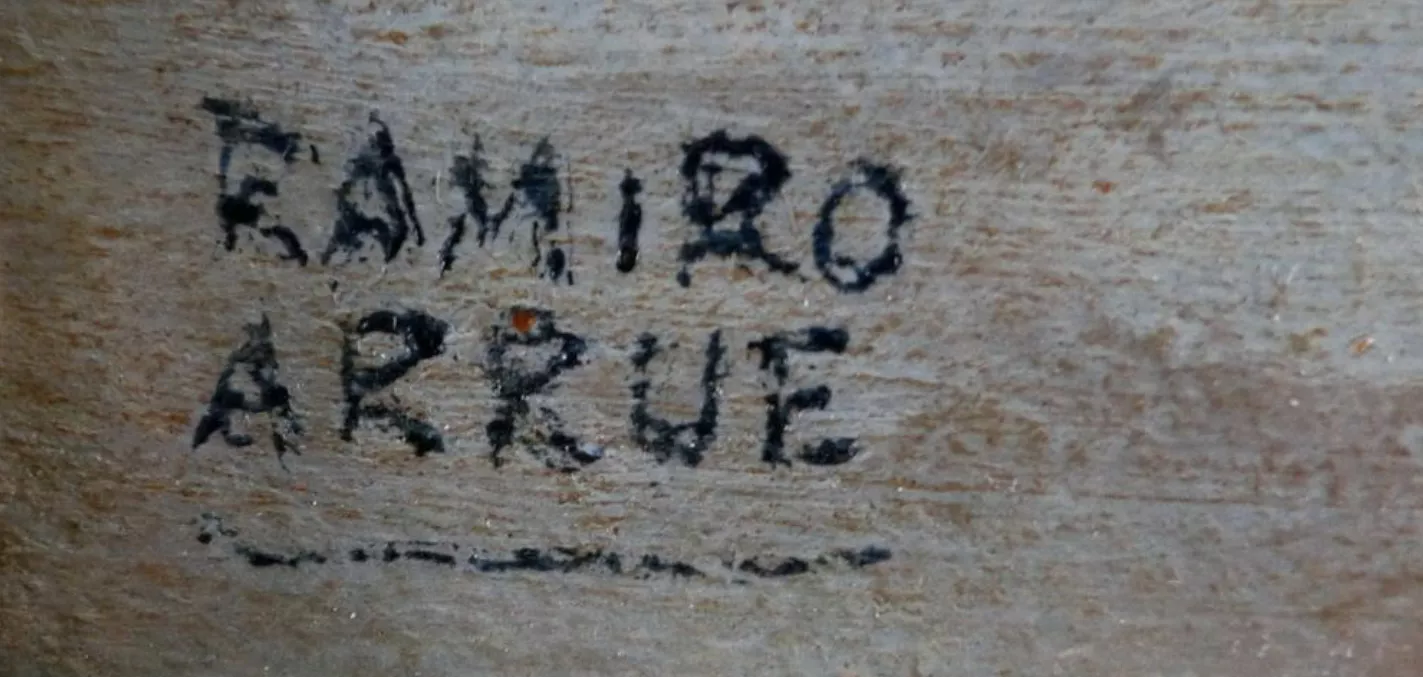
Recognizing the artist's signature
Not all the painter's works are signed. However, with or without a mention, it's important for you to have the work appraised to ensure its originality and to be able to date it. And of course, copies do exist.
Knowing the value of a work
If you happen to own a work by or after Ramiro Arrue, don't hesitate to request a free appraisal using our form on our website.
A member of our team of experts and certified auctioneers will contact you promptly to provide you with an estimate of the market value of your work, as well as ad hoc information about it.
If you wish to sell your work, you will also be accompanied by our specialists in order to benefit from alternatives for selling it at the best possible price, taking into account the inclinations of the market.
.Estimate in less than 24h
Discover in the same theme

Rating and value of Claude Lalanne's sculptures
Claude Lalanne is a twentieth-century French artist whose sculptures set auction records.
Learn more >

Rating and value of paintings by Suzanne Valadon
Suzanne Valadon is a twentieth-century French artist who produced paintings that are highly regarded and valued on the auction market.
Learn more >

Rating and value of Moïse Kisling's paintings
Moïse Kisling is a painter from the École de Paris who produced paintings that are highly rated and valued on the auction market.
Learn more >
D'autres tableaux modernes figuratifs vendus aux enchères

Estimated 800 - 1.500
Jean Roger SOURGEN (1883-1978) Trees and dunes Oil on panel

Estimated 3.000 - 5.000
Georges LAPCHINE (1885-1951) The port of St Tropez Oil on canvas

Estimated 18.000 - 30.000
Charles CAMOIN (1879-1965) "Le Port de Marseille, 1928" Oil on canvas.

Estimated 1.500 - 3.000
Jean VANDEN EECKHOUDT (1875-1946), Basket of persimmons, Oil on canvas

Estimated 2.000 - 4.000
Charles LACOSTE (1870-1959) Starry night, Oil on paper mounted on canvas

Secure site, anonymity preserved

Auctioneer approved by the State

Free and certified estimates
Frequently asked questions
-
Who is Ramiro Arrue, and what is his artistic style?Ramiro Arrue (1892–1971) was a leading Basque painter of the 20th century and the founder of a modernized regionalist aesthetic. Settling in Saint-Jean-de-Luz in 1922, he developed a clean, geometric style characterized by stylized forms, a subdued color palette, and an idealized depiction of the Basque Country. His work combines a deep attachment to the region with a pursuit of formal abstraction reminiscent of the decorative School of Paris.
-
What are the selling prices of Ramiro Arrue's works, broken down by medium?The prices of Ramiro Arrue’s works vary considerably depending on the medium: prints sell for between €40 and €9,700, drawings and watercolors between €40 and €155,000, and oil paintings on canvas between €110,000 and €200,000. At auction, well-preserved oil paintings on canvas from the 1920s–1940s generally fetch between €5,000 and €25,000, with peaks exceeding €40,000 for museum-quality works.
-
How can you authenticate a work by Ramiro Arrue?Although many of Ramiro Arrue’s works are not all signed, it is important to have the work appraised to verify its authenticity and exact date of creation, as copies do exist. Auctie's offers a free, no-obligation appraisal by certified auctioneers and experts, who will provide you with a detailed estimate within 48 hours.
-
Is this a good time to sell a work by Ramiro Arrue?Yes, now is a good time to sell a work by Ramiro Arrue. After a period of relative stagnation in the 1990s and 2000s, his market value has since been rising steadily, albeit modestly. The renewed interest in peripheral modernist movements and regional heritage, combined with recent retrospective exhibitions and publications, is contributing to a critical reassessment of the artist.
-
How does the appraisal and sale of a work of art take place at Auctie's?Appraisals at Auctie's are free and non-binding: simply fill out an online form, and an expert will contact you shortly to appraise your artwork and provide you with its market value. If you’d like to sell, our specialists will guide you every step of the way to determine the best sales strategy and secure the best possible price based on current market trends.
