



Cote et valeur des tableaux - natures mortes de Maurice de Vlaminck

If you own a work by or after the artist Maurice de Vlaminck and would like to know its value, our state-approved experts and auctioneers will offer you their appraisal services.
In fact, Maurice de Vlaminck is an artist well known to Auctie's auction house and its experts.
Lastly, several paintings by the Fauvist painter were presented for sale and achieved significant success - with the hammer price exceeding our high estimate.
This is why we particularly encourage you to submit your Vlaminck painting to us for appraisal, and if you so wish to the sale.
Our specialists will be happy to carry out a free appraisal of your work, and provide you with an accurate estimate of its value on the current market.
Then, should you wish to sell your painting, we'll direct you to the best possible arrangement to obtain the optimum price.
Rating and value of the artist Maurice de Vlaminck
Considered one of the pioneers of Fauvism, Maurice de Vlaminck quickly established himself in the history of twentieth-century art.
This legacy is made up of various creations : mainly oils on canvas among which are still lifes.
At present, the prices of his works are rising enormously under auctioneers' hammers. His still lifes are particularly prized, and the price at which they sell on the art market ranges from €5 to €13,488,000, a considerable gap but one that speaks volumes about the value that can be attributed to Vlaminck's paintings.
In 2021, a blue-dominated still life of fruit, dating from 1907, sold for 1,988,800€ while it was estimated at between 1,403,860 and 2,105,790€.
Order of value from a single work to the most prestigious
Type of still life | Result |
|---|---|
Fish still life | From €9,160 to €193,000 |
Still life of flowers | From €1,190 to €869,000 |
Fruit still lifes | From €6,880 to €1,989,000 |
Estimate in less than 24h
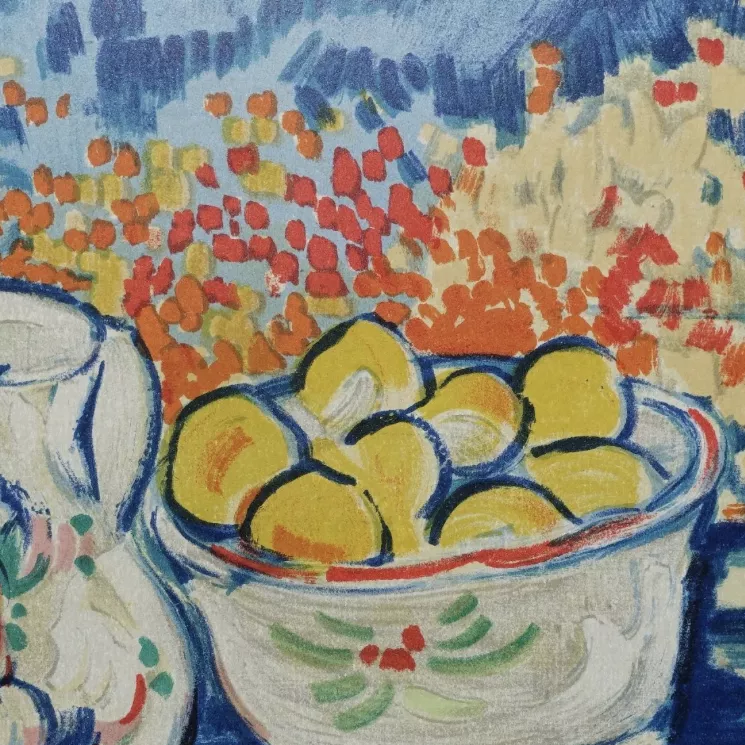
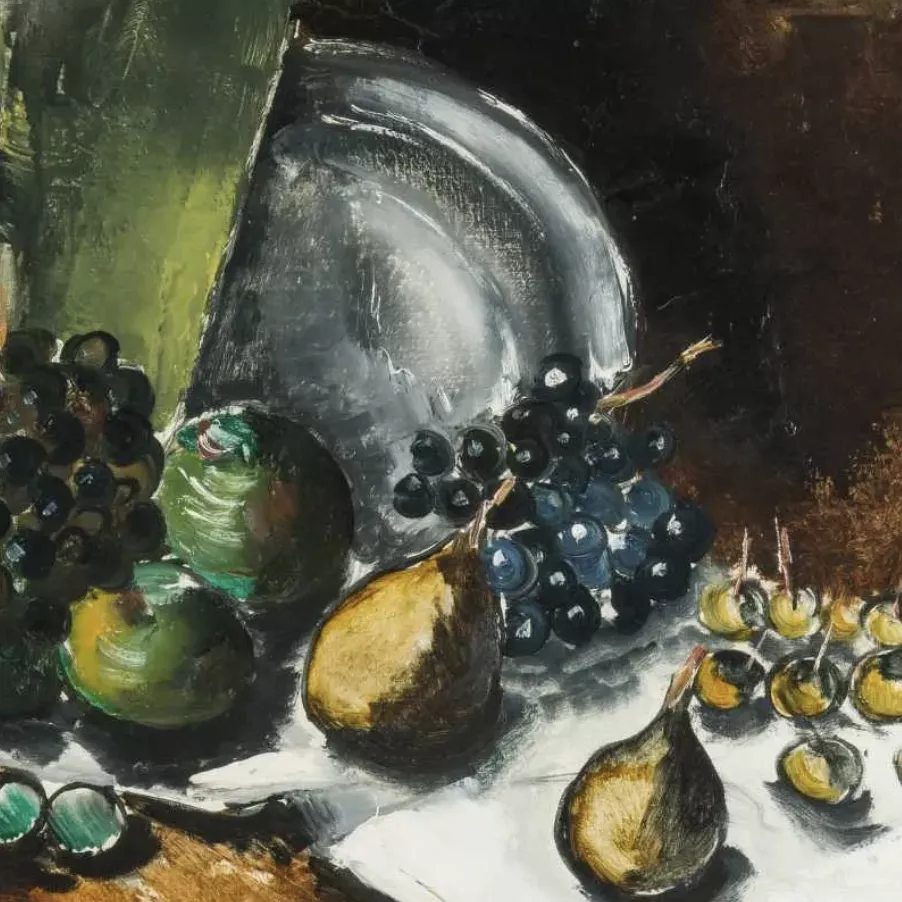
Maurice de Vlaminck's chromatic work in still life
Maurice de Vlaminck, a central figure of Fauvism, marked the history of painting at the beginning of the 20th century with a bold approach, favoring instinct and emotion over analysis and precision.
He established himself as one of the first to fully embrace the chromatic rupture that characterizes Fauvism, a movement made famous in 1905 with the scandal of Room VII at the Salon d'Automne, an acerbic critique delivered by Louis Vauxcelles.
Vlaminck, alongside artists such as Matisse and Derain, explored the use of pure color, applied in broad flat tints, with no concern for realism.
This refusal of traditional representation is also evident in his still lifes, a genre in which he distinguished himself on several occasions throughout his career.
While his compositions may seem conventional at first glance, the elements that make them up are carefully chosen to provide an ideal playground for his chromatic experimentation.
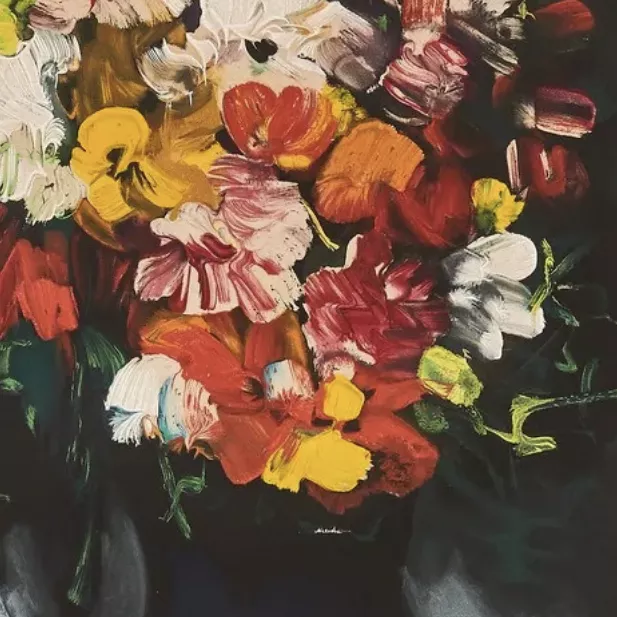
Flowers, often at the center of his still lifes, are not simply decorative objects. They become pretexts for an explosion of color, allowing Vlaminck to deploy his entire palette in vibrant, almost violent tones.
The saturation of reds, yellows and blues, far from respecting the natural color of flowers, underscores the artist's desire to liberate color from its descriptive function, transforming it into a means of emotional expression.
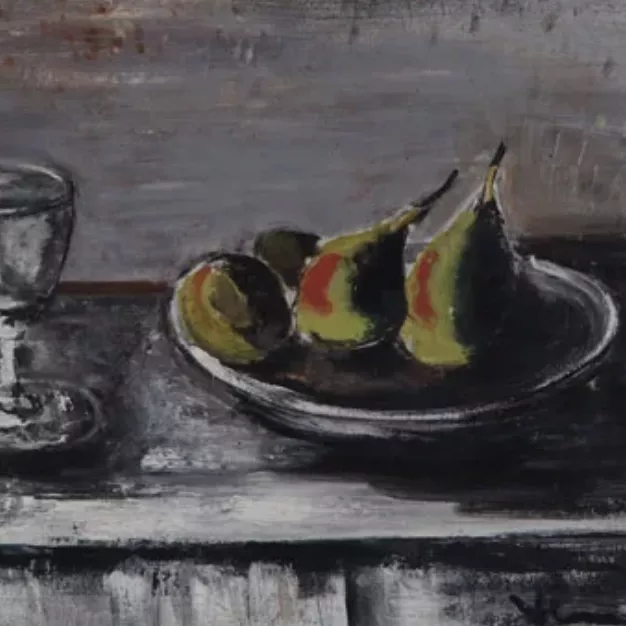
In the same way, fruit often appears in his still lifes. They allow Vlaminck to play with simple, round shapes, and to explore variations in light and texture through color.
Bright oranges, the deep greens of apples or the saturated purple of grapes are treated with an intensity that goes far beyond naturalism. For Vlaminck, color is not limited to imitating reality; it becomes an autonomous, living element, carrying an energy of its own.
Another recurring subject in his still lifes is fish. This choice seems to resonate with his marine works, where the artist often expresses his fascination with coastal landscapes.
Vlaminck has spent much of his career traveling along the French coast, particularly in Normandy, and his encounters with the sea have nourished an important part of his work.
The fish in his still lifes can thus be seen as an extension of this interest in maritime scenes.
They are not treated with cold scientific exactitude, but as organic, sensual forms, imbued with the atmosphere of the seashores he painted so frequently. Their shiny scales become playgrounds for light and color, recalling the way he captured the changing reflections of the sea.
Thus, Vlaminck, through his still lifes, puts Fauvist principles to the test. Flowers, fruit and fish are merely pretexts for a passionate search for color and material.
With daring technique and a masterful sense of composition, he transforms these ordinary objects into vehicles of intense, raw emotion, where instinct takes precedence over academic precision, and color becomes the soul of the work.
>.
Maurice de Vlaminck and the colorimetric instinct
Maurice de Vlaminck, whose real name was Maurice Edmond Devlaeminck (1876-1958), was one of the emblematic figures of Fauvism, the revolutionary movement that overturned the conventions of art in the early 20th century.
Born in Paris into a modest family, he remained loyal to the city throughout his life, but his work extends far beyond its borders. While he is primarily known for his vibrant, color-saturated landscapes, Vlaminck dabbles in other artistic genres, such as nudes and, to a lesser extent, ceramics.
However, it is through his painting that the artist manages to inscribe his name among the greatest of his time.
Trained from an early age by a painter living near his family home, Vlaminck acquired technical mastery at an early age, but it was his instinctive approach and passion for exploring color that would become his true artistic signatures.
The color is for him the primordial element, far more than form or composition. He married Suzanne de Verly early in his career, a period when he was still juggling his multiple passions: music, cycling and painting.
Not yet recognized, Vlaminck struggled to make a living from his art, and it was only with the support of his family and a few influential friends, notably his sister's husband, a well-known Parisian journalist, that he managed to make a name for himself.
The decisive turning point in his career came when he met André Derain, with whom he forged a fruitful friendship. Together, they shared not only a new vision of painting, but also a willingness to shake up established codes.
Their complicity was such that one constantly influenced the other, particularly in the bold use of color, which they would also share with Louis Valtat and Albert Marquet, among others.
Derain and Vlaminck moved away from academic naturalism to enter what art history would soon call "the orgy of pure tones", a chromatic explosion that would profoundly mark the 1905 Salon d'Automne, renamed by Louis Vauxcelles "la cage aux fauves".
Alongside Henri Matisse, they spearheaded this new generation that placed color at the heart of the work, no longer to faithfully represent the world, but to express the most intense emotions.
Vlaminck, with his fiery temperament, embraced this new approach with passion. He painted with an almost savage vigor, applying color brutally, without concern for convention.
This stylistic freedom made him a precursor of modern art. He soon attracted the attention of major art dealers such as Ambroise Vollard and Daniel-Henry Kahnweiler, who brought him international recognition and visibility.
Vlaminck thus participated in numerous exhibitions throughout Europe and the United States, consolidating his reputation beyond French borders.
His career, however, came to a halt with the outbreak of the First World War. Although he was not sent to the front because of his family situation - he was the father of three daughters - he was assigned to a factory, which slowed down his artistic activity.
After the war, Vlaminck took up his brush again and continued his exploration of landscapes, which he now treated with darker tones, marked by the experience of the conflict.
World War II, once again, interrupted his career. But this time, the artist became actively involved in the Resistance.
Fiercely opposed to the ideals of collaborationist writer Louis-Ferdinand Céline, Vlaminck didn't hesitate to take a stand in this fight against Nazi occupation.
This latest commitment adds a political dimension to his work and his life, revealing an artist not only attached to creative freedom, but also to moral freedom.
Thus, Maurice de Vlaminck, through his career marked by trials and successes, was able to impose a new vision of art where color becomes a primordial force, deployed with ardor and sincerity.
Introduction to the concept of colorimetry - 1
The legacy of Maurice de Vlaminck
Vlaminck was an artist who moved with the times, and his artistic output reflects this. He collaborated in revolutionizing contemporary art with the early Fauvists.
His work is varied and follows the evolution of the century, with expressionist touches in his late-career works. Like Kandinsky, he worked on color and published essays on art that were to exert considerable influence on many painters.
The works most prized today for these artists are those produced in the early 20th century, which are characterized by pure, vivid tones and a slight coarsening of the line.
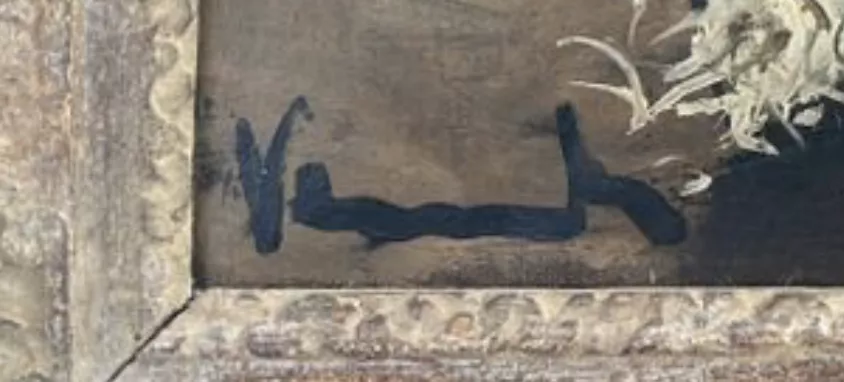
Recognizing the artist's signature
Vlaminck's works are often signed, and his signature can vary from year to year. It can also be found on manuscripts. However, he was and is much copied, which is why it's important to have your work appraised.
Knowing the value of a work
If you happen to own a work by or after Maurice de Vlaminck, don't hesitate to request a free appraisal using our form on our website.
A member of our team of experts and certified auctioneers will contact you promptly to provide you with an estimate of the market value of your work, as well as any relevant information about it.
If you're thinking of selling your work, our specialists will also help you find alternatives to sell it at the best possible price, taking into account market trends.
Estimate in less than 24h
Discover in the same theme

Rating and value of works, sculptures by Igor Mitoraj
Twentieth-century sculptor Igor Mitoraj produced a number of highly prized surrealist and abstract statues.
Learn more >

Rating and value of paintings and drawings by Édouard Vuilla...
Édouard Vuillard is a 20th-century Nabi and Japonist painter. He produced many paintings with a high auction value.
Learn more >

Rating and value of paintings by Dimitri Mikhailovich Krasno...
Dimitri Mikhailovich Krasnopevtsev is a Russian artist who has worked on metaphysical still life. His works have a high value.
Learn more >
Similar works sold at auction

Estimated 8.000 - 12.000
Guillaume FOUACE (1837 - 1895), Still life with lobster, oil on canvas

Estimated 8.000 - 15.000
Maurice de VLAMINCK (1876-1958), Still life with jugs and leeks, oil on canvas

Estimated 3.000 - 5.000
Guillaume FOUACE (1837-1895), Still life with oysters, Oil on canvas

Estimated 3.000 - 5.000
Guillaume FOUACE, (1837-1895) Still life with melon, Oil on canvas

Estimated 4.000 - 6.000
Guillaume FOUACE (1837-1895), Still life with Roquefort cheese, Oil on canvas

Estimated 800 - 1.500
Pascal DAGNAN-BOUVERET (Paris 1852-1929 Quincey) Still life with apple and books, Oil on cardboard

Secure site, anonymity preserved

Auctioneer approved by the State

Free and certified estimates
