Maroussia Tarassov-Vieillefon
Maroussia Tarassov-Vieillefon appraises your Russian paintings from the 18th to the 20th century with Auctie's.






Key takeaways
If you own a work by or after the artist Alexandre Roubtzoff and would like to know its value, our state-approved experts and auctioneers will guide you.
Our specialists will carry out a free appraisal of your work, and provide you with an accurate estimate of its value on the current market.
Then, should you wish to sell your work, we will direct you to the best possible arrangement to obtain the optimum price.
To date, Auctie's is the auction house that has sold the most paintings by the artist. Two paintings presented for sale in April 2024 caused a sensation, attracting numerous bidders from all over the world.
Whether portraits, such as that of Marie-Madeleine Leroy, which went for €60,000, or the Portrait d'Arbia, adjudged at €120,000, or landscapes such as La mosquée Sidi Makhlouf, which went for €13,500, Roubtzoff's paintings are more highly rated than ever on the French auction market.
Maroussia Tarassov-Vieillefon appraises your Russian paintings from the 18th to the 20th century with Auctie's.
A major Russian painter and Orientalist, Alexander Roubtzoff has established himself as a sure bet on the art market. With his Russian origins and painting techniques, Roubtzoff has traveled the world and depicted landscapes far from his native land, making his work and artistic approach absolutely unique.
Today, his works are appreciated and highly sought-after in auction rooms. For example, a work signed by Roubtzoff can fetch hundreds of thousands of euros at auction, his oil on canvas Bédouine de Tunis was sold for €350,000 in 2010.
Technique | Estimation |
|---|---|
Drawing/watercolor | From €300 to €48,000 |
Oil painting | From €500 to €1,716,000 |
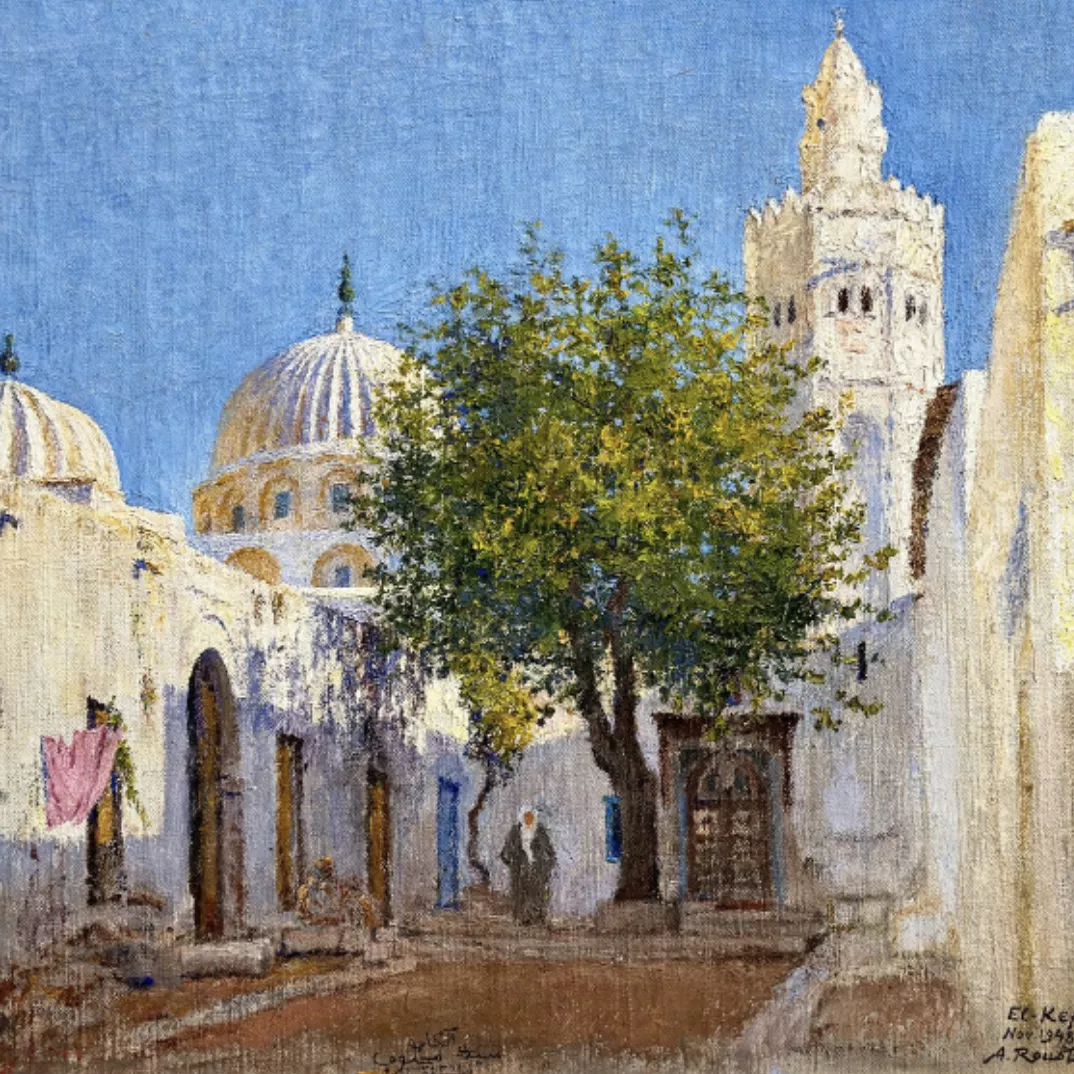
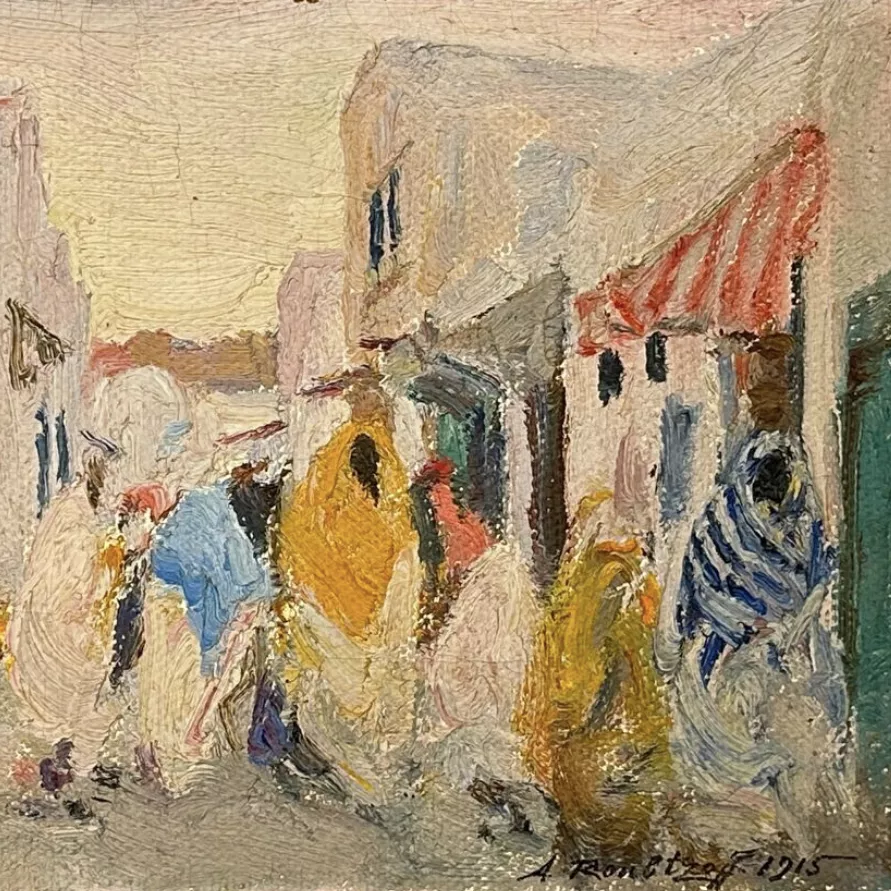
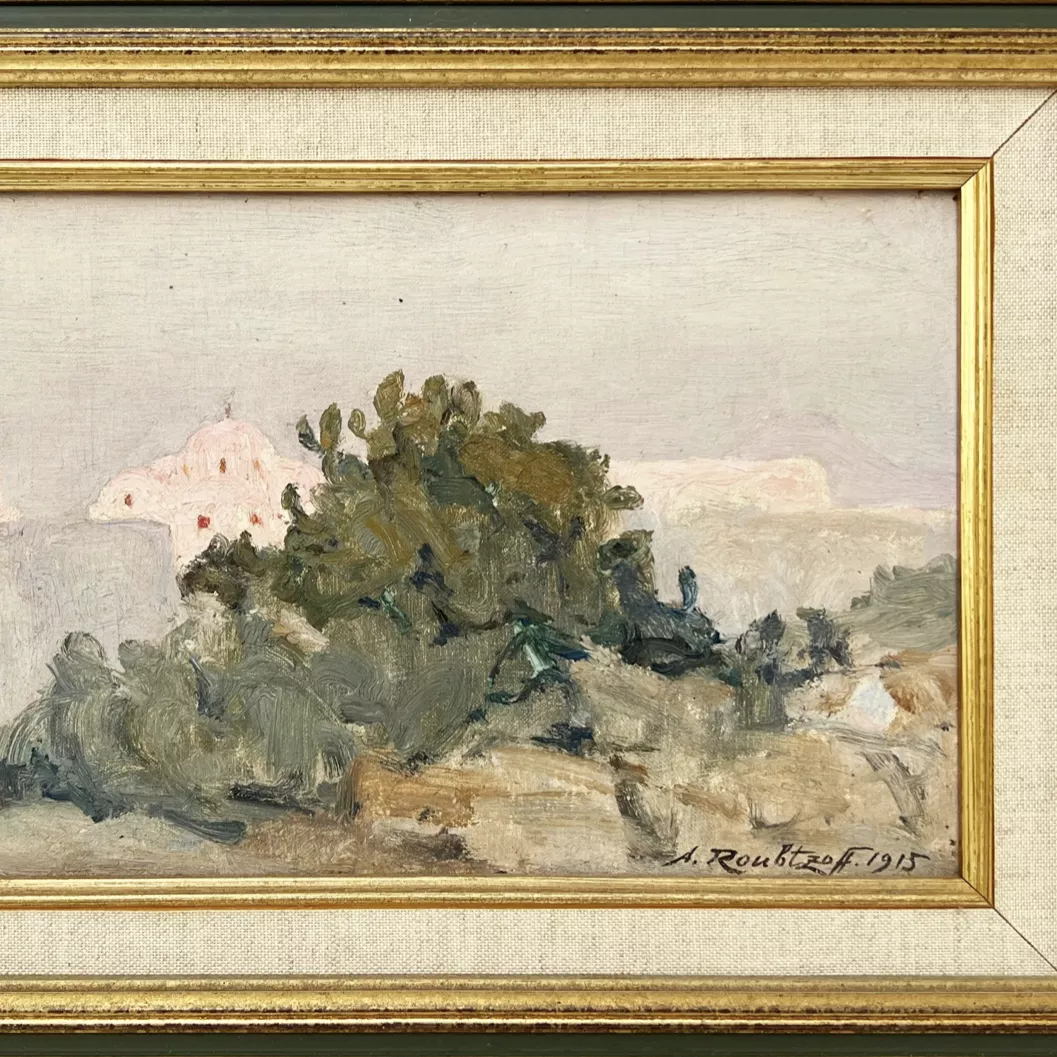
Admired for his Orientalist landscapes and portraits, Alexandre Roubtzoff began by painting Post-Impressionist landscapes, influenced by the vibrant colors and play of light characteristic of this current.
Attracted by the bewitching atmospheres of Tunis, the artist quickly became part of the Orientalist movement, whose leader was Jean-Léon Gérôme.
The latter inspires Roubtzoff in his quest for an authentic representation of the Orient, although Roubtzoff is careful not to lapse into outrageous exoticism.
Roubtzoff considers himself an "ethnographic" orientalist, i.e. his vocation is to represent the Orient as truthfully as possible, far from the idealized landscapes often offered by his contemporaries.
The traditions of the Orient, with their ancestral customs and scenes of daily life, thus become the common thread running through his works. Through his brushwork, it is a veritable chronicle of local lifestyles that he depicts, capturing the very essence of these cultures, without superfluous embellishment.
Roubtzoff's paintings are luminous, inhabited by a palpable atmosphere that bears witness to his extended stay in Tunisia. His work is distinguished by the subtle contrast he creates between light and shadow, a mastery that earned him the nickname "painter of light" by Alexandre Fichet at the Salon Tunisien in 1920.
This play of light gives his works an almost tactile dimension, where the textures of stone, fabric and skin seem to vibrate under the Mediterranean sun.
His rich and varied repertoire is not limited to oil painting. Roubtzoff also produced numerous drawings and watercolors, often focusing on genre scenes or portraits. He excelled at depicting faces and bodies, accurately capturing their expressions and postures.
The artist also produced studies and "academies", a term referring to a meticulous study of the morphology, details and musculature of male models in general, demonstrating his skill in anatomical observation.
These works reflect an almost scientific approach to his art, where every line, every shadow, is carefully studied to better render the beauty of humans and the world around them.
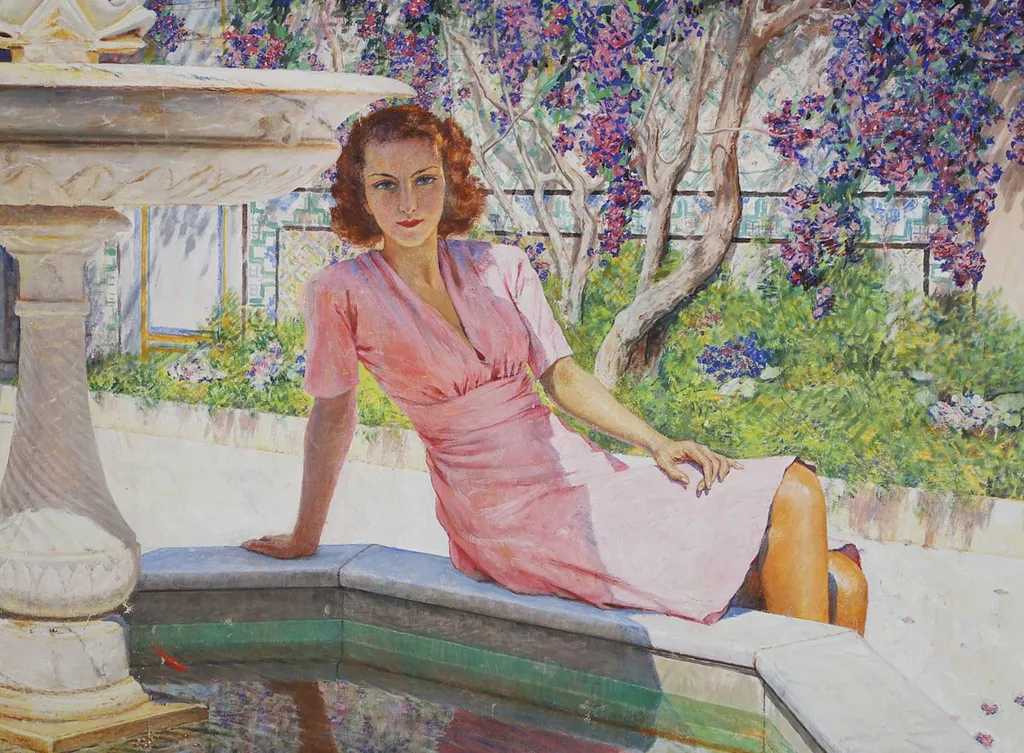
Alexandre Roubtzoff was born in St. Petersburg in 1884, in the heart of an imperial Russia where art played a key role. From an early age, he was supported by his aunt, an influential figure in his life, who recognized his precocious talent and encouraged him to follow a rigorous artistic training.
The young boy, passionate and diligent, soon attracted the attention of his teachers, who saw in him a promise for the future of Russian painting.
In 1904, at just twenty years of age, Alexandre Roubtzoff was admitted to the Imperial Academy of Fine Arts in St. Petersburg, one of the most prestigious institutions of the time. This academy, renowned for the rigor of its teaching, offered him a complete and diversified training, nourished by the great Russian and European artistic traditions.
Roubtzoff studied art in all its forms, from the basics of academic drawing to history painting, via the study of the great masters. This strict but fruitful educational framework enabled him to develop an eclectic, personal style, borrowing from various influences while shaping his own path.
During these formative years, he acquired solid artistic and technical skills. Handling the brush, mastering light and shadow, and composing complex scenes quickly became his strengths.
His teachers also instilled in him the importance of detail and meticulous observation, qualities that would mark his future work.
Roubtzoff, while perfecting his skills, learned to explore a variety of horizons, both thematic and stylistic, which would later enable him to adapt to different cultural and geographical environments, notably that of Tunisia, which would become his adopted homeland.
The painting Portrait d'Arbia by Alexandre Roubtzoff is a striking work that testifies to his talent for capturing the essence and soul of his subjects. Painted with a definite delicacy, this portrait of a woman, probably from the local Tunisian population, wonderfully embodies the artist's mastery of the treatment of light and texture.
Here, Arbia's realistic depiction is distinguished by a detailed rendering of traditional clothing adorned with motifs and decorative elements, testifying both to Roubtzoff's respect for local cultures and his concern for authenticity.
Analyzing this work, one can't help but think of female portraits by Orientalist artists such as Émile Deckers or Benjamin-Constant, who also sought to sublimate the female figure while exploring the exoticism of the Orient.
However, where some of his contemporaries might succumb to idealization or a form of colonial fantasy, Roubtzoff stands out for a more intimate, humanistic approach. Arbia's gaze, direct and imbued with a certain melancholy, seems to reflect a genuine interaction between artist and model, a silent exchange that brings the portrait to life.
Like Delacroix, Roubtzoff manages to translate the richness of Oriental colors and fabrics while preserving a form of sobriety in the composition. The minimalist background, here neutral and uncluttered, highlights the central figure, accentuating the intensity of Arbia's gaze and the nobility of her posture.
Finally, the choice of colors, between reds, pinks and blacks, seems almost symbolic.
The colorful scarves and glittering embroidered garments are a true celebration of local sartorial traditions, and here the artist demonstrates a meticulous attention to detail that anchors Arbia in both a personal and cultural setting.
This portrait, while respecting the codes of orientalism, stands out for a more introspective dimension, where the model is not simply an exotic object of study, but a living, complex and deeply human being.
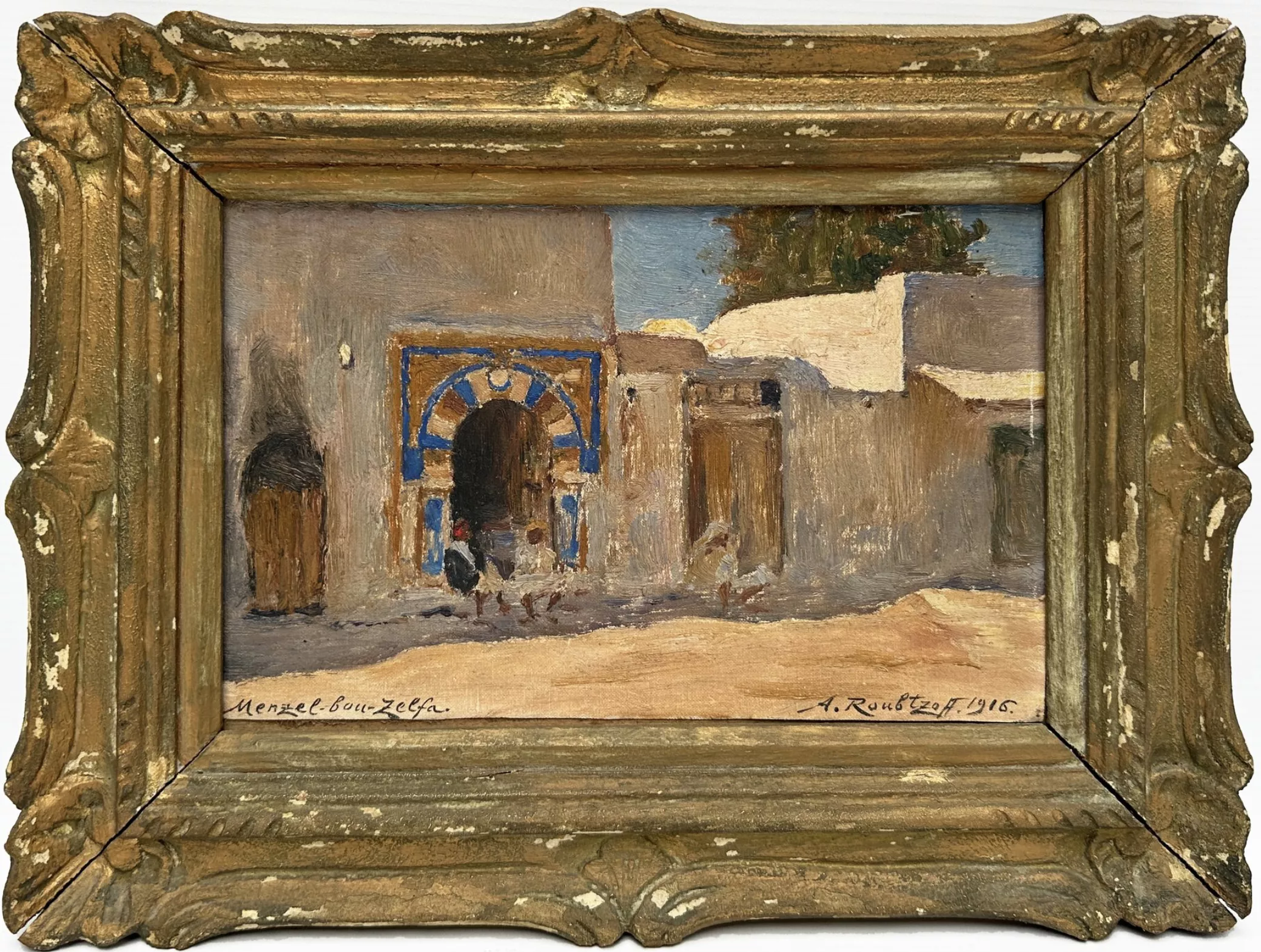
Orientalist painter of Russian origin, Alexandre Roubtzoff is recognized and admired for his faithful depictions of landscapes and scenes of daily life in Tunisia, as well as for his portraits of colonial Orientalist society.
Contrary to many of his contemporaries, who often idealized settings and populations in a style imbued with exoticism, Roubtzoff is distinguished by his constant concern for authenticity.
Rather than settling for stereotypical visions, he strives to immerse himself fully in the environment he paints, seeking to capture the soul of places and people with a deep respect for their traditions and realities.
His works, whether paintings, drawings or watercolors, are thus a precious testimony to the richness of artistic creation in Tunis during the interwar period, a period of great cultural effervescence.
In 1912, Roubtzoff received the consecration of his artistic training with the prestigious Prix de Peinture de l'Académie Impériale des Beaux-Arts de Saint-Pétersbourg. This distinction, a symbol of his immense talent, opened the doors to a wider world thanks to a four-year travel grant.
His journey began in Spain, where he was immediately struck by the striking beauty of Andalusia. The light, colors and architecture of this region awakened in him a deep fascination for the Orient, nourishing his desire to continue his exploration towards other sun-drenched lands.
His wanderings took him through several Oriental lands, but it was finally Tunisia, in 1915, that captured his heart and became his land of choice. Seduced by the contrasts and diversity of the landscape, he settled there permanently, finding it a fertile ground for his artistic expression.
Despite his unwavering attachment to Tunisia, Roubtzoff remained deeply attached to France. He was a regular visitor to Paris, the nerve center of the European art scene, where he took part in major events.
In 1922, he was present at the Exposition coloniale de Marseille, where his work was acclaimed, as well as at the prestigious Salon d'Automne à Paris, which showcased the greatest names in modern painting. His dual membership of these two worlds, Tunisian and French, reflects the richness of his artistic journey.
This to-and-fro between two cultures culminated in 1924 when he obtained French nationality, a symbolic act that definitively sealed his bond with his adopted country.
While Orientalist painting, triumphant in the 19th century, began to lose its lustre in the middle of the 20th century, particularly after Algeria's independence in 1962, Roubtzoff remained one of the leading figures of this movement.
Through his works, he continues to capture the Orient as he perceived and experienced it, offering a unique vision, imbued with a sincerity that is still today the strength and originality of his work.
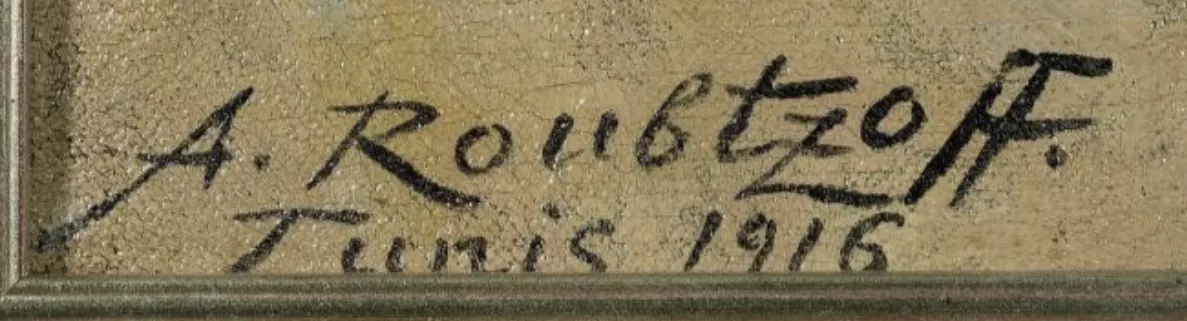
Not all of Roubtzoff's works are signed.
As with any artist, there are variations, here is a first example of his signature at the bottom of this signed and dated painting.
If you happen to own a work by Alexandre Roubtzoff, request a free appraisal without further delay via our form on our website.
A member of our team of experts and certified auctioneers will contact you promptly to provide you with an estimate of the value of your work, as well as ad hoc information about it.
If you are considering selling your work, you will also be accompanied by our specialists in order to benefit from alternatives for selling it at the best possible price.
.
Rating and value of works, drawings, paintings by Chu Teh Ch...
Grand master of Chinese art, millionaire auctioneer, major figure of Asian abstract art: Focus on Chu Teh-Chun.
Learn more >

Kurt Schwitters, analysis and rating of his value on the art...
Kurt Schwitters, visionary artist of the Dada movement, appraise a work by Kurt Schwitters, estimate and market values.
Learn more >

Value of Picasso Madoura ceramics, plates and vases
Picasso Madoura ceramics are sought-after worldwide. The value is climbing and the results are promising. Estimate in 24h
Learn more >
Estimated 3000-5000€
Alexandre Roubtzoff - View of Tunis (small format)
Estimated 3000-5000€
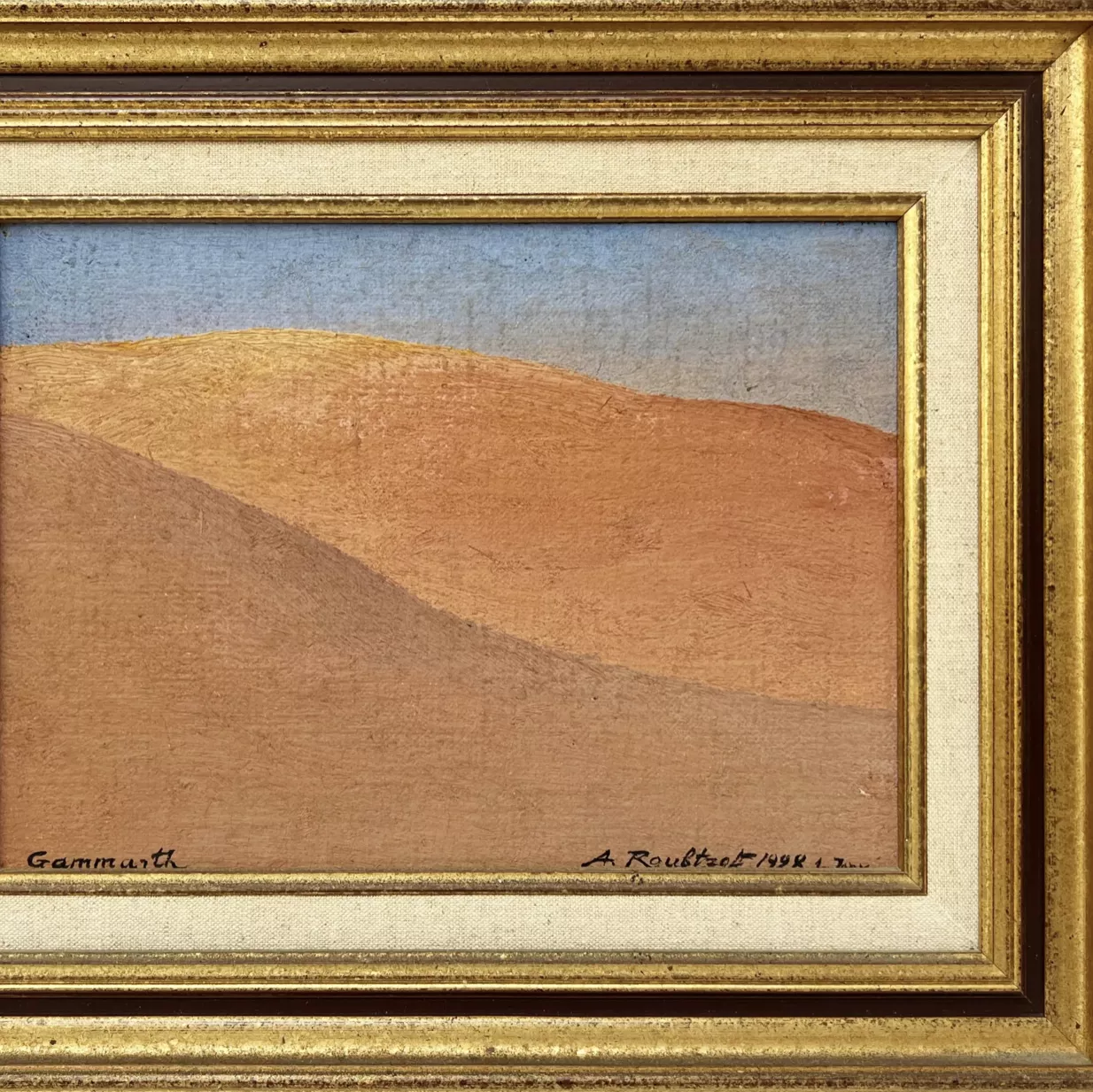
Alexandre Roubtzoff, Gammarth (small format)
Estimated Between €800 and €1,500
Alexandre ROUBTZOFF (1884-1949), View of Notre Dame de Paris, oil on canvas
Estimated 40.000 - 80.000
Alexandre ROUBTZOFF (1884-1949), Portrait of Arbia, oil on canvas
Estimated 20.000 - 30.000
Alexandre ROUBTZOFF (1884-1949), Portrait of Marie-Madeleine Leroy, oil on canvas
Estimated 5.000 - 8.000
Alexandre ROUBTZOFF (1884-1949), The Sidi Makhlouf Mosque, oil on canvas

Secure site, anonymity preserved

Auctioneer approved by the State

Free and certified estimates


