



Rating and value of drawings and paintings by Arbit Blatas

Key takeaways
- Arbit Blatas’s works fetch up to €15,500 at auction, with his oil-on-canvas paintings being the most sought-after by collectors.
- A leading artist of the École de Paris since 1925, Blatas (1908–1999) established himself as an Expressionist figure whose portraits and figurative scenes reveal a psychological insight into his subjects.
- Paintings sell for between €230 and €12,000, while watercolor drawings range from €200 to €2,500, with documented provenance significantly increasing their value.
Arbit Blatas’s paintings and drawings sell for up to €15,500 at auction. An appraisal allows us to accurately determine the current market value of your Arbit Blatas artwork and, if applicable, optimize the sale of the piece.
If you own a work by Arbit Blatas and would like to know its value, our state-certified auctioneers will provide a free appraisal based on authenticity, market rating, and recent market results.
Artist’s Market Value and
Reputation
A leading figure of the École de Paris, Arbit Blatas is known for his figurative paintings and numerous seascapes. The market value of his works was high during his lifetime, and Blatas established himself as a safe bet in the art market.
Highly prized by collectors, his oil-on-canvas paintings are the most popular at auction and can fetch tens of thousands of euros.
A case in point is his 1954 painting *Village Square in Ceret*, which sold for €11,800 in 2008, despite an estimate of between €10,000 and €14,000.
Ranking of value from the most basic to the most prestigious
Technique used | Result |
|---|---|
Print - multiple | From €10 to €1,400 |
Drawing - watercolor | From 50 to 2,900 € |
Painting | From €50 to €11,800 |
Sculpture - three-dimensional | From €50 to €15,500 |
Estimate in less than 24h
Placing the Artist in Context
Period
Arbit Blatas, the pseudonym of Nicolai Arbitblatas (1908–1999), was an artist born in Lithuania who died in New York. His career thus spanned nearly the entire 20th century, reflecting its major turning points: modernist avant-garde movements, World War II, exile, and reconstruction.
His career is structured into three distinct geographical and biographical phases: a formative period in Central Europe, a pivotal period in Paris, and then a forced exile in the United States. The Parisian phase was formative: 1925 marked his arrival in Paris, where he settled in Montparnasse.
He immediately integrated into the artistic circles of the interwar period and joined the artists of the École de Paris, of whom he was, at age 21, the youngest member. In 1941, he fled occupied France and settled in the United States, marking the end of his European period.
Artistic Movements
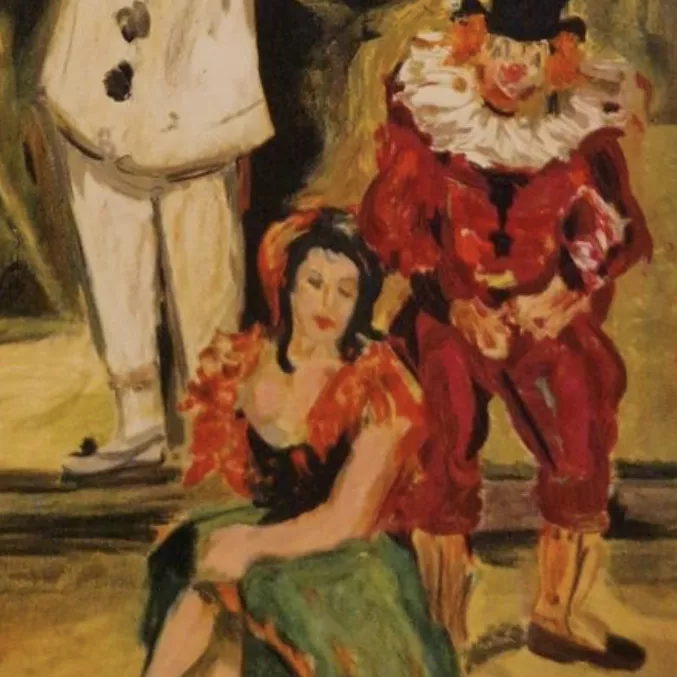
Blatas is primarily associated with the École de Paris and its Expressionist movement: his traditional figurative work is rooted in the deeply poignant Expressionist style characteristic of Central European countries, marked by a dense impasto and light captured by the texture of the oil paint.
His network of artistic friendships attests to his deep roots in the avant-garde: drawn to Paris, he reunited with his Lithuanian Jewish friends such as Kikoine and Soutine, and quickly formed bonds with Matisse, Chagall, and Foujita.
He attended the Académie de la Grande Chaumière and the Académie Colarossi, where he studied with Othon Friesz and André Lhote, both leading figures of Post-Cubism and the “Return to Order” movement. His thematic repertoire is rooted in a humanist figurative tradition.
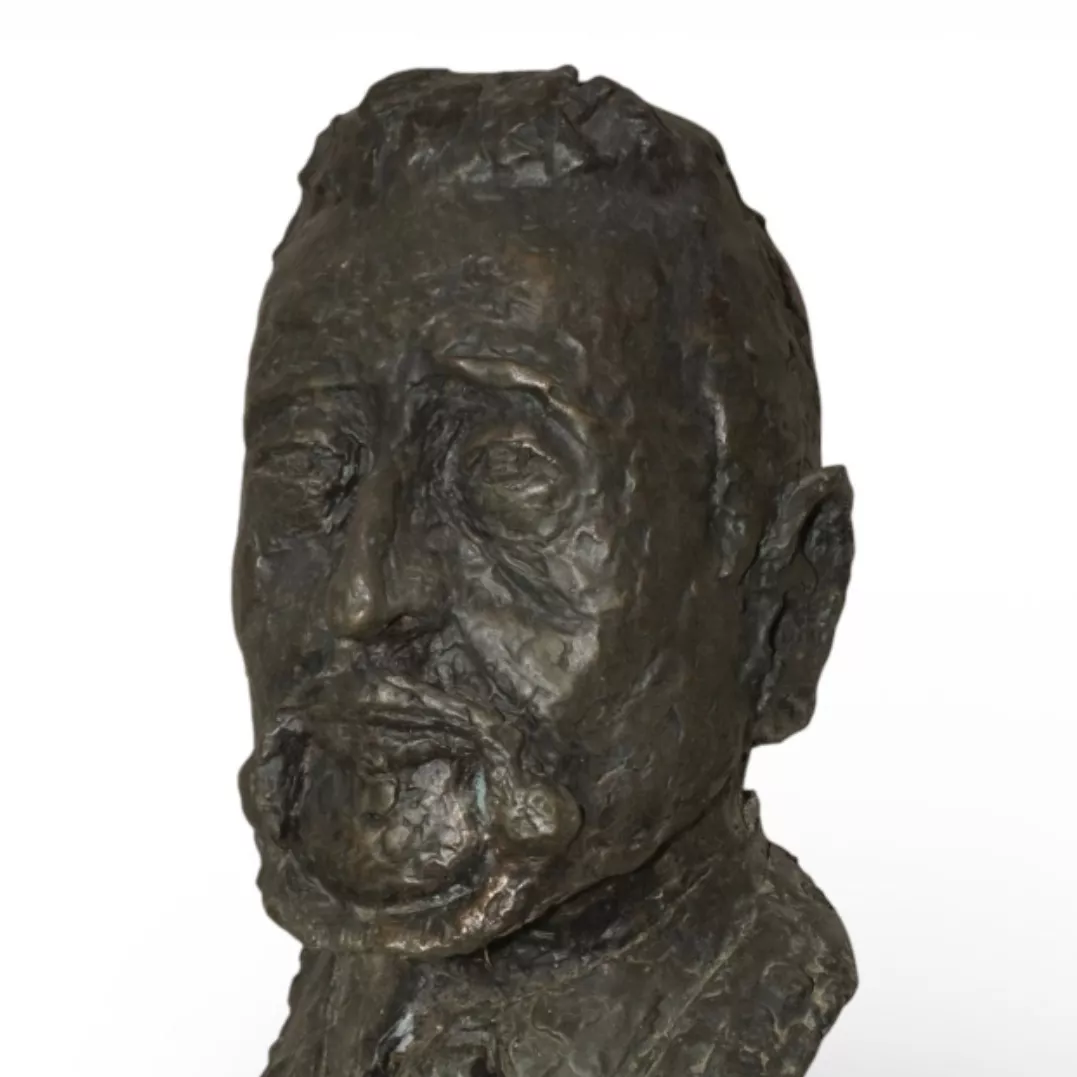
His work as a portrait sculptor constitutes a complementary dimension of his body of work. In 1976, following the advice of André Malraux, the Musée de l’Orangerie acquired a bronze sculpture depicting the painter Soutine. In 1990, the artist donated 41 portraits of artists from the École de Paris to the Musée des Années 30 in Boulogne-Billancourt.
The Life of Arbit Blatas
Cultural Background
Arbit Blatas was born to parents who were piano dealers; he grew up in an environment that was both cultured and religiously strict. His deeply devout father considered the depiction of images to be sacrilegious and severely punished his son’s artistic passion, creating a fundamental tension between Jewish tradition and his calling as a painter.
He fled the Communist Revolution to Germany in 1921, where he studied in Berlin, Munich, and Dresden, before moving to Paris in 1925—a path of exile typical of Jewish artists from Central Europe. At age 21, he became the youngest member of the École de Paris, a cosmopolitan network of foreign artists who transformed Paris into the world capital of the avant-garde.
Beginning in 1929, he exhibited regularly at the Salon d’Automne and the Salon des Tuileries, and at age 24, the Galerie Nationale du Jeu de Paume acquired his first paintings—an early institutional recognition for such a young artist.
Artistic and Intellectual Circle
Settling in Montparnasse on Rue de la Gaîté, he met Sylvia Satenstein, whom he would marry in 1933, and quickly became part of the neighborhood’s dense network of studios and cafés. At the Académie de la Grande Chaumière and the Académie Colarossi, he studied notably with Othon Friesz and André Lhote.
He worked with Suzanne Valadon, of whom he was a student, and at the same time became a friend of the Utrillo family—a connection that linked him to a French tradition of popular Expressionist painting, distinct from the Central European Jewish movement.
Arbit Blatas' Techniques
The Artist’s Style
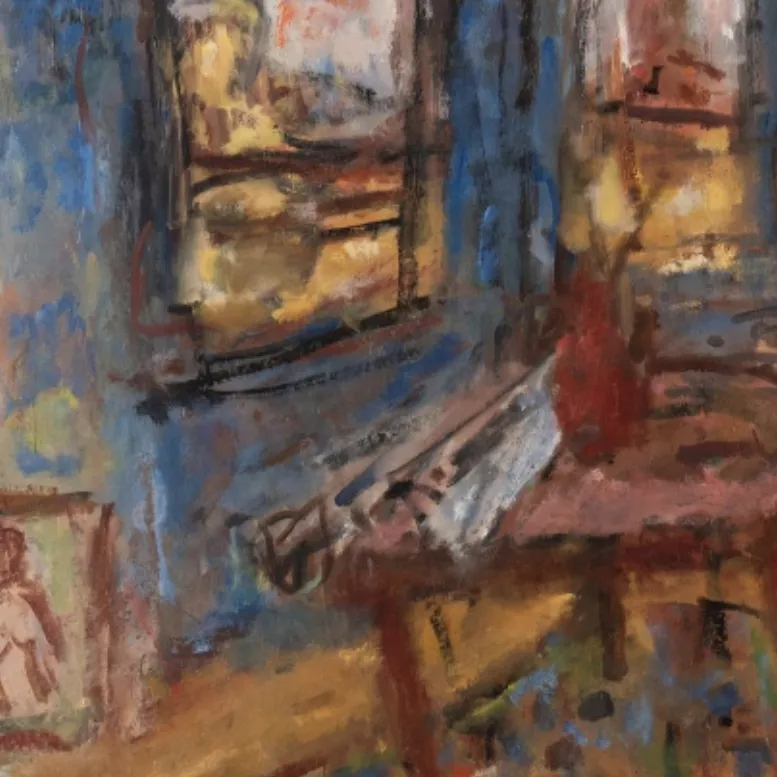
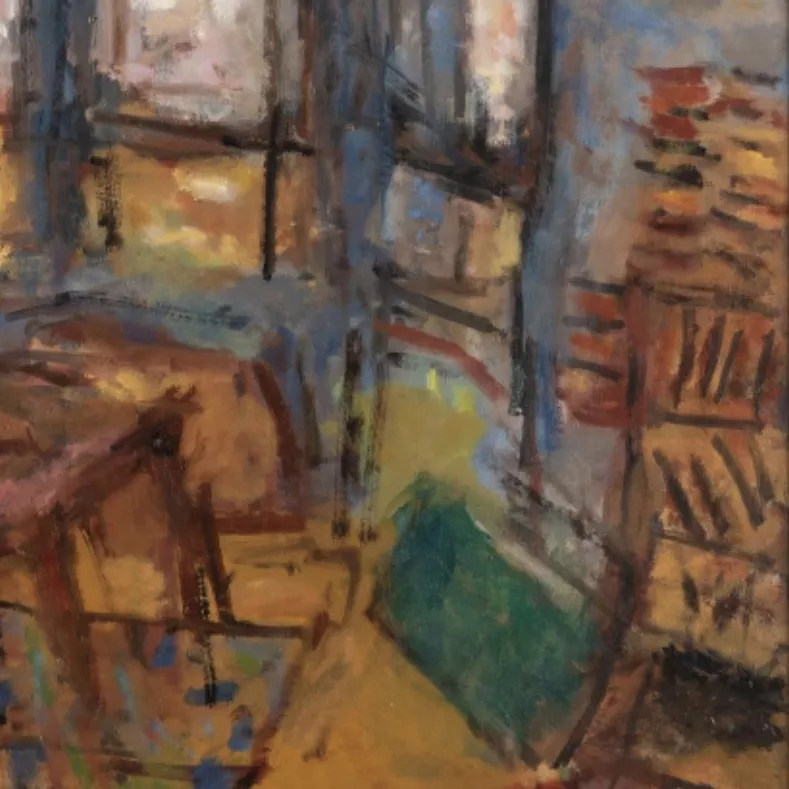
Arbit Blatas is part of the École de Paris movement, with an expressionist influence. His artistic training is diverse and transcends national boundaries. His dense impasto, broad brushstrokes, and the light captured by the oil paint’s texture are accentuated by backlighting, creating an immediate, spontaneous style.
His body of work reveals a predilection for human figures and scenes of everyday life; portraits, nudes, and scenes from daily life are his most frequently depicted subjects, rendered in brown and earthy tones, revealing a constant focus on the psychology of his subjects and the capture of the moment.
Blatas also designed opera sets and costumes for several opera productions, including *Carmen*, *Elektra*, and *Faust*—creations inspired by his marriage to Regina Resnik.
Spotlight on a Key Work
*Le Dôme*, 1938, oil on canvas
*Le Dôme* is a painting depicting the leading figures of the School of Paris, notably Soutine, Kokoïne, Krémègne, Mané-Katz, Lipchitz, and Blatas himself, set in a place steeped in cultural significance and a major gathering spot for the Parisian avant-garde of the 1920s and 1930s.
Painted in 1938, at a time when anti-Semitic persecution was intensifying across Europe, the work takes on, in retrospect, the significance of a final gathering on the verge of disappearing. Blatas opts for a composition in the style of a visual chronicle, in which each face is captured in its expressive individuality.
By including himself among the figures depicted, Blatas affirms his full and complete belonging to the School of Paris, while also making a reflexive gesture (painting the very milieu in which he paints).
FAQ – How do you appraise a work by Arbit Blatas?
1) Which categories of works are most sought after by collectors?
His body of work is divided into several thematic series, each with varying market values. The portraits from the École de Paris constitute the most iconic and best-documented series. Next come the “Theepenny Opera” series, as well as landscapes and scenes from Venice, Céret, and Collioure.
2) At what price points do Blatas’s works sell at auction?
The price of a painting signed by Arbit Blatas typically ranges from €230 to €12,000. Prints are the least expensive works, ranging from €50 to €1,500. Drawings and watercolors generally sell for between €200 and €2,500, compared to €700 to €6,000 for a sculpture.
3) Does the provenance of a Blatas work play a significant role in its valuation?
Due to his personal connections with the greatest artists of the École de Paris, a work coming directly from the circle of Chagall, Soutine, or Lipchitz—or from a collection assembled by one of his close associates—holds significant documentary value.
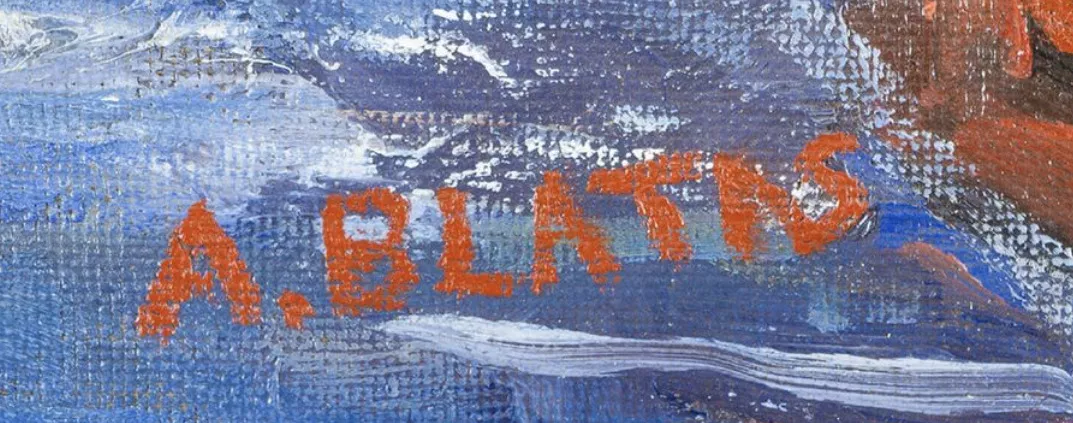
His Signature
Not all of Arbit Blatas’s works are signed.
Although there are variations, here is an example of his signature:
Get Your Arbit Blatas Artwork Appraised
If you own a work by Arbit Blatas, an appraisal will help you determine its current market value.
Using our online form, our experts and certified auctioneers will conduct a free appraisal and provide you with a reliable estimate of your artwork’s market value.
If you’re considering selling it, we’ll guide you through the process to ensure you get the best possible price.
Estimate in less than 24h
D'autres tableaux expressionnistes vendus aux enchères


Discover in the same theme

Rating and value of paintings by Vasudeo Gaitonde
Vasudeo Gaintonde is a twentieth-century Indian abstract painter whose works are highly valued at auction.
Learn more >

Rating and value of paintings by Zeng Yilu
Zeng Yilu is a Chinese artist who has produced numerous works whose value has recently increased at auction. 100% free estimate
Learn more >

Rating and value of paintings by Gabriele Münter
Gabriele Münter is an Expressionist artist who has produced many works that are highly valued at auction. 24h estimate
Learn more >

Secure site, anonymity preserved

Auctioneer approved by the State

Free and certified estimates
Frequently asked questions
-
Who was Arbit Blatas, and what is his artistic background?Arbit Blatas (1908–1999), the pseudonym of Nicolai Arbitblatas, was a Lithuanian painter and sculptor and a leading figure of the School of Paris. He arrived in Paris in 1925 at the age of 21, became its youngest member, and joined the avant-garde circles, befriending Chagall, Soutine, Matisse, and Foujita. His figurative Expressionist work, characterized by a dense impasto and light captured by the texture of the oil paint, spans nearly the entire 20th century, marked by his exile to the United States in 1941.
-
At what prices do Arbit Blatas' paintings and sculptures sell at auction?Arbit Blatas’s works fetch up to €15,500 at auction. Paintings generally sell for between €230 and €12,000, sculptures between €700 and €6,000, drawings and watercolors between €200 and €2,500, while multiples remain the least valuable, fetching between €50 and €1,500.
-
How can you authenticate a work by Arbit Blatas and determine its exact value?To authenticate and appraise a work by Arbit Blatas, we recommend that you submit your item to our state-certified auctioneers by requesting a free, no-obligation estimate. Our experts will conduct an appraisal based on authenticity, signature, provenance, and recent market results, and you’ll receive a response within 48 hours.
-
Does the provenance of a work by Blatas affect its estimated value?Yes, provenance plays a significant role in the valuation of a work by Blatas. A provenance directly linked to the circle of Chagall, Soutine, or Lipchitz—or to a collection assembled by one of their close associates—holds genuine documentary value and can enhance the work’s value, particularly in the case of his iconic portraits associated with the École de Paris.
-
How do I sell a work by Arbit Blatas through Auctie's?Auctie's guides you through the entire process, from appraisal to the auction of your Arbit Blatas artwork. Following a free appraisal conducted by our certified auctioneers, we maximize the value of your item by ensuring its authentication, documentation, and sale at auction under the best market conditions.
