



Rating and value of drawings and paintings by Arnold Böcklin

Key takeaways
- Arnold Böcklin’s works sell for up to €767,900 at auction, with prices ranging from €10 to €360,800 depending on the technique used.
- A Swiss Symbolist painter (1827–1901), Böcklin is recognized as a leading figure of Germanic Symbolism and a precursor to the Surrealists, broadening his appeal among collectors.
- The mythological compositions from his Roman period (1850–1874) and his allegories of death, notably the five versions of *The Isle of the Dead* (1879–1886), command the highest prices.
Arnold Böcklin’s sculptures and drawings sell for up to €767,900 at auction. An appraisal allows us to accurately determine the current market value of your Arnold Böcklin artwork and, if applicable, optimize the sale of the piece.
If you own a work by Arnold Böcklin and would like to know its value, our state-certified auctioneers will provide a free appraisal based on authenticity, market value, and recent market results.
The Artist’s Market Value and Reputation
On the auction market, works by Arnold Böcklin are rare but nonetheless highly sought after by collectors.
His paintings, characteristic of Symbolism, command the highest prices on the market. The amounts his works sell for range from €10 to €360,800 at auction.
Thus, a painting signed by Böcklin can fetch tens of thousands of euros at auction, as evidenced by his painting *The Battle on the Bridge*, which sold for 767,900 in 2024.
Ranking by value, from the most basic to the most prestigious
Technique used | Result |
|---|---|
Print - multiple | From 100 to 2,000 € |
Drawing - watercolor | From 360 to 340,000 € |
Sculpture - three-dimensional | From €215 to €360,800 |
Oil on canvas | From €90 to €767,900 |
Estimate in less than 24h
Placing the Artist in Context
Period
Arnold Böcklin (1827–1901) was a Swiss painter, draftsman, sculptor, and graphic artist. His career spanned the second half of the 19th century, a period of transition between late Romanticism and the early emergence of European Symbolism.
His academic training initially placed him within the German Romantic tradition: at age 18, he studied at the Düsseldorf Art Academy, notably under Johann Wilhelm Schirmer, a painter of panoramic works.
His stay in Rome was formative and had a lasting impact on his pictorial imagination: he lived in Rome for seven years, where he became part of the circle of German artists. He visited Naples and Pompeii. His career then alternated between Italian and German phases.
Movements
Böcklin is unanimously regarded as one of the leading figures of German Symbolism; alongside his peers—including Ferdinand Hodler, Max Klinger, and Lovis Corinth—he is one of the movement’s foremost representatives.
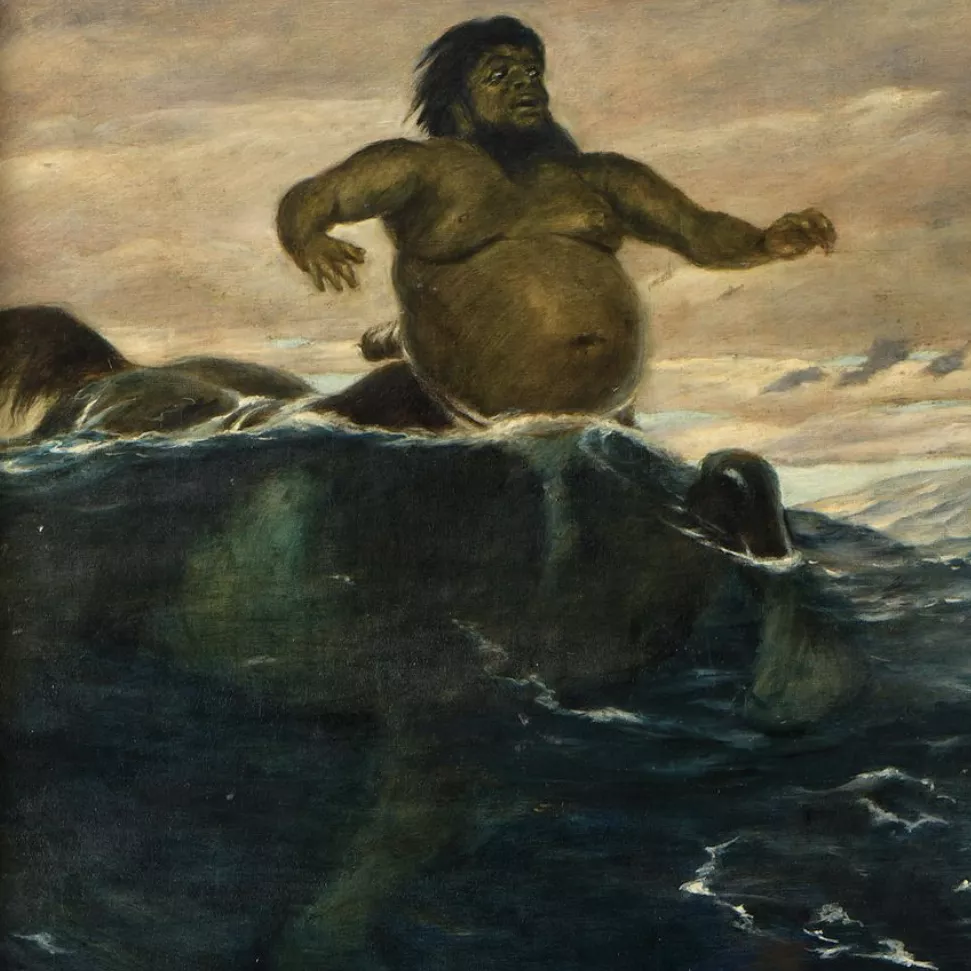
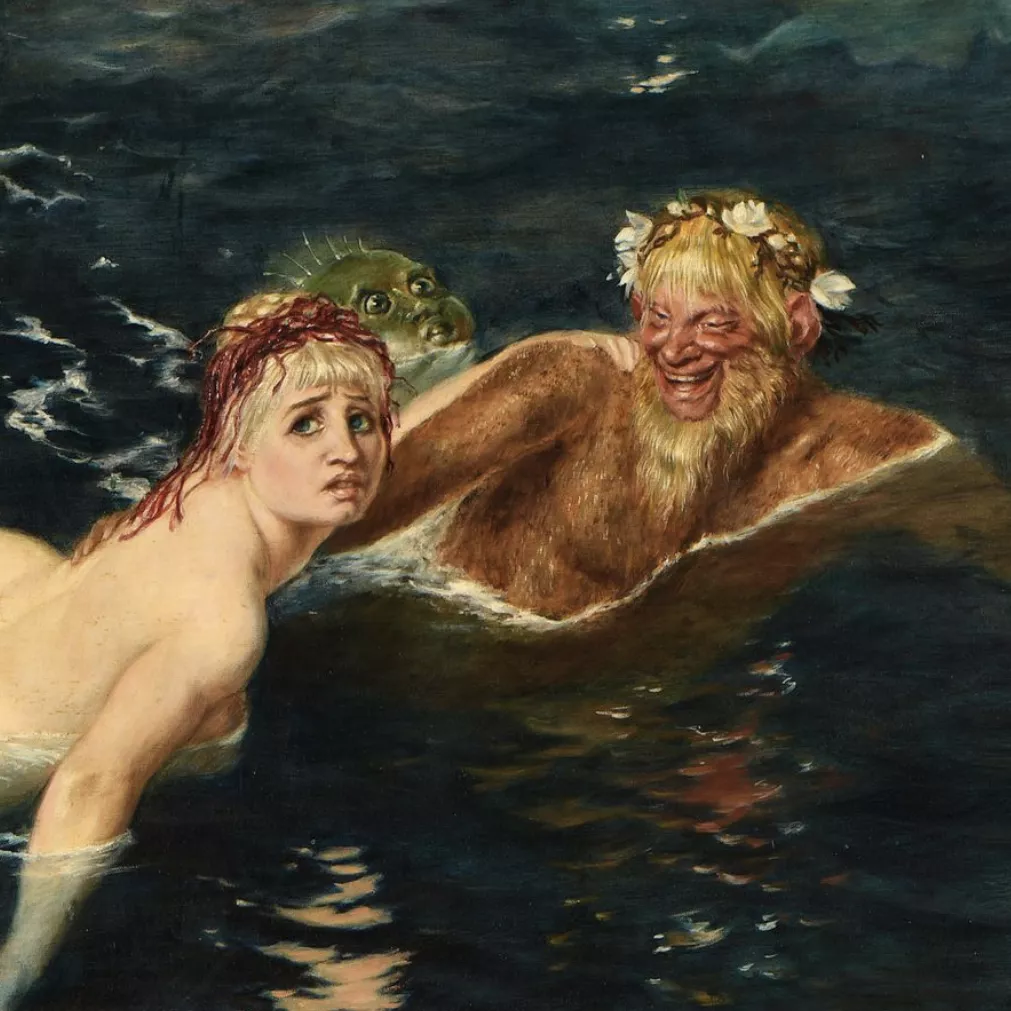
He gradually shifted from naturalism toward a dreamlike imagination: his painting evolved over the years, beginning in his youth with naturalistic themes, before delving into the visionary and the fantastic. His uniqueness within Symbolism lies in the fact that his style defies established categories.
The Life of Arnold Böcklin
Cultural Background
Böcklin was the son of silk merchant Christian Böcklin and Ursula Lipp, and came from the Swiss merchant bourgeoisie—a background without artistic tradition but one that ensured him relative financial independence throughout his career.
He studied from 1845 to 1847 at the Düsseldorf Academy of Fine Arts and was a student of the Romantic painter Schirmer. His stay in Rome lasted from 1850 to 1857. In 1870, the death of his daughter shortly after her birth
Artistic and Intellectual Circle
He studied and trained under Karl Gussow and Émile Wauters, renowned realist painters who instilled in him a rigorous academic technique before his shift toward Symbolism.
In April 1902, the Vienna Secession organized an exceptional exhibition in the building designed by Joseph-Maria Olbrich; conceived by architect Josef Hoffmann, the exhibition paid tribute to Beethoven through the joint presentation of Klinger’s monument and Klimt’s fresco inspired by the Ninth Symphony.
His influence on the Expressionists was considerable, particularly on Edvard Munch. Kollwitz adapted his iconography, creating a direct link to the Expressionist generation, which identified with her dramatic treatment of the anguish of dreams.

Arnold Böcklin's Techniques
Prices of Works
The market for Böcklin’s works is characterized by an exceptionally wide price range, unmatched among the German Symbolist painters of his generation; paintings sell for between €400 and €900,000, drawings and watercolors between €400 and €30,000, and prints between €80 and €1,200.
This range reflects a very pronounced hierarchy based on subject matter and the period in which the works were created: the Romantic landscapes of his early years, still influenced by his academic training in Düsseldorf, remain in price ranges significantly lower than the mythological compositions of his mature Roman period, the most sought-after segment at auction.
Factors Influencing Value
His status as a leading figure in German Symbolism is the primary driver of his critical and market legitimacy: along with Ferdinand Holder, Max Klinger, and Lovis Corinth, Böcklin is one of the leading representatives of German Symbolism, a movement that broke with academic painting and the naturalism of the second half of the 19th century.
The connection claimed by the Surrealists lends the work exceptional historical resonance, extending far beyond the scope of Symbolism: Giorgio de Chirico, Salvador Dalí, and Max Ernst saw Böcklin as one of their predecessors and hailed him as a “brilliant and ironic artist”—a recognition that broadens the pool of potential collectors beyond mere enthusiasts of academic Symbolism.
FAQ – How do you appraise a work by Arnold Böcklin?
1) Which periods are the most sought-after?
Originally a landscape painter, Böcklin gradually shifted toward figurative compositions featuring dreamlike figures and mythological references. We can thus distinguish the Romantic period (1845–1860), the Roman and mythological period (1850–1874), and the mature Symbolist and morbid period (1874–1901).
2) Why is *The Isle of the Dead* so central to understanding Böcklin’s reputation?
In 1879, he painted the first of his five versions of *The Isle of the Dead*, his most famous painting. He produced various commissioned versions in 1880, including the 1883 version that belonged to Hitler, the 1884 version destroyed during the bombing of Rotterdam, and the 1886 version. This series serves as a benchmark.
3) Which subjects fetch the highest prices at public auctions?
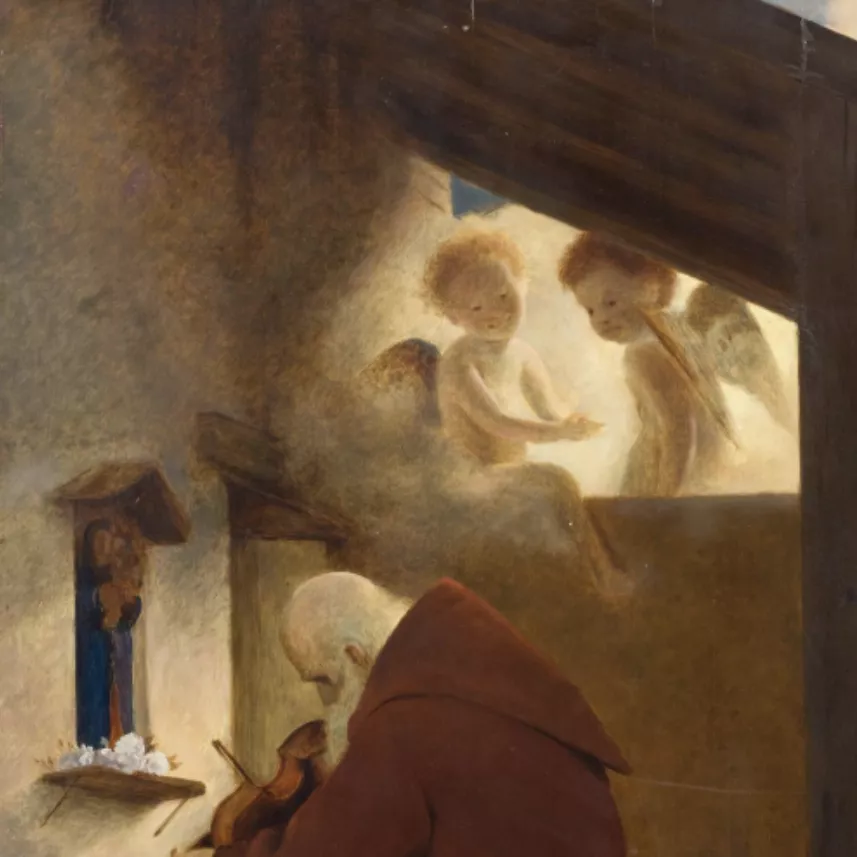
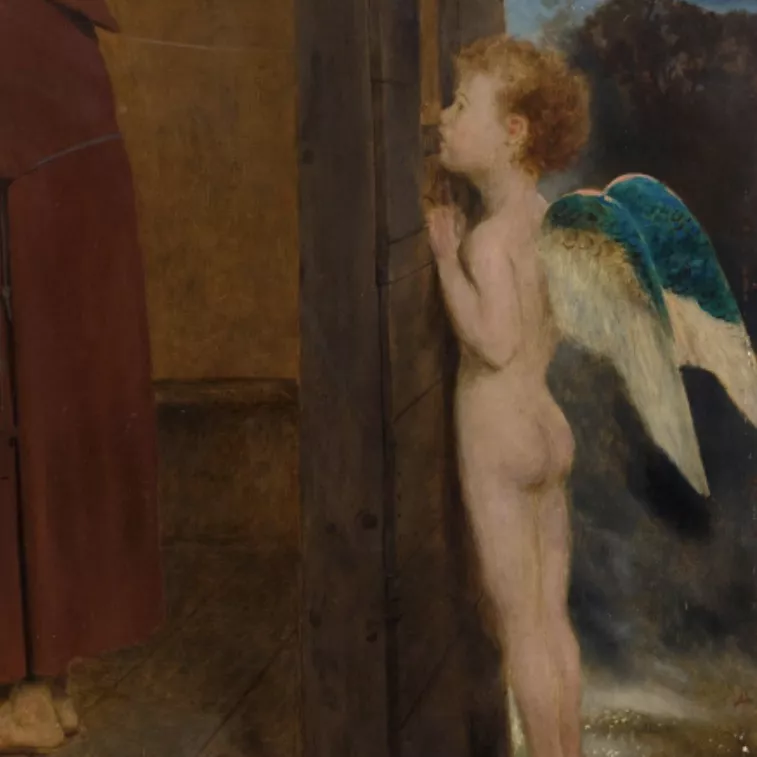
The painter chose to depict mythical creatures or other figures drawn from the collective imagination: sirens, dragons, angels, fauns, gorgons, and centaurs. The market hierarchy ranks allegorical compositions of death at the top, followed by crowded mythological scenes, then portraits and self-portraits, and finally pure landscapes.
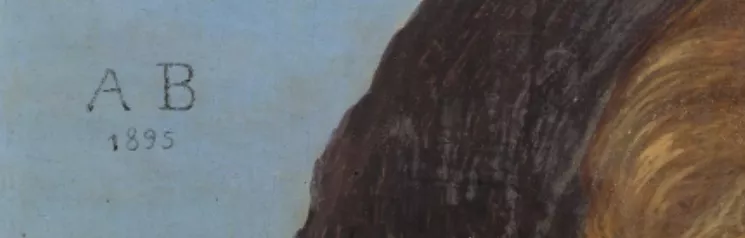
His signature
Not all of Arnold Böcklin’s works are signed.
Although there are variations, here is an example of his signature:
Get Your Arnold Böcklin Artwork Appraised
If you own a work by Arnold Böcklin, an appraisal will help you determine its current market value.
Using our online form, our experts and certified auctioneers will conduct a free appraisal and provide you with a reliable estimate of your artwork’s market value.
If you’re considering selling it, we’ll guide you through the process to ensure you get the best possible price.
Estimate in less than 24h
Discover in the same theme

Ratings and values of paintings by Alfred Roll
Alfred Roll was a 19th-century realist painter who produced drawings and oils on canvas that are valued at auction.
Learn more >

Rating and value of furniture, desks, chests of drawers by P...
Paul Sormani was a 19th-century cabinetmaker who produced a number of pieces of furniture that are highly valued at auction. Estimate in 24h
Learn more >

Rating and value of paintings by Theodore Robinson
Theodore Robinson is an American Impressionist painter who produced works in France. His works are highly valued.
Learn more >
Nos records d'enchères à l'hôtel Drouot

Estimated 10.000 - 15.000 €
Ebridge Ayer BURBANK(1858-1949), Young African-American boy, Oil on panel.

Estimated 20.000 - 30.000
EXCEPTIONAL LARGE OVAL DISH IN VINCENNES SOFT PASTE PORCELAIN FROM THE "BLEU CÉLESTE" SERVICE OF KING LOUIS XV AT THE CHÂTEAU DE VERSAILLES

Estimated 20.000 - 30.000
MANUFACTURE ROYALE DE SÈVRES, 18th century "L'Empereur de la Chine" - Portrait of the Emperor Qianlong, Hard porcelain bisque, 1775

Estimated 1.500 - 3.000
HERMÈS, "Kelly" 32 saddle bag in black box calf

Estimated Between €5,000 and €8,000
KRACHKOWSKY (1854-1914), Before the storm, oil on canvas

Estimated 40.000 - 80.000
Alexandre ROUBTZOFF (1884-1949), Portrait of Arbia, oil on canvas

Secure site, anonymity preserved

Auctioneer approved by the State

Free and certified estimates
Frequently asked questions
-
Who is Arnold Böcklin, and what is his significance in art history?Arnold Böcklin (1827–1901) was a Swiss painter, draftsman, and sculptor considered one of the leading figures of German Symbolism, alongside Ferdinand Hodler and Max Klinger. Trained at the Düsseldorf Academy, his stay in Rome from 1850 to 1857 had a profound impact on his work, leading him to evolve from naturalism toward a dreamlike imagination. His influence extends beyond Symbolism: the Surrealists de Chirico, Dalí, and Max Ernst hailed him as a genius predecessor.
-
What are the price ranges for Böcklin's works based on the medium used?At auction, Böcklin’s oil-on-canvas paintings sell for between €90 and €767,900, his drawings and watercolors for between €360 and €340,000, sculptures between €215 and €360,800, and prints between €100 and €2,000. This exceptional range reflects a marked hierarchy based on subject matter and the period in which the works were created, with the mythological compositions from his mature Roman period commanding the highest prices.
-
Which subjects and time periods command the highest prices?Allegorical depictions of death, particularly the five versions of “The Isle of the Dead” (1879–1886), serve as the benchmark for the art market. Next come mythological scenes populated by dreamlike creatures (sirens, dragons, fauns, gorgons), followed by portraits and self-portraits, and finally pure landscapes. The mature Symbolist period (1874–1901) and the Roman period (1850–1874) are the most sought-after by collectors.
-
How can you authenticate a work by Böcklin and determine its exact value?Requesting a free appraisal from Auctie's allows you to determine the authenticity and exact value of your artwork. Our state-certified auctioneers analyze the artwork based on its technique, provenance, condition, and recent market trends. You’ll receive your no-obligation estimate within 48 hours.
-
Is this the right time to sell a work by Böcklin?Yes, the market for Böcklin’s works remains very active. Recognized as a leading figure in German Symbolism and championed by the Surrealists, his works enjoy exceptional critical and commercial legitimacy that extends far beyond mere enthusiasts of academic Symbolism. Auctie's guides you from the appraisal to the auction to ensure you get the best value for your item.
