



Rating and value of sculptures, drawings, and engravings by Max Klinger

Key takeaways
- Max Klinger's works sell for between €10 and €360,800 at auction, with his polychrome sculptures fetching the highest prices.
- A major pioneer of German Symbolism (1857–1920), Klinger had a significant influence on the Expressionists, including Edvard Munch and Käthe Kollwitz.
- Prices vary depending on the medium: paintings from €300 to €61,700, watercolor drawings from €120 to €130,000, and sculptures from €215 to €360,800.
Max Klinger’s sculptures and drawings fetch up to €360,800 at auction. An appraisal allows us to accurately determine the current market value of your Max Klinger artwork and, if applicable, optimize the sale of the piece.
If you own a work by Max Klinger and would like to know its value, our state-certified auctioneers will provide a free appraisal based on authenticity, market value, and recent market results.
The Artist’s Market Value and Reputation
On the auction market, works by Max Klinger are rare but nonetheless highly sought after by collectors.
His paintings, characteristic of Symbolism, command the highest prices on the market. The prices at which his works sell range from €10 to €360,800 at auction.
Thus, a painting signed by Klinger can fetch tens of thousands of euros at auction, as evidenced by his bronze sculpture *Galeta*, which sold for 360,800 in 2001, despite an estimate of between 13,000 and 20,000.
Ranking by value, from the most basic to the most prestigious
Technique used | Result |
|---|---|
Oil on canvas | From 300 to 61,700 € |
Print—multiple | From €10 to €70,000 |
Drawing - watercolor | From €120 to €130,000 |
Sculpture - three-dimensional | From €215 to €360,800 |
Estimate in less than 24h
Placing the Artist in Context
Period
Max Klinger (1857–1920) was a painter, sculptor, and printmaker born in Leipzig. His career spanned the late 19th century and the turn of the 20th century, a period marked by the ferment of the German avant-garde and a challenge to official academic art.
He received his training at the heart of German academic institutions before embarking on an international career. He studied under Karl Gussow in 1874–75 at the Kunstschule in Karlsruhe and followed him to the Berlin Academy from 1875 to 1878, where he learned engraving; he then spent time in Brussels in 1879, in Munich in 1880, in Berlin from 1875 to 1883, in Paris, and then in Rome.
His stay in Italy marked a major aesthetic turning point; from 1883 to 1893, he lived in Rome and became increasingly influenced by the Italian Renaissance and antiquity.
Movements
Klinger is generally considered one of the major precursors of German Symbolism. He also contributed to the emergence of the Symbolist movement in general. His stylistic evolution involved a gradual move beyond his initial realism: his early works, characterized by realism, gradually gave way to Symbolism.
He conceived of art as a total work, transcending mediums: throughout his career, he explored numerous artistic practices with the aim of creating the total work of art, an ambition that culminated in his sculptural installation dedicated to Beethoven.
His connection to Symbolism is complemented by a dreamlike and morbid vein inherited from Spanish printmaking. His fascination with morbid subjects finds another outlet in his etching series, modeled after the great Spanish printmaker Goya.
His influence on subsequent generations attests to his pivotal role as a bridge between Symbolism and Expressionism; his influence is evident in the work of Edward Munch, Kubin, and Käthe Kollwitz.
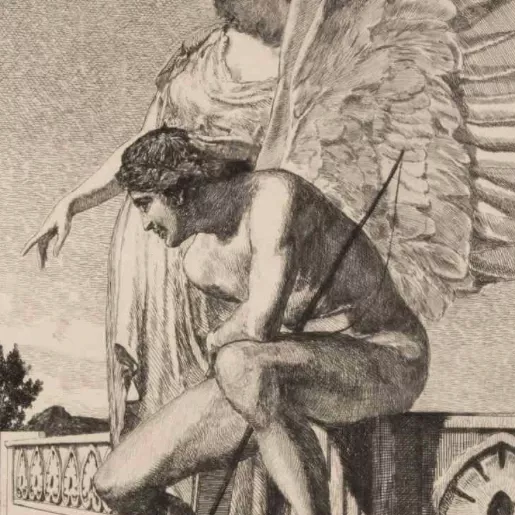
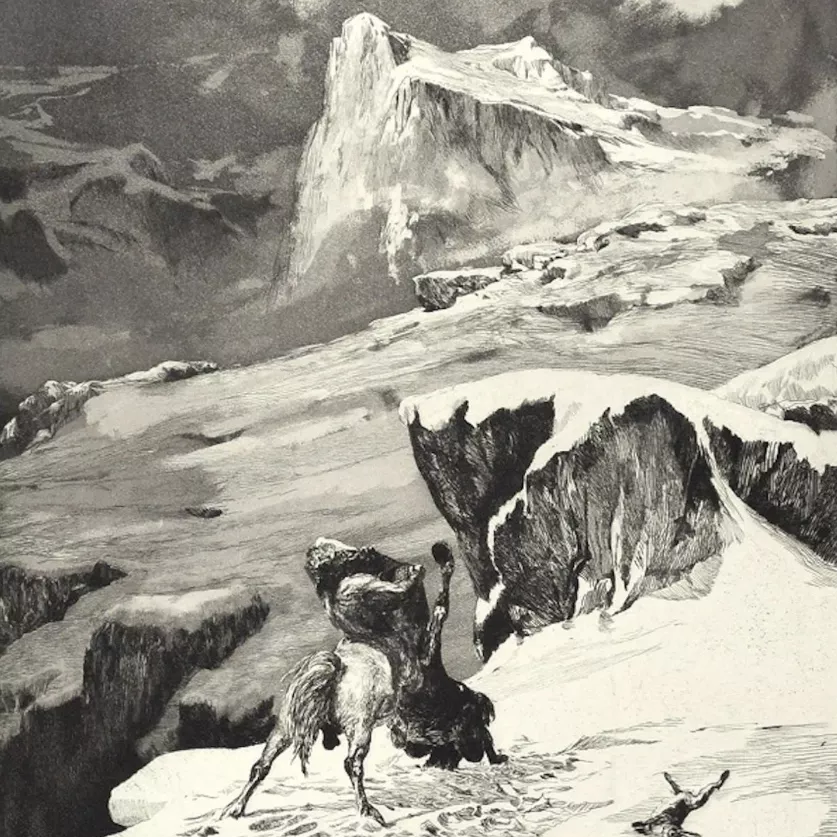
The Life of Max Klinger
Cultural Context
Max Klinger emerged in a Germany that was actively seeking a national and imperial artistic identity, caught between academic tradition and the aspiration toward a fully realized Symbolist art.
He studied at the Academy of Fine Arts in Karlsruhe, where he initially trained as a sculptor before quickly developing an interest in painting, printmaking, and writing. He was also passionate about literature and philosophy, and throughout his career explored numerous artistic practices with the goal of creating the “total work of art.”
He drew inspiration from his dreams—twenty years before Freud published *The Interpretation of Dreams*—a visionary precocity that makes his graphic work a precursor to psychoanalysis and surrealism in its exploration of the unconscious and the fantastical.
Artistic and Intellectual Circle
He studied and trained under Karl Gussow and Émile Wauters, renowned realist painters who instilled in him a rigorous academic technique before he turned toward Symbolism.
In April 1902, the Vienna Secession organized an exceptional exhibition in the building designed by Joseph-Maria Olbrich; conceived by architect Josef Hoffmann, the exhibition paid homage to Beethoven through the joint presentation of Klinger’s monument and Klimt’s fresco inspired by the Ninth Symphony.
His influence on the Expressionists was considerable, particularly on Edvard Munch. Kollwitz adapted his iconography, creating a direct link to the Expressionist generation, which identified with her dramatic treatment of the anguish of dreams.

Techniques of Max Klinger
Prices of Works
The market for Klinger’s works shows a clear differentiation based on medium, which is a direct result of his versatility. Paintings sell for between €500 and €20,000, multiples for between €10,000 and €20,000, drawings and watercolors for between €200 and €50,000, and sculptures command the highest prices.
The historical significance of his body of engravings is a powerful driver of demand in the secondary market. His series of engravings, which have been reprinted several times, exerted a decisive influence on Kollwitz, Max Ernst, Paul Klee, and Giorgio de Chirico.
Drawings from her mature period achieve significant results on the international market. Polychrome sculptures constitute the rarest and highest-value segment.
Factors Influencing Value
Paradoxically, his status as an unsung forerunner of German Symbolism is the primary factor driving desirability among discerning collectors: a pioneer of Symbolism and the finest German sculptor of his generation, Klinger remains relatively unknown outside his home country.
His friendship and aesthetic affinity with Auguste Rodin serve as a major source of critical legitimacy. Klinger drew inspiration from Rodin’s expressive power to create monumental sculptures.
His sculptures possess a scandalous and avant-garde quality, which has sustained critical interest in his body of work over time; his monument to Beethoven, in particular—depicting him as a ghostly figure—caused a major scandal.
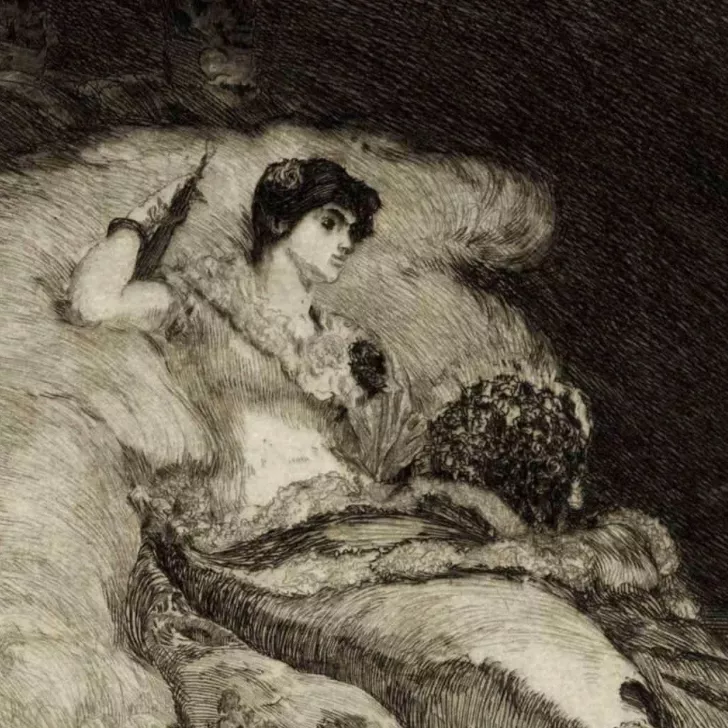
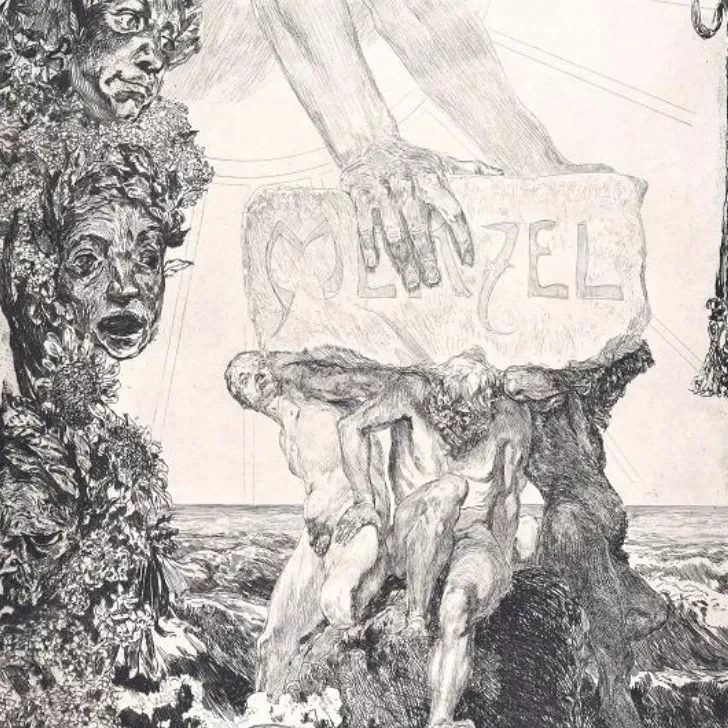
FAQ – How do you appraise a work by Max Klinger?
1) How are Klinger’s engravings organized?
Klinger’s body of engravings is extensive. It consists primarily of about fifteen series, each containing between ten and forty-six plates. He produced the etching series titled *Ein Handschuh*, originally printed in Munich in 1881 by Otto Felsing’s studio. For each series, it is necessary to identify the cycle to which an individual plate belongs, as well as its opus number. Determining its place within the series is the first step in any appraisal.
2) Does Klinger’s influence on later artists support his current market value?
Klinger’s influence on other artists significantly supports his current market value. Klinger’s profound influence on the Expressionists—particularly Edvard Munch and Kubin—is also widely recognized. This direct connection to artists who are now valued much more highly serves as a basis for revaluation.
3) How did Klinger sign his works?
Max Klinger was one of many artists who did not sign all of their works. A few signed works do exist. For engravings, the signature may be engraved directly onto the plate or added by hand in pencil in the lower margin.
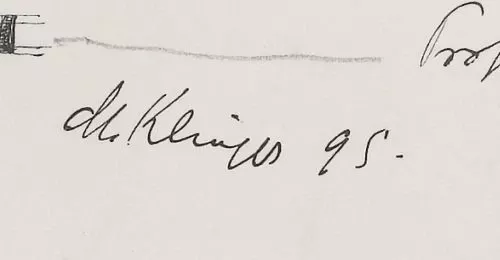
His signature
Not all of Max Klinger’s works are signed.
Although there are variations, here is an example of his signature:
Get Your Max Klinger Artwork Appraised
If you own a work by Max Klinger, an appraisal will help you determine its current market value.
Using our online form, our experts and certified auctioneers will conduct a free appraisal and provide you with a reliable estimate of your artwork’s market value.
If you’re considering selling it, we’ll guide you through the process to ensure you get the best possible price.
Estimate in less than 24h
Nos records d'enchères à l'hôtel Drouot

Estimated 10.000 - 15.000 €
Ebridge Ayer BURBANK(1858-1949), Young African-American boy, Oil on panel.

Estimated 20.000 - 30.000
EXCEPTIONAL LARGE OVAL DISH IN VINCENNES SOFT PASTE PORCELAIN FROM THE "BLEU CÉLESTE" SERVICE OF KING LOUIS XV AT THE CHÂTEAU DE VERSAILLES

Estimated 20.000 - 30.000
MANUFACTURE ROYALE DE SÈVRES, 18th century "L'Empereur de la Chine" - Portrait of the Emperor Qianlong, Hard porcelain bisque, 1775

Estimated 1.500 - 3.000
HERMÈS, "Kelly" 32 saddle bag in black box calf

Estimated Between €5,000 and €8,000
KRACHKOWSKY (1854-1914), Before the storm, oil on canvas

Estimated 40.000 - 80.000
Alexandre ROUBTZOFF (1884-1949), Portrait of Arbia, oil on canvas
Discover in the same theme

Rating and value of works, sculptures, bronzes by Charles Va...
Charles Valton was a 19th-century animal sculptor who worked with Barye, producing works that are quite highly rated at auction.
Learn more >

Rating and value of paintings by Charles Olivier de Penne
Charles Olivier de Penne is a nineteenth-century painter who produced works that are highly regarded and valued at auction. Estimate in 24h.
Learn more >

Rating and value of paintings by Clémentine Hélène Dufau
Clémentine Hélène Dufau is an artist who has produced paintings and illustrations that are highly rated and valued at auction.
Learn more >

Secure site, anonymity preserved

Auctioneer approved by the State

Free and certified estimates
Frequently asked questions
-
Who is Max Klinger, and what is his role in art history?Max Klinger (1857–1920) was a German painter, sculptor, and printmaker born in Leipzig, considered one of the major pioneers of German Symbolism. Trained in German academic institutions before spending time in Italy, France, and Belgium, he developed a dreamlike and morbid style influenced by Goya, exerting a decisive influence on Expressionists such as Edvard Munch, Kubin, and Käthe Kollwitz. His ambition was to create the “total work of art,” transcending the various artistic mediums.
-
What are the price ranges for the different types of works by Max Klinger?Prices for Klinger’s works vary considerably depending on the medium: oil paintings on canvas sell for between €300 and €61,700, prints between €10 and €70,000, drawings and watercolors between €120,000 and €130,000, and sculptures between €215,000 and €360,800. Polychrome sculptures represent the rarest and most expensive segment of the market.
-
How can you authenticate a work by Max Klinger?To authenticate a work by Klinger, we recommend requesting a free appraisal from Auctie's. Our state-certified auctioneers examine the work’s authenticity, market value, and recent auction results, taking into account specific factors such as the series to which the engravings belong, signature variations, and the work’s condition.
-
Is this the right time to sell a work by Max Klinger?Yes, now is a good time to sell a work by Klinger. The auction market is showing growing interest in this artist, who is little known outside his home country but highly prized by discerning collectors. His status as an unsung pioneer of Symbolism and his major influence on the Expressionists are factors contributing to a sustained rise in value.
-
How does the free appraisal of a work of art work at Auctie's?The appraisal is simple and non-binding: you fill out our online form with information and photos of your artwork, and then our experts and certified auctioneers will conduct a thorough appraisal and provide you with a reliable estimate within 48 hours. If you decide to sell, we’ll guide you through the process from the appraisal to the auction to ensure you get the best possible price.
