



Rating and value of paintings by Paul Klee

Key takeaways
- Prices for works by Paul Klee range from €10 to €1.9 million, with paintings fetching as much as €4.7 million depending on the technique and period.
- Major works from the Bauhaus period (1912–1931) and his late period (1935–1940), particularly large-format pieces, regularly exceed €3 to €5 million on the international market.
- The secondary market for works on paper remains very active, with prices ranging from €50,000 to €500,000 depending on the format, technique, provenance, and documentation in the catalogue raisonné.
If you own a work by or after the artist Paul Klee, and would like to know its value, our state-approved experts and auctioneers will offer you their appraisal services.
Our specialists will carry out a free appraisal of your work, and provide you with an accurate estimate of its value on the current market.
Then, should you wish to sell your work, we will direct you to the best possible arrangement to obtain the optimum price.
Rating and value of the artist Paul Klee
Considered one of the leaders of Expressionism, Paul Klee leaves behind a unique and colossal artistic repertoire for the history of art. This legacy consists of paintings, watercolor drawings and prints.
At present, prices for his works are reaching unprecedented levels at auctioneers' gavels. His paintings are particularly prized, and the price at which they sell on the art market ranges from €10 to €1,939,0000, a considerable delta but one that speaks volumes about the value that can be attributed to Paul Klee's works.
In 2022, a polychrome composition entitled Bunte Landschaft dating from 1928 sold for €3,989,000 while it was estimated at €1,196,700 to €1,795,000.
Order of value from a simple work to the most prestigious
Technique used | Result |
|---|---|
Estamp - multiple | From €10 to €321,540 |
Drawing - watercolor | From 275 to 1,939,000€ |
Painting | From 370 to 4,674,000€ |
Estimate in less than 24h
Style and technique of the artist Paul Klee
Paul Klee's work is characterized above all by stylistic polymorphism. It claims a formal eclecticism, which results from a personal synthesis between several twentieth-century currents (expressionism, cubism, surrealism, lyrical abstraction).
His practice eludes any univocal classification, which also contributes to its singularity in the history of modern art.
Paul Klee conceives painting as a language of signs governed by laws of internal composition. He developed a rigorous plastic grammar based on networks of lines, grids and colored rhythms that organize pictorial space according to a musical or architectonic logic.
As an artist with extensive musical training, he transposed rhythmic, contrapuntal and harmonic structures into his painting. The work thus becomes a visual score, in which colors and forms respond to each other according to their own temporality.
Klee demonstrated constant technical inventiveness, exploring a wide variety of media (canvas, paper, cardboard, burlap) but also processes (watercolor, oil, tempera, ink, pastel and etching).
He frequently uses superimposed translucent layers, mixed techniques and scratchy, cross-hatched effects.
He frequently uses superimposed translucent layers, mixed techniques and scratchy, cross-hatched effects.
The painter sees color as an organic phenomenon: it is not treated in an illusionistic way, but as a living substance. It is often used in modulated flat tints, subtle gradations or juxtapositions of complementary tones, reflecting a chromatic reflection nourished by Goethe's theory and Bahaus research.
His pictorial space is non-illusionistic, rejecting traditional perspective in favor of a conceptual space, where planes articulate freely according to internal logics. The absence of mimetic depth favors a symbolic or poetic reading of the image.
The iconography is hybrid : his universe is populated by human and schematic figures, stylized animals and archaic architectural forms, pseudo-scriptural signs and cosmological motifs. These elements are organized according to a plastic syntax that evokes both primitive art and ancient symbolic systems.
As Professor at the Bahaus, Paul Klee developed a theory of artistic creation based on the genesis of forms in nature, which he transposed into his teachings and notebooks. He also thought of his work as an act of knowledge.
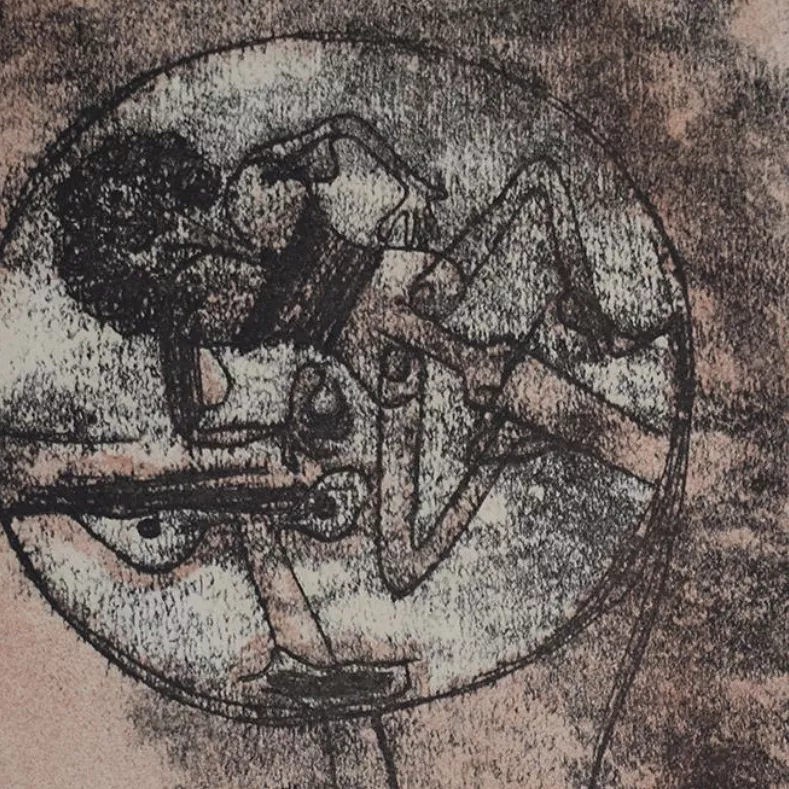

Paul Klee, his life, his work
Paul Klee (1879-1940), a German artist, became a key figure in the art world of the 20th century. Born in Münchenbuchsee, near Bern, into a German-Swiss family of musicians, he was immersed in a cultural environment from an early age.
His father, a music teacher, and his mother, a singer, played a structuring role in his artistic sensibility. After hesitating between a musical and a pictorial career, he finally opted for the visual arts and entered the Munich Academy of Fine Arts in 1898, where he studied under Franz von Stuck.
There he developed a mastery of academic drawing, while quickly becoming critical of academicism. Between 1901 and 1914, Klee underwent a period of intensive exploration, both in technical and iconographic terms.
In 1901, a decisive trip to Italy strengthened his interest in ancient art, while his stay in Tunisia in 1914 with August Macke and Louis Moillet operated a luminous turning point in his painting, marking a revelation as to the expressive power of his color.
When he returned to Munich, he joined the expressionist group Die Blaue Reiter alongside Kandinsky and Marc, without fully identifying with its spiritual orientations.
He developed a personal language, distinct from the dogmas of the movements with which he was associated. In 1921, he was appointed professor at the Weimar Bahaus, where he taught until 1931 (in Weimar and then Dassau).
Here he developed an innovative pedagogy based on the analysis of natural forms, synthesized in his theoretical lectures and notebooks, today considered fundamental in the history of modern plastic thought.
"Art does not reproduce the visible, it makes it visible." Paul Klee, 1920 lecture.
During the interwar period, he enjoyed growing international recognition, exhibiting in Paris, New York, and several major European cities. His works became part of important public and private collections in the 1920s.
In 1933, following Hitler's rise to power, Paul Klee was dismissed from his position at the Düsseldorf Academy, and his works were described as " degenerate art ". He left Germany and took refuge in Berne, Switzerland, where he continued to work alone.
Despite his illness, scleroderma, he maintained intense creative activity until his death in 1940. His later work is more refined, often tinged with irony or gravity, reflecting a plastic sublimation of pathos and a reduction of forms to their symbolic essence.
He is recognized today as a central figure of artistic modernity, whose work has influenced both the abstract avant-gardes and contemporary reflections on the relationship between image, sign and music.
Market segmentation and artist rating
Paul Klee is today considered one of the pillars of European modern art, alongside Kandinsky, Magritte, Picasso and Picasso and Matisse. His work enjoys international institutional recognition, supported by a massive presence in museum collections and in major historical exhibitions devoted to abstraction and the avant-garde.
The Klee market is highly structured, with a clear segmentation between major works on canvas or cardboard (gouaches, oils, mixed techniques) and more modest works on paper (drawings, watercolors, sketches), which make up a significant part of his output.
This fragmentation enables several price ranges to be covered, while maintaining high quality standards. Pieces from the Bahaus period (1912 - 1931), the interwar period and late production (1935 - 1940), especially large-format, highly symbolic works, achieve the highest valuations, often exceeding 3 or 5 million euros on the international market.
Klee's market is highly internationalized, with transactions concentrated in the major modern art marketplaces (New York, London, Paris, Zurich and Hong Kong).
Auction houses such as Christie's, Sotheby's and Koller ensure the regular circulation of his high-value works. Paul Klee's quotation is stable and historically rising, driven by sustained institutional demand, measured supply and the relative rarity of first-rate works.
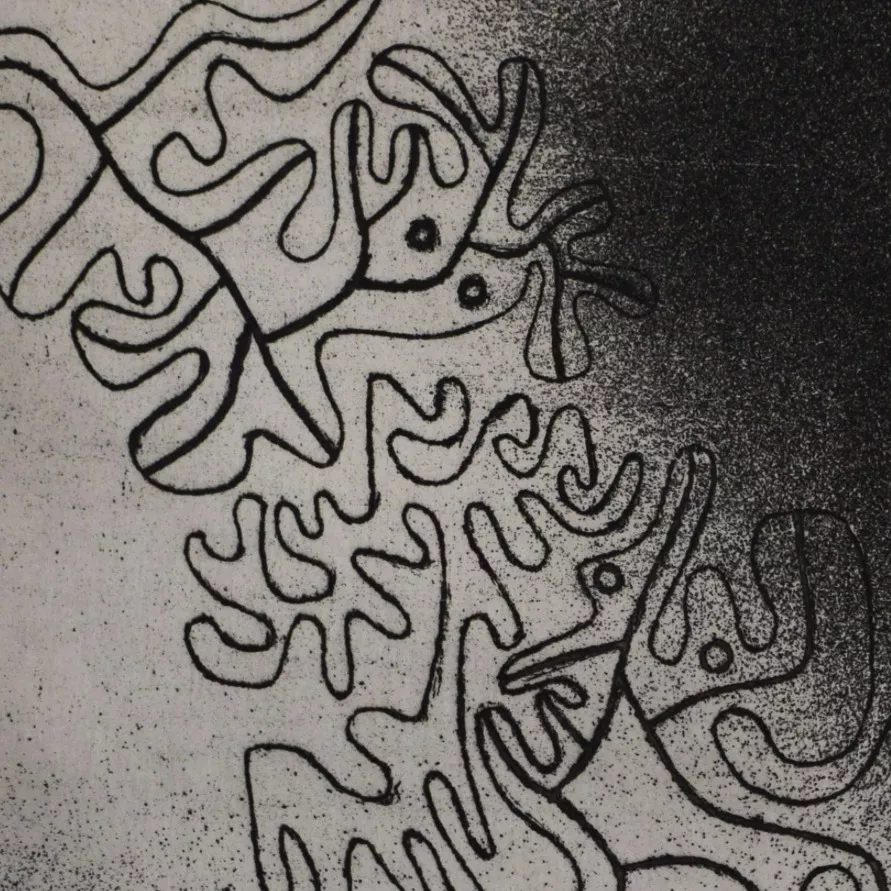
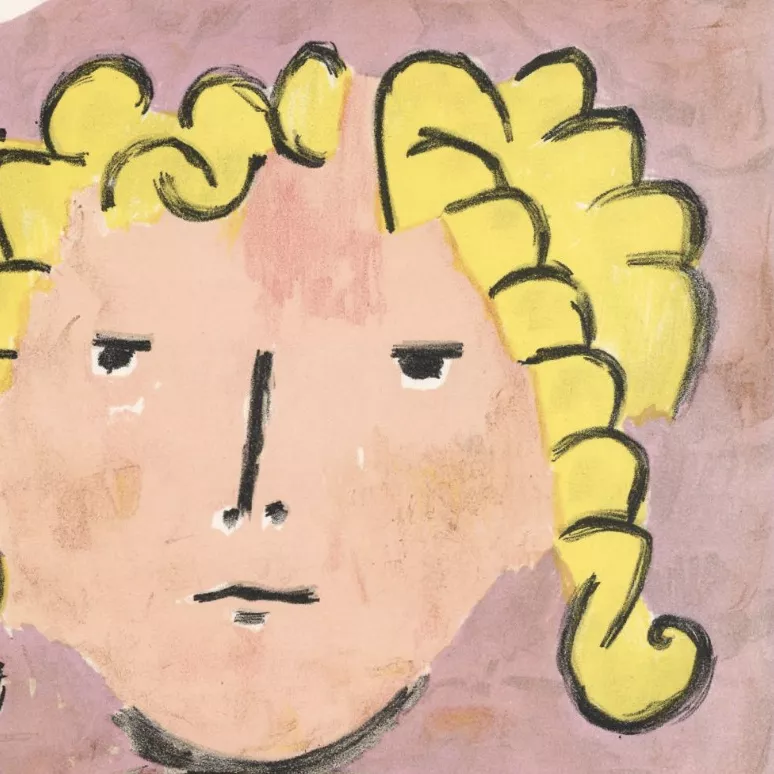
The perceived value is based as much on the artist's historical status as on the conceptual and aesthetic richness of his work. The secondary market is very active, particularly for works on paper, which regularly sell between €50,000 and €500,000, depending on format, technique, date, provenance and documentation.
Signed and dated pieces from well-referenced bodies of work such as the artist's catalog raisonné attract the interest of discerning collectors and institutions alike. The presence of a dedicated research center (Zentrum Paul Klee), the existence of an exhaustive catalog raisonné and the constant research into the artist's notebooks and theoretical writings reinforce the academic legitimacy and confidence of buyers.
This gives the work a patrimonial dimension that is highly secure over the long term. Purchasers are mainly high-level modern art collectors, often oriented towards the European avant-garde. The market also attracts museum institutions, private foundations and collectors sensitive to the intellectual and educational dimensions of the work.
The market is regulated and protected, with the entire corpus now closely monitored by experts and foundations, limiting the circulation of fakes and preserving the integrity of the market.
Recognizing Paul Klee's signature
Paul Klee's paintings are generally signed and dated in the lower right-hand corner of the canvas.

Knowing the value of a work
If you happen to own a work by or after Paul Klee, don't hesitate to request a free valuation using our form on our website.
A member of our team of experts and certified auctioneers will contact you promptly to provide you with an estimate of the market value of your work, as well as ad hoc information about it.
If you are considering selling your work, you will also be accompanied by our specialists in order to benefit from alternatives for selling it at the best possible price, taking into account the inclinations of the market.
.Estimate in less than 24h
Nos records d'enchères à l'hôtel Drouot

Estimated 10.000 - 15.000 €
Ebridge Ayer BURBANK(1858-1949), Young African-American boy, Oil on panel.

Estimated 20.000 - 30.000
EXCEPTIONAL LARGE OVAL DISH IN VINCENNES SOFT PASTE PORCELAIN FROM THE "BLEU CÉLESTE" SERVICE OF KING LOUIS XV AT THE CHÂTEAU DE VERSAILLES

Estimated 20.000 - 30.000
MANUFACTURE ROYALE DE SÈVRES, 18th century "L'Empereur de la Chine" - Portrait of the Emperor Qianlong, Hard porcelain bisque, 1775

Estimated 1.500 - 3.000
HERMÈS, "Kelly" 32 saddle bag in black box calf

Estimated Between €5,000 and €8,000
KRACHKOWSKY (1854-1914), Before the storm, oil on canvas

Estimated 40.000 - 80.000
Alexandre ROUBTZOFF (1884-1949), Portrait of Arbia, oil on canvas
Discover in the same theme

Rating and value of works, drawings, paintings by Yüksel Ars...
Yüksel Arslan is a twentieth-century Turkish painter and draughtsman who produced drawings and oil paintings listed at auction.
Learn more >

Rating and value of paintings by Martial Raysse
Martial Raysse is a twentieth-century New Realist painter whose drawings and oil paintings are highly regarded and valuable.
Learn more >

Rating and value of paintings by Reuven Rubin
Reuven Rubin is an Israeli modernist artist who has produced many works that are highly rated and valued at auction.
Learn more >

Secure site, anonymity preserved

Auctioneer approved by the State

Free and certified estimates
Frequently asked questions
-
Who was Paul Klee, and what is his role in the history of modern art?Paul Klee (1879–1940) was a German artist considered one of the leading figures of Expressionism and a central figure in 20th-century modern art. As a professor at the Bauhaus in Weimar, he synthesized several major movements (Expressionism, Cubism, Surrealism, and lyrical abstraction) by developing a unique personal style, characterized by a rigorous visual language based on networks of lines, grids, and colorful rhythms.
-
What is the price range for Paul Klee's works based on the medium used?The value of Paul Klee’s works varies considerably depending on the medium. Prints and multiples range from €10 to €321,540, watercolor drawings from €275 to €1,939,000, while paintings fetch between €370 and €4,674,000. Major works from the Bauhaus period and his late career—particularly large-format pieces—regularly exceed 3 to 5 million euros on the international market.
-
How do you authenticate a work by Paul Klee?To authenticate a work by Paul Klee, we recommend that you request a free appraisal from Auctie's by filling out the form on our website. A certified expert or auctioneer will contact you shortly to examine the work, verify the signature (usually in the lower right corner), consult the catalog raisonné, and provide you with a reliable appraisal within 48 hours.
-
Is this the right time to sell a work by Paul Klee?Yes, this is an excellent time to sell a work by Paul Klee. The market for this artist enjoys stable and historically rising international institutional recognition, supported by strong institutional demand, limited supply, and the relative scarcity of top-tier works. Transactions remain steady and active at the highest levels of the modern art market.
-
How does the appraisal process work at Auctie's?Appraisals at Auctie's are free and non-binding. You fill out an online form with photos and information about your item. A state-certified expert or auctioneer will review your item and provide you with an accurate assessment of its market value within 48 hours. If you wish to sell, our specialists will guide you toward the best options for obtaining the highest possible price.
