



Rating and value of drawings and paintings by Horace Vernet

Key takeaways
- Horace Vernet’s works sell for between €10 and €420,000 at auction, with paintings fetching the highest prices.
- An Orientalist and Romantic painter of the 19th century (1789–1863), Vernet has enjoyed a critical resurgence since the 1980s and will be the subject of a major retrospective in Versailles in 2023.
- Drawings and watercolors range from €40 to €106,000, while prints sell for between €10 and €6,900, depending on the technique and provenance.
Horace Vernet’s paintings and drawings fetch up to €420,000 at auction. An appraisal allows us to accurately determine the current market value of your Horace Vernet artwork and, if applicable, optimize the sale of the piece.
If you own a work by Horace Vernet and would like to know its value, our state-certified auctioneers will provide a free appraisal based on authenticity, market rating, and recent market results.
Artist’s Market Value and
Reputation
An Orientalist and Romantic painter, Horace Vernet is a unique figure in the art market. His works, however, command high prices on the market and are highly sought after by collectors.
His works consist exclusively of oil-on-canvas paintings, which sell for between €10 and €420,000—a relatively wide range, but one that speaks volumes about the prices these works can command.
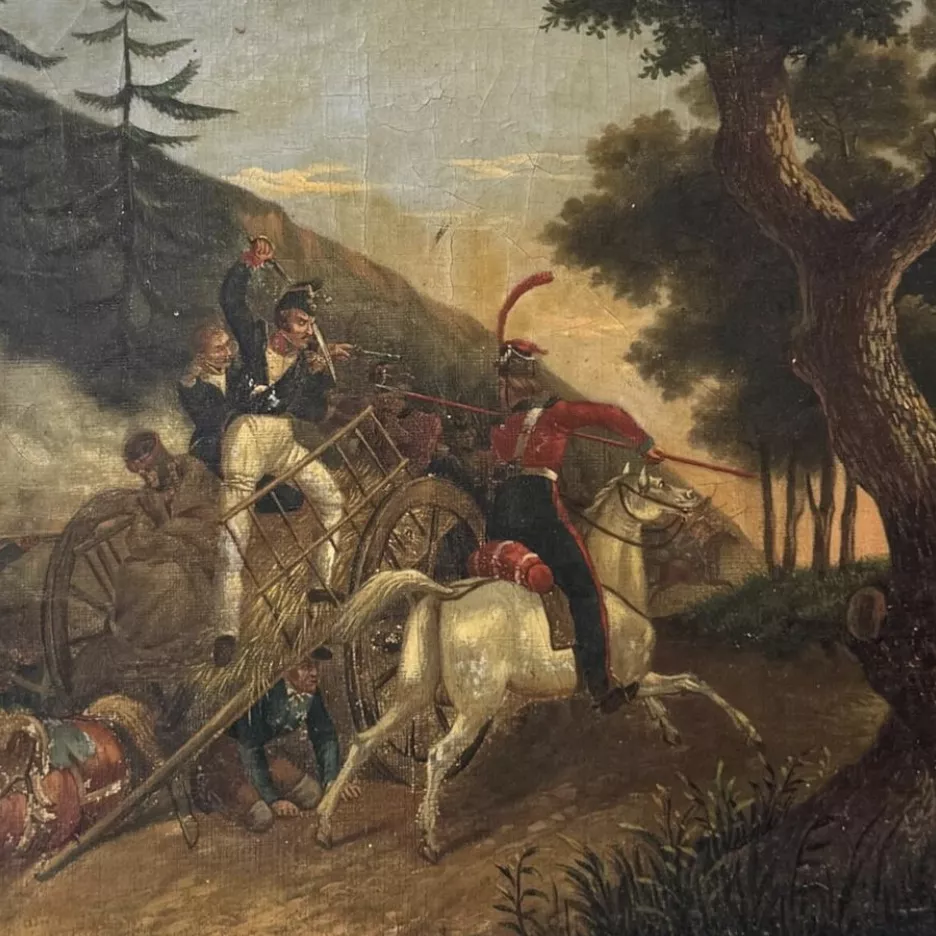
Thus, a work signed or attributed to Vernet can fetch thousands of euros at auction, as evidenced by his oil on canvas, The Death of Prince Poniatowski on October 19, 1813, which sold for €420,000 despite an estimate of between €50,000 and €70,000.
Ranking from the most basic to the most prestigious
Technique used | Result |
|---|---|
Print - multiple | From €10 to €6,900 |
Drawing - watercolor | From 40 to 106,000€ |
Painting | From €130 to €420,000 |
Estimate in less than 24h
Placing the Artist in Context
Period
Émile Jean Horace Vernet (1789–1863) was born in Paris. His career spanned the first half of the 19th century, encompassing all the successive political regimes from Napoleon I to the Second Empire.
Vernet was the heir to a dynasty of painters. He was the grandson of Joseph Vernet and the son of Carle Vernet. His training was strictly academic and shaped by a pivotal friendship; he studied in his father’s studio, which Théodore Géricault frequently visited.
The two painters became friends, a relationship that likely influenced the romantic style evident in Vernet’s work. He achieved institutional recognition early on and maintained it under regimes that were, in fact, opposed to one another; he was appointed official painter by several of them.
He traveled to North Africa several times, and these trips shaped the maturity of his work. He was sent as an official painter to Algeria during the conquest and would return there many times.
Artistic Movements
Vernet occupied a middle ground—a position he himself theorized—between the century’s two great rival schools: after his first trip to Italy in 1820, he produced more linear works intended to rival those of Ingres, positioning himself between the colorists and the linearists.
His connection to Romanticism is nevertheless evident in his early works. During the 1824 Salon, Stendhal praised the modernity of this painter, who had dared to depict war as it truly was—a move that was soon hailed as a break with Neoclassicism, which was overrun with references to antiquity.
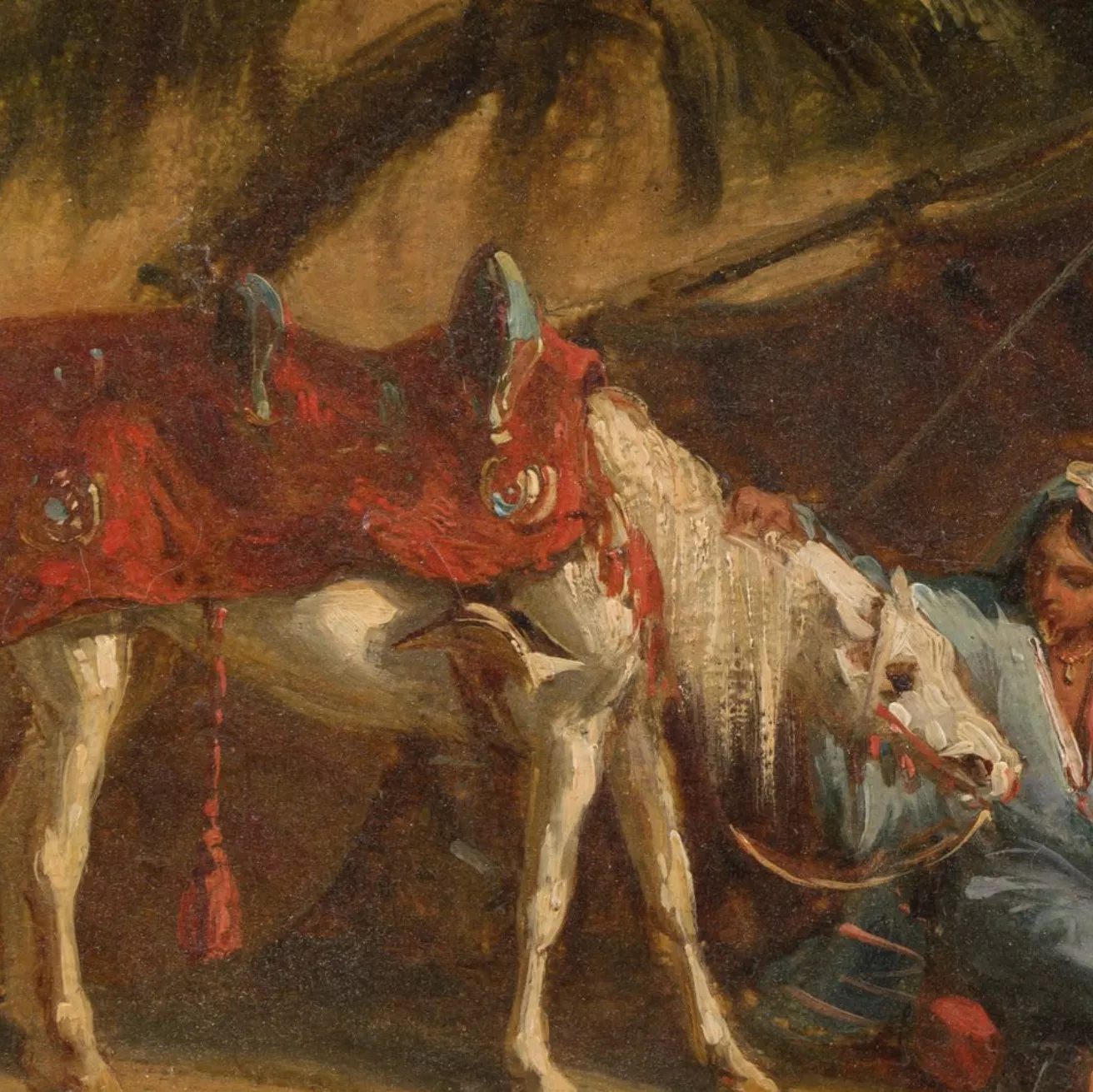
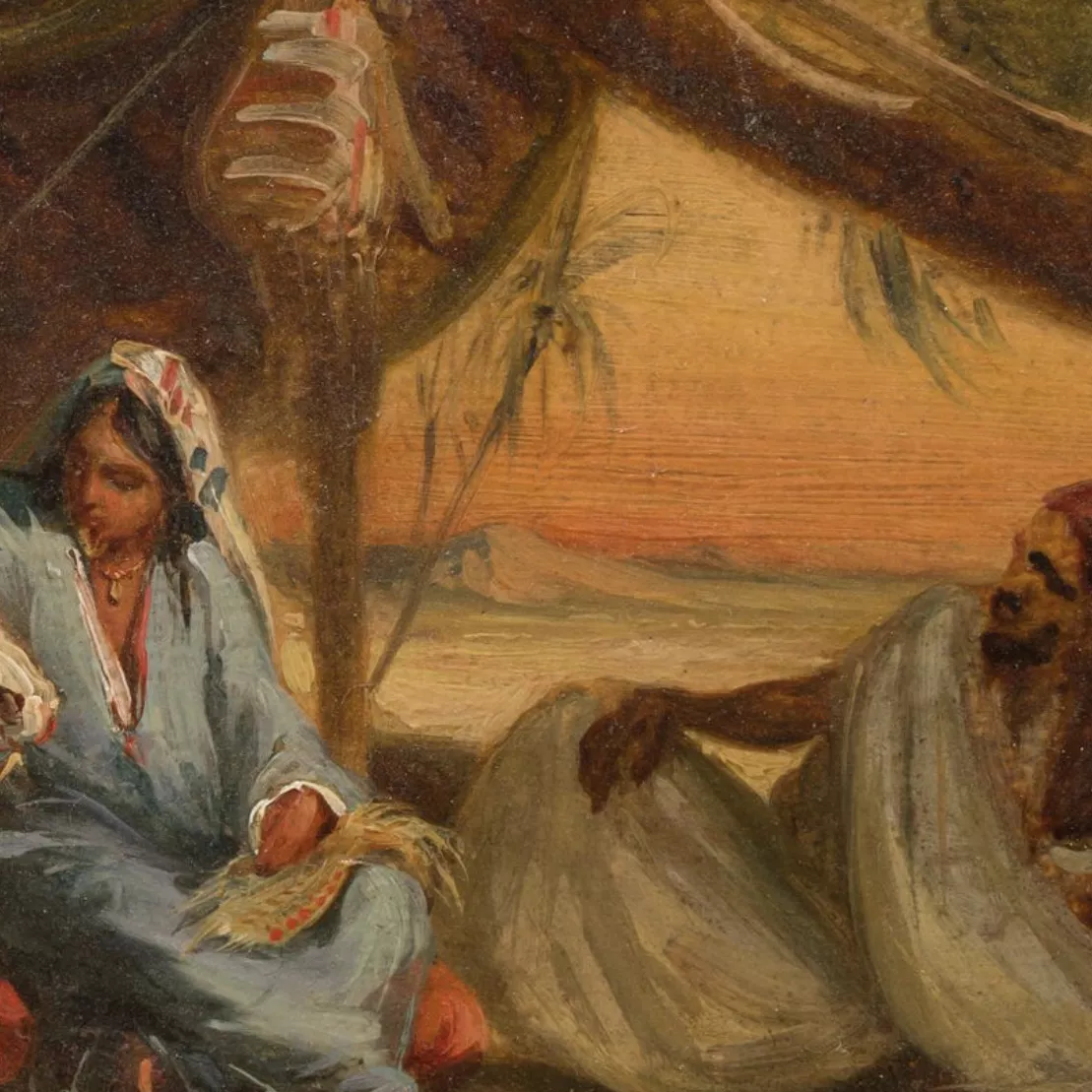
His major contribution to French Orientalism is rooted in firsthand experience in the field: Vernet’s art was fundamental to the development of Orientalism in France, whether he was accompanying the French army on the battlefield or traveling alone.
The Life of Horace Vernet
Historical Context
Horace Vernet was born at the Louvre and received a chaotic education due to political upheavals and his father’s career, which led his father to enroll him briefly with David before recommending him to Géricault. He made his debut at the 1812 Salon, where he was noticed by Jérôme Bonaparte, Napoleon’s brother.
He was appointed director of the French Academy in Rome in 1829, where he discovered the great Italian classical masterpieces and then turned his hand to history painting. In 1833, he visited Algeria and focused on Orientalist painting, alternating between civilian, religious, and military subjects.
Having become Louis-Philippe’s favorite painter, his works are abundant in the historic galleries of Versailles, particularly his paintings depicting Algeria. Charles Baudelaire harshly criticized his painting at the Salons of 1845 and 1846, saying, “Mr. Horace Vernet is a soldier who paints.”
Artistic and Intellectual Circle
During his apprenticeship in his father’s studio, he befriended Géricault, who became his mentor. They both shared an interest in current events and a fondness for horses. He married Louise Pujol, whom he likely met at Isabey’s studio.
He joined the Ethnographic Society and adopted the costume of Yusuf’s Spahis, presenting his theory on costume at the Institute. He became involved in the emerging scholarly circles of French anthropology, which directly informed his artistic project.
He was championed by Théophile Gautier, who provided a crucial critical counterpoint to Baudelaire’s attacks.

Market Segmentation and Artist Rankings
Prices of Works
The market for Vernet’s works shows considerable price variation depending on the medium and genre: the market is dominated by drawings and historical paintings, with prices varying substantially based on the medium, subject, provenance, and quality of execution.
A drawing such as *Oriental Rider and His Horse* sold for €28,000 in 2024, while engravings like *La Smala* sometimes sell for as little as €30.
Works with documented family provenance have achieved notable results at institutional auctions: some thirty works originating directly from the Delaroche-Vernet family were acquired by the Palace of Versailles for €42,700 at an auction in 2026.
Factors Influencing Value
Belonging to a prestigious artistic dynasty is the primary source of critical legitimacy: Horace Vernet came from a distinguished lineage. His status as official painter to the July Monarchy lends his body of work exceptional historical and documentary value.
He became the official painter to Louis-Philippe, for whom he depicted military campaigns and the conquest of Algeria, notably in *The Capture of the Smala*.
The resurgence of critical interest that began in the 1980s—following a period of obscurity in the first half of the 20th century—has been a key factor in his work’s renewed appreciation: his standing has been gradually rising, a trend confirmed by the major retrospective the Palace of Versailles dedicated to the painter in 2023.
FAQ – How do you appraise a work by Horace Vernet?
1) Why is the Palace of Versailles so crucial for authenticating and contextualizing a work by Vernet?
Two years after his stay in Algeria, Horace Vernet was commissioned to depict the military conquests of Louis-Philippe’s heirs in the African Galleries of the Palace of Versailles. Today, the palace houses the largest collection of the painter’s works.
2) Did the recent retrospective at Versailles have an impact on the market for Vernet’s works?
From November 14, 2023, to March 17, 2024, Versailles hosted a major retrospective dedicated to the painter, bringing together approximately 200 works—more than forty years after the last exhibition devoted to him.
3) Do Vernet’s drawings hold significant value?
Horace Vernet’s drawings are marked by the military inspiration found in his work. Many sketches are known to exist, but his most highly regarded works are independent drawings, notably depicting officers and horsemen. They constitute a distinct technical category, particularly prized for their spontaneity and their connection to the genesis of his major battle compositions.
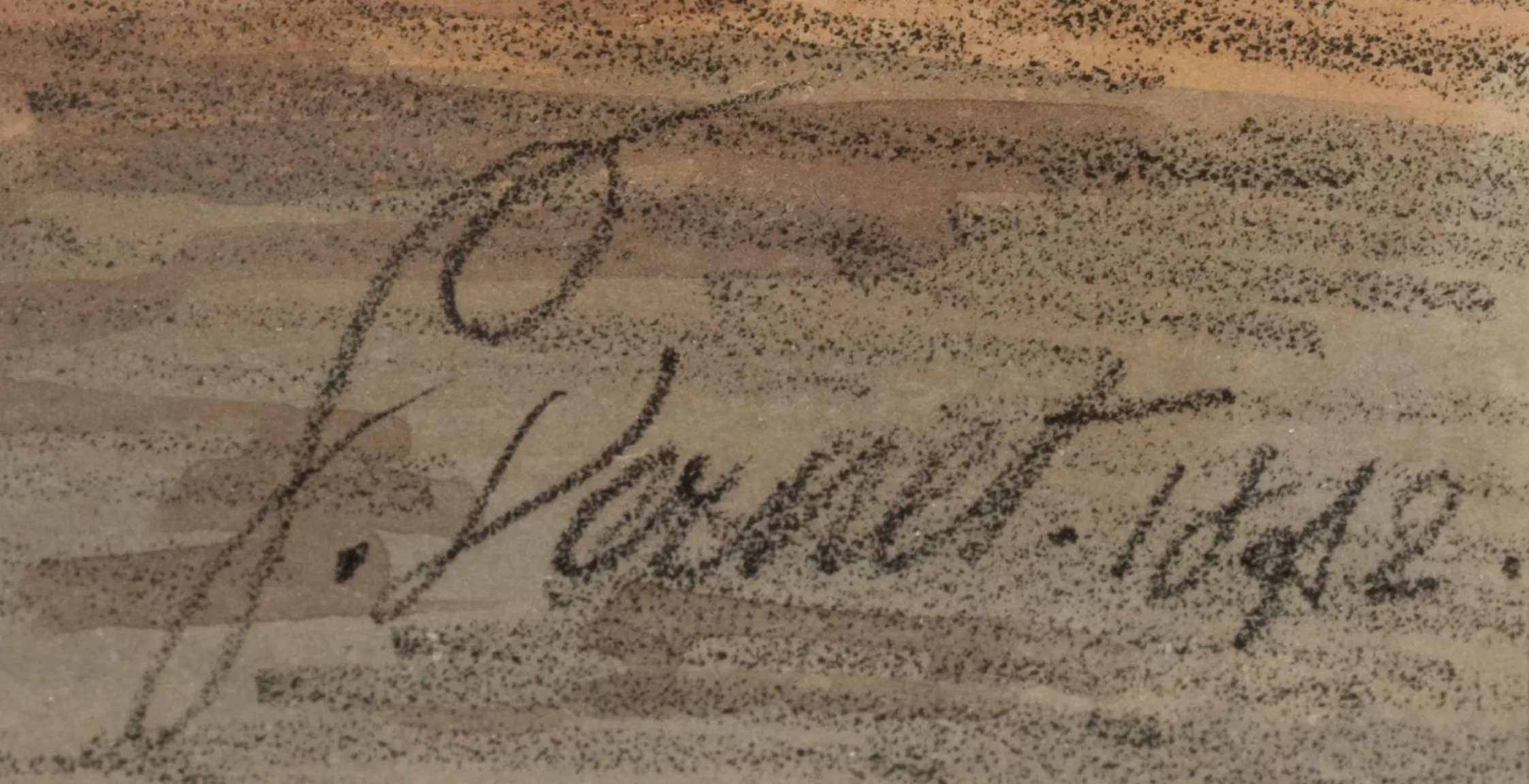
His signature
Not all of Horace Vernet’s works are signed.
If you think you own one, it’s best to have it appraised to ensure the painting is authentic.
Get Your Horace Vernet Artwork Appraised
If you own a work by Horace Vernet, an appraisal will help you determine its current market value.
Using our online form, our experts and certified auctioneers will conduct a free appraisal and provide you with a reliable estimate of your artwork’s market value.
If you’re considering selling it, we’ll guide you through the process to ensure you get the best possible price.
Estimate in less than 24h
Discover in the same theme

Rating and value of paintings by Gustave Jacquet
Gustave Jacquet is a highly regarded painter of portraits and genre scenes, whose works have a certain value at auction.
Learn more >

Rating and value of furniture, desks, chests of drawers by P...
Paul Sormani was a 19th-century cabinetmaker who produced a number of pieces of furniture that are highly valued at auction. Estimate in 24h
Learn more >

Rating and value of drawings and paintings by Léon Gustave R...
Léon Gustave Ravanne is a landscape and seascape painter whose works command high prices and are highly valued at auction.
Learn more >
D'autres tableaux orientalistes vendus aux enchères

Estimated 15.000 - 20.000 €
Jacques MAJORELLE (1886-1962) - Fishermen embarking, Abidjan, Ivory Coast - Oil on canvas.

Estimated 40.000 - 80.000
Alexandre ROUBTZOFF (1884-1949), Portrait of Arbia, oil on canvas

Estimated 5.000 - 8.000
Alexandre ROUBTZOFF (1884-1949), The Sidi Makhlouf Mosque, oil on canvas

Estimated 2.000 - 4.000
Henri PONTOY (1888-1968), The Telouet kasbah in the Ounila valley, Oil on canvas

Estimated 1.500 - 2.500
Henri PONTOY (1888-1968) Animated view of a kasbah in the Atlas Mountains

Estimated 3.000 - 4.000
Henri PONTOY (1888-1968), Fantasia at the foot of the Atlas, Oil on canvas

Secure site, anonymity preserved

Auctioneer approved by the State

Free and certified estimates
Frequently asked questions
-
Who was Horace Vernet, and what was the historical context of his life?Horace Vernet (1789–1863) was a French painter from a prestigious dynasty of painters, the grandson of Joseph Vernet and the son of Carle Vernet. A leading figure in French Romanticism and Orientalism, he lived through all the political regimes of the 19th century and was appointed official painter to several governments, notably under Louis-Philippe to document the military campaigns in Algeria.
-
What is the price range for works by Horace Vernet?Horace Vernet’s works sell for between €10 and €420,000, depending on the medium and subject matter. Paintings range from €130 to €420,000, drawings and watercolors from €40 to €106,000, while prints sell for between €10 and €6,900. This price range depends on the medium, provenance, subject matter, and quality of execution.
-
How can you authenticate a work by Horace Vernet and obtain a reliable estimate?Request a free estimate from Auctie's. Our state-certified auctioneers and experts conduct a thorough appraisal based on authenticity, current market value, and recent market results. You’ll receive a reliable estimate and a no-obligation opinion within 48 hours.
-
Is this the right time to sell a work by Horace Vernet?Yes, this is an excellent time. After a lull in the 20th century, Vernet’s market value has been gradually rising since the 1980s. The major retrospective at the Palace of Versailles in 2023, which featured approximately 200 works, reinforced this critical interest and fostered a structural revival of the market for the artist’s work.
-
How does the sale of a work by Horace Vernet at Auctie's work?Auctie's guides you from the appraisal to the auction. After a free, no-obligation appraisal, we work with you to determine the best sales strategy to maximize the value of your artwork. Our experts leverage their market knowledge and international network of collectors to ensure the best possible results.
