



Rating and value of paintings by Albert Gabriel Rigolot

Key takeaways
- Albert Gabriel Rigolot (1862–1932) was a landscape painter and Orientalist of the Barbizon School, known for his sensitivity to light and his travels in North Africa beginning in the 1890s.
- Rigolot’s paintings fetch between €150 and €82,700 at auction, with significant variations depending on technique and quality, while his watercolor drawings range from €180 to €10,000.
- His naturalistic style favors a subdued palette of earthy and gray-blue tones, combining the academic heritage of the École des Beaux-Arts with a direct approach to the subject and atmospheric effects.
If you own a work by artist Albert Rigolot or based on his work and would like to know its value, our state-approved experts and auctioneers will guide you.
Our specialists will carry out a free appraisal of your work, and provide you with an accurate estimate of its value on the current market.
Then, should you wish to sell your work, we will direct you to the best possible arrangement to obtain the optimum price.
Artist's rating and value
Albert Gabriel Rigolot was a landscape and orientalist artist, responsible for a sizeable pictorial output. The market value of Rigolot's works on the art market is therefore quite high, particularly for his paintings.
The prices the works fetch on the auction market range from €150 to €82,700, a substantial range but one that speaks volumes about the value that can be attributed to the artist's works.
A work signed by him can fetch millions of euros at auction, as evidenced by his painting Villageois dans le désert, which fetched €82,700.
Order of value from the most basic to the most prestigious
Technique used | Result |
|---|---|
Drawing - watercolor | From €180 to €10,000 |
Painting | From €150 to €82,700 |
Estimate in less than 24h
The artist's style and technique
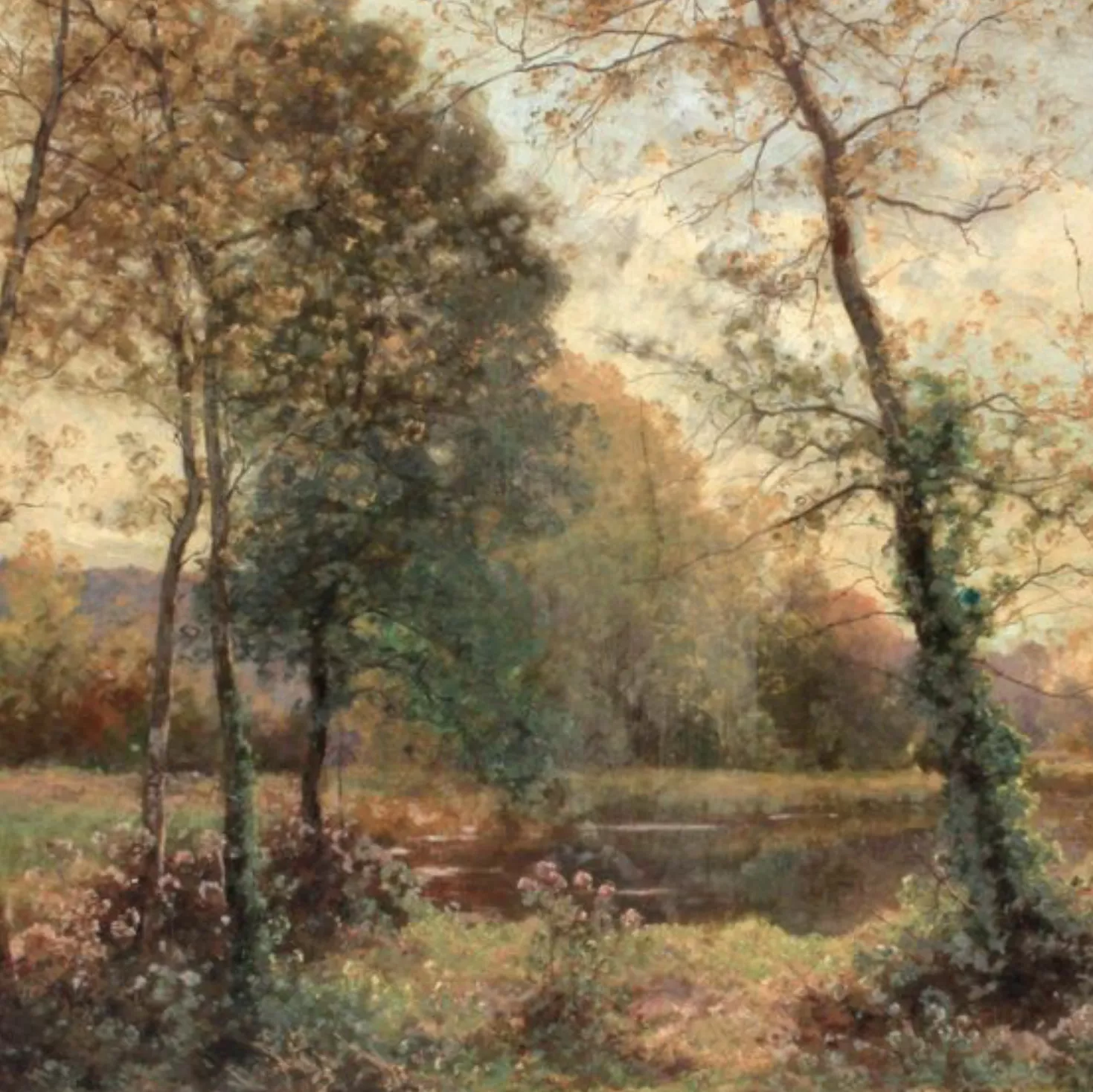
Albert Rigolot is a landscape painter rooted in the naturalist tradition. He follows in the footsteps of the Barbizon painters and the Fontainebleau school, but shows a predilection for nature scenes treated on the motif.
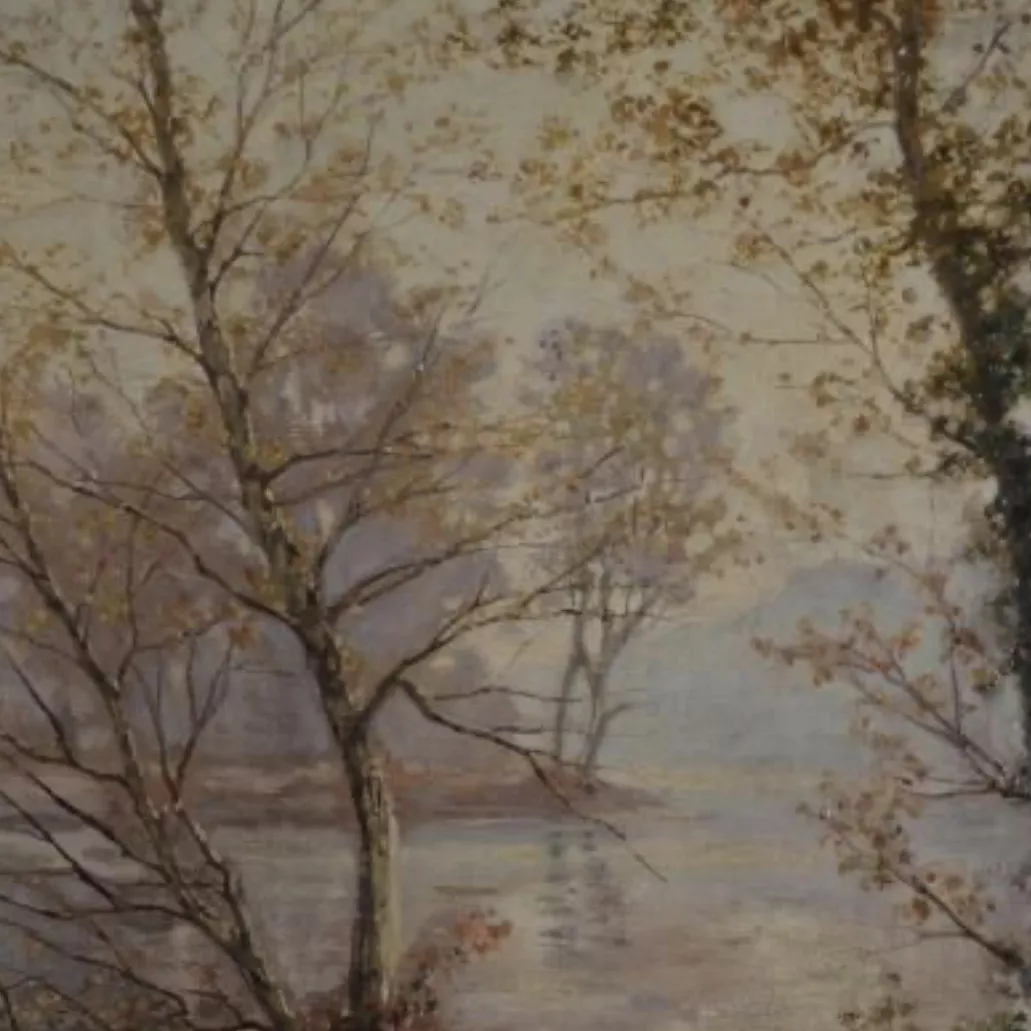
His painting is distinguished by its sensitivity to light, changing atmospheres and landscape structure. His treatment of light is masterful. Rigolot pays particular attention to lighting effects. His skies, which are often vast and nuanced, play a central role in his compositions.
The light is quite diffuse, sometimes golden, which creates end-of-season atmospheres that lend the scenes a particular softness.
He adds a supple, modeling touch to his canvases, using a relatively free touch, but always concerned with form. Foliage, ploughed earth and reflections on water are rendered with fluid paint, without excess material and in a constant search for harmony between detail and whole.
The palette used by the artist is sober and natural, placing himself far from Fauvist and post-impressionist experimentation. Rigolot favors earthy tones, muted greens and blue-greys to reinforce the visual and emotional fidelity of the landscape. This palette contributes to the hushed atmosphere of his compositions.
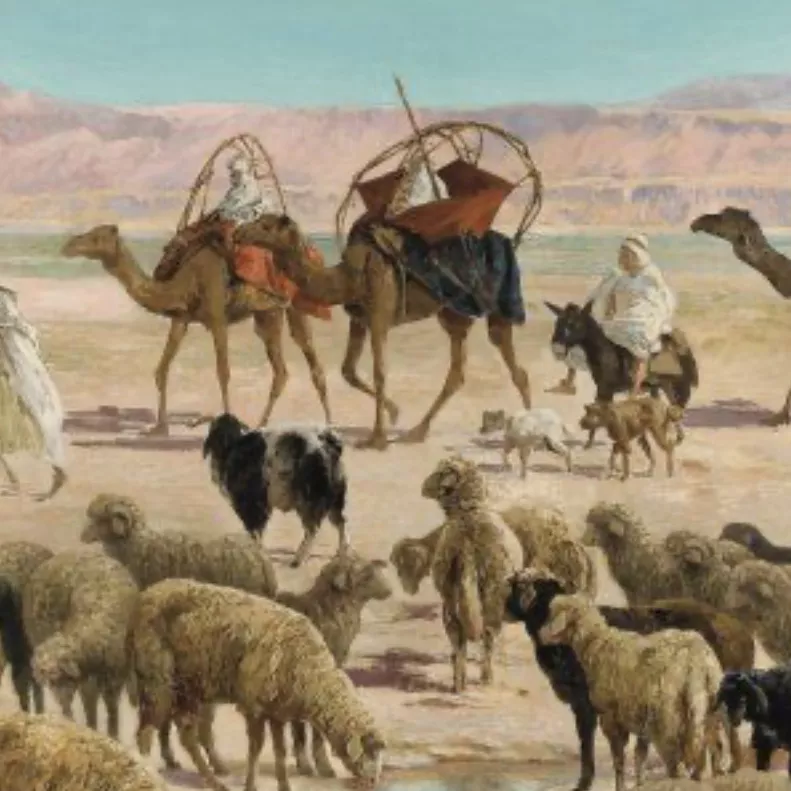
He demonstrates a marked interest in Orientalism. From the 1890s onwards, he incorporated elements of this kind into his work, influenced by his travels in North Africa. He thus transposed his naturalist style to scenes of palm groves, deserts or markets, retaining the same attention to light and atmospheric effect.
He put his academic rigor at the service of nature. A graduate of the École des Beaux-Arts de Paris, where he was a pupil of Léon Germain Pelouse, he maintains a classical base in the structure of his compositions, while adopting a more direct and sensitive approach to the rendering of the motif.
Albert Gabriel Rigolot thus produces a sober and elegant output, faithful to the naturalist tradition but enriched by the experience of travel and a constant attention to variations in light. His work, intended to be restrained, is distinguished by its balance between fidelity to reality and discreet lyricism.
Albert Gabriel Rigolot's work is sober and elegant.
The life of Albert Gabriel Rigolot
Albert Gabriel Rigolot (1862-1932) was a landscape painter born in Paris. Trained at the École des Beaux-Arts in the studio of Léon Germain Pelouse, he is a recognized painter of the École de Barbizon. This classical training gave him a solid foundation in landscape painting, which he would enrich throughout his career by observing nature.
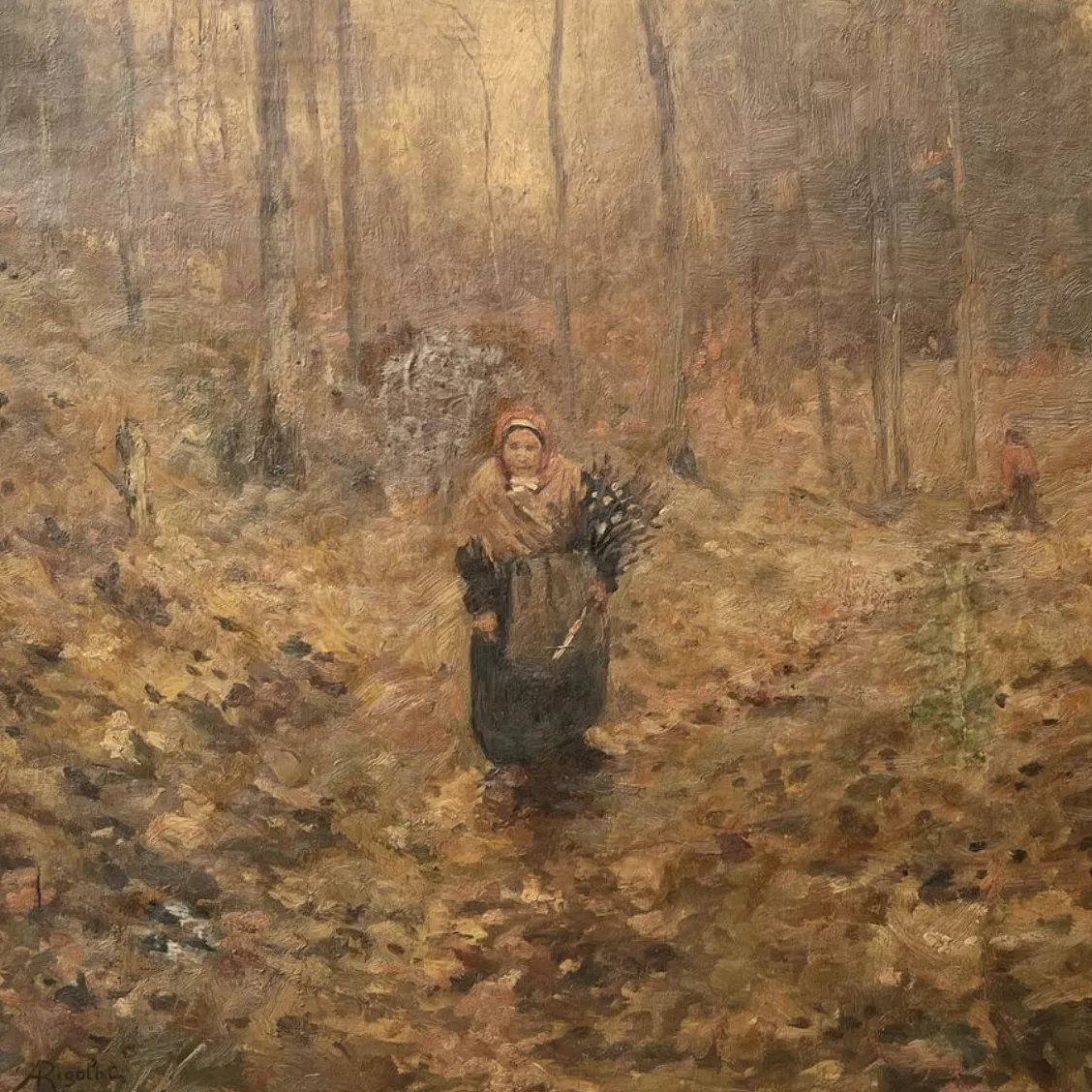
He was attached to the French landscape - since he began his career with country landscapes, which he observed in the Paris region and in the forest of Fontainebleau.
His work was quickly noticed for the quality of its light and the sobriety of its craftsmanship. His career was also marked by Orientalism, and from the 1890s he traveled to Algeria and Tunisia, which enabled him to renew his repertoire and join the Orientalist circles then in vogue.
He became a member of the Société des Peintres Orientalistes Français, alongside artists such as Étienne Dinet or Paul Leroy.
The artist's recognition was institutional, given that he regularly exhibited at the Salon des Artistes Français, where he won awards including a silver medal at the 1900 Exposition Universelle. He was named Chevalier de la Légion d'Honneur in 1901, which testifies to the official recognition of his talent.
His educational activity was important : in parallel with his painting career, he taught at the Académie Julian, where he trained several generations of artists, thus contributing to the spread of the principles of rigorous, sensitive landscape painting.
He continued to paint until his death in 1932. Although he received less media coverage than his contemporaries, he remains a respected figure in naturalist and orientalist landscape painting, and his works are still present in several public and private collections.
Albert Gabriel Rigolot thus embodies a discreet but fairly solid figure in French painting, between academicism and impressionist sensibility. His career, which is marked by a constant attachment to light and motif, bears witness to a fidelity to tradition renewed by the experience of travel.
Focus on Campement arabe, Albert Gabriel Rigolot, circa 1895
In Campement arabe, Albert Gabriel Rigolot treats an Orientalist motif with naturalism. He depicts a peaceful scene on the edge of the desert. We see a few figures in djellabas, low tents, palm trees and a vast sky bathed in light.
This canvas is far removed from the theatrical exoticism of certain Orientalist painters, the artist adopting instead a sober, almost documentary approach.
The treatment of light is at the heart of the composition, as the soft, diffused light seems suspended between two moments of the day, dawn or evening. It envelops the silhouettes in a golden halo, softening the contours and lending the whole a silent, meditative atmosphere.
The composition is balanced and open, allowing the eye to move freely through the space, guided by the spacing of the palm trees and the arrangement of the figures, which is intended to be as natural as possible. The low horizon and horizontal lines accentuate the calm and stability of the scene.
The palette is warm and harmonious, Rigolot using earthy tones (ochres, browns, muted reds, which are combined with pale blues for the sky and shadows). This restricted but subtle range evokes the warmth of the climate and the chromatic unity of the Saharan landscape.
Rigolot demonstrates a respectful regard for others. Unlike some contemporary orientalists, Rigolot does not seek spectacular or anecdotal effect. He paints a scene of daily life with restraint and precision, which testifies to careful observation and a certain desire for truth.
This work is fairly representative of his dual identity, as it perfectly embodies the synthesis between his training as a naturalise in France and his experience of the Maghreb. In this work, Albert Gabriel Rigolot demonstrates that Orientalism can be an outdoor painting, as faithful to the light of the South as to the landscapes of the Île de France. In it, he affirms a luminous sensibility and a discreetly humanistic approach to the world he observes.
Albert Gabriel Rigolot's imprint on his period
Albert Rigolot established himself as a continuator of the landscape tradition : at the juncture of the 19th and 20th centuries, Rigolot continued the legacy of the Barbizon School, whose principles he updated, with a greater focus on light.
He was also a respected player on the Orientalist scene, where he distinguished himself by a sensitive, measured approach, far removed from picturesque excesses. In his Maghrebian scenes, he introduces a naturalistic eye, where light and composition take precedence over anecdote.
His career builds a balance between tradition and openness, in a period when art was divided between advocates of modernity and defenders of Academism.
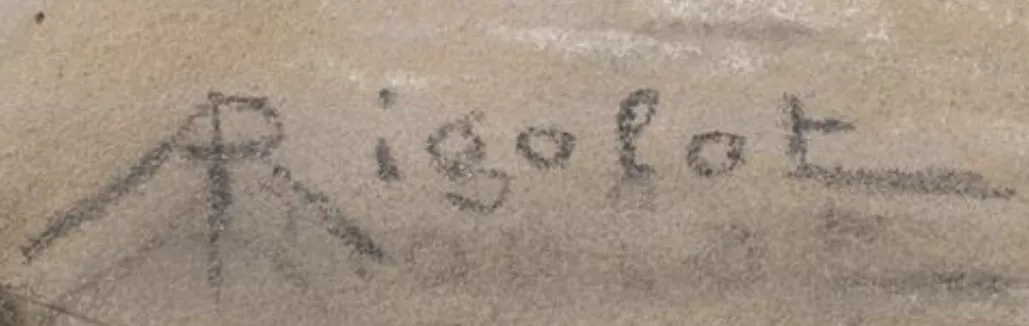
His signature
Although there are variations, here's a first example of his signature:
Expertise your property
If you happen to own an Albert Gabriel Rigolot work or one after the artist, don't hesitate to request a free appraisal by filling in our form on our website.
A member of our team of experts and chartered auctioneers will contact you promptly to provide you with an estimate of the value of your work, and will ensure that you receive ad hoc information about it.
If you are considering selling your work, you will also be accompanied by our specialists in order to benefit from alternatives for selling it at the best possible price, taking into account the inclinations of the market and its specificities.
Estimate in less than 24h
Discover in the same theme

Rating and value of works, paintings by Gustave Courbet
Gustave Courbet was a 19th-century painter and leader of the realist movement. He painted many canvases of high value.
Learn more >

Rating and value of works, paintings, drawings by Étienne Pr...
Berne Bellecour is a successful 19th-century painter of military art. His quotation is stable and the value of his paintings high.
Learn more >

Market Value and Price of Sculptures and Bronzes by François...
François Raoul Larche is an Art Nouveau sculptor who produced works that are highly valued at auction. 24h estimate.
Learn more >
D'autres tableaux orientalistes vendus aux enchères

Estimated 15.000 - 20.000 €
Jacques MAJORELLE (1886-1962) - Fishermen embarking, Abidjan, Ivory Coast - Oil on canvas.

Estimated 40.000 - 80.000
Alexandre ROUBTZOFF (1884-1949), Portrait of Arbia, oil on canvas

Estimated 5.000 - 8.000
Alexandre ROUBTZOFF (1884-1949), The Sidi Makhlouf Mosque, oil on canvas

Estimated 2.000 - 4.000
Henri PONTOY (1888-1968), The Telouet kasbah in the Ounila valley, Oil on canvas

Estimated 1.500 - 2.500
Henri PONTOY (1888-1968) Animated view of a kasbah in the Atlas Mountains

Estimated 3.000 - 4.000
Henri PONTOY (1888-1968), Fantasia at the foot of the Atlas, Oil on canvas

Secure site, anonymity preserved

Auctioneer approved by the State

Free and certified estimates
Frequently asked questions
-
Who was Albert Gabriel Rigolot, and what was his artistic movement?Albert Gabriel Rigolot (1862–1932) was a French landscape painter who trained at the École des Beaux-Arts in Paris. He followed in the tradition of the Barbizon School and naturalism, paying particular attention to light and shifting atmospheres. Beginning in the 1890s, he also distinguished himself as an Orientalist, traveling to North Africa and becoming a member of the Society of French Orientalist Painters.
-
What is the price range for Rigolot's works at auction?The prices of Albert Gabriel Rigolot’s works vary considerably depending on the medium and the size of the piece. Drawings and watercolors range from €180 to €10,000, while paintings range from €150 to €82,700. This wide range reflects the varying quality of the works and fluctuations in the art market.
-
How do I have a work by Rigolot authenticated and appraised?To authenticate and appraise a work by Albert Gabriel Rigolot, we offer a free, no-obligation appraisal. Simply fill out our online form or contact us directly. A state-certified expert or auctioneer will respond within 48 hours with an accurate estimate of your item’s market value.
-
Is this the right time to sell a work by Rigolot?Yes, now is a good time to sell a work by Rigolot. As a respected figure in 19th- and 20th-century naturalist and Orientalist landscape painting, who received institutional recognition (Knight of the Legion of Honor in 1901), his works retain a stable value and continue to attract interest from collectors. The market for historical French landscapes remains strong.
-
How does the sale of a work of art work at Auctie's?Auctie's supports you every step of the way: after a free appraisal by an expert or certified auctioneer, we explore the best sales strategies tailored to your artwork, taking into account the specific characteristics of the market. We then offer you a professional auction service to achieve the best possible price, with transparent monitoring all the way through to the final sale.
