



Rating and value of paintings by Constance Mayer

Key takeaways
- Constance Mayer (1775–1821), a French Neoclassical painter, has seen her market value skyrocket, with her works fetching record-breaking prices at auction.
- The artist’s oil-on-canvas paintings are estimated at between 1,380 and 190,580 euros, while her drawings and watercolors range from 155 to 1,800 euros.
- Her painting “Satyr and Nymph” sold for 20,430 euros in 2023, far exceeding its initial estimate of 2,000 to 3,000 euros, confirming the market’s upside potential.
If you own a work by or after the artist Constance Mayer, and would like to know its value, our state-approved experts and auctioneers will offer you their appraisal services.
Our specialists will work to carry out a free appraisal of your work, and will provide you with an accurate estimate of its value on the current market.
Then, if you wish to sell your work, we will direct you to the best possible arrangement to obtain the optimum price.
Rating and value of the artist Constance Mayer
Constance Mayer is a well-known artist among portrait lovers. Her visibility on the art market continues to grow, her quotation is exploding and she is increasingly in demand : it is speculated that her works could reach unprecedented amounts at auction.
Women artists of the 18th century, pupils in the workshops of undisputed grand masters produced works that are extremely sought-after today.
For the latter, her oil on canvas Satyr and Nymph sold for €20,430 in 2023, against an estimate of €2,000-3,000, suggesting further upside potential for the artist's works.
Order of value from a simple work to the most prestigious
Technique used | Result |
|---|---|
Drawing - watercolor | From €155 to €1,800 |
Oil on canvas | From €1,380 to €190,580 |
Estimate in less than 24h
Style and technique by artist Constance Mayer
Constance Mayer (1775 - 1821) was a French neoclassical artist who worked closely with Prud'hon.
She was a pupil of Joseph-Benoît Suvée, then Jean-Baptiste Greuze, and inherited a precise, sensitive drawing style, which she devoted to moral and domestic scenes. Her style is a continuation of French neoclassicism, but with a softer, more intimate approach, less rigid than David or Girodet.
She worked closely with Pierre-Paul Prud'hon from 1802, an artist in whose work she copied the vaporous chiaroscuro and blended contours.
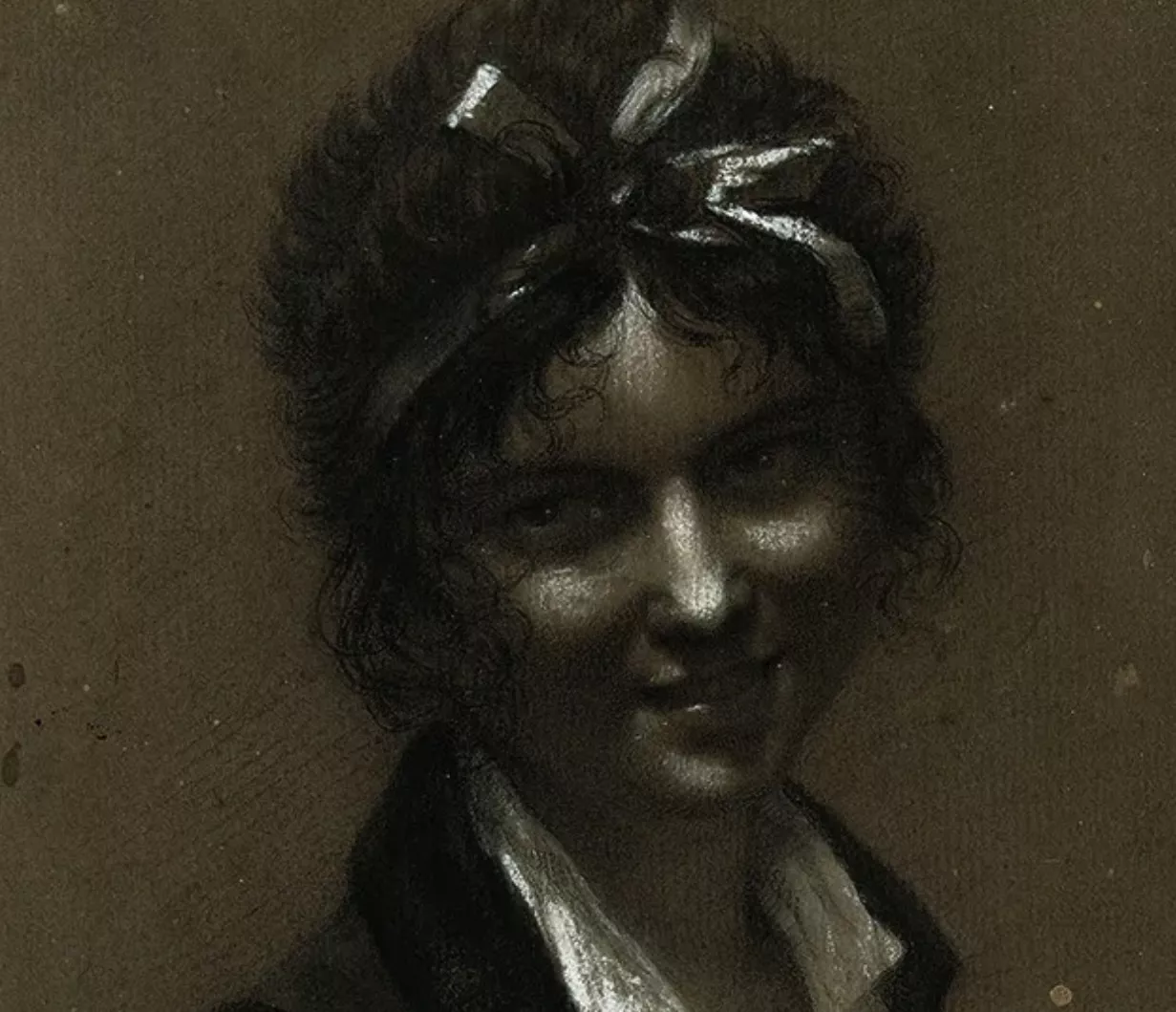
She works with great finesse in pencil and black stone, which she often uses for portraits or studies of female figures. She makes skilful use of white chalk highlights, particularly on tinted paper, to gently shape volumes.
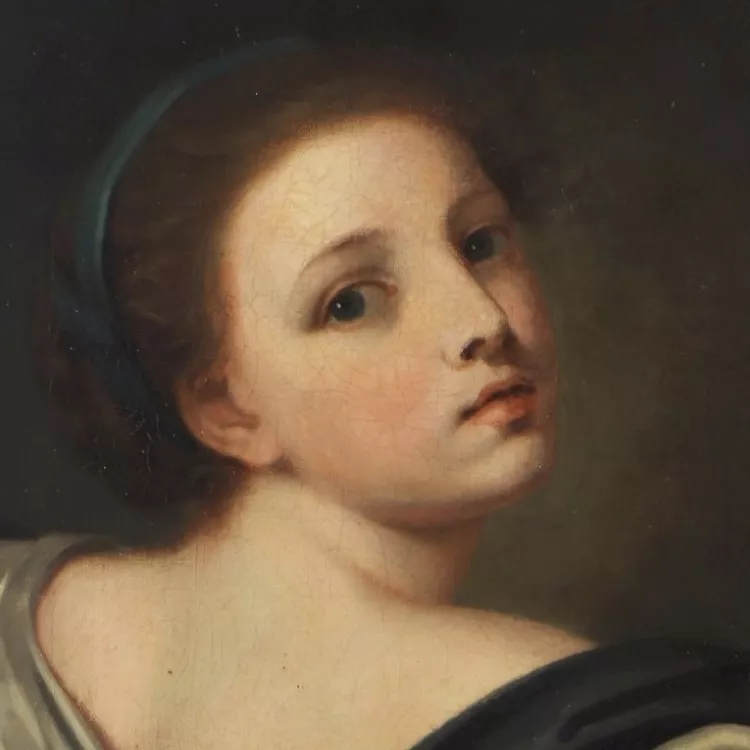
In painting, she makes use of subtle fades and muted tones that create a diffuse, almost melancholy light. She mainly paints intimate genre scenes, featuring women, children, moments of introspection or maternity.
Her works often evoke restrained feelings, tenderness, but also solitude and a certain melancholy, in an elegant but never theatrical style. She was one of the few female artists to paint allegories and moral compositions, which were a male preserve at the time.
She mostly produced her oils on canvas in medium format, often in muted browns, grays and reds. Her composition is balanced, she makes frequent use of curved lines and idealized female figures, with palpable real emotion.
Her production is the result of a blend between a sense of classical drawing and a pre-romantic sensibility, heralding the gentleness of nineteenth-century sentimental scenes.
The life of Constance Mayer
Constance Mayer (1775 - 1821) was born in Paris into a cultured, bourgeois family. She was trained as a painter in a context where women had little access to the Royal Academy.
She studied painting and drawing with Joseph-Benoît Suvée and then Jean-Baptiste Greuze, who passed on to her a taste for moral scenes and expressive drawing. She exhibited regularly at the Paris Salon from 1796, which was exceptional for a woman at the time.
Mayer specialized in genre scenes, portraits and moral allegories, which were appreciated by the public and critics alike. She was protected by several Parisian artistic circles, and acquired a certain notoriety at the turn of the century.
From 1802, her work became closer to that of Prud'hon, whose companion she became. They lived and worked together for almost twenty years, and their emotional and artistic relationship was marked by a certain interdependence.
They produced several works together, and some of the paintings signed by Prud'hon could include major interventions by Mayer.
The artist's personal life was marked by sacrifice, as she remained in Prud'hon's shadow, despite her recognized talent and success at the Salon. She endured the emotional and financial difficulties of her marriage.
She committed suicide in 1821, a few months after Prud'hon refused to officially marry her, leaving behind an unfinished body of work in which she nevertheless played an essential role.
Long marginalized by art history, her name often remained linked to that of Prud'hon. She was rediscovered in the 20th century by art historians studying the place of women in post-revolutionary academies.
Today, she is recognized as one of the first French painters to impose a female voice in the intimate neoclassical register.
Focus on La Rêverie, Constance Mayer, circa 1806
La Rêverie is an oil on canvas painted by Constance Mayer circa 1806, measuring approximately 98 x 130 cm, preserved in the Musée du Louvre in Paris. It depicts a young woman sitting alone in an armchair, her head resting on one hand, eyes downcast, immersed in her thoughts.
The female figure is positioned in the middle of the composition, capturing the viewer's full attention. The background is dark and neutral, with no scenery or narrative elements to reinforce the subject's introspection.
The posture is suspended, the arm abandoned on the armrest and the gaze averted, suggesting a rather melancholy meditation. The lighting is diffused, the light falling softly on the figure's face and arms, without violent contrast.
The tones are deliberately muted and warm, the artist using browns, beiges, faded reds, and a characteristic palette that accentuates the softness of the scene. The modeling is vaporous, to depict subtle transitions between light and shadow, giving a velvety texture to the flesh and fabrics.
The work tells nothing precise, but expresses a state of mind : reverie, inner withdrawal, or perhaps weariness or remembrance. The young woman, without attributes or action, embodies a form of introspective femininity, far removed from neoclassical or traditional heroines.
It can therefore be seen as a form of disguised self-portrait or an evocation of the condition of the female artist: silent, contemplative, invisible but present. The composition and pictorial style are reminiscent of Prud'hon's work, but the character's restrained psychology, discretion and solitude are characteristic of Mayer's own gaze.
The painting has sometimes been attributed to Prud'hon, which testifies to a certain historical erasure of his signature, but experts today agree in recognizing Mayer's distinctive contribution.
The artist's imprint on her time
Constance Mayer is a rare figure among female neoclassical artists. At a time when very few women achieved public recognition in the arts, Mayer exhibited regularly at the Paris Salon from 1796.
She played a full part in the artistic life of the Empire, making a name for herself with the quality of her genre scenes, portrait and allegory work, in a field that was still largely male-dominated. She contributed to the sentimental imagination of the 19th century.
Her intimate, moral compositions, centered on solitude, melancholy and maternal tenderness, heralded themes favored by Romanticism. She explored a discreet emotional register, often linked to the female condition, at odds with the masculine heroism of large neoclassical formats.
For twenty years, she worked with Prud'hon, and their collaboration blurred attributions, but many works signed Prud'hon would include essential contributions from Mayer, particularly with regard to female figures.
His career, though hampered by social norms, works see her to other female painters such as Marie-Guillemine Benoist, Louise Hersent, Adelaïde Labille-Guiard, Sophie Allart or Élise Bruyère.
She proves that a woman can produce a personal work, exhibit at the Salon and be taken seriously without necessarily going through the still life of flowers or the worldly portrait.
After her death in 1821, Mayer fell into oblivion, often overshadowed by the figure of Prud'hon. From the 20th century onwards, research into neoclassical women's painting restored her to a central position in art history.
She is now seen as a mediator between neoclassical rigor and Romantic sensibility, and embodies an alternative path in turn-of-the-century art.
Recognizing the artist's signature
Constance Mayer doesn't necessarily sign his works. Copies may exist, and attribution is complicated because of his collaboration with Prud'hon, which is why expertise remains important.
Knowing the value of a work
If you happen to own a work by Constance Mayer or after the artist, don't hesitate to request a free appraisal using our form on our website.
A member of our team of experts and certified auctioneers will contact you promptly to provide you with an estimate of the market value of your work, as well as ad hoc information about it.
If you are considering selling your work, you will also be accompanied by our specialists in order to benefit from alternatives for selling it at the best possible price, taking into account the inclinations of the market.
.Estimate in less than 24h
Discover in the same theme

Rating and value of works, drawings, paintings by Félicien R...
Félicien Rops was a symbolist and decadent artist of the 19th century, who produced drawings and oils on canvas that were quite highly rated at auctio...
Learn more >

Rating and value of bronzes and sculptures by Pierre Lenorde...
Pierre Lenordez is a 19th-century animal sculptor whose sculptures are highly prized at auction.
Learn more >

Rating and value of Russian paintings by Adolf Baumgartner S...
Adolf Baumgartner Stoiloff is a Russian military painter who has produced works that are sought after by collectors, with a high value.
Learn more >
Paintings from the same period sold at auction

Estimated 4.000 - 6.000
Atelier d'Antoine Jean, baron GROS (Paris 1771-1835 Meudon), oil on canvas

Estimated 800 - 1.200
Carolus DURAN (1837-1917) Portrait of a bearded man with a hat, Charles Drouet, Oil on canvas

Estimated 6.000 - 8.000
Michel Martin DRÖLLING (1786-1851), Portrait of Dominique Alexandre "Charles" Legrand (1790-1808), oil on canvas

Estimated 4.000 - 6.000
Ary Scheffer (Dordrecht 1795-1858 Argenteuil) One of the three holy women (meditating on Christ's resurrection after the vision in the tomb?) Oil on canvas

Estimated 500 - 800
Edma MORISOT-PONTILLON (1839-1921) Spectatrice du crépuscule au bord de l'étang Oil on canvas

Estimated 10.000 - 15.000
ABBÉMA Louise, 1853-1927 Portrait of Mme ***, 1879 Oil and gold paint on canvas

Secure site, anonymity preserved

Auctioneer approved by the State

Free and certified estimates
Frequently asked questions
-
Who was Constance Mayer, and what is her artistic style?Constance Mayer (1775–1821) was a French Neoclassical painter and a student of Joseph-Benoît Suvée and Jean-Baptiste Greuze. She specialized in intimate genre scenes, portraits, and moral allegories, with a style characterized by muted tones, subtle gradations, and a melancholic sensibility. She collaborated closely with Pierre-Paul Prud’hon beginning in 1802 and is counted among the few female artists of her time to produce compositions of such high caliber.
-
What are the price ranges for Constance Mayer's works?Constance Mayer’s drawings and watercolors range in price from €155 to €1,800, while her oil-on-canvas paintings fall within a much wider range, from €1,380 to €190,580. For example, her oil on canvas titled “Satyr and Nymph” sold for €20,430 in 2023, far exceeding its initial estimate of €2,000 to €3,000, which reflects a growing demand for her works.
-
How can you authenticate a work by Constance Mayer?Authenticating a work by Constance Mayer requires professional expertise, as the artist did not consistently sign her paintings, and her close collaboration with Prud’hon has complicated historical attributions. Auctie's offers a free, no-obligation appraisal by its state-certified experts and auctioneers, with a response within 48 hours.
-
Is this the right time to sell a work by Constance Mayer?Yes, this is an excellent time to sell a work by Constance Mayer. The artist’s market value is steadily rising, her works are increasingly in demand, and auction results regularly exceed initial estimates. The contemporary rediscovery of neoclassical women artists is reinforcing this upward trend.
-
How does the appraisal and sale process work at Auctie's?The appraisal is free and non-binding: simply fill out the form on the Auctie's website. A certified expert or auctioneer will contact you and provide you with an estimate for your artwork within 48 hours. If you’d like to sell, our specialists will guide you through the process from appraisal to auction, offering you the best options to achieve the highest possible price.
