



Rating and value of paintings by Claude Joseph Vernet

Key takeaways
- Claude Joseph Vernet (1714–1789), an 18th-century landscape and seascape painter, commands high and stable prices despite his limited presence on the current market.
- Prices for his works vary considerably: from €20 to €2,300 for prints, up to €5.4 million for major paintings such as *View of Avignon*.
- Trained in Rome and influenced by Claude Lorrain and Salvator Rosa, Vernet excelled in his mastery of lighting effects and dramatic compositions that blended classicism with a naturalistic sensibility.
If you own a work by the artist Claude Joseph Vernet or based on his work and would like to know its value, our state-approved experts and auctioneers will guide you.
Our specialists will carry out a free appraisal of your work, and provide you with an accurate estimate of its value on the current market.
Then, if you wish to sell your work, we will direct you to the best possible arrangement to obtain the optimum price.
Rating and value of the artist
Popular during his lifetime, Claude Joseph Vernet made his mark on the art market as early as the 18th century. Today, the artist's market value is high and stable, despite his limited presence on the market.
Very popular with lovers of landscape painting, some of his works can fetch millions of euros at auction.
His painting Vue d'Avignon, de la rive droite du Rhône à côté de Villeneuve was sold for over €5,477,000 in 2013, while it was estimated at between €3,500,000 and €5,830,000.
Order of value from the most basic to the most prestigious
Technique used | Result |
|---|---|
Estamp - multiple | From €20 to €2,300 |
Drawing - watercolor | From €100 to €38,400 |
Painting | From €280 to €5,477,900 |
Estimate in less than 24h
The style and technique of Claude Joseph Vernet
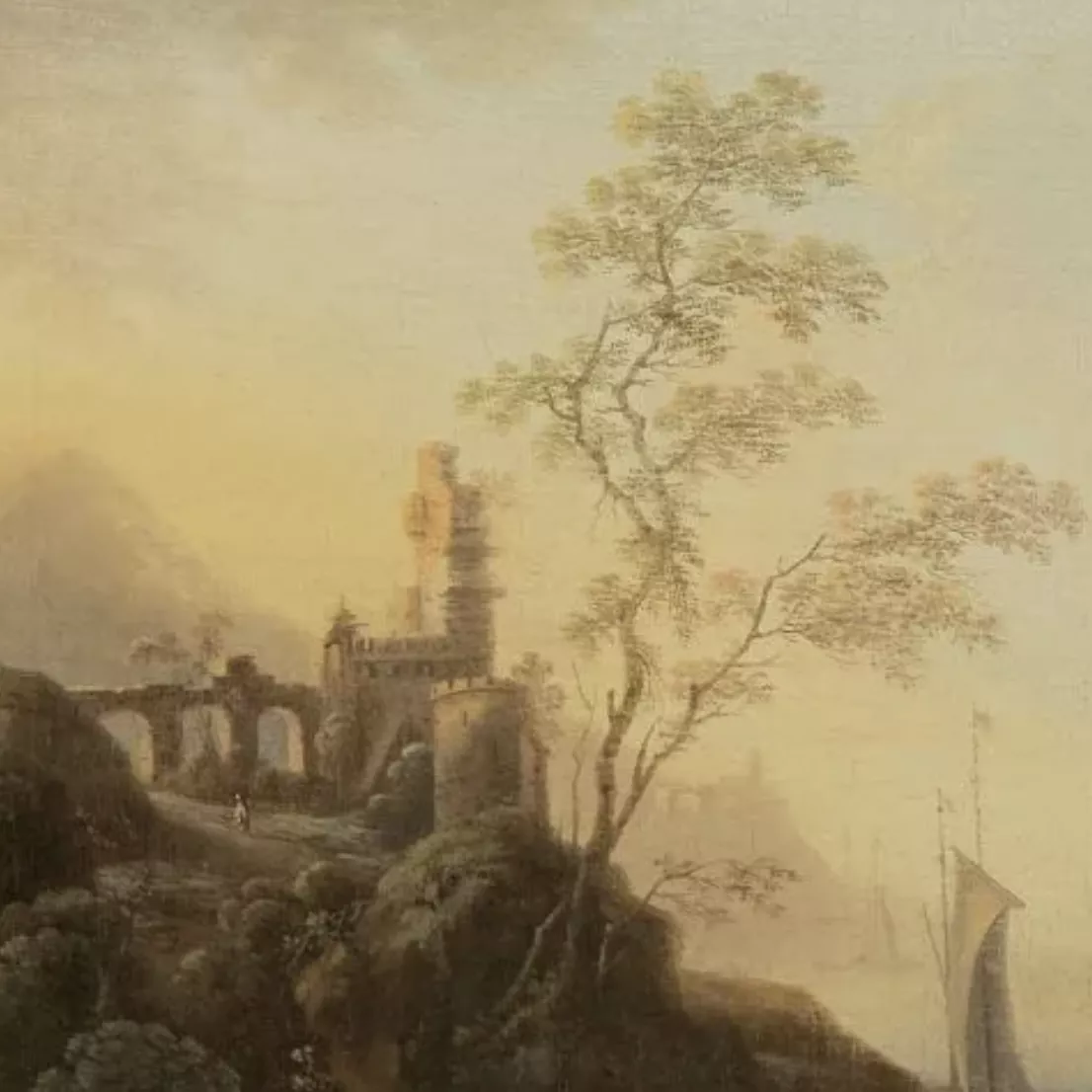
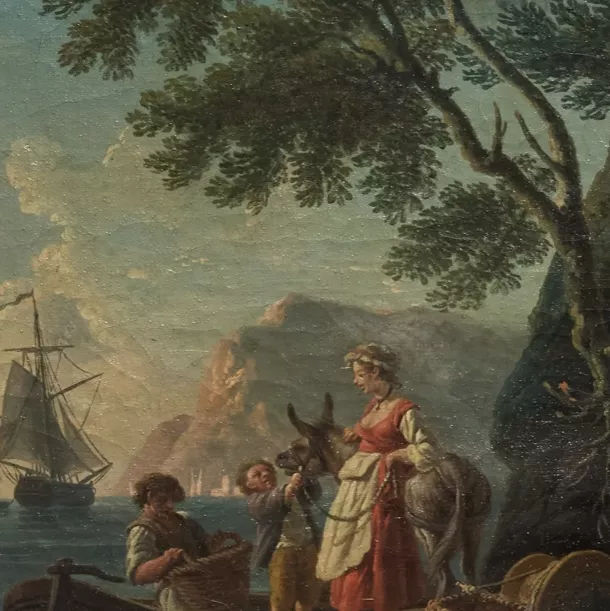
The style and technique of Claude Joseph Vernet are part of a tradition in which landscape art achieves a poetic and theatrical dimension. Trained in Rome, he imbibed the lessons of the Italian and Dutch masters, combining classical elegance with a sensitivity for the effects of light and atmosphere.
His seascapes, often bathed in twilight or dramatic chiaroscuro, captivate by their ability to evoke the indomitable power and beauty of nature.
Vernet excels in the art of composing his scenes, where each element - whether a craggy rock, a turbulent sea or a human silhouette - finds its place in a subtle, almost musical balance.
The precision of his drawing, combined with a fluid, delicate touch, lends his works an almost tactile quality. His tormented skies and moving waves testify to meticulous attention to detail, while retaining a freedom of interpretation that amplifies their visual impact.
Vernet skilfully plays with contrasts: warm, golden tones rub shoulders with cold, dark shades, reinforcing the dramatic intensity of his compositions.
Moreover, his technical approach, rigorous yet imbued with pictorial sensitivity, conveys a vision in which nature becomes the theater of a profound reflection on the human condition.
Through his works, Vernet succeeds in combining technical virtuosity and expressiveness, inscribing his art in a tradition where the landscape becomes both a mirror of the world and a space of emotion.
The life of Claude Joseph Vernet
Claude Joseph Vernet, born in Avignon in 1714, grew up in an artistic environment marked by the activity of his father, Antoine Vernet, a decorative painter. Attracted to art at an early age, he left for Rome in 1734, where he stayed for almost twenty years, immersing himself in the vibrant atmosphere of the Italian schools.
This is where he immersed himself in the classical tradition while developing a fascination for landscapes and seascapes, influenced in particular by Salvator Rosa and Claude Lorrain.
Vernet stood out for his ability to capture the play of light and atmospheric effects, qualities that appealed to Grand Tour travelers and won him an international clientele.
Returning to France in 1753 at the request of Louis XV, he undertook an ambitious series of views of French ports, both artistic and documentary testimony to the kingdom's maritime power. Vernet subsequently enjoyed a prolific career, alternating between royal commissions and works for enlightened amateurs.
Recognized by his peers, he was admitted to the Académie royale de peinture et de sculpture in 1753, consolidating his reputation. His work, celebrated during his lifetime, crossed frontiers and had a lasting influence on landscape painting.
Until his death in 1789, Vernet embodied an ideal of an artist at the crossroads of tradition and innovation, combining the refinement of classical aesthetics with a profoundly human sensitivity to the forces of nature.
Focus on Une tempête avec des naufragés, 1773, Claude Joseph Vernet
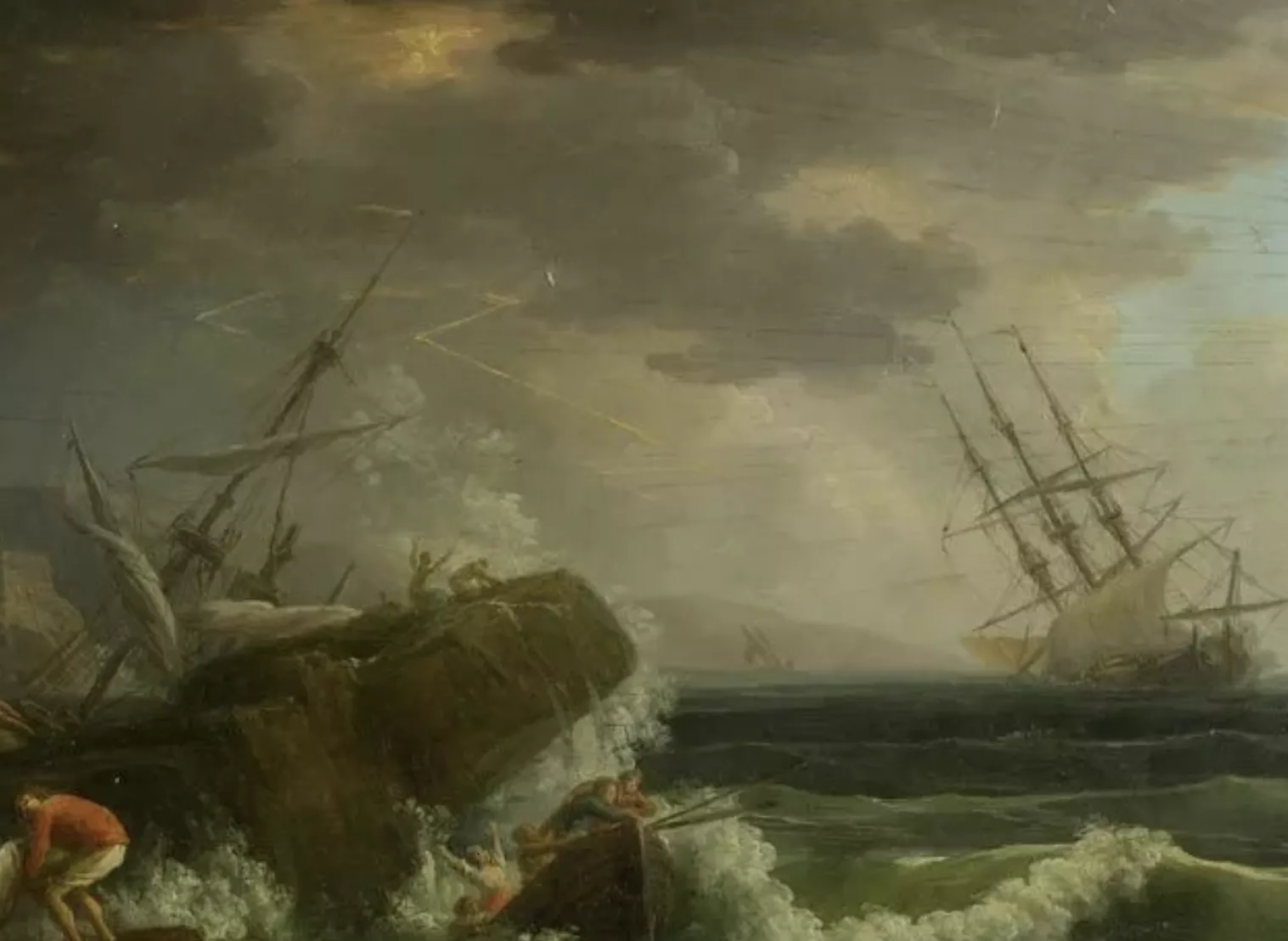
The painting Une tempête avec des naufragés (circa 1773, private collection), powerfully illustrates Claude Joseph Vernet's technical mastery and dramatic acuity.
The composition, constructed diagonally, guides the viewer's gaze from the agitation of the raging waves to the distraught figures on the shore, whose gestures convey both dread and hope.
Light, the central element of the work, contrasts a tormented sky where lightning pierces the clouds with the pale clarity that illuminates the human figures, reinforcing the tension between the indomitable immensity of nature and the vulnerability of man.
The treatment of marine elements - wave foam, reflections on dark water - testifies to meticulous observation, sublimated by a fluid, precise touch.
Vernet, true to his quasi-theatrical approach, breathes a striking dynamism into the whole: every detail, from the movement of trees bending in the wind to fragments of wreckage washed up on the sand, contributes to a carefully orchestrated scenography.
Beyond its pictorial aspect, the work can be read as a meditation on natural forces and human fragility, recurring themes in the aesthetics of the sublime.
This painting, while remaining faithful to the codes of 18th-century landscape painting, reveals a modernity in its treatment of emotions, where the grandiose spectacle of nature becomes a mirror of inner torments.
Vernet, with this piece, once again affirms his role as an attentive and poetic witness to the powers that govern the world.
Claude Joseph Vernet's imprint on his period
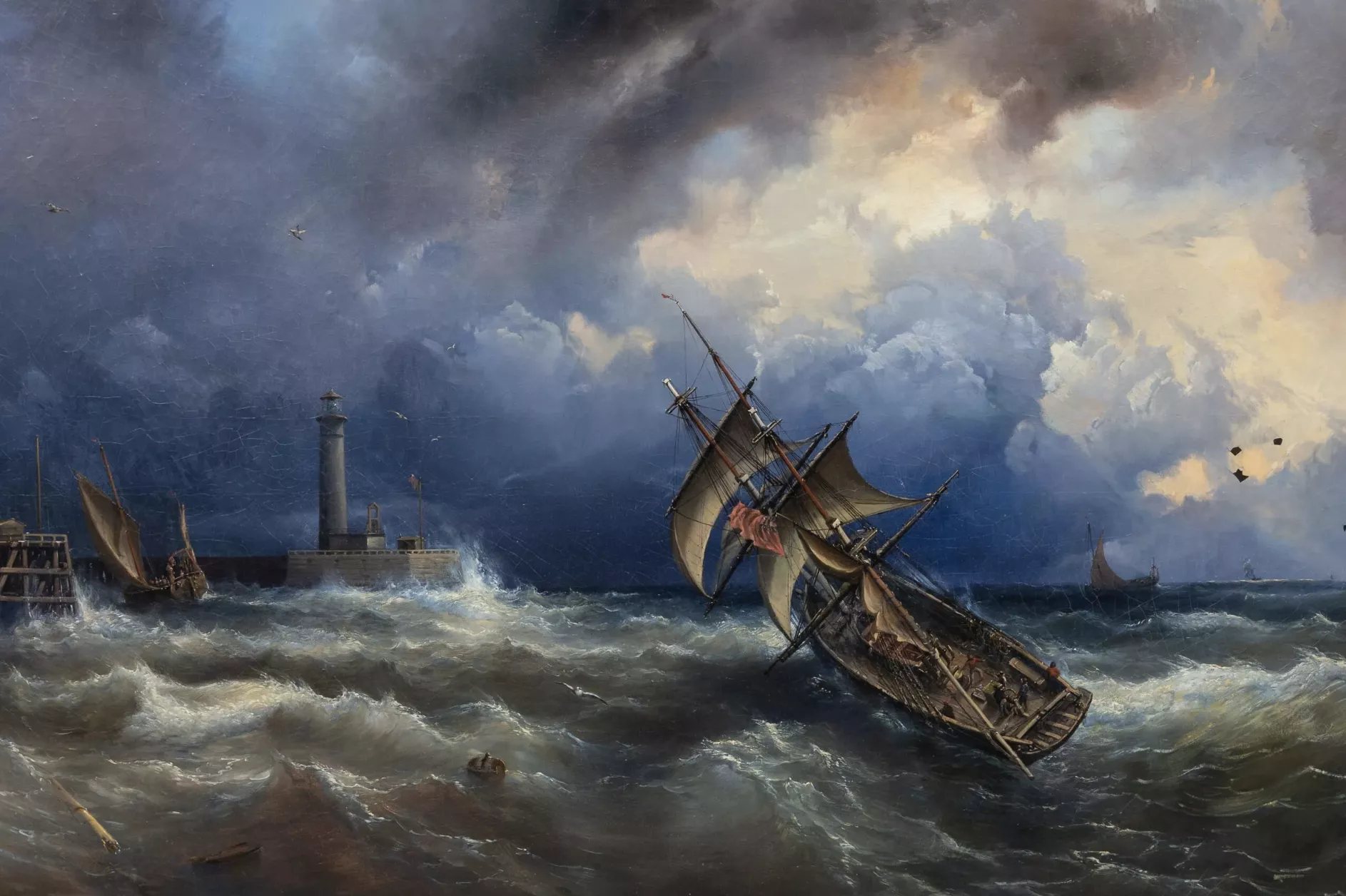
Claude Joseph Vernet left a profound mark on the art of the seascape in the 18th century, establishing himself as one of the undisputed masters of the genre, joining some of his contemporaries such as Eugène Isabey.
His works, appreciated throughout Europe, testify to a unique ability to combine rigorous observation of nature with a dramatic and emotional dimension.
Vernet, commissioned by Louis XV for a series of paintings of French ports, left his mark on art history through his documentary ambition without renouncing pictorial poetry.
His work, at the crossroads of geographical accuracy and sublime imagination, influenced numerous artists, from marine painters to landscape artists sensitive to the play of light and the staging of the elements.
His imprint can also be measured in his ability to express, with rare precision, the immensity of nature in the face of human fragility, thus exploring themes that anticipated Romanticism.
By reconciling classical tradition with stylistic innovations, notably in the use of light contrasts and dynamic compositions, Vernet offered his contemporaries a renewed vision of landscape, between fidelity to reality and exaltation of the sublime.
His paintings, exhibited in the royal and private collections of his time, continue to fascinate today, reminding us of the extent to which Vernet was both an artist of his time and a harbinger of sensibilities to come.
The stylistic influences of Claude Joseph Vernet
The stylistic influences of Claude Joseph Vernet testify to his ability to integrate varied artistic traditions while asserting a personal vision.
Trained in Rome under the aegis of Claude Lorrain's idealized landscapes and Salvator Rosa's animated scenes, Vernet drew from these masters a particular sensitivity to the play of light and the theatricality of compositions.
The Italian school, with its attachment to classical harmony and dramatic effects, has a lasting influence on his work, where nature is transformed into a sublimated setting.
But Vernet did not limit himself to simple imitation: he enriched his approach with a meticulous observation of reality, borrowing from the Dutch tradition of the 17th century his taste for everyday details and the atmosphères marines changeantes.
This dialogue between classicism and naturalism is also echoed in his treatment of the elements, where water, sky and earth seem to vibrate under the effect of a subtly nuanced palette and precise drawing.
His travels throughout France and Italy allow him to diversify his inspirations, incorporating local motifs and direct impressions of the landscapes observed.
Through this synthesis of influences, Vernet succeeded in surpassing his predecessors by infusing his compositions with an emotional intensity that would leave a lasting mark on landscape painting, heralding in many ways pre-romantic sensibilities.
His signature
Not all of Claude Joseph Vernet's works are signed.
Although there are variations, here is a first example of his signature :

Expertise your property
If you own a work by Claude Joseph Vernet, don't hesitate to request a free appraisal by filling in our online form.
A member of our team of experts and certified auctioneers will contact you to provide an estimate of the market value of your work.
If you are considering selling your work, our specialists will also guide you through the various alternatives available to obtain the best possible price, taking into account market trends and the specific features of each work.
Estimate in less than 24h
Discover in the same theme

Rating and value of works in Sèvres porcelain: vases, servic...
Sèvres porcelain, famous and appreciated throughout the world, has value on the auction market. Estimate in less than 24h.
Learn more >

Rating and value of works, drawings, paintings by Hubert Rob...
Hubert Robert was a pre-romantic painter of the 18th century who produced mainly landscape scenes, which are valued and quoted.
Learn more >

Rating and value of paintings by Rosalba Carriera
Rosalba Carriera is an artist who has produced works that are highly rated and valued at auction. Her pastels are sought-after.
Learn more >
Other marine paintings sold at auction

Estimated 600 € - 800 €
Henri ZUBER (1844-1909), Bridge at Artemare. Oil on canvas.

Estimated 1000 - 2000€
Alfred Stevens (1817 - 1875), marine painting, oil on canvas

Estimated Gaston BALANDE (1880-1971), Boats at low tide, oil on canvas
Gaston BALANDE (1880-1971), Boats at low tide, oil on canvas

Estimated Between €5,000 and €8,000
KRACHKOWSKY (1854-1914), Before the storm, oil on canvas

Estimated 1.000 - 2.000
Lucien GOUBERT (1887-1964), Rochers à Fermanville, oil on canvas

Estimated 18.000 - 30.000
Charles CAMOIN (1879-1965) "Le Port de Marseille, 1928" Oil on canvas.

Secure site, anonymity preserved

Auctioneer approved by the State

Free and certified estimates
Frequently asked questions
-
Who was Claude Joseph Vernet, and what is his role in art history?Claude Joseph Vernet (1714–1789) was a French painter born in Avignon, considered one of the undisputed masters of seascape painting in the 18th century. Trained in Rome for nearly twenty years, he developed a unique approach that combined rigorous observation of nature with dramatic lighting effects. Commissioned by Louis XV to create a series of paintings of French ports, his work had a lasting influence on landscape painting in Europe and foreshadowed Romantic sensibilities.
-
What is the market value and price range for Claude Joseph Vernet's paintings?Claude Joseph Vernet’s market value remains high and stable, despite his limited presence at auctions. Prices vary considerably depending on the medium and the prestige of the work: prints range from €20 to €2,300, watercolors from €100 to €38,400, while oil paintings can fetch several million euros. Some of his major seascapes, such as “View of Avignon from the Right Bank of the Rhône,” have sold for over 5 million euros.
-
How can a work attributed to Claude Joseph Vernet be authenticated?To authenticate a work by Claude Joseph Vernet, we recommend that you request a free, no-obligation appraisal from Auctie's. Our state-certified experts and auctioneers will examine your painting and provide you with an accurate estimate of its market value. You will receive a detailed response within 48 hours, based on an in-depth analysis of the artwork and current market trends.
-
Is this the right time to sell a work by Claude Joseph Vernet?Yes, now is a good time to sell a work by Claude Joseph Vernet. The artist’s market value remains high and stable, with sustained demand from collectors and enthusiasts of classical landscape painting. Vernet’s seascapes and landscapes continue to enjoy strong international appeal, and the market for 18th-century French art remains dynamic, offering opportunities to achieve an optimal price.
-
How does the sales process work with Auctie's for a painting by Vernet?At Auctie's, we guide you every step of the way, from appraisal to the final bid. After our experts conduct a free, no-obligation appraisal of your artwork, we’ll help you choose the best sales approach for your painting to ensure you achieve the best possible price. Our team of licensed auctioneers manages the entire process, taking into account market trends and the unique characteristics of your artwork to maximize its auction results.
