



Rating and value of works, paintings, drawings by Théodore Géricault

Key takeaways
- The prices of Théodore Géricault’s works vary considerably, ranging from €10 to €8,000,000 depending on the medium and provenance of the work.
- Oil-on-canvas paintings are the most highly valued, reaching up to €8,000,000 in 2009 for the Portrait of Alfred and Elizabeth Dedreux.
- A 19th-century Romantic painter (1791–1824), Géricault revolutionized the hierarchy of academic genres with *The Raft of the Medusa*.
If you own a work by or after Théodore Géricault, and would like to know its value, our state-approved experts and auctioneers will offer you their appraisal services. Our specialists will carry out a free appraisal of your work, and provide you with a precise estimate of its current market value. Thereafter, if you wish to sell your work, we will guide you towards the best possible arrangement to obtain the optimum price.
Rating and value of the artist Théodore Géricault
Théodore Géricualt leaves behind a rather singular body of work, in the pure Romantic vein. Prices for his works are now rising under the auctioneer's hammer. His paintings are particularly prized, especially by English and French buyers. The price at which they sell on the art market ranges from €10 to €8,000,000, a considerable difference, but one that says a lot about the value that can be attributed to Géricualt's works. In 2009, his oil on canvas from the Pierre Bergé collection, Portrait d'Alfred et Elizabeth Dedreux sold for €8,000,000, while it was estimated at €4,000,000 to €6,000,000 by Sotheby's.
Order of value from a single work to the most prestigious
Technique used | Result | Sculpture - volume | From €600 to €32,000 |
|---|---|
Estamp - multiples | From €10 to €91,010 |
Drawing - watercolor | From 350 to 1,023,740€ |
Oil on canvas | From 7,240 to 8,000,0000€ |
Estimate in less than 24h
Style and technique of Théodore Géricault
Théodore Géricualt was a 19th-century Romantic painter. He was trained by Carle Vernet and Pierre-Narcisse Guérin, among others, who had a major influence on his career. Géricault produced mostly drawings and oils on canvas, although there are also a few prints and sculptures.
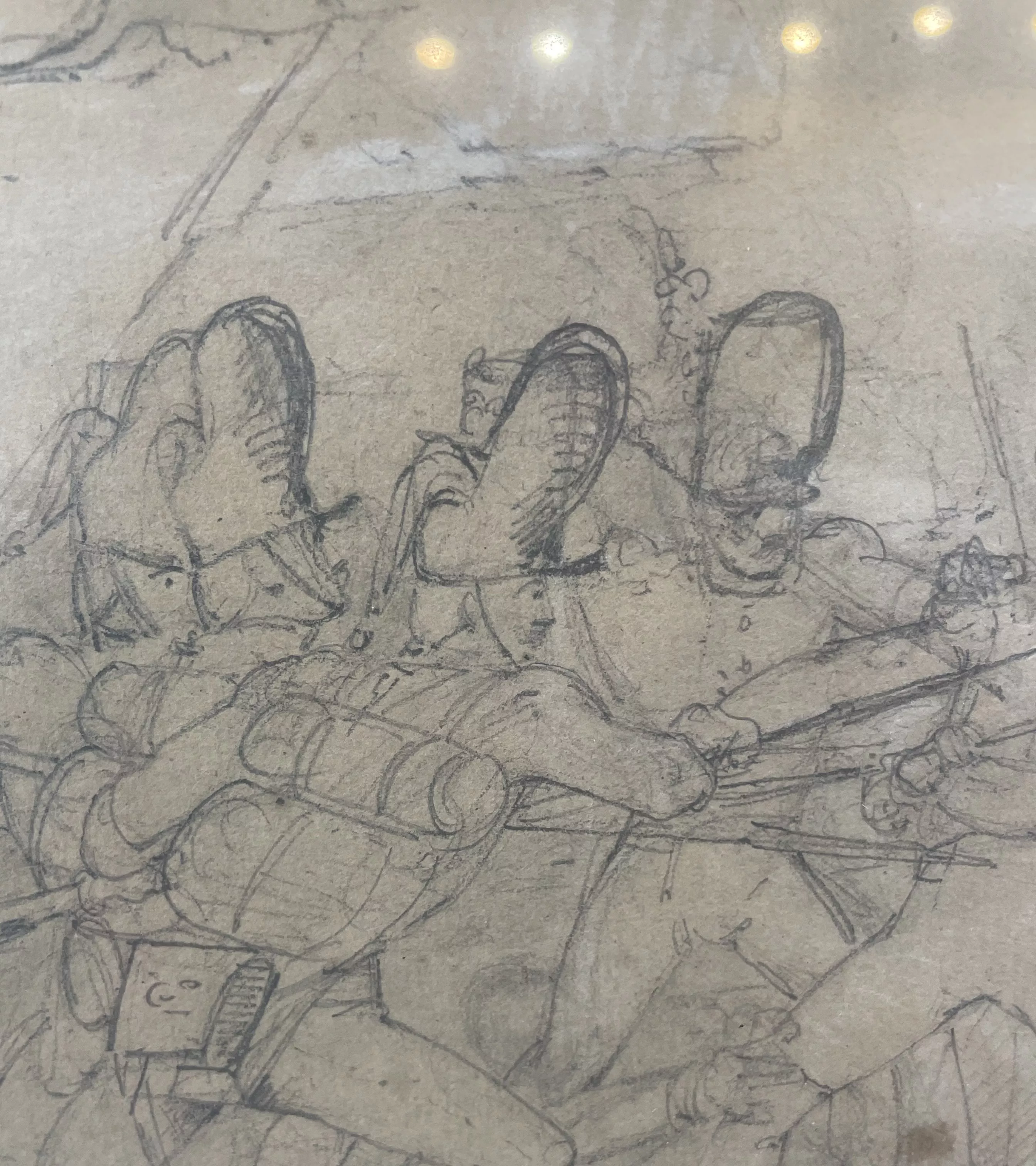
Théodore Géricault, at the height of Romanticism
Jean-Louis André Théodore Géricault (1791 - 1824), is a 19th-century painter who is well known to the general public.
He was born in Rouen into a wealthy family of magistrates, who moved to Paris during his childhood. He did not shine in terms of academic achievement, but nevertheless attended the Lycée Impérial, where he learned drawing techniques with Pierre Bouillon. His uncle was a wealthy collector who encouraged him to pursue a career in art. He began his apprenticeship in the studio of Carle Vernet, who specialized in hunting scenes. He then spent some time in Guérin's studio, before entering the Ecole des Beaux-Arts in Paris, where he copied the paintings in the Louvre, selected at the time by Napoleon I : above all the Flemish and Italian masters of the Renaissance and High Renaissance. At this time, Géricualt worked extensively on male nudes and equestrian portraits.
He was expelled from the Louvre for misconduct in 1812, but did not give up and redoubled his efforts, producing a painting of the Imperial Guard in five weeks, which he presented at the Salon. He received the Salon's gold medal for this work, even though he was only 21. Given the success of equestrian and military paintings, he continued to produce them.
Géricualt fell in love with his aunt, had a son with her, then left for Italy, where he failed the Prix de Rome and was inspired by Italian Renaissance painters. He met Ingres at the Villa Medici, then returned to Paris in 1817, having notably acquired the Caravaggesque chiaroscuro technique.
On his return, he set his sights on creating a masterpiece. Looking for inspiration in news stories, he came across the story of the Raft of the Medusa, which the Restoration had tried to suppress. He thus elevated the genre scene to the dimensions of history painting, definitively breaking the hierarchy of academic genres. His work was not, however, well received by the critics, so he left for England with his painting, where it met with fervent success.
Losing his health in London, however, he returned permanently to Paris, where he was hospitalized at the Salpétrière and produced a series of portraits of the mentally ill on the advice of his doctor. Little known, these paintings are nevertheless a vibrant tribute to the human condition.
Géricualt never recovered and died at the age of 32.
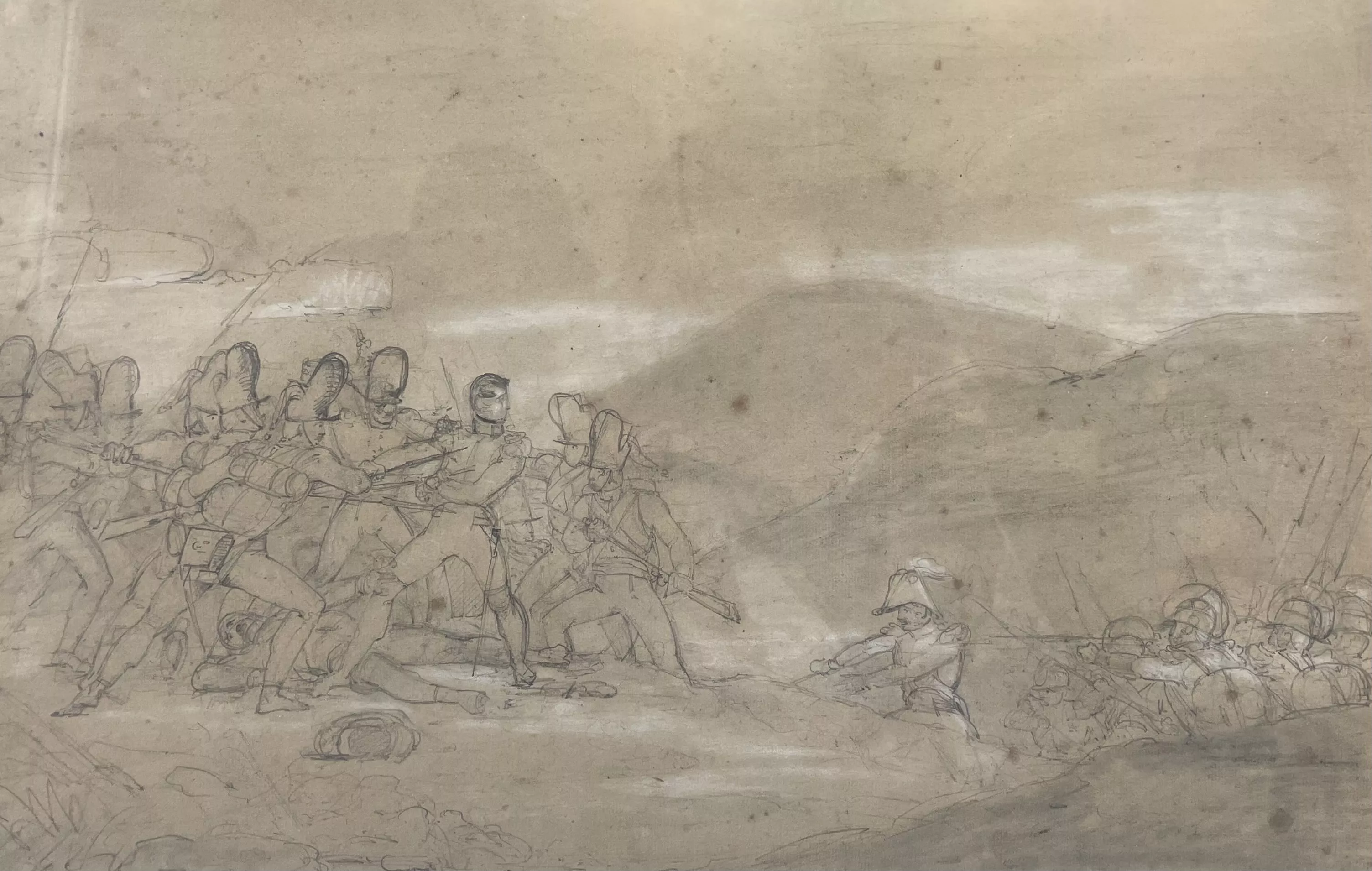
Theodore Géricault's imprint on his time
Théodore Géricualt leaves an immense legacy in art history. Despite the brevity of his existence, he believed in his talent even though the institutions of the time didn't want him. A precursor on many subjects, Le Radeau de la Méduse is interpreted as a plea against slavery. The representation of madness and traumas was more than an artistic theme in the 20th century, with artists like Gaston Chaissac or Zoran Music. Alongside Eugène Delacroix in painting and Chateaubriand in literature, he remains one of the leading figures of Romanticism.
His price is currently stable on the auction market.
Recognizing Théodore Géricault's signature
Theodore Géricault's works are sometimes signed. However, with or without a mention, it is important for you to have the work appraised to ensure its originality and to be able to date it.
Knowing the value of a work
If you happen to own a work by Théodore Géricault or after the artist, don't hesitate to request a free appraisal using our form on our website. A member of our team of experts and certified auctioneers will contact you promptly to provide you with an estimate of the market value of your work, as well as any relevant information about it. If you wish to sell your work, you will also be accompanied by our specialists in order to benefit from alternatives to sell it at the best possible price, taking into account the inclinations of the market.
Estimate in less than 24h
Works from the same period sold at auction

Estimated 2 000 € - 3 000 €
Delphin ENJOLRAS (1857-1945) "A Midsummer Night's Dream", Oil on canvas

Estimated 600 - 800 €
Alexandre Gabriel DECAMPS (1803-1860) Two children reading.

Estimated 9 000 - 12 000 €
Guillaume FOUACE (1837-1895) Pheasant and hare.

Estimated 600 € - 800 €
Henri ZUBER (1844-1909), Bridge at Artemare. Oil on canvas.

Estimated 10.000 - 15.000 €
Ebridge Ayer BURBANK(1858-1949), Young African-American boy, Oil on panel.

Estimated 800 - 1.500€
Barye, seated lion
Discover in the same theme

The value of works, paintings by Olivier Merson
Luc Olivier Merson is one of the last neoclassical historical painters. His works are still valued and quoted.
Learn more >

Rating and value of works, paintings and engravings by Odilo...
Odilon Redon is a 19th-century painter and engraver, a leading exponent of the Symbolist movement. His works are quoted and appreciated at auction.
Learn more >

Rating and value of works, drawings, paintings by Édouard De...
Édouard Detaille is a 19th-century painter who left his mark on his time. His war paintings were highly prized at auction.
Learn more >

Secure site, anonymity preserved

Auctioneer approved by the State

Free and certified estimates
Frequently asked questions
-
Who is Théodore Géricault, and what is his historical context?Théodore Géricault (1791–1824) was a major Romantic painter of the 19th century, trained by Carle Vernet and Pierre-Narcisse Guérin. A leading figure of Romanticism alongside Delacroix, he revolutionized painting by elevating genre scenes to the level of history painting, notably with his famous *The Raft of the Medusa*. Despite a brief and tumultuous life, he left an immense legacy in the history of art, inspiring artists of subsequent generations.
-
What is the price range for works by Théodore Géricault?Prices for Géricault’s works vary considerably depending on the medium and rarity: prints range from €10 to €91,010, drawings and watercolors from €350 to €1,023,740, and oil paintings on canvas— the most prestigious, range from €7,240 to €8,000,000. A record was set in 2009 with the sale of the Portrait of Alfred and Elizabeth Dedreux for €8,000,000.
-
How can you authenticate a work by Théodore Géricault?To verify the authenticity of a work by Géricault, we recommend that you request a free, no-obligation appraisal from Auctie's. Our state-certified auctioneers and experts will examine your artwork and provide you with an accurate estimate within 48 hours, along with all the necessary information regarding its authenticity and date of creation.
-
Is this the right time to sell a work by Théodore Géricault?Yes, now is a good time to sell a work by Géricault. The prices of his paintings are rising steadily at auction, particularly among British and French buyers, and his market value remains stable. Romantic works are in steady demand, which creates a favorable environment for a sale.
-
How does the appraisal and sale of a work of art take place at Auctie's?At Auctie's, appraisals are completely free and non-binding. Simply fill out an online form or contact our team, and an expert auctioneer will get back to you within 48 hours with an estimate of the market value. If you decide to sell, our specialists will then work with you to find the best option for selling your piece at the best possible price.
