



Edvard Munch (1863–1944) Market Data – Estimates and Values | Auctie's

Key takeaways
- Edvard Munch, a pioneer of Norwegian Expressionism, commands some of the most stable and highest prices in the modern art segment, with prices ranging from less than €1,000 to $119.9 million.
- Oil paintings range from $500,000 to $120 million depending on the subject (notably The Frieze of Life), age, and provenance; prints, the most accessible segment, cost from €1,000 to €1.5 million.
- The 1940 bequest to Oslo includes 1,200 paintings, 7,050 drawings, and 18,322 prints, making the available canvases very rare on the secondary market and therefore highly valued.
A Norwegian painter and pioneer of Expressionism, Edvard Munch created a body of work whose value on the art market is among the most stable and highest in the modern art segment.
If you own a painting, drawing, or print by this artist and would like to know its value, our licensed auctioneers will provide you with a free appraisal in less than 24 hours—with no obligation and in complete confidence.
Key Figure | Details |
$119.9 million | The Scream (pastel, 1895) — world auction record, Sotheby’s New York, May 2, 2012 |
26,724 works | Bequeathed to the City of Oslo: 1,200 paintings, 7,050 drawings, 18,322 prints |
< 24 hours | Response time for a free estimate at Auctie's |
Estimate in less than 24h
Edvard Munch's Market Value, Price, and Appraisal on the Art Market
Edvard Munch’s market value—that is, the benchmark market value established by the auction market—spans an extraordinarily wide range, reflecting the diversity of his body of work: from an extremely rare oil on canvas to a print with a run of several hundred copies, prices can vary by a factor of several thousand.
Answering the question “How much is a Munch worth?” therefore requires first specifying the type of work, its condition, its provenance, and its relative rarity.
Type of Work | Low end of the range | High range | Key Factors Affecting Value |
Oil painting or tempera | $500,000 | $120 million | Subject (Fresco of Life?), age, condition, provenance |
Drawing (pastel, charcoal, watercolor) | $50,000 | $30 million | Technique, size, connection to a known painting |
Print (lithograph, woodcut, drypoint) | €1,000 | €1.5 million | Condition of the print, numbering, handwritten annotations, rarity of the print |
Unidentified work on paper / uncertain attribution | A few hundred € | Variable | Degree of attribution, expert appraisal result |
Painting
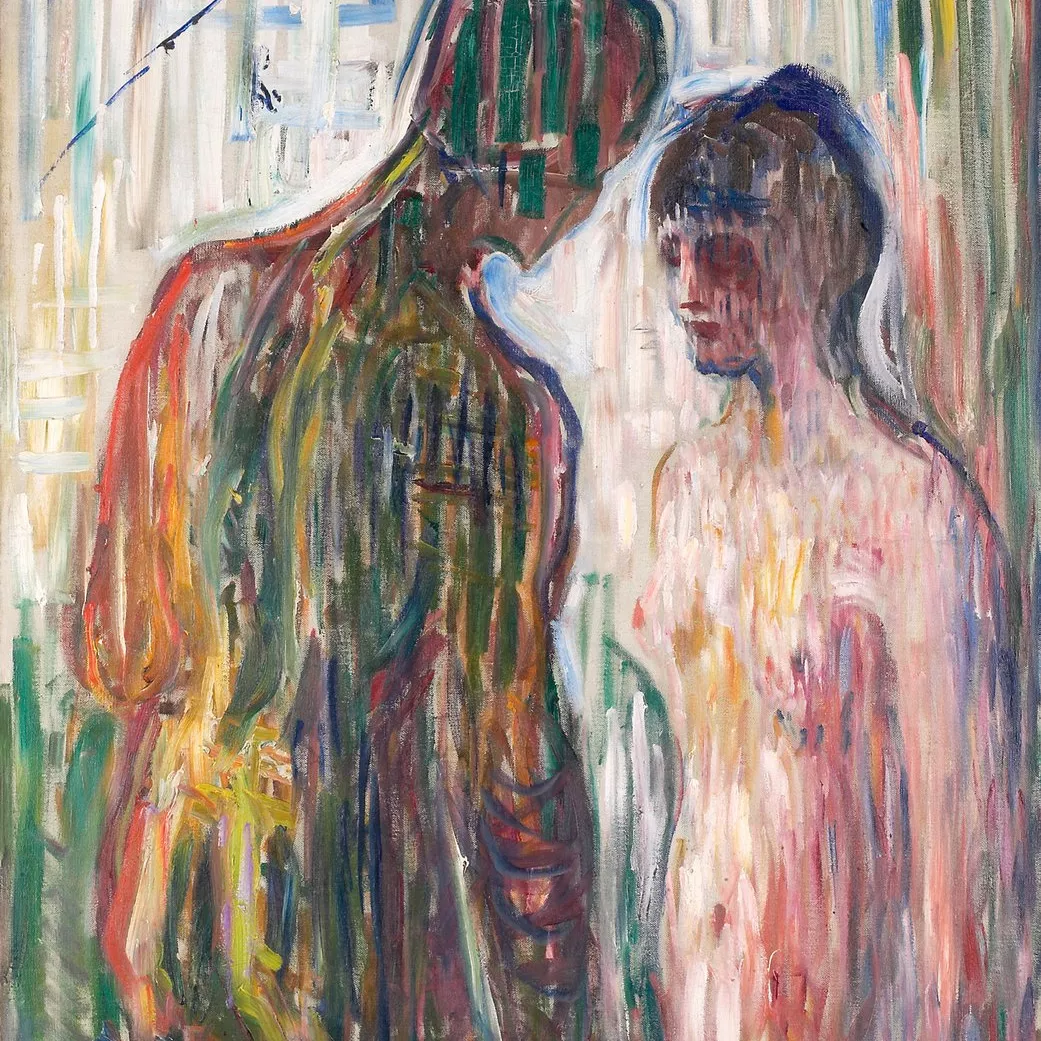
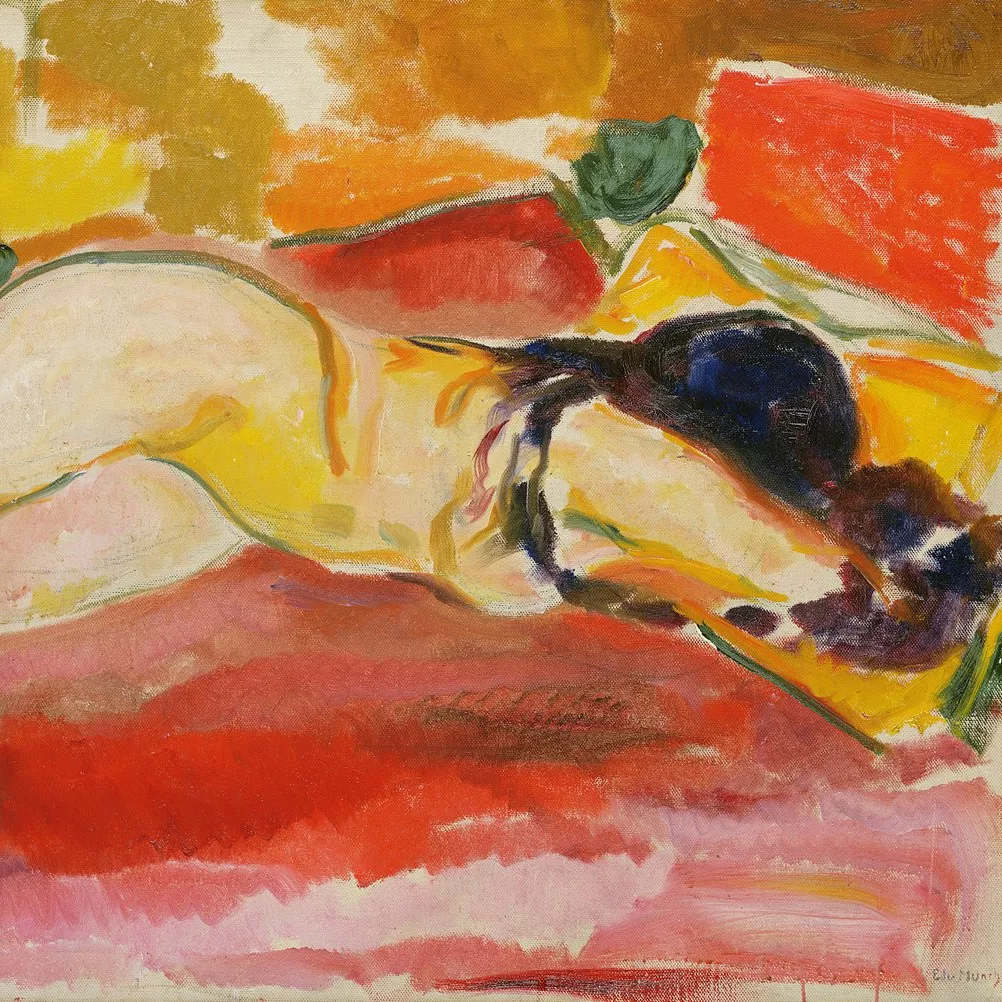
Edvard Munch’s paintings represent the high end of the market, sought after by major institutions and the most well-endowed private collections. Their scarcity is inherent: the bulk of his paintings was bequeathed to the Munch Museum in Oslo in 1940, so there are very few oil paintings available on the secondary market.
A painting belonging to the “Frieze of Life”—the six themes around which Munch organized his work—commands a significant market premium, regardless of its size.
Drawings
Large-scale pastels and charcoal drawings represent the second segment of the market. The two versions of *The Scream* executed in pastel—one on cardboard, the other on panel—fall into this category, making them the most expensive drawings ever sold at auction.
For preparatory drawings or small-scale works on paper, prices are more affordable but remain significant as long as a connection to a known composition can be established.
Prints: Engravings, Lithographs, and Woodcuts
This is the segment most commonly found in private collections. Munch practiced printmaking with rare intensity and inventiveness: etchings, aquatints, lithographs, and woodcuts comprise a catalog of 842 distinct designs, often produced in multiple states and in print runs of highly variable sizes.
The print’s state (first or second edition?), handwritten numbering, the presence or absence of annotations in the artist’s own hand, and the print’s actual rarity are the four technical criteria that determine a print’s value.
Price reference: A lithograph of *The Scream* dating from 1895 sold for 1.4 million pounds at Sotheby’s in 2017.
This exceptional result can be attributed to the absolute rarity of this print—fewer than 20 copies of this lithograph remain in the world—and to the universal fame of the subject depicted.
Biography of Edvard Munch, Pioneer of Norwegian Expressionism
Understanding Edvard Munch’s life story is essential to grasping why his work exerts such a lasting appeal on collectors and museums around the world. His biography is not merely a prelude to formal analysis—it is the raw material of his painting.
A Childhood in Kristiania Marked by Illness and Grief
Edvard Munch was born on December 12, 1863, in Løten, Norway, into a family affected by tuberculosis and the religious fervor of a military father in fragile health.
His mother died of tuberculosis in 1868, when he was five years old; his older sister Sophie, to whom he was very close, succumbed to the same disease in 1877. These early losses had a lasting impact on his relationship with illness, death, and the female body.
*The Sick Child*, painted in 1886 and met with a chorus of boos at the Salon in Kristiania, the Norwegian capital (now Oslo), is the first painting in which he fully embraces this autobiographical theme of grief.
The Bohemian Scene in Kristiania and the Shock of Paris
In the early 1880s, Munch frequented the circle of Hans Jæger, an anarchist novelist whose motto, “Write your own life,” became an artistic creed for him.
This bohemian milieu, hostile to bourgeois morality, encouraged him to place his personal experience at the center of his work. In 1889, he left for Paris on a government scholarship.
The Neo-Impressionist exhibition and his discovery of the works of Paul Gauguin and Vincent van Gogh completed the shift of his palette toward expressive color.
His *Manifesto of Saint-Cloud* (1890) clearly sets out his artistic program: to paint “living beings who breathe, who feel, who love, and who suffer.”
Berlin, the Ferkel Circle, and the Scandal of 1892
In 1892, the Berlin Artists’ Union invited Munch to exhibit. Fifty-five paintings were hung on November 5; they were taken down on the 13th, after a week of scandal.
The controversy made headlines in German newspapers and revealed to Munch the power of controversy as a means of gaining fame. His reaction was clear-eyed: “It’s, after all, the best thing that could have happened to me: I couldn’t have dreamed of better publicity.”
Berlin became his base for several years. There, he frequented the circle at Zum schwarzen Ferkel, spending time with August Strindberg, the Polish poet Stanisław Przybyszewski, and the fascinating Dagny Juel, and it was there that he conceived two of the most iconic motifs of *The Frieze of Life*: *Madonna* and *Vampire*.
The Frieze of Life, a work conceived as a cycle
Munch conceived his body of work very early on as an organic whole organized into six themes: The Awakening of Love, The Blossoming and Dissolution of Love, Anxiety, Fear, Death, and finally, Nature Awakening.
This cyclical principle, which encompasses works painted over a period of forty years, explains why the same motifs recur constantly in his body of work—not as mere repetition, but as variations on a single existential theme.
This serial logic is now well documented in the catalogs raisonnés and constitutes an important criterion for appraisal: a canvas belonging to a central episode of the Frieze will systematically be valued higher than a work of the same format that falls outside the series.
The Discovery of Printmaking and Photography
Beginning in 1894, Munch devoted himself to printmaking with remarkable intensity. Within a few years, he had mastered etching, drypoint, aquatint, lithography, and wood engraving, which he often practiced using innovative mixed media.
His woodcuts, in particular, foreshadowed the aesthetic of the Expressionist group Die Brücke, formed in Dresden in 1905.
In 1902, he acquired a Kodak camera and explored photography as a tool for self-representation: this lesser-known aspect of his work attests to an experimental curiosity that cannot be fully gauged through his paintings alone.
Åsgårdstrand, the Norwegian Landscape, and the Northern Light
The coastal village of Åsgårdstrand, where Munch stayed regularly beginning in 1889, plays a role in his work comparable to that of Giverny in Monet’s: a real place that gradually becomes a mental motif, an inner landscape.
The fjord, the shoreline, the moonlight on the water, and the boardwalk appear in dozens of paintings and engravings, providing experts with a valuable reference point for dating and locating works whose provenance is uncertain.
The Crisis of 1908 and the Return to Norway
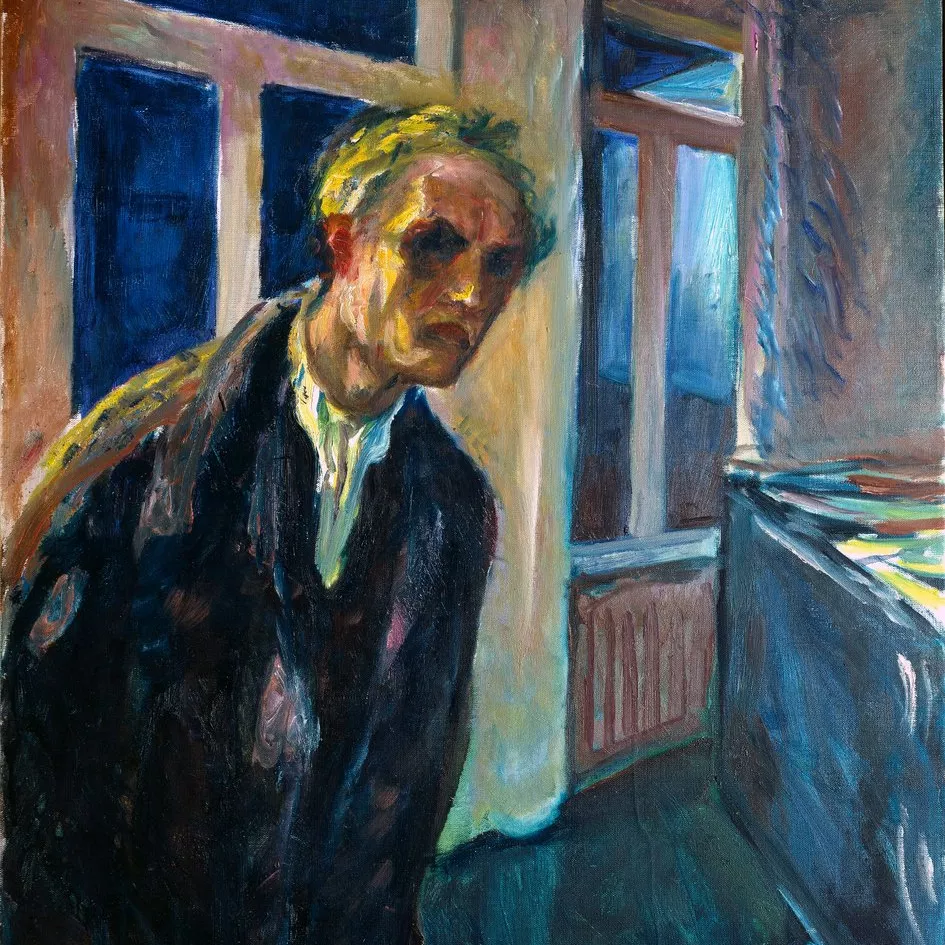
In 1908, a severe depression forced Munch to undergo an eight-month hospitalization in Copenhagen. He emerged from this experience a profoundly transformed artist: his palette became lighter, his compositions simpler, and he accepted major public commissions, notably the murals for the Aula at the University of Oslo (1909–1916).
This evolution contradicts the simplistic image of Munch as solely tragic: his mature works, which are more colorful and serene, constitute a distinct market segment—generally valued lower than the works from the 1892–1908 period but increasingly sought after by collectors interested in the entirety of his body of work.
Ekely, “Degenerate Art,” and the Bequest to the City of Oslo
In 1916, Munch moved to Ekely, an estate on the outskirts of Oslo that would be his home until his death. The rise of Nazism in Germany deprived him of his main market: in 1937, 83 of his works were confiscated from German public collections as part of the infamous “Entartete Kunst” (“Degenerate Art”) exhibition.
*The Sick Child*, sold to a private collector by the city of Dresden in 1938, was eventually donated to the Tate in London in 1939. In 1940, Munch signed a will bequeathing his entire studio to the city of Oslo. He died in Ekely on January 23, 1944, three weeks after his 80th birthday.
Date | Event |
1937 | 83 works confiscated from German museums (Entartete Kunst) |
1938 | *The Sick Child* sold by Dresden to a private collector |
1939 | *The Sick Child* donated to the Tate Gallery in London |
1940 | Will bequeathing the studio to the city of Oslo |
Jan. 23, 1944 | Edvard Munch dies in Ekely |
Focus on *The Scream*, 1893
“Suddenly the sky turned blood red… I stopped, leaning against the railing, exhausted… and I felt an immense, infinite scream pierce through nature. ” — Edvard Munch, diary, Nice, January 22, 1892 (Moderna Museet, Stockholm).
*The Scream* is not a single work but a motif that appeared in four distinct versions between 1893 and 1910 and was reproduced as a lithograph in 1895. The original motif—a figure with an open mouth set against a fjord landscape with a turbulent sky—was inspired by a walk along the Ekeberg Road in Kristiania, likely in 1891 or 1892.
In his diary, Munch describes an experience of intense sensory dissociation, during which the entire natural world seemed to be “screaming” at him. What the figure represents is not a scream being emitted, but a scream being received: the creature with its hands over its cheeks is not screaming; it is covering its ears in response to a scream it hears.
The blood-red sky in the painting has long been interpreted as a purely Expressionist invention.
Astronomers have determined that it corresponds to the abnormally colored twilights observed in Northern Europe in the months following the eruption of Krakatoa on August 27, 1883: volcanic ash suspended in the upper atmosphere produced bright red sunsets, visible from Norway from late November 1883 through mid-February 1884.
Munch was looking toward the southwest—exactly the direction of these phenomena—during his walks on Ekeberg (source: Sky & Telescope).
Version | Year | Technique | Dimensions | Location |
Version 1 | 1893 | Tempera and pencil on cardboard | 91 × 73.5 cm | National Museum of Norway, Oslo |
Version 2 | 1893 | Oil, tempera, and pastel on cardboard | 83.5 × 66 cm | Munch Museum, Oslo |
Version 3 | 1895 | Pastel on cardboard | 79 × 59 cm | Private collection (sold for $119.9 million in 2012) |
Version 4 | 1910 | Tempera on cardboard | 83 × 66 cm | Munch Museum, Oslo |
Versions 1, 2, and 4 are held in Norway by public institutions. Version 3, the only one in private hands, is the only one likely to appear on the market.
It was this version that sold for $119.9 million at Sotheby’s New York on May 2, 2012, setting the world record at that time for any work of art sold at auction, across all categories.
The 1895 lithograph, of which fewer than 20 prints survive, was sold for 1.4 million pounds at Sotheby’s in 2017.
The Success of Edvard Munch’s Works on the Auction Market
The market for Munch is deep and steady: the artist’s works come up for auction at the Hôtel Drouot and at major international auction houses several times a year, across all categories.
Buyers are primarily modern art museums, private foundations, and collectors from the United States, Asia, and Europe. This geographic diversity among bidders ensures effective competition and drives prices upward.
Sales Records
Work | Year | Medium | Auction House | Amount |
The Scream | 2012 | Pastel on cardboard, 1895 | Sotheby's New York | $119.9 million |
Girls on the Bridge | 2016 | Oil on canvas, circa 1902 | Sotheby's New York | $54.5 million |
Sankthansnatt (Midsummer Night) | 2025 | Oil on canvas, ca. 1901–1903 | Sotheby's New York | $35.1 million |
Girls on the Bridge | 2008 | Oil on canvas | Sotheby's New York | $30.8 million |
Lithograph of *The Scream* | 2017 | Lithograph, 1895 | Sotheby's London | £1.4 million |
The price trend of *Girls on the Bridge* across three auctions illustrates the long-term dynamics of the Munch market: sold for $7.7 million in 1996, the same painting reappeared in 2008 for $30.8 million, and in 2016 for $54.5 million, setting a new record for the artist each time.
This twenty-year price trajectory for a single work stands as one of the most striking demonstrations of the enduring strength of Munch’s market value over time.
The most recent major auction was that of *Sankthansnatt* (*Midsummer Night*, c. 1901–1903), from the Leonard A. Lauder collection, which sold for $35.1 million ($30 million hammer price, $35.1 million including fees) at Sotheby’s New York on November 18, 2025.
Estimate in less than 24h
The Works and Style of Edvard Munch
“I don’t paint what I see, but what I have seen.” — Edvard Munch, quoted by Kynaston McShine (MoMA, 2006).
Munch’s visual language is immediately recognizable, even to the untrained eye.
It is based on a few recurring formal principles: the undulating line, expressing an instability of both space and the psyche; color applied in bold, flat areas or vibrant streaks, without illusionistic modeling; distorted perspective, which isolates and amplifies the figures in the foreground; and a deliberate sense of incompleteness, with the edges of the canvas often left bare or simply brushed, signaling that the painting is conceived as a trace of an experience rather than a finished representation of the world.
The Major Motifs and Their Variations
Six motifs dominate Munch’s oeuvre: *The Scream*, *The Madonna* (also known as *Madone*), *Vampire*, *The Dance of Life*, *The Sick Child*, and *Girls on the Bridge*.
Each appears in several painted versions and in one or more prints, spanning a period of two to forty years. What changes from one version to another is never the fundamental motif, but rather its degree of abstraction: the later versions are generally more refined, less narrative, and closer to an icon than to a painting.
The expert must therefore situate each version within the series to assess its place in the market hierarchy.
Influences and Legacy
In his early work, Munch drew on Nordic Symbolism (Ibsen, Strindberg), Gauguin’s Synthetism, and Van Gogh’s loose brushwork. He also incorporated the lessons of Japonism, evident in his flat-color compositions and bold cropping.
Later in his career, his influence on Die Brücke (a group of Expressionist artists founded in Dresden in 1905 by Kirchner, Heckel, and Schmidt-Rottluff) was direct and well-documented: the group’s members saw his prints during their exhibition in Hamburg in 1902.
His legacy in contemporary visual culture is more diffuse but just as real: *The Scream* is one of the most reproduced images of the 20th century, from the “horror mask” to the emoji.
Recognizing Edvard Munch’s Signature
Edvard Munch’s signature varies depending on the period and the medium. On canvases, he generally signs “E. Munch” in cursive, sometimes accompanied by the date, in the upper left or lower right corner.
On prints, the handwritten annotations are more complex: one commonly finds the edition number (e.g., “7/50”), the condition of the plate (first or second impression), the title, and sometimes corrections or inscribed dedications.
The ligated “EM” monogram, used notably on certain engravings, is another form of authentication.
Please note: the presence of a signature alone does not authenticate a work. The market for Munch prints is one of the most vulnerable to forgeries and unauthorized prints, produced after the artist’s death using the original plates.
Only a comparison with the catalog raisonné of prints—in this case, Gerd Woll’s, the academic standard in the field—and, if necessary, a physical examination of the paper and inks by an expert can determine the authenticity of a print.
Why Have Your Edvard Munch Work Appraised at Auctie’s
Auctie’s has been a state-authorized auction house since 1977, is a member of the Rossini Group, and is ranked among the leading auction houses in France according to the 2025 ranking by the Council of Auction Houses.
Its team of experts specializing in modern paintings and prints handles several thousand requests per year, responding to each one within 24 hours.
Indicator | Value |
State-Approved Since | 1977 |
National Ranking 2025 | Among the leading auction houses (CMV) |
Response time | Less than 24 hours |
Appraisal | Free and with no obligation |
Confidentiality | Owner’s anonymity protected |
Authenticity
Authenticity is the primary and most decisive criterion in the appraisal process. For prints, the expert systematically compares the piece to Gerd Woll’s catalog raisonné, which lists 842 distinct designs and their various states.
For works on paper and paintings, the process involves examining available certificates, consulting provenance databases, and, if necessary, conducting technical analyses (infrared, UV, spectrometry) in partnership with specialized laboratories.
Type of Work
The technique used (oil painting, tempera, pastel, charcoal drawing, lithography, etching, woodcut) determines the market segment to which the work belongs and, consequently, the order of magnitude of its value.
The same composition often exists in several different media, whose respective values may differ by a factor of ten to one hundred.
Provenance
Provenance (the documented history of a work’s successive owners) is a major factor in determining value. A work that once belonged to a prestigious collection, is mentioned in an old exhibition catalog, or is accompanied by a gallery purchase invoice from the 1920s is inherently worth more than a work of uncertain provenance.
For Munch, German provenance prior to 1933 is particularly sought after, as it corresponds to the period of his greatest international fame.
Condition and Medium
The condition of a work directly affects its auction price: a canvas that has undergone invasive restoration, a print with foxing, or a folded sheet can be worth 20 to 50 percent less than a copy in perfect condition.
The expert examines the condition of the support (canvas, paper, board), the paint layer, and—for prints—the quality of the print and the condition of the margins.
Subject
Works belonging to the major motifs of the Frieze of Life—The Scream, Madonna, Vampire, Girls on the Bridge—command a significant market premium compared to works of the same format and technique depicting less iconic subjects.
Within a single series, the earliest version—and the one most directly linked to the initial creative impulse—is generally the most highly valued.
Dimensions
All else being equal, large canvases command higher prices than smaller formats—but this rule has many exceptions in Munch’s case, as some of his small preparatory studies are more sought after than large-format canvases from less significant series.
Order of value ranging from a work “after” Munch to an authentic work
Auction catalogs use precise terminology to describe the degree to which a work is attributed to Munch. These designations—whose meanings are codified by professional convention—have a direct impact on value.
Catalog Note | What it means | Impact on value |
After Edvard Munch | Copy or interpretation based on an original by Munch, created by another artist | Minimal value, often a few hundred euros |
Munch's circle / Munch school | Work by a closely associated artist, inspired by his style, but not attributed to him | Modest value, of documentary interest |
Munch’s studio | Work executed in his studio, with or without the artist’s direct involvement | Moderate value depending on the degree of presumed involvement |
Attributed to Edvard Munch | Probable but not certain attribution, subject to further expert evaluation | Value lower than that of a certified work, but significant if the attribution is solid |
Edvard Munch (no reserve) | Authentic work, attributed with certainty based on expert evaluation and the catalog raisonné | Full value, depending on technique, subject matter, condition, and provenance |
Why Edvard Munch's Market Value Is Set to Rise
The long-term rise in Munch’s market value rests on a simple structural factor: the scarcity of supply. The 1940 bequest secured the bulk of his works in Norwegian public collections, making the secondary market heavily dependent on the very few pieces that are not part of this collection. This scarcity is increasing, as many of the private collections that still held Munch works in the mid-20th century have since donated them to museums or sold them at major specialized auctions.
Price | Meaning |
26,724 works | Bequeathed to the City of Oslo—permanently off the market |
10 out of 12 | Versions of *Girls on the Bridge* held in public collections |
3 out of 4 | Versions of *The Scream* in museums—only one likely to appear on the market |
Demand, meanwhile, shows no sign of waning: major exhibitions dedicated to Munch—at the Berlinische Galerie in 2023 and the British Museum in 2019—generate sustained international attention that invariably translates into a rise in auction prices in the months that follow.
The growing recognition of his entire body of work—and no longer just his major motifs—by collectors and institutions is also helping to broaden demand toward less-represented categories, such as drawings from his Berlin period or small-format prints.
Have Your Artwork Appraised
If you own a work you believe to be by Edvard Munch—whether a painting, drawing, print, or work on paper—the first step is a free appraisal by our certified auctioneers.
The process is simple: submit photographs of the piece (complete front and back views, close-ups of the signature, any marks, or annotations) via the online form. Our experts will respond within 24 hours with an initial appraisal and, if necessary, recommendations for further verification.
Estimate in less than 24h
Discover in the same theme

Rating and value of paintings by Harold Speed
Harold Speed is an English painter who has produced valuable and successful works at auction. Estimated in 24h.
Learn more >

Rating and value of Russian paintings by Mikhail Guermacheff
Mikhail Guermacheff is a Russian realist painter who has produced works of increasing value at auction.
Learn more >

Rating and value of sculptures and bronzes by Charles Delhom...
Charles Delhommeau is a French animal sculptor who has created numerous works that command high prices at auction.
Learn more >
Nos records d'enchères à l'hôtel Drouot

Estimated 10.000 - 15.000 €
Ebridge Ayer BURBANK(1858-1949), Young African-American boy, Oil on panel.

Estimated 20.000 - 30.000
EXCEPTIONAL LARGE OVAL DISH IN VINCENNES SOFT PASTE PORCELAIN FROM THE "BLEU CÉLESTE" SERVICE OF KING LOUIS XV AT THE CHÂTEAU DE VERSAILLES

Estimated 20.000 - 30.000
MANUFACTURE ROYALE DE SÈVRES, 18th century "L'Empereur de la Chine" - Portrait of the Emperor Qianlong, Hard porcelain bisque, 1775

Estimated 1.500 - 3.000
HERMÈS, "Kelly" 32 saddle bag in black box calf

Estimated Between €5,000 and €8,000
KRACHKOWSKY (1854-1914), Before the storm, oil on canvas

Estimated 40.000 - 80.000
Alexandre ROUBTZOFF (1884-1949), Portrait of Arbia, oil on canvas

Secure site, anonymity preserved

Auctioneer approved by the State

Free and certified estimates
Frequently asked questions
-
Qui était Edvard Munch et quel est son rôle dans l'histoire de l'art ?Edvard Munch (1863-1944) était un peintre norvégien et l'un des grands précurseurs de l'expressionnisme moderne. Son œuvre, marquée par des thèmes existentiels autour de la maladie, la mort et l'amour regroupés dans la « Frise de la Vie », exerce une attraction durable auprès des collectionneurs et des musées mondiaux. Il a également été un graveur inventif, maîtrisant l'eau-forte, la lithographie et le bois gravé avec une intensité remarquable.
-
Quelle est la fourchette de cote pour les œuvres d'Edvard Munch ?La cote de Munch varie considérablement selon le type d'œuvre : les peintures à l'huile s'étendent de 500 000 $ à 120 millions de dollars, les dessins (pastels, fusains) de 50 000 $ à 30 millions de dollars, et les estampes de 1 000 € à 1,5 million d'euros. Ces variations dépendent du sujet (appartenance à la Frise de la Vie), de l'ancienneté, de l'état, de la provenance et de la rareté relative de l'œuvre.
-
Comment authentifier une œuvre d'Edvard Munch et connaître sa valeur ?Pour authentifier une œuvre de Munch et obtenir une estimation fiable, nous vous recommandons de faire une demande d'estimation gratuite auprès d'Auctie's. Nos commissaires-priseurs agréés et experts examinent votre œuvre sans engagement, en toute confidentialité, et vous livrent une réponse en moins de 24 heures. Cette expertise tient compte du type d'œuvre, de son état, de sa provenance et de son authenticité.
-
Est-ce le bon moment pour vendre une œuvre de Munch ?Oui, c'est un moment favorable pour vendre une œuvre de Munch. Sa cote figure parmi les plus stables et les plus élevées du marché de l'art moderne, avec une demande constante des institutions et des collectionneurs privés internationaux. La rareté structurelle de ses toiles sur le marché secondaire (l'essentiel étant au Musée Munch d'Oslo) maintient une forte valorisation, notamment pour les œuvres appartenant à la Frise de la Vie.
-
Comment vendre une œuvre de Munch avec Auctie's ?Auctie's vous accompagne de bout en bout : nous commençons par une estimation gratuite et confidentielle de votre œuvre par nos experts agréés, puis nous assurons la commercialisation et l'adjudication de votre bien auprès d'une clientèle internationale d'amateurs et d'institutions. Tout au long du processus, vous bénéficiez du savoir-faire d'une maison de ventes aux enchères spécialisée dans l'art moderne et contemporain.
