



Cubism: Appraisal and Auction

Facets, collages, and a revolution in perception: the value of Cubist works varies greatly depending on the artist, the period, and the provenance of the piece.
Below you’ll find all our valuation guides dedicated to Cubism—paintings, drawings, collages, and prints. Each guide details the price ranges observed at auction and the factors that determine a work’s value before it is entrusted to our state-certified auctioneers.
Guides on this art movement
See all guides >
Rating and value of drawings and paintings by Vladimir Baran...
Vladimir Baranoff Rossiné is a painter associated with Cubism whose works command high prices and are highly valued at auction.
Learn more >

Rating and value of drawings and paintings by Édouard Pignon
Édouard Pignon is a French painter of the New School of Paris who produced a vast number of paintings that are highly valued and command high prices.
Learn more >

Rating and value of drawings and paintings by Nicolas Eekman
Nicolas Eekman is an original painter from Brussels whose style defies categorization. His work is reminiscent of the School of Paris and is highly va...
Learn more >

Rating of value of drawing and paintings by Auguste Chabaud
Auguste Chabaud is a Fauvist and Expressionist artist who has produced numerous paintings that command high prices at auction.
Learn more >

Rating and value of drawings and paintings by Max Jacob
Max Jacob was a French poet and draughtsman who produced a number of works that have now been revised upwards. Estimated 24h.
Learn more >

Rating and value of paintings by Marcel Gromaire
Marcel Gromaire is an Expressionist painter of the first half of the 20th century, whose works are highly regarded and valued.
Learn more >

Rating and value of paintings by Paul Klee
Paul Klee was an Expressionist painter who taught at the Bahaus, and was responsible for a considerable body of work of high value.
Learn more >

Rating and value of paintings by Georges Valmier
Georges Valmier was a cubist painter who lived through several currents of modern art. His works are of great value today.
Learn more >

Here's why French cubists are back on the market in style
French Cubists were long forgotten by the art market. Today, they are back on the market in great numbers. 24h estimate.
Learn more >

Here's why female artists are going through the roof
Impeccable provenance, historical reintegration, institutional attention: women artists have never been so present on the market.
Learn more >

Rating and value of Anne Dangar's drawings, paintings and ce...
Anne Dangar is an Australian artist, active in France, who has produced paintings and ceramics that are highly regarded and valued.
Learn more >

Rating and value of paintings by Auguste Herbin
Auguste Herbin is a painter and theoretician of abstraction who has produced works that are highly valued at auction.
Learn more >
Understanding the Value of a Cubist Painting
What Is Market Value in the Modern Art Market?
The market value of a Cubist painting refers to the benchmark value assigned to it by the secondary market at a given moment, based on the artist’s identity, the phase of the movement to which the work belongs, the subject matter, the condition of the work, the strength of the documentation, and the current state of international demand.
Cubism is one of the most prestigious and most studied segments of the 20th-century art market: works by Pablo Picasso and Georges Braque, its two founders, regularly rank among the highest auction prices in the history of public sales.
Emerging around 1907 through the joint efforts of Picasso and Braque, Cubism revolutionized representation by abandoning traditional perspective in favor of a geometric decomposition of forms and a multiplication of viewpoints on a single object.
This radical break, which subsequently spread to a wider circle of artists—including Fernand Léger, Juan Gris, Albert Gleizes, and Jean Metzinger, produced a body of work that exerted a considerable influence on all of 20th-century art, which explains the depth and stability of demand in this segment over the past several decades.
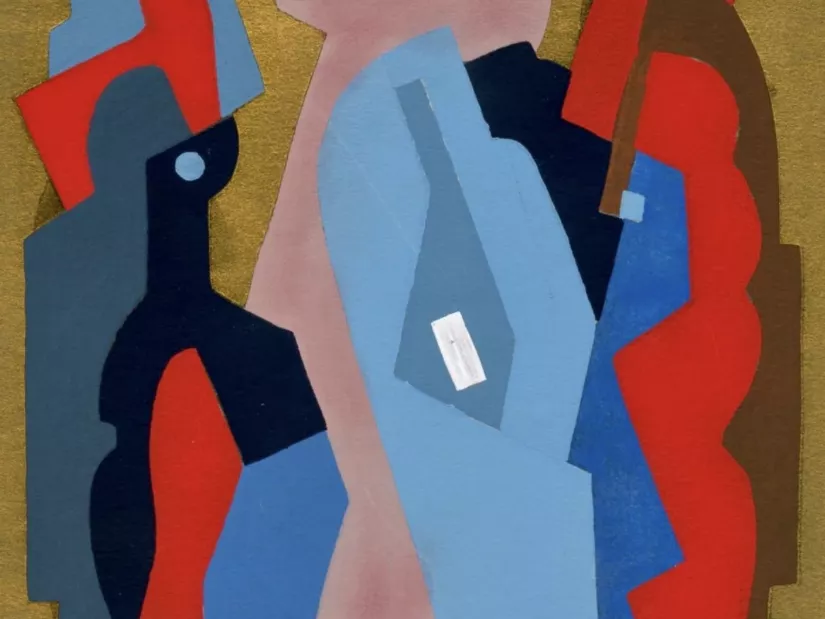
Analytical and Synthetic Cubism: What Impact Do They Have on Market Value?
Cubism is traditionally divided into two major phases, and distinguishing between them is essential for any serious valuation.
Analytical Cubism, which developed between 1907 and 1912, takes the decomposition of forms to its most extreme point: the color palette is limited to shades of brown, gray, and ochre, and the subject sometimes becomes difficult to identify amid the proliferation of geometric facets.
This phase, the most radical and the most difficult for the uninitiated public to grasp, is paradoxically the most sought after by museums and knowledgeable collectors, who see it as the movement’s moment of greatest intellectual intensity.
Synthetic Cubism, which succeeded it beginning in 1912, reintroduced color, simplified forms, and pioneered the use of collage and cut-out paper—the famous “papier collé” technique invented by Braque and Picasso.
This second phase, more colorful and more accessible, also produced major works, and its market value, though sometimes slightly lower than that of the most iconic analytical masterpieces, remains extremely strong, particularly for the collages, whose historical significance as a foundational technical innovation in 20th-century art is now fully recognized.
Period | Characteristics | Artists and Works | Market Demand Level |
Proto-Cubism (1906–1907) | Influence of Cézanne and African art; simplification of forms | Picasso (Les Demoiselles d'Avignon), Braque (early works) | Institutional; extremely rare works on the market |
Analytical Cubism (1908–1912) | Extreme geometric decomposition, monochromatic palette | Picasso, Braque, Juan Gris (early works) | Exceptional, very high auction prices |
Synthetic Cubism (1912–1920) | Return of color, papier collé, collage | Picasso, Braque, Juan Gris, Fernand Léger | Very strong, international |
Expanded Cubism (Section d’Or) | Spread to a wider circle of artists, 1912–1914 | Albert Gleizes, Jean Metzinger, Robert Delaunay, Henri Le Fauconnier | Active, specialized collectors |
Estimate in less than 24h
The criteria that determine the value of a Cubist work
The market value of a Cubist work stems primarily from the artist’s identity, which has a considerable impact in this segment: the gap between the market value of a Picasso or a Braque and that of an artist from their broader circle—even one of high formal quality—is measured in several orders of magnitude.
For Picasso, whose career spanned several decades beyond his Cubist period, precise dating within that period—and the distinction between Analytical and Synthetic Cubism—are key determinants of value.
For Juan Gris and Fernand Léger, whose entire bodies of work are more directly associated with Cubism, identifying the specific phase of their own stylistic evolution plays a comparable role.
The price ranges observed on the secondary market illustrate this considerable range. A Cubist drawing or study by an artist from the broader circle of the Section d’Or can range from 5,000 to 50,000 euros.
A medium-sized oil on canvas by Juan Gris or Fernand Léger ranges from 300,000 to 5 million euros, depending on the period and quality. The major analytical or synthetic compositions by Picasso and Braque consistently exceed ten million euros and can reach several hundred million for the most exceptional works, making Picasso the highest-valued artist in the history of the art market.
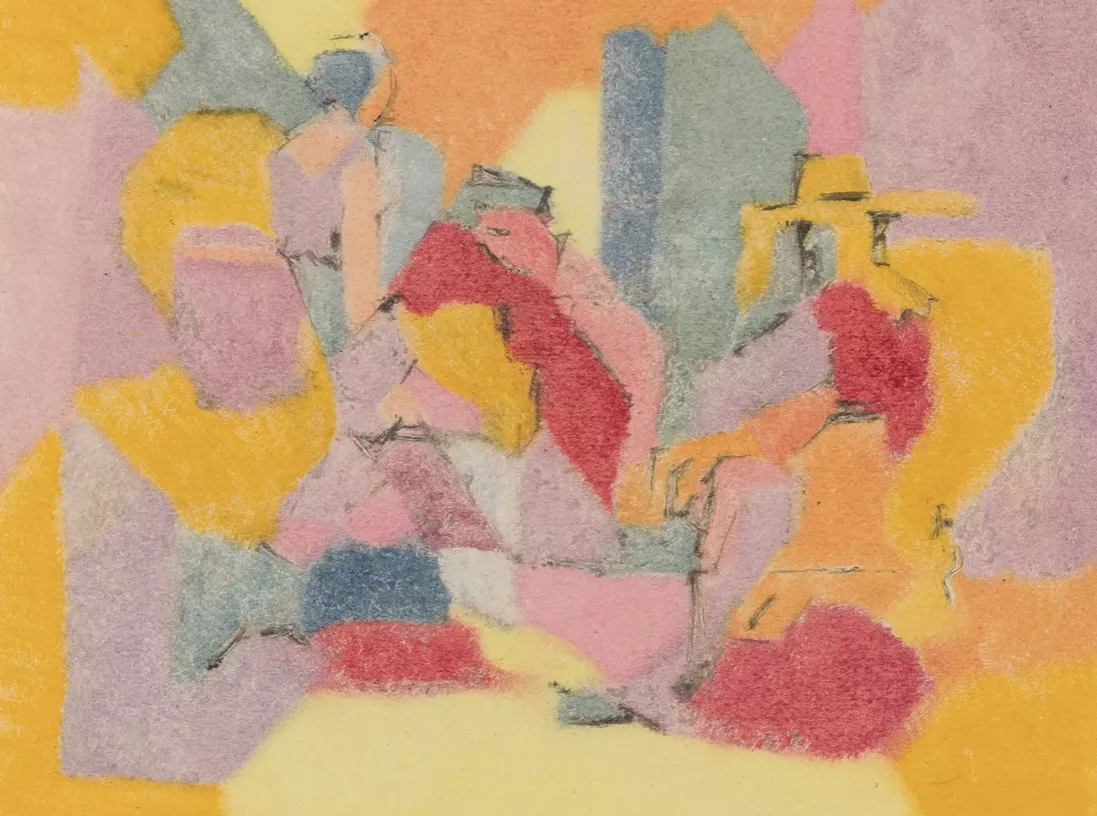
Paintings, drawings, sculptures: all Cubist works appraised
The hierarchy of Cubist works and its impact on market value
In Cubism, oil painting occupies the dominant position in the hierarchy of value, particularly the large analytical compositions that constitute the intellectual and historical heart of the movement.
The papier collé and collages of the Synthetic Period, although technically more modest in size and materials, are valued at a comparable level due to their foundational historical significance: they mark the introduction of everyday materials— wallpaper, newspapers, and labels, into the realm of fine art—a breakthrough whose significance extends far beyond the strict confines of Cubism.
Cubist sculpture, though rarer, occupies a unique place. Picasso himself produced sculptural assemblages of great technical inventiveness, while sculptors such as Alexander Archipenko, Henri Laurens, and Jacques Lipchitz developed a body of work entirely devoted to the three-dimensional translation of Cubist principles.
Finally, drawings and preparatory studies offer a unique insight into the process of geometric decomposition characteristic of the Cubist method and represent a more accessible segment for collectors with more modest budgets.
Category | Characteristics | Indicative Price Range | Market Demand |
Large Cubist composition (Picasso, Braque), key period | A work of the highest prestige, with comprehensive documentation | €10 million — several hundred million | Institutional, exceptional |
Medium-sized canvas (Juan Gris, Fernand Léger) | Top-tier quality, gallery-sized | €300,000 — €5 million | Very strong, international |
Mounted on paper or collage (major artist) | Groundbreaking technical innovation, historical significance | €500,000 — several million € | Very active, highly sought-after |
Canvas by an artist from the broader circle (Gleizes, Metzinger, Delaunay) | Variable quality, solid critical acclaim | €30,000 — €500,000 | Active, specialized collectors |
Cubist sculpture (Archipenko, Laurens, Lipchitz) | Rare, three-dimensional interpretation of Cubist principles | €50,000 — €2 million | Strong demand, specialists |
Drawing or preparatory study | Insight into the process of geometric decomposition | €5,000 — €100,000 | Rising in value, collection-worthy |
Still lifes and geometric compositions: the most sought-after works
The still life is, par excellence, Cubism’s favorite subject: guitars, bottles, newspapers, glasses, and fruits arranged on a table constitute the movement’s most consistent iconographic repertoire, through which artists developed their most accomplished formal explorations.
These compositions, when created by Picasso, Braque, or Juan Gris during the movement’s classical period, rank among the most sought-after works on the market, their often modest size contrasting with their considerable value.
Cubist portraits, which are rarer and more technically ambitious due to the difficulty of reconciling geometric decomposition with the recognizability of the subject, also generate very strong demand when they are well-documented.
Compositions featuring multiple figures—even rarer, particularly in Analytical Cubism—are works of the highest prestige, and their appearance on the public market is always an event followed with great interest by institutions and major international collectors.
Estimate in less than 24h
Get a Free Appraisal of a Cubist Artwork
A certified appraisal by a licensed auctioneer in less than 24 hours
Appraising a Cubist artwork is one of the most demanding tasks in the modern art market.
It requires a detailed understanding of the movement’s complex chronology, the ability to distinguish between its analytical and synthetic phases, and mastery of the attribution tools specific to artists whose global fame—particularly in the case of Picasso—has given rise to a market for forgeries of considerable sophistication.
A licensed auctioneer possesses these skills, and their expertise is backed by their professional liability.
Auctie’s offers this appraisal free of charge, with a certified response within 24 hours.
Whether you have inherited a painting attributed to a Cubist artist, wish to have a drawing or collage from that period appraised, or are considering compiling an estate inventory, the process is the same: submit your item to a trained eye capable of accurately assessing its value.
What you need to provide for an online appraisal
For a Cubist painting, clear photographs of the front and back of the work are essential, along with a close-up of the signature and any inscriptions on the back of the support, the precise dimensions of the composition, and any known provenance information: gallery label, purchase invoice, previous certificate of authenticity, or reference in an exhibition catalog or specialized publication.
For pasted papers and collages, the condition of the assembled elements and the exact nature of the materials used—such as newspaper or wallpaper—must be described in detail, as these are important factors for dating and authentication.
For drawings and preparatory studies, the condition of the paper support must be documented: pinholes, foxing, creases, and tears. In cases of serious doubt regarding attribution—particularly for works presented as being by Picasso—a thorough physical examination will be recommended prior to any sale, which may include a scientific analysis of the materials.
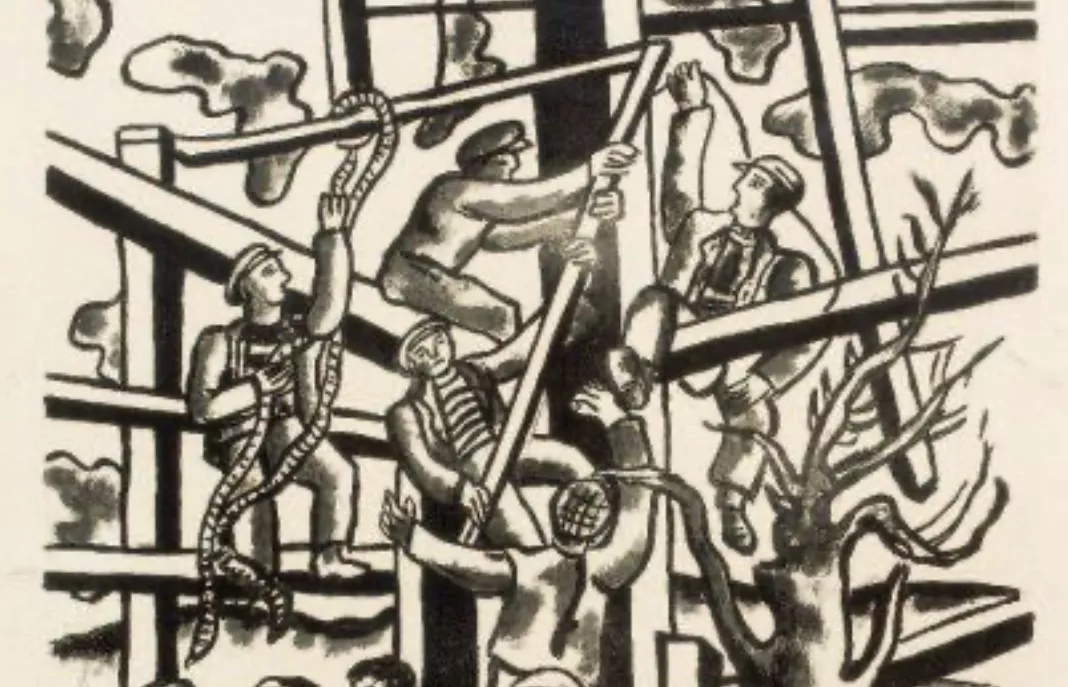
Signature, provenance, and authenticity: the pillars of valuation
Signatures and Attributions: Their Impact on Value
The authentication of a Cubist work relies on a set of converging clues, the rigor of which must be proportional to the artist’s reputation.
The signature, when present, is never sufficient on its own for the most highly valued artists: Picasso himself did not consistently sign his works during the Cubist period, which necessitates an in-depth stylistic analysis for many unsigned pieces attributed to the circle of Kahnweiler, his dealer at the time.
Consulting archives and catalogs raisonné is, in this context, absolutely crucial.
For the movement’s major artists, catalogs raisonné or authentication committees serve as the definitive authority. Picasso’s work is documented by the monumental catalog compiled by Christian Zervos, supplemented by subsequent work by the Picasso Administration.
For Braque, the catalog raisonné compiled by Nicole Worms de Romilly and Jean Laude serves as the reference. For Juan Gris, the works of Douglas Cooper are authoritative. A work listed in one of these collections enjoys the highest level of scholarly endorsement, which is directly and significantly reflected in its market value.
Level of Documentation | Impact on Market Value |
Work listed in the catalogue raisonné (Zervos for Picasso, etc.) | Maximum assurance; often an essential condition for sale |
Work published in specialized literature or exhibited in a major retrospective | Strong scientific backing; value highly sensitive |
Work with conclusive scientific analysis (pigments, papers, supports) | Guarantee of material authenticity; provides strong assurance to the buyer |
Work accompanied by a written appraisal from a recognized expert on the body of work | Good guarantee; facilitates the sale and reduces risk |
Work with documented provenance from the original gallery (Kahnweiler, in particular) | Solid foundation; direct traceability to the artist or his circle |
Work without documentation; isolated signature without context | Maximum uncertainty; sale not recommended without prior in-depth appraisal |
Provenance and Condition: Their Impact on Valuation
The provenance of a Cubist work is a key factor in establishing trust and determining value. Daniel-Henry Kahnweiler, the exclusive dealer for Picasso, Braque, Gris, and Léger during the movement’s formative years, built an archive of exceptional richness, which often makes it possible to trace a work’s history from its creation through the dispersal of his collection after World War I.
A work whose chain of ownership has been documented from its very origins enjoys near-absolute legitimacy on the market.
The condition of the work is a particular concern for collages and works made with glued paper, as the assembled materials—often period newspaper of modest quality—are sensitive to light, humidity, and the gradual separation of the elements.
For oil paintings, examination under raking light and ultraviolet light reveals craquelure, overpainting, or past restorations, which can have a significant impact on value in a market that places the highest value on the physical integrity of the original work.
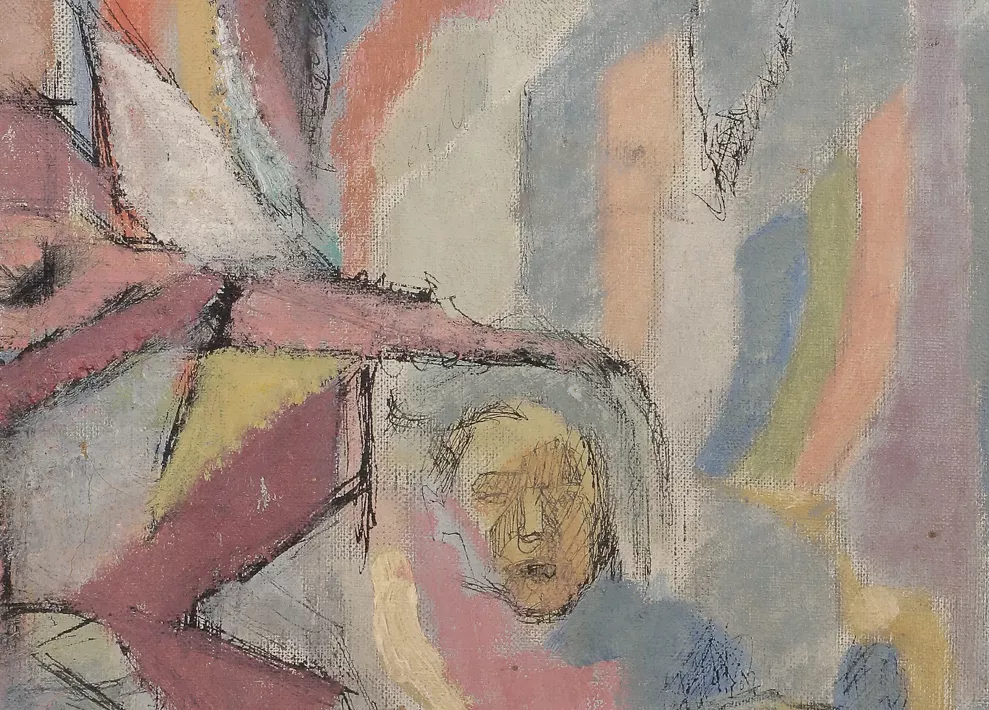
Sell a Cubist Painting at Auction with Auctie's
From the reserve price to the hammer price: how the price is determined
Auctions are the preferred method of sale for high-quality Cubist works, particularly for major pieces whose rarity and international renown warrant exposure to the entire global market.
It yields a public price certified by a court-appointed auctioneer, resulting from the direct interplay of supply and demand. The reserve price, set in consultation with the seller, must be carefully calibrated with particular attention to the specific phase of the movement to which the work belongs, as a significant portion of its value depends on this.
For major works, particularly those by Picasso and Braque, the sale is accompanied by a sophisticated marketing strategy, including the distribution of the catalog to active collectors in the field and outreach to institutions likely to be interested.
For artists from the broader circle of the movement, the quality of the catalog entry and the accuracy of the attribution remain the most decisive factors in achieving a strong result.
Hôtel Drouot and online auctions: reaching the right bidders
Auctie’s holds its auctions at Hôtel Drouot, the leading auction house in continental Europe, founded in 1852 and frequented by a dense network of dealers, collectors, and specialists in modern art.
For a Cubist painting, Drouot offers visibility among European enthusiasts of this seminal movement, complemented by an online presence that significantly expands the global reach of each auction.
An American collector passionate about the early days of modern art, an Asian museum seeking an iconic Cubist work, or a collector from the Gulf region drawn to the history of this artistic revolution can bid in real time from their home countries.
For Cubism, whose fame is truly global, this international dimension is almost always decisive in securing the highest hammer price.
Estimate in less than 24h
Estate Planning, Inheritance: Valuing an Inherited Cubist Artwork
Inventory and Distribution of an Estate
Cubist works are found in certain family estates whose collections were assembled in the early decades of the 20th century, a time when these artists—already recognized but not yet at the level of fame they would later achieve—remained accessible to discerning collectors.
A work acquired in the 1920s or 1930s may now be worth considerably more than the heirs realize, making a preliminary appraisal all the more essential before any division of the estate takes place.
Auctie’s regularly works alongside notaries to compile comprehensive estate inventories that include modern artworks.
Each piece is appraised individually, with particular attention paid to issues of attribution and dating—factors that are absolutely critical to determining value in this segment. The resulting report is an official document that is legally enforceable and can be included in the estate file without reservation.
Confidentiality of the process and preservation of anonymity
The circumstances leading to the appraisal of a Cubist work are often personal and sensitive: discovery as part of an inheritance, reorganization of a family collection, or a decision to sell after a long period of ownership.
Auctie’s handles each case with absolute discretion. The owner’s identity is never disclosed to third parties without their explicit consent, and the works may be offered for sale under complete anonymity if the owner so desires.
This confidentiality is a core commitment of Auctie’s, valid at every stage of the relationship, from the initial contact through to the receipt of the proceeds from the sale.
Entrust the appraisal of your Cubist artwork to Auctie’s
A Cubist work deserves an appraisal that reflects the chronological complexity of the movement and the considerable stakes it may represent.
The distinction between analytical and synthetic Cubism, the sophistication of the forgery market for the most famous artists, and the extreme sensitivity of valuations to documentation and provenance: all reasons to entrust the appraisal of your piece to a state-certified auctioneer well-versed in the specifics of this demanding segment.
Auctie’s guides you from the initial appraisal through to the final auction, with the rigor of an expert trained in these matters and the discretion your financial decisions deserve. The appraisal is free, confidential, and non-binding, and you’ll receive a response within 24 hours.
Discover in the same theme
Rating and value of drawings and paintings by Édouard Pignon
Édouard Pignon is a French painter of the New School of Paris who produced a vast number of paintings that are highly valued and command high prices.
Learn more >

Rating and value of paintings by Michel Moreno
Michel Moreno is a French contemporary artist who has produced works of considerable value at auction.
Learn more >

Rating and value of drawings, paintings and sculptures by Ge...
Georges Kars is a twentieth-century painter, draughtsman and sculptor who has produced works that are valued at auction.
Learn more >
Estimate in less than 24h
Frequently asked questions
-
Quelles sont les fourchettes de prix pour une œuvre cubiste selon l'artiste et le type d'œuvre ?Les prix varient considérablement selon l'artiste et le type d'œuvre. Un dessin ou une étude d'un artiste de la Section d'Or se situe entre 5 000 et 50 000 euros. Une huile sur toile de Juan Gris ou Fernand Léger oscille entre 300 000 et 5 millions d'euros. Les grandes compositions de Picasso et Braque dépassent systématiquement 10 millions d'euros et peuvent atteindre plusieurs centaines de millions pour les pièces exceptionnelles. Les papiers collés et collages majeurs se situent entre 500 000 euros et plusieurs millions.
-
Comment faire authentifier une œuvre cubiste et connaître sa valeur réelle ?Auctie's propose une expertise gratuite et sans engagement, confiée à un commissaire-priseur agréé par l'État spécialisé en art moderne. Il suffit de soumettre des photographies nettes de l'œuvre (recto, verso, signature), ses dimensions précises et tout élément de provenance connu. Une réponse certifiée vous sera transmise en moins de 24 heures. Pour les doutes sérieux sur l'attribution, un examen physique approfondi ou une analyse scientifique des matériaux peut être proposée.
-
Est-ce le bon moment pour vendre une œuvre cubiste ?Oui, le cubisme constitue l'un des segments les plus prestigieux et les plus stables du marché de l'art du XXe siècle depuis plusieurs décennies. La demande internationale reste très soutenue pour les œuvres authentifiées et bien documentées, en particulier pour les natures mortes, les papiers collés et les compositions majeures des artistes fondateurs. La profondeur et la stabilité de cette demande offrent un contexte favorable à la vente.
-
Quels sont les facteurs qui déterminent la cote d'une œuvre cubiste ?La cote d'une œuvre cubiste dépend avant tout de l'identité de l'artiste, de la période (proto-cubisme, cubisme analytique ou synthétique), du sujet (notamment les natures mortes très recherchées), du format et de la qualité formelle. L'état de conservation, la solidité de la documentation, la provenance certifiée et la demande internationale jouent également un rôle déterminant. La distinction entre cubisme analytique et synthétique est particulièrement essentielle pour l'évaluation.
-
Comment se déroule la vente d'une œuvre cubiste chez Auctie's ?Auctie's accompagne le vendeur de l'estimation gratuite jusqu'à l'adjudication publique en tant que maison de ventes aux enchères. Après l'expertise certifiée d'un commissaire-priseur agréé, l'œuvre est cataloguée, illustrée et mise en vente aux enchères publiques. Cela garantit une mise en concurrence des acheteurs potentiels sur un marché ouvert, maximisant les chances d'obtenir la meilleure valorisation pour votre pièce.
