



Rating and value of paintings by Georges Valmier

Key takeaways
- Paintings by Georges Valmier (1885–1937) sell for between €115 and €479,280 at auction, with a record price of $725,000 set in 2014.
- Prices vary significantly depending on the medium: paintings between €100,000 and €300,000, gouaches/watercolors between €10,000 and €50,000, and prints between €80 and €2,070.
- A major figure in French abstract art and an active member of the Abstraction-Création group, with fewer than 300 cataloged oil paintings, supplemented by numerous independent studies.
If you own a work by artist Georges Valmier or based on his work and would like to know its value, our state-approved experts and auctioneers will guide you.
Our specialists will carry out a free appraisal of your work, and provide you with an accurate estimate of its value on the current market.
Then, should you wish to sell your work, we will direct you to the best possible arrangement to obtain the optimum price.
Artist's rating and value
Georges Valmier has created a multitude of works with a variety of colors and media. The value of each piece depends on the medium used. On today's market, his paintings fetch tens of thousands of euros at auction. His drawings are less popular.
The price at which his works sell ranges from €115 to €479,280. Thus, a work signed Georges Valmier can sell for tens of thousands of euros at auction, as evidenced by his painting Nature morte au compotier, dating from 1925 adjudged €51,000 in 2015.
Order of value from the most basic to the most prestigious
Technique used | Result |
|---|---|
Estamp - multiple | From 80 to 2070€ |
Drawing - watercolor | From €120 to €101,030 |
Painting | From €115 to €479,280 |
Estimate in less than 24h
The works and style of Georges Valmier
Georges Valmier (1885 - 1937) was a Cubist painter, but his career also traversed other currents. His artistic journey thus traversed Impressionism, Cubism, which he discovered at the age of 25, through to pure abstraction from 1921.
He also became an active member of the Abstraction - Création group, collaborating with artists such as Jean Arp, Albert Gleizes, Frantisek Kupka or Alfred Reth.
His compositions are characterized by abstract or synthetic forms, often curves, disks or circles linked by dots (rhythmic, almost musical compositions). He favors contrasting, luminous flat colors, implemented with inventiveness and formal audacity.
He also designs theater and ballet sets and costumes, as well as models for fabrics, carpets or objects, demonstrating a global aesthetic practice. Georges Valmier is also a passionate musician. He plays Debussy, Ravel, Fauré and Satie. This musical sensibility permeates his abstract art, allowing his forms to be invested with a rhythmic and expressive dimension.
His paintings (there are fewer than 300 oil paintings on canvas today), are often preceded by numerous gouache studies, each version exploring color or form, creating a body of work each as distinctive as the next.
His late production includes monumental versions for the decoration of public spaces, such as those destined for the Palais des Chemins de Fer for the 1937 Universal Exhibition.
His work is thus a rarely equaled synthesis of decorative cubism and lyrical abstraction, freed from any narrative allegory, from which emerges a harmonious expression of pure form. The artist represents a decisive figure in French abstraction, alongside the founders of the Abstraction-Création group, inscribing abstraction in a culture that is at once decorative, musical and modernist.
.
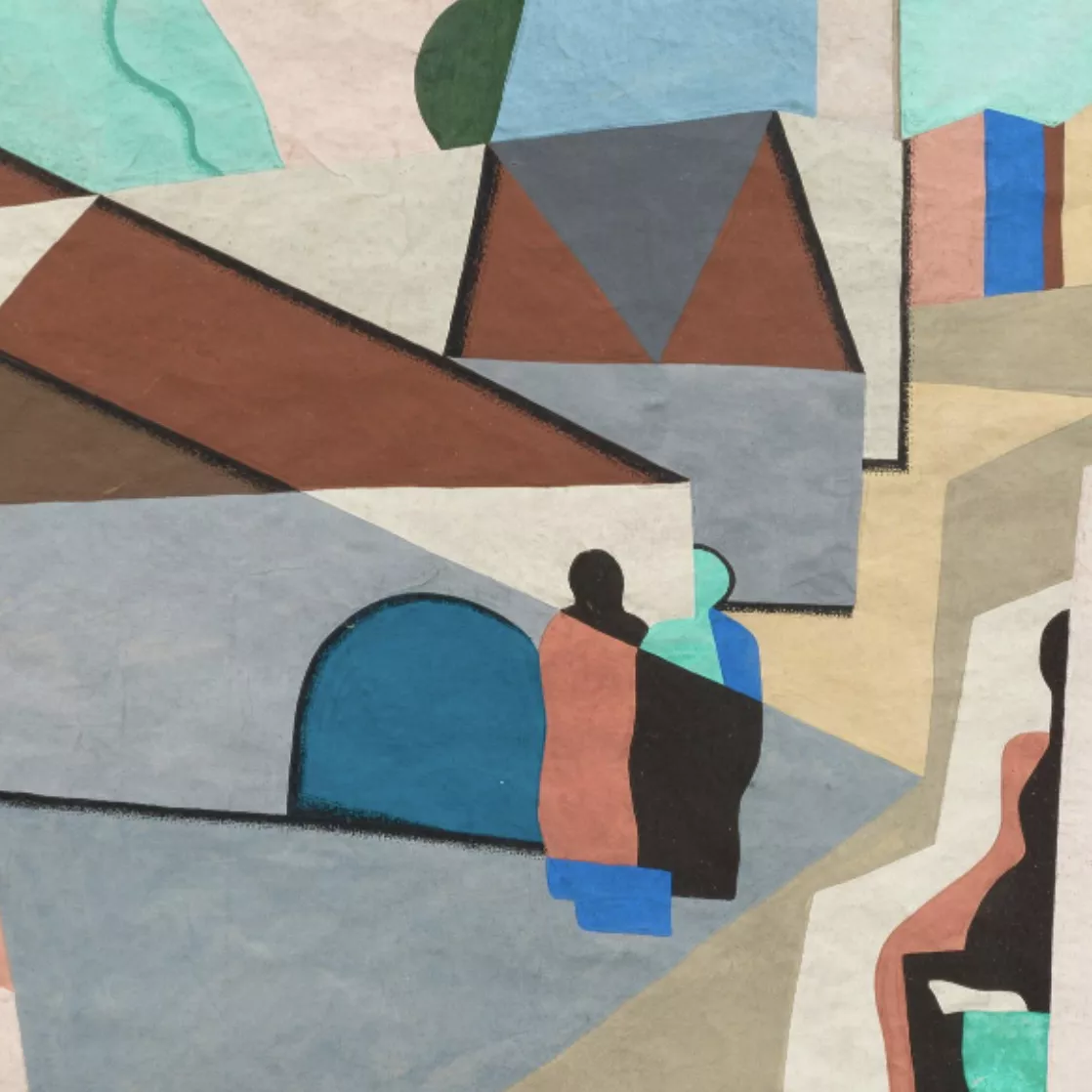
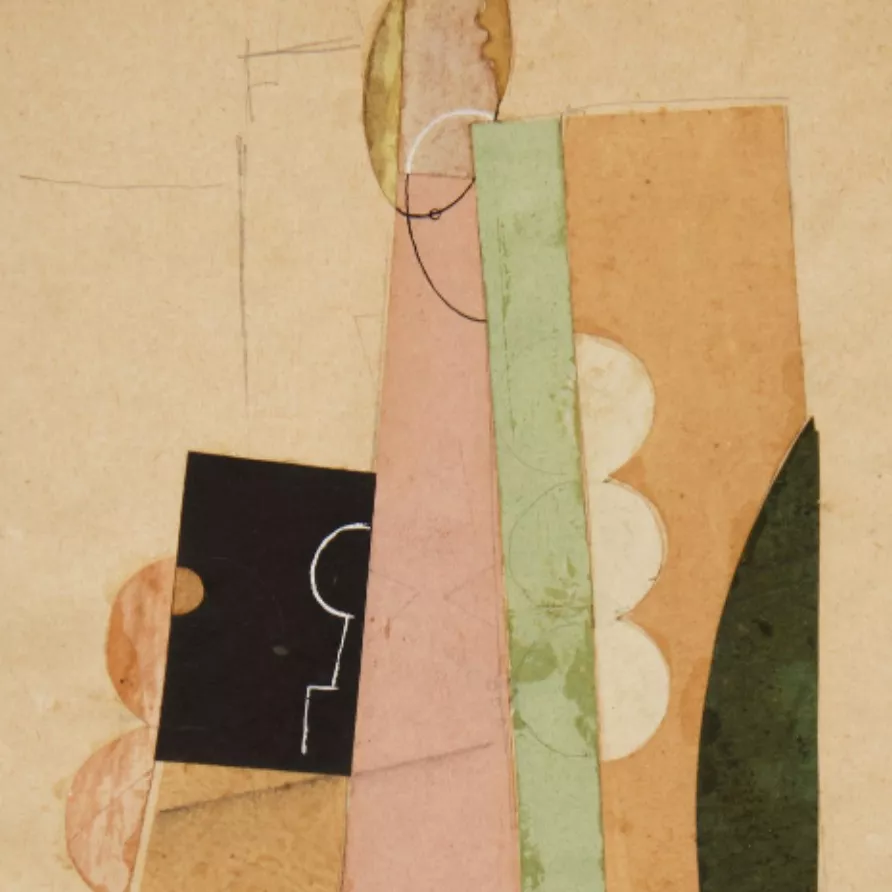
The life of Georges Valmier
Georges Valmier (1885 - 1937) was born in Angoulêmes, before moving to Montmartre in 1890, in a family environment that emphasized painting and music. After his military service, which he performed from 1904 to 1905, he discovered the work of Cézanne, at the Salon d'Automne in 1907, and entered the École des Beaux-Arts, studying under Luc-Olivier Merson until 1909.
The artist was initially influenced by Impressionism, moving towards a personal Cubism, simplifying volumes into geometric shapes as a result of his discovery of Cézanne. He exhibited his work for the first time at the Salon des Indépendants in 1913, and from then on was described as a post-cubist by the critic André Salmon.
In 1914, he was mobilized as a nurse in Toul, and his works during this period were limited to sketchbooks in allusive sketches, done in pencil, ink or watercolor. Returning to Montmartre after the war, he was taken on under contract by Léonce Rosenberg (l'Effort Moderne gallery), who exhibited his work from 1921 onwards and regularly published it in the Bulletin de l'Effort Moderne.
From 1921 onwards, Valmier adopted a geometric abstraction, simplifying composition into large, rhythmically decorative flat tints of color. He was also active in theater and ballet design, creating costumes, sets, models, fabrics and carpets, demonstrating the multidisciplinary aspect of his work.
He was also a member of the steering committee of the Abstraction-Création group, alongside Jean Arp, Kupka and Gleizes, and played an active part in this abstract avant-garde. In 1936, he undertook monumental canvases to decorate the railway palace at the 1937 Exposition Universelle.
Sick from 1932 onwards, he died prematurely in 1937 in Montmartre, aged just 51. His body of work comprises fewer than 300 recorded oil paintings, supplemented by numerous preparatory gouaches considered autonomous.
Georges Valmier was also an accomplished musician, an interpreter of Debussy, Ravel, Fauré and Satie, and a decisive influence on composer André Jolivet. His work is now preserved in major institutions such as the Centre Pompidou, the Guggenheim and the Kröller-Müller Museum (Netherlands).
Georges Valmier was also an accomplished musician.
Market segmentation and the artist's rating
The absolute record achieved for a work by Georges Valmier is Nature morte au compotier, dating from 1925 and sold for 725,000 USD at Sotheby's New-York in 2014. It sets the current catalog ceiling.
Various prices have been realized recently, such as Femmes au balcon, reaching €126,000, an untitled work on paper sold for USD107,100 and Jeune fille lisant sold for USD252,000.
More modest works can also be found, such as Jeune fille assise sold for between €17,640 and €32,760, results nevertheless often above estimates.
Depending on the medium, prices evolve. Medium to large-format paintings on canvas generally fetch between €100,000 and €300,000, with notable performances depending on inspiration or compositional quality. Higher values are also possible for key pieces.
Works on paper (gouaches, watercolors) typically fetch between €/€10,000 and €/$50,000, depending on the degree of finish and the provenance of the work. Art books or stencils such as Album n°1, collection Décors et Couleurs can sell for 2,500 USD.
Valmier's works today reach a historic price range, with sales between 90 USD and 725,000 USD, depending on size and medium. Recent average prices are around 38,170 USD for paintings.
The most sought-after works remain abstract or cubist paintings with a lyrical mood, which dominate the high auctions. Works on paper, although not at the same level of value, represent an active segment, accessible to intermediate collectors.
Prints and publications remain marginal, but sometimes fetch a few thousand euros. Overall, the market seems robust, particularly since the 2020s, with several significant sales often exceeding their initial estimates.
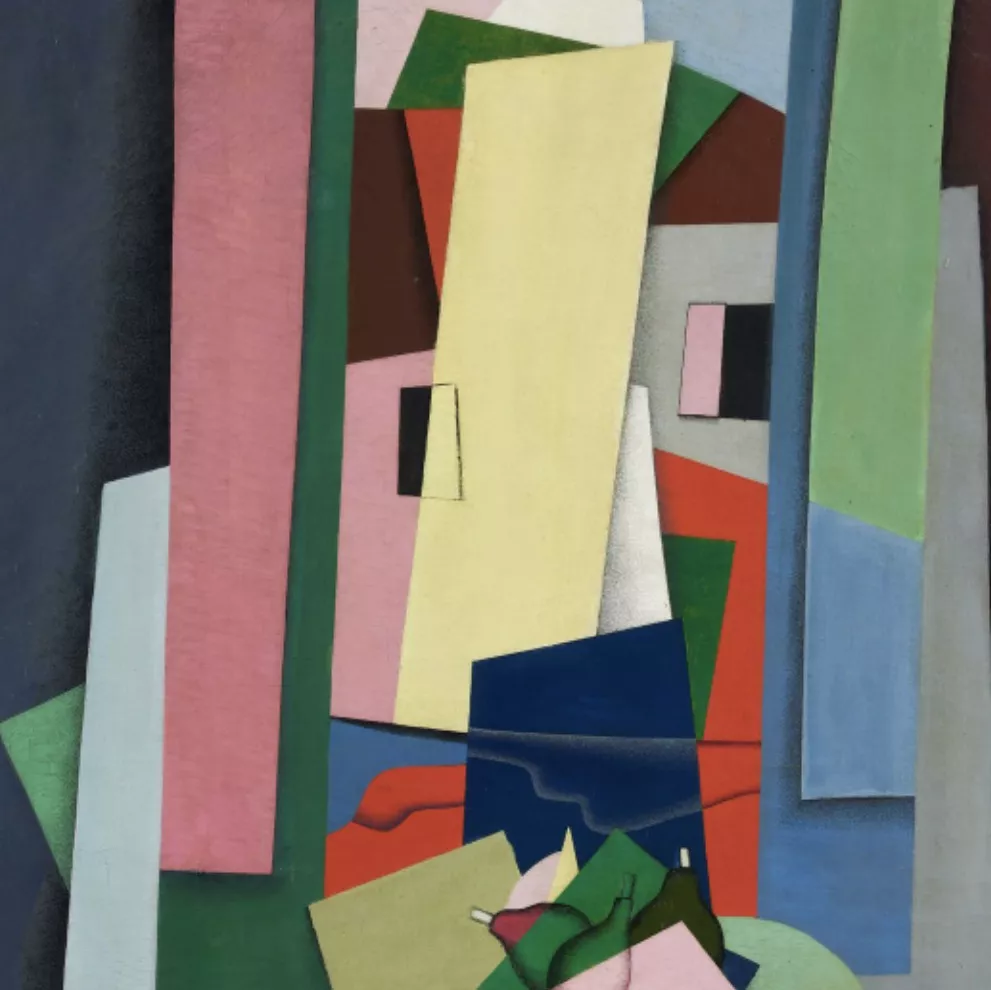
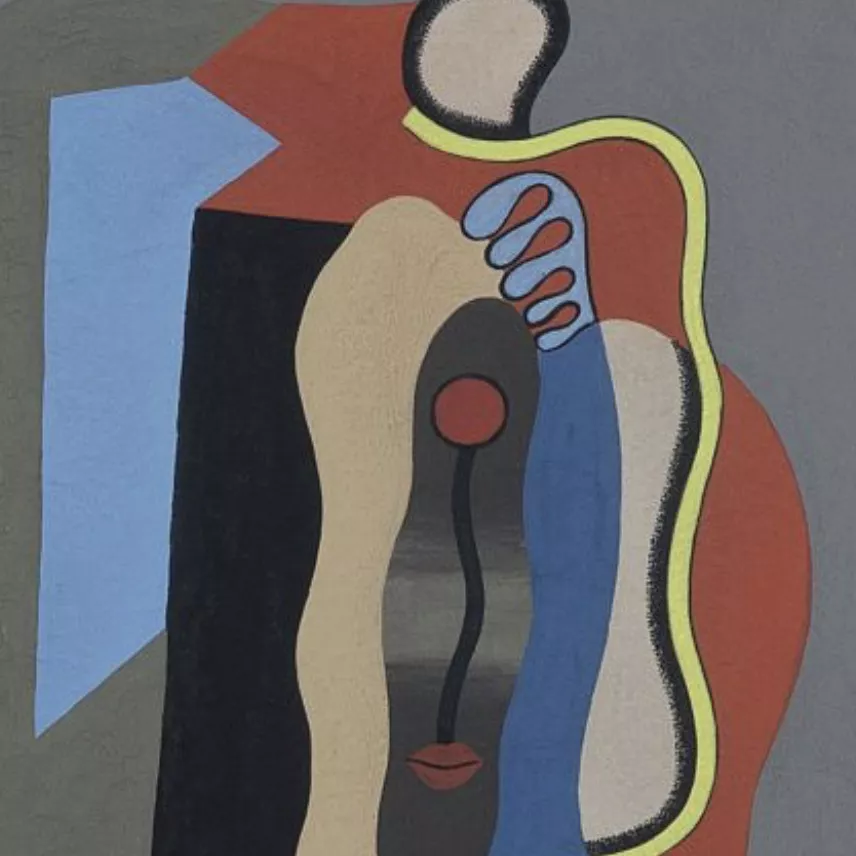
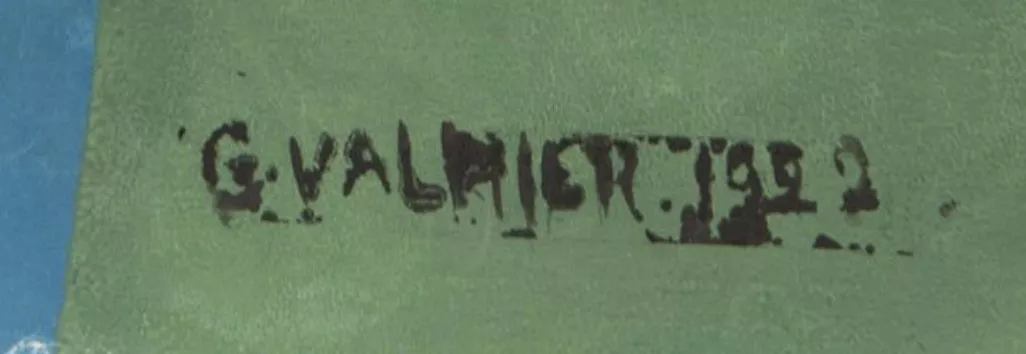
His signature
Not all of Georges Valmier's works are signed. They can often be found at the bottom of the drawing or painting.
Expertise your property
If you happen to own a work by or after Georges Valmier, don't hesitate to request a free valuation by filling in our form on our website.
A member of our team of experts and certified auctioneers will contact you promptly to provide you with an estimate of the value of your work, and will ensure that you receive ad hoc information about it.
If you're thinking of selling your work, our specialists will also help you find alternatives to sell it at the best possible price, taking into account the inclinations of the market and its specific features.
Estimate in less than 24h
Discover in the same theme

Value and quotation of works, paintings by Jules René Hervé
Jules René Hervé, a 20th-century painter of genre scenes, produced many canvases in demand on the auction market. Estimated in 24h.
Learn more >

Rating and value of works, drawings, paintings by Henri Le S...
Henri Le Sidaner is a 20th-century Expressionist painter whose drawings and oils on canvas are highly prized at auction.
Learn more >

Rating and value of sculptures and bronzes by Mahmoud Mokhta...
Mahmoud Mokhtar is an Egyptian sculptor who has produced many works that are highly valued at auction. 24h estimate.
Learn more >
D'autres tableaux abstraits vendus aux enchères

Estimated 2.000 - 4.000
Serge POLIAKOFF (1900-1969), Composition en rouge et bleu. 1965, Lithograph

Estimated Between €5,000 and €8,000
Jean MIOTTE (1926-2016), acrylic on canvas

Estimated 3.000 - 5.000
Roberto MATTA (1911-2002), Composition, Gouache on canvas

Secure site, anonymity preserved

Auctioneer approved by the State

Free and certified estimates
Frequently asked questions
-
Who was Georges Valmier, and what is his role in art history?Georges Valmier (1885–1937) was a leading French abstract painter whose work spanned Impressionism, Cubism, and pure abstraction. A founding member of the Abstraction-Création group alongside Jean Arp and Frantisek Kupka, he is recognized as a pivotal figure in French abstract art, characterized by geometric shapes, curves, and contrasting blocks of color inspired by his passion for music.
-
What is the price range for Georges Valmier's works at auction?Georges Valmier’s paintings generally sell for between 100,000 and 300,000 €, with an all-time record of 725,000 USD for “Still Life with Fruit Bowl” (1925) at Sotheby’s. Drawings and watercolors range from €10,000 to €50,000, while prints range from €80 to €2,070. Prices depend heavily on the medium, the size, and the quality of the composition.
-
How do I have a work by Georges Valmier authenticated?To have a work by Georges Valmier authenticated, we recommend that you request a free, no-obligation appraisal from Auctie's by filling out our online form. A state-certified expert or auctioneer will contact you shortly to evaluate your item and provide you with an accurate estimate of its current market value.
-
Is this a good time to sell a work by Georges Valmier?Yes, the market for Georges Valmier is currently strong, particularly since the 2020s, with several significant sales regularly exceeding initial estimates. The market remains active and prices are stable, especially for abstract and Cubist paintings with a lyrical atmosphere, making this a favorable time for sellers.
-
How does the sale of a work by Georges Valmier at Auctie's work?After requesting a free appraisal from our experts, you will be assisted by our specialists, who will offer you the best options for selling your artwork at the best price, taking into account market trends and the characteristics of your item. Auctie's, an auction house, manages the entire process from appraisal to auction.
