



Rating and value of drawings and paintings by Max Jacob

Key takeaways
- Max Jacob's works sell for between €20 and €10,000 at auction, with prices expected to rise by 38.7% in 2025.
- Drawings and watercolors make up the bulk of the market (€100 to €6,000) and are favored by French collectors (85.2% of sales).
- Works associated with the early 20th-century Parisian Cubist circle and bearing dedications to Picasso or Apollinaire command a premium.
Paintings and drawings by Max Jacob trade up to €10,000 on the auction market. An appraisal enables us to accurately determine the price of your Max Jacob work on the current market and to optimize, if necessary, the sale of a work.
If you own a Max Jacob work and would like to know its value, our state-approved auctioneers will carry out a free estimate based on authenticity, quotation and recent market results.
Rating and value of the artist Max Jacob
The artist Max Jacob left behind a body of work characteristic of modern painting, famous for his canvases and drawings. Now, prices for his works are rising under the auctioneers' gavel.
His paintings are particularly prized, especially by French buyers. The price at which they sell on the art market ranges from €20 to €10,000, a substantial gap but one that says a lot about the value that can be attributed to Max Jacob's works.
Portrait of Vaslav Nijinsky in the " Dieu Bleu ", a graphite drawing with watercolor highlights sold for €10,000.
Order of value ranging from a simple work to the most prestigious
Technique used | Result |
|---|---|
Estamp - multiple | From €20 to €1,700 |
Oil on canvas | From €200 to €6,450 |
Drawing - watercolor | From €70 to €10,000 |
Estimate in less than 24h
Situating the artist
Early twentieth century
Max Jacob was part of the transition between the late nineteenth-century symbolism and the avant-gardes of the early twentieth century, with a context marked by the questioning of literary and artistic forms inherited from romanticism and realism.
He was a central figure in the Parisian artistic milieu of the early 20th century, frequenting the circles of Montmartre and Montparnasse. His use of allegory, mysticism and onirism are close to Symbolism.
Max Jacob
He was a key figure in modern poetry, often associated with pre-surrealism and its formal experiments.
He participated indirectly in the Cubist aesthetic through his close links with the painters of this movement and an innovative fragmentation of poetic language, and was a close friend of Picasso.
He is also close to Jean Cocteau, André Salmon, Georges Valmier or Pierre Reverdy. He refuses a strict doctrinal belonging to a movement and prefers to maintain a singular position
The life of Max Jacob
Cultural context
Max Jacob (1876 - 1944) was born in Quimper, into a Breton Jewish family. This cultural background was to have a lasting influence on his literary and artistic imagination.
He moved to Paris at the turn of the 20th century, where he frequented avant-garde artistic circles and played a central role in the formation of literary cubism.
Entourage
He was close to Picasso, Apollinaire and Cocteau, and exerted a decisive intellectual and aesthetic influence on modern poetry.
He converted to Catholicism in 1915, which was a major spiritual turning point in his career, and deeply permeated his poetic and reflective work. He was arrested in 1944 because of his Jewish origins, and died in the Drancy camp.
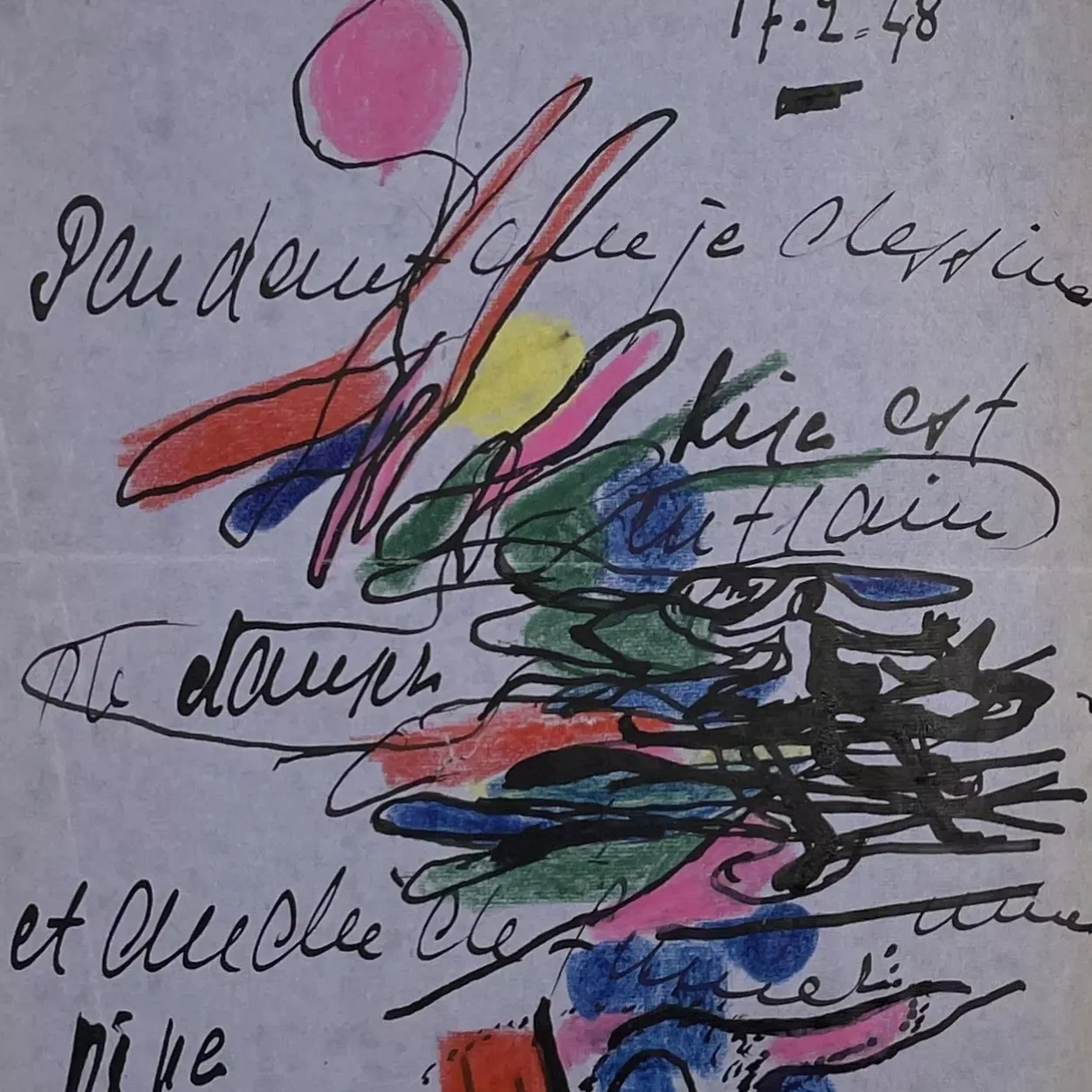
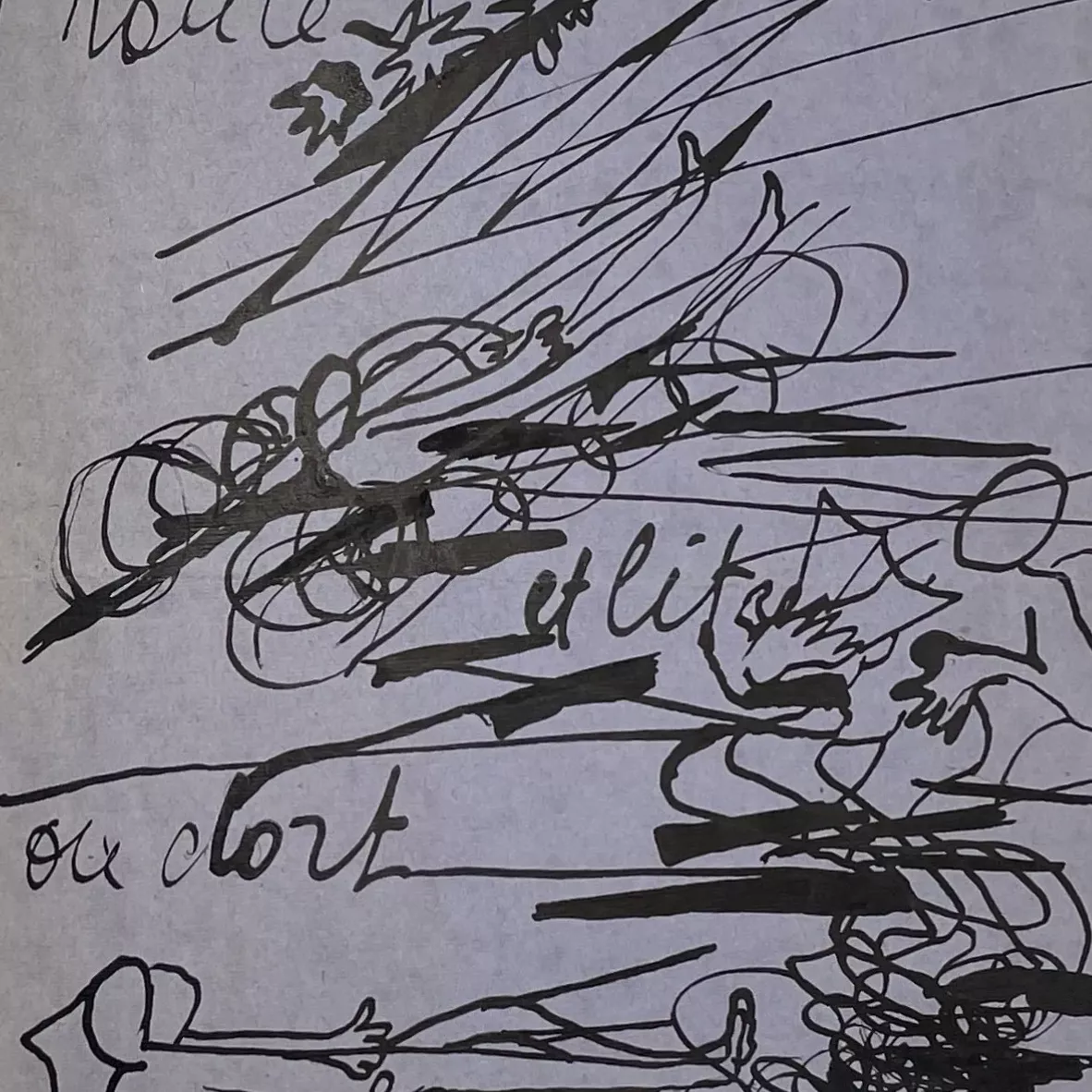
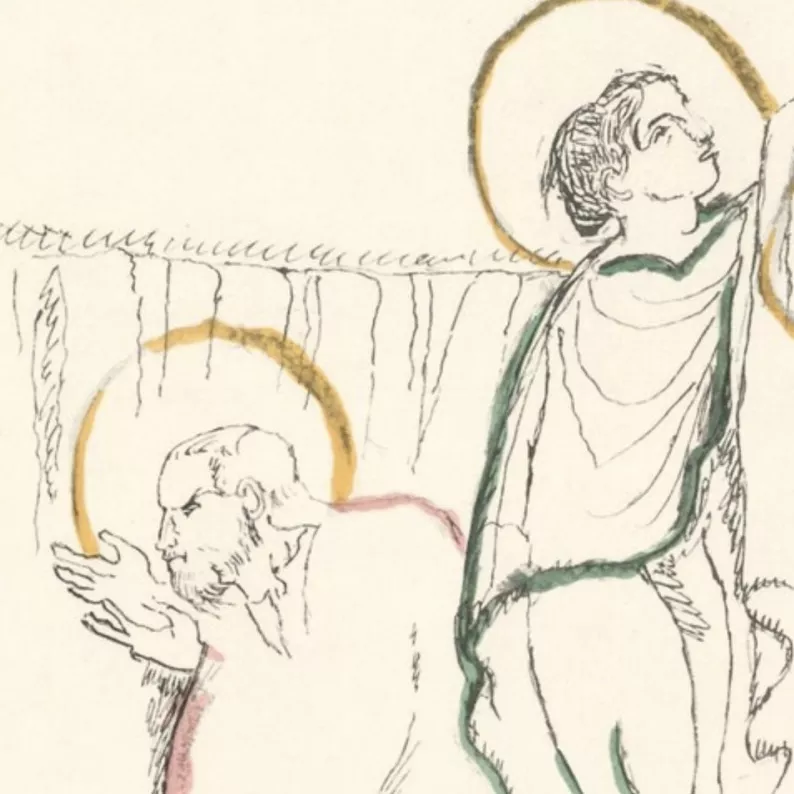
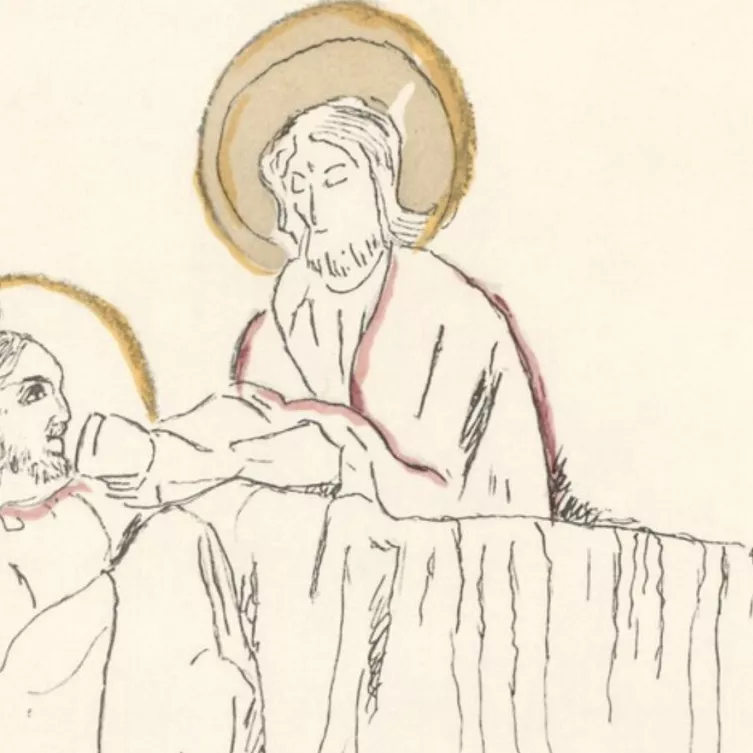
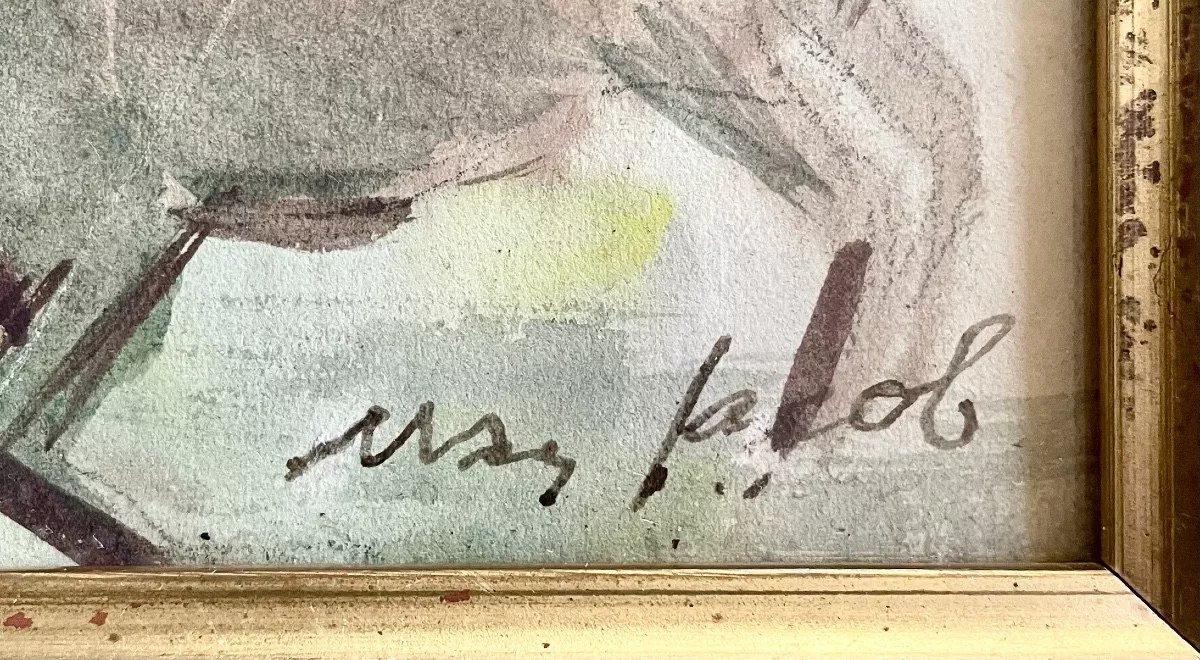
Max Jacob mainly produced drawings and paintings, which he saw as an experimental extension of his poetic activity. He favored simple graphic techniques (ink, pencil and watercolor), favoring spontaneity of line and rapid execution, breaking with academic conventions. His work is characterized by a deliberate stylization of forms, assumed disproportions and a simplification of volumes, close to a naive and symbolic aesthetic. The influence of nascent Cubism is materialized in the fragmentation of figures and the flat organization of space, without strict adherence to the analytical principles of the movement. His frequent use of expressive line and non-naturalistic color reflects a search for spiritual and mental intensity rather than a mimetic aim. His plastic works maintain a close dialogue between text and image. The Self-Portraits are representative drawings of Max Jacob's graphic production at the beginning of the 20th century, which he produced in a context of artistic effervescence. These works are marked by a deliberate stylization of forms and a schematic treatment of the face, breaking with the codes of naturalistic portraiture. He uses a simplified, expressive line, and prioritizes the symbolic and psychological value of the face over physical likeness. The introspective dimension is asserted, with perceptible affinities to cubist research and naive aesthetics, without strict formal adherence to a movement. The appraisal begins with the precise qualification of the work, knowing here that Max Jacob's production consists mainly of drawings, gouaches and watercolors on paper, often of small format. At this stage, we're already looking at the handwritten annotations and titles inscribed by the artist. Analysis of the work must focus on recognition of his singular formal vocabulary, with the simplification of figures, the deliberate naivety of line, the narrative and poetic dimension of the scenes, as well as the close links between the graphic work and his literary activity. The dating of the work is essential, in particular to distinguish works produced during the Parisian years in connection with the avant-gardes of the early 20th century from those from later periods, marked by spiritual and introspective iconography. The presence of the work in catalogs raisonnés, correspondences, exhibitions or publications devoted to Max Jacob constitutes an important factor in valuing and securing the estimate. Max Jacob's works are appraised according to their relative rarity, their representative character of the artist's universe and the regularity of results at public sales. Max Jacob is an artist with a hybrid positioning, part of both literary history and the graphic arts, which segments his market between lovers of poetry and collectors of drawings and works on paper. Works on paper account for the bulk of the market, with prices between €100 and €6,000 most of the time. In 2025, 100% of lots offered for sale were in the drawing-watercolor category, and 85.2% of sales took place in France. Its value increased by 38.7%. The variation is, however, differentiated according to stylistic phases, with a premium for works linked to the Cubist circle and the Parisian avant-garde of the early 20th century. Dedications and links with major figures can also influence value and directly the quotation (Apollinaire or Picasso, for example). The market is characterized by accessible prices in view of the artist's historical importance. The factors driving revaluation are multiple, with a growing interest in cross-disciplinary artists and a rediscovery of the secondary figures of the avant-gardes. Not all the artist's works are signed. However, with or without a mention, it's important for you to have the work appraised to ensure its originality and to be able to date it. And of course, copies do exist. If you own a work by Max Jacob, an estimate enables you to assess its value on the current market. Using our online form, our experts and certified auctioneers will carry out a free appraisal and provide you with a reliable estimate of the market value of your Max Jacob work. If you're thinking of selling it, we'll work with you to ensure it fetches the best possible value. Rating and value of works, drawings, paintings by André Lhot... André Lhote is a 20th-century painter with Cubist influences who produced drawings, watercolors and paintings listed at auction. Learn more > Rating and value of paintings by Alexej von Jawlensky Alexej von Jawlensky is a twentieth-century Russian artist who produced many works that are highly valued at auction. Learn more > Rating and value of paintings by Marguerite Delorme Marguerite Delorme is an Orientalist artist who produced paintings that are highly valued at auction. 24-hour estimate! Learn more > Estimated 800 - 1.500 Jean Roger SOURGEN (1883-1978) Trees and dunes Oil on panel Estimated 3.000 - 5.000 Georges LAPCHINE (1885-1951) The port of St Tropez Oil on canvas Estimated 18.000 - 30.000 Charles CAMOIN (1879-1965) "Le Port de Marseille, 1928" Oil on canvas. Estimated 1.500 - 3.000 Jean VANDEN EECKHOUDT (1875-1946), Basket of persimmons, Oil on canvas Estimated 2.000 - 4.000 Charles LACOSTE (1870-1959) Starry night, Oil on paper mounted on canvas Secure site, anonymity preserved Auctioneer approved by the State Free and certified estimates
Artist's techniques
Max Jacob's style
Focus on a key work
The Self-Portraits of Max Jacob (series circa 1910)
FAQ : How to appraise a work by Max Jacob
1) What is the first step in appraising a work by Max Jacob ?
2) What stylistic elements specific to Max Jacob are decisive ?
3) What role does dating play in the appraisal ?
4) How do provenance and bibliographic references influence value ?
5) How does the market appraise Max Jacob's works ?
Market segmentation
Price of works
Valuation factors
Recognizing the artist's signature
Knowing the value of a work
Estimate in less than 24h
Discover in the same theme


D'autres tableaux modernes figuratifs vendus aux enchères


Frequently asked questions
