



Rating and value of Jean Cocteau's works, paintings and drawings

Key takeaways
- Jean Cocteau, a major artist of the 20th century, has seen his works fetch tens of millions of euros at auction, with high and rising prices.
- Drawings and watercolors are the most sought-after, with values ranging from 50 to 622,050 euros, often exceeding initial estimates.
- His works span six main media: prints (€10–29,150), tapestries, ceramics, paintings, sculptures, and drawings, each with its own specific value.
If you own a work by or based on the artist Jean Cocteau and would like to know its value, our state-approved experts and auctioneers will guide you.
Our specialists will carry out a free appraisal of your work, and provide you with a precise estimate of its value on the current market.
Then, if you wish to sell your work, we will direct you to the best possible arrangement to obtain the optimum price.
Artist's rating and value
A major artist of the 20th century, Jean Cocteau was already enjoying great recognition during his lifetime. On today's art market, his works have a high and rising quotation.
His oil paintings are the most sought-after items for collectors. A work signed by Cocteau can fetch tens of millions of euros at auction.
His ink on paper Opium a adjudged €622,050 in 2012 while it was estimated at €33,180-49,760.
Order of value from the most basic to the most prestigious
Technique used | Result |
|---|---|
Estamp | From €10 to €29,150 |
Upholstery | From €350 to €14,480 |
Ceramics | From €50 to €38,000 € |
Painting | From €70 to 123,480 |
Sculpture - volume | From €35 to €266,780 |
Drawing - watercolor | From €50 to €622,050 |
Estimate in less than 24h
The artist's style and technique
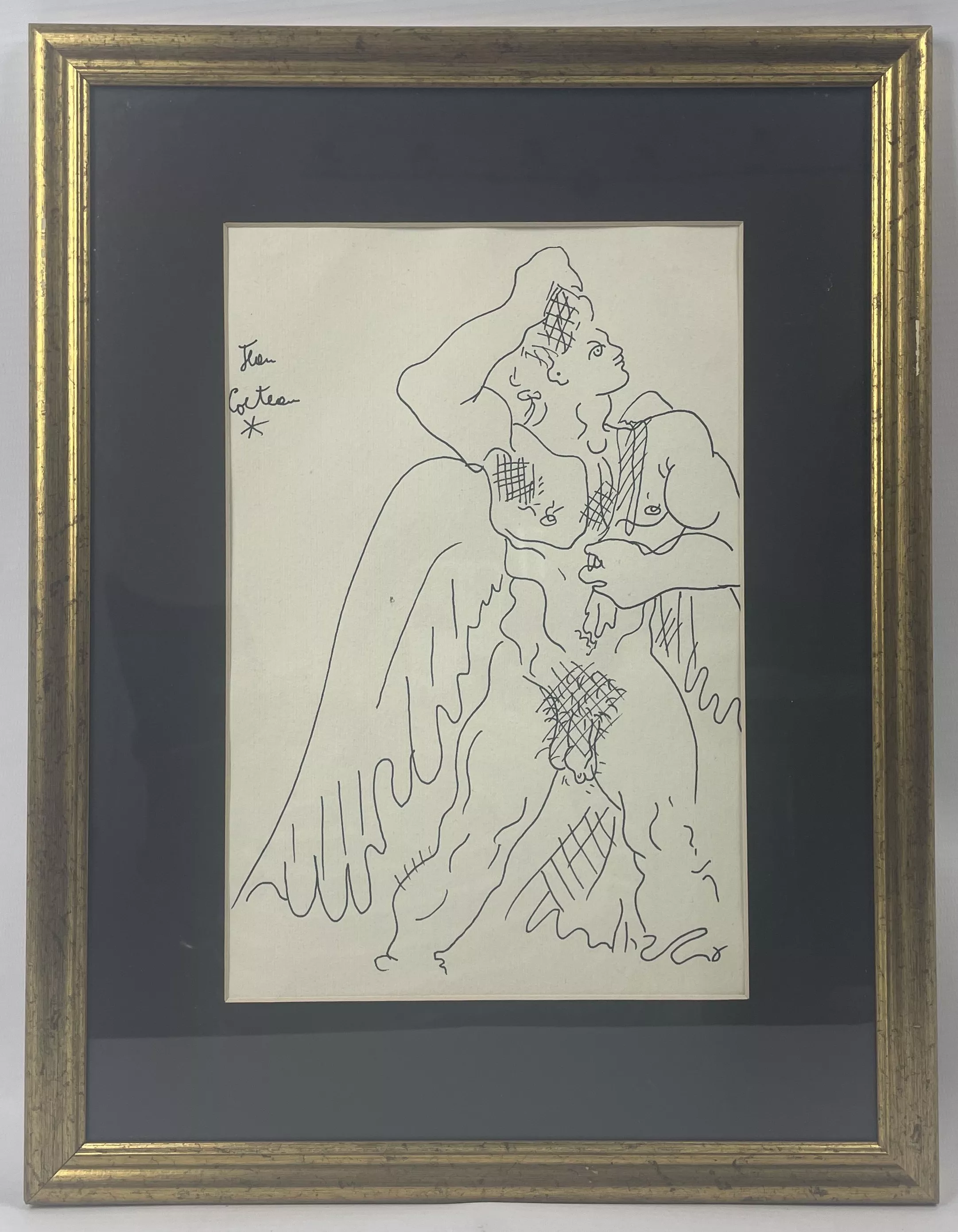
Jean Cocteau is an artist distinguished by his versatility. He fuses painting, drawing, drama and poetry to create an all-encompassing work that represents him. His simple lines and uncluttered style mark his works, whether drawings or plays.
Each element of his work seems to respond to the other, forming a continuity between his various artistic expressions. He is a major figure of the 20th century, appreciated by the general public and connoisseurs alike.
Jean Cocteau's recognition is not limited to admiration alone: his value remains very high on the art market. His works, sought after by collectors, regularly fetch significant prices at auction.
This success reflects the continuing interest in his work and his ability to reach a wide audience.
Today, private collectors play a crucial role in the conservation of his material works, which they cherish and preserve.
However, some of his creations are also exhibited in museums around the world, ensuring permanent visibility and enabling a wide audience to access his unique universe. In this way, Cocteau remains an essential reference, whose influence continues to leave its mark on the modern art scene.
The life of Jean Cocteau
Clément Eugène Jean Maurice Cocteau was born in Maisons-Laffitte in 1889, into a family where art held a special place. His father, a lawyer by profession but an amateur painter, passed on to him a taste for artistic creation.
Surrounded by relatives who collected works of art, and under the influence of his mother, he developed an early curiosity for various forms of artistic representation, with a particular interest in theater. However, his childhood was marked by a profound tragedy: at the age of nine, he lost his father to suicide. This tragic event left an indelible mark on him.
At the age of fifteen, Cocteau left to study at the Lycée Condorcet in Paris. However, his unruly behavior led to expulsion, and he failed his baccalauréat twice.
His rebellious youth didn't prevent him from quickly being taken under the wing of actor Édouard de Max, who introduced him to the influential circles of the artistic world. It was during this period that he published his first collection of poems and earned the nickname "Prince Frivole".
He frequented literary salons, notably that of Anna de Noailles, where he befriended Maurice Barrès, a central figure of the period.
Cocteau also approached the pictorial avant-gardes, notably the Cubists and Futurists, while developing links with Russian artists such as Leon Bakst, but is also close to controversial artists such as Arno Breker.
These encounters opened the doors to prestigious collaborations, such as his participation in the ballets Le Dieu bleu and Parade, projects in which he collaborated with Pablo Picasso and Erik Satie. His artistic career then took on an international dimension.
Through his multiple talents, he produced a variety of works: drawings, prints, ceramics while pursuing his career as a writer and playwright. In 1955, his talent was recognized by his election to the Académie Française. Jean Cocteau passed away in 1963, leaving behind a prolific body of work that continues to inspire.
10 things to know about Jean Cocteau
Focus on the stained glass windows in the church of Saint Maximin
The stained glass windows in the church of Saint Maximin in Metz, created by Jean Cocteau, embody both the artist's artistic mastery and poetic sensibility.
Created in the 1960s, these works of art are part of a singular project: Cocteau, whose work already extended to theater, poetry, painting and cinema, has here the opportunity to confront a medium new to him, that of stained glass. With these creations, he manages to make his mark while respecting the spirit of the place.
Cocteau was not a master glassmaker by training, but that didn't stop him from conceiving a work of great finesse. For the church of Saint-Maximin, he chose a sober, uncluttered style, perfectly in tune with the spiritual atmosphere of the building.
The simple lines and pure forms that characterize his work in other disciplines are found here, giving the stained glass windows an almost dreamlike lightness. The soft colors and delicate lines bring a subdued light to the interior of the church, creating an atmosphere conducive to contemplation.
The themes of the stained glass windows are in perfect harmony with Cocteau's symbolic universe. They include biblical figures, but also mythological references, blending the sacred with the poetic imagination dear to the artist.
Christ, angels and saints are depicted with a simplicity that lends the figures an almost supernatural aura. Cocteau doesn't seek to reproduce reality; he prefers to suggest, to evoke, leaving room for interpretation and reverie. It's this ability to combine mysticism and modernity that makes his stained glass so captivating.
One of the most striking aspects of these stained glass windows is the use of color. Unlike more traditional stained glass windows, where bright, contrasting hues dominate, Cocteau opts here for more subtle colors.
Blues and greens, combined with a few touches of yellow, diffuse a soft, soothing light, in perfect symbiosis with the quietude of the church. This chromatic choice gives the stained glass windows a meditative aspect, reinforcing the impression that these works are at once windows to the divine and reflections of the human soul.
The layout of the figures, meanwhile, is typically Coctalian. The lines are pure, sometimes bordering on the abstract, but always expressive. The faces, often reduced to a few simple strokes, nonetheless manage to convey a palpable emotion.
There's an economy of means in these stained glass windows reminiscent of Cocteau's poetry, where every word, every image is carefully chosen for its evocative power.
The Saint-Maximin church in Metz itself is a perfect setting for these creations. Built in the 15th century, its late Gothic architecture contrasts with the modernity of Cocteau's stained glass windows.
This dialogue between old and new further enhances the effect of the works: they seem to integrate naturally into the space while adding a resolutely contemporary touch.
Finally, these stained glass windows bear witness to Jean Cocteau's deeply spiritual vision. Although not religious in the strict sense, he was always fascinated by the mysteries of existence, the questions of life, death and the sacred.
These themes run through all his work, and are magnified here by the light that shines through the glass. Each ray of sunlight seems to bring a new dimension to the stained glass windows, changing their appearance as the hours and seasons go by.
To sum up, the stained glass windows in Metz's Saint-Maximin church, created by Jean Cocteau, are both sober and profound works, reflecting the artistic and spiritual sensibility of their creator. They constitute a unique visual legacy, where the poetry of shapes and colors sublimates the sacred space, inviting contemplation and reflection.
The success of Jean Cocteau's drawings on the auction market
Jean Cocteau's drawings are enjoying remarkable success at auction, attesting to the artist's prominent place in the art market.
While Cocteau is best known for his versatility, his graphic work, and more specifically his drawings, enjoys great recognition among collectors and art lovers.
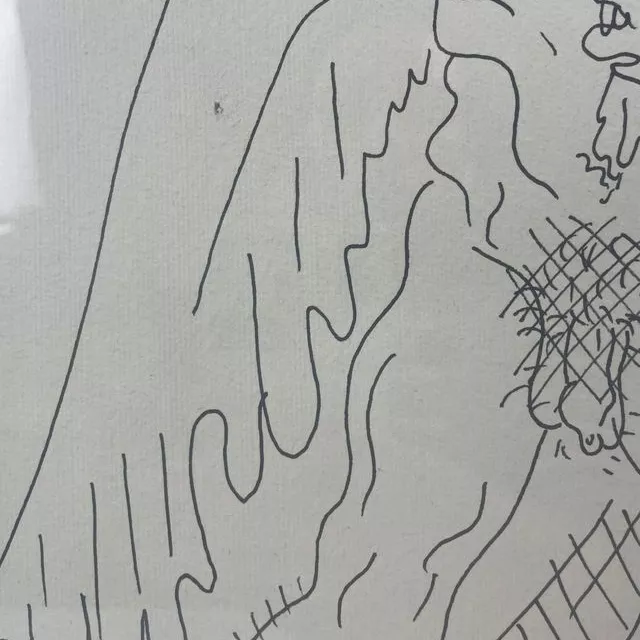
These works, often produced with disconcerting simplicity, captivate with their elegance and ability to evoke deep emotions through a few clean lines.
The success of Cocteau's drawings is partly due to their immediately recognizable character. With simple, almost minimalist strokes, he manages to create figures full of life, movement and expressiveness.
This economy of means, which has become a trademark, appeals to collectors looking for works that are both modern and timeless. His portraits, often reduced to clean, fluid contours, exude an intensity and depth that transcend technique.
At auction, these drawings regularly fetch substantial sums.
Cocteau, with his unique style and central position in the twentieth-century art world, continues to attract attention even decades after his death. His drawings, less expensive than his larger pieces or paintings, represent an accessible gateway for those wishing to own a work by the artist.
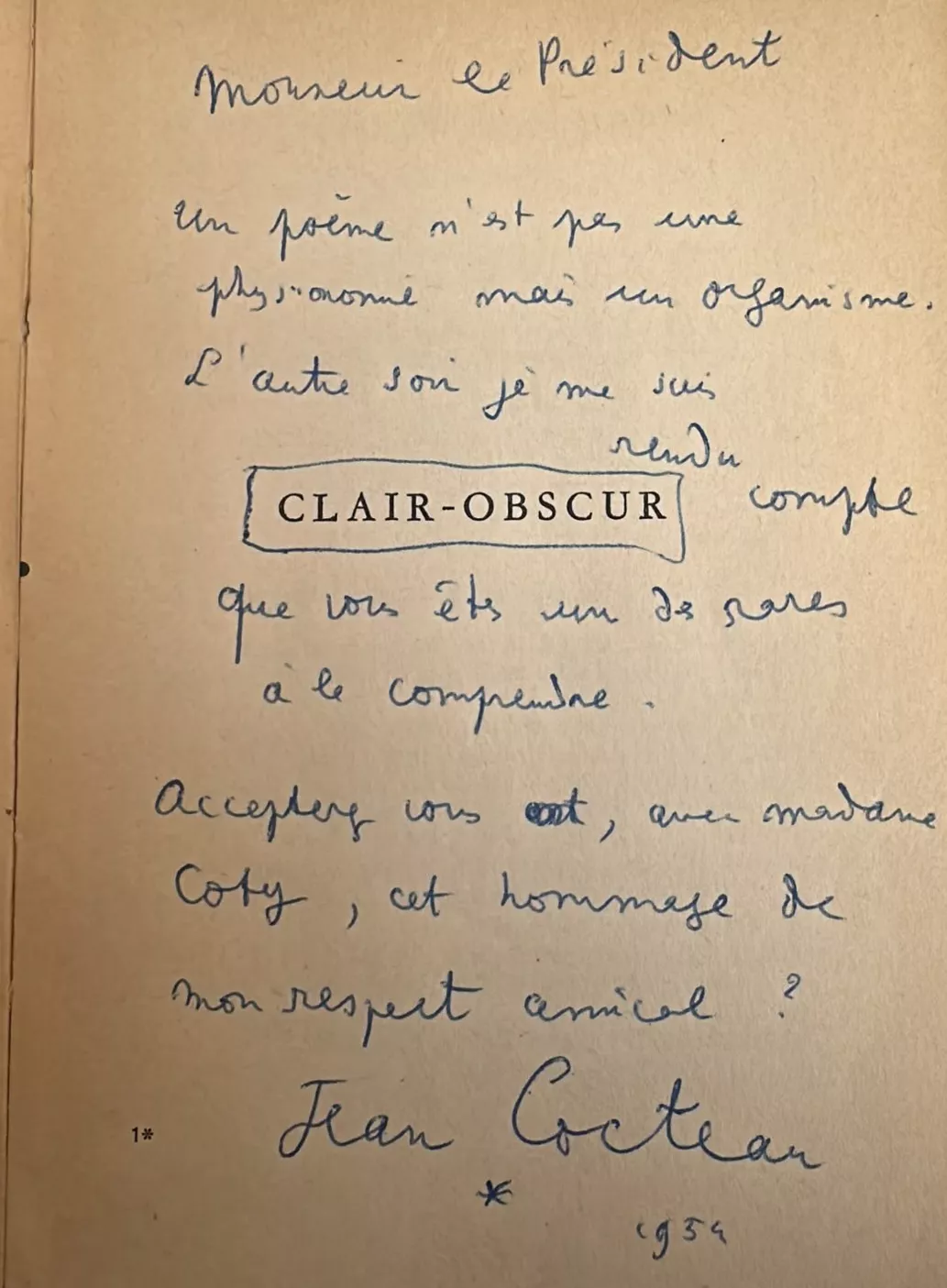
Cocteau's poetic universe, present in his graphic works, also plays a key role in this success. His drawings, often accompanied by evocative captions or titles, transport viewers into a world where the imaginary takes precedence over reality.
This intimate link between drawing and poetry enables his creations to reach a wide audience, from art lovers to seasoned collectors.
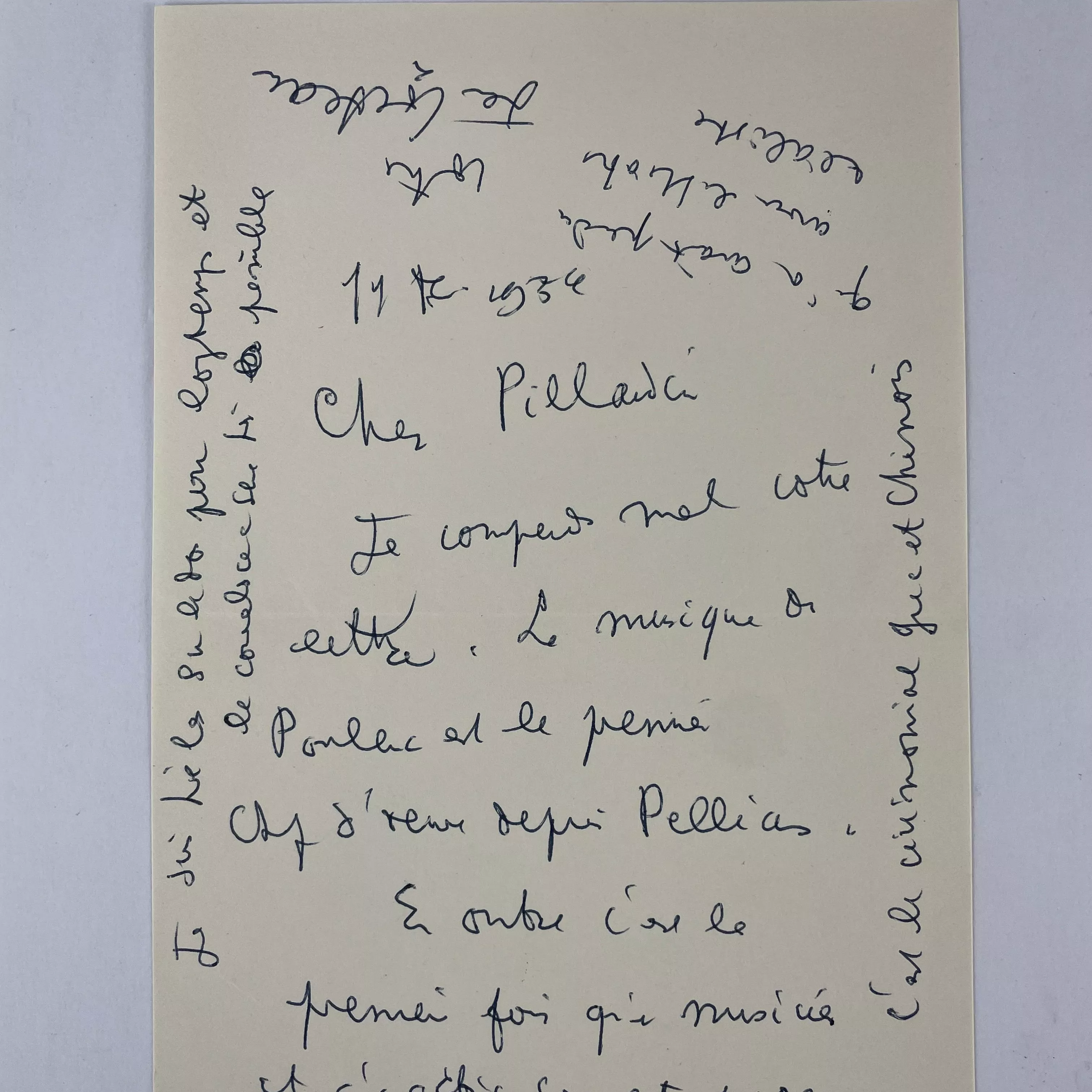
His signature
Not all of Jean Cocteau's works are signed.
Although there are variations, here's a first example of his signature:
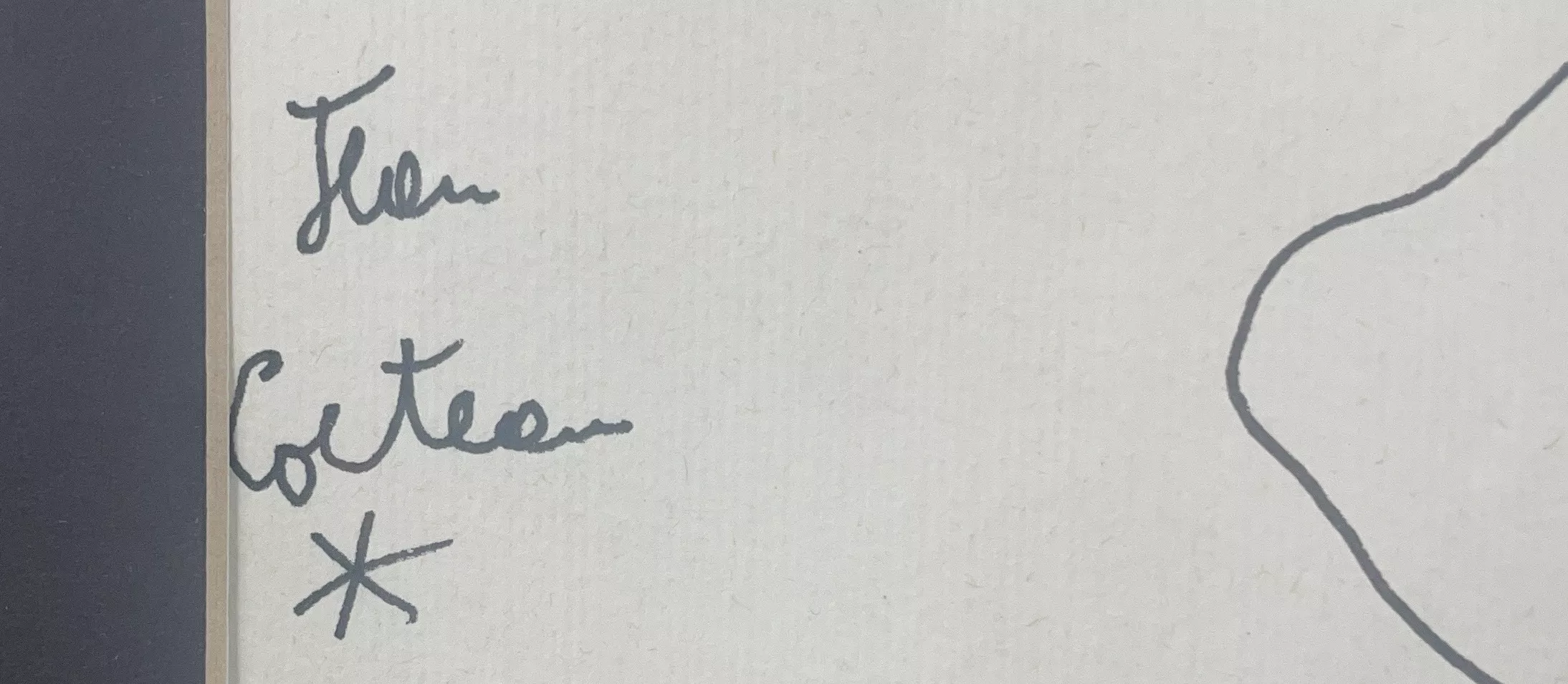
Our team remains at your disposal to identify your works.
Expertise your property
If you own a work by Jean Cocteau, don't hesitate to request a free appraisal by filling in our online form.
A member of our team of experts and chartered auctioneers will contact you to provide an estimate of the market value of your work.
If you are considering selling your work, our specialists will also guide you through the various alternatives available to obtain the best possible price, taking into account market trends and the specific features of each object.
Estimate in less than 24h
Works from the same period sold at auction

Estimated 600 € - 800 €
Henri ZUBER (1844-1909), Bridge at Artemare. Oil on canvas.

Estimated 600 € - 800 €
Louis TOFFOLI (1907-1999), The maternity of flowers. Tapestry.

Estimated 30 € - 50 €
In the spirit of Keith HARING (1958-1990), Pregnant woman and "radiant baby".

Estimated 500 - 1000 €
Jean PICART LE DOUX (1902-1982) Le vol d'oiseau Polychrome wool tapestry.

Estimated 3 000 - 5 000
Gaston SUISSE (1896-1988), Engraved polychrome lacquer panel on tortoiseshell lacquer background.

Estimated 2.000 - 4.000 €
PABLO PICASSO (1881-1973) ATELIER MADOURA " Profil de femme n° 67 " Round plate.

Estimated 15.000 - 20.000 €
Jacques MAJORELLE (1886-1962) - Fishermen embarking, Abidjan, Ivory Coast - Oil on canvas.
Discover in the same theme

Rating and value of works, drawings, paintings by Maxime Noi...
Maxime Noiré is a twentieth-century Orientalist painter who produced drawings and oil on canvas that are quite popular at auction.
Learn more >

Rating and value of Karl Lagerfeld's fashion designs
Karl Lagerfeld is a German fashion designer and great couturier of the 20th century. He has produced many valuable fashion designs.
Learn more >

Rating and value of drawings and paintings by Maurice Joron
Maurice Joron was a French painter active between the two world wars whose paintings command relatively high prices and are highly valued.
Learn more >

Secure site, anonymity preserved

Auctioneer approved by the State

Free and certified estimates
Frequently asked questions
-
Who is Jean Cocteau, and why are his works so highly valued?Jean Cocteau (1889–1963) was a major figure of the 20th century, renowned for his exceptional versatility as a painter, draftsman, playwright, poet, and filmmaker. His works command high and rising prices on the current market due to his enduring influence, his refined and recognizable style, and his central role in the artistic avant-garde movements of the century. His prestigious collaborations with Picasso and Satie, as well as his election to the Académie Française in 1955, attest to his universal and enduring recognition.
-
What are the price ranges for Jean Cocteau's works, broken down by type of item?Prices vary considerably depending on the technique used: prints range from €10 to €29,150, tapestries from €350 to €14,480, ceramics from €50 to €38,000, paintings from €70 to €123,480, sculptures from €35 to €266,780, and watercolor drawings from €50 to €622,050. Oil paintings on canvas and drawings remain the types of works most sought after by collectors and can fetch considerable sums at auction.
-
How can a work attributed to Jean Cocteau be authenticated?To authenticate a work by Jean Cocteau, we recommend that you request a free appraisal from our state-certified auctioneers and experts. Simply fill out our online form: a member of our team will contact you within 48 hours to examine your piece and provide you with a detailed estimate. This no-obligation process will allow you to verify the authenticity of your item and obtain a reliable assessment of its market value.
-
Is this the right time to sell a work by Jean Cocteau?Yes, now is a good time to sell a work by Jean Cocteau. The artist’s market value is on the rise, and his works remain highly sought after by collectors worldwide. The market shows consistent interest in his work, particularly his drawings and paintings, which ensures good liquidity and consistently strong auction results.
-
How does the appraisal and sale of a work of art take place at Auctie's?At Auctie's, the process is simple and non-binding: contact us via our online form to request a free appraisal. A certified expert or auctioneer will examine your piece and provide you with an appraisal within 48 hours. If you decide to sell, we’ll then guide you toward the best possible sales approach, taking into account market trends, the condition of your item, and its unique characteristics to help you achieve the best price at auction.
