



Rating and value of Anne Dangar's drawings, paintings and ceramics

Key takeaways
- Anne Dangar's ceramics sell for between €700 and €10,500, with some vases fetching more than four times their initial estimate in 2018.
- The artist’s drawings and watercolors are estimated at between €180 and €1,900, offering an accessible alternative for collectors.
- A leading Australian Cubist artist (1885–1951), she fused Cubist geometric principles with traditional vernacular craftsmanship, creating a unique style known as “rustic Cubism.”
If you own an object by or after Anne Dangar, and would like to know its value, our state-approved experts and auctioneers will offer you their appraisal services.
Our specialists will work to carry out a free appraisal of your work, and provide you with an accurate estimate of its value on the current market.
Then, should you wish to sell your work, we will direct you to the best possible arrangement to obtain the optimum price.
Rating and value of works by Anne Dangar
Anne Dangar is a French artist who is fairly well known to painting and ceramics enthusiasts. If you own one of her works, it may be worth more than you think. On the art market, prices for Dangar's works can be very high at the auctioneer's hammer.
Her ceramics are particularly prized by French and American buyers, and the price at which they sell on the art market ranges from €700 to €10,500, a fairly substantial range, but one that says a lot about the value that can be attributed to the artist's works.
In 2018, a pansu vase with two handles, sold for €10,500 while it was estimated at between €2,500 and €3,500, more than four times the low estimate, suggesting the high potential of the artist's works on the auction market.
Order of value ranging from a simple work to the most prestigious
Technique used | Result |
|---|---|
Drawing - watercolor | From €180 to €1,900 |
Ceramics | From €700 to €10,500 |
Estimate in less than 24h
Style and technique of Anne Dangar
Anne Dangar (1885 - 1951) is a major Australian artist of the Cubist movement, rediscovered today and mainly active in France.
She trained at the Julian Ashton Art School in Sydney, then at the Académie André Lhote in Paris, where she chose to adopt the principles of Cubism.
She was greatly influenced by Albert Gleizes, and participated in the artistic community of Moly - Sabata that the artist founded, integrating his theories on the translation and rotation of forms.
His work stands out as a fusion of traditions, blending the geometric motifs of cubism with elements of French, Celtic and Islamic folk art.
Anne Dangar discovers ceramics after painting, and produces glazed ceramics, using traditional pottery techniques, notably wood-firing, to create utilitarian pieces adorned with cubist motifs.
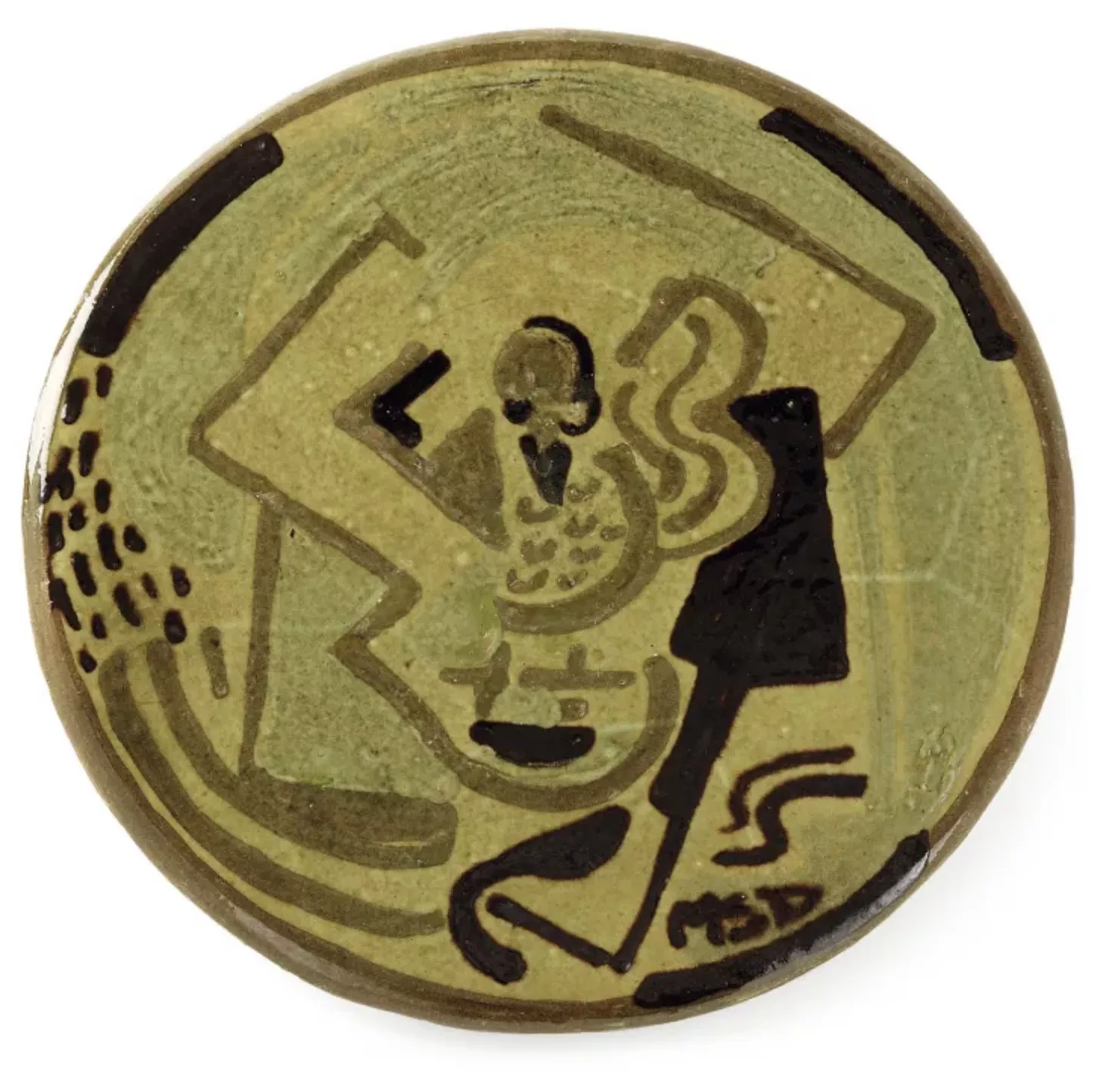
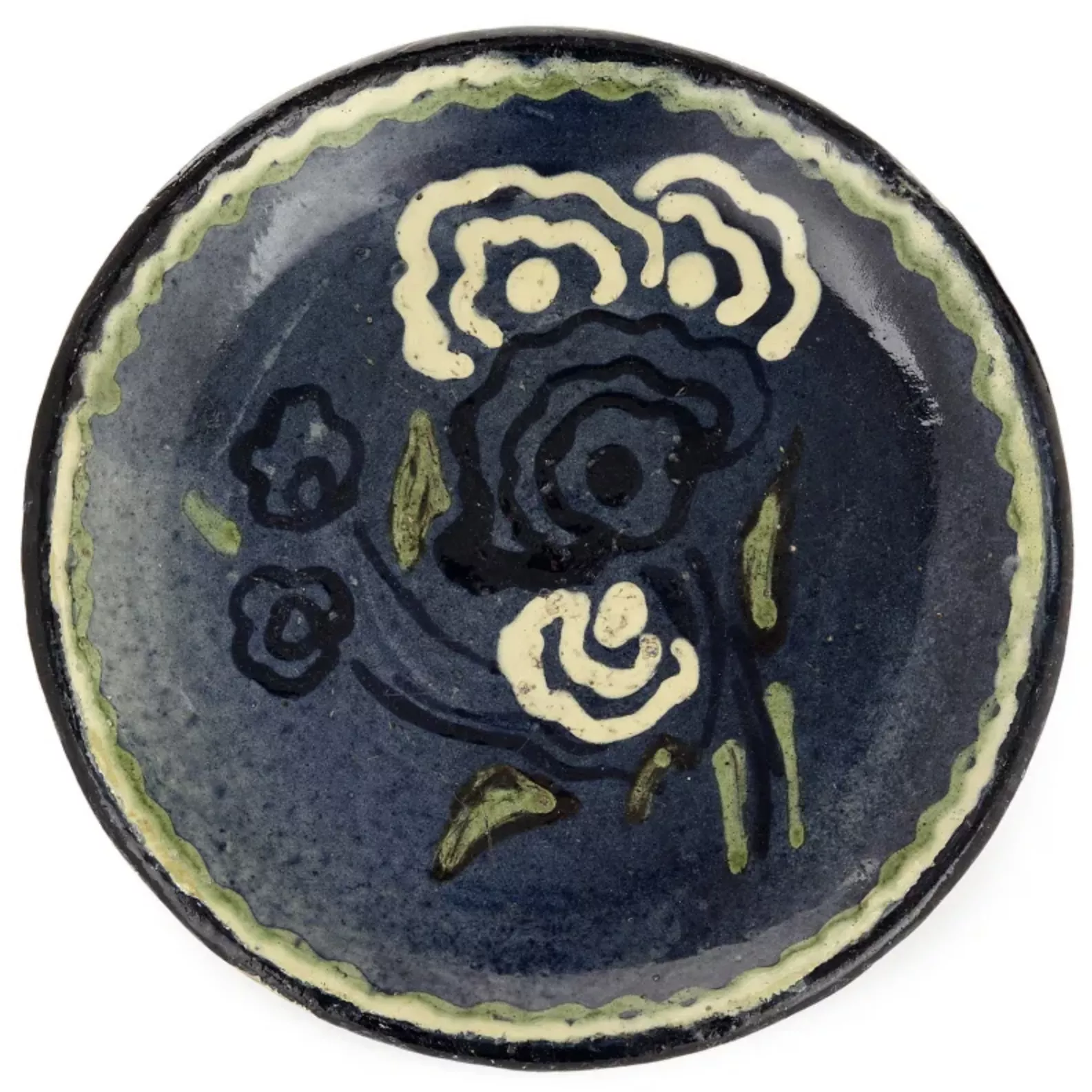
On her ceramics, she uses the stencil drawing technique to apply geometric patterns to her ceramics, making it easy to reproduce complex designs. She works with local clays and glazes, incorporating natural colors and rustic textures into her work.
Dangar thus develops a unique style sometimes referred to as " rustic cubism ", combining the rigor of cubism with the warmth of traditional craftsmanship. She uses recurring motifs, incorporating spirals, crosses, entralacs and stylized representations of human and animal figures.
She creates utilitarian objects (dishes, pitchers, tureens) that transcend their everyday use through their aesthetic value.
The life of Anne Dangar
Anne Dangar (1885 - 1951) was an Australian artist born in Kempsey, New South Wales (Australia). She is a central figure in the dialogue between cubism and the applied arts.
As a student at the Julian Ashton Art School in Sydney, she trained in fairly traditional, figurative techniques at one of Australia's leading art schools. She went on to teach at the Syndey Church of England Girls Grammar School, and was already campaigning for an art that combined formal rigor with a sense of the everyday.
In 1926, she moved to France and trained at the André Lhote Academy, where she discovered structured and theorized Cubism. In 1930, she joined the community of Moly Sabata, founded by Gleizes, where she could experiment with an art of synthesis between tradition and modernity.
In the same years, she moved away from easel painting to devote herself to cubist ceramics, which she considered a total art.
She lived and worked in the community of Moly-Sabata (Ardèche), and led a simple life, close to the earth and materials. Her life is well documented thanks to the correspondence she nurtured with her Australian friends (notably Grace Crowley and Dorrit Black), in which she set out her artistic and spiritual ideas.
She was a pedagogue of modern art, her influence on the Australian scene also passing through her letters, which spread the ideas of cubism and applied art in Australia.
She died in 1951 in Ardèche. Long forgotten, she was rediscovered later in the twentieth century as a pioneering figure of Australian modern art and a conduit of forms between Europe and Oceania.
Her works are now held in several Australian museums, including the National Gallery of Australia, and her influence is now recognized in modern and decorative art circles.
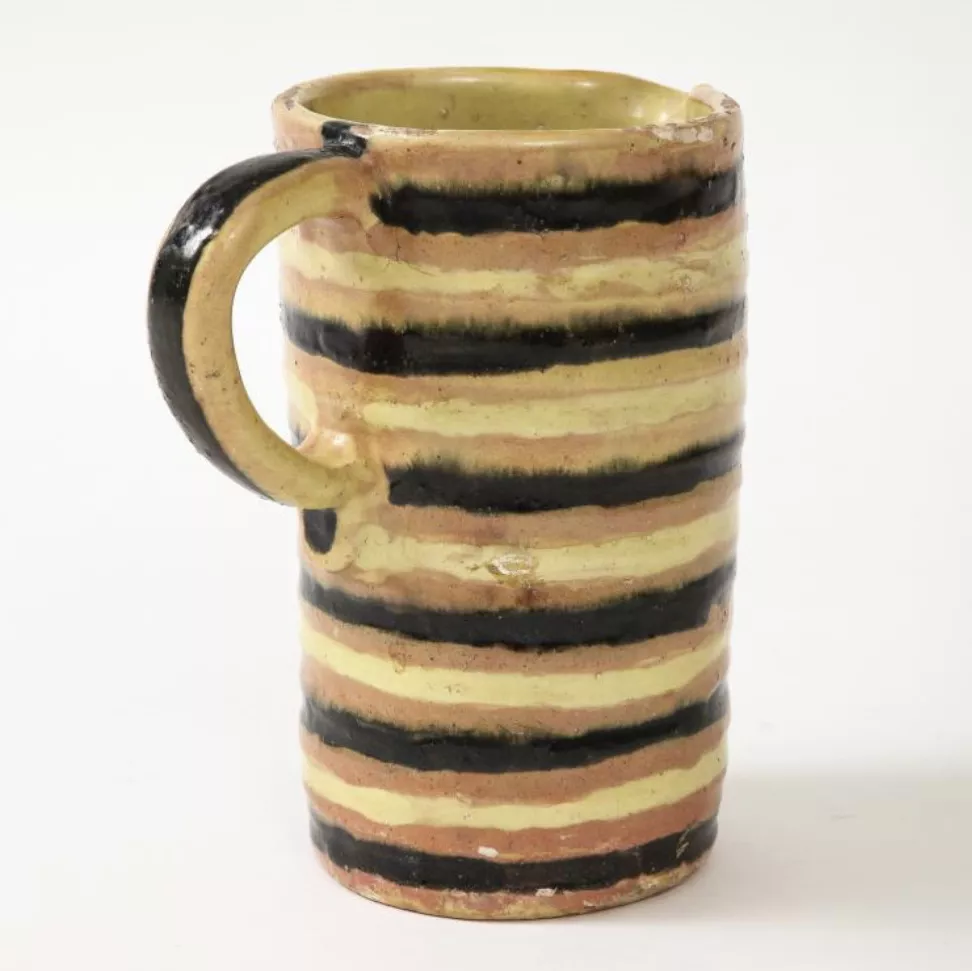
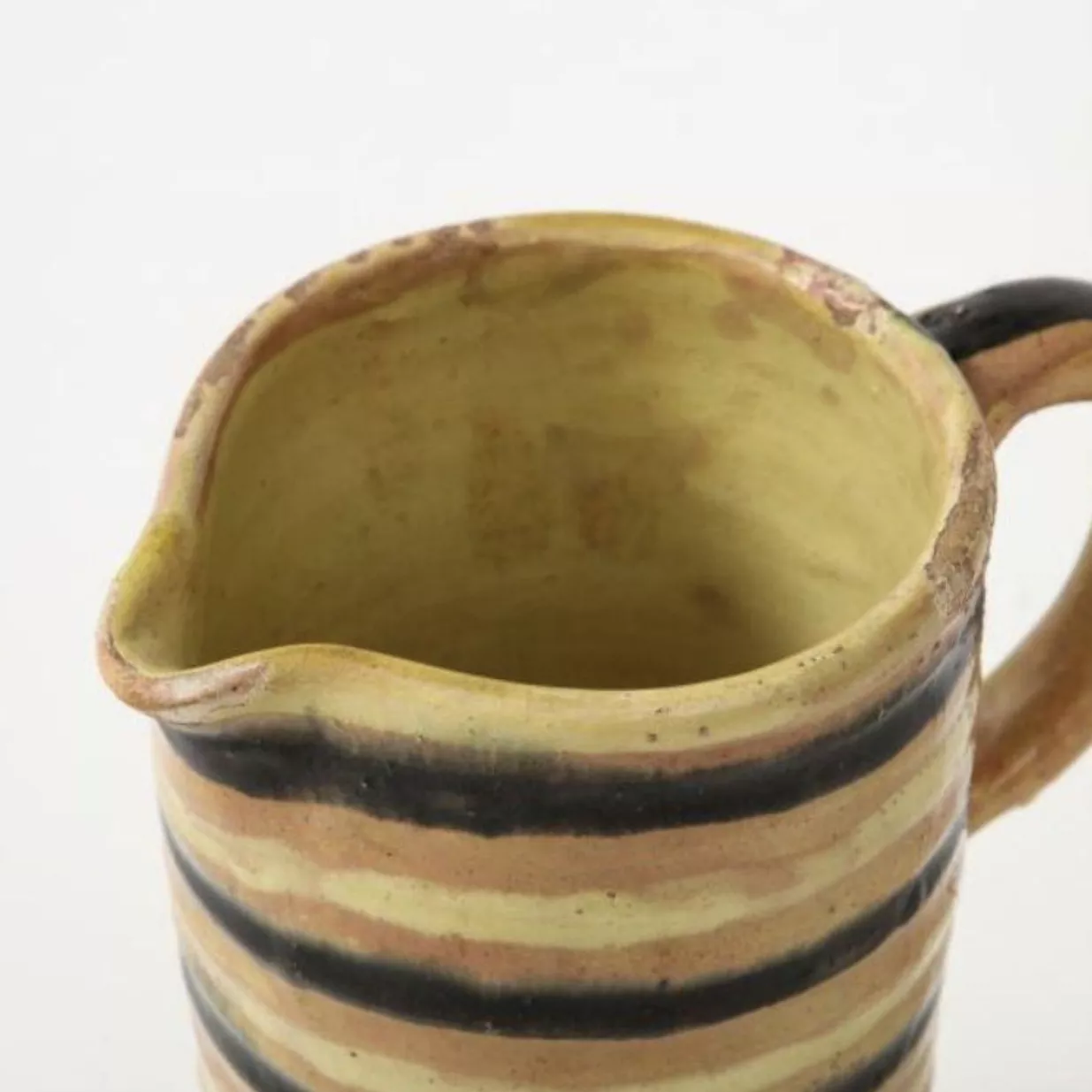
Focus on Decorated Bowl, Anne Dangar, circa 1935 - 1940
Decorated Bowl is a glazed ceramic emblematic of the artist's " rustic cubist " style. It is a utilitarian object, designed for domestic use, but transcended by its plastic treatment.
Its function is affirmed insofar as the work is not decorative in the luxurious sense, but assumes its anchorage in gesture and material, in the spirit of the Arts & Crafts movement. The geometric decor is stylized, with Anne Dangar integrating a network of simple shapes (triangles, spirals, broken lines) arranged according to a logic of rotation and dynamic rhythm.
The motifs recall the principles of translation and superposition specific to the cubist language developed and taught by Gleizes.
The support retains a slightly grainy, handcrafted texture, and the stencilled enamel remains matte or slightly satin-finished in places. The colors used are muted enough (brown, cream, olive green, ochre) to harmonize with the raw material.
The lines are deliberately irregular, not striving for mechanical perfection, but expressing a living breath.
Through this work, Anne Dangar shares a desire to merge art and everyday life, with no hierarchy between the aesthetic and the functional.
We find both the modern principles of cubism and echoes of vernacular folk pottery, particularly Mediterranean or Islamic.
Anne Dangar's imprint on her period
Anne Dangar's work draws a link between modern art and craft. She is a pioneer of applied cubism, transposing cubist principles (decomposed forms, geometric rhythms, structured abstraction) to the decorative arts, particularly ceramics.
She breaks with the Beaux-Arts / decorative arts hierarchy. At a time when figurative art remained dominant in Australia, she deliberately chose everyday objects as a medium for artistic innovation.
Anne Dangar is an active member of Moly-Sabata : in this community founded by Albert Gleizes, she helps forge an artistic utopia based on manual labor, spirituality and simplicity.
She is a figure of transmission between Europe and Australia, spreading modern ideas from a distance, through her correspondence with Australian artists, she plays the role of intellectual mediator, transmitting the innovations of French Cubism to Australia.
By choosing to live in Ardèche, a rural area of France, away from the artistic capitals, she asserts a posture of independence that resonates with the spiritual avant-gardes of the twentieth century.
She also established herself as a precursor of the ceramics revival : her experimental, artisanal and geometric approach to ceramics anticipates trends rehabilitated in the 20th century (Studio Pottery, Bahaus, art brut).
Her rediscovery is late but essential. Although the artist remained marginal during her lifetime, today her work is recognized for its radical originality, intercultural dimension and ethical commitment to the act of creating.
Today, her work demands constant attention as it promises fine results at auction, like those of Claude Lalanne, Alice Colonieu or Dani Ruelland.
Recognizing Anne Dangar's signature
Not all objects produced by Anne Dangar are signed. What's more, copies may exist, which is why it's important to have your work appraised.
Knowing the value of a work
If you happen to own a work by Anne Dangar or after the artist, don't hesitate to request a free appraisal using our form on our website.
A member of our team of experts and certified auctioneers will contact you promptly to provide you with an estimate of the market value of your work, as well as ad hoc information about it.
If you are considering selling your work, you will also be accompanied by our specialists in order to benefit from alternatives for selling it at the best possible price, taking into account the inclinations of the market.
.
Estimate in less than 24h
Discover in the same theme

Rating and value of works, drawings, paintings by Raphaël De...
Raphaël Delorme is an Art Deco painter who produced paintings and drawings sought after at auction. Estimated in 24h.
Learn more >

Rating and value of works, drawings, paintings by Yüksel Ars...
Yüksel Arslan is a twentieth-century Turkish painter and draughtsman who produced drawings and oil paintings listed at auction.
Learn more >

Rating and value of paintings and laquers by Nguyen Gia Tri
Nguyễn Gia Tri is a leading artist of Vietnamese modernism, who has produced numerous works that are highly prized and valuable.
Learn more >
More modern ceramics at auction

Estimated 40.000 - 60.000
Georges JOUVE (1910-1964), free-form sculpture in glazed ceramic

Estimated 1.300-2.000
Jacques BLIN (1920-1995) Pair of glazed ceramic amphora-shaped sconces

Estimated 1.000 - 2.000
MITHÉ ESPELT (1923-2020). Ouvéa" orange-red glazed ceramic mirror

Estimated 800 - 1.500
ÉTABLISSEMENTS GALLÉ Polychrome glazed ceramic pot cover with enamel enhancement

Estimated 3.000 - 5.000
Georges JOUVE (1910-1964) Free-form bowl, circa 1955. Black glazed ceramic proof

Estimated 1.800 - 2.500
Roger CAPRON (1922-2006) Rare Z1 coffee table, 1961, in teak with rectangular top decorated with glazed ceramic shuttle tiles.

Secure site, anonymity preserved

Auctioneer approved by the State

Free and certified estimates
Frequently asked questions
-
Who is Anne Dangar, and what is her artistic background?Anne Dangar (1885–1951) was a leading Australian artist of the Cubist movement who trained at the André Lhote Academy in Paris. She moved to France in 1926 and joined the Moly-Sabata community founded by Albert Gleizes, where she developed a unique style known as “rustic Cubism” that fused the geometric principles of Cubism with the traditions of folk crafts. A pioneering figure in Australian modern art, she was long forgotten before being rediscovered as a key bridge between European and Oceanic artistic traditions.
-
What are the prices and price ranges for Anne Dangar's works?Anne Dangar’s ceramics, which are particularly sought after, sell for between €700 and €10,500, with strong potential to exceed estimates. Her drawings and watercolors range from €180 to €1,900. In 2018, a bulbous vase with two handles fetched €10,500 at auction, far exceeding its estimate of €2,500 to €3,500, illustrating the significant market potential of her works.
-
How can you authenticate a work by Anne Dangar and determine its exact value?To authenticate and appraise a work by Anne Dangar, we recommend that you request a free appraisal using our online form. A certified expert or auctioneer from our team will contact you promptly to examine the artwork and provide you with an accurate estimate of its market value, particularly since some works are unsigned and copies may exist.
-
Is this the right time to sell a work by Anne Dangar?Yes, now is an excellent time to sell a work by Anne Dangar. The artist is experiencing a significant resurgence in popularity, and her work promises strong results at auction, with growing interest from French and American buyers—particularly for her ceramics, which show strong potential for appreciation in the art market.
-
How does the sales process work at Auctie's?At Auctie's, we support sellers from the appraisal stage through to the auction. After a free, no-obligation appraisal of your artwork, our specialists will guide you toward the best sales strategy to achieve the highest possible price. We develop a strategy tailored to the current market for your artwork and guide you through the entire auction process.
