



Nabis Paintings: Valuation and Auctions

Intimacy, flat colors, and decorative synthesis: the value of Nabis paintings varies greatly depending on the artist, the period, and the provenance.
Below you’ll find all our valuation guides dedicated to Nabis artworks—including Nabis paintings, decorative panels, pastels, and prints. Each guide details the price ranges observed at auction and the factors that determine a work’s value before it is entrusted to our state-certified auctioneers.
Guides on this art movement
See all guides >
Rating and value of drawings and paintings by Hilma af Klint
Hilma af Klint was a Swedish painter and pioneer of abstract art whose paintings command high prices at auction.
Learn more >

Rating and value of drawings and paintings by Jean Peské
Jean Peské is a French-Polish artist who has produced numerous works that command high prices at auction.
Learn more >

Rating and value of drawings and paintings by Albert André
Albert André is a Post-Impressionist painter whose works command high prices at auction. 24-hour estimate.
Learn more >

Rating and value of drawings and paintings by Georges d'Espa...
Georges d'Espagnat was a 20th-century Symbolist painter who produced numerous paintings that command high prices at auction.
Learn more >

Rating and value of drawings and paintings by Charles Victor...
Charles Victor Guilloux is a Symbolist and Post-Impressionist painter who produced numerous works that are highly valued and command high prices.
Learn more >

Rating and value of paintings by Marie Hiester Reid
Mary Hiester Reid is a Canadian artist who produced mainly still lifes. Her works are highly valued at auction.
Learn more >

Rating and value of paintings by Louise Desbordes Jonas
Louise Desbordes Jonas is a 19th-century Symbolist artist who produced works of increasing value at auction.
Learn more >

Rating and value of paintings by Anna Boch
Anna Boch is an Impressionist artist who produced paintings that are highly rated and valued at auction. 100% free estimate
Learn more >

Ratings and values of paintings by Elisabeth Chaplin
Elisabeth Chaplin is a Franco-Italian artist who has produced works that are highly valued at auction. 24h estimate.
Learn more >

Rating and value of paintings by Paul Élie Ranson
Paul Élie Ranson is a Nabi painter who has produced many works that are highly valued at auction. 24h estimate.
Learn more >

Rating and value of paintings by Hippolyte Petitjean
Hippolyte Petitjean is a twentieth-century pointillist painter who produced numerous works of high value.
Learn more >

Rating and value of paintings by Vilmos Huszar
Vilmos Huzsàr was a Hungarian painter and member of the De Stijl movement, who produced numerous works of great value.
Learn more >
Understanding the Value of a Nabi Painting
What Is Market Value in the Nabi Painting Market?
The market value of a Nabi painting refers to the benchmark value assigned to it by the secondary market at a given moment, based on the artist’s identity, the subject matter, the medium, the period of creation, the condition of the work, and current international demand.
The Nabi movement, which emerged in 1888 around Paul Sérusier and his famous painting *Le Talisman*—painted under Gauguin’s guidance in Pont-Aven—occupies a pivotal place in the history of modern art, between the legacy of Symbolism and Synthetism and the dawn of the 20th-century avant-garde movements.
The very name of the group, borrowed from the Hebrew word *nabi*, meaning “prophet,” reflects the quasi-mystical ambition of these young artists united by a shared vision of painting as a decorative surface rather than a window onto reality.
This collective ambition, championed in particular by Pierre Bonnard, Édouard Vuillard, and Maurice Denis, produced a body of work of remarkable aesthetic coherence, now fully recognized by museums and actively sought after by collectors worldwide.
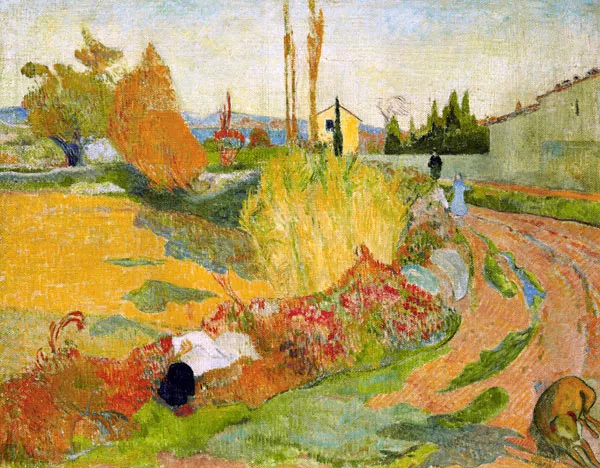
Why Nabis Artworks Appeal to the Art Market
Nabis works captivate viewers with their ability to combine intimate subjects—domestic scenes, gardens, and family portraits—with a radical formal audacity inherited from Gauguin’s Synthetism and a careful study of Japanese woodblock prints.
This tension between the gentleness of the subjects and the innovation of the artistic techniques—flat areas of color, bold outlines, and flattened perspectives—gives these works a modernity that has lost none of its freshness more than a century after their creation.
Bonnard and Vuillard, who each pursued long careers well beyond the group’s dissolution at the turn of the century, are now recognized far beyond the strictly “Nabi” framework of their early years, which fuels broad-based demand from collectors drawn to both their early works and their mature output.
Sérusier, Denis, and their fellow artists—whose work is more closely associated with this formative period—enjoy a very solid reputation among specialized collectors and institutions dedicated to the history of French modern art.
Artist | Nabi period | Type of Work | Market Demand Level |
Paul Sérusier | 1888–1900 | Oil painting, Breton landscapes, pictorial theory | Very strong, specialized collectors |
Pierre Bonnard | 1888–1900 (followed by a long career) | Painting, interior scenes, nudes, gardens | Exceptional, very active international market |
Édouard Vuillard | 1888–1900 (followed by a long career) | Painting, interiors, portraits, decorative art | Exceptional, very high auction prices |
Maurice Denis | 1888–1905 | Religious and decorative painting, aesthetic theory | Very active, international |
Félix Vallotton | 1892–1900 (associated with the group) | Painting, woodcut, portraits | Very active, showing strong recent progress |
Paul-Élie Ranson and Ker-Xavier Roussel | 1888–1900 | Symbolist and decorative painting | Active, sought after by specialized collectors |
Estimate in less than 24h
The criteria that determine the value of a Nabi painting
The market value of a Nabi painting is determined first and foremost by the artist’s identity, which has a significant impact: Bonnard and Vuillard occupy the top of this hierarchy, followed by Vallotton, whose market value has risen significantly, and then by Sérusier and Denis, whose works enjoy very strong demand but at a structurally lower level.
The medium and format also play a decisive role: a large oil on canvas is consistently worth several times more than a small-format panel or a work on paper by the same artist.
The price ranges observed on the secondary market illustrate this range. A work on paper or a small study by a second-tier artist can range from 3,000 to 30,000 euros. A medium-sized oil on panel or canvas by Sérusier, Denis, or Roussel ranges from 30,000 to 400,000 euros, depending on the period and quality.
The large, intimate compositions by Bonnard and Vuillard frequently exceed one million euros and can reach tens of millions for the most exceptional works from their mature periods.
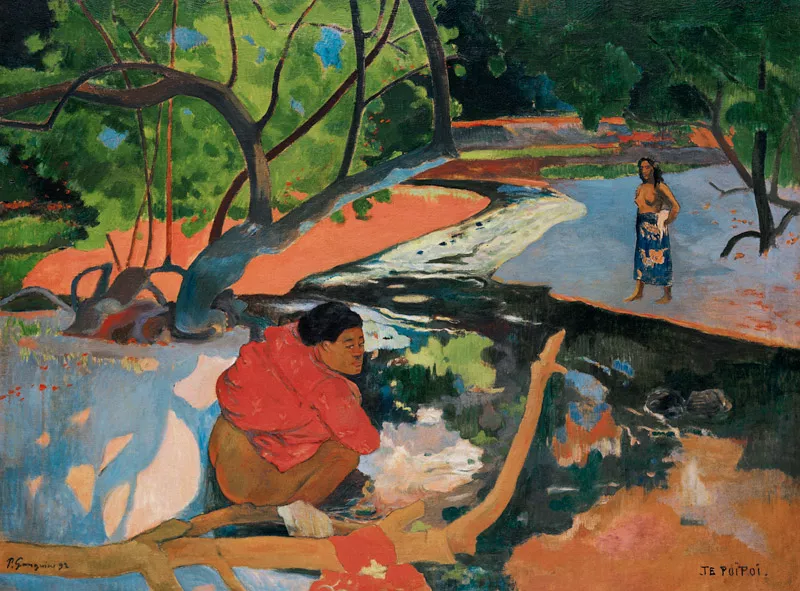
Bonnard, Vuillard, Sérusier: The Most Highly Valued Nabis Painters
The Great Masters Who Dominate the Art Market
Pierre Bonnard occupies a unique position in the Nabi art market hierarchy: his early works—intimate scenes with colors still reminiscent of Symbolism—and his mature compositions—gardens and interiors bathed in increasingly bold chromatic light—are both highly sought after, giving his market value a rare depth and stability.
Édouard Vuillard, whose bourgeois interiors and portraits document the life of the Parisian bourgeoisie during the Belle Époque with remarkable psychological finesse, enjoys comparable recognition; his large-scale murals are considered works of the highest prestige whenever they appear on the market.
Paul Sérusier, theorist and founder of the movement, occupies a historic position of the very highest order, although his market value remains lower than that of Bonnard and Vuillard in strictly commercial terms.
His Breton landscapes, particularly those from his formative period in 1888 at Pont-Aven, are the most sought-after works in his body of work, embodying the foundational historical significance of the entire movement.
Artist | Featured Subject | Approximate Price Range | Market Demand |
Pierre Bonnard (large-scale composition, mature period) | Garden, interior, nude, chromatic light | €1 million — tens of millions | Institutional, exceptional |
Édouard Vuillard (large-scale scene or portrait) | Bourgeois interior, psychological portrait | €500,000 — tens of millions | Very strong, international |
Paul Sérusier (Breton landscape, early period) | Pont-Aven, theory of Synthetism | €100,000 — €2 million | Very active, specialized collectors |
Bonnard or Vuillard (works on paper, drawings) | Study, insight into the creative process | €20,000 — €500,000 | Active, sought-after segment |
Sérusier or Denis (medium-sized oil painting) | Landscape, religious or decorative scene | €50,000 — €400,000 | Strong demand, specialized collectors |
Denis, Vallotton, Ranson, Roussel: other sought-after artists
Maurice Denis, a theorist as influential as he was a painter, coined one of the most famous phrases in the history of modern art by defining a painting as a flat surface covered with colors arranged in a certain order, rather than as a window onto the world.
His religious and decorative works, imbued with a gentle spirituality, appeal to collectors drawn to this contemplative dimension; his market value remains solid without reaching the heights of Bonnard or Vuillard.
Félix Vallotton, whose association with the Nabi group remains a subject of debate among art historians but whose work undeniably shares some of the movement’s aesthetic concerns, has undergone a remarkable reassessment over the past twenty years or so, both for his paintings with their incisive flat areas of color and for his woodcuts of striking modernity.
Paul-Élie Ranson and Ker-Xavier Roussel, who are less well-documented on the international market but actively followed by collectors specializing in the Nabi movement as a whole, round out this overview, their works offering more accessible entry points into the collection from this foundational moment in French modern art.
Estimate in less than 24h
Interiors, Breton landscapes, portraits: popular subjects
The hierarchy of Nabi subjects and its impact on market value
Interior scenes, a central motif in Nabi art, document with remarkable intimacy the domestic life of the Parisian bourgeoisie in the late 19th century: living rooms, dining rooms, bedrooms, and private gardens, rendered with the decorative attention to detail that is the movement’s hallmark.
These compositions—particularly in the work of Vuillard, for whom they form the core of his body of work—rank among the most sought-after subjects on the Nabi market, their documentary richness adding to their purely artistic merit.
Breton landscapes, a direct legacy of the seminal Pont-Aven experience, occupy a historically prominent place, particularly for Sérusier, for whom they constitute the most emblematic subject.
Female portraits, rendered with great economy of artistic means yet often remarkable psychological depth, and decorative still lifes, round out this iconographic repertoire that is highly sought after by collectors.
Subject | Characteristics | Estimated Price Range | Market Demand |
Interior scene (Vuillard, Bonnard) | Domestic life, setting, chromatic light | €100,000 — several million € | Very strong, international |
Breton Landscape (Sérusier, early period) | Pont-Aven, Synthetist theory | €80,000 — €1.5 million | Very active, significant historical value |
Portrait of a Woman (major artist) | Economy of means, psychological depth | €50,000 — €800,000 | Strong market, portrait collectors |
Garden or outdoor landscape (Bonnard) | Expressive color, light, free composition | €200,000 — several million € | Highly sought-after, very rare |
Decorative still life | Balanced composition, soft color palette | €20,000 — €300,000 | Active market, broad buyer base |
Still lifes and decorative compositions: highly sought-after works
Nabis still lifes—whether depicting flowers, fruit, or household objects—convey the movement’s decorative ambition with remarkable economy of means: composition takes precedence over the illusion of depth, and colors are arranged in juxtaposed blocks rather than naturalistic gradients.
These works, often smaller in size than the large interior scenes, offer a welcome entry point into the Nabi collection for more accessible budgets, while retaining genuine aesthetic and historical value.
Decorative compositions in the broadest sense—panels intended to adorn a private interior, folding screens, and door transoms—constitute a particularly sought-after category when they have retained their documented original function and context.
Vuillard’s large-scale mural decorations, in particular, rank among the most prestigious pieces in this segment; their rarity on the open market—as most are held in institutional collections—explains the exceptional prices they command when they appear at public auction.
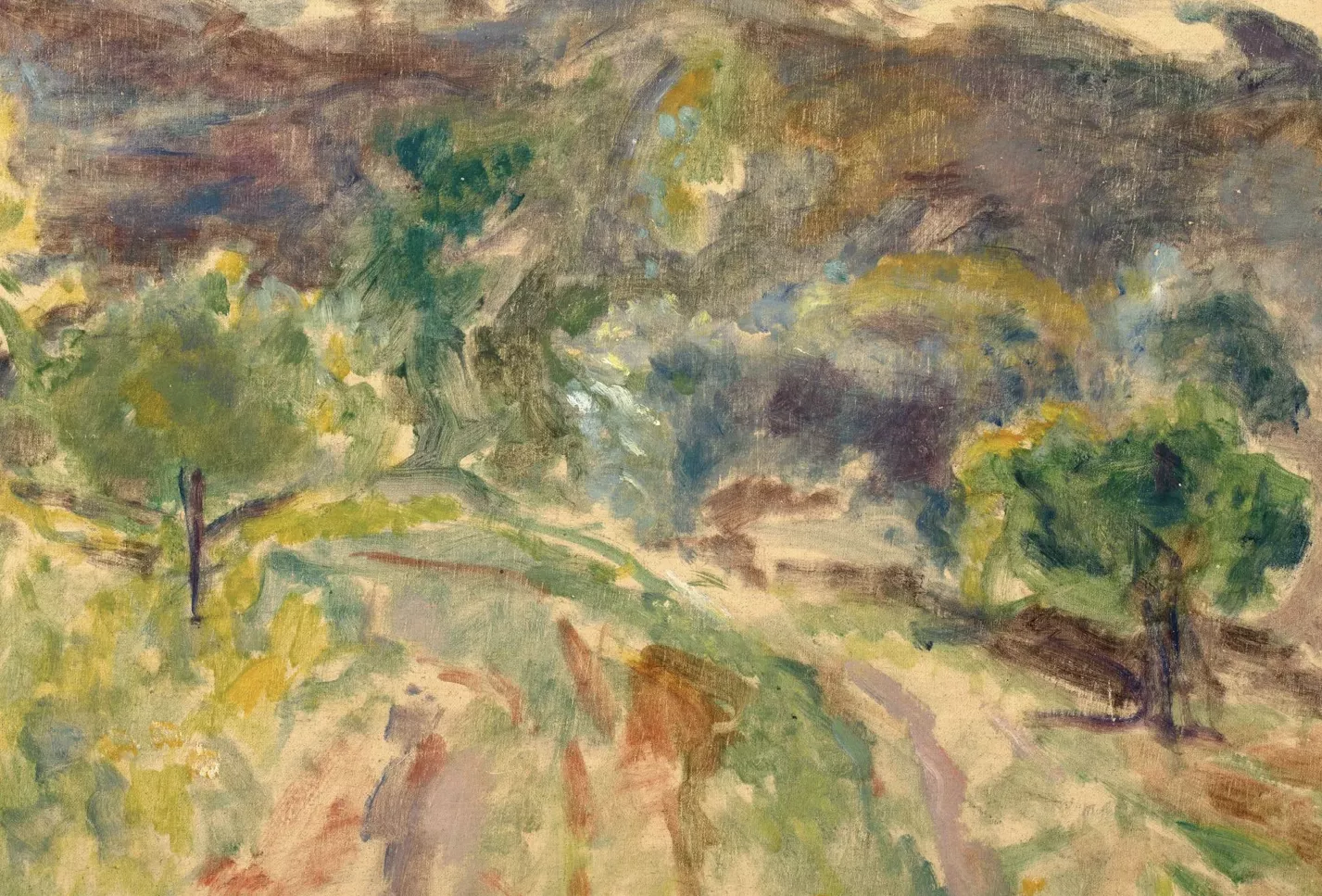
Solid blocks of color, Japonism, Symbolism: How to Recognize a Nabi Painting
Synthetism and decorative art: the hallmarks of the Nabi movement
Synthetism, an aesthetic principle inherited directly from Gauguin and theoretically formulated by Sérusier under the painter’s influence during their meeting in Pont-Aven, is based on the simplification of forms, the use of pure color in flat areas outlined by bold contours, and the rejection of traditional illusionistic perspective in favor of a decorative organization of the surface.
These principles, immediately recognizable in Sérusier’s *Le Talisman*, had a lasting influence on the practice of the entire group, even though each artist interpreted them according to his own sensibility.
The movement’s decorative ambition—which rejects the traditional hierarchy between fine art and the applied arts—explains the Nabis’ interest in the decorative arts in the broadest sense: posters, screens, theater sets, and book illustration—all media that the artists approached with the same aesthetic rigor as their easel paintings.
This fluidity between genres is reflected today in the art market by a sustained focus on the movement’s decorative and graphic works, which were long undervalued compared to painting but are now fully recognized.
Japanese Influence and Post-Impressionism: Contextualizing Your Work
The influence of Japanese woodblock prints, Japonism, which permeated much of late 19th-century French art, is evident in the work of the Nabis through the flattening of perspectives, the use of bold and asymmetrical compositions, and a particular focus on repetitive decorative motifs.
This influence, particularly pronounced in the works of Bonnard and Vuillard, often makes it possible to date and situate a work within the movement’s chronology, as references to Japanese art were more systematic during the strictly Nabi period than after the group’s dissolution.
The Nabi movement stands in direct continuity with Post-Impressionism and Symbolism, extending certain formal concerns while steering them toward a more resolutely decorative and intimate dimension.
Precisely situating a work within these various influences—Gauguinian Synthetism, Japonism, and the Symbolist legacy—is a task requiring expertise and a detailed understanding of the chronology and stylistic evolution of each artist, an essential prerequisite for establishing a reliable appraisal.
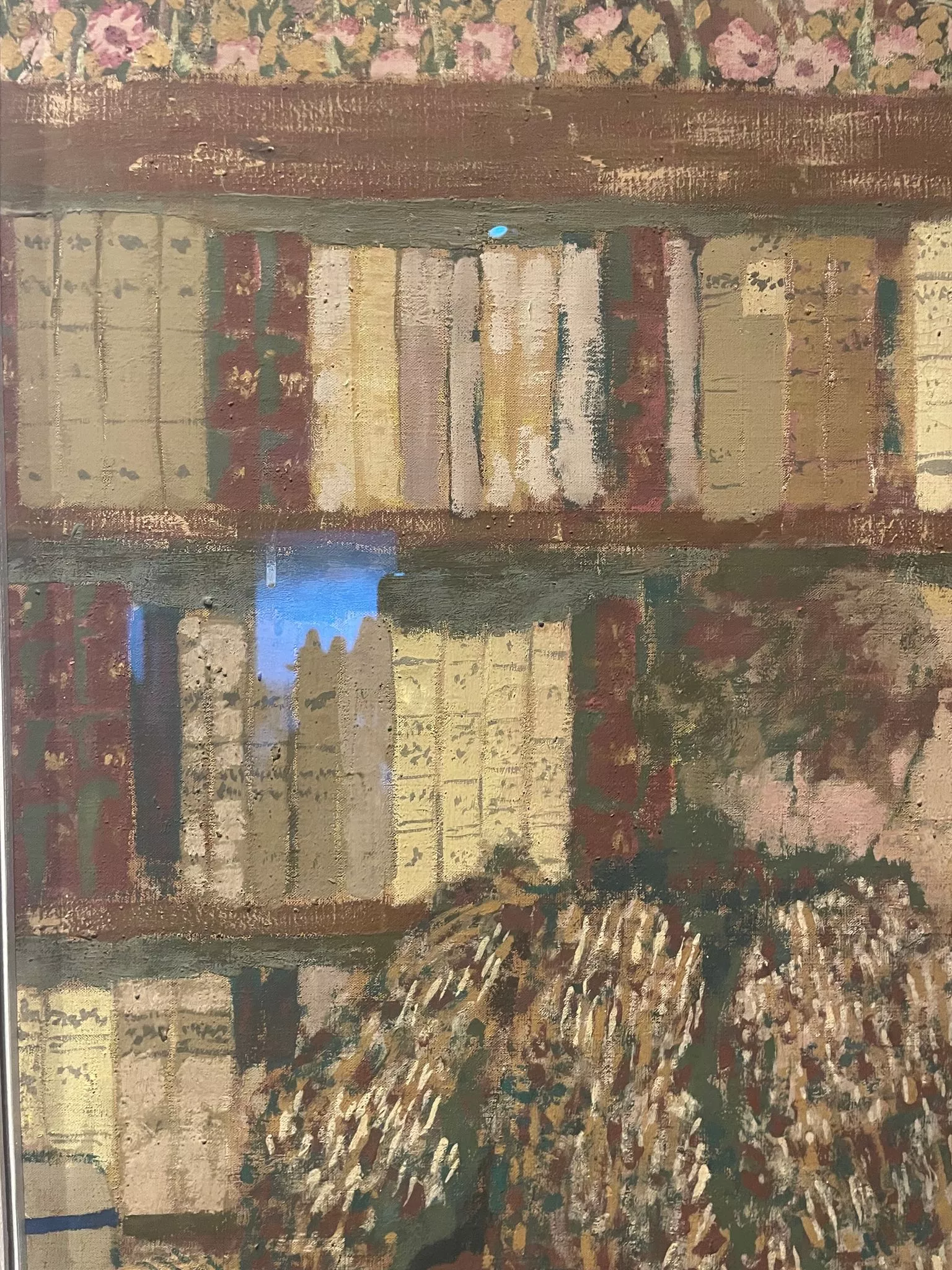
Signature, Provenance, and Authenticity: The Pillars of Valuation
Signature, Attribution, and Authentication: Their Impact on Value
The authentication of a Nabi painting relies on a set of converging clues. The signature is a primary element, but it is never sufficient on its own to establish a precise date within the artist’s career, particularly for Bonnard and Vuillard, whose output spans several decades well beyond the strictly Nabi period.
Comparison with documented works from the same period, detailed stylistic analysis, and consultation of available archives are essential steps in any serious appraisal.
For the movement’s major artists, authoritative catalogs raisonné serve as the standard of reference in the market. Bonnard’s work is documented in the catalog compiled by Jean and Henry Dauberville; Vuillard’s in the works of Antoine Salomon and Guy Cogeval; and Vallotton’s in the catalog by Gilbert Guisan and Doris Jakubec.
A work listed in one of these catalogs enjoys the highest level of scholarly credibility, which is directly reflected in its market value.
Level of Documentation | Impact on Market Value |
Work listed in the artist’s catalog raisonné | Maximum assurance; very significant premium on value |
Work dated and precisely situated within the movement’s formative period | Strong impact; maximum valuation within the artist’s body of work |
Work published in specialized literature or exhibited in a retrospective | Strong scholarly endorsement; significant appreciation in value |
Work accompanied by a written appraisal from a recognized expert on the artist’s body of work | Good guarantee; facilitates the sale and provides security for the buyer |
Work with a legible signature and documented provenance | Solid foundation; reliable estimate and a narrow price range possible |
Work without documentation or precise dating | Increased uncertainty; estimate based solely on stylistic analysis |
Provenance, medium, and condition
The provenance of a Nabi painting is a decisive factor in building confidence in the market. A work whose history can be traced through historic dealers associated with the movement—particularly the Bernheim-Jeune gallery, which actively supported several Nabis artists at the turn of the century—or through a well-documented historic private collection, enjoys a legitimacy that buyers directly factor into their offers.
The support itself serves as an indicator of expertise: the Nabis often worked on unusual supports, such as cardboard or thin wood panels, the precise identification of which aids in dating the work.
The condition of the work is another key factor. The Nabis sometimes used paint diluted with glue or experimental tempera techniques for their murals, the long-term stability of which can pose specific conservation challenges.
For more traditional oil-on-canvas works, examination under raking light and ultraviolet light reveals craquelure, overpainting, or past restorations, which can have a significant impact on value, as the integrity of the pictorial surface is central to the appreciation of these works with their carefully composed areas of flat color.
Get a free appraisal of your Nabi painting
A certified appraisal by a licensed auctioneer in less than 24 hours
Appraising a Nabi painting requires a precise understanding of each artist’s chronology and the evolution of their style beyond the strictly “Nabi” period, particularly for Bonnard and Vuillard, whose careers continued well after the group disbanded.
A licensed auctioneer has the necessary training to precisely situate a work within this complex chronology and to assess its place within the artist’s body of work.
Auctie’s offers this appraisal free of charge, with a certified response within 24 hours. Whether you have inherited a painting attributed to a Nabi artist, wish to have a drawing or study from this period appraised, or are considering compiling an inventory of your art collection, the process is the same: submit your piece to a trained eye capable of accurately assessing its value.
What you need to provide for an online appraisal
For a Nabi painting, clear photographs of the front and back of the work are essential, as well as a close-up of the signature and any inscriptions on the back of the support, the precise dimensions of the composition, and any known provenance information: an old gallery label, a purchase receipt, or a reference in an auction catalog or specialized publication.
The exact nature of the support—canvas, panel, or cardboard—must be specified, as it is an important factor in identification and dating.
For drawings and works on paper, the condition of the support must be documented: pinholes, foxing, creases, and discoloration.
In cases of doubt regarding attribution—which is particularly important for distinguishing a work from the strict Nabi period from a later work by the same artist—a physical examination of the piece will be offered before any steps are taken to put it up for sale.
Sell a Nabi painting at auction with Auctie's
From the reserve price to the hammer price: how the price is determined
Auctions are the most advantageous method of sale for high-quality Nabi paintings, in a market where the inherent scarcity of certain periods in each artist’s career can generate fierce competition among multiple collectors interested in the same piece.
The reserve price, set in consultation with the seller, must be carefully calibrated, taking into account the work’s precise place in the artist’s chronology, on which a significant portion of its value depends.
For major, well-documented works, the dynamics of the auction can lead to final prices far exceeding initial estimates, as several collectors are prepared to engage in intense competition to acquire iconic pieces from this seminal period of French modern art.
The auctioneer plays a decisive role here by curating a sale that creates the conditions for this competition.
Hôtel Drouot and Online Auctions: Reaching the Right Bidders
Auctie’s holds its auctions at Hôtel Drouot, the leading auction house in continental Europe, founded in 1852 and frequented by a dense network of dealers, collectors, and specialists in modern art.
For a Nabi painting, Drouot offers optimal visibility among French and European enthusiasts of this movement, complemented by online promotion that significantly broadens the reach of each auction on an international scale.
An American collector passionate about Bonnard, an Asian museum seeking an iconic work by Vuillard, or a European art lover drawn to the intimate freshness of the Nabi aesthetic can bid in real time from their home countries.
For the Nabi movement, whose reputation continues to grow among international collectors, this aspect is often decisive in securing the best hammer price.
Estimate in less than 24h
Estate Planning, Inheritance: Valuing an Inherited Nabi Painting
Inventory and Distribution of an Estate
Nabi paintings are sometimes found in the estates of families whose collections were assembled in the early decades of the 20th century, a time when these artists—though already recognized in connoisseur circles—remained accessible to collectors of substantial but not exceptional means.
A work acquired in the 1910s or 1920s may today be worth considerably more than the heirs realize, making a preliminary appraisal all the more essential before any distribution of the estate.
Auctie’s regularly works alongside notaries to compile comprehensive estate inventories that include works from the Nabi movement.
Each piece is appraised individually, with particular attention paid to precise dating within the artist’s career—a key factor determining value in this segment. The resulting report is an official, legally binding document that can be included in the estate file without reservation.
Confidentiality of the process and preservation of anonymity
The circumstances leading to the appraisal of a Nabi painting are often personal and sensitive: discovery as part of an inheritance, reorganization of a family collection, or a decision to sell after a long period of ownership.
Auctie’s handles each case with absolute discretion. The owner’s identity is never disclosed to third parties without their explicit consent, and works may be offered for sale under complete anonymity if the consignor so desires.
This confidentiality is a fundamental commitment of Auctie’s, valid at every stage of the relationship, from the initial contact through to the receipt of the proceeds from the sale.
Entrust the appraisal of your Nabi painting to Auctie’s
A Nabi painting deserves an appraisal that matches the subtlety of this movement, which laid the foundation for modern French art. The chronological precision required to situate a work within the artist’s career, the diversity of media and techniques employed by the group, and the strength of consistently robust international demand: these are all factors that only a licensed auctioneer, well-versed in the specifics of this segment, can assess with the rigor they require.
Auctie’s guides you from the initial appraisal through to the final auction, offering the expertise of a state-certified appraiser and the discretion your financial decisions deserve. The appraisal is free, confidential, and non-binding, and you’ll receive a response within 24 hours.
Discover in the same theme
Rating and value of drawings and paintings by Charles Victor...
Charles Victor Guilloux is a Symbolist and Post-Impressionist painter who produced numerous works that are highly valued and command high prices.
Learn more >

Rating and value of works, paintings by Léon Lhermitte
Léon Lhermitte was a 19th-century naturalist painter who produced drawings and oil paintings that are highly prized at auction.
Learn more >

Rating and value of works, paintings, drawings by Henri Pill...
Henri Pille is a 19th-century painter and illustrator of drawings and paintings. His works are successful and stable.
Learn more >
Estimate in less than 24h
Frequently asked questions
-
Quelles sont les fourchettes de prix des tableaux Nabis selon l'artiste ?Les prix varient considérablement selon l'artiste et le format. Une œuvre sur papier ou petite étude d'un artiste de second cercle se situe entre 3 000 et 30 000 euros. Une huile de format moyen de Sérusier ou Denis oscille entre 30 000 et 400 000 euros. Les grandes compositions de Bonnard et Vuillard dépassent fréquemment le million d'euros et peuvent atteindre plusieurs dizaines de millions pour les pièces exceptionnelles.
-
Comment authentifier et estimer un tableau Nabi ?Chez Auctie's, nos commissaires-priseurs et experts agréés par l'État proposent une estimation gratuite et sans engagement. Cette demande d'estimation vous permettra de vérifier l'authenticité, d'évaluer l'état de conservation et d'obtenir une fourchette de prix fiable basée sur les comparables du marché. Nous vous répondons sous 48 heures.
-
Quels sont les critères qui déterminent la valeur d'un tableau Nabi ?La valeur dépend principalement de l'identité de l'artiste (Bonnard et Vuillard au sommet de la hiérarchie), du support et du format (une grande huile vaut plusieurs fois un petit panneau), de la période de création, du sujet (scènes d'intérieur et paysages bretons très recherchés), de l'état de conservation et de la provenance documentée.
-
Est-ce le bon moment pour vendre un tableau Nabi ?Oui, le marché des tableaux Nabis demeure très actif et soutenu, particulièrement pour les œuvres de Bonnard, Vuillard et Sérusier. La reconnaissance institutionnelle du mouvement et l'intérêt constant des collectionneurs internationaux créent des conditions favorables à la vente, même pour les artistes de second cercle comme Vallotton dont la cote a connu une progression notable.
-
Comment se déroule la vente d'un tableau Nabi chez Auctie's ?Nous vous accompagnons de bout en bout : estimation gratuite par un expert, préparation du dossier de provenance et de conservation, mise en catalogue détaillée, et enfin adjudication en vente publique. Notre expertise et notre réseau international d'acheteurs assurent une commercialisation optimale de votre œuvre.
