



Rating and value of drawings and paintings by Jean Peské

Key takeaways
- Jean Peské’s oil-on-canvas paintings sell for between €120 and €61,000, with significant variation depending on the work’s authenticity and provenance.
- A Russian-Polish painter (1870–1949) associated with the Nabis movement, Peské made his mark with his innovative technique of Chinese ink wash enhanced with pigments, which he developed around 1910.
- His Mediterranean landscapes—particularly those of Collioure, which come from family estates—are the most sought-after and hotly contested lots at auction.
Jean Peské’s paintings and drawings sell for up to €61,000 at auction. An appraisal allows us to accurately determine the current market value of your Jean Peské artwork and, if applicable, optimize the sale of the piece.
If you own a work by Jean Peské and would like to know its value, our state-certified auctioneers will provide a free appraisal based on authenticity, market rating, and recent market results.
Market Value and Reputation of Artist Jean Peské
A painter of Polish origin associated with the Nabis movement, Peské quickly established himself in 20th-century art. His body of work consists of various pieces, primarily oil-on-canvas works, including landscapes.
Currently, prices for his works are rising sharply at auction.
His oil-on-canvas paintings are particularly sought after, and their prices on the art market range from €120 to €61,000—a considerable gap that speaks volumes about the value that can be attributed to Peské’s paintings.
An oil on canvas titled *Young Woman Reading*, dating from 1895, sold for €61,000, even though it had been estimated at between €10,000 and €15,000.
A range of values from a simple work to the most prestigious
Technique used | Result |
DA | From €40 to €21,000 |
EM | From €30 to €5,800 |
Excl. tax | From 120 to 61,000€ |
Estimate in less than 24h
Placing the Artist in Context
Period
Jan Miroslaw Peszke, known as Jean Peské (1870–1949), was a painter and printmaker of Polish descent on his father’s side and Russian descent on his mother’s side. He was active during the long modern period spanning the Belle Époque, the two world wars, and the immediate postwar period.
His artistic training unfolded in two geographically distinct phases: he first attended the Kiev School of Painting, then the Odessa School of Fine Arts, and finally the Warsaw School of Fine Arts, before moving to Paris in 1891 thanks to an inheritance from his father.
His integration into the Parisian art scene was immediate and fruitful. At the Académie Julian, following in the footsteps of the Nabis, he attended the studios of Jean-Paul Laurens and Benjamin-Constant, and formed friendships within the capital’s Polish circles, where he met the future Marie Curie—with whom he would remain close—as well as Guillaume Apollinaire.
Artistic Movements
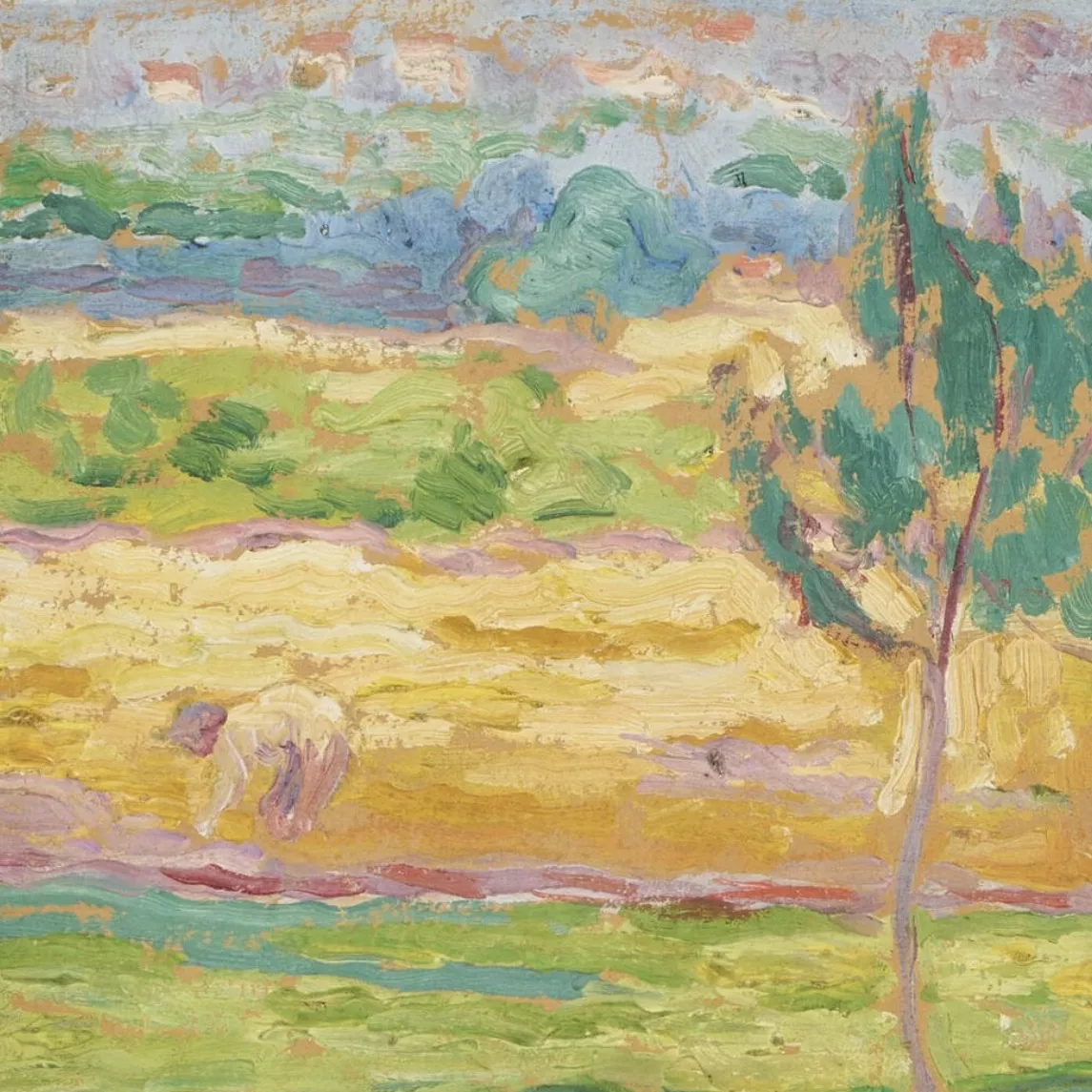
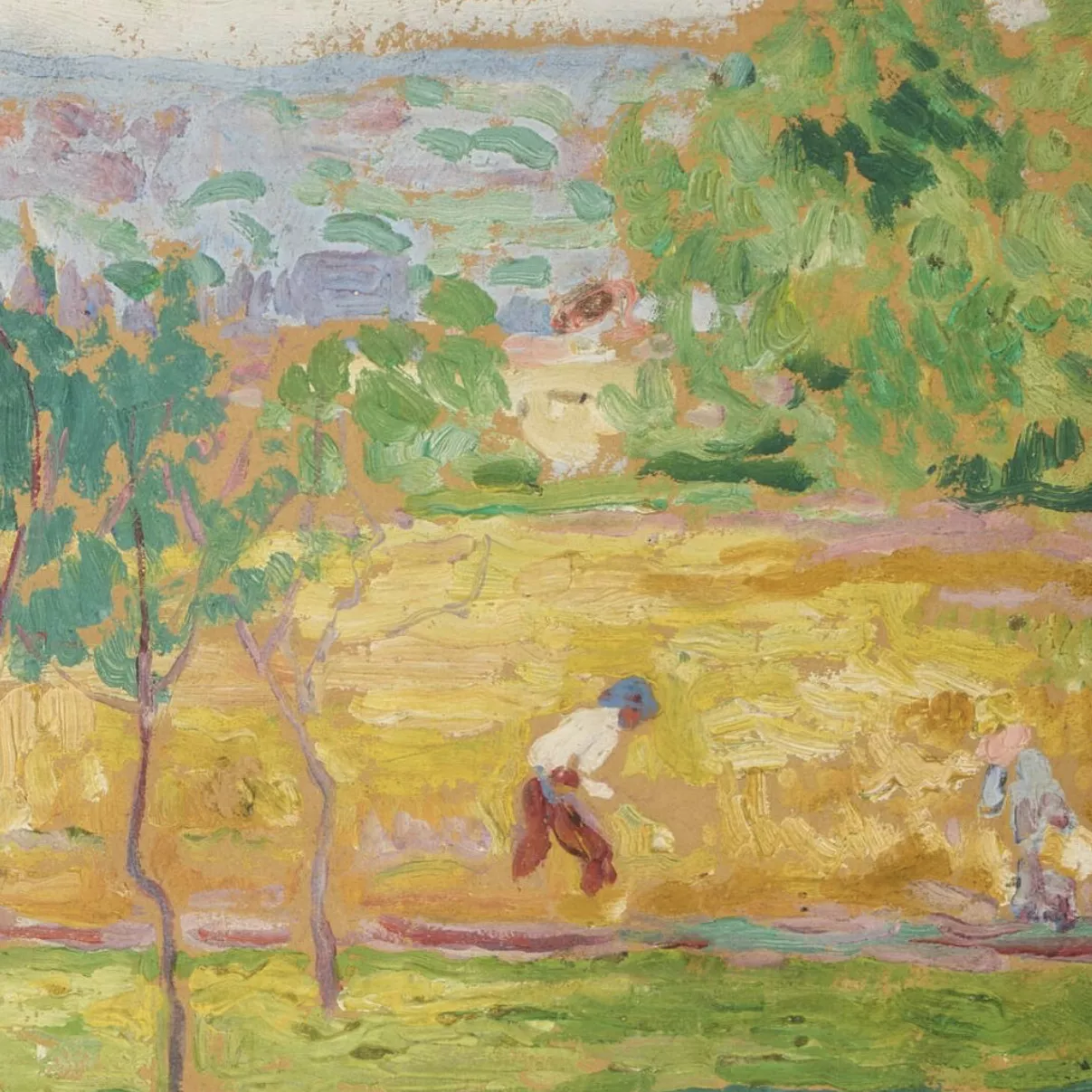
Peské is generally associated with Post-Impressionism and the École de Paris; this painter and printmaker of Russian-Polish origin developed his art alongside artists of the movement, without ever confining himself to a single style.
His stylistic evolution stemmed from a successive absorption of several movements. Captivated by the aesthetic of Pointillism and invited by Paul Signac to his estate in Saint-Tropez, he made a few attempts at Neo-Impressionism but moved away from it fairly quickly.
His association with the Nabis marked a formative stage in his development: he became interested in the Nabis group in the late 1890s. He exhibited alongside Sérusier, Bonnard, and Vuillard, reflecting a shared sensibility toward color as an autonomous expressive value.
The Life of Jean Peské
Cultural Background
After studying at the Academy of Fine Arts in Kiev and then in Odessa, he enrolled at the Academy of Fine Arts in Warsaw and took evening classes with Wojciech Gerson, a renowned painter and admirer of Delacroix.
Thanks to an inheritance from his father, who died in 1891, he left his homeland and settled in Paris that same year, joining the many artists who had made Montmartre and Montparnasse their home and workplace.
He also took on commissions for theater set designs. In 1905, he moved to Bois-le-Roi, where he painted the trees of the Fontainebleau Forest and members of his family, before dividing his time between Bormes-les-Mimosas and Paris for about fifteen years.
Intellectual and Artistic Circle
At the Académie Julian, in the studios of Jean-Paul Laurens and Benjamin-Constant, he rubbed shoulders with those who would soon call themselves the Nabis. He forged friendships within the Polish community in the capital, notably with Marie Curie.
The art critic Félix Fénéon supported him as early as 1895 and introduced him to Camille Pissarro, with whom he learned the art of etching. Beginning in 1900, he painted en plein air in Barbizon, where he met Constantin Kousnetzoff, a Russian artist based in Fontainebleau.
Market Segmentation and Artist Rankings
Prices of Artworks
The market for Peské’s works shows a clear price stratification based on medium: paintings sell for between €200 and €25,000, drawings and watercolors between €150 and €12,000, and multiples between €120 and €6,000.
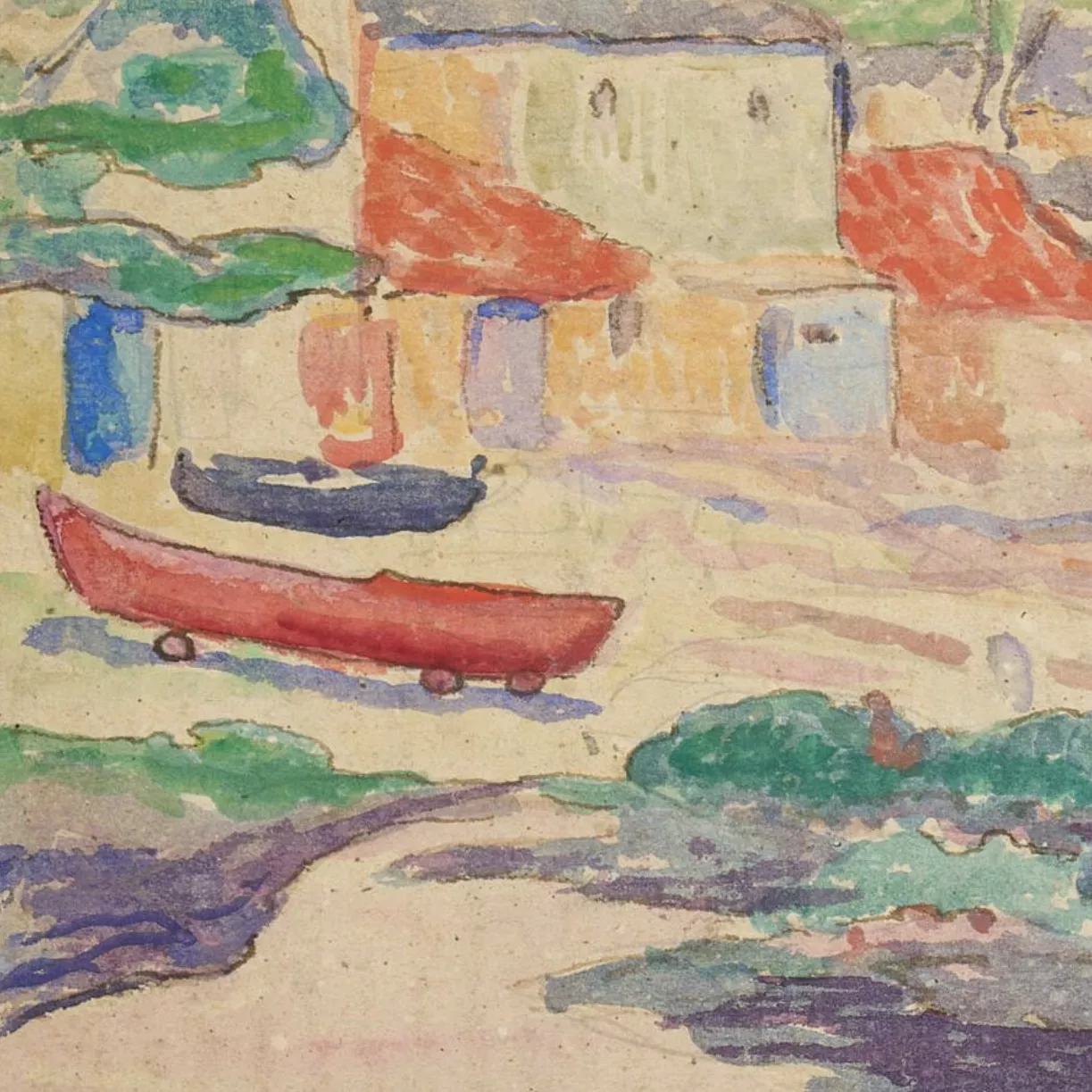
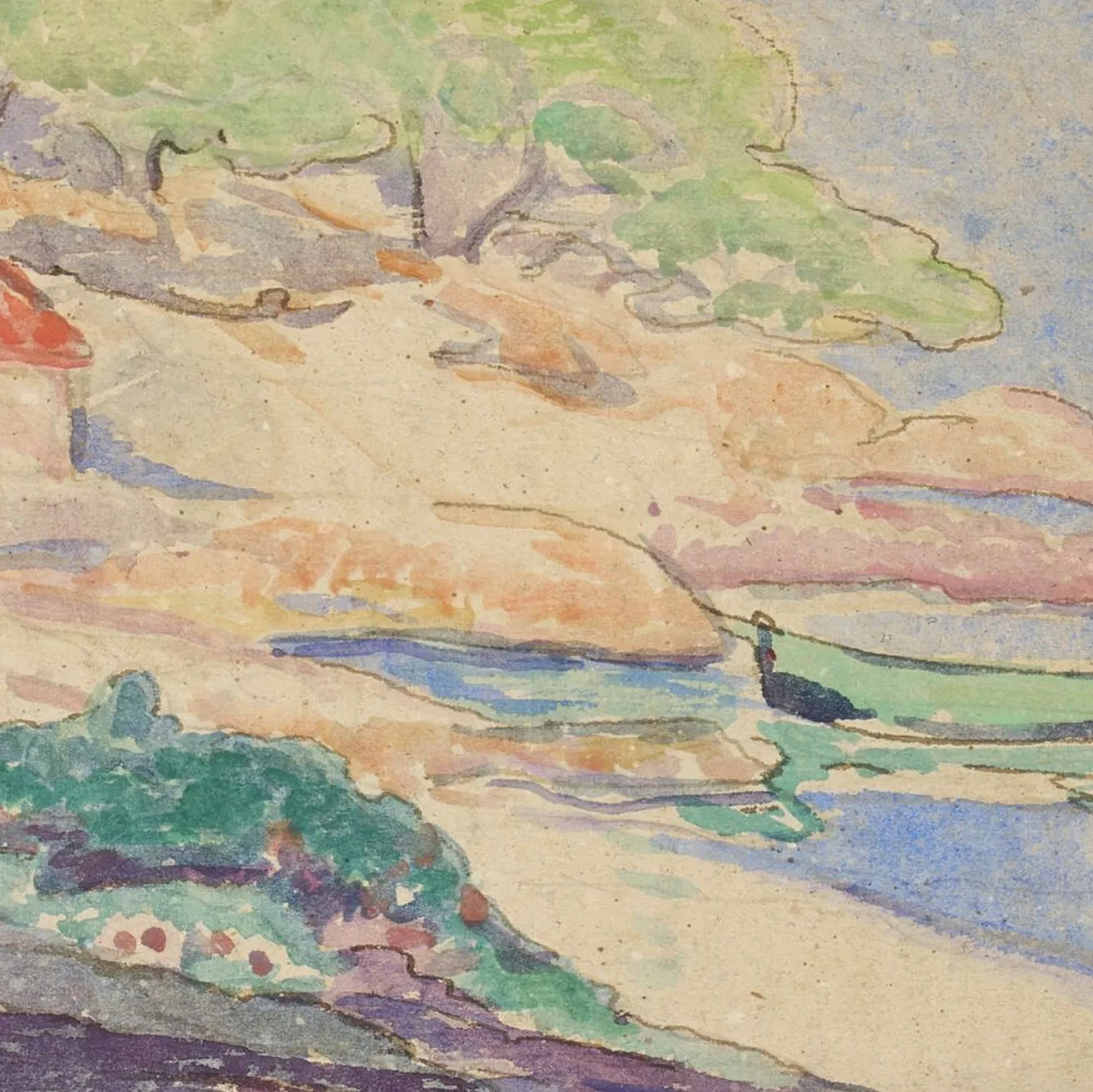
The landscapes of Collioure, which serve as the painter’s signature topographical subjects, command significant prices. Sales from the artist’s immediate family’s estate constitute the best-documented lots and are the most actively contested at auction.
Factors Driving Value
His place within the lineage of the Parisian avant-garde is the primary driver of market legitimacy. Peské moved successively through the circles of Signac and Pointillism, then the Nabis.
The technical uniqueness of his mature period was a decisive factor in his desirability: the technique of Chinese ink wash enhanced with red, ochre, and white—developed around 1910—earned the admiration of critics and gave his works on paper an immediately recognizable visual identity.
The founding of the Musée d’Art Moderne de Collioure in 1934 constituted an exceptional institutional legacy: Peské established a sort of permanent outpost at the Salon d’Automne.
Peské’s network of artistic and intellectual connections in Paris helped fuel biographical and critical interest in his work. These associations anchored his work in the cultural memory of the Belle Époque and the interwar period.
FAQ – How do you appraise a work by Jean Peské?
1) What is Peské’s Chinese ink wash technique?
Jean Peské captures the light and colors of Provençal summers using his own technique—wash enhanced with Chinese ink—an innovative technique for its time. It is the most recognizable stylistic hallmark of his mature period. Works created using this technique are highly valued because they demonstrate the artist’s unique creative contribution
2) Which of Peské’s subjects fetch the highest prices?
His favorite subjects are trees, as well as members of his family and Mediterranean landscapes, rendered in the wash-and-ink technique, along with recognizable landscapes of the French Riviera, still lifes, and finally landscapes of Brittany or Normandy.
3) Are Peské’s works of interest to foreign buyers?
The artist’s works are sold primarily in the French and Polish markets. The artist’s dual cultural identity attracts collectors in France, Poland, and Ukraine. A recent exhibition in Kyiv demonstrates institutional interest in his country of origin.
Recognizing the Artist’s Signature
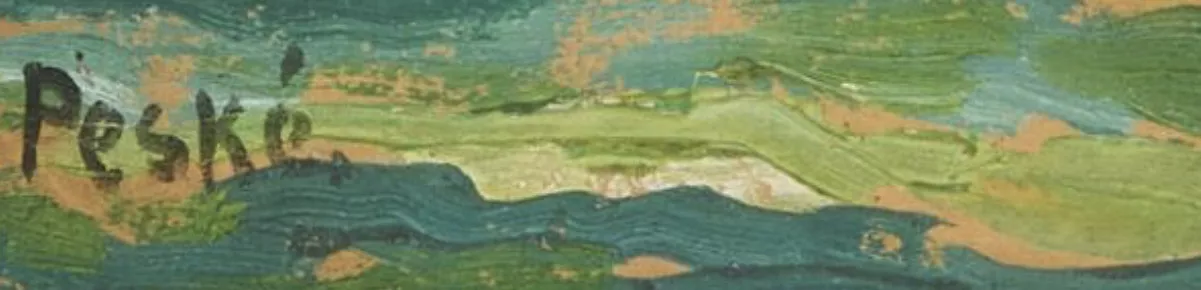
Jean Peské’s works are often signed, though his signature may vary from year to year. Here is an example.
Get Your Jean Peské Artwork Appraised
If you own a work by Jean Peské, an appraisal will help you determine its current market value.
Using our online form, our experts and certified auctioneers will conduct a free appraisal and provide you with a reliable estimate of your artwork’s market value.
If you’re considering selling it, we’ll guide you through the process to ensure you get the best possible price.
Estimate in less than 24h
D'autres tableaux de fauvistes vendus aux enchères

Estimated 8.000 - 15.000
Maurice de VLAMINCK (1876-1958), Still life with jugs and leeks, oil on canvas

Estimated 18.000 - 30.000
Charles CAMOIN (1879-1965) "Le Port de Marseille, 1928" Oil on canvas.

Estimated 200€ - 400€
André DERAIN (1880-1954) Decorative project, black ink (insolation),...

Estimated 2.000 - 4.000
Jean DUFY (1888-1964) Vase of anemones, Watercolor

Estimated 2.000 - 4.000
Jean DUFY (1888-1964) Vase of anemones, Watercolor
Discover in the same theme

Alix Aymé Drawings - Value, rating, artist
Alix Aymé is a 20th-century painter of drawings, oil on canvas and lacquer from Vietnam. His value is exploding at auction.
Learn more >

Rating and value of Fernand Dresse's paintings and furniture
Fernand Dresse is a Belgian artist who produced paintings and furniture that are highly valued at auction. 24h estimate
Learn more >

Rating and value of paintings and laquers by Tran Huu Chat
Tran Huu Chat is a modern Vietnamese painter who has produced panel lacquers and paintings of encouraging value.
Learn more >

Secure site, anonymity preserved

Auctioneer approved by the State

Free and certified estimates
Frequently asked questions
-
Who is Jean Peské, and what is his artistic background?Jean Peské (1870–1949) was a painter and printmaker of Russian-Polish descent who established himself as a major figure in Parisian modern art. Trained at the fine arts academies in Kiev, Odessa, and Warsaw, he moved to Paris in 1891, where he rubbed shoulders with the Nabis (Sérusier, Bonnard, Vuillard) and major figures such as Camille Pissarro and Paul Signac. His work is part of the Post-Impressionist movement and the École de Paris, characterized by an innovative technique: Chinese ink wash enhanced with color, which became his signature style beginning in 1910.
-
What is the price range for Jean Peské's works?Jean Peské’s paintings and drawings sell for between €120 and €61,000, depending on the medium and quality. Paintings sell for between €200 and €25,000, drawings and watercolors between €150 and €12,000, and prints between €120 and €6,000. Landscapes of Collioure and works from the artist’s family estate generally achieve the highest prices.
-
How can you authenticate a work by Jean Peské?To authenticate a work by Jean Peské, we recommend that you request a free appraisal from our state-certified auctioneers, who conduct an evaluation based on authenticity, technique, signature, and recent market trends. You can submit your artwork via our online form and receive a reliable estimate within 48 hours, with no obligation on your part.
-
Is this the right time to sell a work by Jean Peské?Yes, now is a good time to sell a work by Jean Peské. Prices for his works are rising significantly on the auction market, and interest in his work extends beyond France, particularly to Poland and Ukraine. Renewed institutional interest, as evidenced by recent exhibitions, is driving demand for his Mediterranean landscapes and innovative techniques.
-
How does the appraisal and sale of a work of art take place at Auctie's?The appraisal is free and non-binding: simply submit your artwork via our online form, and our experts will provide you with a reliable appraisal within 48 hours. If you’re considering selling, we’ll guide you every step of the way—from appraisal to auction—to ensure your artwork achieves the best possible value among French and international buyers.
