



Rating and value of drawings and paintings by Hilma af Klint

Key takeaways
- Hilma af Klint’s works sell for up to €101,300 at auction, with prices ranging from €40 to €20,000 depending on the technique and format used.
- A pioneer of abstraction who predated Kandinsky and Malevich, this Swedish artist (1862–1944) revolutionized modern art through her independence from contemporary modernist movements and her spiritual approach.
- The 2018–2019 Guggenheim exhibition, which attracted 600,000 visitors, and upcoming exhibitions at the Grand Palais and the Pompidou Center (2026) are the main catalysts behind the recent rise in her market value.
Hilma Af Klint’s paintings and drawings sell for up to €101,300 at auction. An appraisal allows us to accurately determine the current market value of your Hilma Af Klint artwork and, if applicable, optimize the sale of the piece.
If you own a work by Hilma Af Klint and would like to know its value, our state-certified auctioneers will provide a free appraisal based on authenticity, market rating, and recent market results.
Market Value and Appraisal of Hilma Af Klint
Hilma Af Klint is an artist well-known among lovers of modern and contemporary art. Currently, prices for her works are rising at auction.
Her oil-on-canvas paintings are particularly sought after, especially by American buyers, and the prices at which they sell on the art market range from €40 to €20,000—a significant range that speaks volumes about the value that can be attributed to the artist’s works.
In 2025, his work *Studio Interior*, an oil painting, sold for €101,300, despite an estimate of between €46,000 and €50,000. His market value is rising sharply.
Ranking from the most basic to the most prestigious
Technique used | Result |
|---|---|
Drawing - watercolor | From €110 to €37,000 |
Painting | From €300 to €101,300 |
Estimate in less than 24h
Putting Hilma Af Klint in Context
Period
Hilma Af Klint (1862–1944) was a Swedish painter born in Solna. She was a theosophist and a pioneer of abstract art. Her career spanned the Belle Époque, the two world wars, and the interwar period—a time of gestation and blossoming for the European avant-garde movements, within which she now holds a recognized place as a founding figure.
She received her training at an institution that was a pioneer in gender equality; in particular, she studied at the Royal Academy of Fine Arts in Stockholm (1882–1887), one of the first public art schools to admit women, before establishing herself as a professional painter.
She led a dual artistic life, with a figurative practice that conformed to the expectations of her time, and, in secret, a radically avant-garde body of work, inspired by theosophy and spiritualism, exploring harmony and invisible forces.
Artistic Movements
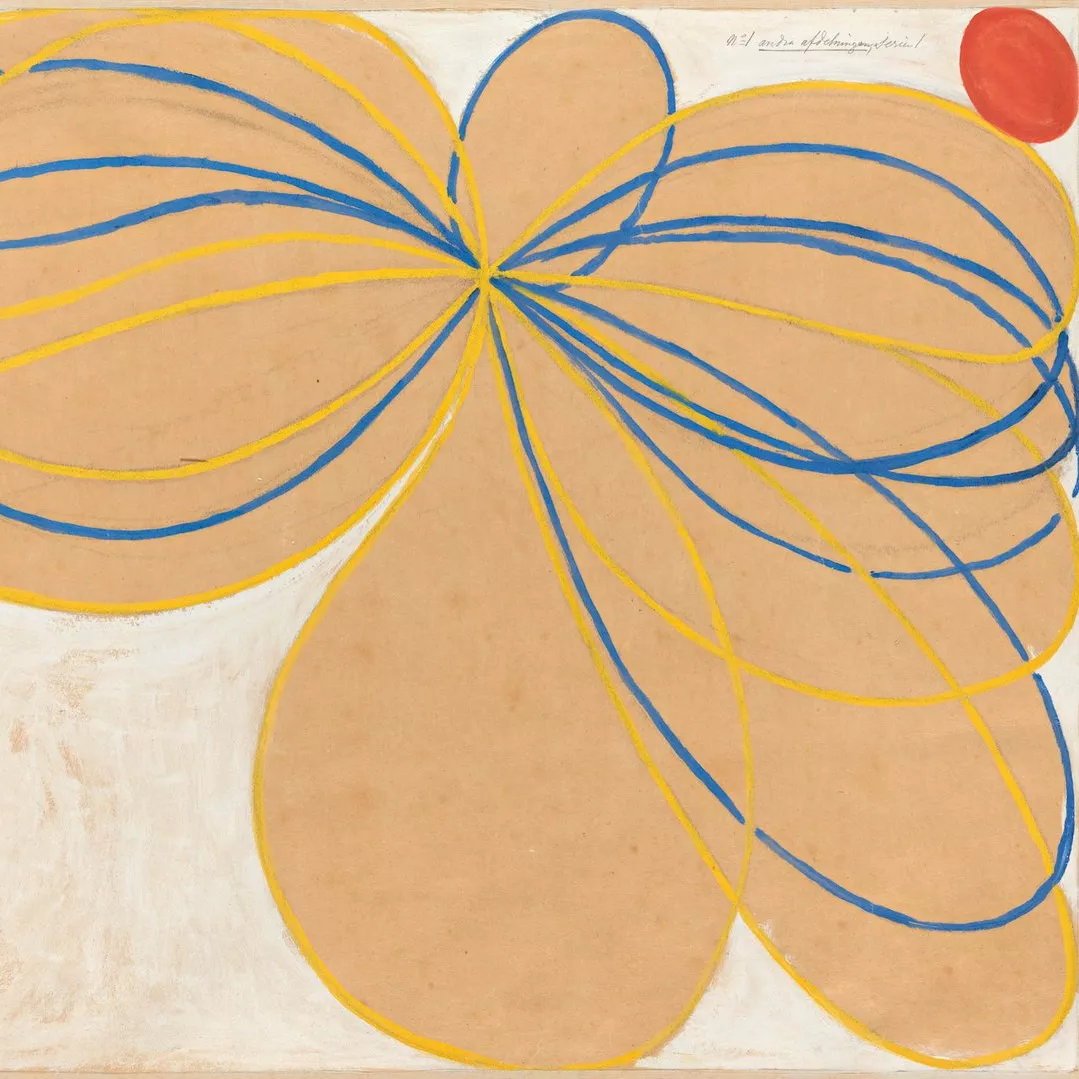
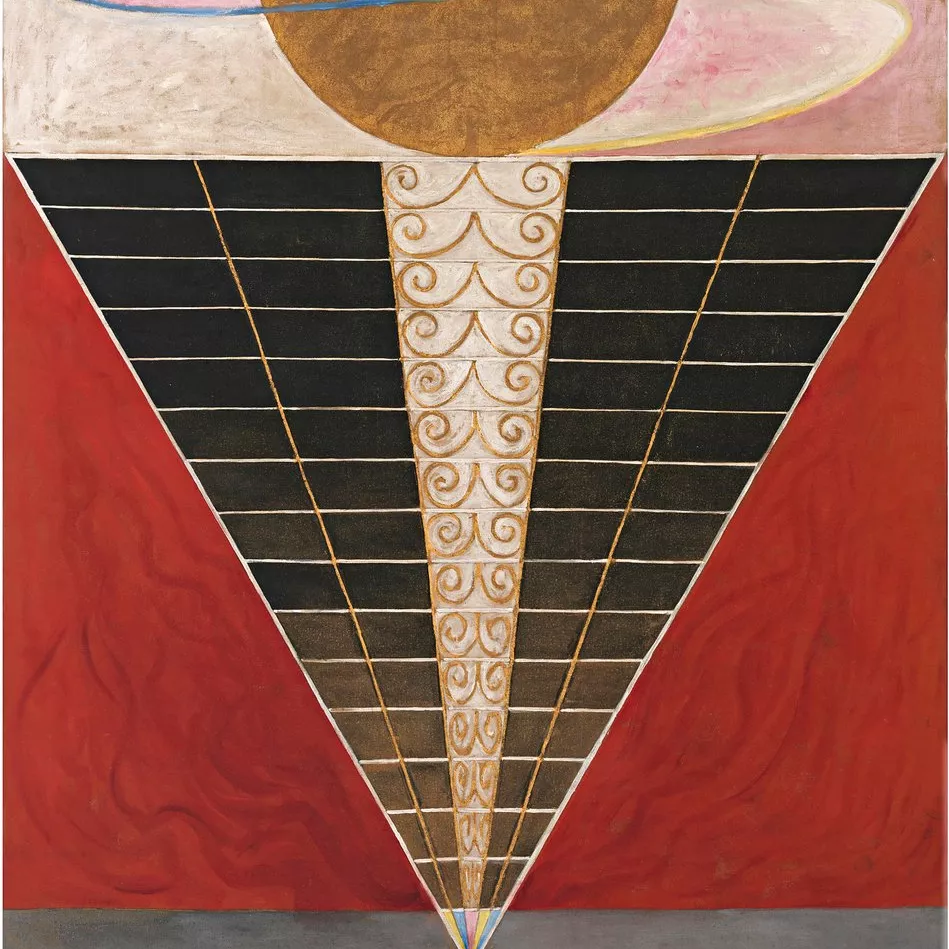
Halma Af Klint occupies an exceptional historiographical position in the history of abstraction: resolutely ahead of the major movements of the 20th century, she upended the chronology of modern art by creating, long before established figures of abstraction such as Kandinsky or Malevich, esoterically inspired paintings of exceptional audacity.
The uniqueness of her approach lies in her absolute independence from contemporary modernist movements. Although this fascination with spirituality can be found in other artists such as Kandinsky, Mondrian, or the Nabis, af Klint’s artistic transition toward abstract art and non-figurative painting took place without any connection to the modernist movements of the time. Her work is first and foremost spiritual, and her artistic oeuvre is a consequence of this.
Her work is defined by an iconographic program of systemic coherence: the paintings often express a duality or symmetrical reciprocity between high and low, interior and exterior, earthly and spiritual, masculine and feminine, good and evil.
The Life of Hilma Af Klint
Cultural Background
Born in Solna in Stockholm County, Hilma Af Klint came from a family with several generations of naval officers, engineers, and cartographers. She spent her summers at the family estate in Hanmora on Adelsö Island in Lake Mälar.
At age 20, she was one of the few women to enroll at the Stockholm Academy of Fine Arts, an institution that was then almost exclusively male, where she trained in conventional figurative art before secretly developing a radically different body of work.
She embodies what is defined in sociological terms as “triple marginality”—a reclusive female artist, detached from herself, in a country on the periphery of the art world. Paradoxically, this position afforded her a freedom to experiment that the official art circles in Paris, Berlin, or Vienna would not have tolerated.
Intellectual and Artistic Circle
In the 1890s, Hilma af Klint founded the Group of Five with four other female artists who shared her mystical fervor. For them, creating under the guidance of transcendental forces was a way to legitimize their work, which was at the time largely undervalued.
In her group of séances, she found the communal support that was lacking elsewhere. This feminine and spiritual circle constituted her true avant-garde studio, outside of any male-dominated institution. She claimed to have painted her *Paintings for the Temple* under the influence of a spirit, the angel Amiel, summoned during séances.

Market Segmentation and Artist Rankings
Prices of Works
The market for Hilma Af Klint’s works exhibits a very pronounced structural duality between the primary market—where virtually the entire major body of work is inaccessible, held under the stewardship of the Hilma Af Klint Foundation—and the residual secondary market.
The various derivatives (hand-tufted wool rugs produced in numbered editions of 7 or 30 copies based on the series *The Ten Great* and *Group III*, produced in collaboration with CFHILL, constitute the most accessible segment of the market, with estimates ranging from €1,500 to €8,000 depending on rarity and format.
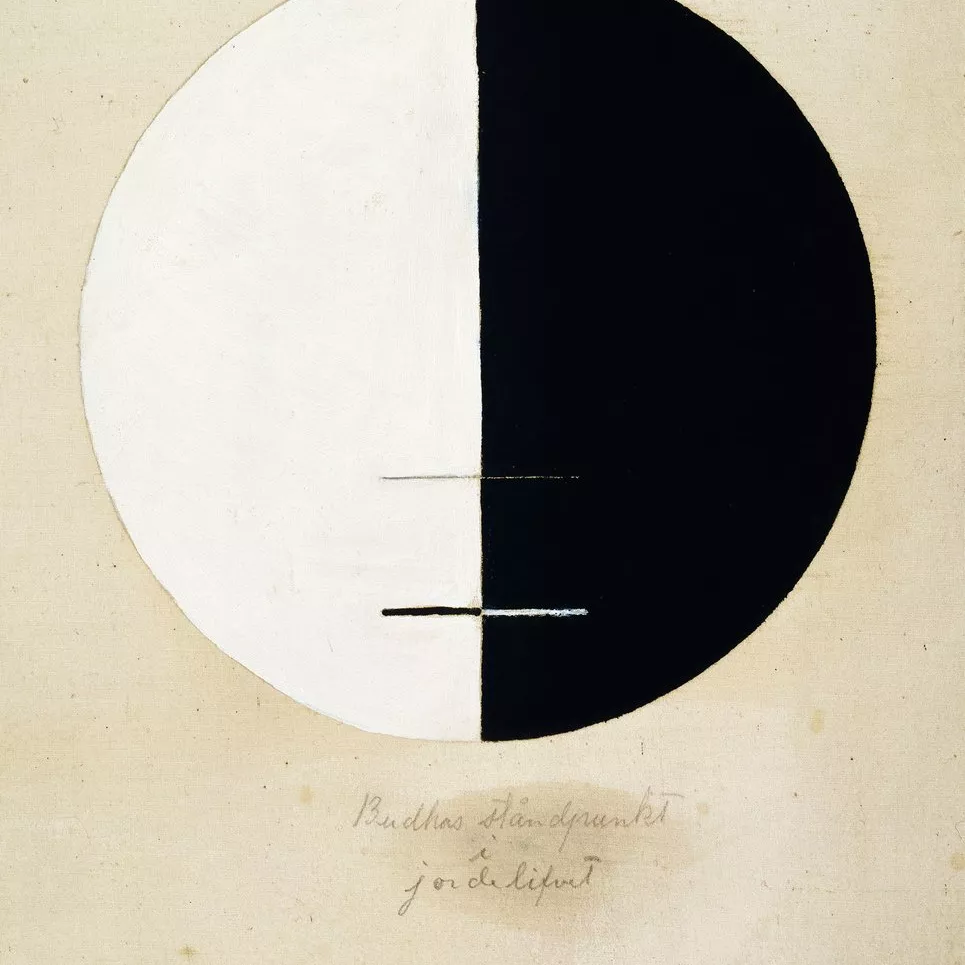
Graphic works and offset lithographs reproducing iconic motifs (Birch, Altarpiece) regularly appear on the U.S. market at modest estimates, illustrating the stratification of the body of work between original pieces that are virtually impossible to find and widely distributed editorial derivatives.
Factors
Her status as an absolute pioneer of abstraction is the most powerful and defining factor driving her value: af Klint developed her visual language before other abstract artists of her time, including Wassily Kandinsky, Kazimir Malevich, and Piet Mondrian—a historical precedence now recognized by the most prestigious institutions in the history of global art.
The artist’s deliberate decision to withhold her body of work constitutes a factor of structural rarity without parallel in the history of modern art. She stipulated in her will that her abstract work should not be shown publicly until 20 years after her death, believing that the world was not ready for it.
The “Guggenheim Effect” of 2018–2019 was the main catalyst for the contemporary surge in her market value: the exhibition at the Guggenheim Museum broke the museum’s attendance records, attracting more than 600,000 visitors.
FAQ – How do you appraise a work by Hilma af Klint?
1) What types of works by Hilma af Klint are legitimately available on the market?
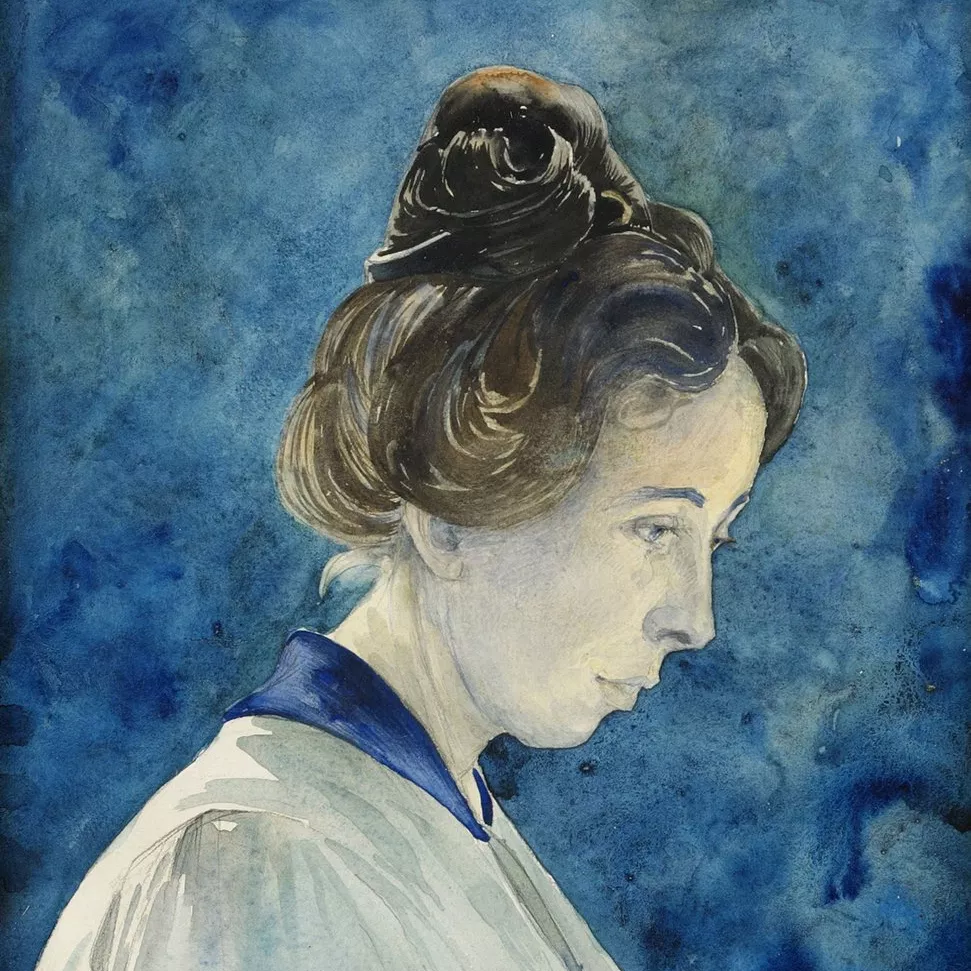
There are several possible categories: first, her academic works—portraits, landscapes, and botanical studies (created alongside her secret abstract work to support herself). Next, early works or practice pieces not included in the bequest to the foundation. One can also find watercolors and small-format works created in the 1920s and 1930s.
2) How does recent recognition by museums support the value of his work?
The 2018–2019 exhibition at the Guggenheim Museum broke attendance records. From May 6 to August 31, 2026, the Grand Palais and the Centre Pompidou will present Hilma Af Klint’s theosophical and spiritualist works. This dual exhibition is a major market event.
3) What stylistic differences distinguish her academic works from her abstract works, and how can they be identified?
Starting in 1896, Hilma Af Klint pursued two distinct bodies of work in parallel: her work as an illustrator at the Stockholm Institute of Veterinary Medicine and her traditional figurative works on the one hand, and her abstract body of work on the other. Her abstract works, by contrast, are distinguished by their biomorphic and geometric forms, their vibrant colors, and their esoteric symbols.
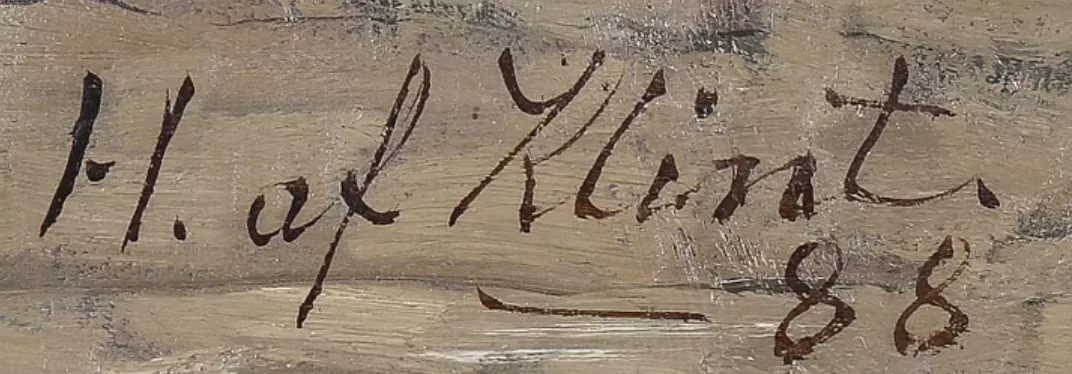
Her signature
Not all of Hilma Af Klint’s works are signed.
Although there are variations, here is an example of her signature:
Get Your Artwork Appraised
If you own a work by Hilma Af Klint, please feel free to request a free appraisal by filling out our online form.
A member of our team—composed of experts and certified auctioneers—will contact you to provide an estimate of your artwork’s market value.
If you’re considering selling your artwork, our specialists will also guide you through the various options available to help you achieve the best possible price, taking into account market trends and the unique characteristics of each piece.
Estimate in less than 24h
Discover in the same theme

Rating and value of works, drawings, paintings by Michel Kik...
Michel Kikoine is an expressionist painter of the Paris School who produced sought-after and valuable drawings and oils on canvas.
Learn more >

Rating and value of works, drawings, paintings by Louis Marc...
Louis Marcoussis was a 20th-century Cubist painter who produced drawings and oils on canvas that are highly prized at auction.
Learn more >

Rating and value of paintings by Maurice Louvrier
Maurice Louvrier is an Impressionist painter of the Rouen School, who produced many highly valued paintings.
Learn more >
D'autres tableaux abstraits vendus aux enchères

Estimated 2.000 - 4.000
Serge POLIAKOFF (1900-1969), Composition en rouge et bleu. 1965, Lithograph

Estimated Between €5,000 and €8,000
Jean MIOTTE (1926-2016), acrylic on canvas

Estimated 3.000 - 5.000
Roberto MATTA (1911-2002), Composition, Gouache on canvas

Secure site, anonymity preserved

Auctioneer approved by the State

Free and certified estimates
Frequently asked questions
-
Who is Hilma af Klint, and what is her significance in art history?Hilma af Klint (1862–1944) was a Swedish painter recognized as a true pioneer of abstract art, having developed her visual language before Kandinsky, Malevich, and Mondrian. A theosophist and spiritualist, she led a dual artistic life: producing conventional figurative work in public and, in secret, creating radically avant-garde art inspired by esotericism and spiritualism. Her status as a pioneer of abstraction is the most powerful factor driving the rise in her market value.
-
What is the price range for Hilma af Klint's paintings and drawings?Hilma af Klint's works sell for between €40 and €101,300 at auction. Drawings and watercolors range from €110 to €37,000, while oil paintings range from €300 to €101,300. This wide range reflects significant variations based on the type, format, and provenance of the work, with prices rising sharply since the Guggenheim exhibition in 2018–2019.
-
How can you authenticate a work by Hilma af Klint and have its value appraised?To authenticate a work by Hilma af Klint and determine its exact market value, contact Auctie's to request a free, no-obligation appraisal. A state-certified auctioneer or appraiser will contact you within 48 hours to assess the work’s authenticity, market value, and recent market performance. This appraisal is essential because it determines the exact market positioning of your work based on its technique, format, and provenance.
-
Is this the right time to sell a work by Hilma af Klint?Yes, this is a particularly opportune moment. Hilma af Klint’s market value has been on a steady upward trend since the 2018–2019 Guggenheim exhibition (600,000 visitors). In addition, two major museum events are coming up: a dual exhibition at the Grand Palais and the Centre Pompidou from May 6 to August 31, 2026. This institutional recognition is driving up demand and auction prices on the secondary market.
-
How does the appraisal and sale of a work of art take place at Auctie's?At Auctie's, appraisals are free and non-binding. After you fill out the online form, an expert or auctioneer will contact you to appraise your artwork. If you decide to sell, our team will guide you through the available options to maximize the sale price, taking into account market trends, provenance, condition, and the specific characteristics of your artwork—from start to finish.
