



Rating and value of paintings by Paul Élie Ranson

Key takeaways
- Paul Élie Ranson, a Nabi painter (1861–1909), commands high prices ranging from 30 to 400,000 euros, depending on the medium and rarity.
- Paintings command the highest prices (€700 to €400,000), while prints range from €30 to €20,000 and watercolor drawings from €60 to €175,000.
- His oil on canvas "Three Bathers with Irises" (1896) sold for €400,000 in 2020, exceeding its initial estimate of €250,000 to €350,000.
If you own a work by or based on the artist Paul Élie Ranson and would like to know its value, our state-approved experts and auctioneers will guide you.
Our specialists will carry out a free appraisal of your work, and provide you with a precise estimate of its value on the current market.
Then, if you wish to sell your work, we will direct you to the best possible arrangement to obtain the optimum price.
Rating and value of the artist
Nabi painter, Paul Élie Ranson enjoys a fairly high rating on the art market today - especially when it comes to his paintings.
Appreciated by collectors, some of his canvases can sell for hundreds of thousands of euros at auction : the price at which they sell on the art market ranges from €30 to €400,000, a considerable delta but one that speaks volumes about the value that can be attributed to the artist's works.
In 2020, his oil on canvas entitled Trois baigneuses aux Iris ou Femmes au bain, dating from 1896, sold for €400,000 whereas it was estimated at between €250,000 and €350,000.
Order of value from the most basic to the most prestigious
Technique used | Result |
|---|---|
Estamp - multiple | From €30 to €20,000 |
Drawing - watercolor | From €60 to €175,000 |
Painting | From €700 to €400,000 |
Estimate in less than 24h
Artist's style and technique
Paul Élie Ranson (1861-1909) was a Nabi and Symbolist artist.
He was a founding member of the Nabis group. He developed a synthetic, decorative and spiritual pictorial language, breaking with naturalism.
Concerning symbolist affinities, his work was distinguished from other Nabis by a marked mystical and esoteric vein, which is close to the art of Redon or Gustave Moreau.
The artist was fascinated by theosophy, esotericism, magic and symbolic theater, and therefore often incorporated religious or pagan elements into his compositions.
Ranson often worked with decorative compositions, using circled forms, flat areas of bright color, and working the illusionistic absence of depth. There is a certain influence of Japanese prints and Gauguin's cloisonnism.
His drawings are mostly stylized and synthetic, and he favors simplified, sometimes almost childlike forms, in favor of the overall harmony of the image. His palette is warm and unearthly, and the colors he uses are rich and contrasting (deep reds, golds, purplish blues), creating a dreamlike or ritualistic atmosphere.
He also employs matte and opaque textures, applying paint evenly, without academic modeling, with sharp and sometimes decorative outlines. The mixed media he uses in addition to oil paint enrich his corpus (decorative panels, illustrations, puppets or even theater sets).
He works with recurring themes, depicting allegories and mythical figures such as witches, priestesses, satyrs, sabbath scenes or invocations - which come from the direct influence of his interest in the occult sciences.
Magical or fatal women are present in many of his works, often nude or draped, embodying mysterious and ambivalent forces. The artist also makes use of vegetal symbolism, with sinuous lines, imaginary plants and stylized decorations reinforcing the link between nature and spirituality.
The work of Paul-Élie Ranson thus establishes a bridge between Art Nouveau and Symbolism, insofar as Ranson's taste for decoration and mystery prefigures Art Nouveau while extending the Symbolist imagination.
He is a singular voice among the Nabis, since less focused on everyday life than Vuillard or Bonnard, his work explores more the margins of consciousness and the sacred.
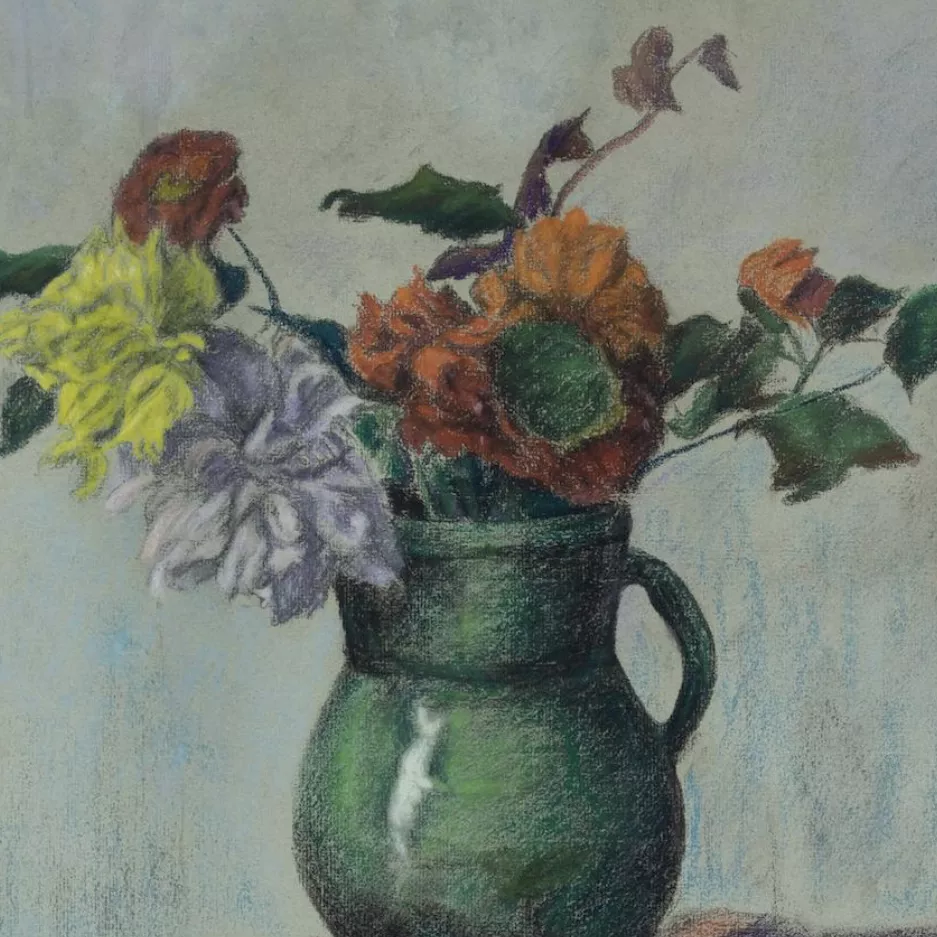
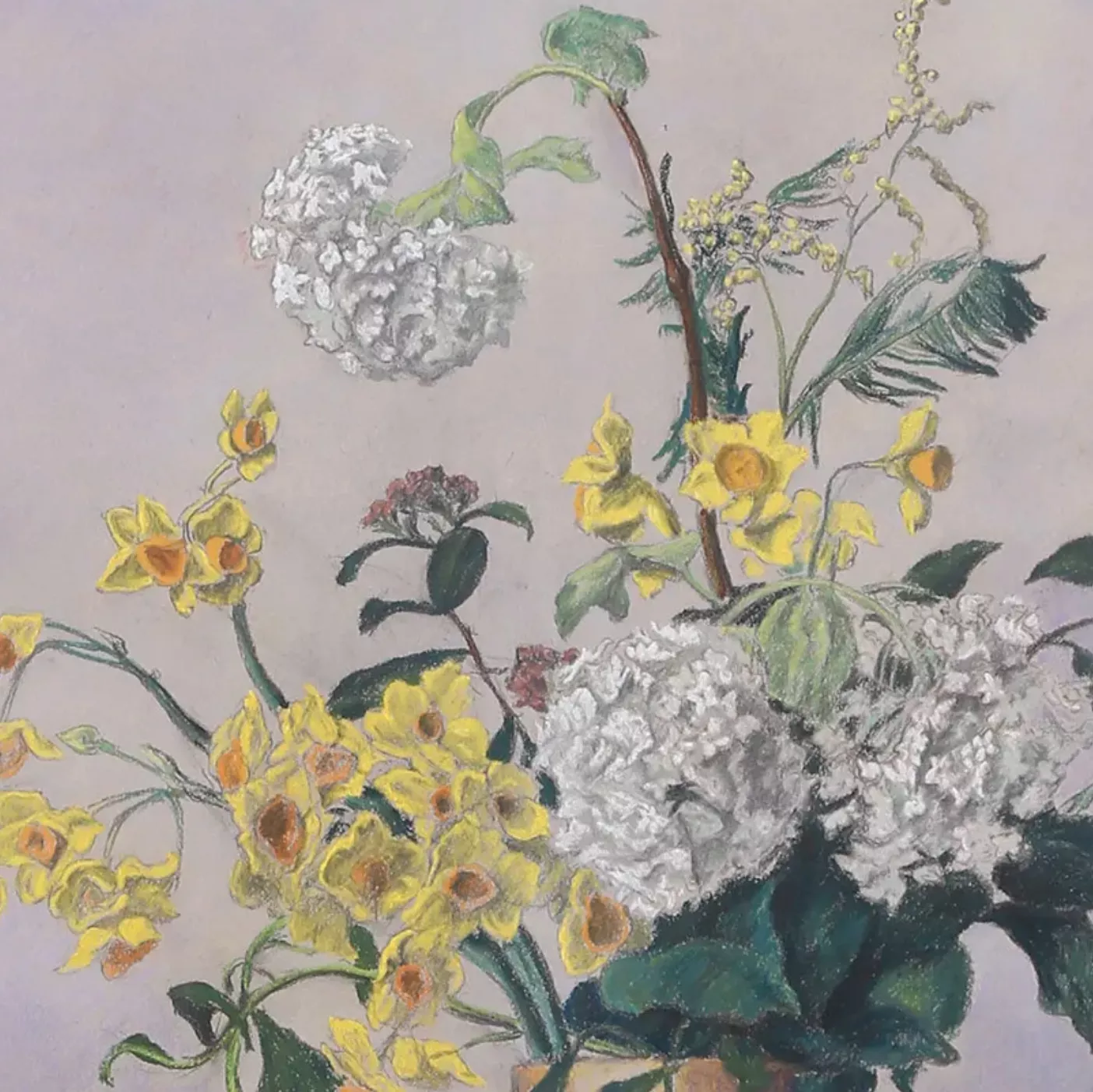
Paul Élie Ranson, his life, his work
Paul Élie Ranson (1861 - 1909) was born in Limoges. The son of a drawing school director, he was introduced to the plastic arts at an early age. He trained at the École des Beaux-Arts de Limoges, then at the Beaux-Arts de Paris. He then chose the Académie Julian, where he met Sérusier, Bonnard, Denis and Vuillard, a group of artists who were to form the future nucleus of the Nabi group.
He co-founded the Nabis group in 1888, alongside Paul Sérusier, with the determination to break with academicism and make painting a spiritual language. He took an active part in the Nabis exhibition, notably at the Salon des Indépendants and with the dealer Le Barc de Boutteville.
He carried out several decorative works, creating screens, wall panels, illustrations, theater sets and puppets, in a synthetic and symbolist spirit.
His career is also closely linked to theater and esotericism; he is passionate about spiritualism, theosophy and occultism, and in 1891 founds the Théâtre d'Art et de marionnettes, where he designs the sets and texts, thus blending mysticism and visual art.
Weakened by a chronic illness (probably tuberculosis or an intestinal ailment) he endured difficult years punctuated by frail health towards the end of his life. He died prematurely in Paris at the age of 47.
Although he is less well-known today than Bonnard or Vuillard, he was rediscovered in the 20th century as a singular representative of Nabi symbolism, at the crossroads of esotericism, Art Nouveau and decorative painting.
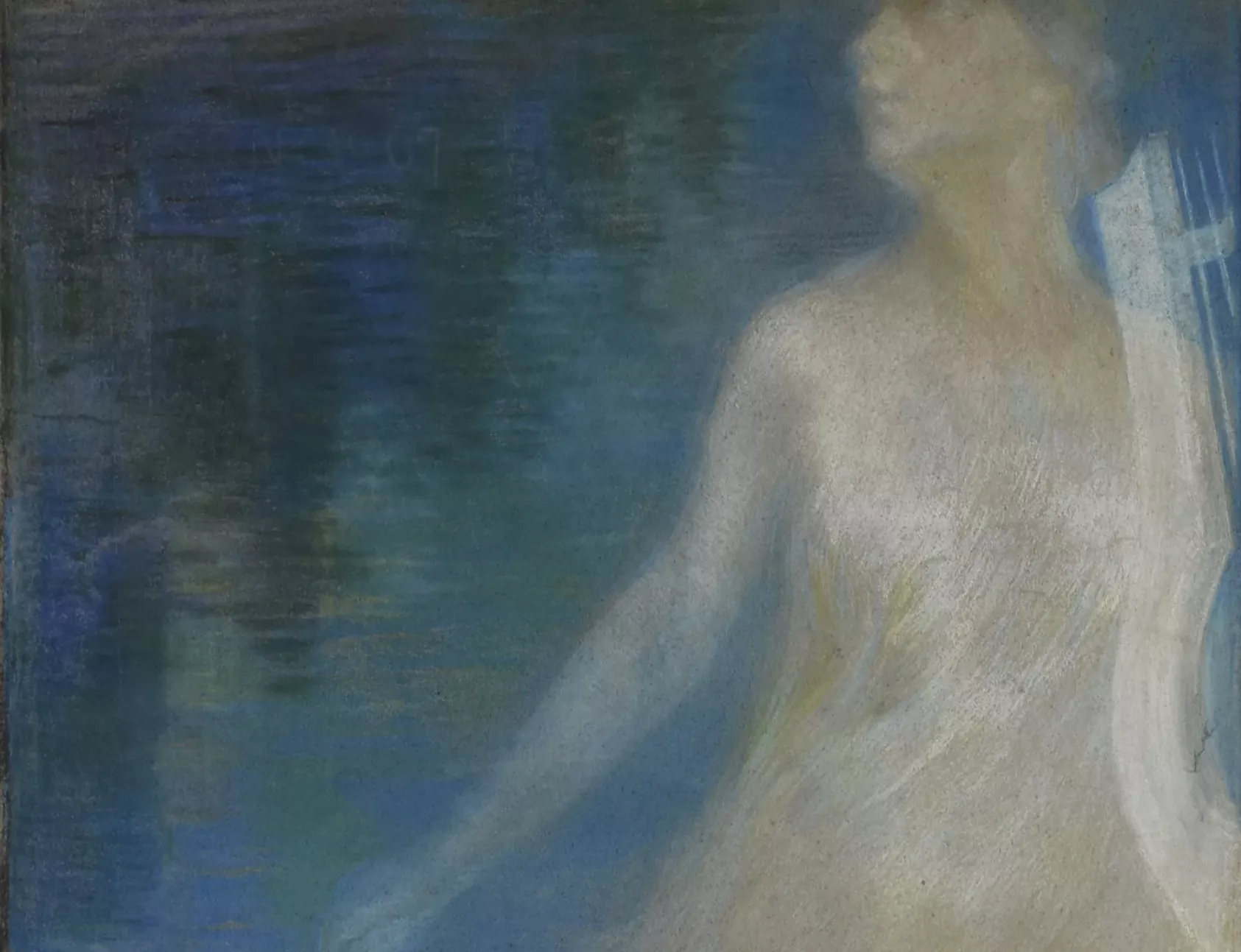
Focus on Les sorcières autour du feu, Paul Élie Ranson, 1891
The work depicts an occult and ritualistic scene, a circle of naked witches, crouching around a fire, in a stylized nocturnal passage. The composition is constructed in rotation, the bodies forming a ring around the central flame, reinforcing the effect of magical ritual.
There is an absence of precise narration : this is not a narrative but a suspended scene, like a dream or a symbolic vision. The painting's atmosphere is designed to be strange and bewitching: the bodies are pale, the attitudes frozen, the dark background and the flames suggest a scene between magic, sleep and hypnosis.
The circle, the fire and the ritual nudity allude to the occult practices and theosophical beliefs dear to Ranson. He also alludes to the witch as a figure of feminine power: far from caricature, women here are almost sacred, like priestesses of an ancient knowledge.
Shapes are outlined and worked with solid colors. The bodies are stylized, with clean contours, the colors are laid down in broad matte areas without modeling, in the Nabi spirit.
The palette used by the artist is dark and contrasting, with deep ochres, reds and blacks dominating, accentuating the nocturnal and sacred character of the scene.
This is a deliberate simplification, since Ranson was looking for an image-symbol rather than a realistic scene, in the manner of the Japanese prints he admired.
The work thus blends archaism (witchcraft, fire,) and avant-garde (stylization, schematization), in order to propose a painting that speaks to the unconscious.
This vision of feminine magic and the initiatory circle can also be read as a projection of Ranson's own spiritual universe.
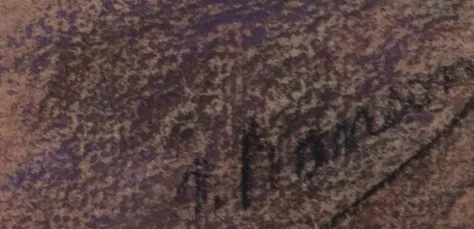
His signature
Not all of Paul Élie Ranson's works are signed.
Although there are variations, here's a first example of his signature.
Expertise your property
If you happen to own a work by Paul Élie Ranson, request a free appraisal without further delay via our form on our website.
A member of our team of experts and chartered auctioneers will contact you promptly to provide you with an estimate of the value of your work, as well as ad hoc information about it.
If you are considering selling your work, you will also be accompanied by our specialists in order to benefit from alternatives for selling it at the best possible price.
.Estimate in less than 24h
Discover in the same theme

Rating and value of works, drawings, paintings by Alfred Ste...
Alfred Stevens was a 19th-century realist painter who produced works that are highly valued on the auction market.
Learn more >

Rating and value of paintings by Gustave Jacquet
Gustave Jacquet is a highly regarded painter of portraits and genre scenes, whose works have a certain value at auction.
Learn more >

Rating and value of drawings, pastels and watercolors by Éli...
Elie Repin is a 19th-century Russian realist painter whose drawings are highly prized at auction.
Learn more >
D'autres tableaux modernes figuratifs vendus aux enchères

Estimated 800 - 1.500
Jean Roger SOURGEN (1883-1978) Trees and dunes Oil on panel

Estimated 3.000 - 5.000
Georges LAPCHINE (1885-1951) The port of St Tropez Oil on canvas

Estimated 18.000 - 30.000
Charles CAMOIN (1879-1965) "Le Port de Marseille, 1928" Oil on canvas.

Estimated 1.500 - 3.000
Jean VANDEN EECKHOUDT (1875-1946), Basket of persimmons, Oil on canvas

Estimated 2.000 - 4.000
Charles LACOSTE (1870-1959) Starry night, Oil on paper mounted on canvas

Secure site, anonymity preserved

Auctioneer approved by the State

Free and certified estimates
Frequently asked questions
-
Who was Paul Élie Ranson, and what was his artistic context?Paul Élie Ranson (1861–1909) was a painter and co-founder of the Nabis group, a movement that broke with academic tradition to transform painting into a spiritual language. A Symbolist and mystical artist, he was known for his keen interest in esotericism, theosophy, and the occult, which he incorporated into his decorative compositions featuring outlined forms and vivid colors. His work bridges Art Nouveau and Symbolism, exploring the fringes of consciousness and the sacred.
-
What is the price range for Paul Élie Ranson's paintings, drawings, and works of art?The prices of Paul Élie Ranson’s works vary considerably depending on the technique used. Prints sell for between €30 and €20,000, drawings and watercolors for between €60 and €175,000, and paintings for between €700 and €400,000. In 2020, a major oil on canvas, *Three Bathers with Irises*, sold for €400,000, exceeding its initial estimate of €250,000 to €350,000.
-
How can you authenticate a work by Paul Élie Ranson?To authenticate a work attributed to Paul Élie Ranson, we recommend that you request a free, no-obligation appraisal using the form on the Auctie's website. A state-certified expert or auctioneer will examine your item and provide you with an accurate estimate of its current market value within 48 hours.
-
Is this the right time to sell a work by Paul Élie Ranson?Yes, this is a good time. Paul Élie Ranson is currently highly valued on the art market, particularly for his paintings, and is appreciated by collectors. His status as a unique figure in Nabi Symbolism and his rediscovery in the 20th century have further fueled interest in his works.
-
How does the appraisal process work at Auctie's?Appraisals at Auctie's are free and non-binding. Simply fill out a form on our website. A member of our team of experts and licensed auctioneers will contact you promptly to examine your item and provide you with an estimate of its value, along with relevant information. If you’d like to sell, we’ll offer you options to sell your piece at the best possible price.
