



Belgian Art Market: Valuation and Auctions

Symbolism, Surrealism, and Flemish Modernism: The value of Belgian art varies greatly depending on the artist, the period, and the quality of the work.
Below you’ll find all our valuation guides dedicated to Belgian art—including Symbolist, Surrealist, Modern, and Contemporary Belgian artists. Each guide details the price ranges observed at auction and the factors that determine a work’s value before it is entrusted to our state-certified auctioneers.
Guides on this art movement
See all guides >
Rating and value of drawings and paintings by Jan Toorop
Jan Toorop is a Dutch Symbolist painter whose Symbolist paintings command high prices at auction.
Learn more >

Rating and value of drawings and paintings by Nicolas Eekman
Nicolas Eekman is an original painter from Brussels whose style defies categorization. His work is reminiscent of the School of Paris and is highly va...
Learn more >

Rating and value of paintings by Pierre Paulus
Pierre Paulus is a Belgian post-impressionist painter who produced many works that are highly valued at auction.
Learn more >

Ratings and values of sculptures, bronzes and marbles by Égi...
Égide Rombaux is a Belgian sculptor whose work falls somewhere between Symbolism and Art Nouveau. Today, his works are highly valued.
Learn more >

Rating and value of paintings by Anna Boch
Anna Boch is an Impressionist artist who produced paintings that are highly rated and valued at auction. 100% free estimate
Learn more >

Rating and value of paintings by Georges Vantongerloo
Georges Vantongerloo is an abstract painter and member of the de Stijl group, whose works are highly regarded and valued.
Learn more >

Rating and value of paintings by Auguste Mambour
Auguste Mambour is a Belgian Expressionist painter who produced works that are highly valued at auction. 24h estimate.
Learn more >

Rating and value of paintings by Théo Van Rysselberghe
Théo Van Rysselberghe is a Belgian painter who has lived through a number of currents, and whose works are quoted and valued at auction.
Learn more >

Rating and value of paintings by Valerius de Saedeleer
Valerius de Saedeleer is a Belgian Expressionist painter who produced works of high value. 24h estimate.
Learn more >

Rating and value of sculptures, bronzes and paintings by Pau...
Paule Bisman is a 20th-century Belgian sculptor and painter. Her works reach unprecedented heights on the art market.
Learn more >

Market Value and Pricing of Jean Le Mayeur's Paintings, Draw...
Jean Le Mayeur is a twentieth-century Belgian luminist painter whose works are highly prized at auction.
Learn more >

Rating and value of paintings by Émile Deckers
Émile Deckers was a Belgian Orientalist painter whose drawings and oil paintings are highly valued at auction.
Learn more >
Understanding the Value of Belgian Art
What Is Market Value in the Belgian Art Market?
The market value of a Belgian artwork refers to the benchmark value assigned to it by the secondary market at a given moment, based on the artist’s identity, the artistic movement to which it belongs, the medium, its condition, the strength of the documentation, and the current state of international demand.
Belgian art spans an exceptionally long and diverse period, ranging from the Golden Age of Old Flemish painting to contemporary street art, including world-renowned movements such as Symbolism and Surrealism.
This remarkable historical continuity—rare for a country of modest size—can be attributed to an Old Flemish pictorial tradition of exceptional technical quality, whose legacy has continued to influence Belgian art throughout the centuries.
The Belgian art market today enjoys solid international recognition, driven in particular by the global renown of the Surrealism of René Magritte and Paul Delvaux, but extending far beyond to include many other movements and artists.
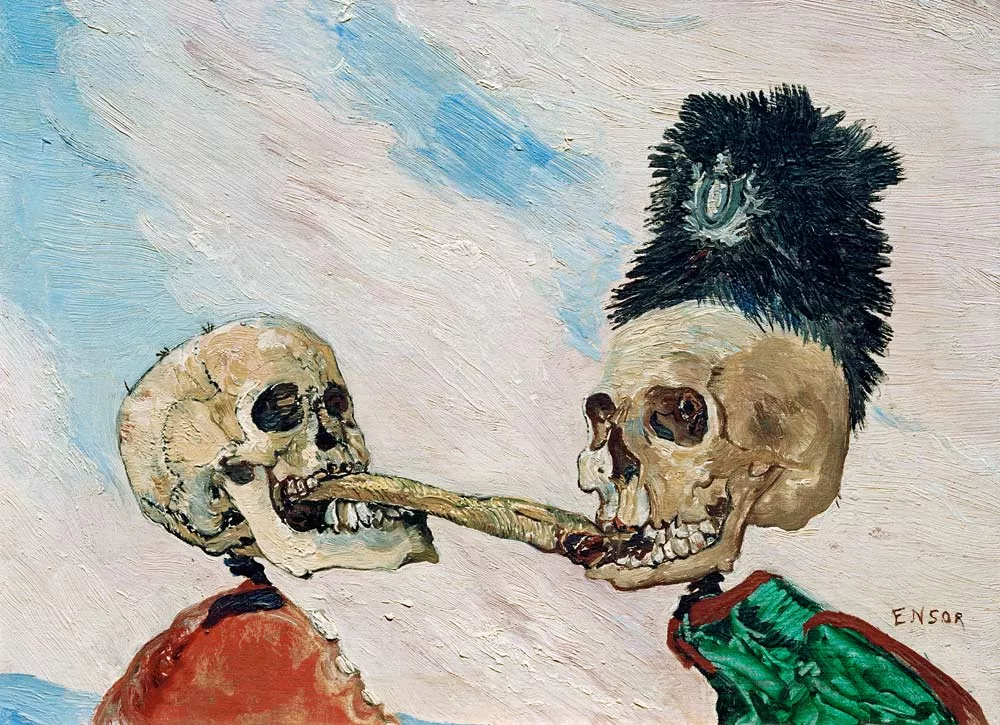
Symbolism, Surrealism, Contemporary Art: Which Art Movements Are the Most Valuable?
Belgian Symbolism, led by figures such as Fernand Khnopff, Félicien Rops, and Jean Delville at the turn of the 19th and 20th centuries, is one of the most important centers of this movement in Europe, alongside French Symbolism.
Its works, imbued with mysticism and an often unsettling sensuality, are highly sought after by specialized collectors worldwide. Flemish Expressionism, which developed primarily around the artistic colony of Sint-Martens-Latem with figures such as Constant Permeke and Gustave De Smet, constitutes a second major center, whose visual power and dark palette left a lasting mark on Belgian art during the interwar period.
Belgian Surrealism, dominated by the world-famous figures of René Magritte and Paul Delvaux, represents the absolute pinnacle of Belgian art’s value on the international market.
Their fame, comparable to that of the greatest names in French Surrealism, places their works among the most sought-after and most expensive in modern art.
The CoBrA movement, founded in 1948 and bringing together Belgian, Dutch, and Danish artists—including the Belgian Pierre Alechinsky—adds a touch of gestural and spontaneous abstraction that rounds out this overview, before Belgian contemporary art and street art took the reins in a market that is now booming.
Movement | Period | Key Artists | Market Demand Level |
Belgian Symbolism | 1880–1910 | Fernand Khnopff, Félicien Rops, Jean Delville, Xavier Mellery | Very strong, international |
Flemish Expressionism (Sint-Martens-Latem) | 1905–1940 | Constant Permeke, Gustave De Smet, Frits Van den Berghe | Active, with a strong Belgian and Dutch market |
Belgian Surrealism | 1925–1970 | René Magritte, Paul Delvaux, E.L.T. Mesens, Rachel Baes | Exceptional, among the highest in the world |
CoBrA | 1948–1951 | Pierre Alechinsky, Christian Dotremont (Belgian side) | Very active, international |
Belgian contemporary art | 1970–present | Luc Tuymans, Wim Delvoye, Michaël Borremans | Strongly supported, growing rapidly |
Belgian street art | 2000–present | ROA, various contemporary urban artists | Active, rapidly growing emerging market |
Estimate in less than 24h
The Criteria That Determine the Value of a Belgian Work of Art
The market value of a Belgian work of art is determined first and foremost by the artist’s identity, which has a considerable impact: Magritte and Delvaux occupy the very top of this hierarchy, followed by the great names of Symbolism and Flemish Expressionism.
The subject matter and the period in which the work was created also play a decisive role, particularly in the case of Magritte, whose iconic compositions from the 1930s to the 1960s—featuring his most famous recurring motifs—command the highest prices among his body of work.
The price ranges observed on the secondary market illustrate this breadth. A drawing or work on paper by a second-tier Belgian artist can range from 2,000 to 20,000 euros.
A medium-sized oil on canvas by a well-documented Flemish Symbolist or Expressionist ranges from 30,000 to 600,000 euros, depending on quality and period.
Major compositions by Magritte and Delvaux frequently exceed several million euros and can reach tens of millions for the most iconic pieces, with Magritte ranking among the most expensive 20th-century artists on the international market.
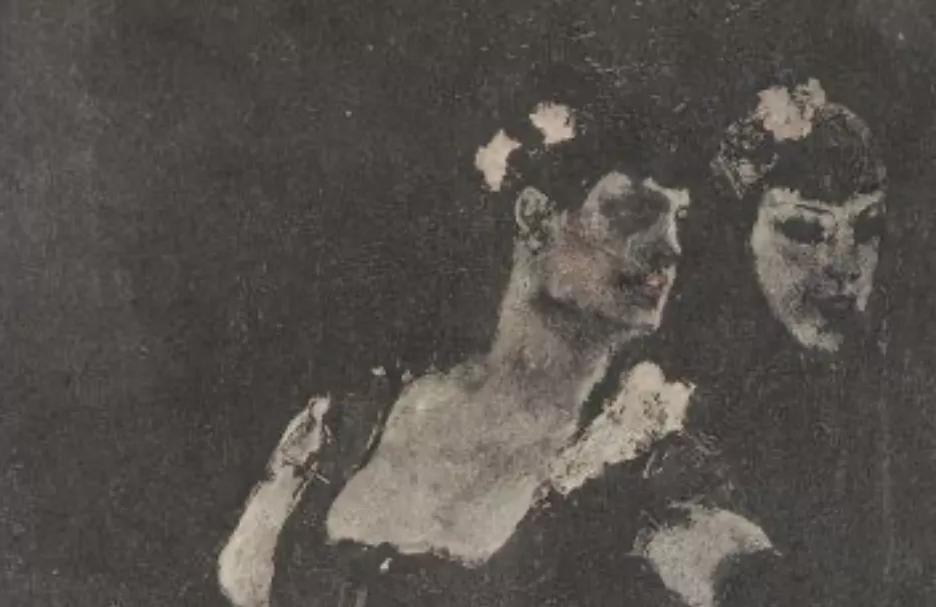
Paintings, Sculptures, Drawings: Belgian Artworks Appraised
The hierarchy of Belgian artworks and its impact on market value
In Belgian art, oil painting naturally occupies the dominant position in the hierarchy of value, particularly the large Symbolist and Surrealist compositions that constitute the most sought-after core of this market.
Drawings and gouaches—of which Magritte produced a significant body alongside his paintings—hold a prominent place, particularly the preparatory studies for his most famous compositions, which are sought after for the insight they offer into the artist’s creative process.
Sculpture, though rarer in the broader Belgian art scene, is present among several artists of the Symbolist movement as well as certain contemporaries, and holds a unique place, valued according to criteria specific to the medium.
Engravings—particularly those by Rops, whose engraved work is of major importance in the history of Symbolist printmaking—round out this diverse overview, offering a variety of entry points into the collection of Belgian art to suit every collector’s budget.
Category | Characteristics | Estimated Price Range | Market Demand |
Large Surrealist composition (Magritte, Delvaux) | Iconic subject, classical period | €1 million — tens of millions | Institutional, exceptional |
Flemish Symbolist or Expressionist painting (major artist) | Top-tier quality, well-documented period | €100,000 — €2 million | Highly sought-after, international |
Painting by a recognized second-tier Belgian artist | Solid quality, identified period | €30,000 — €300,000 | Active market, specialized collectors |
Drawing or gouache (notably Magritte) | Preparatory study, insight into the creative process | €20,000 — €500,000 | Very active, sought-after segment |
Symbolist engraving (Félicien Rops) | Major print, old print | €1,000 — €30,000 | Active market, print collectors |
Sculpture by an artist of the Symbolist movement or a contemporary artist | Rare, three-dimensional interpretation of the aesthetic | €20,000 — 1 million | Strong demand, specialists |
Belgian contemporary artwork (renowned artist) | Tuymans, Delvoye, Borremans, and other contemporary figures | €20,000 — €2 million | Highly sought-after, rapidly rising in value |
Surrealism and Expressionism: the most sought-after names
René Magritte’s works, with their unique ability to transform the most everyday objects into visual enigmas, are among the most sought-after pieces on the global Surrealist art market.
His most famous recurring motifs—men in bowler hats, green apples, and cloudy skies invading enclosed interiors—have become cultural icons whose recognition extends far beyond the circle of art enthusiasts, helping to sustain an exceptionally broad and deep demand.
Paul Delvaux, with his dreamlike architectures populated by somnambulistic female figures, occupies a comparable—albeit slightly lower—position in the hierarchy of the Belgian surrealist market.
Flemish Expressionism from Sint-Martens-Latem, led by Constant Permeke—whose powerful brushwork and earthy palette evoke an unapologetic peasant robustness—appeals to collectors drawn to this aesthetic of raw power, which breaks with the more intellectual refinement of the Symbolism that preceded it.
The works of this artistic colony, long undervalued compared to Surrealism on the international market, have undergone a significant revaluation in recent years, driven by a resurgence of critical and institutional interest.
Estimate in less than 24h
Contemporary Art and Belgian Street Art: Values on the Rise
Monumental Sculpture, Public Art, and Murals
Over the past few decades, Belgian contemporary art has produced a generation of artists whose international recognition continues to grow, particularly in the fields of monumental sculpture and public art.
Wim Delvoye, whose provocative and technically masterful sculptures have been exhibited in the world’s leading institutions, exemplifies this vitality of contemporary Belgian art, whose value is driven by strong and diverse international demand.
Belgian street art, a more recent addition to the formal auction market, is experiencing a notable rise, driven by collectors’ growing interest in this form of urban expression.
Large-scale murals—when they can be detached from their surfaces or when they exist in the form of transportable works, prints, canvases, are generating an emerging yet already significant demand, particularly from a new generation of collectors who are younger than those traditionally active in the market for antique and modern art.
Belgian Contemporary Artists on the Art Market
Luc Tuymans, whose paintings in pale monochromatic tones explore collective memory and the gray areas of European history, is today one of the world’s most highly valued contemporary painters, with his works regularly fetching several hundred thousand—or even several million—euros at public auctions.
Michaël Borremans, whose unsettling paintings evoke the old Flemish masters while exploring a resolutely contemporary imagination, enjoys comparable recognition.
These artists attest to the enduring vitality of Belgian creativity on the international art scene, and their market value—still developing in comparison to the great historical names—offers prospects for appreciation that discerning collectors are closely monitoring.
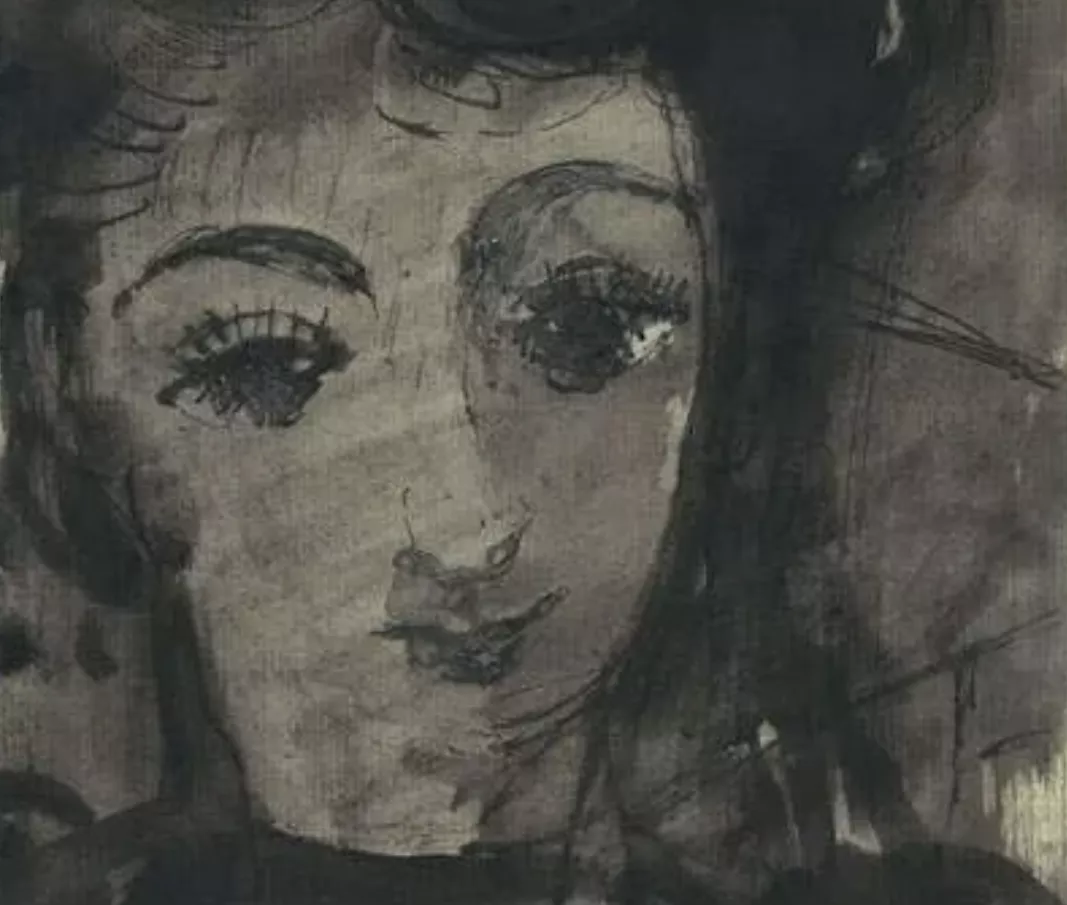
Get a Free Appraisal of a Belgian Artwork
A certified appraisal by a licensed auctioneer in less than 24 hours
Appraising a Belgian work of art requires extensive knowledge of several centuries of artistic creation and a diverse range of movements with very different market dynamics, from Symbolism to contemporary urban art.
A licensed auctioneer has the necessary training to precisely situate a work within this complex landscape and to assess its place within the artist’s body of work, whether the artist is a historical master or an emerging contemporary artist.
Auctie’s offers this expertise free of charge, with a certified response within 24 hours.
Whether you’ve inherited a Symbolist painting, wish to have a Magritte drawing or a work of contemporary Belgian art appraised, or are considering compiling an estate inventory, the process is the same: submit your piece to a trained eye capable of accurately assessing its value.
What you need to provide for an online appraisal
For a painting, clear photographs of the front and back of the work are essential, along with a close-up of the signature and any inscriptions on the back of the support, the precise dimensions of the composition, and any known provenance information: gallery label, purchase invoice, previous certificate of authenticity, or reference in an exhibition catalog or specialized publication.
For contemporary artworks, any certificate of authenticity issued by the artist or their gallery at the time of acquisition must be retained and provided, as it is a key factor in the appraisal.
For drawings and prints, the condition of the paper must be documented: pinholes, foxing, creases, and discoloration. In cases of doubt regarding attribution—particularly for works presented as being by Magritte, whose fame has led to the circulation of forgeries—a thorough physical examination will be offered before any steps are taken to put the work up for sale.
Signature, provenance, and authenticity: the pillars of valuation
Signatures, Seals, and Certificates: Their Impact on Value
The authentication of a Belgian work of art relies on a set of converging indicators, the nature of which varies depending on the period and the artist in question.
For historical works, the signature, stylistic analysis, and consultation of archives are the primary tools of expertise.
For contemporary artworks, the certificate of authenticity issued by the artist or their gallery at the time of creation, as well as the work’s inclusion in the catalog or database maintained by the artist’s studio, constitute documentary evidence that is just as decisive as the signature itself.
For major artists of the Surrealist movement, authentication committees or catalogs raisonné are the authoritative sources in the market.
Magritte’s work is documented by the catalog raisonné edited by David Sylvester, the definitive reference for this artist, while the works devoted to Delvaux are also authoritative in their field.
A work listed in one of these collections enjoys the highest level of scholarly endorsement, which is directly reflected in its market value.
Level of Documentation | Impact on the market value |
Work listed in the artist’s catalogue raisonné | Maximum assurance; often an essential condition for sale |
Work published in specialized literature or exhibited in a major retrospective | Strong scholarly backing; value highly sensitive |
Certificate of authenticity from the artist or their gallery (contemporary art) | Essential guarantee; a virtually indispensable condition of sale |
Work accompanied by a written appraisal from a recognized expert on the artist’s body of work | Good guarantee; facilitates the sale and reduces risk |
Work with a legible signature and documented provenance | Solid foundation; reliable estimate and narrow price range possible |
Work without documentation or signature | Increased uncertainty; estimate based solely on stylistic analysis |
Provenance and Condition: Their Impact on Value
The provenance of a Belgian work of art is a decisive factor in building trust in the market, particularly for historic pieces whose chain of ownership warrants careful documentation.
A work whose history can be traced through recognized historic dealers or a private collection documented over several generations enjoys a legitimacy that buyers directly factor into their offers.
For contemporary artworks, direct provenance from the gallery representing the artist is the strongest argument for value.
Condition is the other key factor, with specific considerations depending on the period. For historical works, hairline cracks, old repainting, and abrasive cleaning must be identified through examination under raking light and ultraviolet light.
For contemporary art, which sometimes incorporates non-traditional materials, the long-term stability of these materials must be assessed with particular care, as certain recent techniques pose conservation challenges that are not yet well documented by historical perspective.
Sell a Belgian Work of Art at Auction with Auctie's
From the reserve price to the hammer price: how the price is determined
Auctions are the most advantageous method of sale for high-quality Belgian artworks, in a market where the global renown of certain artists—Magritte and Delvaux foremost among them—can generate fierce competition among several international collectors interested in the same piece.
The reserve price, set in consultation with the seller, must be carefully calibrated according to the specific movement and period to which the work belongs, as a significant portion of its value depends on these factors.
For major, well-documented works, the dynamics of the auction can lead to final prices far exceeding initial estimates, as several collectors are prepared to engage in intense competition to acquire iconic pieces of Belgian art.
The auctioneer plays a decisive role here by structuring the auction in a way that fosters this competition among specialized bidders.
Hôtel Drouot and Online Auctions: Reaching the Right Bidders
Auctie’s holds its auctions at Hôtel Drouot, the leading auction house in continental Europe, founded in 1852 and frequented by a dense network of dealers, collectors, and specialists in modern and contemporary art.
For a Belgian work of art, Drouot offers optimal visibility among French and European art lovers in this segment, complemented by online promotion that significantly expands the reach of each auction on an international scale.
An American collector passionate about Magritte, an Asian museum seeking a work by Luc Tuymans, or a Belgian art lover committed to preserving the national heritage can bid in real time from their home countries.
For Belgian art—whose reputation, particularly in the realm of surrealism, extends far beyond the circle of specialists—this international dimension is almost always decisive in securing the best hammer price.
Estimate in less than 24h
Estate Planning, Inheritance: Valuing an Inherited Belgian Work of Art
Inventory and Distribution of an Estate
Belgian works of art frequently appear in the estates of families with ties to Belgium or who have built up a collection through travels or acquisitions throughout the 20th century.
These pieces, sometimes held without their current owners knowing their exact value, can represent a significant asset in an estate, particularly given the remarkable rise in the value of Belgian Surrealism and Belgian contemporary art over the past several decades.
Auctie’s regularly works alongside notaries to compile comprehensive estate inventories that include Belgian works of art. Each piece is appraised individually: precise description, technique and medium, dimensions, condition, attribution, and an estimate of market value as of the reference date. The resulting report is an official document that is legally enforceable and may be included in the estate file without reservation.
Confidentiality and Anonymity Preserved
The circumstances leading to the appraisal of a Belgian work of art are often personal and sensitive: inheritance, divorce, estate reorganization, or the decision to sell after a long period of ownership. Auctie’s handles each case with absolute discretion.
The owner’s identity is never disclosed to third parties without their explicit consent, and the works may be offered for sale under complete anonymity if the owner so desires.
This confidentiality is a core commitment of Auctie’s, applicable at every stage of the relationship, from the initial contact through to the receipt of the proceeds from the sale.
Entrust the appraisal of your Belgian artwork to Auctie’s
A Belgian work of art deserves an appraisal that reflects the richness and exceptional historical continuity of this national artistic tradition.
From Symbolism to street art, including the world-renowned Surrealism of Magritte and Delvaux, the diversity of movements and market dynamics that characterize them requires a trained eye capable of accurately contextualizing each work.
Auctie’s guides you from the initial appraisal through to the final auction sale, offering the expertise of a state-certified appraiser and the discretion your financial decisions deserve. The appraisal is free, confidential, and non-binding, and you’ll receive a response within 24 hours.
Discover in the same theme
Rating and value of drawings and paintings by Jan Toorop
Jan Toorop is a Dutch Symbolist painter whose Symbolist paintings command high prices at auction.
Learn more >
Rating and value of paintings by Auguste Mambour
Auguste Mambour is a Belgian Expressionist painter who produced works that are highly valued at auction. 24h estimate.
Learn more >
Rating and value of paintings by Valerius de Saedeleer
Valerius de Saedeleer is a Belgian Expressionist painter who produced works of high value. 24h estimate.
Learn more >
Estimate in less than 24h
Frequently asked questions
-
Quels sont les artistes belges les plus cotés et dans quelles fourchettes de prix se situent leurs œuvres ?René Magritte et Paul Delvaux dominent le marché de l'art belge avec des cotes exceptionnelles : les grandes compositions surréalistes de Magritte dépassent fréquemment plusieurs millions d'euros et peuvent atteindre plusieurs dizaines de millions pour les pièces les plus emblématiques. Les symbolistes comme Fernand Khnopff et les expressionnistes flamands comme Constant Permeke voient leurs huiles osciller entre 30 000 et 600 000 euros selon la qualité, tandis que l'art contemporain belge (Luc Tuymans, Michaël Borremans) se situe entre 20 000 et 2 millions d'euros.
-
Comment authentifier une œuvre d'art belge et vérifier sa valeur réelle ?L'authentification d'une œuvre belge nécessite l'expertise d'un commissaire-priseur agréé par l'État, capable de situer précisément l'œuvre dans plusieurs siècles de création artistique et de vérifier sa documentation. Auctie's propose une estimation gratuite et certifiée en moins de 24 heures : il suffit de soumettre votre œuvre avec des photographies nettes du recto et du verso pour obtenir une évaluation fiable et professionnelle.
-
Est-ce le bon moment pour vendre une œuvre d'art belge ?Oui, le marché de l'art belge bénéficie actuellement d'une reconnaissance internationale solide et durable, portée par la notoriété mondiale du surréalisme (Magritte, Delvaux) mais s'étendant bien au-delà. L'expressionnisme flamand connaît depuis plusieurs années une réévaluation sensible, tandis que l'art contemporain belge et le street art belge sont en forte expansion avec une nouvelle génération de collectionneurs.
-
Comment se déroule une estimation d'œuvre d'art chez Auctie's ?L'estimation est gratuite et sans engagement : vous soumettez votre œuvre avec des photographies nettes (recto et verso pour une peinture). Un commissaire-priseur agréé par l'État examine le dossier et fournit une réponse certifiée en moins de 24 heures. Cette expertise professionnelle tient compte de l'identité de l'artiste, du mouvement, de l'état de conservation, de la documentation et de la demande internationale actuelle.
-
Comment vendre une œuvre d'art belge aux enchères ?Auctie's, maison de ventes aux enchères professionnelle, accompagne le vendeur de l'estimation gratuite jusqu'à l'adjudication. Une fois votre œuvre estimée par un commissaire-priseur agréé, vous bénéficiez d'un suivi complet : préparation du lot, catalogage détaillé, mise en vente et promotion auprès des collectionneurs spécialisés du monde entier, en fonction du type d'art belge concerné.
