



Rating and value of sculptures, bronzes and paintings by Paule Bisman

Key takeaways
- Paule Bisman, a Belgian artist (1897–1973) who specialized in bronze, is seeing her market value rise, with works selling for between €50 and €4,000.
- Her bronze sculptures—particularly her busts and female figures—are highly sought after by collectors despite her limited public recognition.
- Auctie’s free appraisal service allows you to authenticate works and obtain an accurate estimate prior to the auction.
If you own a work by or after the artist Paule Bisman, and would like to know its value, our state-approved experts and auctioneers will offer you their appraisal services.
Our specialists will carry out a free appraisal of your work, and provide you with an accurate estimate of its value on the current market.
Then, should you wish to sell your work, we will direct you to the best possible arrangement to obtain the optimum price.
Rating and value of Paule Bisman's works
A French artist, Paule Bisman works mainly in bronze. Lately, her stock has been rising on the art market. Her works are selling for between €50 and €4,000 on the auction market, a substantial delta but one that speaks volumes about the value that can be attributed to the artist's works.
A bronze sculpture, Naïade, recently sold for €4,000 while it was estimated at between €4,000 and €8,000.
Order of value from a simple work to the most prestigious
Technique used | Result |
|---|---|
Drawing | From 50 to 300€ |
Painting | From 60 to 1,000€ |
Bronze | From €40 to €4,000 |
Estimate in less than 24h
Style and technique of artist Paule Bisman
Paule Bisman is a French artist who works mainly with bronze. Her sculptures are characterized by bronze busts, impressionist paintings.
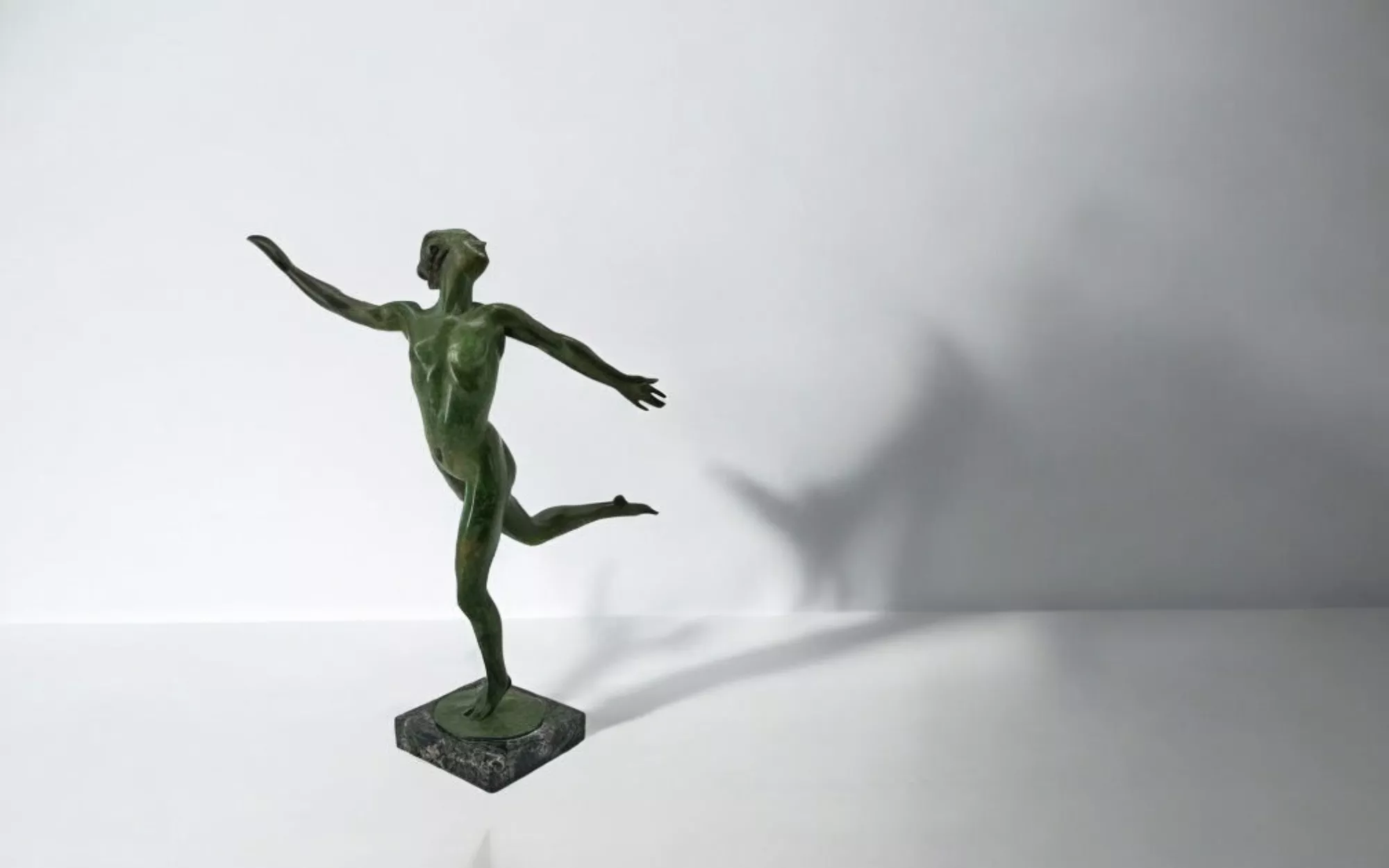
She has produced some porcelain and ceramics but is best known and sought after for her bronzes by collectors. The artist works mainly with human subjects.
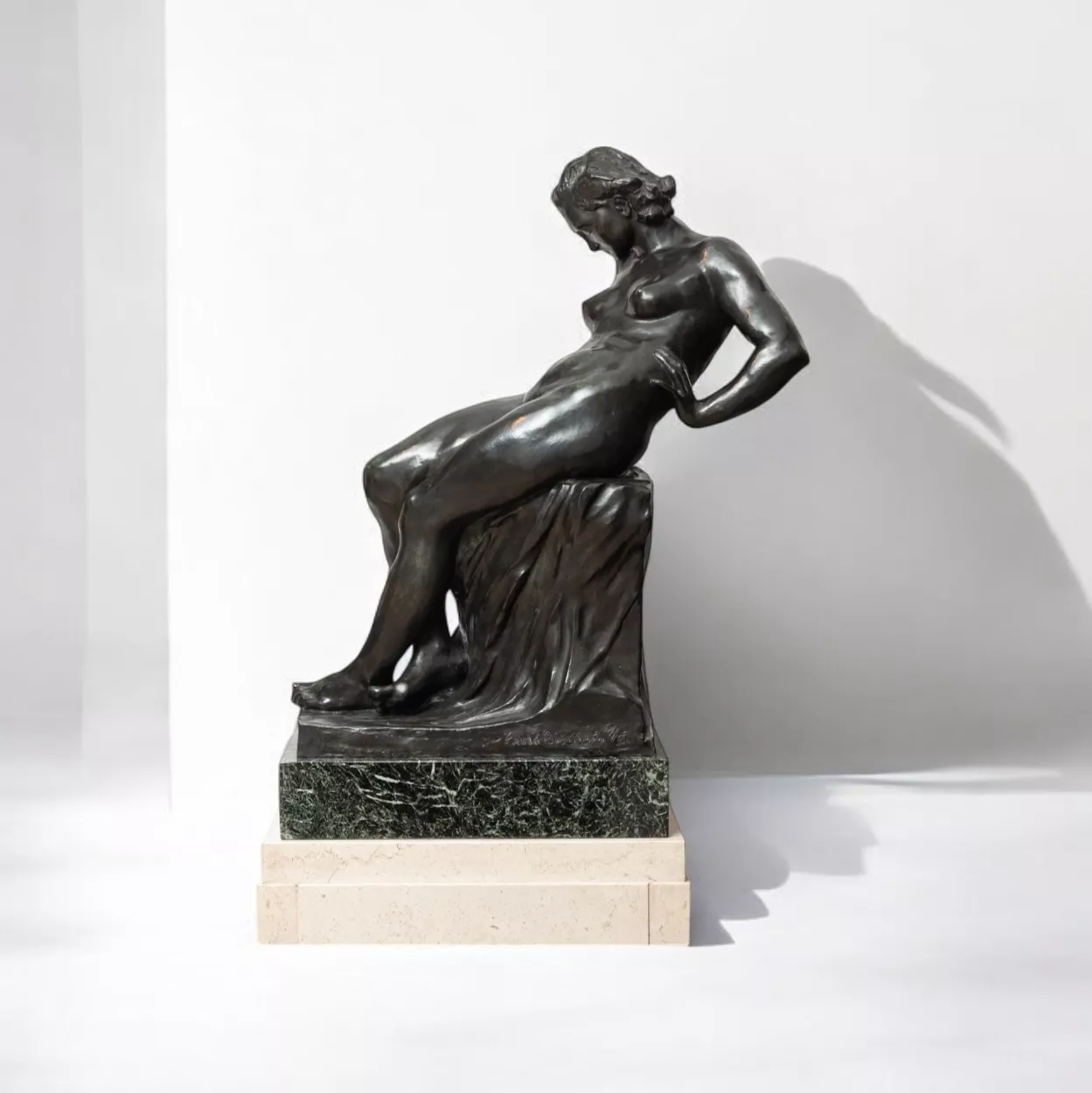
There are many female figures in her work, but also some childlike ones. Her chasing technique is very classical, with no clean lines like those of François Pompon or Yves Klein, for example.
Little known for various reasons - her output is not very large, and her works are quite rare on the auction market.
.
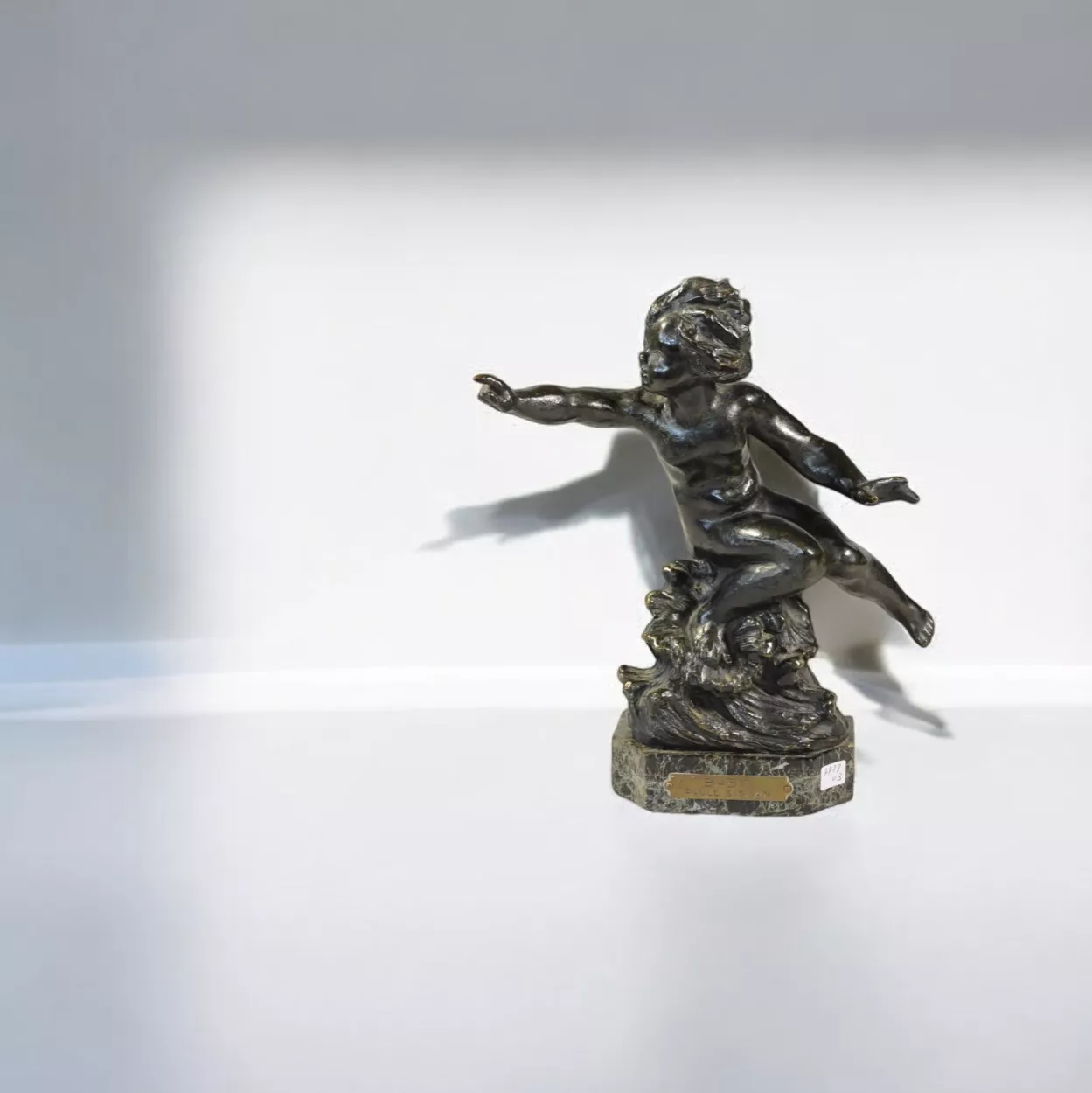
Paule Bisman's career
Paule Bisman (1897 - 1973), was a Belgian painter and sculptor of the 20th century.
She trained at the Nemur middle school, where she first learned landscape painting at the Académie des Beaux-Arts. From 1919, she entered the Ecole des Beaux-Arts in Brussels, where she studied with Herman Richir, Jean Delville, Victor Rousseau and Paul Du Bois.
She quickly gained recognition for her work in academic circles, winning four gold medals as well as the Prix de Rome, the supreme distinction for an artist.
Once her studies were completed, the young artist traveled to France and Paris, as well as to Amsterdam and The Hague in the Netherlands.
Today, some of her paintings are sold at auction, but she is best known as a sculptor. Throughout her career, she alternated between the two mediums, which enabled her to take a more complete approach to her creations.
She was inspired above all by the painters of her native country, particularly those of the 19th century. Her works are exhibited throughout Belgium and in France, where buyers still appreciate her work today.
Twentieth-century bronze
Bronze, a material with ancient roots, experienced a genuine revival in the twentieth century, lending itself flexibly to the many artistic explorations of the time.
This noble metal, appreciated for its durability and ability to capture light, became a favored medium for sculptors seeking to combine tradition and modernity.
Bronze, with its unique texture and patina, imbues each work with unequalled depth and richness, making it a medium of choice for expressing nuance and emotion.
At the turn of the century, sculptors influenced by the Art Nouveau and Art Deco movements, such as Antoine Bourdelle and Aristide Maillol, exploited the fluidity of bronze to create works where every curve seems to vibrate with life.
Bourdelle, for example, relies on the robustness of bronze to give his figures an impressive monumentality, while Maillol favors the softness of female forms, where bronze captures an almost tangible warmth.
The material here becomes not just a support, but an integral part of the emotion conveyed by the work.
The 1920s and 1930s saw bronze flourish in the hands of the modernists. Pablo Picasso and Diego Giacometti, among others, appropriated this metal to push back the boundaries of traditional sculpture.
Giacometti, with his elongated figures, uses bronze to explore the fragility of human existence, each sculpture seeming to defy the laws of matter while remaining firmly rooted in reality.
Paule Bisman, a lesser-known but equally remarkable sculptor, contributes her own vision of bronze during this period. She uses the metal to capture animal scenes, as well as portraits imbued with gentleness and lightness.
Her sculptures of small animals, created with admirable finesse and precision, show how bronze, often associated with strength and power, can also evoke fragility and gentleness.
Bisman succeeded in making bronze an intimate material, capable of conveying the subtlest details, from the feathers of a bird to the fur of a rabbit.
The post-war period pushed experimentation even further. Germaine Richier and César, for example, explore new textures, transforming bronze into a raw, almost savage material.
Richier, with his tormented figures, shows a jagged bronze, reflecting the anxieties of the time, while César, with his compressions, plays on the plasticity of metal, bending and twisting it to make it a pure expression of creative energy.
Bronze thus spans the 20th century, adapting to every artistic movement, whether abstract or figurative.
Artists such as Henry Moore and Alexander Calder exploit its ability to translate organic or geometric forms, creating works that dialogue with the surrounding space.
Finally, bronze in the 20th century embodies a perfect balance between tradition and innovation. It lends itself to all manner of daring, while remaining rooted in ancestral know-how, offering sculptors an infinite playground in which to express their vision of the world.
Focus on Paule Bisman's self-portrait preserved at the Maison du Roi
This painting by Paule Bisman, a self-portrait inspired by 19th-century Flemish painters, reveals an intimate dialogue between the artist and her artistic heritage. At first glance, this portrait captivates with its apparent simplicity and the softness that emanates from the artist's face.
The dark background, typical of the Flemish masters, highlights the luminosity of the complexion and the subtleties of the shadows, reinforcing this impression of depth and intensity.
The influence of the Flemish painters is clearly seen in the mastery of light and the delicacy of detail.
The artist's brown curls are treated with meticulous precision, each strand seeming to catch a sliver of light, in the manner of those ancient portraits where every detail is a celebration of the real.
Bisman's slightly cornered gaze expresses a quiet, almost mischievous confidence, while inviting the observer into a silent dialogue. There's a glint of defiance and introspection in his eyes, a window onto his inner world.
The choice of chromatic palette, dominated by warm, earthy hues, also evokes Flemish influences. Touches of red and ochre that blend into the brown of the background create a soothing, yet vibrant chromatic harmony that enlivens the portrait.
The golden necklace adorning the artist's neck immediately catches the eye, contrasting with the simplicity of the garment. This glittering detail recalls the play of light and subtle richness present in Flemish works, where every accessory has a meaning, a story to tell.
Paule Bisman's self-portrait is more than just a technical study. It embodies a form of artistic statement, in which the artist places herself in a lineage of masters while asserting her own voice.
Bisman's attitude, both gentle and assertive, reveals a strong personality, aware of her talent, yet humble in her approach.
She presents herself here not only as an heir to Flemish tradition, but also as a creator who appropriates this heritage to make something personal and current.
In the end, this painting is a work that brings together past and present, where tradition meets modernity. In it, Paule Bisman demonstrates great technical mastery while infusing an emotional and introspective dimension.
Thus, this self-portrait is much more than a mere physical representation: it is an exploration of the artist's identity, her link with the past and her place in the art world.
Paule Bisman's imprint on her period
Paule Bisman was a well-known and sought-after artist during her lifetime, selling works at high enough prices to make a living from the various commissions she received. Today, her quotation is stable on the auction market.
Although little known today by the general public, her works are very successful on the art market, her sculptures and paintings being prized by many collectors.
Recognizing the signature of the artist
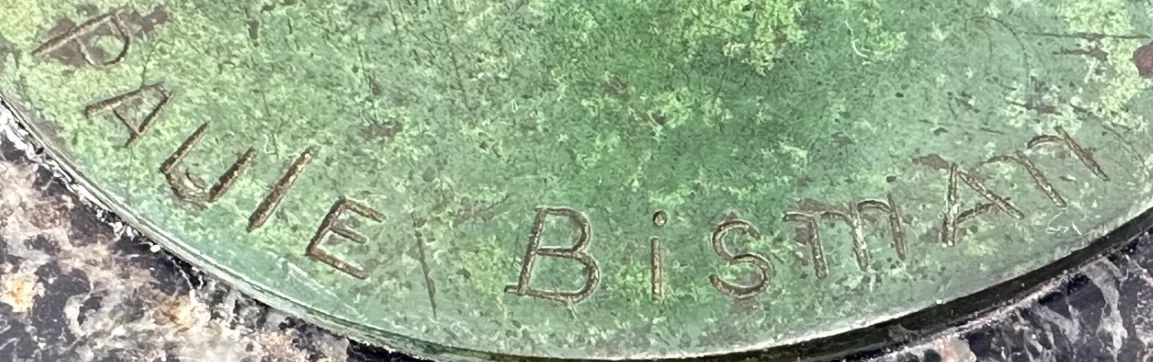
Paule Bisman signs her works in cursive script, often with her surname. Expertise remains essential to authenticate your property.
Knowing the value of a work
If you happen to own a work by Paule Bisman, don't hesitate to request a free valuation via our form on our website.
A member of our team of experts and chartered auctioneers will contact you promptly to provide you with an estimate of the value of your work, as well as ad hoc information about it.
If you are considering selling your work, you will also be accompanied by our specialists in order to benefit from alternatives for selling it at the best possible price.
.Estimate in less than 24h
Discover in the same theme

Rating and value of works, drawings, paintings by Marie Vass...
Marie Vassilief is a 20th-century Cubist artist who produced drawings, collages and oils on canvas that are valued at auction.
Learn more >

Market Value and Price of the Sculptures and Bronzes by Loui...
Louis de Monard is a twentieth-century animal sculptor whose sculptures are highly prized at auction.
Learn more >

Rating and value of sculptures, bronzes by Auguste Rubin
Auguste Rubin is a sculptor of the Art Nouveau period who produced works that are highly rated and valued at auction.
Learn more >
Works from the same period sold at auction

Estimated Between €1,500 and €3,000
Renato CARVILLANI (1896-1986), seated woman, gilded bronze print

Estimated Between €800 and €1,500
Claude Victor BOELZ (b. 1937), gilt bronze and quartz centerpiece

Estimated Between €1,500 and €3,000
César BALDACCINI dit CESAR (1921-1998), Poule Cartier, bronze print

Estimated 3.000 - 5.000
Raphaël DELORME (1885-1962), Le Bain au Harem, oil on isorel

Estimated 500 - 1.000
Yves BENOIST-GIRONIERE (1903-1983) Wild boar and its wild boar, bronze print with brown patina

Secure site, anonymity preserved

Auctioneer approved by the State

Free and certified estimates
Frequently asked questions
-
Who was Paule Bisman, and what is her significance in art history?Paule Bisman (1897–1973) was a 20th-century Belgian painter and sculptor who trained at the Academy of Fine Arts in Brussels under renowned masters. She won four gold medals and the Prix de Rome, a major distinction for an artist. Although less well-known to the general public, she is highly regarded by collectors, particularly for her bronze sculptures depicting busts and female figures, characterized by a classical technique and great finesse.
-
What are the price and value ranges for Paule Bisman's works, broken down by type of object?Paule Bisman's works sell for between 50 and 4,000 euros at auction, depending on the medium and the piece's prestige. Drawings range from €50 to €300, paintings from €60 to €1,000, and bronzes from €40 to €4,000. A prestigious bronze sculpture such as “Naïade” sold for €4,000, demonstrating that her market value is currently on the rise in the art market.
-
How can you authenticate a work by Paule Bisman and determine its value?Expert appraisal is essential for authenticating a work by Paule Bisman. We recommend that you request a free, no-obligation appraisal via our online form. A state-certified expert or auctioneer will contact you shortly to provide a precise estimate of your artwork’s value, share relevant information about it, and advise you on the best sales options if you wish.
-
Is this the right time to sell a work by Paule Bisman?Yes, now is a good time to sell a work by Paule Bisman. Her value is currently on the rise in the art market, and her sculptures and paintings are highly sought after by collectors, despite her limited output and the rarity of her works at auction. At Auctie's, we’ll guide you through the process from appraisal to auction to help you get the best possible price.
-
How does the process of selling a work of art at Auctie's work?At Auctie's, we guide you from start to finish: first, a free, no-obligation appraisal of your artwork by a certified expert, followed by personalized support to determine the best sales strategy. Our specialists will present you with various options to help you sell your item at the best price, right up until it is sold at auction.
