



Rating and value of paintings by Auguste Mambour

Key takeaways
- Auguste Mambour, a Belgian Expressionist (1883–1946), sees his works sell for between €20 and €105,000 at auction, with prices varying depending on the medium.
- Paintings command the highest prices (up to €105,000), while prints sell for between €20 and €3,000, and drawings for between €70 and €14,000.
- His style, characterized by emotional intensity, thick layers of paint, and distorted figures, reflects the influence of early 20th-century Belgian Expressionism.
If you own a work of art by artist Auguste Mambour or based on his work and would like to know its value, our state-approved experts and auctioneers will guide you.
Our specialists will carry out a free appraisal of your work, and provide you with an accurate estimate of its value on the current market.
Then, should you wish to sell your work, we will direct you to the best possible arrangement to obtain the optimum price.
Artist's rating and value
Thanks to his prolific artistic output, Auguste Mambour is commonplace in auction rooms. A quoted Belgian expressionist artist, his works sell for significant amounts on the auction market.
Today, the prices at which his works sell on the auction market range between €20 and €105,000, a considerable delta but one that speaks volumes about the value that can be attributed to Mambour's works.
Coveted by collectors, works by Auguste Mambour can fetch tens of thousands of euros at auction, as evidenced by his oil on canvas Fragment, dating from 1924, sold for €105,000 in 2013, whereas it was estimated at between €40,000 and €60,000.
Order of value from the most basic to the most prestigious
Technique used | Result |
|---|---|
Estamp - multiple | From €20 to €3,000 |
Drawing - watercolor | From €70 to €14,000 |
Painting | From €200 to €105,000 |
Estimate in less than 24h
Style and technique of artist Auguste Mambour
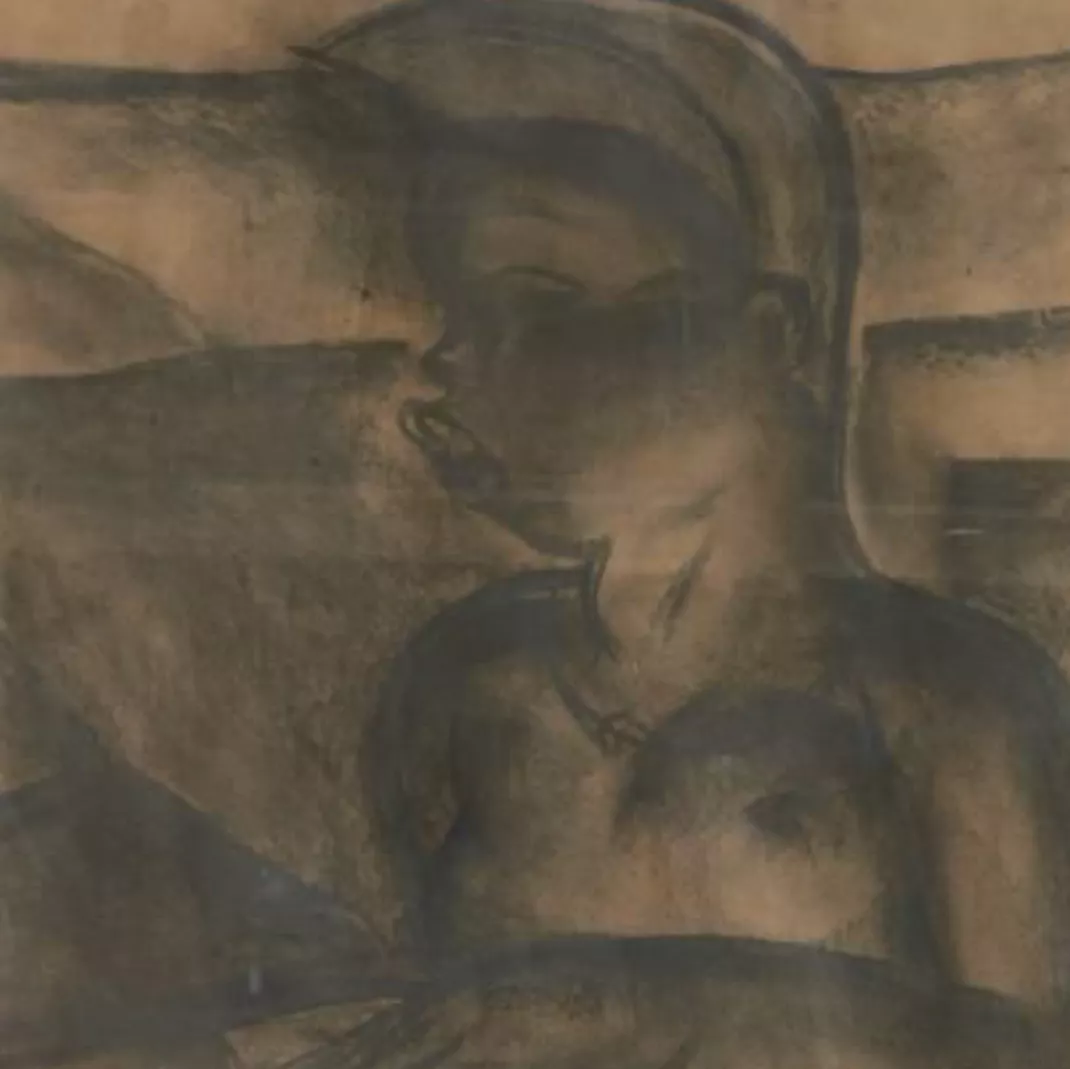
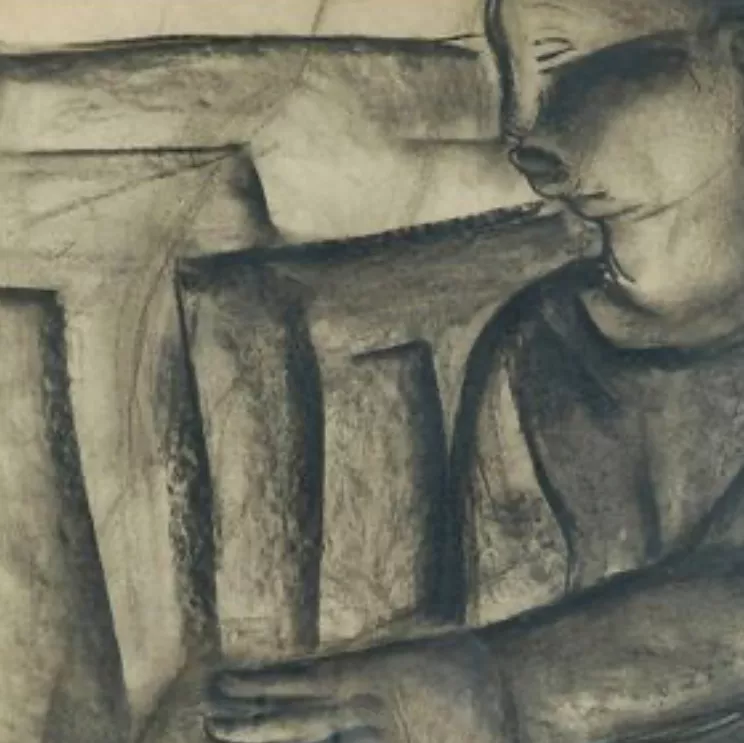
The style and technique of Auguste Mambour, a key figure in Belgian expressionism, are characterized by a rare emotional intensity, embodied in compositions where matter and light engage in a tumultuous dialogue.
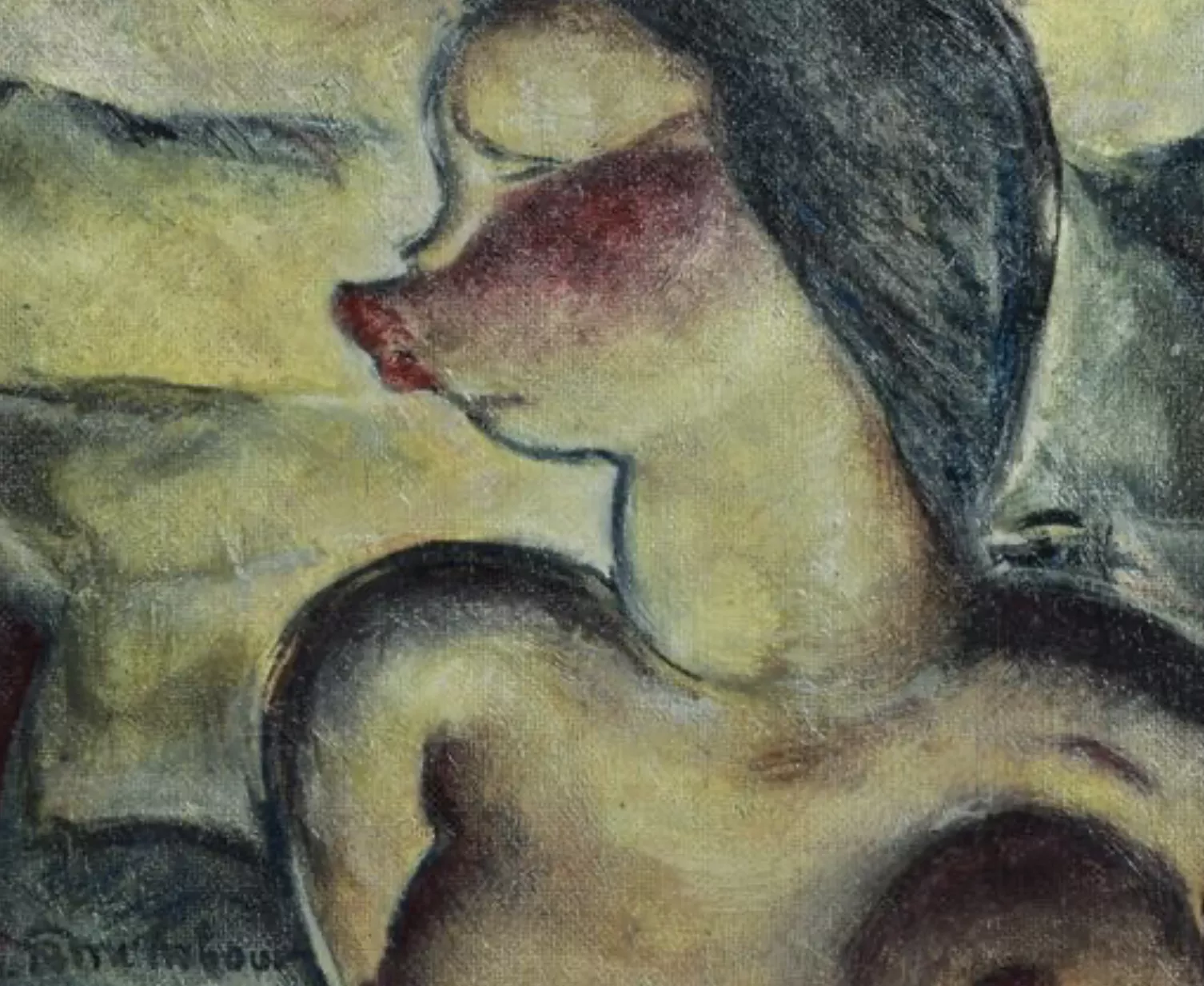
Deeply rooted in an exploration of human moods, his works favor a dense, saturated palette, where deep reds, dark blues and vibrant ochres seem to spring directly from the canvas.
Mambour adopts a broad, spontaneous gestural style, applying paint in thick, nervous layers that lend his paintings an almost sculptural texture.
This raw materiality, sometimes accentuated by scratches and superimpositions, reflects a visceral quest to capture the moment, the fleeting emotion, and the latent tensions that animate his subjects.
The human figures at the heart of his work often appear distorted, fragmented, as if caught in an inner movement that defies immobility.
Their heightened expressivity is part of a tradition in which the individual becomes a mirror of universal anxieties and impulses, recalling the influence of Ensor and Permeke. However, Mambour does not limit himself to reproducing the codes of Expressionism.
Through a unique treatment of shadows and reflections, he infuses his compositions with an atmospheric, almost mystical dimension, where the real dissolves into the imaginary.
By defying aesthetic conventions to let matter and emotion speak for themselves, Mambour forges a pictorial language of unparalleled power, where the act of painting becomes a veritable catharsis.
The career of Auguste Mambour
Auguste Mambour, Belgian Expressionist painter, was born in Ghent in 1883 at a time of artistic and social ferment. Trained at the Academy of Fine Arts in his hometown, he soon developed a fascination for the human condition and its contradictions.
Influenced by Symbolism while steering clear of its ethereal subtleties, Mambour soon turned to a more visceral style of painting, driven by the burgeoning Expressionist movement.
His early works, exhibited as early as 1910, already reflect this desire to translate inner turmoil through tormented compositions.
The years of the First World War marked a decisive turning point in his career. Confronted with the violence and fragility of existence, he found in painting an outlet for his own anguish.
His portraits of soldiers and scenes of desolation bear witness to a lucid and deeply human gaze, where pain mingles with palpable spiritual strength.
On his return, Mambour made a name for himself on the Belgian art scene, taking part in major group exhibitions celebrating the avant-garde, while maintaining a certain distance from overly academic circles.
In the 1920s and 1930s, his work evolved towards partial abstraction, where color and texture took precedence over figurative contours.
Widly acclaimed for his ability to blend emotional intensity and technical virtuosity, Mambour left a legacy at his death in 1946 that continues to inspire generations of expressionist artists.
Focus on The Silent Soldier, Auguste Mambour, 1917
Auguste Mambour's The Silent Soldier, painted in 1917, illustrates with poignant intensity the emotional and psychological complexity underlying his art. This painting, a medium-format oil on canvas, depicts a seated soldier, his gaze lost in an indefinable distance.
The dark, abstract background evokes a devastated landscape, while the soldier's body, fragmented by angular lines, seems to vacillate between presence and erasure, translating the fragility of the human soul in the face of war.
This painting testifies to Mambour's mastery of transcending simple figuration to explore a spiritual and universal dimension. The palette used, dominated by earthy hues and touches of blood-red, recalls the invisible wounds inflicted by conflict.
Through these colors, the artist manages to suggest a constant tension between life and death, hope and despair. The texture, marked by impasto and scratched areas, adds a raw, almost tactile physicality, reinforcing the impression of an inner struggle.
The soldier's face, barely sketched, is the emotional center of the work. It is not a realistic portrait, but a synthesis of all the expressions of human pain and resilience.
His eyes, empty but charged with meaning, invite the viewer to contemplate not an individual, but a collective condition: that of man broken by a violence beyond him.
Mambour succeeds here in capturing what words cannot express, using the tools of expressionism to reveal universal truths.
The spatial treatment is equally remarkable. The absence of traditional depth creates a compression that intensifies the emotional weight of the scene. The soldier seems crushed by an oppressive space, reflecting the mental claustrophobia engendered by the horror of war.
This plastic approach, where the artist manipulates perspective and proportion to serve emotion rather than reality, characterizes Mambour's unique language.
Finally, Le Soldat Silencieux is part of an artistic continuity while asserting its individuality.
While there are echoes of German Expressionism, notably in the works of d'Otto Dix, or in Max Oppenheimer for Austrian Expressionism, Mambour stands out for a more subtle, less frontal approach, where suggestion replaces explicit denunciation.
It's not just a matter of bearing witness, but of questioning: what happens to humanity in circumstances where it seems to fade away?
Thus, this work by Auguste Mambour is much more than a representation of a soldier. It is a reflection on the human experience in the face of the inexpressible.
It confronts us with our own limits, our own silences, and reminds us with rare force that art can be a space for dialogue between the individual and the universal, between intimate pain and collective memory.
Auguste Mambour's imprint on European Expressionism
Auguste Mambour's imprint on European Expressionism manifests itself in a unique synthesis where the emotional force of form meets singular spiritual depth.
Away from the sometimes garish exaggerations of his contemporaries, Mambour developed a language in which visual intensity is combined with a silent meditation on the human soul.
His works, often marked by solitary figures and tense atmospheres, transcend simple figuration to achieve a universal scope.
While echoes of German Expressionism can be found in his work, particularly in the emphasis placed on suffering and anguish, Mambour differs in a more introspective, almost mystical approach, where the fragmentation of forms becomes a metaphor for the human condition.
His compositions, oscillating between figuration and abstraction, seem to contain within them a tectonic force, a latent energy ready to emerge, revealing the underlying tensions of his time.
In an artistic movement often driven by tumult and excess, Mambour has left a mark both discreet and indelible: that of an artist for whom the cry must never overwhelm the whisper.
Through this expressive subtlety, he enriched the language of expressionism by integrating a more intimate, meditative dimension, which continues to inspire and question the history of modern art.
His signature
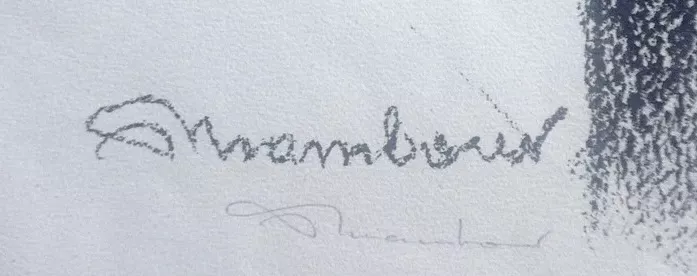
Not all works by Auguste Mambour are signed.
Although there are variations, here is a first example of his signature:
Expertise your property
If you own a work by Auguste Mambour, don't hesitate to request a free appraisal by filling in our online form.
A member of our team of experts and certified auctioneers will contact you to provide an estimate of the market value of your work.
If you are considering selling your work, our specialists will also guide you through the various alternatives available to obtain the best possible price, taking into account market trends and the specific features of each object.
Estimate in less than 24h
Discover in the same theme

Value and quotation of works, paintings by Jean Fusaro
Jean Fusaro, a 20th-century painter, produced a number of important works that are appreciated and quoted on the art market. Estimated in 24h.
Learn more >

Rating and value of drawings and paintings by Nicolas Eekman
Nicolas Eekman is an original painter from Brussels whose style defies categorization. His work is reminiscent of the School of Paris and is highly va...
Learn more >

Rating and value of drawings and paintings by Vladimir Baran...
Vladimir Baranoff Rossiné is a painter associated with Cubism whose works command high prices and are highly valued at auction.
Learn more >
D'autres tableaux expressionnistes vendus aux enchères


Secure site, anonymity preserved

Auctioneer approved by the State

Free and certified estimates
Frequently asked questions
-
Who was Auguste Mambour, and what artistic movement did he belong to?Auguste Mambour (1883–1946) was a Belgian Expressionist painter trained at the Academy of Fine Arts in Ghent. A key figure in European Expressionism, he is distinguished by his visceral exploration of the human condition, characterized by a rich color palette, thick impasto, and often fragmented figures. His more introspective and meditative approach sets him apart from his Expressionist contemporaries.
-
What prices do Auguste Mambour's works fetch at auction?Auguste Mambour's works sell for between €20 and €105,000, depending on the medium and quality. Prints range from €20 to €3,000, drawings and watercolors from €70 to €14,000, while paintings fetch between €200 and €105,000. His oil on canvas titled “Fragment” (1924) was sold for €105,000 in 2013.
-
How can you authenticate a work by Auguste Mambour?To authenticate a work by Auguste Mambour, we recommend that you request a free appraisal from Auctie's. Our team of experts and state-certified auctioneers will analyze the work and provide you with an accurate, no-obligation estimate. You will receive a response within 48 hours.
-
Is this the right time to sell a work by Auguste Mambour?Yes, now is a good time to sell a work by Auguste Mambour. His compositions remain highly sought after by collectors, and the market for Belgian Expressionism continues to be dynamic. The growing recognition of this artist and the stability of his works’ prices at auction guarantee an attractive return on investment.
-
How does the appraisal and sale process work at Auctie's?The appraisal is free and non-binding: fill out our online form, and an expert will contact you within 48 hours to appraise your artwork. If you’re interested in selling, our specialists will then guide you through the best available options, taking into account market trends, the context of the artwork, and its specific characteristics to help you achieve the best possible price.
