



Rating and value of drawings and paintings by Jan Toorop

Key takeaways
- Jan Toorop’s works sell for between €10 and €720,000 at auction, with oil-on-canvas paintings fetching the highest prices.
- The Symbolist compositions from his Brussels period (1882–1886) and his Dutch period command the highest estimates and are highly sought after by specialized collectors.
- As a pivotal figure between Symbolism and Art Nouveau, Toorop enjoys European institutional recognition, as evidenced by his exhibitions in Vienna in 1900 and 1902.
Jan Toorop’s sculptures and drawings fetch up to €720,000 at auction. An appraisal allows us to accurately determine the current market value of your Jan Toorop artwork and, if applicable, optimize the sale of the piece.
If you own a work by Jan Toorop and would like to know its value, our state-certified auctioneers will provide a free appraisal based on authenticity, market value, and recent market results.
The Artist’s Market Value and Reputation
On the auction market, works by Jan Toorop are rare but nonetheless highly sought after by collectors.
His paintings characteristic of Symbolism command the highest prices on the market. The amounts his works sell for range from €10 to €720,000 at auction.
Thus, a painting signed by Toorop can fetch tens of thousands of euros at auction, as evidenced by his 1900 painting *Portret van nevrouw M. J. de Lange*, which sold for 720,000, originally estimated at between 700,000 and 1,000,000 euros.
Ranking by value, from the most basic to the most prestigious
Technique used | Result |
|---|---|
Sculpture - three-dimensional | From €2,700 to €15,600 |
Print - multiple | From €10 to €50,000 |
Drawing - watercolor | From €10 to €431,900 |
Oil on canvas | From €170 to €720,000 |
Estimate in less than 24h
Placing the Artist in Context
Period
Jan Toorop (1858–1928) was born in Purworejo in the Dutch East Indies. He was a painter whose work bridges the gap between pictorial Symbolism and Art Nouveau. His career spanned the late 19th century and the turn of the 20th, a period of rapid change in the Northern European avant-garde.
His artistic development followed a unique path, shaped by a formative experience of colonial uprooting: he left Indonesia in 1869 for the Netherlands, where he studied in Delft, before enrolling in 1880 at the Royal Academy of Fine Arts in Amsterdam.
His time in Brussels (1882–1886) marked the heart of his integration into the European avant-garde: he lived in Brussels, where he became a member of the Group of the XX in 1884, traveled to London with Émile Verhaeren, and then went to France, where he met Odilon Redon.
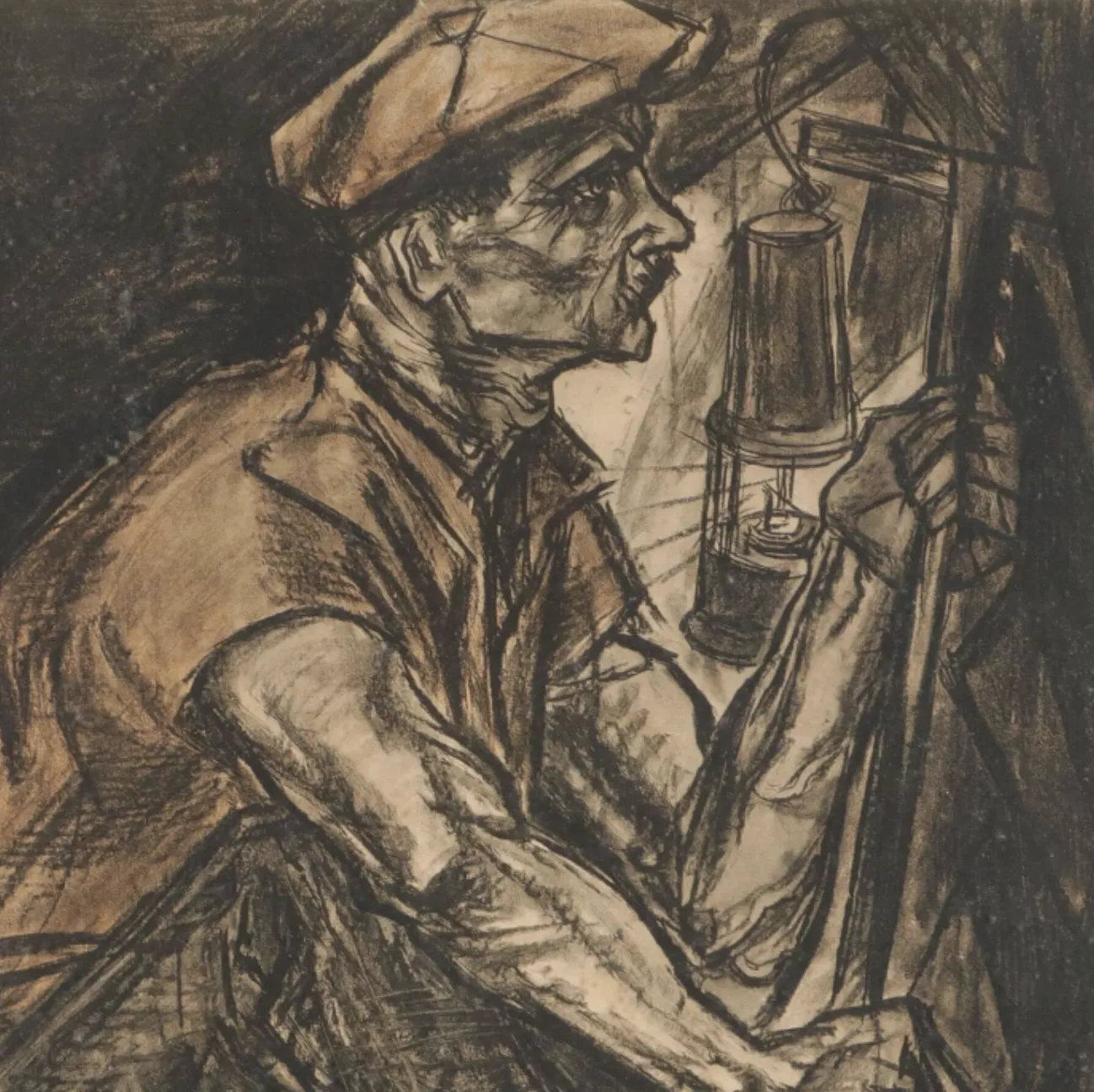
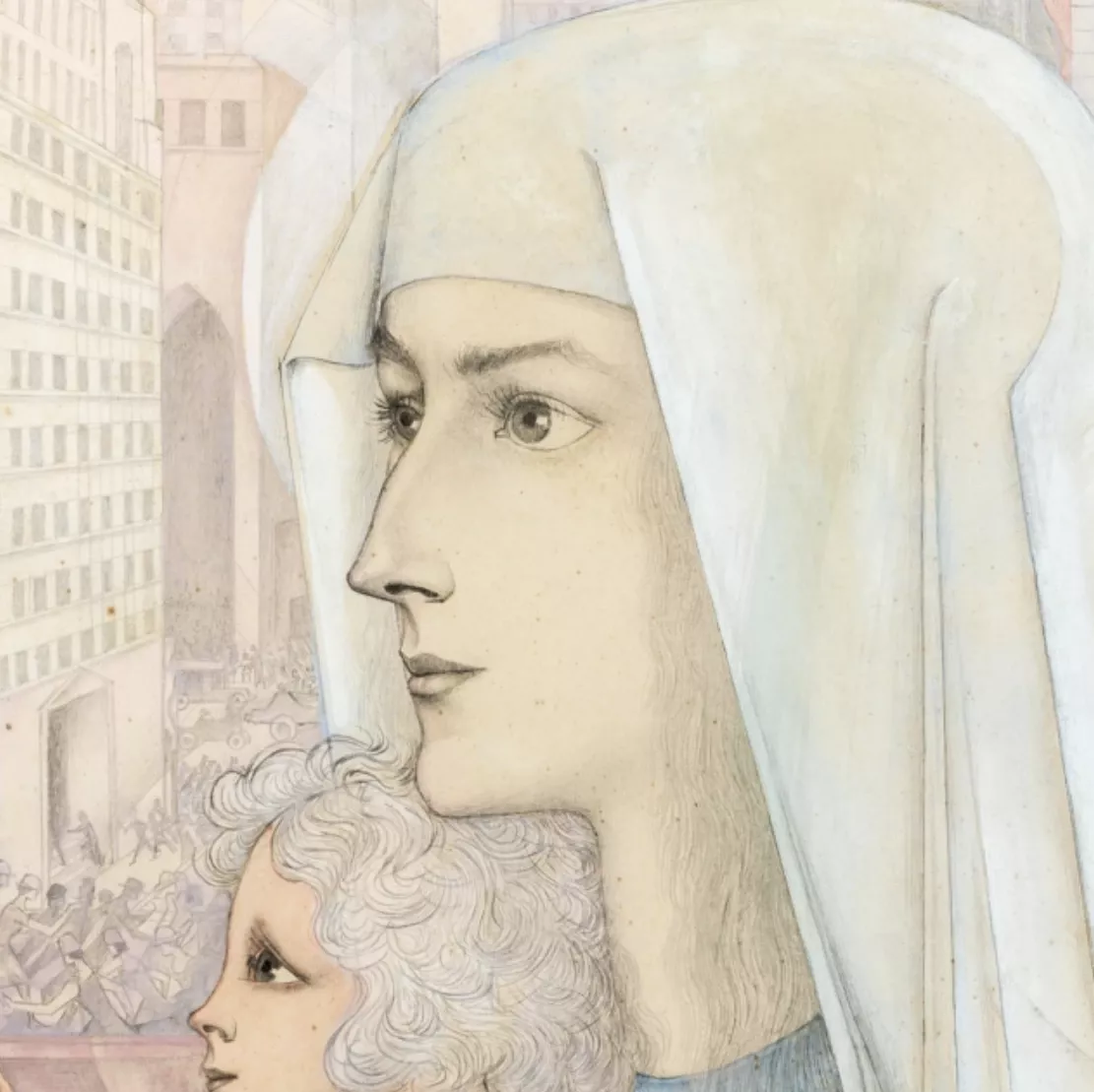
He converted to Catholicism in 1905 and began painting religious works, while continuing to produce portraits and landscapes.
Artistic Movements
Toorop is characterized by a rare stylistic versatility, moving successively through several major movements. He experimented with various styles during these years, such as Realism, Impressionism, Neo-Impressionism, and Post-Impressionism, before developing his own personal style.
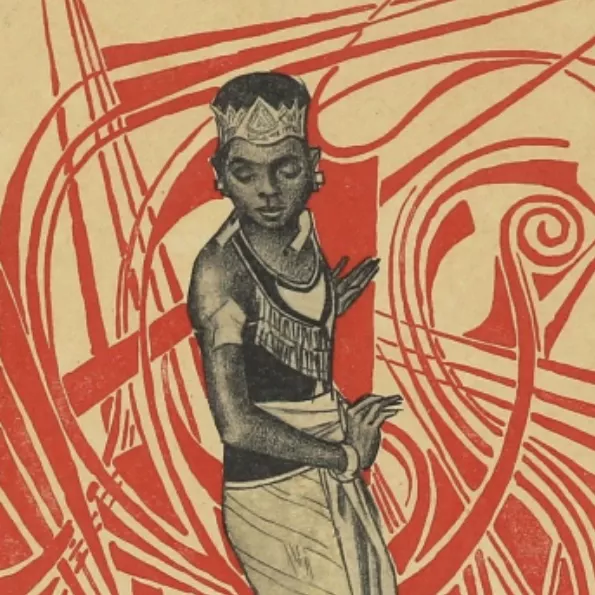
His Symbolist style is the result of an original synthesis of his Javanese heritage and Symbolism; his slender, curvilinear figures also foreshadow Art Nouveau. His contribution is considered decisive and is internationally recognized.
He also practiced Pointillism, which constitutes a unique technical dimension of his work; predating its adoption in the Netherlands, he was the first Dutch artist to embrace this movement.
His final artistic period, following his conversion, shifted his Symbolism toward a mystical-religious dimension, while retaining the dynamic lines and sense of stylization that characterized his entire career.
The Life of Jan Toorop
Cultural Background
Jan Toorop was the son of a Dutch colonial official and a British mother. He grew up with Asian and African ancestors. In 1872, he moved with his family to the Netherlands, where he studied in Delft and Amsterdam.
From 1882 to 1886, he lived in Brussels, where he joined Les Vingt, a group of artists centered around James Ensor, and immersed himself in the burgeoning Belgian avant-garde, at the forefront of Impressionism, Neo-Impressionism, and later European Symbolism.
After 1890, he settled in Ketwijk aan Zee, a small seaside town. This move coincided with the beginning of his Art Nouveau period, which spanned from 1891 to 1899. He exhibited in Vienna in 1900 and 1902 alongside artists from the Secession and published in the journal *Ver sacrum* in 1902.
Artistic and Intellectual Circle
In 1884, he traveled to London with the poet Émile Verhaeren, a major figure in French-speaking Belgian Symbolism, and then went to France, where he met Odilon Redon, whose work directly influenced his turn toward Symbolism.
In Domburg, he gathered around him an informal circle of artists, the most famous of whom was Piet Mondrian, a leading figure in an art scene that contributed to the emergence of the Dutch generation that would, a few years later, lead to geometric abstraction.

Market Segmentation and Artist Rankings
Prices of Works
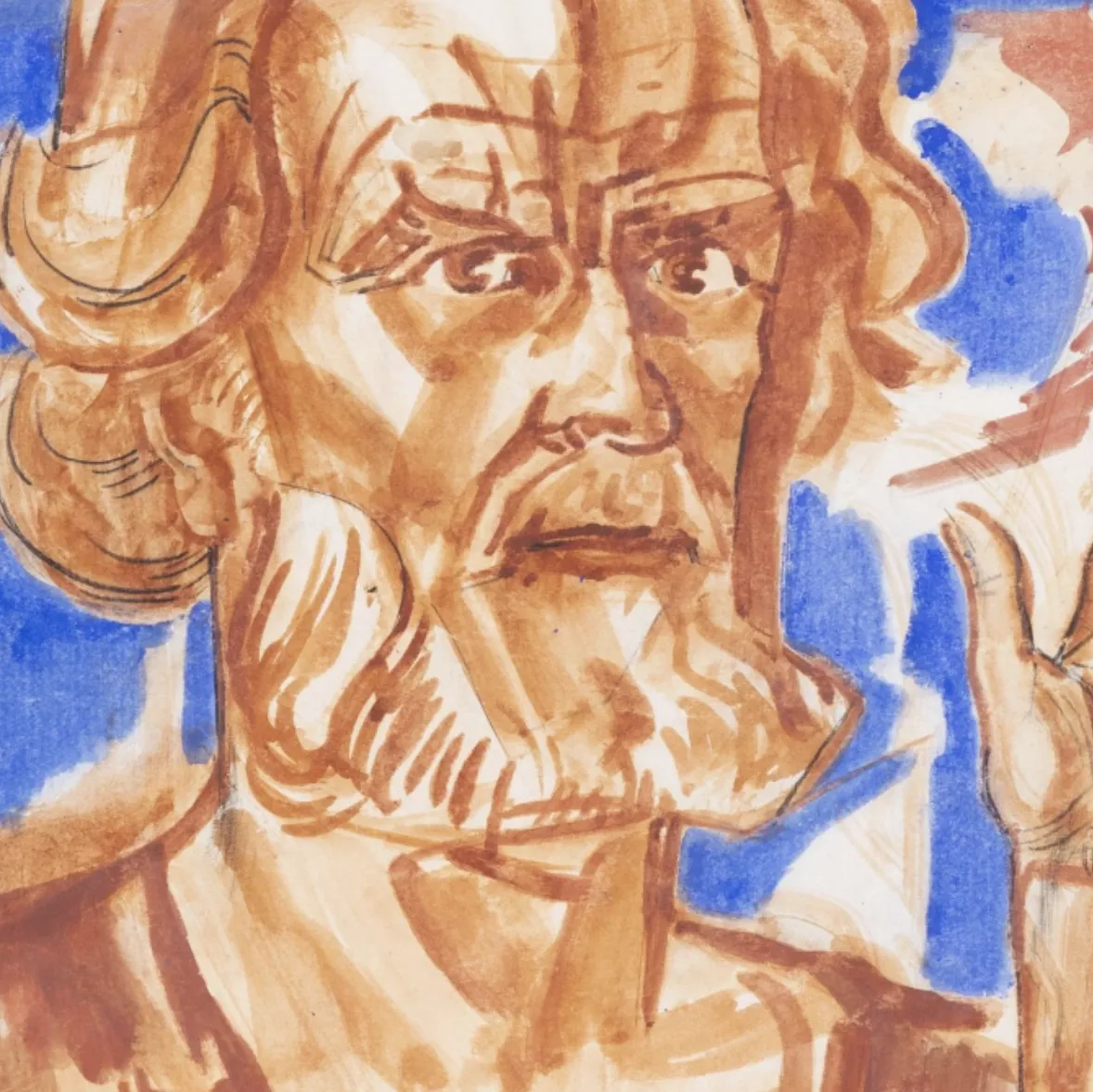
The market for Toorop’s works shows a clear price stratification based on medium, a result of his status as a multidisciplinary artist: paintings sell for between €250 and €150,000, drawings and watercolors between €200 and €70,000, and multiples between €50 and €9,000.
The Symbolist compositions from his Brussels and Dutch periods—emblems of the artist’s stylistic maturity—command the highest auction estimates, ahead of his Pointillist works and graphic pieces created for advertising commissions, which are less sought after by specialized collectors.
Factors Influencing Value
His position as a pivotal figure between Symbolism and Art Nouveau is the primary driver of his critical and market legitimacy: he enjoys significant renown as a major figure in both Art Nouveau and Symbolism, with his highly distinctive style having contributed to his growing fame.
His creation of a national visual icon significantly bolstered the artist’s popular fame beyond the circle of specialists: his poster for the Dutch Oil Company, featuring innovative, stylized clothing and hair, was so iconic that it earned Dutch Art Nouveau the nickname “Slaolie.”
Regular publication in avant-garde journals, including the Viennese magazine *Ver Sacrum* in 1902, and his participation in the Vienna Secession exhibitions in 1900 and 1902, attest to European institutional recognition that extended beyond the strictly Dutch context and bolstered the international appeal of his body of work on the secondary market.
FAQ – How do you estimate the value of a work by Jan Toorop?
1) Which periods are the most sought-after?
In the 1880s and 1890s, Toorop experimented with various styles, including Realism, Impressionism, and Neo-Impressionism. He was associated with the Belgian avant-garde group Les XX, where he met contemporaries such as James Ensor and Gustav Klimt. His career can thus be divided into the Naturalist period, the Symbolist period, and the late Catholic period.
2) Why is *The Three Brides* so central to understanding the artist’s work?
In 1893, he produced what some consider his masterpiece, *The Three Brides*, with its coiled, flat, serpentine composition and imagery reminiscent of Javanese art, particularly batik. This monochrome Symbolist painting depicts three states of the soul.
3) What technique did Toorop favor for his Symbolist drawings, and why is this important?
His use of mixed media on paper or primed canvas (chalk, pencil, and highlights of color and white) is characteristic of the Symbolist period and serves as a valuable technical indicator for authenticating a work from this period, as opposed to the more conventional oil paintings from other periods of his career.
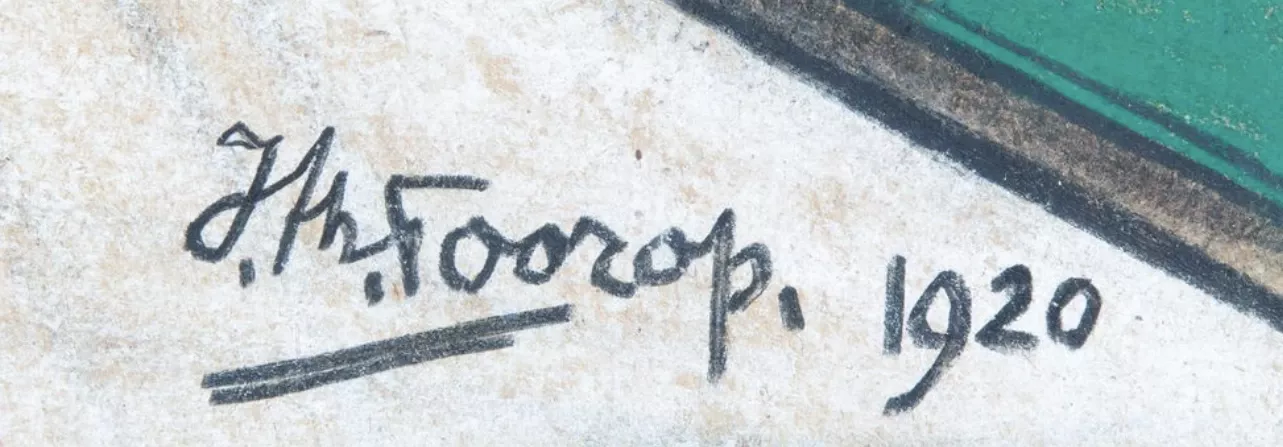
His signature
Not all of Jan Toorop’s works are signed.
Although there are variations, here is an example of his signature:
Get Your Jan Toorop Artwork Appraised
If you own a work by Jan Toorop, an appraisal will help you determine its current market value.
Using our online form, our experts and certified auctioneers will conduct a free appraisal and provide you with a reliable estimate of your artwork’s market value.
If you’re considering selling it, we’ll guide you through the process to ensure you get the best possible price.
Estimate in less than 24h
Discover in the same theme

Rating and value of works, tables, saddles, cupboards by Gab...
Gabriel Viardot was a cabinetmaker of the late 19th century who produced Far Eastern cabinetry. His work is highly appreciated.
Learn more >

Rating and value of paintings, drawings and prints by Pierre...
Jeanniot was a 19th-century painter, draughtsman and engraver who produced war paintings and genre scenes that were sold at auction.
Learn more >

Rating and value of works, drawings and paintings by Élizabe...
Elizabeth Vigée Le Brun was a 19th-century painter who produced many portraits, both drawings and paintings, which are listed at auction.
Learn more >
Nos records d'enchères à l'hôtel Drouot

Estimated 10.000 - 15.000 €
Ebridge Ayer BURBANK(1858-1949), Young African-American boy, Oil on panel.

Estimated 20.000 - 30.000
EXCEPTIONAL LARGE OVAL DISH IN VINCENNES SOFT PASTE PORCELAIN FROM THE "BLEU CÉLESTE" SERVICE OF KING LOUIS XV AT THE CHÂTEAU DE VERSAILLES

Estimated 20.000 - 30.000
MANUFACTURE ROYALE DE SÈVRES, 18th century "L'Empereur de la Chine" - Portrait of the Emperor Qianlong, Hard porcelain bisque, 1775

Estimated 1.500 - 3.000
HERMÈS, "Kelly" 32 saddle bag in black box calf

Estimated Between €5,000 and €8,000
KRACHKOWSKY (1854-1914), Before the storm, oil on canvas

Estimated 40.000 - 80.000
Alexandre ROUBTZOFF (1884-1949), Portrait of Arbia, oil on canvas

Secure site, anonymity preserved

Auctioneer approved by the State

Free and certified estimates
Frequently asked questions
-
Who is Jan Toorop, and what is his artistic significance?Jan Toorop (1858–1928) was a Dutch painter of Indonesian descent and a pivotal figure bridging Symbolism and Art Nouveau. A member of the Belgian group Les XX from 1884 onward, he developed a distinctive style combining Javanese heritage with European Symbolism, characterized by slender, curvilinear forms. His influence extended to the Vienna Secession, where he exhibited in 1900 and 1902, and his international recognition extended far beyond the borders of the Netherlands.
-
What are the price ranges for Jan Toorop's works, broken down by medium?Prices for Toorop’s works vary considerably depending on the medium: oil paintings sell for between €170 and €720,000, drawings and watercolors for between €10 and €431,900, prints between €10 and €50,000, and sculptures between €2,700 and €15,600. His Symbolist compositions from his Brussels and Dutch periods command the highest estimates, while the paintings from his Brussels and Symbolist phases remain the most sought-after by collectors.
-
How can you authenticate a work by Jan Toorop?To authenticate a work by Toorop, we recommend having it appraised by our state-certified auctioneers. They assess authenticity by analyzing the signature (not all works are signed), the technique used (Symbolist drawings employ characteristic mixed media: chalk, pencil, and colored highlights), and the materials. You can request a free, no-obligation estimate via our online form, and an expert will respond within 48 hours.
-
Which periods of Toorop's career are most highly valued on the market?The Symbolist period (1880s–1890s) and the Art Nouveau period (1891–1899) are the most sought-after and highly valued by collectors. His Brussels period and Symbolist compositions—including the masterpiece “Les Trois Fiancées” (1893)—command the highest estimates. Pointillist works and graphic pieces commissioned for advertising are less sought after, while his religious works produced after 1905 remain secondary in terms of market value.
-
How do I sell a work by Jan Toorop at Auctie's?Auctie's guides you from the appraisal to the auction. You begin by requesting a free, no-obligation appraisal from our certified auctioneers, who will assess the value of your artwork based on its authenticity, technique, period, and recent market trends. Once accepted, our auction house handles the promotion, in-auction presentation, and sale to ensure the best possible price.
