



Rating and value of paintings by Valerius de Saedeleer

Key takeaways
- Valerius de Saedeleer, a Belgian Expressionist painter (1867–1941), is valued between €30 and €167,000, depending on the medium and rarity of his works.
- His paintings, particularly oil-on-canvas works, command the highest prices, such as “Winter Evening,” which sold for €150,000 in 2024.
- A specialist in contemplative Flemish winter landscapes, his works are sought after by collectors for their precision and subtle treatment of light.
If you own a work by or based on the work of artist Valerius de Saedeleer and would like to know its value, our state-approved experts and auctioneers will guide you.
Our specialists will carry out a free appraisal of your work, and provide you with an accurate estimate of its value on the current market.
Then, if you wish to sell your work, we will direct you to the best possible arrangement to obtain the optimum price.
Artist's rating and value
Thanks to his prolific artistic output, Valerius de Saedeleer is commonplace in the auction room. A listed Belgian expressionist artist, his works sell for significant amounts on the auction market.
Today, the prices at which his works sell on the auction market range between €30 and €167,000, a considerable delta but one that speaks volumes about the value that can be attributed to Saedeleer's works.
Coveted by collectors, works by Valerius de Saedeleer can fetch tens of thousands of euros at auction, as evidenced by his oil on canvas Soir d'hiver, dating from 1924, sold for €150,000 in 2024.
Order of value from the most basic to the most prestigious
Technique used | Result |
|---|---|
Estamp - multiple | From €30 to 800 |
Drawing - watercolor | From €320 to €35,000 |
Painting | From €150 to €167,000 |
Estimate in less than 24h
Style and technique of the artist Valerius de Saedeleer
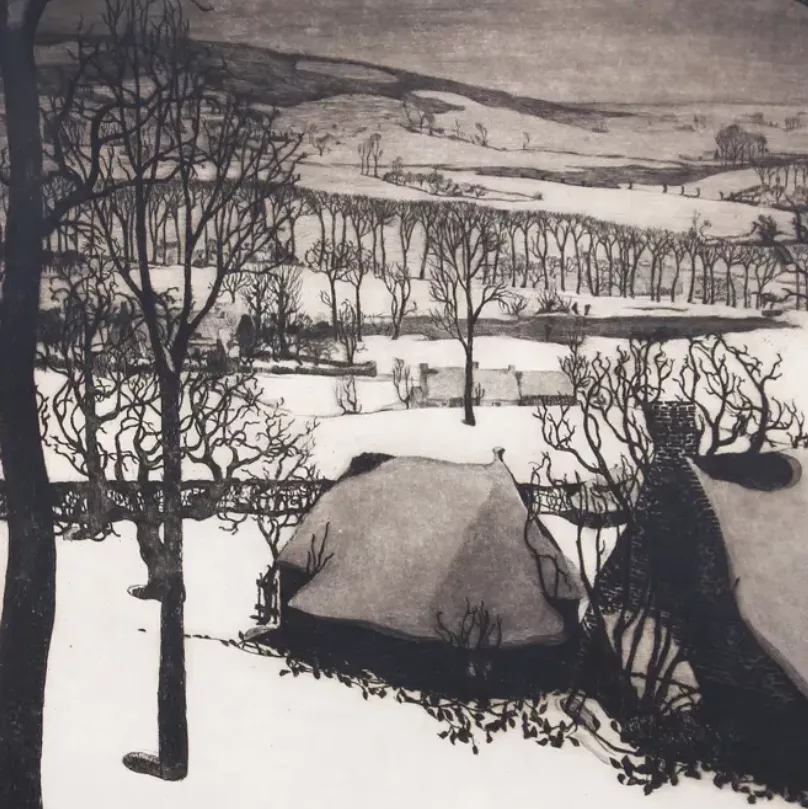
Valerius de Saedeleer, one of the most esteemed Flemish landscape artists, was born in 1867 in Oudenaarde, Belgium. From an early age, he showed a particular sensitivity to nature, encouraged by his mother, who supported him in his early artistic endeavors.
It was in the landscapes of his native Flanders that De Saedeleer found his inspiration, developing a unique style focused on soft light and peaceful rural scenes.
It was at the dawn of the 20th century, after many years of personal research, that he devoted himself fully to painting, with a predilection for snowy landscapes and vast fields under a winter sky.
His works, marked by meticulous precision and a palette of subtle colors, capture the tranquility and atmosphere of the Flemish countryside.
De Saedeleer quickly became a prominent artist, frequenting other painters of his day who, like him, sought to depict the timeless beauty of nature.
His oils on panel, often executed with great finesse, are the most sought-after works, fetching high prices at specialist sales. His lesser-known but equally delicate ink and pencil drawings reveal another facet of his talent, and are equally prized by collectors.
His career, marked by a deep attachment to nature and an undisputed mastery of light, makes Valerius de Saedeleer a major figure of early 20th-century Belgian landscape.
.
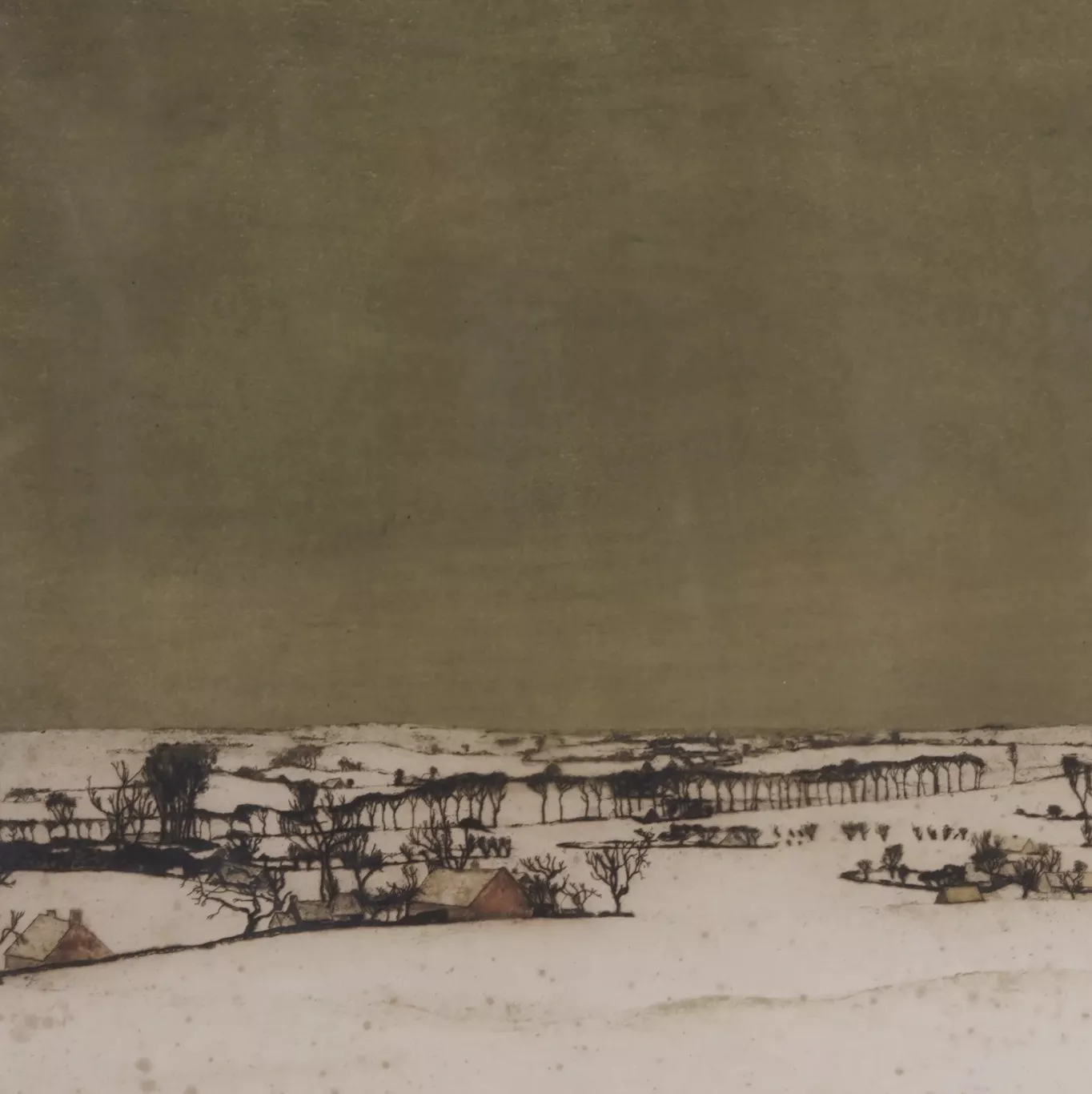
Valerius de Schaedeleer
Valerius de Schaedeleer (1867-1941) was a Belgian Expressionist landscape painter. He grew up in Aalst and experienced tensions with his father, who categorically refused to allow his son to pursue a career in art.
To cut short his artistic ambitions, Valerius' father forced him to work in a textile factory from the end of elementary school.
But, determined to follow his dreams, Valerius secretly enrolled at the Ghent School of Fine Arts and the Aalst School of Fine Arts, where he received a basic training that, although initially satisfactory, soon seemed insufficient.
It was this desire to improve that brought him to Brussels, where he joined the studio of Franz Courtens, an Impressionist painter known for his mastery of light and natural landscapes.
Under Courtens' tutelage, Valerius refined his brushstrokes and explored new techniques. Despite his father's opposition, he persevered and became an independent artist in 1887, finally distancing himself financially from his family.
During the early years of his career, Valerius traveled extensively throughout Belgium, passing through Bruges, Antwerp and Liège, in search of new artistic influences. These travels fueled his curiosity, but inspiration remained capricious.
In search of renewal, he traveled to Holland, attracted by the vast, flat landscapes and changing light effects of the Nordic skies. His works from this period reflect a desire to capture the tranquil beauty of fields and rivers.
Returning to Belgium, he finally settled in Ghent, where he joined the Socialist Party. His ideas evolved, influenced by the political climate of the time and his interest in social movements. After flirting with anarchist ideas, Valerius found unexpected peace by returning to Catholicism, the religion of his childhood. This spiritual quest marks a turning point in his painting, which becomes more serene and gains in depth.
Focus on Winter at Laethem-Saint-Martin, Valerius de Saedeleer, 1920
Let's take Winter at Laethem-Saint-Martin, an oil on canvas by Valerius de Saedeleer painted around 1920. This work perfectly embodies the peaceful, contemplative atmosphere of his Flemish landscapes.
It presents a vast snow-covered expanse, crossed by a few paths that meander gently through the countryside, creating a natural network that subtly guides the viewer's eye.
The village is nestled in the background of the composition, with its snow-whitened roofs and bare trees standing, almost frozen, beneath a pearl-gray sky. The whole is bathed in a soft, diffused light, typical of winter days, when the air seems both icy and pure.
The artist chooses a cold palette, dominated by shades of white, pale blues and silvery greys, which underline the wintry quietude of the place.
The contrasts are subtle: the use of delicate, light brushstrokes suggests the softness of a blanket of snow enveloping the Flemish countryside, while the precision of details, such as the fine silhouettes of trees and roofs, reflects a meticulous approach to the landscape.
Each tree seems to have been painted with care, its bare branches silhouetted against the sky with a finesse reminiscent of the precision of an ink drawing.
In this painting, we sense a desire to capture not only a moment of silence, but also a crystalline, wintry light, specific to these cold Flanders mornings. Each element is imbued with an almost mystical serenity, evoking the tranquility of rural landscapes isolated from the world.
The eye is irresistibly drawn to the winding paths that lead the viewer across the canvas, inviting a quiet stroll through the heart of a frozen winter. This choice of composition gives the work a particular depth, while reinforcing the impression of isolation and calm that are characteristic of Saedeleer's style.
The village buildings, barely sketched in, testify to Saedeleer's ability to capture the essence of the place without overloading it with detail. His brush lingers more on the play of light than on architectural precision, preferring to evoke the sensation of an enveloping winter cold.
The snow, omnipresent, is not simply white; it is streaked with subtle reflections that recall the changing light of Nordic skies.
This painting is a celebration of silence and nature, where every element seems frozen in contemplative immobility, reinforcing the atmosphere of timelessness that emanates from the work.
Valerius de Saedeleer captures the austere, tranquil beauty of Flanders here with rare sensitivity, transforming a familiar landscape into an almost spiritual place, imbued with nostalgia and contemplation.
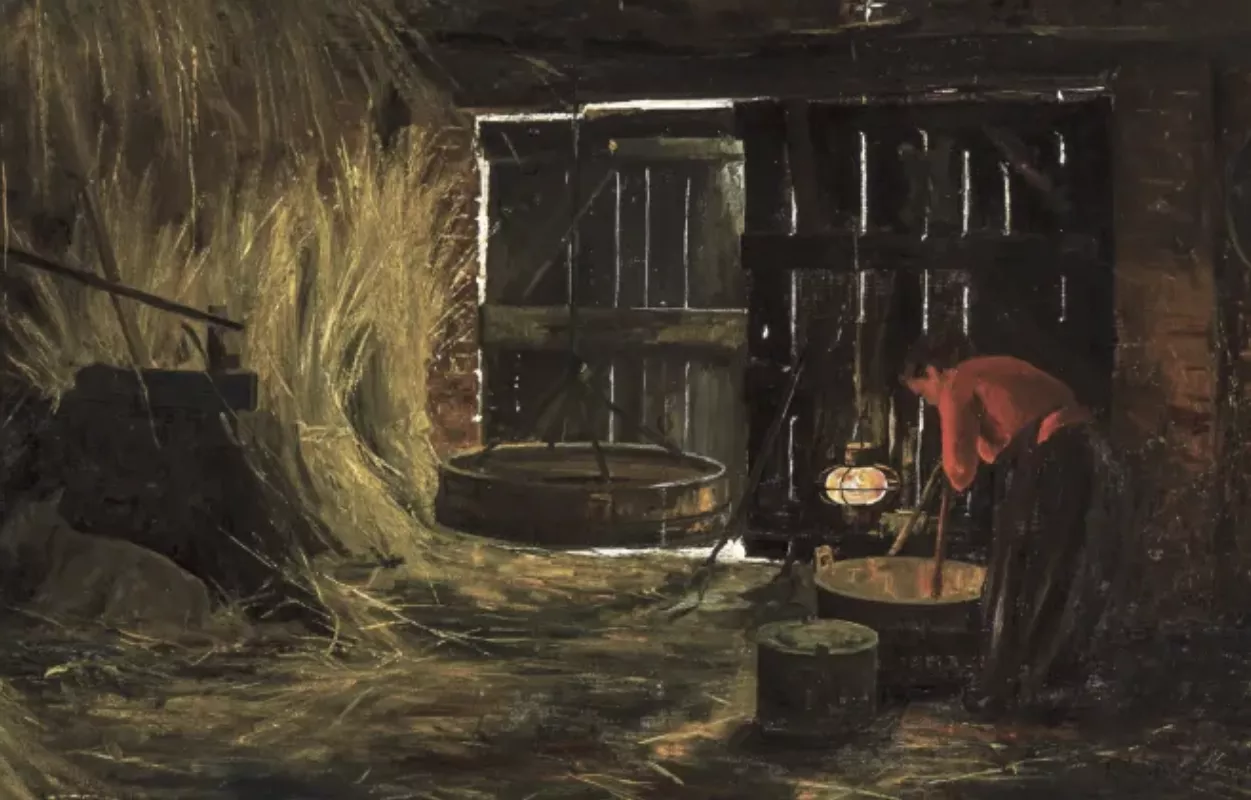
V. De Saedeleer's imprint on European modern art
Valerius de Saedeleer's imprint on French modern art is a fascinating testimony to the richness of rural landscapes at the beginning of the 20th century. Born in Aalst in 1867, de Saedeleer established himself as a key figure, midway between the Post-Impressionist and Symbolist currents.
His works, imbued with an atmosphere both intimate and contemplative, find echoes in French artists such as Maurice Denis and Henri Le Sidaner, whose gentle, luminous landscapes exalt a quiet, almost meditative beauty.
De Saedeleer developed a style characterized by a delicate palette and great precision of detail, capturing the subtle light of the Flemish countryside.
As did Camille Pissarro and Henri Martin before him, he lingers on the play of light and changing atmospheres, capturing fleeting moments of rural daily life.
Like these French masters, he favors an approach where time seems suspended, far from the hustle and bustle of cities, focusing his gaze on nature and its unchanging cycles.
His landscapes, imbued with a meditative serenity, are also reminiscent of the poetic universe of Charles-François Daubigny, who knew how to sensitively capture the light of riversides and the quietude of forests.
The way de Saedeleer treats his rural scenes, with a touch of intimacy and meticulous attention to nuance, also evokes the compositions of Jean-François Millet, who sublimated the simplicity of peasant life by lending it an almost spiritual dimension.
De Saedeleer, like Eugène Carrière, succeeds in creating enveloping atmospheres, where diffuse light bathes the landscape in an almost unreal softness.
His snow-covered fields, sleepy villages and shady paths are imbued with a melancholy tranquility reminiscent of the works of Gustave Loiseau, another painter enamored of rural landscapes, known for his winter scenes and snow-covered villages.
Today, Valerius de Saedeleer remains an essential figure in landscape art. His legacy is that of an artist who combined the intimacy of a Maurice Utrillo with the poetry of a Henri Le Sidaner, while imposing a personal vision, where each landscape becomes a silent hymn to nature.
His works continue to move with their simplicity and depth, bearing witness to an era when nature, magnified and soothing, was a refuge from burgeoning modernity.
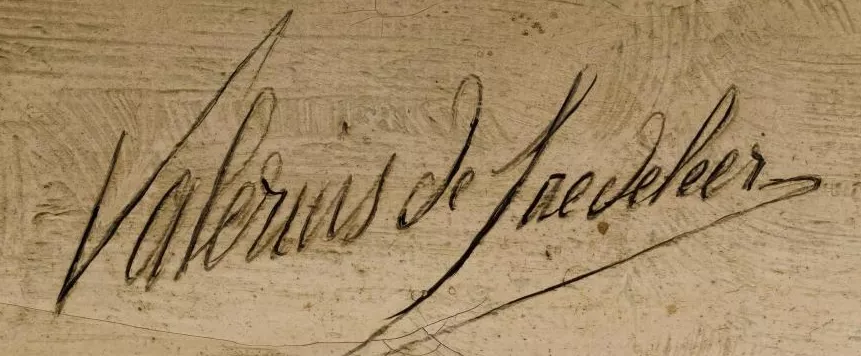
His signature
Valerius de Saedeleer 's works are not all signed.
Although there are variations, here is a first example of his signature:
Expertise your property
If you own a work by Valerius de Saedeleer, don't hesitate to request a free appraisal by filling in our online form.
A member of our team of experts and certified auctioneers will contact you to provide an estimate of the market value of your work.
If you are considering selling your work, our specialists will also guide you through the various alternatives available to obtain the best possible price, taking into account market trends and the specific features of each object.
Estimate in less than 24h
Discover in the same theme

Rating and value of works, drawings, paintings by Leonor Fin...
Leonor Fini is a 20th-century Surrealist artist whose drawings, prints and paintings are sought-after and highly prized at auction.
Learn more >

Rating and value of paintings by Albert Gleizes
Albert Gleizes was a twentieth-century Cubist artist and theorist who produced numerous works of great value.
Learn more >

Rating and value of paintings by Bram van Velde
Bram van Velde is a Dutch abstract painter who produced many works that are highly valued at auction.
Learn more >
D'autres tableaux expressionnistes vendus aux enchères


Secure site, anonymity preserved

Auctioneer approved by the State

Free and certified estimates
Frequently asked questions
-
Who is Valerius de Saedeleer, and what is his artistic background?Valerius de Saedeleer (1867–1941) was a leading Belgian Expressionist painter who specialized in Flemish landscapes. Trained at the Ghent School of Fine Arts and in Franz Courtens’ studio in Brussels, he established himself as a leading figure in early 20th-century Belgian landscape painting, known for his subtle treatment of light, his peaceful rural scenes, and his snow-covered landscapes imbued with contemplative serenity.
-
What is the price range for works by Valerius de Saedeleer at auction?Prices for Saedeleer’s works range from €30 to €167,000, depending on the medium and quality. Prints sell for between €30 and €800, drawings and watercolors for between €320 and €35,000, and paintings for between €150 and €167,000. His oil paintings on canvas, which are particularly sought after, can fetch tens of thousands of euros, as illustrated by his painting “Winter Evening” (1924), which sold for €150,000 in 2024.
-
How can you authenticate and appraise a work by Valerius de Saedeleer?Auctie's offers a free, no-obligation appraisal conducted by its experts and state-certified auctioneers. Simply fill out an online form, and a member of our team will contact you to provide an accurate estimate of your artwork's market value based on current market trends.
-
Is this a good time to sell a work by Valerius de Saedeleer?Yes, this is a good time. Valerius de Saedeleer is a highly regarded Belgian Expressionist artist who is in great demand among collectors. His works enjoy strong demand on the auction market, and his prolific output ensures that his pieces appear regularly at auction, guaranteeing good visibility for your item.
-
How does Auctie's go about selling a work by Valerius de Saedeleer?Auctie's, an auction house, supports you every step of the way: after a free appraisal of your artwork, our specialists will guide you toward the best sales strategy, taking into account market trends and the unique characteristics of your item, to ensure you achieve the best possible price at auction.
