



Rating and value of paintings by Théo Van Rysselberghe

Key takeaways
- The prices of Van Rysselberghe’s works vary considerably, ranging from €40 for prints to €8,440,000 for his most prestigious oil-on-canvas paintings.
- A leading figure in Belgian Neo-Impressionism, the artist mastered color division with a more fluid approach than Seurat’s orthodox Pointillism.
- His Mediterranean landscapes and portraits, enriched by his travels in Morocco and France, capture light with a technique that oscillates between Divisionist precision and expressive spontaneity.
If you own a work by or after Théo Van Rysselberghe and would like to know its value, our state-approved experts and auctioneers will offer you their appraisal services.
Our specialists will carry out a free appraisal of your work, and provide you with an accurate estimate of its value on the current market.
Then, should you wish to sell your work, we will direct you to the best possible arrangement to obtain the optimum price.
Rating and value of the artist Théo Van Rysselberghe
The artist Théo Van Rysselberghe leaves behind a classic body of work, consisting mainly of landscape scenes and portraits. He studied art at the Ghent School of Fine Arts.
Henceforth, the prices of his works rise with the auctioneers' gavel. His paintings are highly prized, especially by Belgian and French buyers.
The price at which they sell on the art market ranges from €40 to €8,440,000, a very substantial range but one that speaks volumes about the value that can be attributed to Van Rysselberghe's works.
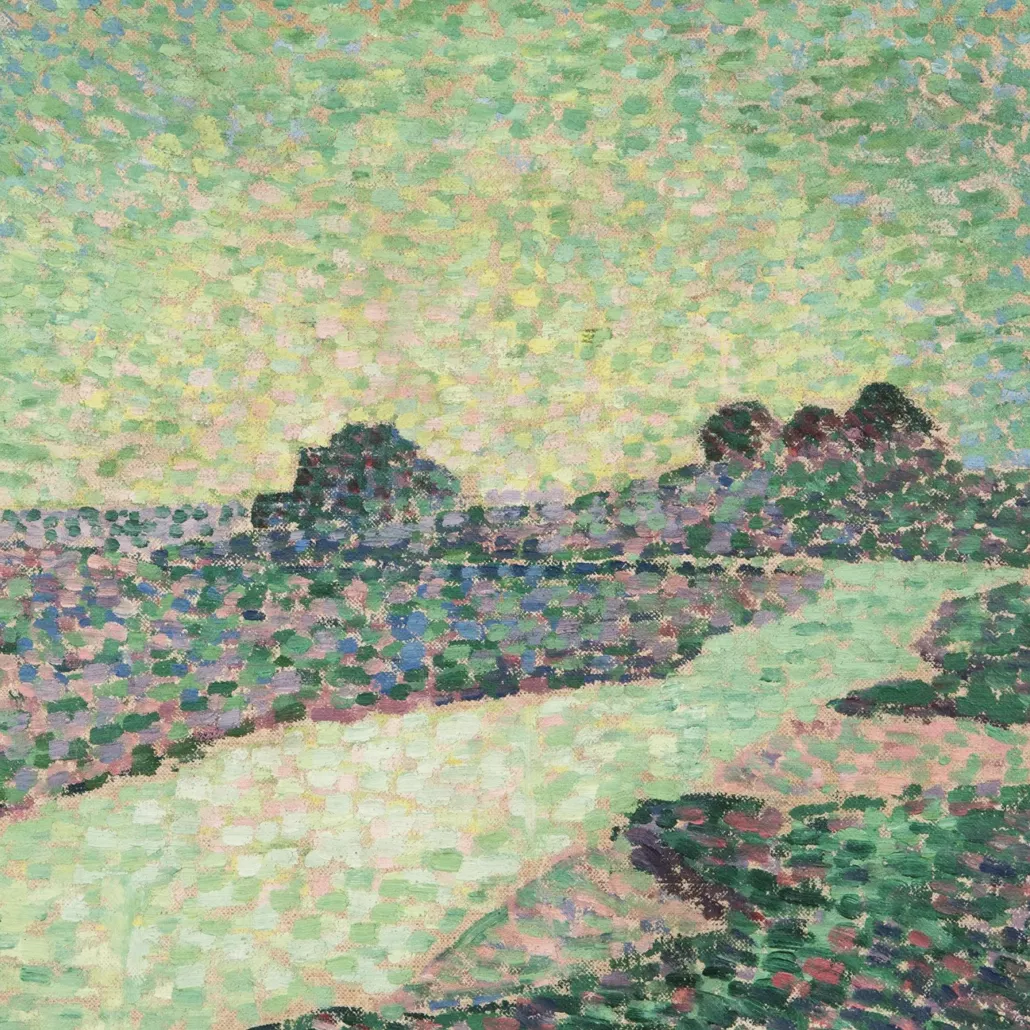
In 2018, the tableau L'escaut en amont d'Anvers sold for €8,440,000 while it was estimated at between €8,000,000 and €11,000,000.
Order of value from a simple work to the most prestigious
Technique used | Result |
|---|---|
Estamp - multiple | From €40 to €6,200 |
Drawing - watercolor | From €120 to €240,000 |
Oil on canvas | From €150 to 8 440 000€ |
Estimate in less than 24h
Style and technique of the artist Théo Van Rysselberghe
Théo Van Rysselberghe established himself as a major figure of Neo-Impressionism, developing a style recognizable by the balance between technical rigor and poetic sensitivity.
Fundamentally influenced by Georges Seurat and Paul Signac, he adopted the division of colors into small, distinct strokes, but soon distinguished himself with a more fluid, warm approach.
Contrary to Pointillist orthodoxy, his brushstrokes softened, sometimes stretched into broader strokes, giving his works a more vibrant dynamic.
The Mediterranean landscapes he favored, bathed in light, were thus adorned with brilliant hues where the deep blue of the sea blended with the soft green of the hills, creating a striking visual harmony.
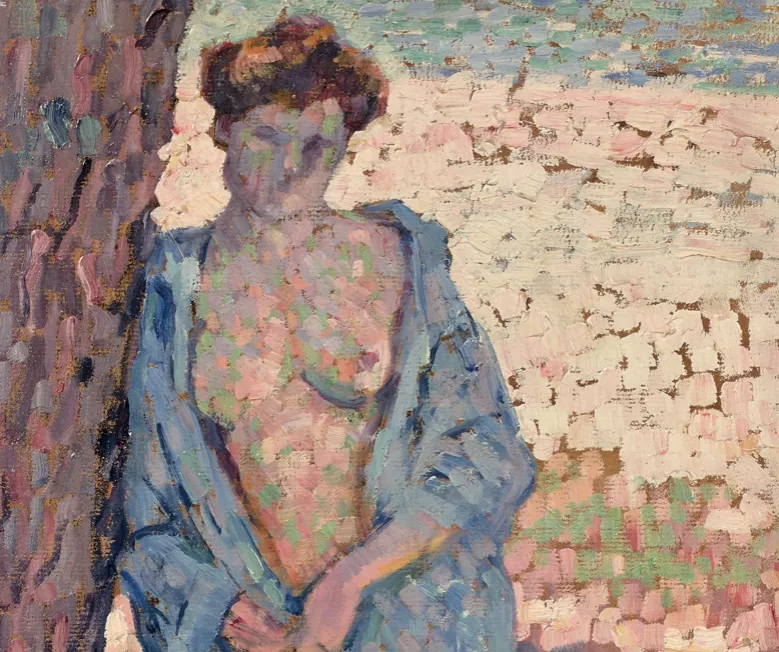
Van Rysselberghe also excels in the art of portraiture, where he transposes this technique by capturing the subtleties of expressions and the texture of materials.
His compositions often feature figures imbued with serenity, enveloped in a diffuse light that underscores their presence.
His work on light, inspired by his many trips to the south of France and the Maghreb, reveals a fascination with shadows and reflections, which he transcribes with an almost tactile precision.
These Mediterranean influences enrich his pictorial language with a warmer, more vibrant palette, while maintaining a striking atmospheric depth.
Théo Van Rysselberghe, like his contemporaries such as Camille Pissarro or Maximilien Luce, makes light and color the central elements of his work.
His mastery of chromatic contrasts and attention to detail reflect a desire to elevate the neo-impressionist aesthetic beyond its scientific foundations, towards a universal and emotional art form.
This search for balance between methodical precision and intuitive spontaneity lends his work a timelessness that continues to captivate the eye.
The life of Théo Van Rysselberghe
Théo Van Rysselberghe, born in Ghent in 1862, established himself as a central figure of Neo-Impressionism, combining remarkable technical talent with a relentless quest for modernity.
From his earliest years, he showed an early interest in the plastic arts, joining the Academy of Fine Arts in Ghent, then Brussels, where he trained with the masters of the day.
His innovative spirit, however, soon led him to go beyond academic teachings and immerse himself in the avant-garde.
His meeting with poet Émile Verhaeren marked a decisive turning point: the two men shared a common vision of art as a vehicle for social and cultural transformation.
Their fruitful collaboration resulted in sensitive portraits and intellectual exchanges that nurtured Van Rysselberghe's career.
In 1883, he joined the group Les XX, a collective of Belgian artists and writers seeking to break with prevailing artistic conventions.
Through this association, he played a key role in introducing international artistic currents to Belgium, organizing exhibitions that revealed to the public works by Vincent van Gogh, James McNeill Whistler and Georges Seurat.
It was during one of these encounters that he discovered the pointillist technique, a revelation that would redefine his way of painting.
Enthralled by the scientific precision of color division advocated by Seurat and Paul Signac, he adopted this style in the 1880s, but without ever sacrificing the emotion and poetry characteristic of his art.
A passionate traveler, Van Rysselberghe traveled Europe and the Mediterranean basin, discovering landscapes and lights that enriched his palette.
His sojourns in Morocco inspired scenes vibrant with warmth and exoticism, while the sunny coasts of southern France nurtured his interest in luminous nuances.
His works, often marked by meditative serenity, capture both the intensity of light and the subtlety of shadows, creating compositions of striking harmony.
A talented portrait painter, he excelled in the art of translating the intimacy and psychological depth of his models, who included renowned intellectuals and artists.
Insettled in France from 1898, he began a significant stylistic evolution, gradually abandoning rigorous Divisionism for a freer, more expressive approach.
This late period reveals a painting in which the spontaneity of brushstrokes coexists with an ever assertive mastery of color and composition.
A committed man, Van Rysselberghe frequented anarchist and socialist circles, finding in his works a subtle way of expressing his progressive ideals.
He remains faithful to a humanist vision of art, where visual beauty is combined with a deep respect for the individuals and landscapes he depicts.
Until his death in 1926, Van Rysselberghe continued to explore and reinvent himself, leaving behind a considerable body of work, at the crossroads of scientific rigor and artistic emotion.
His legacy testifies to his essential role in the revival of European painting, embodying a rare balance between modernity and tradition.
Focus on The Reader, Théo Van Rysselberghe
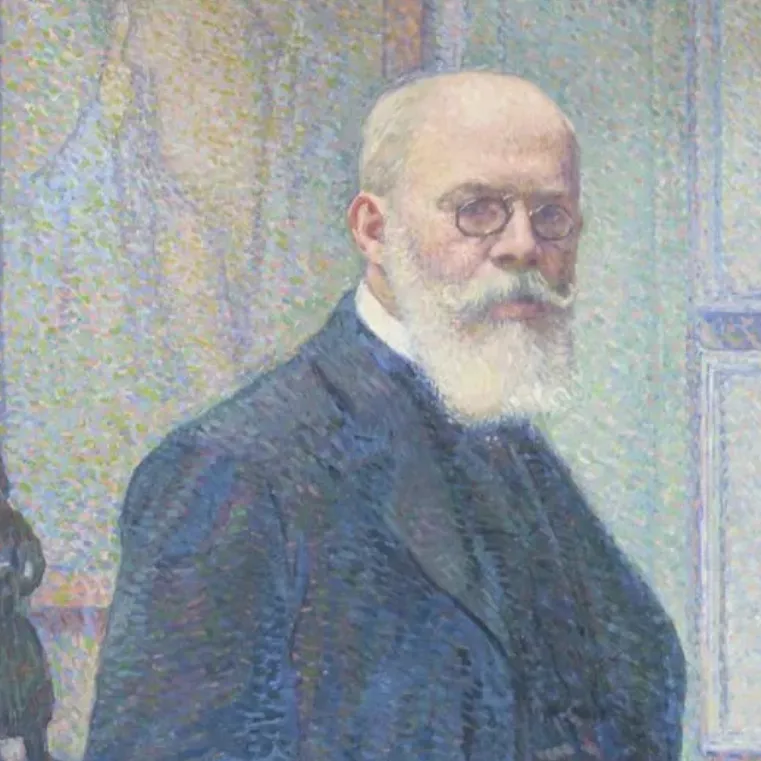
Let's take a look at The Reader, one of Théo Van Rysselberghe's most representative works, created in 1903.
This subtle canvas perfectly illustrates the stylistic evolution of the artist, then in transition between rigorous divisionism and a freer, more fluid approach.
It shows a man immersed in his reading, seated in an interior bathed in soft, enveloping light.
The choice of subject, imbued with intimacy and quietude, reflects Van Rysselberghe's abiding interest in everyday scenes, sublimated by his meticulous work on light and color.
In this work, the divisionist touches, though present, are softened. The chromatic contrasts, far from the cold scientific analysis of his early work, serve here a warm, peaceful atmosphere.
The light, filtered through an invisible window, delicately caresses the surfaces, playing on the ochre, blue and cream hues that dominate the composition. This light becomes almost a character in its own right, unifying the different elements of the painting.
The reader, though frozen in concentration, seems surrounded by a subtle energy, materialized by the vibration of colors and shapes.
His face, slightly tilted, is treated with a finesse that conveys not only physical appearance, but also the interiority of the moment.
The relaxed posture, the elegantly reclining chair and the open book contribute to a perfectly balanced composition, where every detail invites contemplation.
This work also bears witness to the growing influence of bourgeois interiors in Van Rysselberghe's art, a subject he often tackled in his portraits and genre scenes.
Here, the environment is not simply a setting, but an extension of the character's state of mind. Space becomes a setting for meditation and serenity, themes dear to the artist in his mature years.
With The Reader, Van Rysselberghe transcends the technical preoccupations of his early years to offer a profoundly human painting, where light, color and composition combine to celebrate the beauty of simple moments.
Through this work, he invites us not only to admire the scene, but also to feel that inner calm, like a suspended pause in the tumult of everyday life.
Theo Van Rysselberghe's imprint on his period
Van Rysselberghe was a painter who made his mark on his era, working with many of his peers. He sold his paintings for high prices at the time, a value that has continued to grow over the years.
The artist's value was at its highest in the 1990s, as many of his works were present on the art market.
However, they are still highly sought-after at auction, especially by American collectors to whom his paintings still appeal.
Recognizing the artist's signature
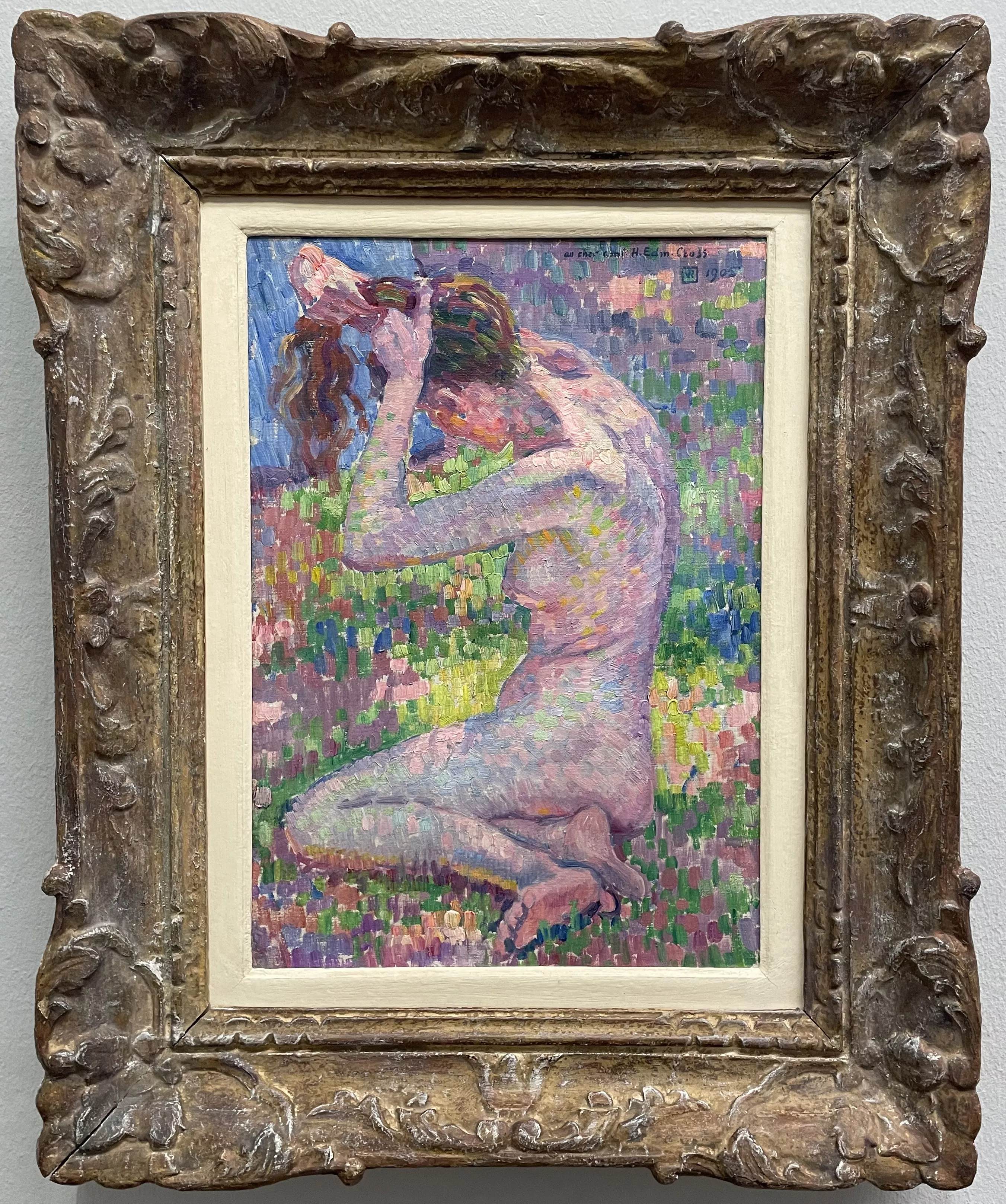
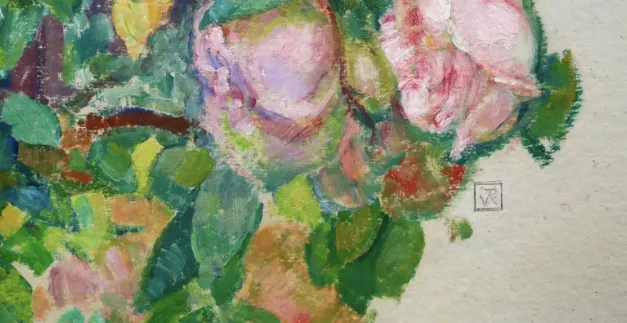
Not all Théo Van Rysselberghe's works are signed.
They may be at the bottom of the painting, but if you think you own one, it's best to have it appraised to be sure of its originality.
In addition, the artist may sometimes sign with his full name - and sometimes inscribe his initials small in a square, creating a kind of pictogram.
Knowing the value of a work
If you happen to own a work by or after Theo Van Rysselberghe, don't hesitate to request a free valuation using our form on our website.
A member of our team of experts and certified auctioneers will contact you promptly to provide you with an estimate of the market value of your work, as well as ad hoc information about it.
If you wish to sell your work, you will also be accompanied by our specialists in order to benefit from alternatives for selling it at the best possible price, taking into account the inclinations of the market.
.Estimate in less than 24h
Discover in the same theme

Value of Picasso Madoura ceramics, plates and vases
Picasso Madoura ceramics are sought-after worldwide. The value is climbing and the results are promising. Estimate in 24h
Learn more >

Rating and value of paintings by Georges Lapchine
Georges Lapchine is a 20th-century Russian painter who produced Russian Impressionist canvases that were highly successful at auction.
Learn more >

Cote and value of paintings by Max Moreau
Max Moreau is a twentieth-century Orientalist painter whose paintings are highly valued on the auction market.
Learn more >
D'autres tableaux impressionnistes vendus aux enchères

Estimated 6.000 - 8.000
Mikhail Markianovich GUERMACHEFF (1867 - 1930) House under the snow, oil on canvas

Estimated 2.000 - 4.000
Jean DUFY (1888-1964) Vase of anemones, Watercolor

Estimated 600 € - 800 €
Henri ZUBER (1844-1909), Bridge at Artemare. Oil on canvas.

Secure site, anonymity preserved

Auctioneer approved by the State

Free and certified estimates
Frequently asked questions
-
Who was Théo Van Rysselberghe, and what is his artistic style?Théo Van Rysselberghe (1862–1926) was a leading figure of Belgian Neo-Impressionism. Trained in Ghent and Brussels, he adopted the Pointillist technique of Seurat and Signac, but distinguished himself through a more fluid and warm approach. His Mediterranean landscapes and portraits are characterized by an exceptional mastery of light and color, combining technical precision with poetic sensitivity.
-
What are the price ranges for Théo Van Rysselberghe's paintings and artworks?Prices for Van Rysselberghe’s works vary considerably depending on the type and size: prints range from €40 to €6,200, drawings and watercolors from €120 to €240,000, and oil paintings on canvas from €150 to €8,440,000. This range reflects the variability in market value based on the work’s age, provenance, and reputation.
-
How can I have a work by Théo Van Rysselberghe appraised to determine its authenticity and value?Auctie's offers a free, no-obligation appraisal conducted by its experts and state-certified auctioneers. Simply submit a request using the form on the website, and a specialist will contact you promptly to provide you with an accurate estimate of your artwork’s value and all relevant details regarding its current market value.
-
Is this the right time to sell a work by Théo Van Rysselberghe?Yes, now is a good time to sell. Although Van Rysselberghe’s popularity peaked in the 1990s, his works remain highly sought after at auctions, particularly by American collectors. Demand continues to drive prices in the art market.
-
How do I sell a work by Théo Van Rysselberghe through Auctie's?Auctie's supports you from the appraisal stage through to the auction: once your artwork has been approved by our experts, we will guide you toward the best sales options to achieve the optimal price, taking into account current market trends and collectors' preferences.
