



Naturalism Art: Appraisal and Auction

Key takeaways
- Large-format peasant scenes by major artists sell for between 15,000 and 200,000 euros, while medium-format works range from 3,000 to 40,000 euros.
- Naturalism occupies a middle ground between Realism and Impressionism, offering affordable opportunities to acquire works of genuine quality on the 19th-century art market.
- The artist’s reputation, the narrative subject matter, and the large format are the three major criteria that determine the market value of a naturalist painting.
Rural scenes, social realism, and plein air: the value of naturalist art varies greatly depending on the artist, the subject, and the painting’s format.
Below, you’ll find all our valuation guides dedicated to naturalism—naturalist paintings, drawings, and sculptures. Each guide details the price ranges observed at auction and the factors that determine a work’s value before it is entrusted to our state-certified auctioneers.
Guides on this art movement
See all guides >
Rating and value of drawings and paintings by Johan Christia...
Johan Christian Dahl is a Norwegian painter associated with the Romantic movement. His paintings command high prices at auction.
Learn more >

Rating and value of drawings and paintings by Arnold Böcklin
Arnold Böcklin was a 19th-century Symbolist painter who produced numerous paintings that are highly prized and valuable.
Learn more >

Rating and value of sculptures and bronzes by Charles Delhom...
Charles Delhommeau is a French animal sculptor who has created numerous works that command high prices at auction.
Learn more >

Rating and value of drawings and paintings by Léon Gustave R...
Léon Gustave Ravanne is a landscape and seascape painter whose works command high prices and are highly valued at auction.
Learn more >

Rating and value of drawings and paintings by Paul Guigou
Paul Guigou is a landscape painter associated with the Barbizon School whose paintings command high prices and are highly valued.
Learn more >

Rating and value of drawings and paintings by Jules Jacques...
Jules Jacques Veyrassat was a 19th-century painter associated with the Barbizon School whose works command high prices and are highly valued.
Learn more >

Rating and value of marines paintings by Hendrik Willem Mesd...
Hendrik Willem Mesdag was a marine painter associated with the Hague School, who produced numerous paintings that fetch high prices at auction.
Learn more >

Rating and value of drawings and paintings by Salomon de Bra...
Salomon de Bray was a painter of the Dutch Golden Age who produced numerous works that command high prices at auction.
Learn more >

Rating and value of paintings by Nicola Forcella
Nicola Forcella was an Italian Orientalist painter who produced most of his paintings in Cairo. Today, his works are highly valued.
Learn more >

Rating and value of sculptures and bronzes by Henri Louis Le...
Henri Louis Levasseur was a French sculptor who worked on mythological subjects in a variety of materials. Their value can be considerable.
Learn more >

Rating and value of paintings by Peder Mork Monsted
Peder Mork Monsted is a Danish landscape painter who has produced a number of highly valued works.
Learn more >

Rating and value of paintings by Jean-Louis Paguenaud
Jean-Louis Pagunaud is a French marine painter who has produced a number of paintings that are highly valued at auction.
Learn more >
Understanding the Value of a Naturalist Painting
What Is Market Value in the Naturalist Art Market?
The market value of a naturalist painting refers to the benchmark value assigned to it by the secondary market at a given moment, based on the combination of factors that make each work unique: the artist’s identity, the subject matter, the format, the technique, the condition, the strength of the documentation, and the current state of international demand.
It is not a fixed figure: it evolves over time through auctions, retrospective exhibitions, and critical reassessments that periodically occur in the 19th-century art market.
Born in the wake of Realism during the Third Republic, Naturalism distinguishes itself through a heightened focus on light, atmosphere, and the authenticity of the artist’s brushwork.
Whereas Courbet emphasized the roughness of the material and the political weight of the working-class subject, Jules Bastien-Lepage, Jules Breton, Léon Lhermitte, and their contemporaries sought to depict peasant and rural life with near-photographic precision, imbued with a natural light that at times brought them close to Impressionism without ever compromising the need for narrative clarity.
This position at the crossroads between social realism and Impressionist sensibility explains collectors’ enduring interest in Naturalism: it offers the best of both worlds—the rigor of academic drawing and the freshness of direct observation.
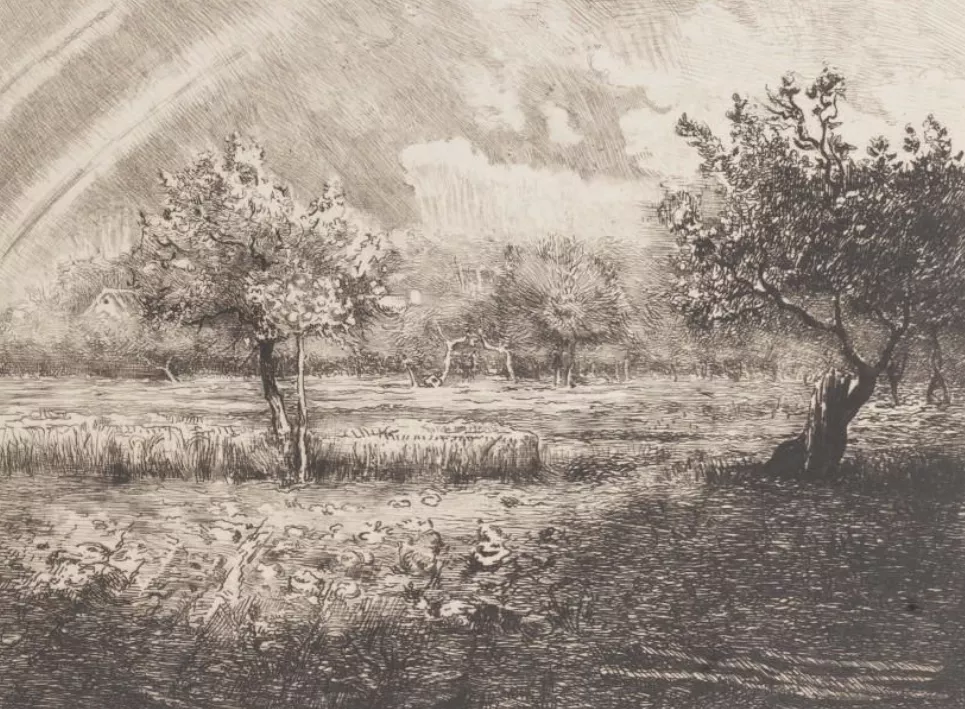
Naturalism, Realism, and Impressionism: What Are the Differences in the Art Market?
Naturalism, Realism, and Impressionism are three movements that coexisted in the second half of the 19th century and share a common interest in depicting the observable world.
However, their market dynamics differ significantly due to their distinct aesthetics and the communities of collectors they attract.
Impressionism, led by Monet, Renoir, and Degas, is the most liquid and internationally valued segment of 19th-century painting: its global renown ensures structurally strong demand and consistently spectacular auction results.
Realism, embodied by Courbet, Millet, and Daumier, appeals to collectors drawn to the political and social dimensions of the subject matter and benefits from a sustained market, particularly from museums.
Naturalism occupies an intermediate position: less publicized than Impressionism, it offers acquisition opportunities at prices that remain accessible for works of genuine quality, making it one of the most interesting segments of the 19th-century market for discerning collectors.
Period | Period | Representative Artists | Market Demand Level |
Realism | 1840–1875 | Gustave Courbet, Jean-François Millet, Honoré Daumier, Rosa Bonheur | Very high, both institutional and private |
French Naturalism | 1870–1900 | Jules Bastien-Lepage, Jules Breton, Léon Lhermitte, Pascal Dagnan-Bouveret | Active, with European and American collectors |
Belgian Naturalism | 1875–1905 | Émile Claus, Eugène Laermans, Léon Frederic, Fernand Khnopff (early period) | Thriving, with a very active Belgian art market |
Scandinavian Naturalism | 1880–1910 | Anders Zorn, Bruno Liljefors, Christian Krohg, Frits Thaulow | Active, strong demand in the Nordic region and internationally |
Spanish Naturalism | 1875–1905 | Joaquín Sorolla, Ignacio Pinazo, Francisco Domingo Marqués | Very active, international demand rising sharply |
Impressionism | 1860–1890 | Claude Monet, Auguste Renoir, Edgar Degas, Camille Pissarro | Very high, deep and liquid global market |
Realistic Academicism | 1850–1900 | William-Adolphe Bouguereau, Ernest Meissonier, Alexandre Cabanel | Very active, strong international demand |
Estimate in less than 24h
The criteria that determine the market value of a naturalist painting
The market value of a naturalist painting is determined by a hierarchy of criteria that the auctioneer carefully weighs.
The artist’s identity takes precedence over everything else: a large-format painting signed by Jules Bastien-Lepage or Jules Breton will always command a significantly higher price than a work of equal formal quality by a lesser-known contemporary artist.
The subject matter plays an important role: peasant scenes with strong narrative content, portraits of farmworkers captured in the midst of their labor, and large, luminous rural landscapes are consistently valued higher than subjects less typical of the movement.
Size is a decisive factor in Naturalism even more so than in other movements: Naturalist artists often chose large formats to depict subjects that academic art reserved for the minor genres, and these ambitious works—when well-preserved and well-documented—are the ones that fetch the highest auction prices.
A large-format peasant scene signed by a leading Naturalist artist can fetch between 15,000 and 200,000 euros. A medium-format rural landscape by an identified artist ranges from 3,000 to 40,000 euros. A signed study of fauna or flora sells for between 1,500 and 15,000 euros, depending on the quality of execution and the rarity of the subject.
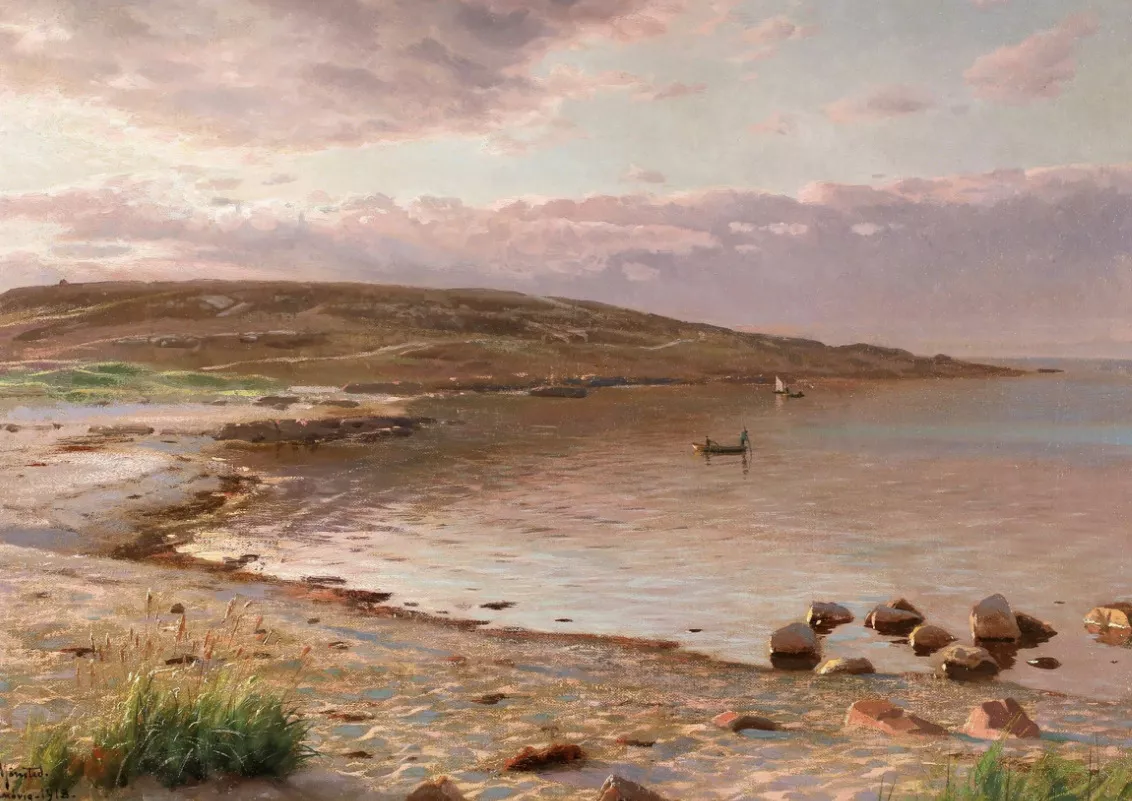
Rural scenes, landscapes, flora and fauna: all subjects covered
The hierarchy of naturalist subjects and its impact on the rating
Naturalism developed its own distinct iconography, deeply rooted in the depiction of rural life and the social changes of the Third Republic: the exodus from the countryside, the mechanization of agriculture, harvests, grape harvests, goose herders, and spinners.
These subjects, which would have seemed trivial to an academician of the early 19th century, became, under the brush of the naturalists, works of a dignity and gravity comparable to the great historical compositions.
It is precisely this ambition—to depict the world of labor with the solemnity once reserved for heroes and gods—that gives these works their enduring power and appeal to contemporary collectors.
Peasant scenes with strong narrative content constitute the most active and highly valued segment of the naturalist market. They are followed by rural landscapes painted en plein air, with that attention to atmospheric light that distinguishes naturalism from Courbet’s realism.
Paintings of flora and fauna, long relegated to a minor status, have undergone a gradual reappraisal since the 2000s, driven by collectors drawn to their decorative nature and their relevance to contemporary environmental concerns.
Portraits of identified peasants or laborers, captured in their work environments, constitute a narrower but consistently sought-after segment.
Subject / Theme | Characteristics | Indicative Price Range | Market Demand |
Large-format peasant scene (major artist) | Central motif of naturalism, maximum narrative ambition | €15,000 — €200,000+ | Very strong, institutional and private |
Medium-sized peasant scene (established artist) | Depiction of labor, outdoor light, rigorous composition | €3,000 — €40,000 | Active, broad spectrum of buyers |
Naturalistic rural landscape (documented artist) | Atmospheric light, direct observation, low horizon | €2,000 — €30,000 | Strong market, landscape collectors |
Agricultural work and harvest | Group scene, often large-scale, socially significant subject | €5,000 — €80,000 | Very active, international demand |
Portrait of an identified farmer or laborer | Dignity of the subject, direct gaze, work environment | €2,500 — €25,000 | Regular demand, portrait collectors |
Paintings of flora and fauna (well-documented artist) | Naturalistic observation, botanical or zoological accuracy | €1,500 — €15,000 | On the rise, highly valued decorative segment |
Signed study and preparatory sketch | Spontaneity, insight into the artist’s creative process | €500 — €6,000 | Growing market, accessible entry point for collectors |
Large-format works and oil-on-canvas: the most sought-after naturalist works
In naturalism, the large format is an artistic and political statement in its own right. By choosing to paint harvesters, gleaners, or animal tenders in formats typically reserved for history painting, Bastien-Lepage, Jules Breton, and Léon Lhermitte affirmed the equal dignity of these subjects alongside grand mythological or historical compositions.
These ambitious works, exhibited at the Official Salon where they attracted considerable attention, are the ones that museums and major collectors seek out first when they appear on the market.
Oil on canvas remains the dominant and most highly valued medium in the naturalist art market. However, naturalist artists also produced works on paper, pastels, and preparatory drawings, which offer a more accessible entry point into their body of work.
In the case of Bastien-Lepage, his charcoal drawings and pen-and-ink studies are now just as sought after by specialized collectors as his large canvases. For Lhermitte and Breton, the preparatory drawings offer insight into the compositional work underlying their major painted works.
Estimate in less than 24h
Get a Free Appraisal of a Naturalist Painting
A certified appraisal by a licensed auctioneer in less than 24 hours
Appraising a naturalist painting requires a comprehensive understanding of the movement’s history, the technical characteristics of 19th-century plein air painting, and the current state of a market distinguished by its national diversity.
Naturalism is a European phenomenon with highly contrasting national expressions: what applies to a large-format work by Bastien-Lepage does not follow the same criteria as a seascape by Frits Thaulow or a genre scene by Joaquín Sorolla.
A certified auctioneer has the training and experience necessary to navigate this complexity, and his expertise is backed by his professional liability.
Auctie’s offers this expertise free of charge, with a certified response within 24 hours.
Whether you wish to appraise an inherited painting, prepare an estate, ensure a work is valued at its true worth, or consider putting it up for sale, the process is the same: submit your piece to a trained eye capable of accurately determining its value in today’s market.
What You Need to Provide for an Online Appraisal
For a naturalistic oil on canvas, please provide clear photographs of the front and back of the artwork, a photo of the signature if visible, the precise dimensions of the composition and the stretcher, and any known provenance information: a collection or gallery label on the back, an old purchase receipt, or a reference in an auction catalog or specialized publication.
Mention of any participation in the Official Salon, attested by a Salon label or a reference in digitized catalogs, is particularly valuable because it establishes a definite date and a form of early public recognition.
For works on paper, pastels, and drawings, the condition of the support is critical: pinholes, foxing, creases, or water stains must be noted and documented with photographs. In case of doubt regarding attribution or condition, a physical examination of the piece can be arranged at a later date at no additional cost.
Attribution, Provenance, and Authenticity: The Pillars of Valuation
Signature, Art Show, and Catalogue Raisonné: The Impact on Value
The authentication of a naturalist painting relies on a set of converging clues. The signature is the first point of reference, but it is never sufficient on its own: disputed attributions and signed forgeries circulate on the market, particularly for the most highly valued artists.
Stylistic comparison with the artist’s documented works, analysis of materials and the support, examination of the stretcher and canvas, and consultation of available archives are the essential steps in any serious appraisal.
For naturalist works, participation in the official Salon is a documentation tool of paramount importance. The naturalists almost always exhibited their large-scale compositions at the Salon, and the Salon catalogs—which have been digitized and are now accessible—make it possible to trace a work’s presence in official exhibitions, establish its exact date, and document its contemporary critical reception.
For the artists covered, catalogs raisonné are the definitive authority: the one on Jules Bastien-Lepage compiled by William Feldman, the collections on Jules Breton and Léon Lhermitte, the works devoted to Anders Zorn by Erik Lönnmark or to Sorolla by Blanca Pons-Sorolla constitute the primary tools for attribution that the auctioneer relies on.
Level of Documentation | Impact on the valuation |
Work listed in the catalogue raisonné | Maximum guarantee; very significant premium on value |
Work exhibited at the Official Salon (digitized booklet) | Certain dating and contemporary public documentation; strong impact |
Work published in specialized literature or exhibited in a retrospective | Strong scholarly endorsement; significant increase in value |
Work accompanied by a written appraisal from a recognized expert on the artist’s body of work | Good guarantee; provides assurance to the buyer and facilitates the sale |
Work with a legible signature and documented provenance | Solid foundation; reliable estimate and a narrow price range possible |
Work without documentation or signature | Increased uncertainty; estimate based on stylistic and material analysis |
Provenance and Condition: Their Impact on Value
The provenance of a naturalist painting is a decisive factor in building confidence in the market. A work whose history can be traced through a well-identified historic private collection, a major 19th-century Parisian gallery such as Georges Petit or Durand-Ruel, or a documented historical public auction enjoys additional legitimacy that buyers directly value.
For major Salon compositions, often reproduced in the illustrated press of the time, a mention in *Le Monde illustré*, *L’Art*, or *La Gazette des Beaux-Arts* constitutes valuable contemporary iconographic documentation that considerably enhances the piece’s credibility.
The state of preservation is the other key factor. Naturalistic oil-on-canvas paintings, often painted en plein air with materials of varying quality, can present specific problems: premature cracking due to overly rapid drying, yellowing of the varnish, and old touch-ups on weakened areas.
Examination under raking light and ultraviolet light reveals these interventions and allows for a precise assessment of their impact. For large Salon compositions, whose imposing dimensions make any restoration costly, the state of preservation is often the primary factor in negotiating the final price.
Selling a Naturalist Painting at Auction with Auctie's
From the reserve price to the hammer price: how the price is determined
Auction is the most advantageous method of sale for high-quality naturalist paintings. It yields a public price certified by a court-appointed auctioneer, resulting from the direct interplay of supply and demand. The reserve price, set in consultation with the seller, is a carefully calibrated signal designed to attract early bidders without undervaluing the piece.
For major, well-documented naturalist compositions—for which international demand is often greater than assumed—a well-calculated reserve price can spark competition among multiple buyers, resulting in a final price that far exceeds initial projections.
For leading naturalist artists—particularly Scandinavian and Spanish artists whose market values have been rising steadily for the past twenty years—auction is the optimal method of valuation: it simultaneously exposes the piece to the entire international market and produces a certified price that accurately reflects the state of demand.
For second-tier artists, the quality of the catalog entry, the accuracy of the appraisal, and the distribution of the catalog to the right buyers are the most critical factors in achieving a good result.
Hôtel Drouot and online auctions: reaching the right bidders
Auctie’s holds its auctions at Hôtel Drouot, the leading auction venue in continental Europe, founded in 1852 and frequented by a dense network of dealers, collectors, and connoisseurs of 19th-century art.
For a naturalist painting, Drouot offers optimal visibility among specialists in the period: enthusiasts of Bastien-Lepage and Jules Breton, collectors of Scandinavian and Spanish naturalism, and dealers specializing in 19th-century plein air painting. The catalog is distributed prior to the auction, allowing potential buyers to plan their bids well in advance of the auction.
Auctie’s auctions are also accessible online in real time, which extends the reach of each sale far beyond Paris.
A Swedish collector specializing in Anders Zorn, an American art lover passionate about Jules Breton’s naturalism, or a Spanish buyer searching for an early Sorolla can bid from their office.
For naturalist paintings—whose most active collectors are often based outside France—this international dimension is often decisive in securing the optimal hammer price.
Estimate in less than 24h
Estate Planning, Inheritance: Valuing an Inherited Naturalist Painting
Inventory and Distribution of an Estate
Naturalist paintings frequently appear in the estates of families whose collections were assembled in the second half of the 19th century or in the early decades of the 20th century.
Having hung in family homes for generations—sometimes without their current owners knowing their exact value or even the artist’s identity—these works can represent a significant portion of the estate’s assets.
A large Salon-style naturalist composition, acquired in the 1890s for a few hundred francs, may be worth tens of thousands of euros today. This rise in market value explains why appraising inherited naturalist paintings is a process that is both important and delicate.
Auctie’s regularly works alongside notaries to compile comprehensive estate inventories that include 19th-century paintings. Each work is appraised individually: precise description, technique and medium, dimensions, condition, attribution, and an estimate of market value as of the reference date.
The resulting report is an official document that is legally enforceable and can be included in the estate file without reservation.
Confidentiality and Anonymity Preserved
The circumstances leading to the appraisal of a naturalist painting are often personal and sensitive: estate settlement, divorce, estate reorganization, or the decision to sell after a long period of ownership.
Auctie’s handles each case with absolute discretion. The owner’s identity is never disclosed to third parties without their explicit consent, and the works may be offered for sale under complete anonymity if the owner so desires.
This guarantee is a fundamental commitment of Auctie’s, valid at every stage of the relationship, from the initial contact through to the receipt of the proceeds from the sale.
Entrust the appraisal of your naturalist painting to Auctie's
A naturalist painting deserves an appraisal commensurate with its complexity. The diversity of national expressions within the movement—from Bastien-Lepage’s naturalism to Zorn’s Nordic plein air style, including Sorolla’s Spanish luminism—the challenges of attribution in a market undergoing revaluation, and the decisive role of format and documentation: these are all factors that only a licensed auctioneer, well-versed in the specifics of this segment, can accurately prioritize.
Auctie’s guides you from the initial appraisal through to the final auction, with the rigor of a state-certified expert and the discretion your financial decisions deserve. The appraisal is free, confidential, and non-binding, and you’ll receive a response within 24 hours.
Discover in the same theme

Rating and value of paintings by Paulin Bertrand
Paulin Bertrand is a 19th-century landscape painter whose works are highly regarded and valued at auction.
Learn more >

Ratings and values of paintings by Ernfried Wahlqvist
Ernfried Wahlqvist was a 19th-century Swedish realist painter whose paintings and seascapes are highly prized at auction.
Learn more >

Rating and value of sculptures, bronzes and marbles by Augus...
Auguste Clésigner is a French sculptor who has produced a number of sculptures that are highly valued at auction.
Learn more >
Estimate in less than 24h
Frequently asked questions
-
What is the price range for a naturalistic painting?The value varies considerably depending on the artist, the subject, and the format. A large-format peasant scene by a major artist ranges from 15,000 to 200,000 euros. A medium-sized rural landscape by a recognized artist ranges from 3,000 to 40,000 euros. Signed studies, drawings, and works depicting flora and fauna sell for between 1,500 and 15,000 euros, depending on their quality and rarity.
-
How can I get a free appraisal of a naturalist painting at Auctie's?Auctie's offers a certified appraisal by a licensed auctioneer—with no obligation and at no cost. Simply submit clear photographs of the front and back of the artwork, the signature, the exact dimensions, and any known provenance information. An expert’s response will be sent to you within 24 hours.
-
Is this the right time to sell a naturalist painting?Yes. Naturalism occupies a middle ground in the 19th-century art market: while it receives less media attention than Impressionism, it offers opportunities to acquire works of genuine quality at affordable prices. It is one of the most interesting segments for discerning collectors, with active demand from European and international collectors.
-
What factors determine the value of a naturalistic painting?Five criteria are key: the artist’s identity (the primary criterion), the subject matter (narrative peasant scenes are highly valued), the format (ambitious large-scale works command the highest prices), the condition of the work, and the strength of the documentation (provenance, exhibition at the Salon, specialized publications).
-
How does Auctie's assist with the sale of a naturalist artwork?Auctie's, an auction house, guides you from the free appraisal all the way through to the final bid. After your artwork has been appraised by a certified auctioneer, we advise you on how to list it for sale, prepare the catalog listing, and organize the public auction using the best sales strategies for your piece.
