



Rating and value of sculptures and bronzes by Henri Louis Levasseur

Key takeaways
- Henri Louis Levasseur (1853–1934) was a French figurative sculptor who specialized in decorative sculpture in the late 19th and early 20th centuries; he is known for his animal and allegorical female figures.
- Levasseur’s works sell for between €70 and €26,330 depending on the material and quality, with marble and bronze commanding the highest prices; there have been approximately 550 sales at public auctions.
- Value depends primarily on the quality of the casting, the original patina, a legible signature, and overall condition, with statuettes measuring 40–60 cm forming the core of the market.
If you own a work by or after the artist Henri Louis Levasseur, and would like to know its value, our state-approved experts and auctioneers will offer you their appraisal services.
Our specialists will carry out a free appraisal of your work, and provide you with an accurate estimate of its value on the current market.
Then, should you wish to sell your work, we will direct you to the best possible arrangement to obtain the optimum price.
Rating and value of the artist Henri Louis Levasseur
Henri Louis Levasseur was recognized during his lifetime. He belongs to the artistic vein of figurative sculptors at the frontier between the 19th and 20th centuries. His legacy therefore consists mainly of sculptures made from several types of material, especially bronze.
At present, the prices of his works are rising recurrently at auctioneers' gavels. His sculptures are prized above all by French and French buyers, and the price at which they sell on the art market ranges from €70 to €26,300, a considerable delta, which speaks volumes, however, about the value that can be attributed to Levasseur's works.
One of his marble sculptures, Petite sieste, sold for €26,330 in 2013, while it was estimated at between €25,000 and €37,600.
Order of value from a simple work to the most prestigious
Technique used | Result |
|---|---|
Baked clay | From €100 to €450 |
Porcelain | From €120 to €2,000 |
Bronze | From €70 to €12,000 000€ |
Marble | From 500 to 26 330€ |
Estimate in less than 24h
Style and technique of the artist Henri Louis Levasseur
Henri Louis Levasseur is a French sculptor linked to the great tradition of decorative sculpture of the late 19th and early 20th centuries. His work is situated between naturalistic realism and sculptural academicism, with no search for the avant-garde.
His production is aimed at a bourgeois and institutional public, in an assumed decorative context. His iconographic fields are animals and allegorical and decorative female figures, symbolic groups and secondary mythological subjects. His work is marked by a strong demand for autonomous animal subjects.
He carefully observes animal anatomy and faithfully depicts proportions, musculature and attitudes. There is no excessive dramatization, the animal is shown in a stable or controlled posture.
His compositions are balanced and legible, often centered. Postures are natural or slightly idealized. Silhouettes are clearly identifiable, designed for immediate reading.
Movement is suggested with restraint (walking, stopping and continuous tension). He rejects spectacular effects in favor of a calm nobility of posture. His style is naturalistic, without excessive hyper-realistic detail. Volumes are legible and forms full and structured.
The clear influence of 19th-century French animal sculpture (Barye, Cain, Frémiet) without formal radicalism. Bronze is the main material of his production, but he also uses plaster, porcelain and marble.
Casting is carried out by specialized commercial founders. Editions are sometimes unlimited, in keeping with the decorative customs of the time. The signature is generally carried on the base or integrated into the pedestal.
The surfaces are smooth to lightly modeled, and anatomical details are suggested without overloading. Modeling emphasizes the continuity of volumes. Patinas are traditional (dark brown, green) and designed to enhance the legibility of forms rather than to create an expressive effect.
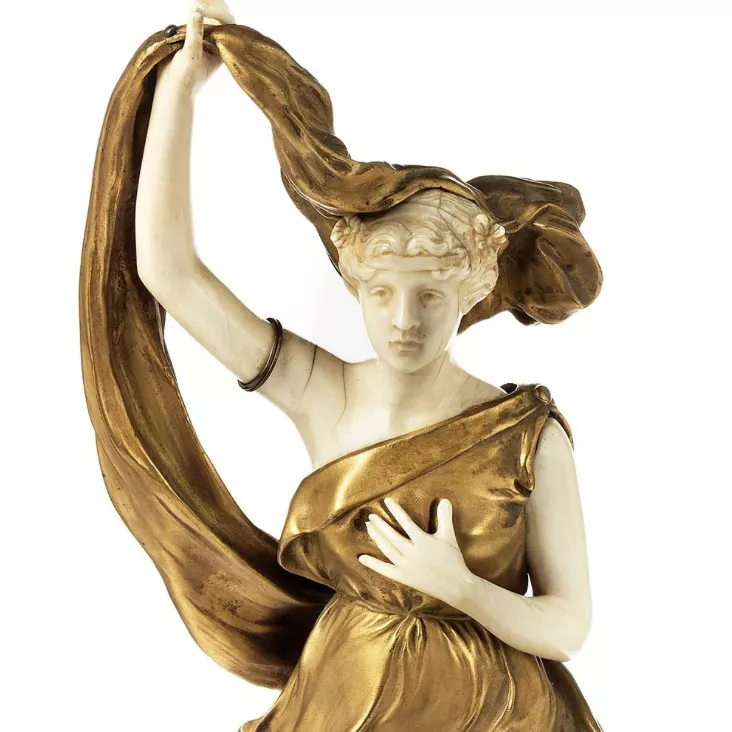
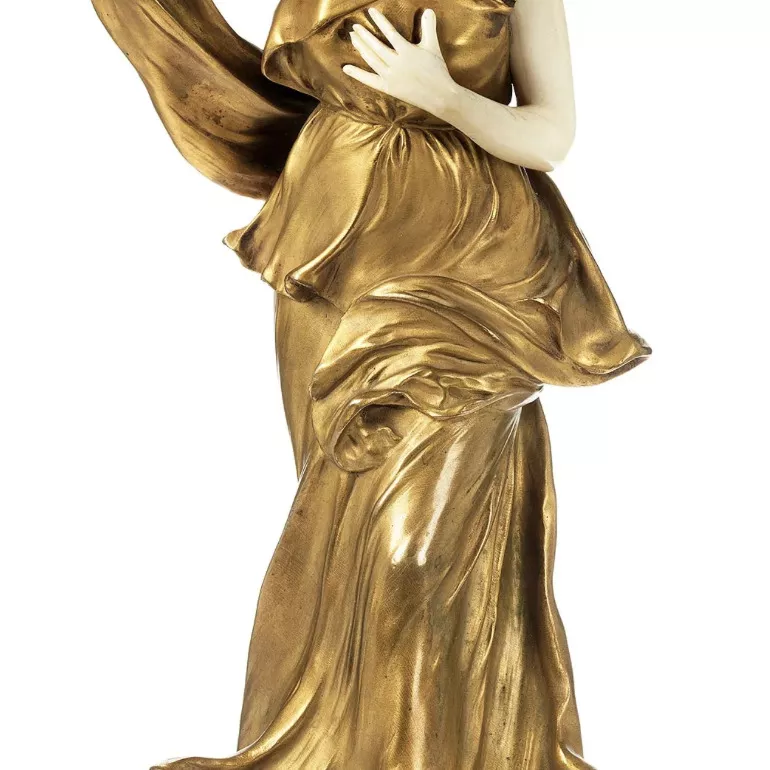
The life of Henri Louis Levasseur
Henri Louis Levasseur (1853 - 1934) was born in France, in a context marked by the domination of academic sculpture and the rise of decorative sculpture for an expanding bourgeois market.
His artistic training was part of the French academic circuits of the second half of the 19th century. His training was based on drawing, modeling and the study of human and animal anatomy. He assimilated the classical codes of figurative sculpture.
He began his activity in the 1870s - 1880s, and began by producing models for publishing, in a context where sculpture was being widely disseminated in the form of bronzes and regules.
He developed a career essentially focused on decorative sculpture. He worked for a broad market, on the border between art sculpture and ornamental production. His work was distributed by specialized foundries and publishers, which explains the multiplicity of print runs.
His output was varied, and included allegorical figures, decorative subjects, decorative scenes and a few animal subjects. His activity was sustained during the Belle Époque and the interwar period.
He did not seek avant-garde recognition or formal innovation, and adhered to an artisanal and academic tradition, responding to a stable decorative demand. His work is designed to be reproducible and integrable into private interiors.
His recognition is essentially commercial and non-institutional. His presence is limited at official Salons compared to leading academic sculptors. He adapts his models to changing decorative tastes without any formal break.
Market segmentation and artist's rating
Henri Louis Levasseur is an artist who is very present at public sales (around 550 passages recorded). This high liquidity corresponds above all to a decorative edition production (statuettes) rather than a rare museum corpus.
Figures and allegories (young women, moral subjects) are a structuring segment, the most frequent in sales. Animal subjects constitute a minority segment in the aggregate results.
Bronze constitutes a premium segment (cast quality, patina, signature, stamps). We also sometimes find combinations of materials such as bronze and ivory, which form part of a more speculative segment, highly conditioned by legal compliance and expertise.
Statuettes (40 - 60 cm) form the core of the market, with their transportable, decorative nature and abundant comparables. Larger pieces belong to a narrower market (logistics, condition, outdoor display) with a more variable valuation.
The criteria for premium pricing are old cast iron, original patina, legible signature, quality of modeling, " titles " subjects such as Vanitas, and provenance.
Discounting criteria can include late casting, refinished patina, accidents, a replaced base, as well as uncertain attribution.
The Levasseur market is abundant and relatively liquid, but driven primarily by decorative figurative statuettes. The price depends less on the subject than on the quality of the cast and the condition.
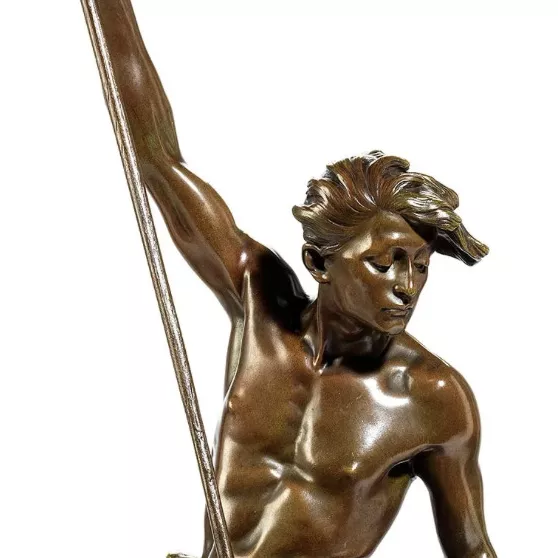
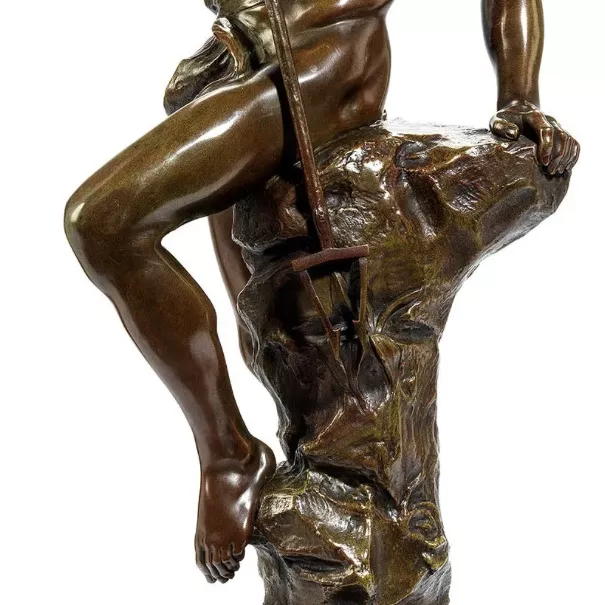
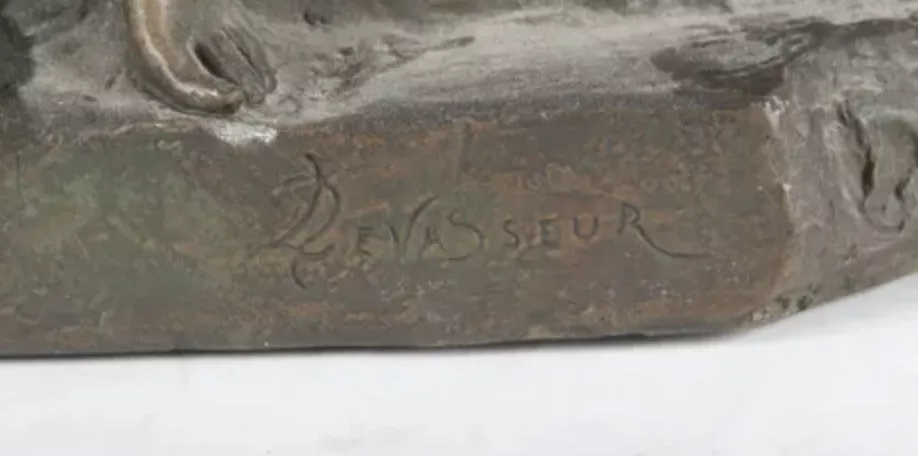
Recognizing the signature of Henri Louis Levasseur
The artist signs " Levasseur" on his sculptures, most of the time. There are, however, many copies, which is why expertise is important.
Knowing the value of a work
If you happen to own a work by or after Henri Louis Levasseur, don't hesitate to request a free appraisal using our form on our website.
A member of our team of experts and chartered auctioneers will contact you promptly to provide you with an estimate of the market value of your work, as well as ad hoc information about it.
If you are considering selling your work, you will also be accompanied by our specialists in order to benefit from alternatives for selling it at the best possible price, taking into account market inclinations.
.Estimate in less than 24h
D'autres bronzes anciens vendus aux enchères

Estimated Between €5,000 and €8,000
Agathon LEONARD (1841-1923), Dancer with scarf, bronze lamp, ed. Susse frères

Estimated 3.000 - 5.000
Raoul LARCHE (1860-1912) The fisherman, Bronze with green patina

Estimated 600 - 800
Hercules Farnese, bronze, reproduction after Glycon of Athens

Estimated 1.500 - 3.000
Jules FRANCESCHI (1825-1893) Hébé et l'aigle de Jupiter, gilded bronze

Estimated 800 - 1.500
Henry Étienne DUMAIGE (1830-1888), bronze print

Estimated 1.500 - 3.000
Antoine Louis BARYE (1796-1875) Eagle and heron, bronze print with shaded brown-green patina
Discover in the same theme

Rating and value of works, drawings, paintings by Edmond Yar...
Edmond Yarz is a landscape painter of the late 19th century, whose paintings are appreciated at auction. His price is stable.
Learn more >

Rating and value of works, drawings, paintings by Emile Fria...
Emile Friant was a late 20th-century artist, close to Degas. He produced drawings and oils on canvas that are highly regarded and quoted at auction.
Learn more >

Rating and value of paintings by Franz Defregger
Franz Defregger is a painter of history and military scenes who has produced works that are highly valued at auction.
Learn more >

Secure site, anonymity preserved

Auctioneer approved by the State

Free and certified estimates
Frequently asked questions
-
Who was Henri Louis Levasseur, and what is his artistic style?Henri Louis Levasseur (1853–1934) was a French sculptor associated with the tradition of decorative sculpture of the late 19th and early 20th centuries. His work, which bridges naturalistic realism and academic sculpture, is distinguished by a prolific output of animal subjects, allegorical female figures, and mythological subjects, characterized by a careful study of anatomy and a faithful representation of proportions, without any avant-garde experimentation.
-
What is the price range for Henri Louis Levasseur's sculptures?The prices of Levasseur’s works range from €70 to €26,330, depending on the material and quality. Bronze works range from €70 to €12,000, while marble pieces command the highest prices, reaching up to €26,330. The material, casting technique, original patina, and condition are the main factors influencing the value.
-
How can you authenticate a sculpture by Henri Louis Levasseur?Authenticating a work by Levasseur requires professional expertise, as there are many copies bearing his signature. Auctie's offers a free, no-obligation appraisal conducted by state-certified experts and auctioneers, who will provide you with their assessment within 48 hours.
-
Is this the right time to sell a work by Henri Louis Levasseur?Yes, now is a good time to sell a Levasseur sculpture. The market is robust and relatively liquid, with approximately 550 lots appearing at public auctions, and prices for these works are rising consistently. Decorative figurative statuettes in bronze or marble are in high demand, particularly among French buyers.
-
How does the appraisal process work at Auctie's, and what should I do next?Appraisals at Auctie's are free and non-binding: simply fill out a form on the website, and a certified expert or auctioneer will contact you to provide a market valuation within 48 hours. If you’d like to sell, Auctie’s will guide you through the process from the appraisal to the auction, offering you the best options to achieve the highest possible price.
