



Rating and value of drawings and paintings by Jules Jacques Veyrassat

Key takeaways
- Veyrassat's works sell for between €10 and €48,800 at auction, with oil-on-canvas paintings fetching the highest prices.
- A member of the Barbizon School (1828–1893), Veyrassat specialized in rural and agricultural scenes, adopting a realistic and naturalistic approach.
- Major compositions featuring horses and farm work command a premium of 20 to 40 percent and regularly exceed €5,000.
Jules Jacques Veyrassat’s paintings and drawings sell for up to €48,800 at auction. An appraisal allows us to accurately determine the current market value of your Jules Jacques Veyrassat artwork and, if applicable, optimize the sale of the piece.
If you own a work by Jules Jacques Veyrassat and would like to know its value, our state-certified auctioneers will provide a free appraisal based on authenticity, market rating, and recent market results.
Market Value and Appraisal of Artist Jules Jacques Veyrassat
Jules Jacques Veyrassat was an artist from the Barbizon School. His body of work consists primarily of paintings. Currently, prices for his paintings are skyrocketing at auction.
His landscapes are particularly sought after, especially by British and American buyers, and the prices at which they sell on the art market range from €10 to €48,800—a considerable range that speaks volumes about the value that can be attributed to Veyrassat’s paintings.
A painting titled *Les chevaux de halage au relais* (88 x 127 cm), dating from 1877, sold for €48,800, while it had been estimated at between €100 and €48,800.
A range of values from a simple work to the most prestigious
Technique used | Result |
|---|---|
Print - multiple | From €10 to €1,500 |
Drawing - watercolor | From €40 to €8,500 |
Oil on canvas | From €100 to €48,800 |
Estimate in less than 24h
Placing the Artist in Context
Period
Jules Jacques Veyrassat (1828–1893) was an artist whose career spanned the rise of Realism in painting.
His career unfolded during the Second Empire and the early years of the Third Republic, a period marked by a growing interest in social and rural subjects. He was part of a movement that revitalized landscape and genre painting, breaking with the traditional academic hierarchy.
Artistic Movements
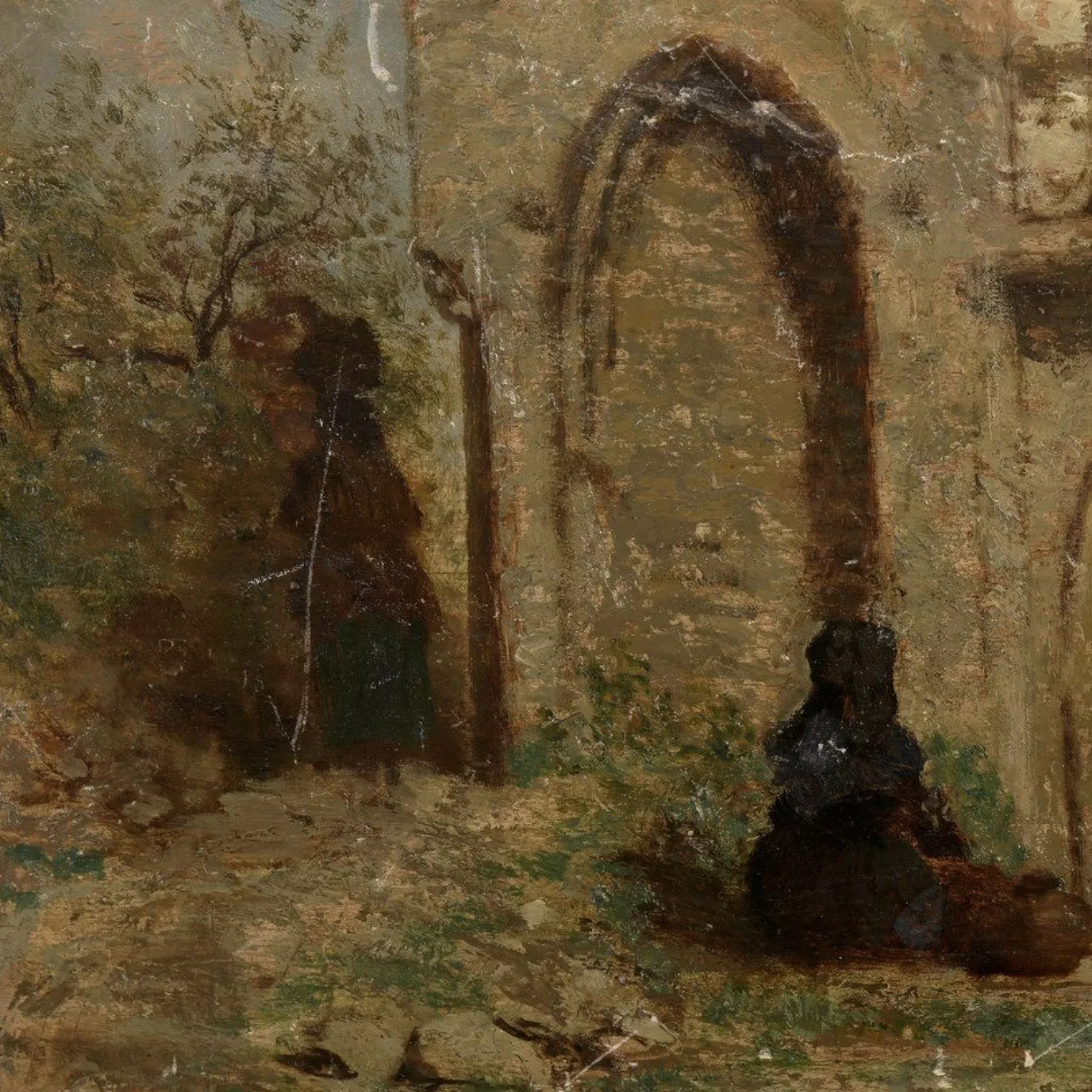
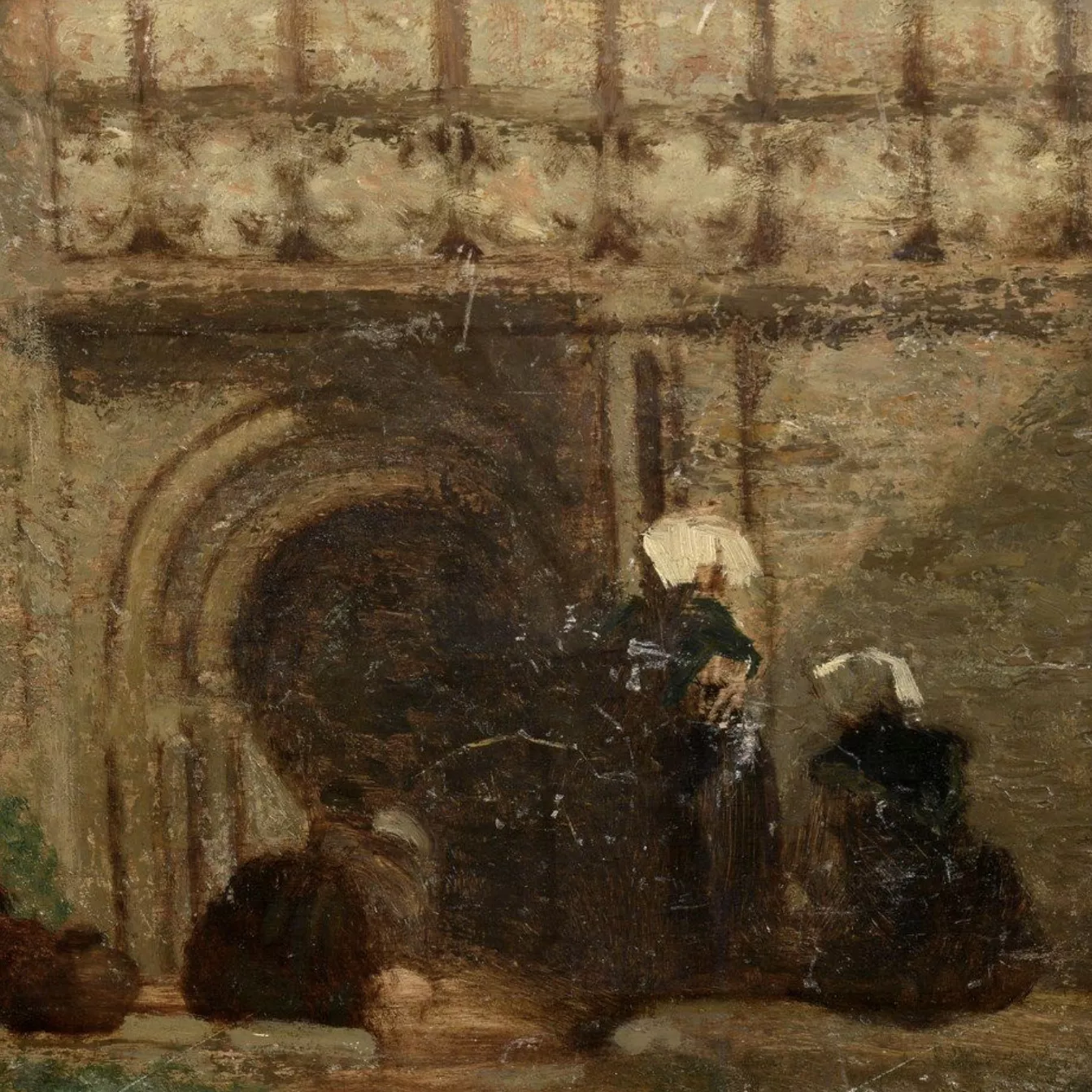
Veyrassat was a realist who favored a faithful depiction of rural scenes and peasant life, without idealization, focusing on living conditions and work.
He was closely associated with the Barbizon School; his body of work reveals an interest in natural landscapes and rural scenes, linking him to artists such as Jean-François Millet and Théodore Rousseau.
He specialized in scenes of daily life, particularly agricultural ones, characterized by a narrative and descriptive quality. He made precise observations of reality, with an eye for detail and a desire to capture the truth of rural life.
The artist contributed to a shift in painting toward contemporary subjects, foreshadowing certain themes of Impressionism.
The Life of Gustave Caillebotte
Cultural Context
Jules Jacques Veyrassat was born in 1828 and developed his body of work within the context of 19th-century French painting, a period marked by the rise of realism and genre painting. He followed the naturalist tradition, focusing on depictions of rural life, agricultural work, and scenes of peasant life.
His work is characterized by meticulous attention to gestures, tools, and draft animals—particularly horses, which occupy a central place in his compositions.
He developed a descriptive and precise style of painting, based on direct observation, reflecting a desire to depict the social and economic realities of rural life. His work contributes to a pictorial celebration of agricultural labor, set against a backdrop of transformations linked to industrialization.
Background
Veyrassat was a student of François-Édouard Picot, whose academic instruction shaped his early training. He collaborated with Jean-Louis Ernest Meissonier, particularly on genre scenes, which influenced his attention to detail and descriptive precision.
His work is part of an artistic milieu closely associated with realist painters such as Gustave Courbet, with whom he shared an interest in depicting reality and working-class life.

The Artist's Techniques
The Style of Jules Jacques Veyrassat
Jules Jacques Veyrassat was a 19th-century French painter associated with the realist tradition and rural genre painting. He specialized in peasant scenes and agricultural work, particularly depictions of plow horses.
His drawing is precise and solid, revealing particular attention to animal anatomy and the accuracy of poses. His palette is natural and subdued, based on earthy tones and diffused lighting effects.
His compositions are balanced, often structured around the activity depicted (plowing, transport, animals at rest). He was influenced by the naturalist painting of the Barbizon School in his observation of the rural world. He sought a descriptive realism combined with a certain dignity in the subjects he depicted.
Focus on a Key Work
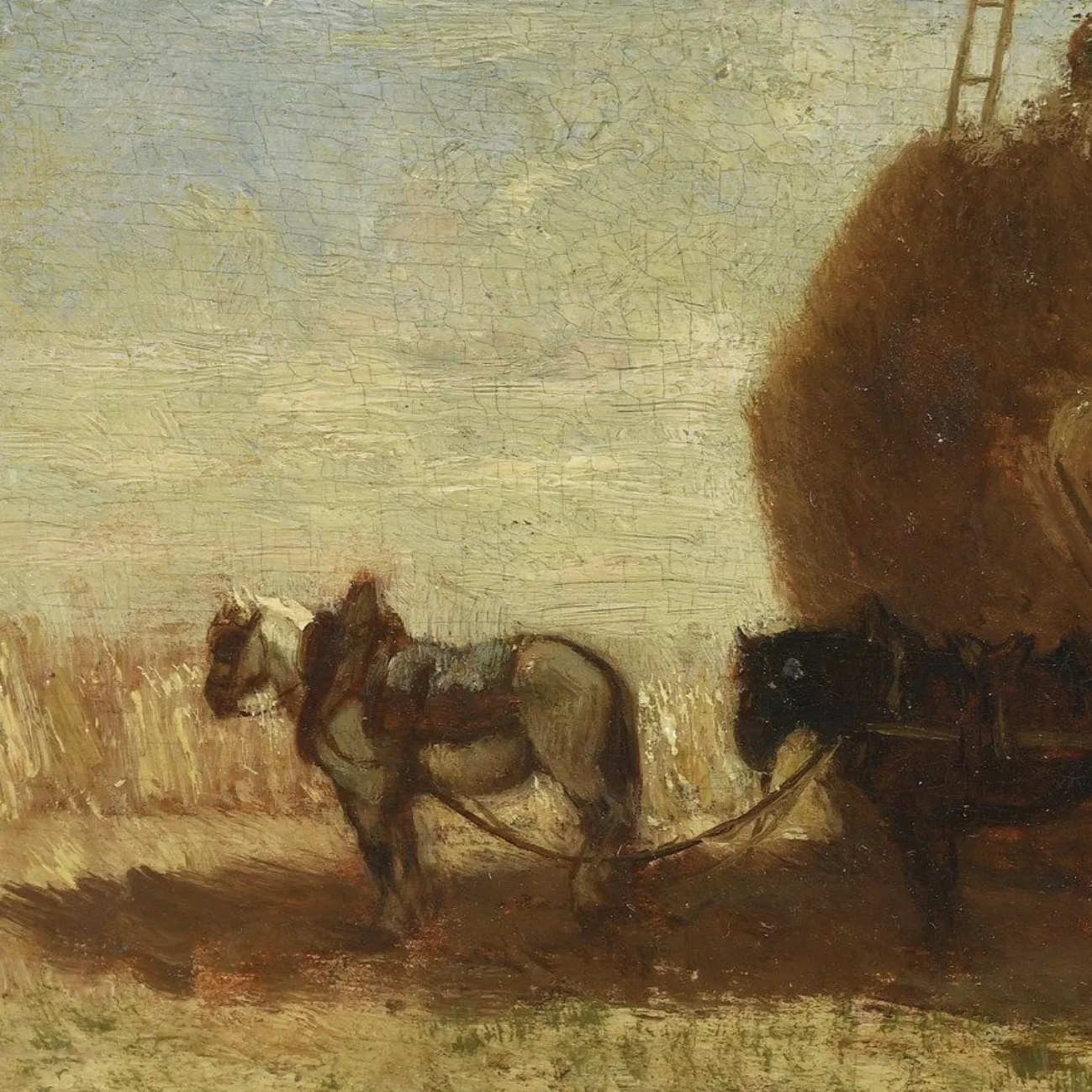
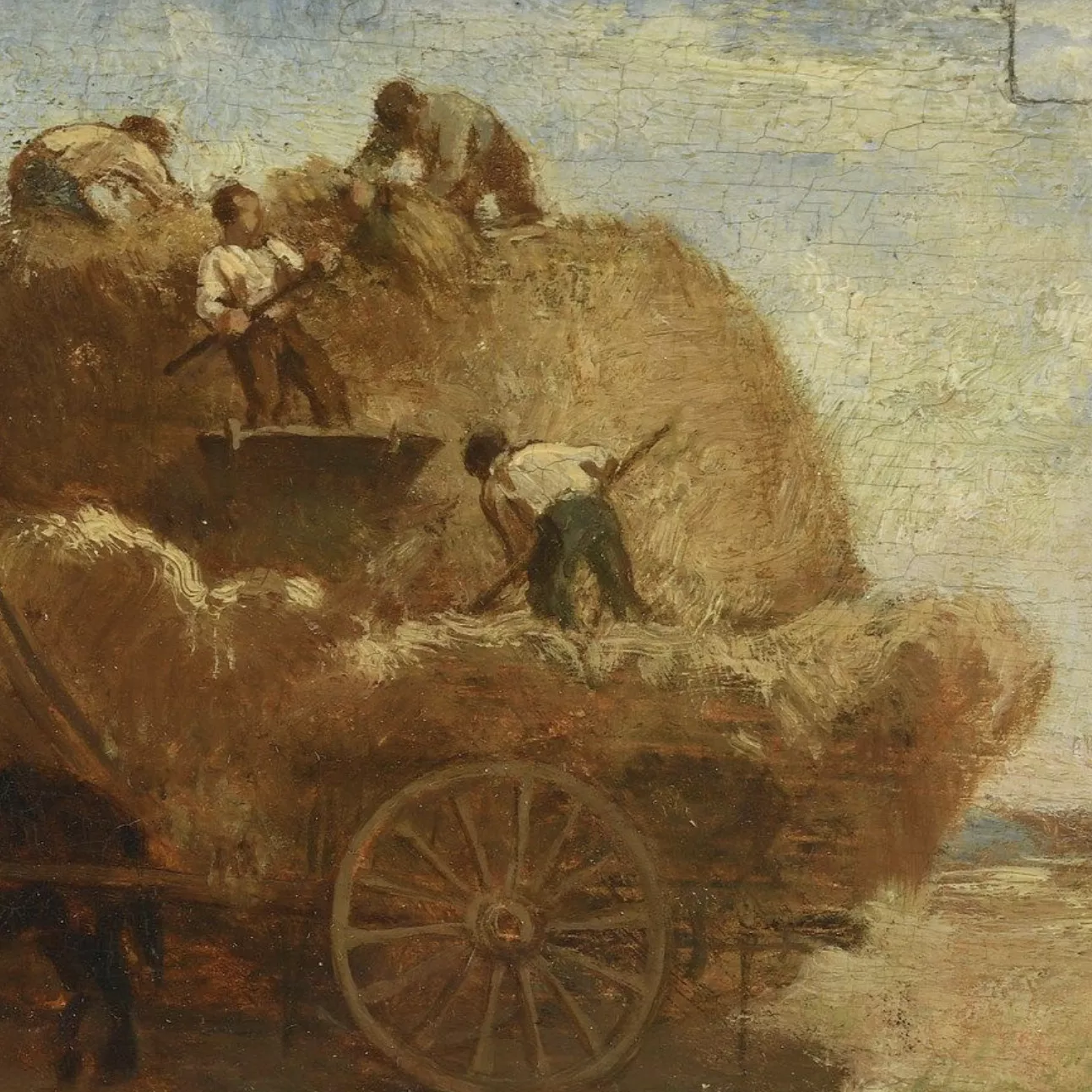
Plow Horses (late 19th century)
This composition centers on a team of horses, which form the focal point of the scene. The depiction of the animals’ anatomy and movement is meticulous, reflecting the artist’s careful observation.
The color palette is dominated by browns, ochres, and greens, evoking the earth and the rural landscape. He incorporates the landscape as a functional frame, without decorative excess. The diffused light contributes to a realistic and stable atmosphere.
This work is representative of a rural realism in which agricultural activity and animal figures take center stage.
FAQ – How do you appraise a work by Veyrassat?
1) What stylistic criteria specific to Veyrassat are key?
The analysis should focus on the precision of the drawing, the rigor of the composition, and the naturalistic treatment of the subjects—characteristics of realistic painting that focuses on rural scenes and agricultural work.
2) How important is the rural theme in the valuation?
Scenes of plowing, harvesting, or peasant life form the core of his body of work. The quality of their execution, their narrative clarity, and their consistency with the artist’s body of work directly influence the estimated value.
3) How does the market influence the valuation?
The estimate is based on a comparative analysis of auction results for 19th-century realist paintings, taking into account pictorial quality, condition, and collectors’ interest in rural scenes and naturalism; the value remains indicative.
Market Segmentation and Figures
Prices of Artworks
In Veyrassat, there is a clear hierarchy among oil-on-canvas paintings, drawings, and prints. Mature oil paintings (rural scenes, agricultural work) generally sell for between €5,000 and €40,000, depending on size and artistic quality.
Large-scale works or major compositions can reach €50,000 to €80,000 under favorable market conditions. Drawings and engravings constitute a more accessible segment, ranging from €500 to €5,000.
The majority of auction results remain below €50,000, positioning the artist in the mid-range segment of the 19th-century painting market.
Factors Influencing Value
Scenes of plowing, horse-drawn carriages, farm work, and lively landscapes form the core of demand; these subjects can command a premium of 20 to 40% compared to more generic landscapes.
The most accomplished works—characterized by structured composition and detailed rendering of animal figures—achieve higher prices than more repetitive or late-period works.
The market for 19th-century paintings in France is relatively active, with a steady sales frequency but a strong emphasis on the individual quality of the works. The market trend is generally stable, supported by sustained interest in the Barbizon School and depictions of rural life in the 19th century.
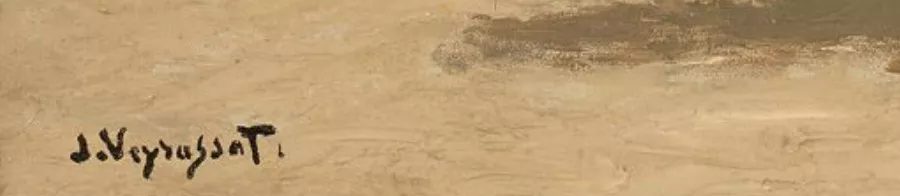
Recognizing Jules Jacques Veyrassat’s Signature
The artist does not always sign his works. If you believe you own one, it is best to have your piece appraised. The signature may vary depending on the type of work, but paintings are often signed. Copies also exist, which is why an appraisal is important.
Get Your Jules Jacques Veyrassat Artwork Appraised
If you own a work by Jules Jacques Veyrassat, an appraisal will help you determine its current market value.
Using our online form, our experts and certified auctioneers will conduct a free appraisal and provide you with a reliable estimate of your artwork’s market value.
If you’re considering selling it, we’ll guide you through the process to ensure you get the best possible price.
Estimate in less than 24h
Discover in the same theme

Rating and value of paintings by Ferdinand Holder
Ferdinand Holder was a 19th-century Swiss painter who became famous for his Symbolist works. His works are valued and quoted.
Learn more >

Ratings and values of paintings by Armand Guillaumin
Armand Guillaumin was a 19th-century Impressionist painter who produced drawings and oil paintings that are highly prized on the auction market.
Learn more >

Rating and value of drawings and paintings by Jean Syndon
Jean Syndon was a 19th-century painter—a realist and Orientalist—who signed his paintings under several names. The value of his works is on the rise.
Learn more >
Nos records d'enchères à l'hôtel Drouot

Estimated 10.000 - 15.000 €
Ebridge Ayer BURBANK(1858-1949), Young African-American boy, Oil on panel.

Estimated 20.000 - 30.000
EXCEPTIONAL LARGE OVAL DISH IN VINCENNES SOFT PASTE PORCELAIN FROM THE "BLEU CÉLESTE" SERVICE OF KING LOUIS XV AT THE CHÂTEAU DE VERSAILLES

Estimated 20.000 - 30.000
MANUFACTURE ROYALE DE SÈVRES, 18th century "L'Empereur de la Chine" - Portrait of the Emperor Qianlong, Hard porcelain bisque, 1775

Estimated 1.500 - 3.000
HERMÈS, "Kelly" 32 saddle bag in black box calf

Estimated Between €5,000 and €8,000
KRACHKOWSKY (1854-1914), Before the storm, oil on canvas

Estimated 40.000 - 80.000
Alexandre ROUBTZOFF (1884-1949), Portrait of Arbia, oil on canvas

Secure site, anonymity preserved

Auctioneer approved by the State

Free and certified estimates
Frequently asked questions
-
Who was Jules Jacques Veyrassat, and what was his artistic context?Jules Jacques Veyrassat (1828–1893) was a French realist painter associated with the Barbizon School. He was part of the 19th-century Realist movement, specializing in rural scenes, agricultural work, and natural landscapes—particularly depictions of plow horses. His work flourished during the Second Empire and the Third Republic, a period marked by a growing interest in social and working-class subjects.
-
What are the prices and price ranges for Veyrassat's paintings?Veyrassat's paintings and drawings sell for between €10 and €48,800, depending on the type of work. Oil-on-canvas paintings range from 100 to 48,800€, drawings and watercolors from 40 to 8,500€, and prints and multiples from 10 to 1,500€. The majority of sales remain below 50,000€, with scenes of plowing and horse-drawn carts commanding a 20–40% premium over more generic landscapes.
-
How do I have a Veyrassat artwork authenticated and appraised?If you own a work by Veyrassat, our certified auctioneers will provide a free, no-obligation appraisal via our online form. The appraisal is based on authenticity, market value, and recent market results, with a response provided within 48 hours. This process is essential because the artist does not always sign his works, and copies do exist.
-
Is now a good time to sell a Veyrassat?Yes, the Veyrassat market remains generally stable and active, supported by continued interest in the Barbizon School and depictions of rural life in the 19th century. The regular frequency of auctions and the interest of British and American collectors in these landscapes create a favorable environment for the sale of high-quality works.
-
How does the sale of a Veyrassat artwork at Auctie's work?Auctie's, an auction house, supports sellers from the free appraisal through to the final sale. After you receive a no-obligation appraisal, we guide you through the entire sales process, maximizing the value of your artwork on the market based on its quality, condition, and subject matter.
