



Rating and value of paintings, drawings and sculptures by Ernest Meissonier

Key takeaways
- Meissonier's works sell for between €10 and €501,900, with a record set in 2002 for the oil on canvas "The Guide," which exceeded its estimate.
- In 2024, 33% of the lots sold were priced between €1,000 and €10,000, and 77% were sculptures, attesting to the importance of this medium.
- A painter of historical and military scenes highly sought after by French and American collectors, his works are characterized by meticulous attention to detail.
If you own a work by or after Ernest Meissonier, and would like to know its value, our state-approved experts and auctioneers will offer you their appraisal services.
Our specialists will carry out a free appraisal of your work, and provide you with an accurate estimate of its value on the current market.
Then, if you wish to sell your work, we will direct you to the best possible arrangement to obtain the optimum price.
Rating and value of the artist Ernest Meissonier
The artist Ernest Meissonier leaves behind a body of work characteristic of his era, he is famous for his paintings of historical and military scenes. Now, prices for his works are rising under the auctioneers' gavel.
His paintings are particularly prized, especially by French and American buyers. The price at which they sell on the art market ranges from €10 to €501,900, a substantial gap but one that says a lot about the value that can be attributed to Meissonier's works.
In 2002, the oil on canvas The Guide was sold for €501,900, while it was estimated at between €154,000 and €256,000.
Order of value from a simple work to the most prestigious
Technique used | Result |
|---|---|
Estamp - multiple | From €10 to €1,100 |
Sculpture - volume | From €300 to €135,000 |
Drawing - watercolor | From €40 to €260,700 |
Oil on canvas | From €70 to €501,900 |
Estimate in less than 24h
Style and technique of the artist Ernest Meissonier
In Ernest Meissonier's painting, detail retains this function of descriptive precision, meticulous restitution, scrupulous fidelity to reality. But it is not diluted into anecdote: it structures the image, supports the form, defines a rigorous visual order.
The brushstroke, brief, tight, applied without impasto, builds the material without ever crushing it. The light, clear and controlled, underlines the volumes with clarity, without dramatic effect, without overload.
The figures, sometimes reduced to a few centimeters, do not lose their authority: they impose themselves through the accuracy of the gesture, through the tension of the body, through the holding of the attitude.
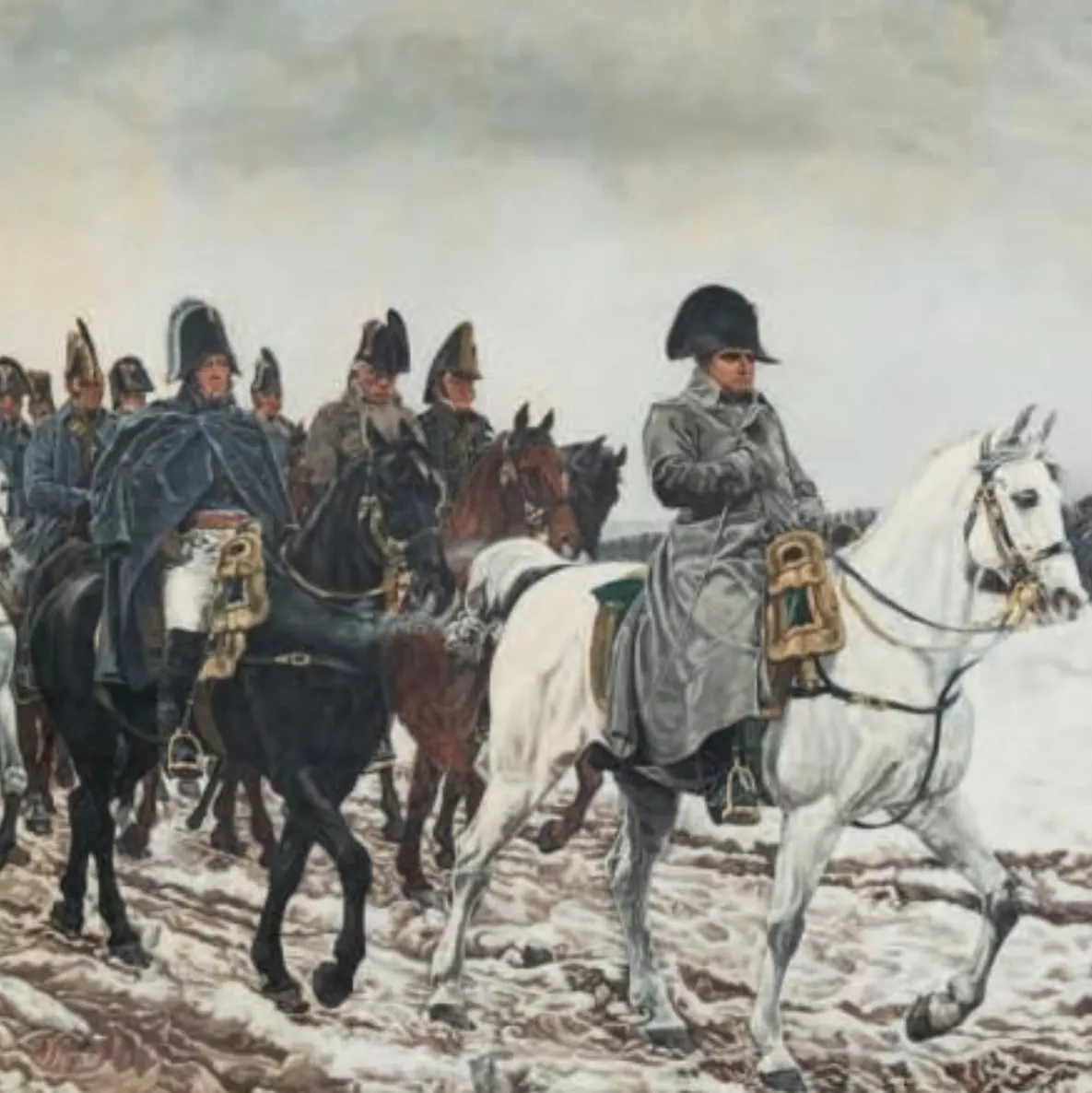
In 1814, Campagne de France (fig. 1), every fold of the coat, every reflection on the saber, every imprint in the snow are treated with equal attention, with no visible hierarchy. The landscape, restrained and silent, doesn't frame the scene: it extends its rigor.
This rigor is echoed in Le Manège (fig. 2), where the horse's movement, the rider's carriage, the speck of dust on the boot all become anchor points for the eye.
The composition is never spectacular: it relies on the balance of lines, the density of observation, the coherence of a meticulously constructed whole. The painting is not given immediately, but is discovered slowly, through successive layers of reading.
The often reduced format forces the viewer to get closer, to scrutinize, to slow down the gaze. Nothing is left to improvisation. The architecture of the image, the drawing, the color, everything obeys a logic of patient adjustment, of slow construction.
Thus, removed from both Romantic breadth and Impressionist fluidity, Ernest Meissonier's painting asserts a classicism of a different order: not that of grandiose composition, but that of exact fragment, of relentless control, of a truth maintained within the strict limits of the frame.
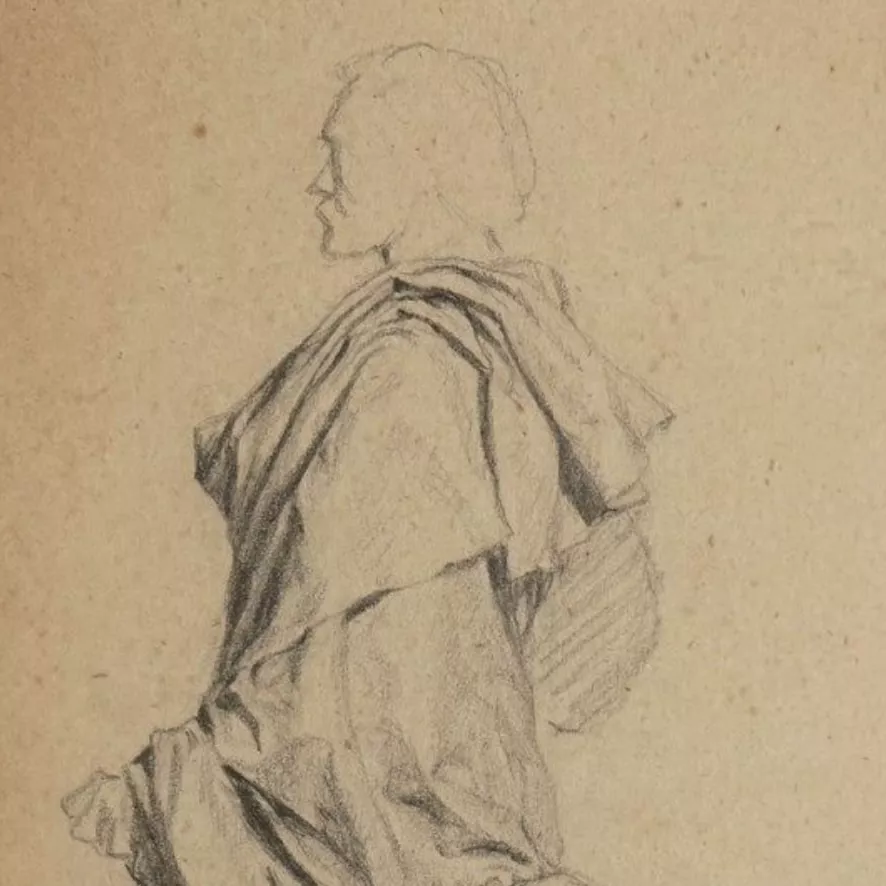
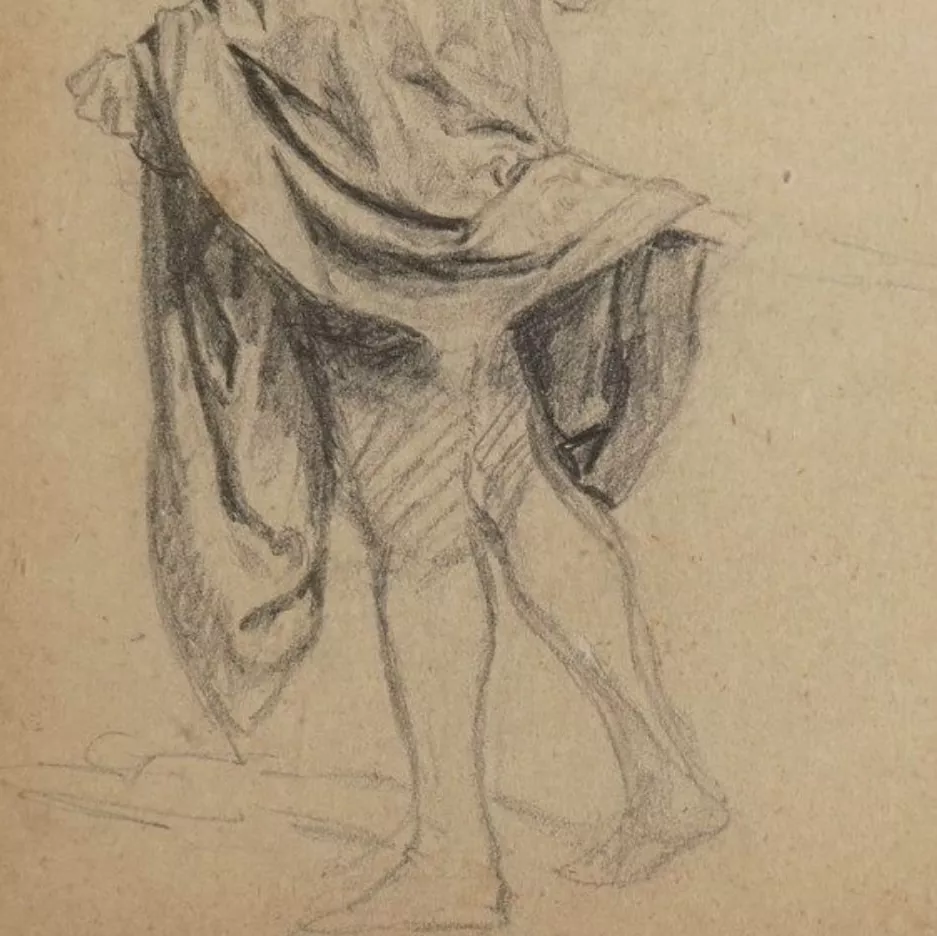
The life of Ernest Meissonier
In Ernest Meissonier's career, academic training retains this function of rigorous drawing, accuracy of observation, discipline of the eye.
Trained in Paris in Léon Cogniet's studio, he turned early on to small-format painting, rejecting heroic compositions (cf Baron Gros, Baron Gérard, Gérôme, or Nicolas Toussaint-Charlet) in favor of patient attention to detail, focused on the precision of the gesture and the coherence of the scene.
Born in 1815 in Lyon, he began exhibiting at the Salon in 1834 with Les Bourgeois Flamands, in a style directly inspired by Dutch painting of the XVIIᵉ century. This early recognition was accompanied by rapid support from private collectors and the state, which acquired several of his works.
His attachment to history painting, in particular to the figure of Napoleon, asserted itself in the 1850s, with paintings such as 1807, Friedland or 1814, Campagne de France, which combine documentary demands, technical mastery and a concern for truth.
He reconstructs every uniform, every weapon, every gesture with an accuracy that's almost visual archaeology. The Emperor is not idealized: he is seen from behind, on horseback, in the midst of his troops, as if absorbed in the moment.
This rigorous, unaffected approach earned him the highest honors: medals at the Salons, numerous official commissions, purchase of his works by Napoleon III, then by the Third Republic.
He played an active role in the artistic life of his time, presiding over exhibition juries, entering the Institut in 1861, and becoming a major figure in the academic camp in the face of modern developments.
His fame was European. English, German and Russian collectors snapped up his small-format works, produced with the same exacting standards as large-scale history paintings.
Thus, untouched by the avant-gardes and the effects of rupture, Meissonier's career followed a continuous line, founded on consistency of style, rigorous craftsmanship and fidelity to a classical ideal, where truth is imposed not by grandeur but by control of detail.
Focus on 1814, Campagne de France, Ernest Meissonier
In 1814, Campagne de France (fig. 1), the composition retains this property of balance, clarity, constructed rigor.
But it does not rely on theatrical staging: it is organized around a slow march, a silent sinking into the snow, a restrained movement.
The figure of Napoleon, centered, slightly leaning forward, is absorbed into the gray mass of horsemen, as if erased by the weight of the moment. The gaze is not directed towards the action, but inward.
The posture, the fold of the coat, the curve of the back: everything indicates weariness, concentration, solitude. The snow, treated in small, tight strokes, erases the traces, unifies the ground, absorbs the light without contrast.
The sky, low, lacklustre, encloses the scene in a muted atmosphere. There is no spectacular depth, no escape effect: the figures are arranged head-on, in a dense, almost compact horizontality.
Every rider, every uniform, every detail of harnessing is treated with equal attention, with no visible hierarchy. The painting doesn't recount a victory, it shows resistance. History is not heroicized, it is contained, weighed, subjected to the gravity of reality.
Then, removed from all lyricism, Meissonier's painting in 1814, Campagne de France imposes a rare form of classicism without sparkle, where the precision of detail becomes a way of retaining the drama, freezing time, maintaining form on the verge of erasure.
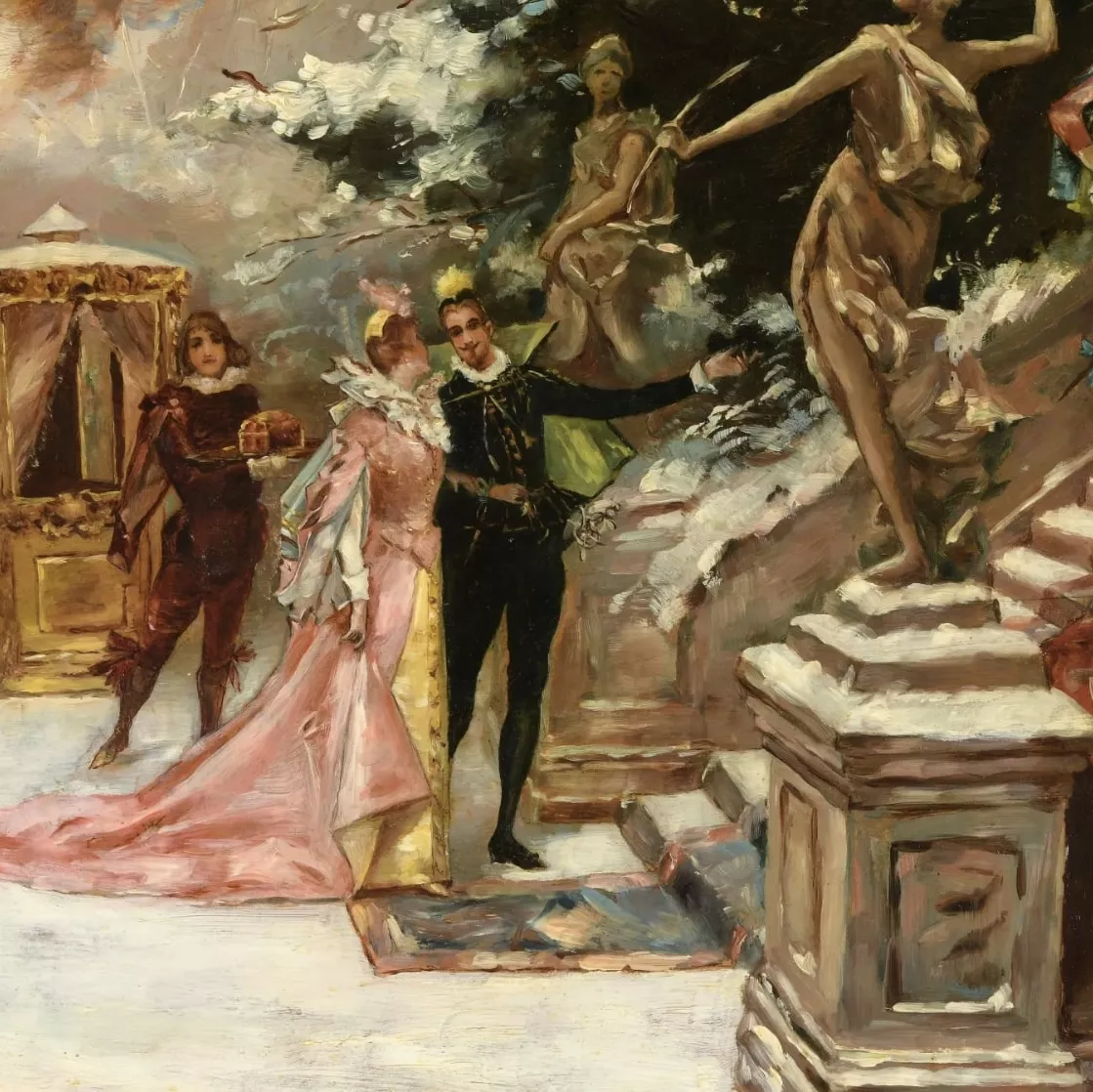
Ernest Meissonier's imprint on his period
In Ernest Meissonier's work, history painting retains this function of visual memory, of fixing gestures, of transmitting figures.
But it no longer imposes itself through the grandeur of the format or the amplitude of the scene: it becomes tighter, more concentrated, more precise to the point of making detail the very unity of the narrative.
This extreme rigor, this relentless fidelity to the visible, this methodical exactitude imposed on his era another idea of the classic, based not on eloquence but on control.
In a century marked by aesthetic upheavals, Meissonier embodied the permanence of a craft, a know-how, a held image.
His influence was felt in official circles, in juries, in public collections, but also in workshops, where his method was cited as an example.
Thus, removed from both experimentation and lyricism, his painting marks its period by its constancy, its clarity, its mastery - a work without demonstrative brilliance, but without fault.
Today, his works meet with great success at auction. They are sought after by a variety of collectors, and the artist's quotation peaked in 2011, remaining a little lower but also more stable since 2020.
In 2024, 33% of lots concerning the artist were auctioned between €1,000 and €10,000, and 77% of works auctioned were for the medium sculpture-volume, a part of his work that is quite important and receives just as much attention as his drawings and paintings.
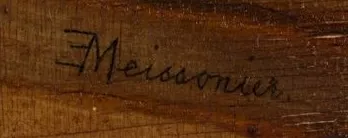
Recognizing Ernest Meissonier's signature
Ernest Meissonier's works are generally signed. However, with or without a mention, it is important for you to have the work appraised to ensure its originality and to be able to date it. Copies also exist.
Knowing the value of a work
If you happen to own a work by or after Ernest Meissonier, don't hesitate to request a free appraisal using our form on our website.
A member of our team of experts and certified auctioneers will contact you promptly to provide you with an estimate of the market value of your work, as well as ad hoc information about it.
If you wish to sell your work, you will also be accompanied by our specialists in order to benefit from alternatives for selling it at the best possible price, taking into account the inclinations of the market.
.Estimate in less than 24h
D'autres bronzes anciens vendus aux enchères

Estimated Between €5,000 and €8,000
Agathon LEONARD (1841-1923), Dancer with scarf, bronze lamp, ed. Susse frères

Estimated 3.000 - 5.000
Raoul LARCHE (1860-1912) The fisherman, Bronze with green patina

Estimated 600 - 800
Hercules Farnese, bronze, reproduction after Glycon of Athens

Estimated 1.500 - 3.000
Jules FRANCESCHI (1825-1893) Hébé et l'aigle de Jupiter, gilded bronze

Estimated 800 - 1.500
Henry Étienne DUMAIGE (1830-1888), bronze print

Estimated 1.500 - 3.000
Antoine Louis BARYE (1796-1875) Eagle and heron, bronze print with shaded brown-green patina

Secure site, anonymity preserved

Auctioneer approved by the State

Free and certified estimates
Frequently asked questions
-
Who was Ernest Meissonier, and what was his artistic style?Ernest Meissonier (1815–1894) was a French academic painter famous for his historical and military scenes, particularly his depictions of Napoleon. His style is characterized by extreme precision, meticulous attention to detail, often small formats, and controlled lighting without dramatic effects. He stood in opposition to the avant-garde movements of his time, embodying a classical vision based on control of detail rather than heroic grandeur.
-
What is the price range for Ernest Meissonier's works at auction?Prices for Meissonier’s works vary considerably depending on the medium and quality. Prints range from €10 to €1,100, watercolor drawings from €40 to €260,700, sculptures from €300 to €135,000, and oil paintings on canvas from €70 to €501,900. In 2024, 33% of lots sold for between €1,000 and €10,000.
-
How can you authenticate a work by Ernest Meissonier?Although Meissonier’s works are generally signed, copies do exist, and it is important to have the work appraised to verify its authenticity and determine its exact date. Auctie's offers a free, no-obligation appraisal by certified experts and auctioneers, who will respond within 48 hours via a simple form on the website.
-
Is this the right time to sell a work by Meissonier?Yes, now is a good time to sell a work by Meissonier. His paintings are enjoying great success at auction among French and international collectors, and the artist’s market value, although slightly lower than in 2011, has remained stable since 2020, with steady demand.
-
How does the appraisal process work at Auctie's?The appraisal is completely free and non-binding. You fill out a form on the website with photos and information about the artwork, and then an expert or certified auctioneer from our team will contact you to provide an estimate of its market value within 48 hours. If you decide to sell, we’ll then guide you through the best options to get the highest price.
