



Rating and value of drawings and paintings by Henri Martin

Key takeaways
- Henri Martin's works sell for between €20 and €1,099,700 at auction, with "La Joie de vivre" (1905) selling for €1,099,700.
- A French Post-Impressionist painter (1860–1943), he combined chromatic Divisionism with Symbolist sensibilities and was awarded a gold medal in 1889.
- His landscapes of the Lot region and decorative compositions from his 1890–1920 period are the most sought-after and highly valued on the market.
Henri Martin’s paintings and drawings fetch up to €1,099,700 at auction. An appraisal allows us to accurately determine the current market value of your Henri Martin artwork and, if applicable, optimize the sale of the piece.
If you own a work by Henri Martin and would like to know its value, our state-certified auctioneers will provide a free appraisal based on authenticity, market rating, and recent market results.
Artist’s Market Value and Reputation
A Post-Impressionist painter, Henri Martin quickly established a reputation and a place in the French art market. Today, his works maintain a very high market value, making him a safe bet at auction.
As such, the prices at which the artist’s works sell range from €20 to €1,099,700—a considerable range that speaks volumes about the value that can be attributed to his works.
For example, his 1905 oil on canvas *La joie de vivre* sold for €1,099,700, while it had been estimated at between €455,000 and €600,000.
Ranking of value from the most basic to the most prestigious
Technique used | Result |
|---|---|
Print - multiple | From €20 to €2,300 |
Drawing - watercolor | From 150 to 85,900€ |
Painting | From €90 to €1,099,700 |
Estimate in less than 24h
Placing the Artist in Context
Period
Henri Jean Guillaume Martin (1860–1943) was a Post-Impressionist painter of the late 19th century. He followed a classical academic path, studying at the École des Beaux-Arts in Toulouse from 1877 to 1879 before moving to Paris, where he took classes with Jean-Paul Laurens.
In 1885, he traveled to Italy, where he studied the early Italian masters alongside Edmond Aman-Jean; this allowed him to discover Mediterranean light and the paintings of Giotto, which would have a profound influence on his work.
His institutional recognition came both early and lasted a long time: he won the gold medal at the 1889 World’s Fair, then the Grand Prix at the 1900 World’s Fair. He was elected to the Academy of Fine Arts in 1917.
Artistic Movements
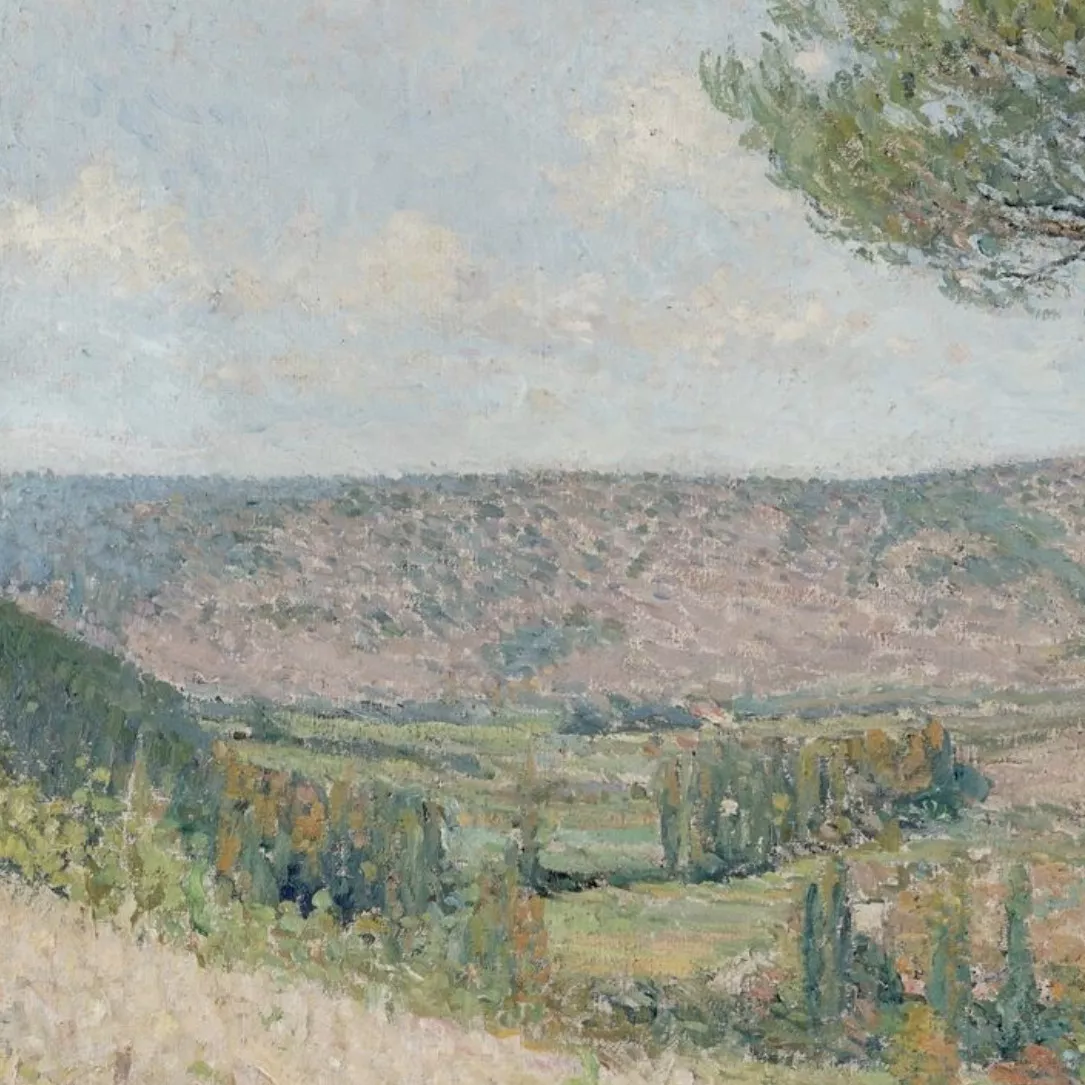
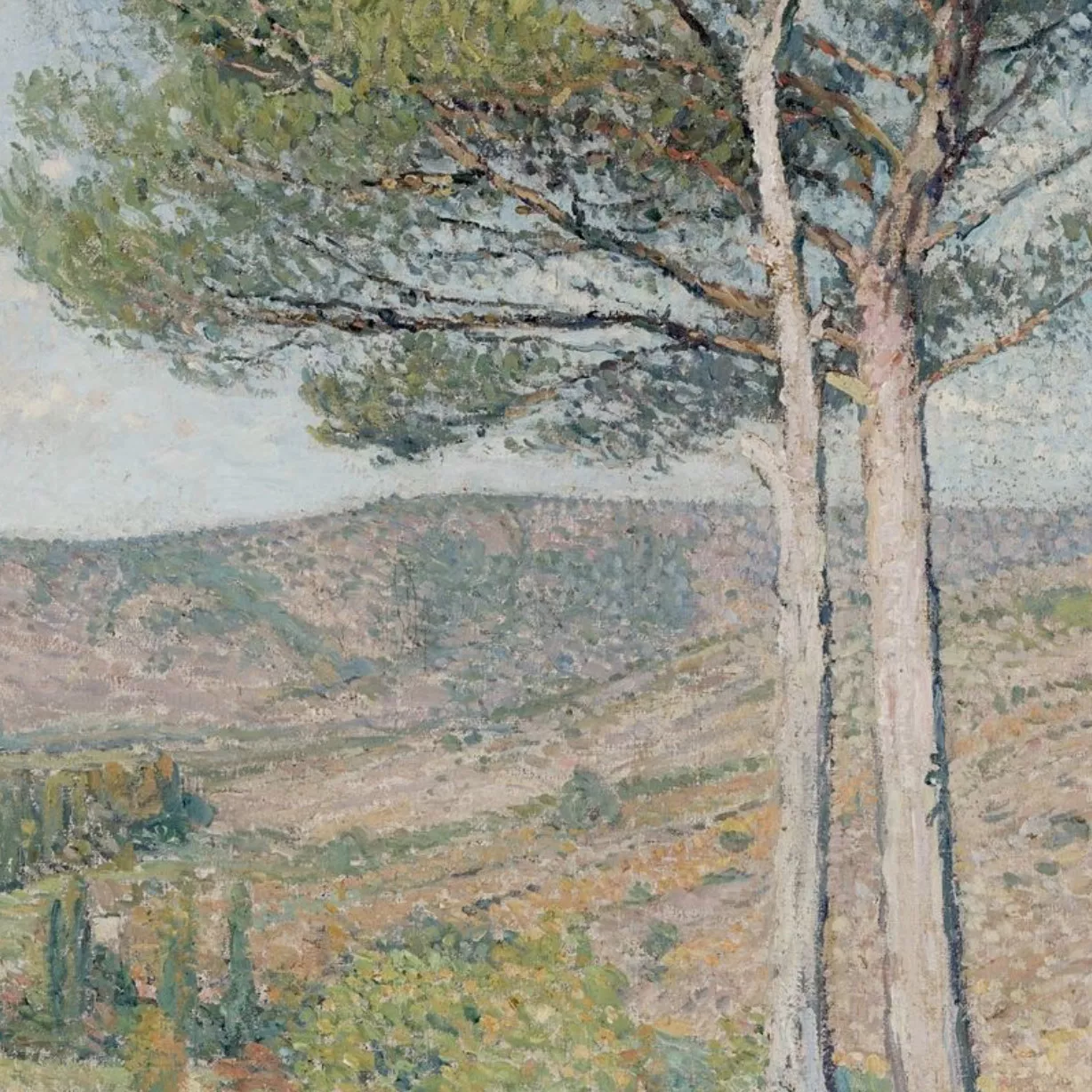
Described as a Post-Impressionist, he stood at the crossroads of several movements: his aesthetic aspirations blended, making him an unclassifiable artist—both Symbolist in his poetic and metaphysical inspiration, and Pointillist in his techniques of dividing colors into iridescent brushstrokes.
His association with Divisionism is debatable, since his technique reveals the influence of the Neo-Impressionists, though in a more spontaneous rather than theoretical manner. Short, separate, and parallel brushstrokes construct forms and light in an idealized color scheme conducive to reverie.
The Life of Henri Martin
Cultural Background
Born in Toulouse to a cabinetmaker father, the artist grew up in a traditional artisan community in southwestern France, far from Parisian art circles, before moving to Paris thanks to a municipal scholarship. From 1880 to 1889, he exhibited works in the traditional style at the Salon des Artistes Français.
After his trip to Italy, his technique moved away from academic models toward an original form of Divisionism, influenced by the Neo-Impressionists, featuring short, separate, and parallel brushstrokes that constructed forms and light within an idealized color scheme.
A reader of Poe, Dante, Byron, Baudelaire, and Verlaine, he exhibited works with Symbolist themes and misty landscapes featuring melancholic figures.
Artistic and Intellectual Circle
He first trained in Toulouse in Jules Garipuy’s studio, then in Paris under the guidance of Jean-Paul Laurens. Through Aman-Jean, a close associate of Seurat, Henri Martin became interested in Divisionist experiments and radically transformed his technique.
In 1881, he married Marie Charlotte Barbaroux, a pastel artist he had met at the École des Beaux-Arts in Toulouse; two of their four sons would go on to become painters themselves: Claude-René Martin and Jacques Martin-Ferrières.
His student and collaborator was the painter Henri Doucet, and he socialized with artists such as Henri Le Sidaner, Pierre-Eugène Montézin, and Fernand Pinal.

Market Segmentation and Artist Rankings
Prices of Works
Henri Martin’s works command varying estimates depending on their size and the period in which they were created, ranging from a few thousand to several hundred thousand euros on the art market.
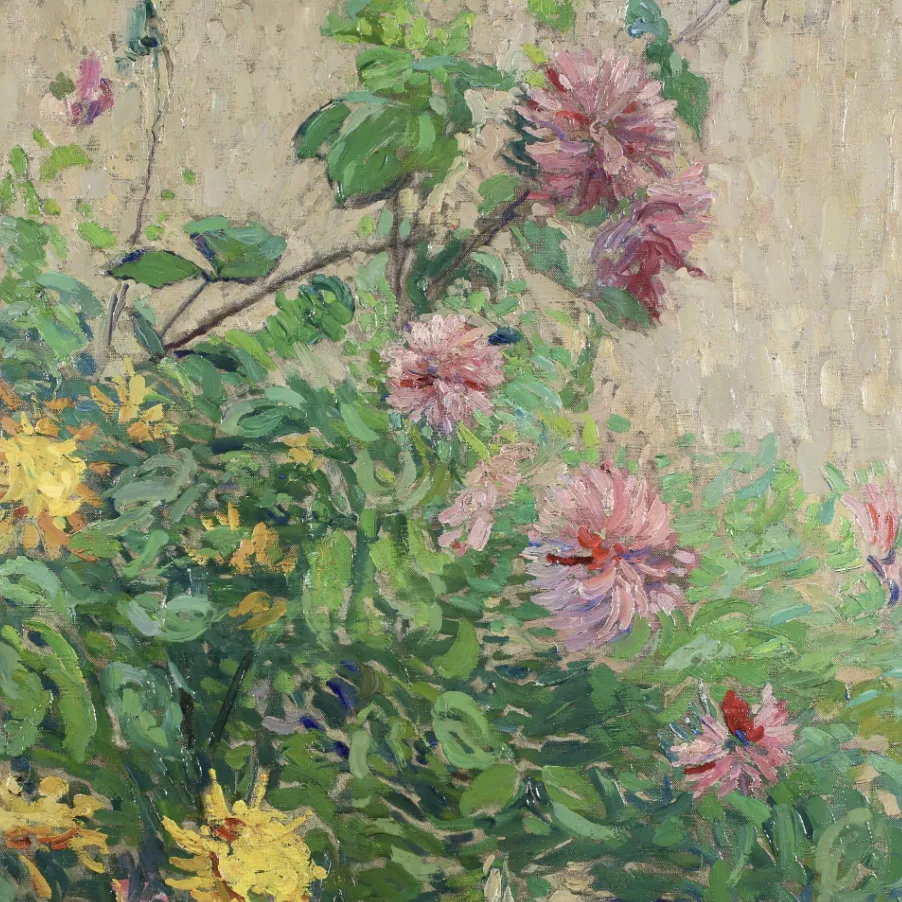
His large-format paintings—particularly his decorative compositions and luminist landscapes of the Lot region—are the most sought-after pieces at auction.
Auction results show a steady and progressive rise in value, reflecting collectors’ growing interest in French Post-Impressionism. Certain works from his mature period, executed in a highly refined Pointillist style, have surpassed the one-million-euro mark at recent public auctions.
Factors Driving Value
Henri Martin’s unique style—a synthesis of chromatic divisionism and Symbolist sensibility—gives his works an immediately recognizable visual identity, ensuring their desirability on the market.
The relative rarity of certain thematic series (plowing scenes, intimate compositions, portraits) exerts upward pressure on estimates. The documented authenticity of the works, attested by an entry in the catalogue raisonné, is a decisive factor in price formation.
The critical rehabilitation of Henri Martin within scholarship on regionalist Post-Impressionism has helped firmly establish his work among the top acquisition priorities of discerning collectors.
FAQ – How do you estimate the value of a work by Henri Martin?
1) Are all of Henri Martin’s periods equally valued on the market?
Certain periods are more sought after, particularly works created between 1890 and 1920—especially his Mediterranean landscapes and Symbolist scenes—which command higher prices. The Symbolist period (1888–1900) and the major Lot period (1900–1930) are recognized as the two pinnacles of the market.
2) Which subjects are most highly valued in Henri Martin’s work?
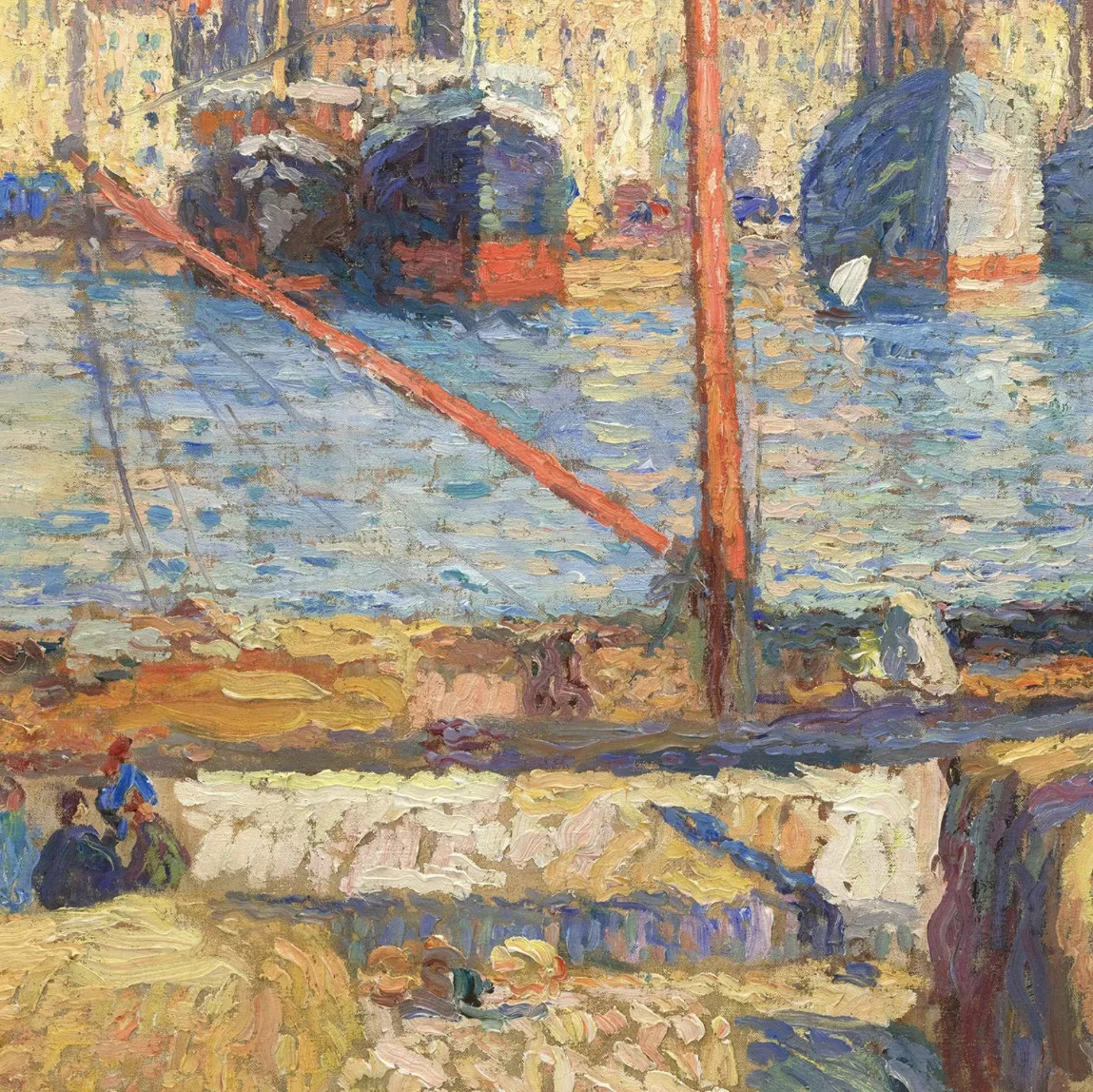
The most sought-after paintings are those depicting the Marquayrol estate, the village of Labastide-du-Vert, and views of the port of Collioure. Less iconic works, such as portraits and still lifes, command lower prices but are still highly regarded.
3) Does the size of a painting influence its appraisal?
Size is a factor that significantly influences an appraisal. Henri Martin’s large-format works, particularly oil-on-canvas pieces, are often the most prized on the market. A large, well-preserved work depicting an iconic subject can be worth 5 to 10 times as much as a smaller study of the same subject.
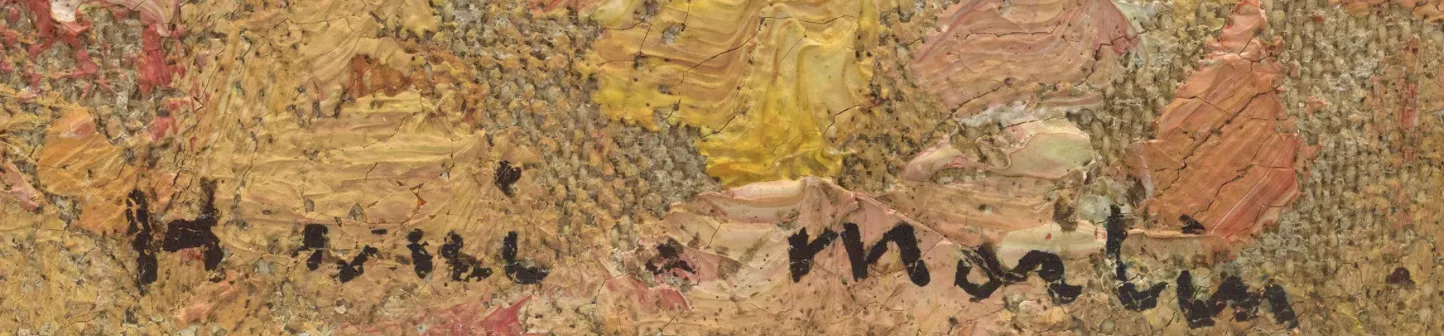
His signature
Not all of Henri Martin’s works are signed.
Although there are variations, here is an example of his signature:
Get Your Henri Martin Artwork Appraised
If you own a work by Henri Martin, an appraisal will help you determine its current market value.
Using our online form, our experts and certified auctioneers will conduct a free appraisal and provide you with a reliable estimate of your artwork’s market value.
If you’re considering selling it, we’ll guide you through the process to ensure you get the best possible price.
Estimate in less than 24h
D'autres tableaux impressionnistes vendus aux enchères

Estimated 6.000 - 8.000
Mikhail Markianovich GUERMACHEFF (1867 - 1930) House under the snow, oil on canvas

Estimated 2.000 - 4.000
Jean DUFY (1888-1964) Vase of anemones, Watercolor

Estimated 600 € - 800 €
Henri ZUBER (1844-1909), Bridge at Artemare. Oil on canvas.
Discover in the same theme

Rating and value of sculptures, bronzes by Paul Wayland Barl...
Paul Wayland Barlett was a 19th-century American sculptor who produced bronzes that are highly valued at auction.
Learn more >

Rating and value of Charles Greber's vases and ceramics
Charles Greber is a French ceramist who has produced works that can be highly valued at auction. 24h estimate.
Learn more >

Estimate and value of paintings, drawings by Hans Thoma
Discover the prices and values of works by Hans Thoma (1839–1924), a German Symbolist painter. Appraisals, art market trends, and expert advice.
Learn more >

Secure site, anonymity preserved

Auctioneer approved by the State

Free and certified estimates
Frequently asked questions
-
Who is Henri Martin, and what is his artistic movement?Henri Martin (1860–1943) was a French Post-Impressionist painter who studied at the École des Beaux-Arts in Toulouse and later in Paris. His work lies at the intersection of several movements: Symbolist in its poetic inspiration and Divisionist in its technique of short, separate brushstrokes used to build up light. A medalist at the 1889 World’s Fair and elected to the Académie des Beaux-Arts in 1917, he is recognized as a sure bet on the French art market.
-
What is the price range for works by Henri Martin?Henri Martin’s paintings and drawings sell for between €20 and €1,099,700, depending on the medium and period. Prints range from €20 to €2,300, drawings and watercolors from €150 to €85,900, and paintings (oils on canvas) from €90 to €1,099,700. His mature works, particularly the large-format landscapes and decorative compositions of the Lot region, command the highest prices.
-
How can you authenticate a work by Henri Martin?To authenticate a work by Henri Martin, we recommend submitting your piece for a free appraisal at Auctie's. Our state-certified auctioneers conduct an appraisal based on authenticity, inclusion in the catalogue raisonné, and recent market results. Documented authenticity is a key factor in determining the price.
-
Which periods and topics are most highly valued at Henri Martin?The works from 1890 to 1920 are the most sought-after, particularly those from his Symbolist period (1888–1900) and his major period in the Lot region (1900–1930). The most highly valued subjects are Marquayrol’s landscapes, the village of Labastide-du-Vert, and views of the port of Collioure. Large-format works and decorative compositions command higher prices than smaller formats and less iconic subjects, such as portraits.
-
How does the appraisal process work at Auctie's?Appraisals at Auctie's are free and non-binding. You can submit your artwork via our online form. Our experts and certified auctioneers will conduct an appraisal and provide you with a reliable estimate of the market value within 48 hours. If you’re considering selling, we’ll work with you to ensure you get the best possible price for your artwork.
