



Rating and value of sculptures and bronzes by Charles Delhommeau

Key takeaways
- Bronze sculptures by Charles Delhommeau (1883–1970) sell for between €200 and €50,000, depending on the technique and the animal subject.
- Big cats and large mammals (leopards, tigers, lions) command the highest prices, while smaller subjects are more affordable.
- Lost-wax cast bronzes by Leblanc-Barbedienne and signed pieces from Sèvres are more valuable than standard editions.
Charles Delhommeau’s sculptures and bronzes sell for up to €50,000 at auction. An appraisal allows us to accurately determine the current market value of your Charles Delhommeau artwork and, if applicable, optimize the sale of the piece.
If you own a work by Charles Delhommeau and would like to know its value, our state-certified auctioneers will provide a free appraisal based on authenticity, market rating, and recent auction results.
Market Value and Appraisal of Artist Charles Delhommeau
Charles Delhommeau is a French artist known for his animal sculptures. Today, the prices of these works can rise significantly at auction.
His sculptures are particularly sought after by buyers worldwide.
The prices at which they sell on the art market currently range from €200 to €33,300—a significant spread that speaks volumes about the value that can be attributed to Charles Delhommeau’s works.
In 2015, his Art Deco bronze Panther from 1925 sold for €33,300, having been originally estimated at between €20,000 and €28,000.
A range of values from a simple work to the most prestigious
Technique used | Result |
|---|---|
Drawing - watercolor | From €20 to €2,000 |
Sculpture—three-dimensional | From 200 to 33,300€ |
Estimate in less than 24h
Placing the Artist in Context
Period
Charles Delhommeau (1883–1970) was a French sculptor whose career spanned nearly seven decades of creative activity, from the Belle Époque through the 1960s.
His institutional presence is documented from the turn of the century; he exhibited for the first time at the Salon des Artistes Français in 1904 with a plaster cast of a “Cat by the Fire,” and later became a member of the Société nationale des Beaux-Arts.
His career can be divided into two successive thematic phases: after a brief career as a portraitist specializing in busts, he turned to animal sculpture, with the distinctive feature that the wild animals he depicted were in captivity.
World War I marked a decisive turning point in his life: after the war, he devoted himself entirely to animal sculpture, specializing in wild animals and drawing inspiration from the animals at the Jardin des Plantes.
Artistic Movements
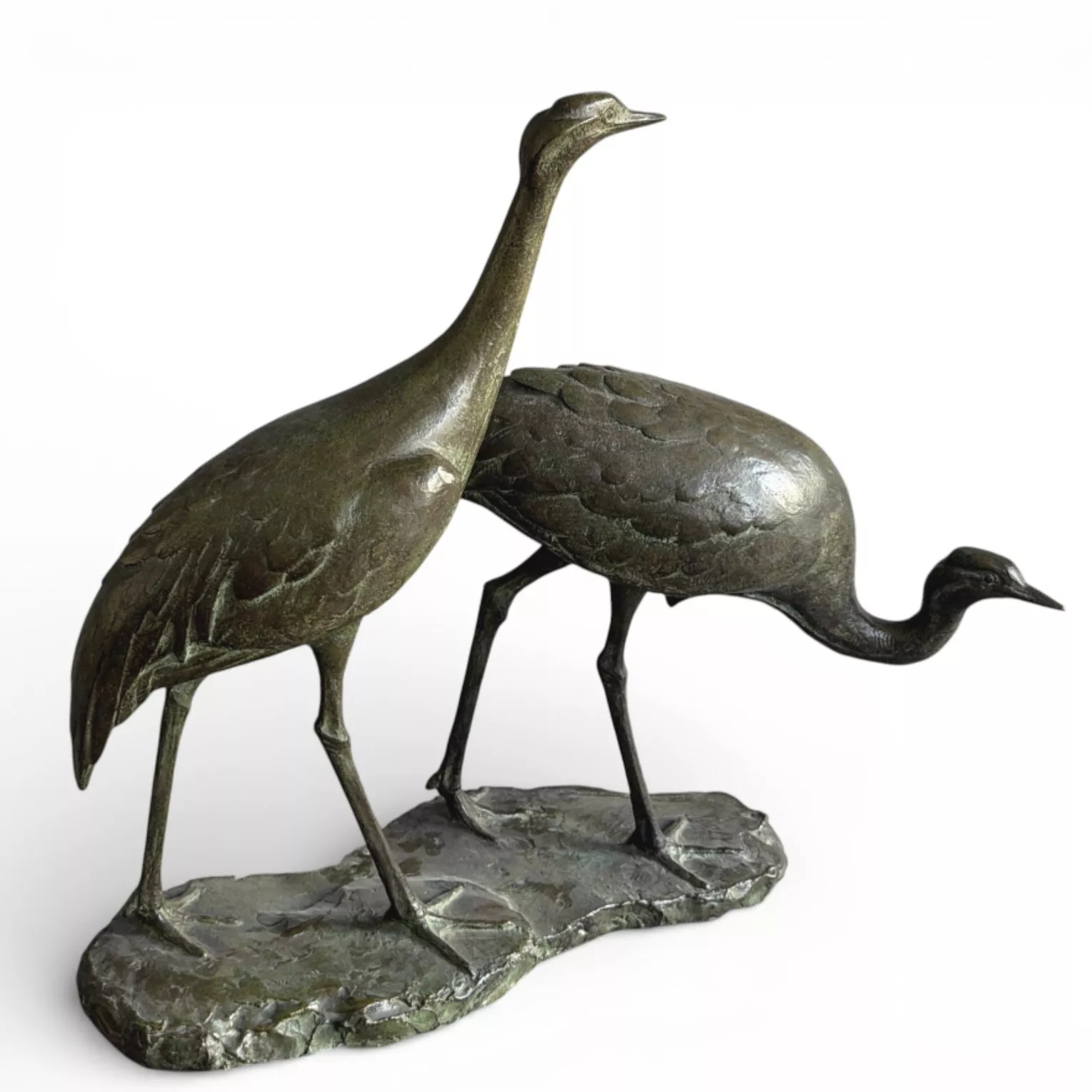
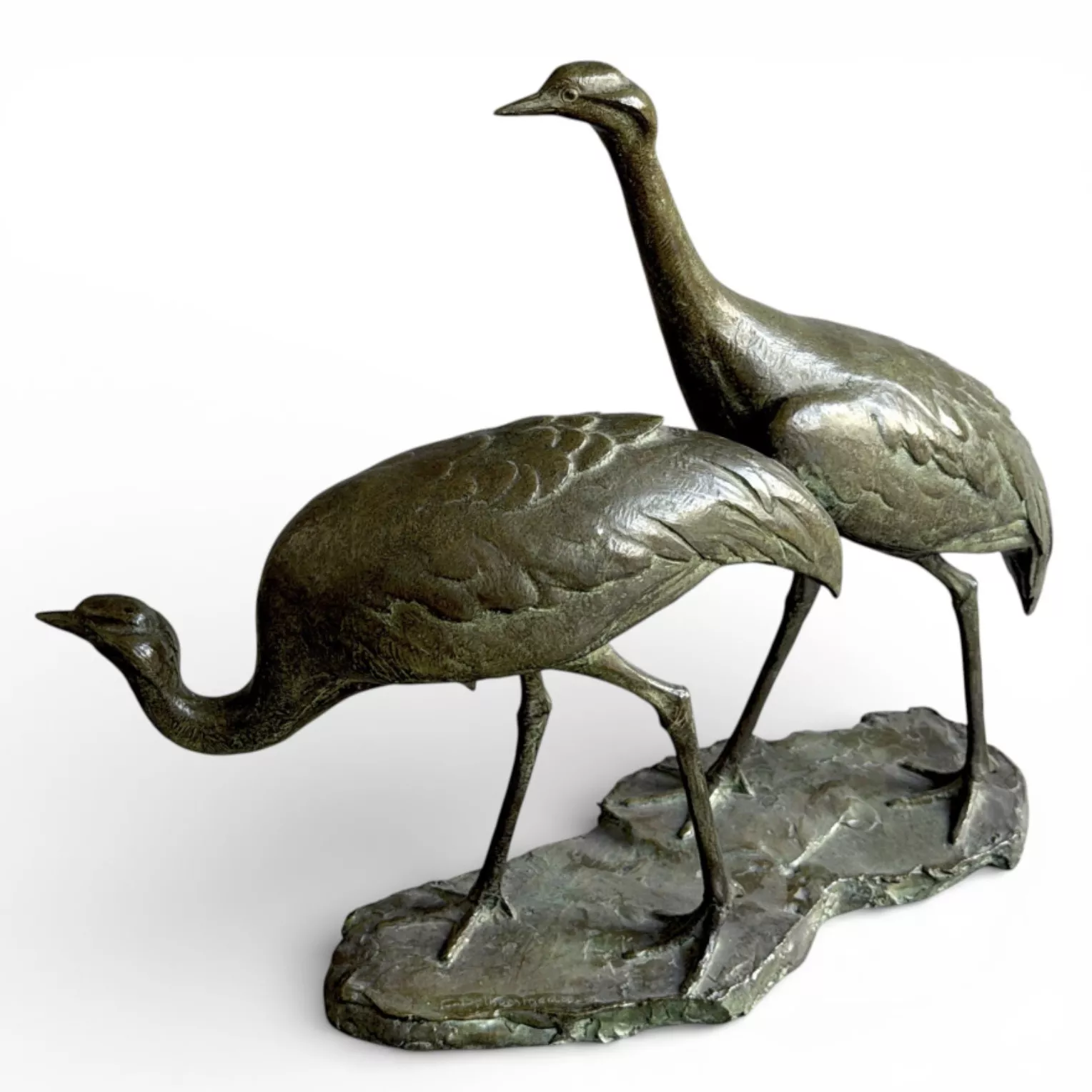
Delhommeau was fully immersed in the tradition of French animal sculpture, a tradition in which he shared an artistic approach with Bugatti, Pompon, and Barye, devoting himself, like them, to long sessions of observing animals at the Jardin des Plantes.
Influenced by Rembrandt Bugatti, he sought to capture the fluid lines and liveliness of animals rather than their ferocity, thereby shifting animal realism toward a more intimate sensibility.
His practice reflects a well-documented naturalistic realism: he produced numerous preparatory drawings, watercolors, and oil paintings, which earned him a reputation as an animal painter. His work follows the tradition of high-quality bronze editions, most of which were cast by Barbedienne.
The Artist's Life
Cultural Context
After a brief career as a portraitist specializing in busts, he turned to animal sculpture, observing wild animals in captivity—a deliberate aesthetic choice that led him to focus on capturing movement and vitality rather than ferocity.
He exhibited for the first time at the Salon des Artistes Français in 1904, steadily advancing through the Salon’s ranks while solidifying his place in the field of animal sculpture.
He followed in the tradition of Parisian animal sculptors by conducting long observation sessions at the Jardin des Plantes and the Vincennes Zoo, much like Bugatti and Pompon before him.
Artistic and Intellectual Circle
In 1938, on the recommendation of his friend, the sculptor Louis de Monard, he submitted to the Sèvres Porcelain Manufactory a centerpiece depicting the Twelve Months of the Year with a central figure of Apollo emerging from the clouds; 13 porcelain copies of this piece were delivered to the French government.
The Sèvres Manufactory then presented him to the government as an artist highly regarded for his expertise in the restoration of Degas’s wax models, and Delhommeau quickly submitted an application detailing the role he had played in that restoration.
He follows directly in the footsteps of the great animal sculptors of the 19th and 20th centuries (Barye, Mêne, Pompon, Godchaux, Collin, Sandoz, Petersen, Guyot), a circle whose names are regularly associated with his own in auction catalogs.
The Artist's Techniques
Style
After a brief career as a portrait sculptor specializing in busts, Delhommeau turned definitively to animal sculpture, undergoing a stylistic shift that shaped his entire subsequent body of work and placed him within the French tradition of animal sculptors.
Like Bugatti, he sought to capture the fluid lines and liveliness of animals rather than their ferocity, thereby embracing an aesthetic of grace and movement that broke with the Romantic tradition of animal combat and violence pioneered by Barye.
Most of his work is cast by Leblanc-Barbedienne using the lost-wax process, always in limited editions and of uncompromising quality.
Spotlight on a Key Work
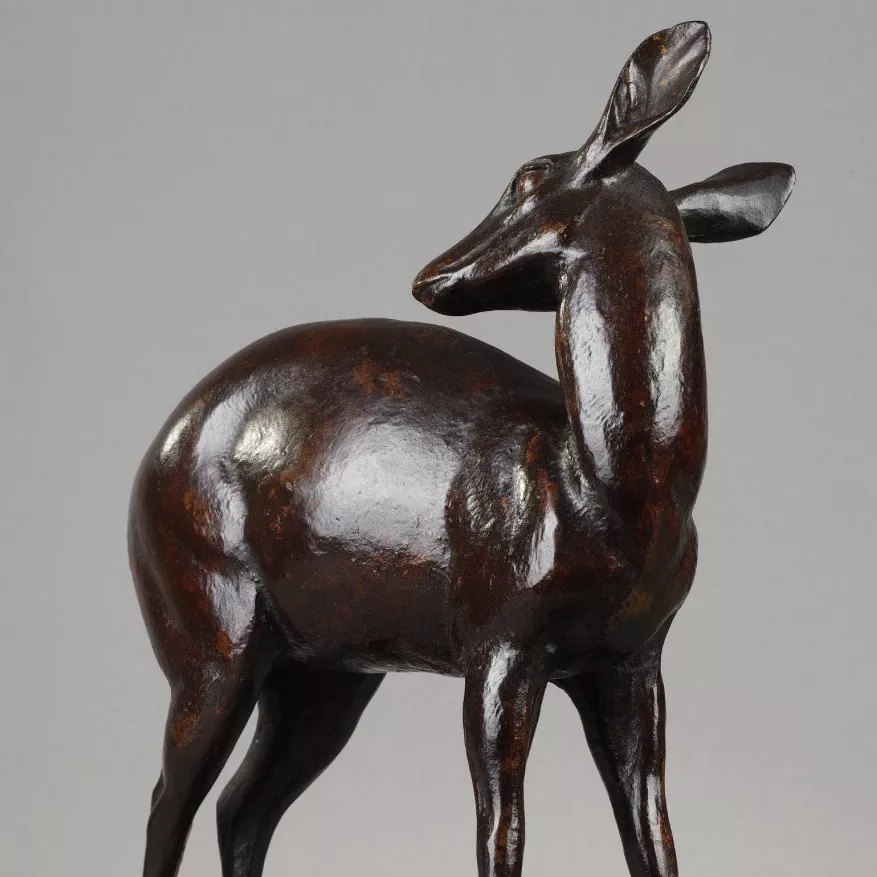
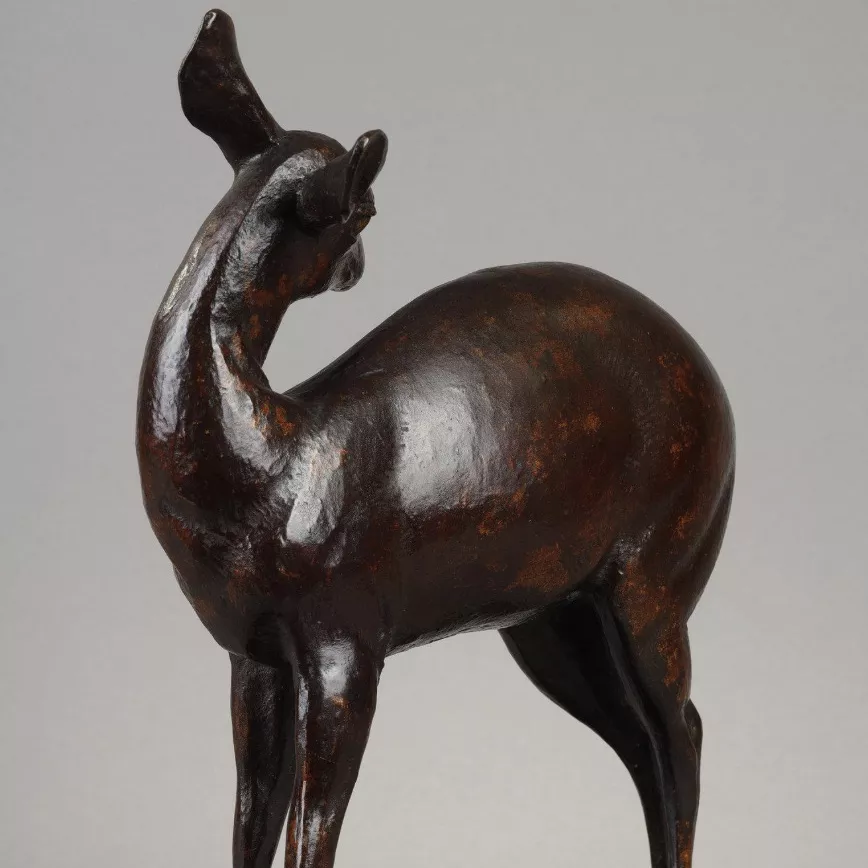
The Reclining Panther, terracotta, 1949
Between 1946 and 1956, the French government regularly acquired Delhommeau’s terracotta sculptures, including a Reclining Panther in 1949, attesting to official recognition that positioned the artist among the legitimate representatives of animal sculpture.
By choosing a reclining pose rather than a scene of action or attack, Delhommeau embraced the unique challenge of modernist animal sculpture: to convey the animal’s power, muscular tension, and nature not through spectacular movement, but through the concentration of its forces in stillness.
FAQ – How do you appraise a work by Charles Delhommeau?
1) Why is the lost-wax casting technique so important for valuing a Delhommeau bronze?
Most of his bronze sculptures were cast using the lost-wax method by the Lebanc-Barbedienne foundry. Lost-wax casting is the most refined casting technique: it produces exceptionally fine details and results in very limited editions.
2) Do all the animals sculpted by Delhommeau have the same value?
There is a clear hierarchy. Big cats and large mammals (tigers, panthers, lions, mandrills, and cynocephalus) command the highest prices on the market. Primates are particularly prized, while smaller subjects such as rabbits or birds are more affordable.
3) Do the pieces created for Sèvres have special value?
In 1938, he began collaborating with the Sèvres porcelain manufactory. Various animal-themed pieces were subsequently produced. A Sèvres porcelain piece that is signed or stamped—and identifiable in the manufactory’s archives—is considered to be of higher value than standard editions.
Recognizing Charles Delhommeau’s Signature
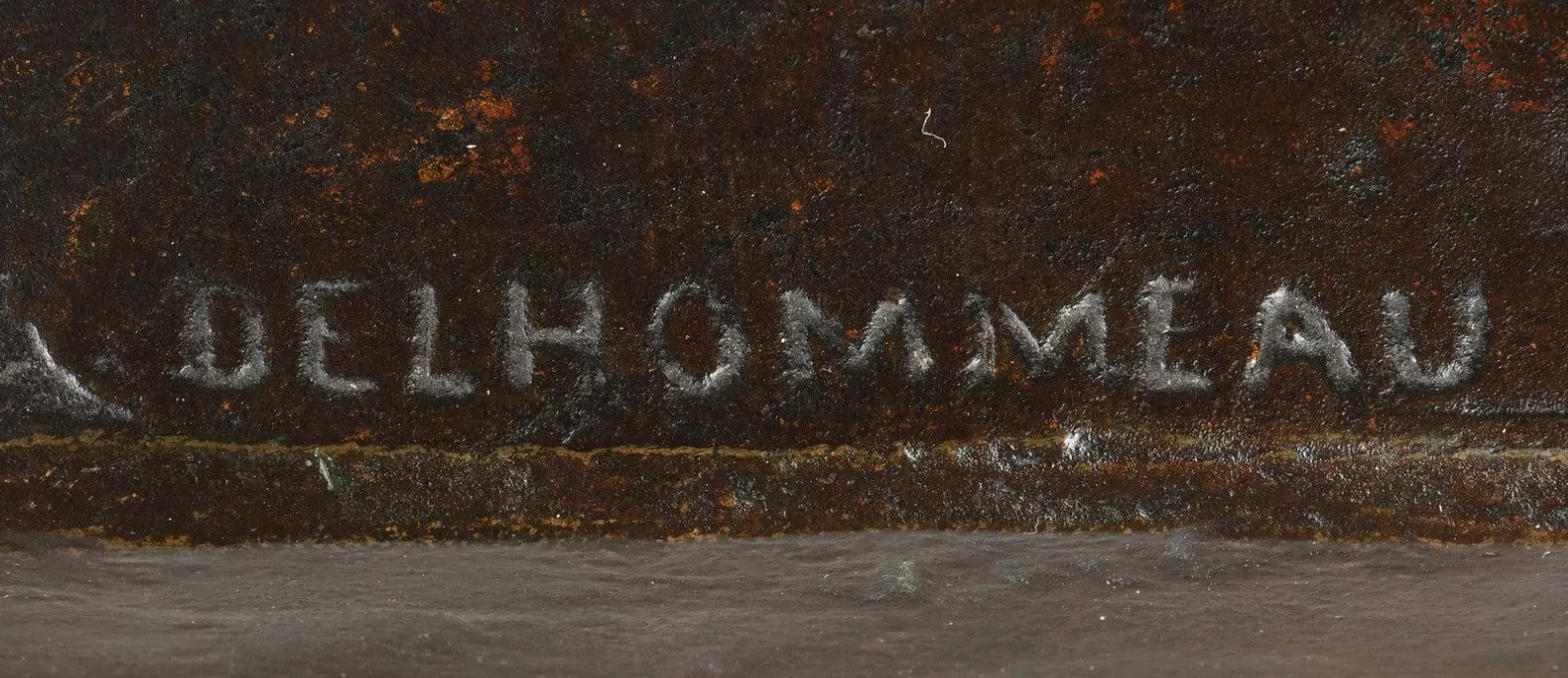
Charles Delhommeau usually signs his sculptures and works on paper “Delhommeau.” However, there are many copies, which is why expert appraisal is important.
Get Your Charles Delhommeau Sculpture Appraised
If you own a sculpture by Charles Delhommeau, a valuation will help you determine its current market value.
Using our online form, our experts and certified auctioneers will conduct a free appraisal and provide you with a reliable estimate of your artwork’s market value.
If you’re considering selling it, we’ll guide you through the process to ensure you get the best possible price.
Estimate in less than 24h
D'autres bronzes modernes vendus aux enchères

Estimated Between €2,000 and €4,000
Edouard Marcel SANDOZ (1881-1971) curly stingray, bronze print

Estimated Between €1,500 and €3,000
Renato CARVILLANI (1896-1986), seated woman, gilded bronze print

Estimated Between €1,500 and €3,000
César BALDACCINI dit CESAR (1921-1998), Poule Cartier, bronze print

Estimated Between €10,000 and €20,000
Baltasar LOBO (1910-1993), female nude in bronze

Estimated 5.000 - 8.000
Igor MITORAJ (1944-2014), Bust of Asclepius, Green patina bronze sculpture
Discover in the same theme

Rating and value of works, drawings, paintings by Ladislas K...
Ladislas Kijno was a 20th-century French visual artist who produced drawings and oils on canvas, experimenting with papier marouflé.
Learn more >

Ratings and values of paintings by Willem de Kooning
Willem DE KOONING is an artist who has produced many works that are highly valued at auction. 24h estimate.
Learn more >

Rating and value of paintings, oils on canvas by Georges Mat...
Georges Mathieu is a twentieth-century painter who combined monarchical convictions and lyrical abstraction in his work. He is highly regarded.
Learn more >

Secure site, anonymity preserved

Auctioneer approved by the State

Free and certified estimates
Frequently asked questions
-
Who is Charles Delhommeau, and what is his artistic background?Charles Delhommeau (1883–1970) was a French sculptor who specialized in animal sculpture. After a brief career as a portrait sculptor, he devoted himself entirely to sculpting wild animals beginning with World War I, following in the tradition of the great French animal sculptors alongside Bugatti, Pompon, and Barye. He was renowned for capturing the liveliness and fluid lines of animals rather than their ferocity, drawing inspiration from long observation sessions at the Jardin des Plantes.
-
What is the price range for a Charles Delhommeau sculpture at auction?Charles Delhommeau's sculptures and bronzes sell for between €200 and €33,300 at auction. Big cats and large mammals such as panthers, tigers, and lions command the highest prices, while more modest subjects like rabbits and birds are more affordable. In particular, an Art Deco bronze panther from 1925 fetched €33,300 in 2015.
-
How can you authenticate a work by Charles Delhommeau?To authenticate a sculpture by Delhommeau, it is important to seek a professional appraisal, as there are many copies. Our state-certified auctioneers provide a free, no-obligation appraisal based on authenticity, market value, and recent market trends. Our experts will send you a detailed response within 48 hours.
-
What factors influence the value of a Delhommeau sculpture?Several key factors influence value: the lost-wax casting technique used by Leblanc-Barbedienne (the most refined technique), the nature of the animal subject (big cats being worth more than small animals), the material (bronze, terracotta, or Sèvres porcelain), the condition, and documented provenance. Pieces created for the Sèvres Manufactory are considered to be of higher value than standard editions.
-
How do I sell a work by Charles Delhommeau at Auctie's?Auctie's guides you from the appraisal to the auction to ensure you get the best value for your artwork. Using our online form, our experts will provide a free, no-obligation appraisal and then advise you throughout the auction process. Our licensed auctioneers are involved at every stage to maximize the price of your sculpture or bronze.
