



Rating and value of drawings and paintings by Salomon de Bray

Key takeaways
- Salomon de Bray’s paintings sell for between €2,200 and €1,068,930, with his history paintings fetching between €200,000 and €1.2 million depending on their provenance.
- A 17th-century Dutch painter active in Haarlem, he is known for his Dutch classicism, his restrained color palette, and his meticulously rendered biblical and mythological compositions.
- Authenticated attribution (signed) carries significant weight: price differences between signed works and those from the artist’s studio can range from 3 to 6 times, with scientific analysis being mandatory in the absence of a systematic signature.
Paintings by Salomon de Bray or attributed to him are selling for up to €1,068,930 at auction. An appraisal allows us to accurately determine the current market value of your Salomon de Bray artwork and, if applicable, optimize the sale of the piece.
If you own a work by Salomon de Bray and would like to know its value, our state-certified auctioneers will provide a free appraisal based on authenticity, market rating, and recent market results.
Market Value and Appraisal of the Artist Salomon de Bray
Salomon de Bray was a 17th-century Dutch painter. Although he is a world-renowned figure, relatively few works attributed to him are found on the art market; however, those that are available are highly prized and command high prices.
Most of his body of work consists of paintings, though a few drawings and engravings have also been preserved.
Salomon de Bray’s works sell for between €2,200 and €1,068,930 (attributed to him or his studio for the lower-priced results). His 1936 oil on canvas, *Study of a Young Woman in Profile*, sold for €1,068,930, while it had been estimated at between €600,000 and €750,000.
Ranking by value, from a simple work to the most prestigious
Technique used | Result |
|---|---|
Drawing | From €2,800 to €19,300 |
Painting | From €2,200 to €1,068,930 |
Estimate in less than 24h
Placing the Artist in Context
Period
Salomon de Bray (1597–1664) was a painter who worked at the height of the Dutch Golden Age. He was active primarily in Haarlem, a major artistic center of the United Provinces.
The Republic of the United Provinces was economically prosperous, which facilitated the growth of the art market during this period. He was a contemporary of major figures such as Frans Hals and Rembrandt.
Artistic Movements
Salomon de Bray’s body of work belongs to the Dutch Baroque movement and, visually, to the Golden Age, characterized by naturalism, chromatic restraint, and attention to the effects of light.
His work is characteristic of Dutch Classicism, with the influence of Italian models (particularly those from Bologna) evident in the clarity of composition, the balance of the figures, and the historical or biblical themes.
He produced many history paintings, addressing religious, mythological, or allegorical subjects—considered the highest genre in the academic hierarchy—as well as portraits, contributing to the Dutch civic tradition with a particular focus on individual characterization.
Through his Protestant humanism, he turned to moral and edifying subjects, suited to the religious and cultural context of the 17th-century United Provinces.
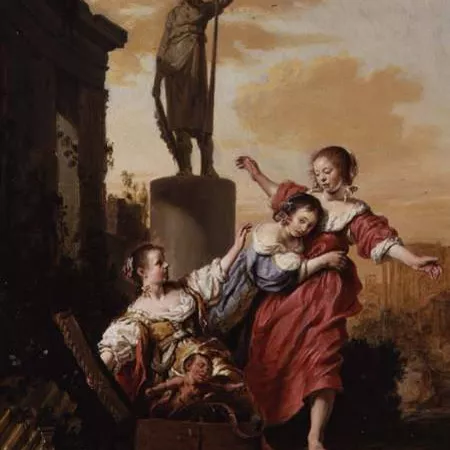

The Life of Salomon de Bray
Cultural Context
Salomon de Bray was born in 1597 and worked primarily in Haarlem during the Dutch Golden Age, a period of intense artistic and economic development in the United Provinces.
His work emerged in an environment characterized by the diversification of pictorial genres (portraiture, biblical scenes, architecture, still life) to cater to a broadening bourgeois clientele.
He developed a body of work characterized by clear composition, monumental figures, and a certain chromatic restraint, in line with the classicizing trends of the 17th century.
Alongside his work as a painter, he served as an architect and theorist, contributing to the discourse on order and proportion in the visual arts. His work reflects a dialogue between late Mannerist tradition and emerging classicizing trends in Dutch painting.
Artistic and Intellectual Circle
Active in Haarlem, he moved in artistic circles that included major figures such as Frans Hals, whose portraiture had a lasting influence on the local school.
The painter belonged to a family of artists with close ties to Jan de Bray, helping to shape a family-based artistic network active in the 17th century.
His work was part of the intellectual climate of Haarlem, an important center of artistic production, where the circulation of models and theories contributed to the stylistic renewal of the Dutch Golden Age.

The Artist's Techniques
The Style of Salomon de Bray
Salomon de Bray was a painter and architect active in Haarlem during the 17th century, working within the context of the Dutch Golden Age. He focused on history painting and biblical or mythological subjects, rendered with classical rigor.
The influence of Dutch classicism and Italian models is evident, particularly in the anatomical construction and stable composition. His draftsmanship is structured and precise, revealing particular attention to the arrangement of figures and the balance of masses.
His color palette is restrained, favoring light tones and relatively uniform lighting. He demonstrates an interest in expressive restraint, avoiding the dramatic excesses of Southern Baroque.
Salomon de Bray tends to organize space according to coherent architectural schemes, reflecting his dual career as a painter and architect.
Focus on a Key Work
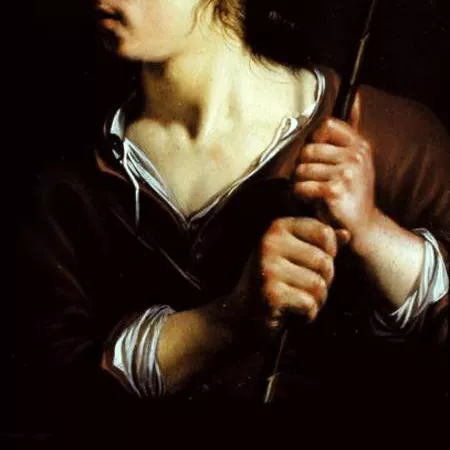
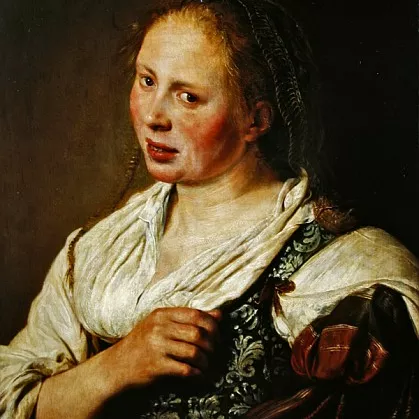
Judith with the Head of Holofernes, c. 1636
This composition centers on the figure of Judith, depicted with restrained dignity rather than heightened dramatic pathos. The construction of the forms is clear and the modeling meticulous, demonstrating academic mastery.
The lighting is relatively uniform, avoiding the stark chiaroscuro contrasts typical of Caravaggism. The drapery is rendered with precision, contributing to the figure’s calm monumentality.
The spatial organization is stable, based on a clear hierarchy between the main figure and the background. This work is representative of a tempered Dutch classicism, reconciling biblical narrative with formal balance.
FAQ – How do you appraise a work by Salomon de Bray?
1) What is the first step in appraising a work by Salomon de Bray?
The appraisal begins with a precise identification of the nature of the work (history painting, biblical scene, portrait, or drawing) along with an examination of the support, technique, dimensions, signature, and date—all of which are necessary to situate the work within the context of 17th-century Dutch painting.
2) What stylistic criteria specific to Salomon de Bray are decisive?
For Salomon de Bray, the analysis focuses on the clarity of the composition, the balance of the figures, the restrained color palette, and the architectural precision—characteristics of an artist who was also active as an architect and theorist in Haarlem during the Golden Age.
3) What role do scientific examinations and provenance play?
The study of the support, pigments, and paint layers, as well as documented provenance—such as old inventories, historical collections, and specialized publications—are essential factors in confirming attribution and establishing the work’s value.
Market Segmentation
Artwork Prices
Salomon de Bray occupies a mid-range segment of the Old Masters market, ranking below major figures such as Rembrandt, Frans Hals, and Osias Beert, but benefiting from steady interest in Dutch history painting and portraiture.
There is a clear hierarchy among history paintings, portraits, and drawings. History paintings or accomplished allegorical compositions generally range from 200,000 to 1.2 million euros, depending on quality and provenance.
Portraits occupy a central segment, often ranging from 80,000 to 400,000 euros. Drawings are part of a more accessible market, with prices frequently ranging from 5,000 to 40,000 euros.
Factors Affecting Value
Price differences between works by the artist themselves, those from the artist’s studio, or those by associates can vary by a factor of 3 to 6, depending on scholarly consensus and the condition of the work.
Monumental biblical scenes and group portraits command a significant premium, while more conventional or fragmentary works fall at the lower end of the range.
The market is relatively narrow, with moderate sales frequency, and is highly sensitive to quality and recency on the market. Historic provenance, the condition of the paint layer, the quality of the composition, and references in scholarly literature are the main factors influencing pricing.
Recognizing the Artist’s Signature
Salomon de Bray does not always sign his canvases, and many works on the market are attributed to his followers (which does not mean the paintings have no value). In any case, for this artist, the involvement of a dedicated expert is essential.
Have Your Salomon de Bray Work Appraised
If you own a work by Salomon de Bray or attributed to him, an appraisal will help you assess its value on the current market.
Using our online form, our experts and certified auctioneers will conduct a free appraisal and provide you with a reliable estimate of your artwork’s market value.
If you’re considering selling it, we’ll guide you through the process to ensure you get the best possible price.
Estimate in less than 24h
Discover in the same theme

Rating and value of paintings by Osias Beert
Osias Beert the Elder is a painter of still lifes who produced many works that are highly valued at auction.
Learn more >

Rating and value of drawings and paintings by Pierre Mignard
Pierre Mignard was a Classical-style artist who worked during the reign of Louis XIV and produced numerous portraits of great value.
Learn more >

Rating and value of mannerists works of art
Mannerism is a relatively little-known artistic movement that is often confused with the major figures of the Renaissance, even though it began upon R...
Learn more >
Nos records d'enchères à l'hôtel Drouot

Estimated 10.000 - 15.000 €
Ebridge Ayer BURBANK(1858-1949), Young African-American boy, Oil on panel.

Estimated 20.000 - 30.000
EXCEPTIONAL LARGE OVAL DISH IN VINCENNES SOFT PASTE PORCELAIN FROM THE "BLEU CÉLESTE" SERVICE OF KING LOUIS XV AT THE CHÂTEAU DE VERSAILLES

Estimated 20.000 - 30.000
MANUFACTURE ROYALE DE SÈVRES, 18th century "L'Empereur de la Chine" - Portrait of the Emperor Qianlong, Hard porcelain bisque, 1775

Estimated 1.500 - 3.000
HERMÈS, "Kelly" 32 saddle bag in black box calf

Estimated Between €5,000 and €8,000
KRACHKOWSKY (1854-1914), Before the storm, oil on canvas

Estimated 40.000 - 80.000
Alexandre ROUBTZOFF (1884-1949), Portrait of Arbia, oil on canvas

Secure site, anonymity preserved

Auctioneer approved by the State

Free and certified estimates
Frequently asked questions
-
Who was Salomon de Bray, and what was the historical context of his life?Salomon de Bray (1597–1664) was a 17th-century Dutch painter who was active in Haarlem during the Dutch Golden Age. A leading figure in Dutch Classicism, he was also an architect and art theorist, a contemporary of Frans Hals and Rembrandt. His work is characterized by history painting, biblical subjects, and portraits, rendered with the compositional clarity and chromatic restraint typical of the Dutch Baroque.
-
What is the price range for works by Salomon de Bray at auction?Salomon de Bray's paintings sell for between €2,200 and €1,068,930, depending on the type and quality of the work. Historical paintings and allegorical compositions range from 200,000 to 1.2 million euros, portraits from 80,000 to 400,000 euros, and drawings from 5,000 to 40,000 euros. Price differences can vary by a factor of 3 to 6 depending on whether the work is by the artist’s own hand, from the studio, or by an associate.
-
How can you authenticate a work by Salomon de Bray?Authenticating a work by Salomon de Bray requires the expertise of a specialist, as the artist did not consistently sign his paintings. A free, no-obligation appraisal at Auctie’s allows us to examine the medium, technique, dimensions, signature, and date, as well as to review the documented provenance. Our team of state-certified auctioneers will provide you with a reliable appraisal within 48 hours.
-
Is this the right time to sell a work by Salomon de Bray?Yes, the market for Dutch Golden Age masters, including Salomon de Bray, shows stable and sustained interest in Dutch historical painting and portraiture. High-quality works with documented provenance and in good condition regularly find buyers. Auctie's guides you from the appraisal to the auction to ensure you get the best value for your artwork.
-
How does the appraisal process work at Auctie's?The appraisal is free and non-binding. You fill out an online form with photos and information about the artwork, and then our experts and licensed auctioneers conduct a detailed appraisal. You’ll receive a reliable estimate of the market value within 48 hours. If you’re considering selling, we’ll guide you through the entire process until the item is sold at auction.
