



Rating and value of paintings by Abraham Govaerts

Key takeaways
- Abraham Govaerts (1589–1626), a 17th-century Flemish painter who specialized in small-format wooded landscapes known as “cabinet landscapes”; his works are extremely rare and highly sought after.
- Govaerts’ paintings sell for between €7,000 and €467,400; his oil on canvas work “A Wooded Landscape with a Sportsman” exceeded its estimate, fetching €467,400.
- Working in oil on panel, he painted dense undergrowth with thick trees and gnarled trunks in the foreground, with human figures and secondary narrative scenes added by other artists.
If you own a work by or after the artist Abraham Govaerts, and would like to know its value, our state-approved experts and auctioneers will offer you their appraisal services.
Our specialists will carry out a free appraisal of your work, and provide you with an accurate estimate of its value on the current market.
Then, should you wish to sell your work, we will direct you to the best possible arrangement to obtain the optimum price.
Rating and value of the artist Abraham Govaerts
Abraham Govaerts was a Dutch painter of the 17th century. A world-famous figure, there are relatively few works attributed to him on the art market, but these are extremely highly prized and well priced.
The bulk of his output revolves around painting, but a few drawings and engravings are also preserved.
Works by Abraham Govaerts are auctioned between €7,000 and €467,400 (attributed to or studio of for the smaller results). His oil on canvas A wooded landscape with a sportsman on a path greeting a hermit near a tree sold for €467,400, against an estimate of €167,000 to €250,300.
Order of value ranging from a simple work to the most prestigious
Technique used | Result |
|---|---|
Painting | From €7,000 to €467,400 |
Estimate in less than 24h
Artist's style and technique
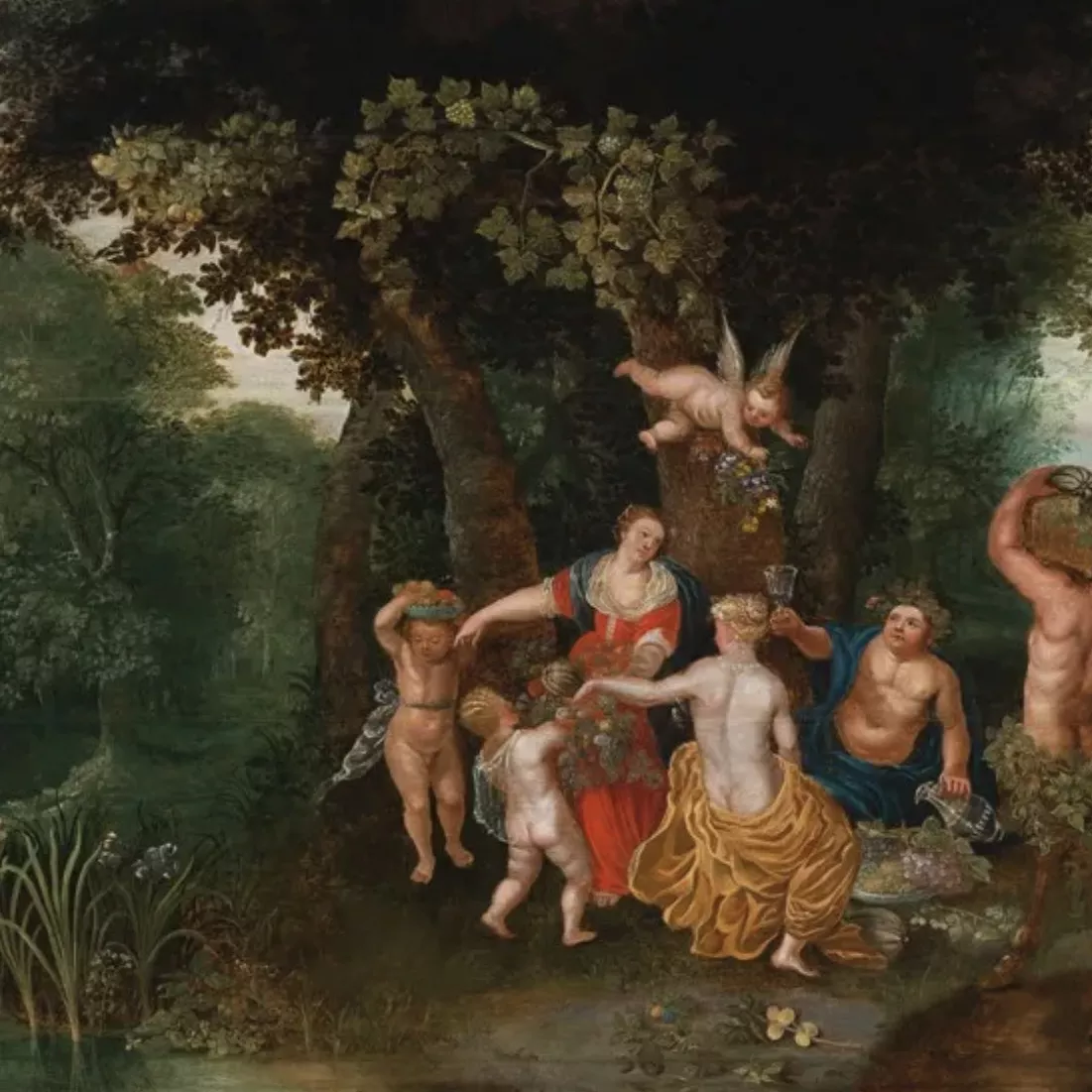
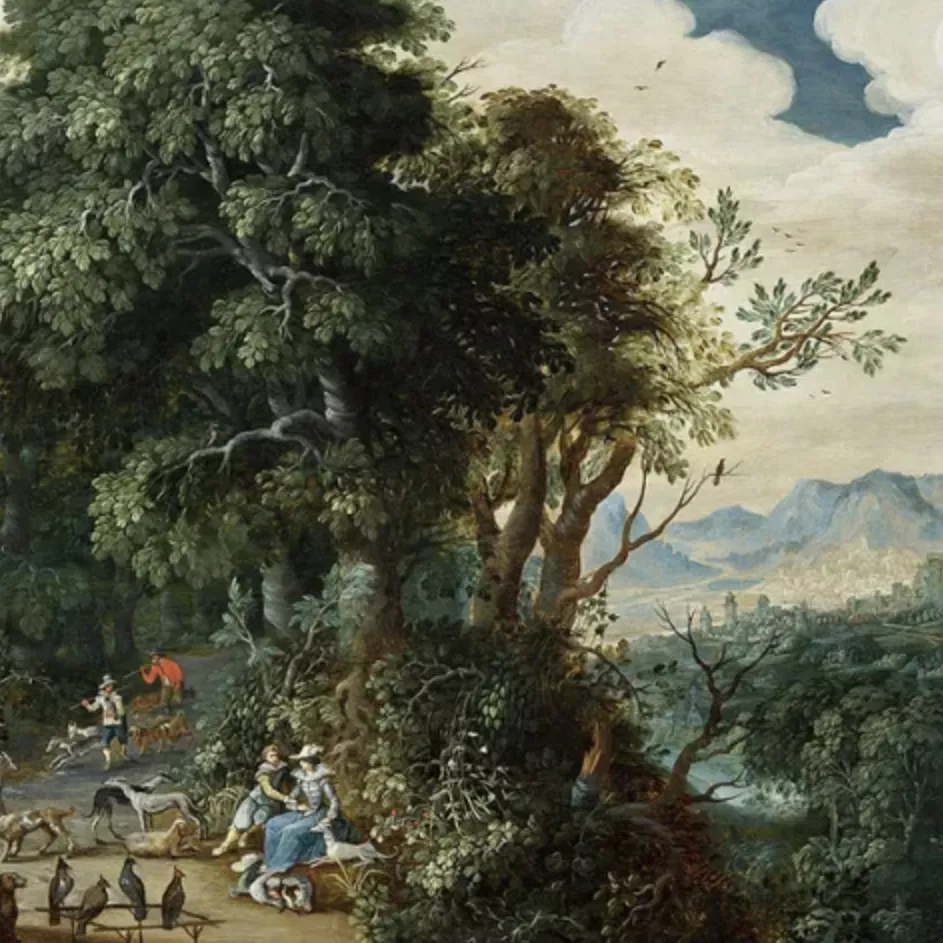
Abraham Govaerts is a Flemish specialist in small-format woodland landscapes, often referred to as " cabinet-landscapes ". He inherited the tradition of Gillis van Coninxloo, who used thick trees, dense undergrowth and gnarled trunks in the foreground, with a strong verticality of vegetation.
From 1620, he introduced pure color and sharper light, as well as smoother transitions, and a tendency towards the so-called " brueghelian " miniature. Narrative figures are reduced, with mythological or biblical, hunting or walking scenes integrated but secondary to a dominant landscape.
The medium used is oil on panel, often wood or copper for smaller formats. In terms of color, early works are characterized by dark browns, deep greens and cool blues for the background.
He evolves towards brighter tones, using the technique of light " stippling " (dotted lines) to create finesse and light. The artist uses repoussoir trunks in the foreground, with a landscape opening into a chiaroscuro distance, creating depth and a passing effect.
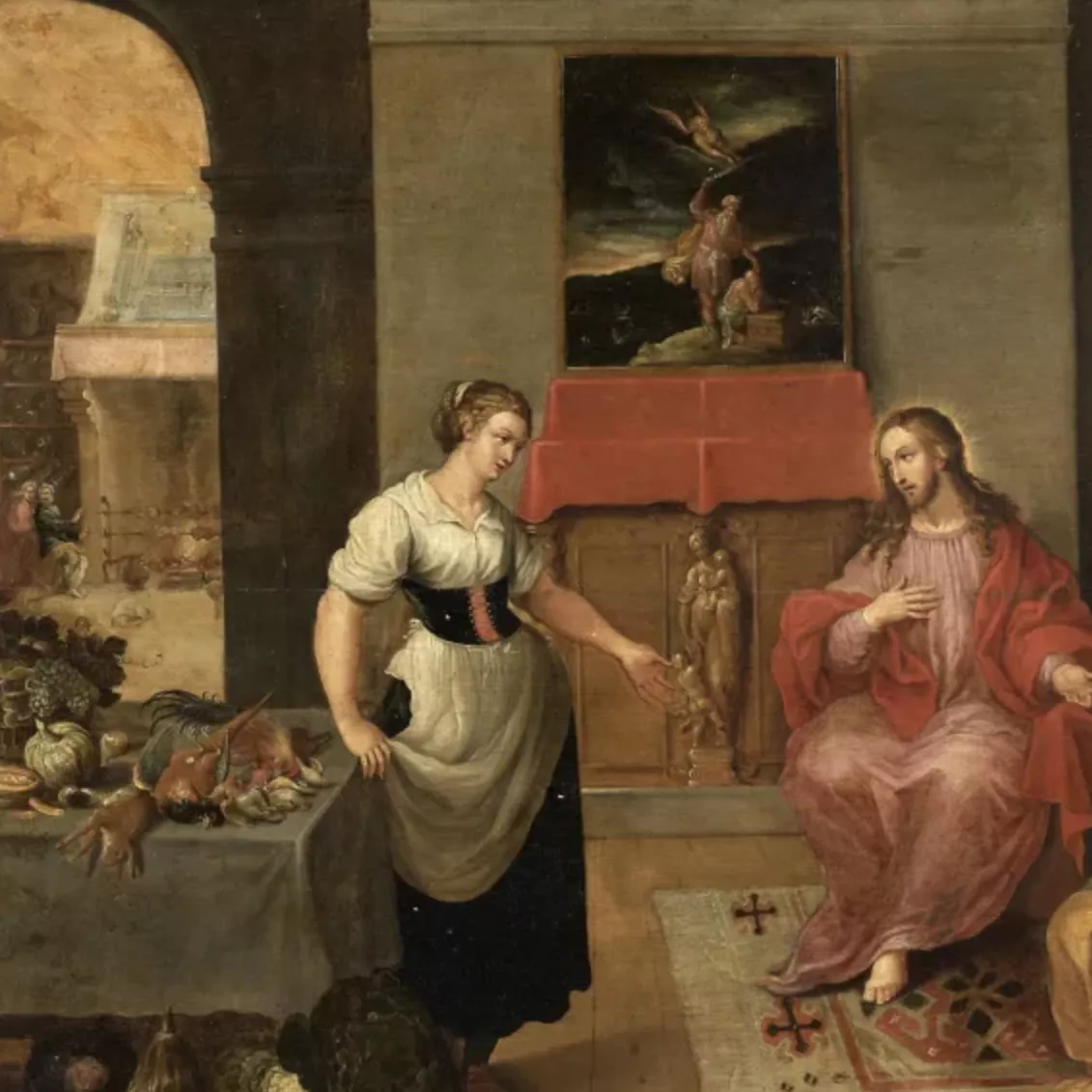
Govaerts works collaboratively : he provides the landscapes, and other artists (portraits, figures, hunters) complete the scenes, a frequent practice in the Flemish period.
The life of Abraham Govaerts
Abraham Govaerts (1589 - 1626) was baptized on August 30, 1589 in Antwerp, Belgium. He was the son of Willem Govaerts, a dealer in paintings and old clothes, and Elisabeth Yselstein.
There is no definite documentation of a formal apprenticeship workshop, but the influence of Jan Brueghel the Elder is evident in his early works, leading to the conjecture of a stint in this workshop without factual evidence.
Between 1607 and 1608, he entered the Guilde de Saint-Luc d'Anvers as a master. In 1609, he acquired two houses on St. Jansstraat in Antwerp, close to the family home. He married Isabella Gielis in Antwerp on February 9, 1622. They had two daughters, Isabella and Suzanna.
His notable pupils included Alexander Keirincx (c. 1617), Nicolaes Aertens and Gysbrecht van der Berch. In 1623, he was elected Dean of the Antwerp Guild of Saint Luke. He died on September 9, 1626 in Antwerp during an epidemic.
Several unfinished works were completed by other artists, including Jasper van der Lanen or Frans Francken II after his death.
Focus on Wooded Landscape with Hunters and Fortune-Teller, circa 1620
This oil on panel, dated 1620, is typical of Govaerts' " cabinet " landscapes. The reduced format favors a particular visual experience : the eye is invited to enter a dense undergrowth, framed by tall, repulsive trunks.
The foreground is dominated by a sturdy, twisting tree on the right, which acts as a repulsor and guides the eye to a more open middle ground, then to the light background. This scheme recalls the Flemish tradition inherited from Gillis van Coninxloo.
The artist's palette is evolving : in his early days, Govaerts used the traditional " three-colour world landscape " (brown earth, greenery and distant blue). Here, we see a softer light, a purer palette and a lighter touch from 1620.
Human figures (hunters, diviner) are integrated but remain secondary. They are punctual, almost anecdotal, in a landscape that remains the protagonist. This cohabitation reflects Govaerts' frequent collaboration with figure painters.
The medium used is oil on panel, a choice that allows for fine paint application and fine detail. The paint is applied in multiple layers. The deep shadows of the foreground are laid down, then come lighter layers of light on the leaves and distant sky.
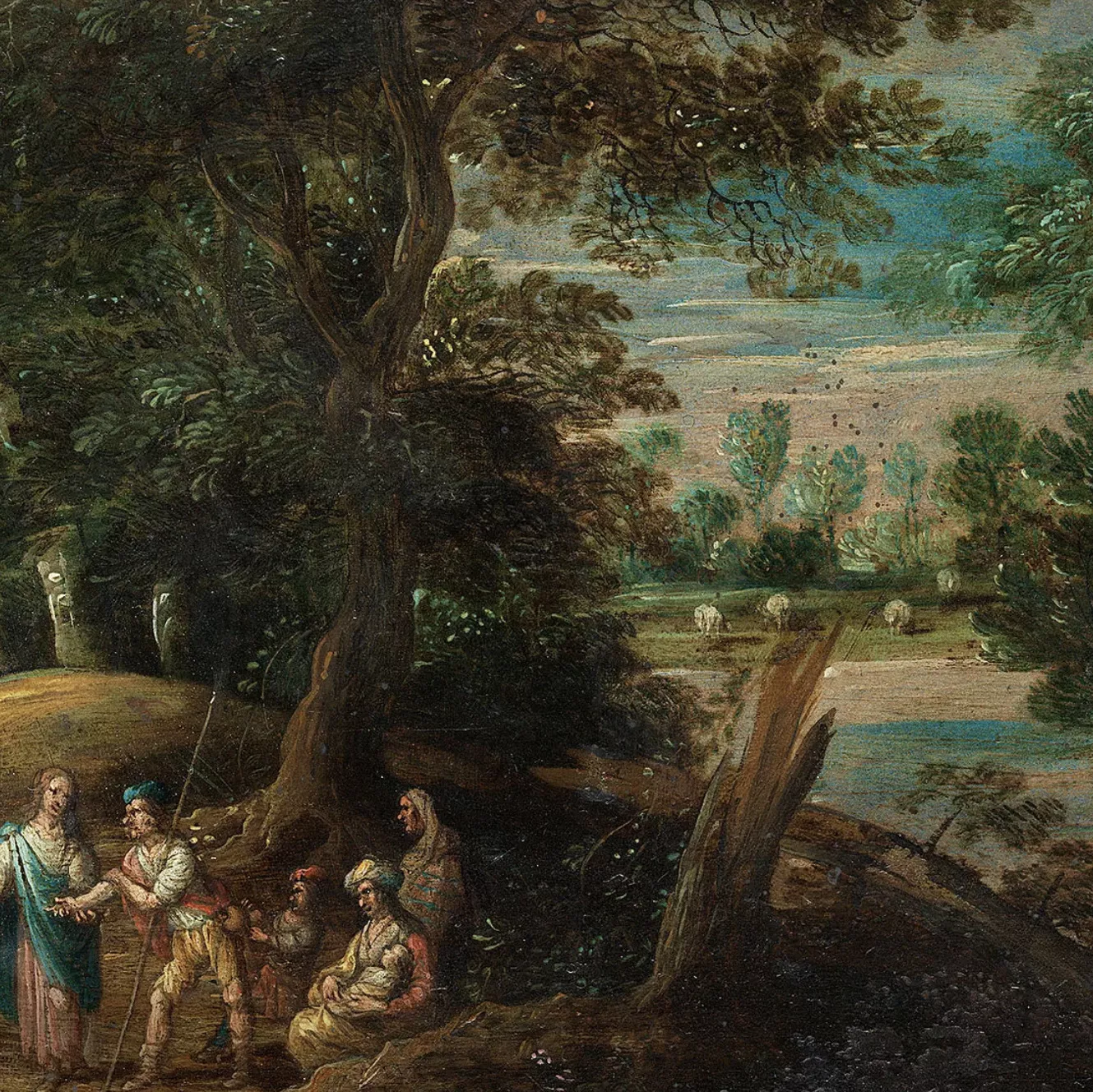
The modeling sometimes uses " stippling " (punctuated treatments) to achieve a delicate texture. The treatment of light is careful : light touches settle in the background to open up the landscape, contrasting with the dark foreground ; the dramatic effect is mastered.
Collaboration with other artists is an important technical and studio datum, Govaerts creates the landscape while other figurists contribute the figures and animals. This demands coordination in terms of planes, light and visual rhythm.
The work combines the descriptive realism of Flemish undergrowth with a poetic aspiration towards the infinity of the landscape. The hunter and the soothsayer introduce a narrative element, but it's not the narrative that takes precedence, it's the invitation to visually navigate nature.
The contrast between the dense shadow of the foreground and the clarity that escapes into the background suggests a metaphorical depth, with an entry into mystery and then an opening towards the horizon.
We can read a desire to merge nature and civilization, insofar as the human figures are small but present, in a landscape that remains sovereign. This relationship evokes the conception of landscape as a reflection of man, a frequent theme in Flemish Baroque painting.
Recognizing the artist's signature
Abraham Govaerts doesn't always sign his paintings, and many on the market are attributed to his followers (this is not to say that the paintings have no value). Whatever happens, for this artist, the intervention of a dedicated expert is mandatory.
Knowing the value of a work
If you happen to own a work by Abraham Govaerts, request a free appraisal without further delay via our form on our website.
A member of our team of experts and auctioneers will contact you promptly to provide you with an estimate of the value of your work, as well as ad hoc information about it.
If you are considering selling your work, you will also be accompanied by our specialists in order to benefit from alternatives for selling it at the best possible price.
Estimate in less than 24h
Discover in the same theme

Value and quotation of old paintings - Schools of the United...
The schools of the United Provinces (Amsterdam, Utrecht, Haarlem, Antwerp) produced many paintings that were highly prized at auction. Estimated in 24...
Learn more >

Rating and value of sculptures, bronzes and marbles by Stefa...
Stefano Maderno is a 17th-century Italian Baroque sculptor whose works are highly prized at auction.
Learn more >

Rating and value of drawings and paintings by Charles Le Bru...
Charles Le Brun was the official painter to Louis XIV, and he created a body of work that commands high prices and is highly valued at auction.
Learn more >
Other paintings from the same period sold at auction

Estimated 1.000 - 2.000
Early 17th-century Flemish school, after Luca Longhi (Ravenna 1507-1580 Ravenna) or Barbara Longhi (Ravenna 1552 - 1638 Ravenna) Virgo Lactans Oil on panel (parquetage)

Estimated 800 - 1.500
Attributed to Michelangelo des Batailles ou des Bamboches, Michelangelo Cerquozzi (1602-1660)

Estimated 1.000 - 2.000
19th-century Flemish school, after Antoon Van Dyck (Antwerp 1599-1641 London), Portrait of Anna Wake (1605-1669), Oil on canvas

Estimated 300 - 500
Surroundings of Hieronymus Francken (Herentals 1578-1628 Paris) The Circumcision of Our Lord Jesus Christ Oil on panel

Estimated 500 - 800
French school of the second half of the 18th century, follower of Hyacinthe Rigaud (Perpignan 1659-1743 Paris) Portrait in cuirass of a Marshal of France

Estimated 1000€ - 2000€
Jan Jansz. Van der Stoffe (Leiden 1611-1682 Leiden)...

Estimated 3000€ - 5000€
Attributed to Simon de Vlieger (Rotterdam 1601-1653 Weesp)...

Estimated 250€ - 300€
Jacques CALLOT (1592 - 1635) The Siege of...

Secure site, anonymity preserved

Auctioneer approved by the State

Free and certified estimates
Frequently asked questions
-
Who is Abraham Govaerts, and what is his artistic background?Abraham Govaerts (1589–1626) was a 17th-century Flemish painter who specialized in small-format wooded landscapes known as “cabinet landscapes.” Following in the tradition of Gillis van Coninxloo, he is known for his dense woodlands featuring strongly vertical vegetation, which, beginning in 1620, were enriched with clearer light and softer transitions. A globally recognized figure, his works are highly prized on the art market.
-
What is the market value of Abraham Govaerts' works?Abraham Govaerts’ paintings sell for between €7,000 and €467,400, depending on the work’s authenticity and significance. This wide range reflects the differences between works directly attributed to him and those from his studio. A notable example: “A Wooded Landscape with a Hiker on a Trail Greeting a Hermit Near a Tree” sold for €467,400, surpassing its initial estimate of €167,000 to €250,300.
-
How can you authenticate a work by Abraham Govaerts?Authenticating a work by Govaerts requires the expertise of a specialist, as the artist did not always sign his paintings, and many are attributed to his followers or his studio. Auctie's offers a free, no-obligation appraisal by its state-certified auctioneers and experts, who will provide you with their assessment within 48 hours.
-
What techniques does Abraham Govaerts use?Govaerts works primarily in oil on panel (wood or copper for smaller formats), applying the paint in multiple layers. He uses tree trunks as a focal point in the foreground, deep shadows contrasted with light highlights, and sometimes the “stippling” technique (light dots) to create delicacy and light. He frequently collaborates with other artists who contribute to the figures and narrative scenes.
-
How do I sell a work by Abraham Govaerts at Auctie's?Auctie's guides you from appraisal to auction: start by requesting a free appraisal through our online form, and our experts will provide you with an estimated value and guide you toward the best sales options to get the best price. Our state-certified auctioneers then manage the entire sales process.
