



Rating and value of drawings and paintings by Charles Le Brun

Key takeaways
- Charles Le Brun’s paintings fetch up to €1,200,000 at auction, with works generally selling for between €500,000 and €1,000,000.
- As King Louis XIV’s chief painter and a leading theorist of French Classicism, Le Brun (1619–1690) headed the Royal Academy and designed decorative schemes for Versailles.
- Drawings and preparatory studies sell for between €5,000 and €80,000, while painted sketches fetch between €150,000 and €800,000 depending on the scale of the composition.
Charles Le Brun’s paintings and drawings fetch up to €1,200,000 at auction. An appraisal allows us to accurately determine the current market value of your Charles Le Brun artwork and, if applicable, optimize the sale of the piece.
If you own a work by Charles Le Brun and would like to know its value, our state-certified auctioneers will provide a free appraisal based on authenticity, market rating, and recent market results.
The Artist’s Market Value and Reputation
Popular during his lifetime and particularly famous for his portraits, Charles Le Brun established himself in the art market as early as the 18th century. Today, the artist’s market value is high and stable, despite his limited presence on the market.
Highly prized by collectors of old master paintings, some of his works can fetch up to one million euros at auction.
His painting *The Sacrifice of Polyxena*, dating from 1647, sold for €1,200,000 in 2013, while it had been estimated at between €300,000 and €500,000.
Ranking from the most basic to the most prestigious
Technique used | Result |
|---|---|
Print - multiple | From €10 to €10,000 |
Drawing - watercolor | From 220 to 80,000€ |
Painting | From €850 to €1,200,000 |
Estimate in less than 24h
Placing the Artist in Context
Period
Charles Le Brun (1619–1690) was an artist active in the 17th century, during the era of the French absolute monarchy and the reign of Louis XIV. This was a period of institutional consolidation of the arts in France, marked by the founding and consolidation of the Royal Academy of Painting and Sculpture.
His activity was particularly intense beginning in the 1660s, a time when he became the principal architect of royal artistic policy. He worked on major decorative projects associated with royal residences, notably at Versailles.
Artistic Movements
He is associated with French Classicism, characterized by a pursuit of order, clarity, and balance in composition, based on the imitation of ancient models and the Italian Renaissance.
His work is also associated with the French Baroque, incorporating monumental effects and vast decorative programs while maintaining a rigorous classical structure.
He specialized in historical, mythological, and allegorical subjects, considered the highest genre in the academic hierarchy. He played a central role in the theoretical codification of painting, particularly through the study of the passions and the hierarchy of genres.
He developed a visual language designed to exalt the power and legitimacy of the monarchy, making Charles le Brun the principal theorist and organizer of art in the service of the state during the reign of Louis XIV.
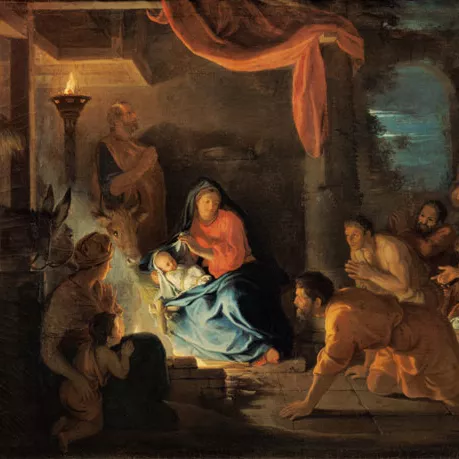
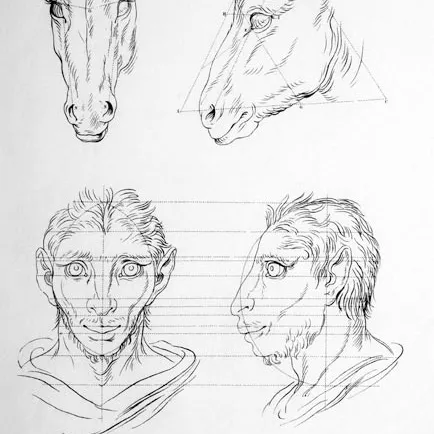
The Life of Charles Le Brun
Cultural Context
Charles Le Brun was born in Paris in 1619 and became one of the central figures of official art during the reign of Louis XIV, against a backdrop of political and cultural centralization within the French monarchy.
He received his training in an academic setting and spent time in Italy, where he studied ancient art and the Renaissance masters—an experience that was pivotal in the development of his classical style. Upon his return to France, he played a key role in the emergence of French Classicism, characterized by clarity of composition, a hierarchy of genres, and the primacy of history painting.
As the king’s chief painter, he played a decisive role in organizing artistic production in the service of the monarchy, particularly in the major decorative projects of the reign.
His work also extended to art theory and teaching, which helped shape the aesthetic principles of the Royal Academy of Painting and Sculpture.
Artistic and Intellectual Circle
Charles Le Brun was initially trained by Simon Vouet, who introduced Italian Baroque influences to France and had a lasting impact on Le Brun’s artistic development. His career was closely linked to that of Minister Jean-Baptiste Colbert, the principal architect of Louis XIV’s cultural policy and a major institutional supporter of Le Brun’s work.
He collaborated with artists and architects involved in major royal projects, notably André Le Nôtre and Louis Le Vau, on the design of the decorative schemes for the Palace of Versailles.
Through his institutional position, he exerted considerable influence on several generations of French artists, contributing to the spread of the classical academic model. Today, he is better known than artists of his time such as Jacques Fouquier, Simon Vouet, or Salomon de Bray.

The Artist's Techniques
The Style of Charles Le Brun
Charles Le Brun was the leading exponent of Classicism during the reign of Louis XIV. An art theorist, he headed the Royal Academy of Painting and Sculpture, where he helped codify the principles of the grand genre.
He focused on history painting, considered the most noble category in the academic hierarchy. His compositions are rigorously organized, based on clear geometric structures and a hierarchy of figures.
His draftsmanship is precise and monumental, characterized by idealized anatomies and theatrical poses. His palette is rich yet controlled, supporting the narrative clarity and grandeur of the subject. He developed a theory of the expression of passions to make emotions legible through gesture and facial expression.
Charles Le Brun’s work demonstrates a great ability to conceive vast decorative programs integrating painting, architecture, and sculpture.
Focus on a Key Work
Chancellor Séguier at the Entry of Louis XIV into Paris (1660)
This is a monumental composition organized around the central figure of the chancellor, highlighted by a hierarchical arrangement. The ceremonial staging draws on the tradition of ceremonial portraiture and history painting.
The rendering of the costumes, horses, and props is meticulous, reinforcing the political and symbolic dimension of the scene. The perspective is stable, ensuring the clarity of the procession and spatial coherence.
The vibrant color palette contributes to the sense of magnificence and solemnity characteristic of the official art of the reign. This work is emblematic of court painting under Louis XIV and illustrates the propagandistic and monumental function of Charles Le Brun’s style.
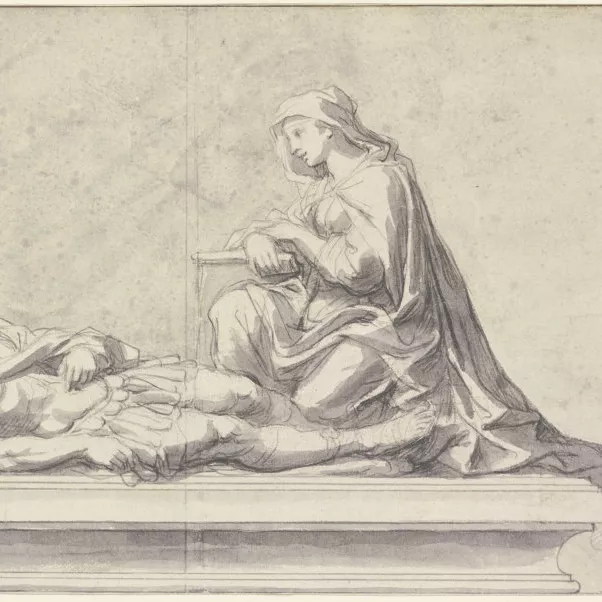
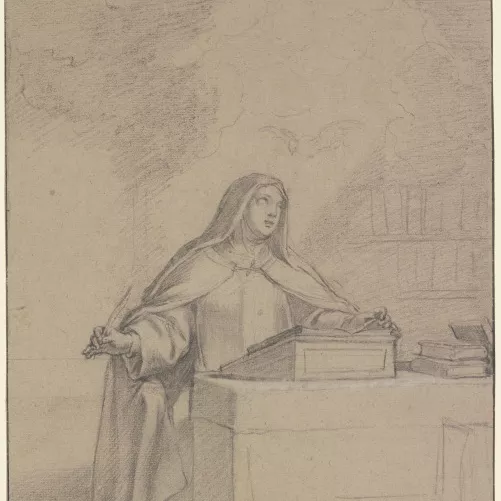
FAQ – How do you appraise a work by Charles Le Brun?
1) What stylistic criteria specific to Charles Le Brun are key?
For Charles Le Brun, the analysis focuses on the rigorous construction of the composition, the monumentality of the figures, the narrative clarity, and the mastery of drawing—characteristics of the classical aesthetic developed during the reign of Louis XIV.
2) How important is the connection to major royal decorative projects?
Particular attention is given to preparatory works related to the major decorative programs of the 17th century, notably those created for the Palace of Versailles. These studies are of major historical and scientific interest.
3) What role do provenance and scientific documentation play?
An established and documented provenance—including references in inventories, exhibition catalogs, or specialized publications—as well as consistency with the artist’s established body of work are essential factors in confirming attribution and establishing the work’s value.
Market Segmentation
Prices of Artworks
Charles Le Brun was Louis XIV’s chief painter and a leading figure at the Royal Academy. He occupies a high-end segment of the market for French Old Masters; the relative scarcity of autograph works on the market helps maintain a strong valuation.
Signed history paintings generally sell for between €500,000 and €1,000,000, depending on the significance of the composition and provenance. Painted sketches for decorative works or large cycles constitute a mid-range segment, often falling between €150,000 and €800,000.
Drawings and preparatory studies are part of an active market ranging from €5,000 to €80,000, with some major works exceeding this range.
Factors Affecting Value
The difference in value between works signed by the artist, workshop productions, and works by associates can range from a factor of 5 to 10, as the painter’s workshop was particularly active in executing large decorative commissions.
Works associated with the major decorative cycles of Louis XIV’s reign (Versailles, the Tuileries, academic projects) command a significant premium due to their historical significance. The market is relatively narrow, characterized by moderate sales frequency and strong institutional competition for first-rate works.
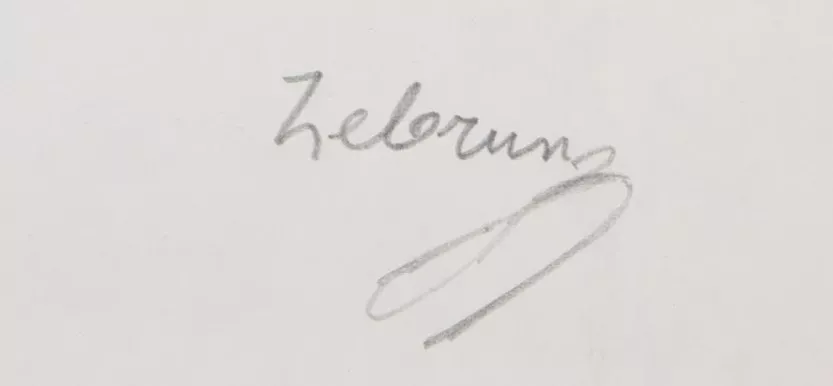
His Signature
Not all of Charles Le Brun’s works are signed. Furthermore, copies may exist, which is why expert appraisal remains essential.
Get Your Charles Le Brun Artwork Appraised
If you own a work by Charles Le Brun, an appraisal will help you determine its current market value.
Using our online form, our experts and certified auctioneers will conduct a free appraisal and provide you with a reliable estimate of your artwork’s market value.
If you’re considering selling it, we’ll guide you through the process to ensure you get the best possible price.
Estimate in less than 24h
Discover in the same theme

Rating and value of sculptures, bronzes and marbles by Stefa...
Stefano Maderno is a 17th-century Italian Baroque sculptor whose works are highly prized at auction.
Learn more >

Rating and value of paintings, drawings and engravings by Re...
Rembrandt Van Rijn is one of the most famous artists of the Dutch Golden Age. Today, he is one of the most highly-rated and sought-after artists of hi...
Learn more >

Rating and value of paintings by Balthasar van der Ast
Balthasar van der Ast was a painter of the Golden Age who produced many still lifes, which are highly valued at auction.
Learn more >
Nos records d'enchères à l'hôtel Drouot

Estimated 10.000 - 15.000 €
Ebridge Ayer BURBANK(1858-1949), Young African-American boy, Oil on panel.

Estimated 20.000 - 30.000
EXCEPTIONAL LARGE OVAL DISH IN VINCENNES SOFT PASTE PORCELAIN FROM THE "BLEU CÉLESTE" SERVICE OF KING LOUIS XV AT THE CHÂTEAU DE VERSAILLES

Estimated 20.000 - 30.000
MANUFACTURE ROYALE DE SÈVRES, 18th century "L'Empereur de la Chine" - Portrait of the Emperor Qianlong, Hard porcelain bisque, 1775

Estimated 1.500 - 3.000
HERMÈS, "Kelly" 32 saddle bag in black box calf

Estimated Between €5,000 and €8,000
KRACHKOWSKY (1854-1914), Before the storm, oil on canvas

Estimated 40.000 - 80.000
Alexandre ROUBTZOFF (1884-1949), Portrait of Arbia, oil on canvas

Secure site, anonymity preserved

Auctioneer approved by the State

Free and certified estimates
Frequently asked questions
-
Who is Charles Le Brun, and what is his historical significance?Charles Le Brun (1619–1690) was King Louis XIV’s chief painter and a central figure in French Classicism. As head of the Royal Academy of Painting and Sculpture, he orchestrated royal artistic policy and the major decorative projects at Versailles, becoming the leading theorist and organizer of art in the service of the state under the Ancien Régime.
-
What is the market value of Charles Le Brun's paintings and drawings?Charles Le Brun’s signed history paintings generally sell for between €500,000 and €1,000,000, with some major works fetching as much as €1,200,000. Painted sketches range from €150,000 to €800,000, while drawings and preparatory studies range from €5,000 to €80,000.
-
How can you authenticate a work by Charles Le Brun?The authentication of a work by Charles Le Brun is based on stylistic analysis (rigorous composition, monumental scale, narrative clarity), documented provenance, inclusion in specialized inventories or catalogs, and consistency with the artist’s established body of work. We recommend that you request a free estimate from our certified auctioneers, who will provide an appraisal with no obligation.
-
What role do provenance and documentation play in the evaluation?A documented historical provenance, as well as references in inventories, exhibition catalogs, or specialized publications, are essential factors in confirming the attribution and enhancing the value of the work. Works associated with the major decorative cycles of Louis XIV’s reign (Versailles, Tuileries) command a significant premium due to their historical significance.
-
How do I sell a work by Charles Le Brun through Auctie's?Auctie's guides you from appraisal to auction. Submit your artwork via our online form for a free, no-obligation appraisal by our experts and certified auctioneers, who will provide you with a reliable valuation within 48 hours before considering putting it up for auction.
