



Rating and value of paintings, drawings and engravings by Rembrandt van Rijn

Key takeaways
- Rembrandt van Rijn, a 17th-century Dutch master (1606–1669), has works that sell for between €5 and 29.6 million, depending on the medium and authenticity.
- Paintings attributed without dispute fetch between 20 and 30 million euros at auction, while drawings and engravings offer a more accessible price range of 1,700 euros to 3.4 million euros.
- Authenticity confirmed by the Rembrandt Research Project, condition, and prestigious provenance remain the key criteria that significantly influence market value.
If you own a work by or after the artist Rembrandt van Rijn, and would like to know its value, our state-approved experts and auctioneers will offer you their appraisal services.
Our specialists will work to carry out a free appraisal of your work, and provide you with an accurate estimate of its value on the current market.
Then, should you wish to sell your work, we will direct you to the best possible arrangement to obtain the optimum price.
Rembrandt van Rijn artist's rating and value
Rembrandt van Rijn was a Dutch painter of the 17th century. A world-famous figure, there are relatively few works attributed to him on the art market, but these are extremely highly prized and well priced.
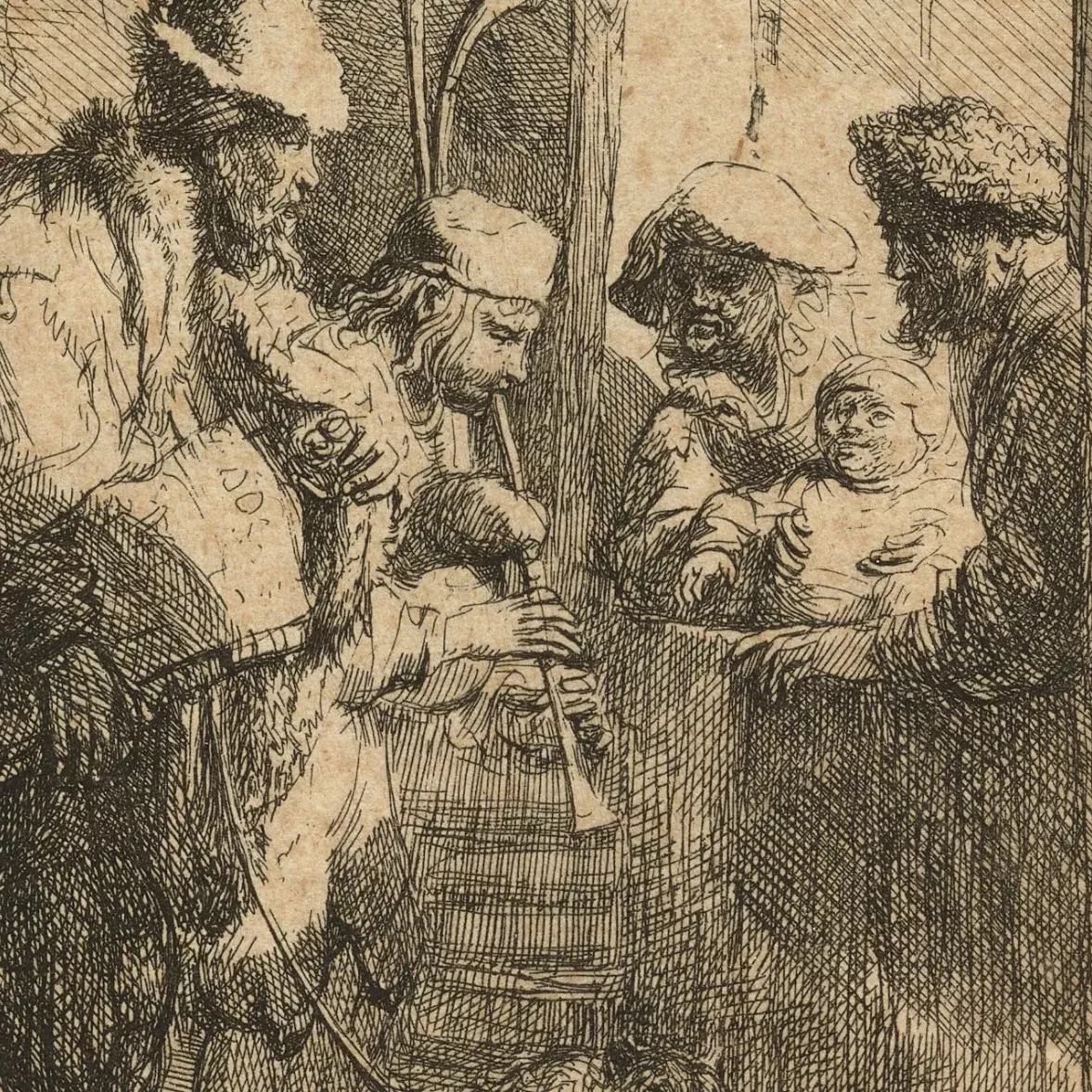
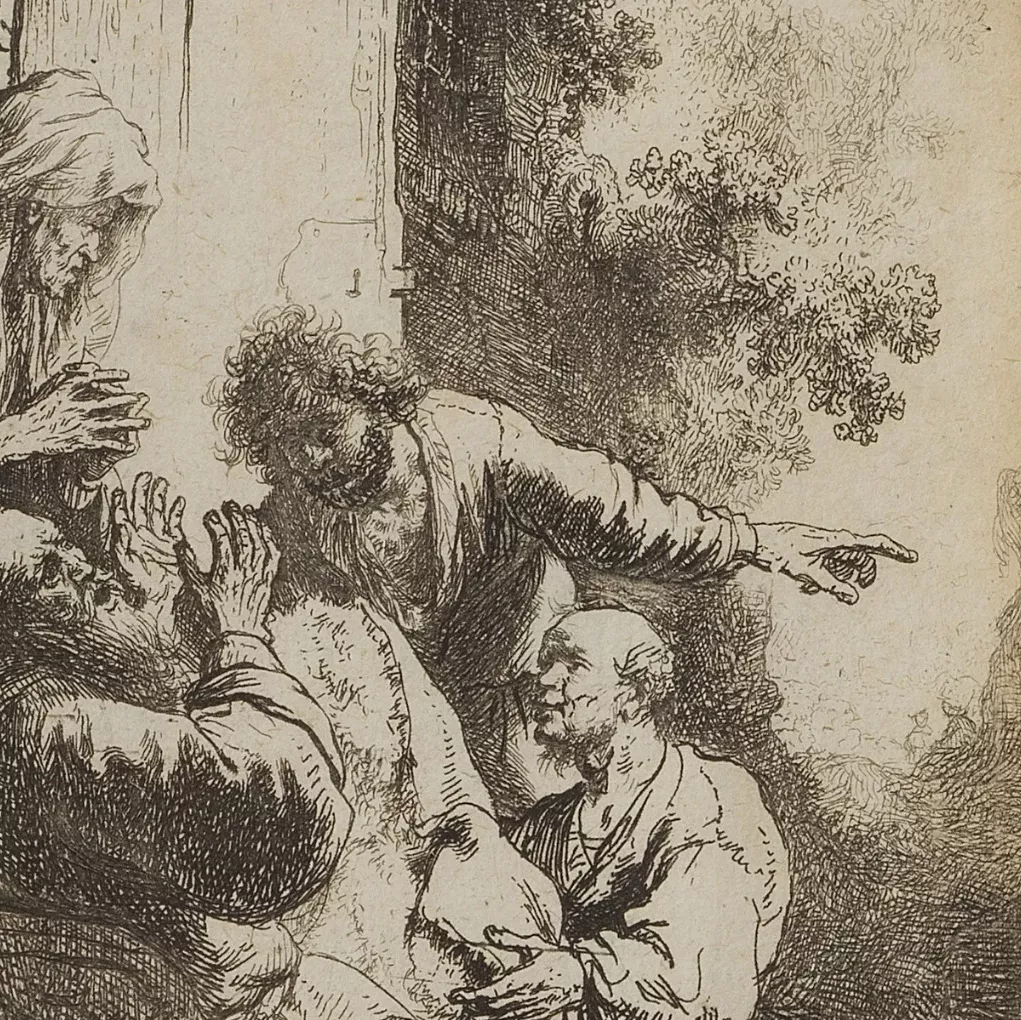
The bulk of his output revolves around painting, but a few drawings and engravings are also preserved.
Works by Rembrandt van Rijn are sold for between €5 and €29,618,800 (attributed to or workshop of for the smaller results). In 2020, his oil on canvas Autoportrait of the artist, mid-body, wearing a strawberry and black hat,dating from 1632 sold for €30,000, against an estimate of €20,000-30,000.
Order of value from a simple work to the most prestigious
Technique used | Result |
|---|---|
Estamp - multiple | From €5 to €2,485,000 |
Drawing - watercolor | From €1,700 to €3,439,000 |
Painting | From €330 to €29,618,800 |
Estimate in less than 24h
Market segmentation and artist rating
Rembrandt van Rijn (1606 - 1669) is one of the most prestigious and rare artists on the art market. Most of his masterpieces are in museum collections (Rijksmuseum, Louvre, National Gallery, Metroplitan).
The presence of his works is limited on the market, where we find mainly drawings, engravings and a few paintings of lesser importance. His name remains a safe haven at the very top end of the art market.
The market segmentation is as follows : paintings are rare in public sales, and most large canvases are off the market. The works still available are often commissioned portraits or small biblical scenes.
Drawings are extremely sought-after, with estimates ranging from €200,000 to €5,000,000,000, depending on subject and confirmed authenticity. Etchings (eaux-fortes) are more accessible, with values ranging from €5,000 for common prints to over €500,000 for rare, exceptional-quality proofs.
Paintings attributed without dispute can exceed €20-30 million at auction, with Portrait d'un homme selling for €23.2M at Christie's in 2009. For drawings, records hover around €10m for major sheets.
For engravings, for example, the Crucifixion with the Two Thieves, if in exceptional condition, can fetch several hundred thousand euros.
Among the factors influencing value, authenticity is a major criterion. The Rembrandt Research Project has considerably refined the corpus and downgraded several works.
The state of conservation is also very important, and decisive for engravings (print quality, depth of inking) and paintings. Naturally, provenance also comes into play: if the work has a prestigious history (royal or aristocratic collections), the value can be multiplied.
Rembrandt thus largely dominates the Dutch Golden Age market, above Frans Hals, Vermeer, who is even rarer, and Gerrit Dou. His graphic work rivals that of Dürer in value for engravings, but is generally worth more.
His position is close to that of the great universal masters such as Rubens, Titian or Velazquez. The market is active but still extremely limited due to rarity. Growth is notable for engravings and drawings, which are attracting new collectors looking for Rembrandt's signature in a more accessible range.
The upside potential linked to reattributions is significant, since a work rediscovered as authentic can rise from a modest price to several tens of millions of euros.
.
Rembrandt's style and technique
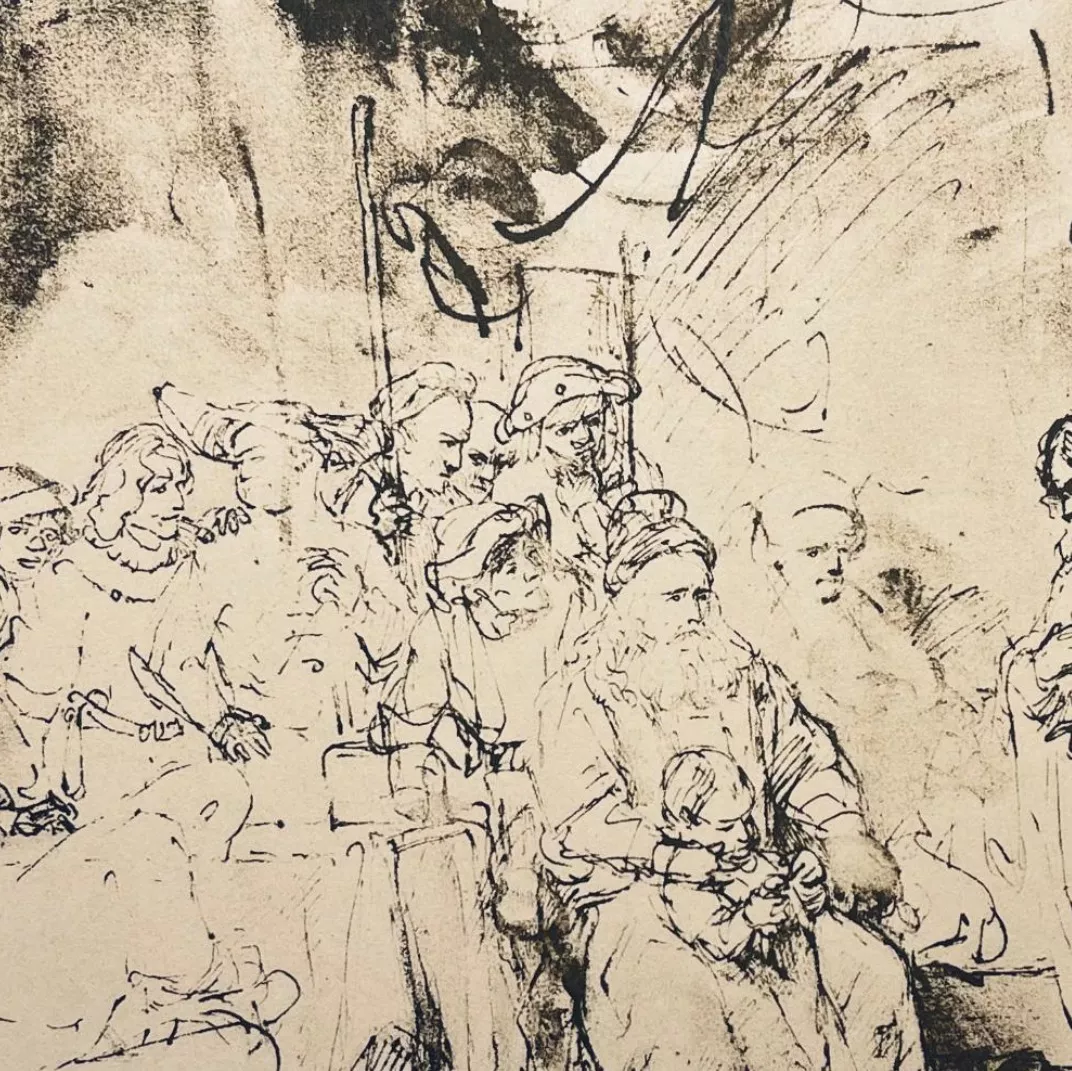
Rembrandt van Rijn (1606 - 1669) painted mainly in oil on canvas or panel, with frequent use of coarse canvases to create material effects. He produced his drawings in pen, brown ink and wash, sometimes also in black or red chalk, which are used to quickly grasp an idea or a composition.
He sometimes combined etching with drypoint and burin, techniques in which he innovated through the richness of the effects.
In his workmanship and execution, the pictorial paste is dense, with the use of thick impasto for highlights, giving tactile relief. Transparent glazes are superimposed to obtain deep, vibrant tones in the shadows.
In the drawing, his line is lively and nervous, often preparatory but autonomous, conveying an immediate energy. Rembrandt is a master of chiaroscuro, heir to Caravaggio, but with an approach that is more psychological than dramatic.
He uses light to sculpt volumes and focus attention on the face or hands. His palette is rich, moving from warm tones (ochres, reds, golden browns) to cool contrasts (grays, muted blues).
Colors are often subdued, serving expressive intensity rather than decorative brilliance. The organization is asymmetrical insofar as Rembrandt favors spontaneity and mass dynamics over classical symmetry.
The figures are often depicted in natural poses, with a force of embodiment rather than idealization. The composition is centered on zones of light, which guide the eye through the image.
Rembrandt seeks human truth in his works, depicting faces marked by age, wrinkles and imperfections, far from the academic ideal. His portraits and self-portraits exude a great psychological intensity.
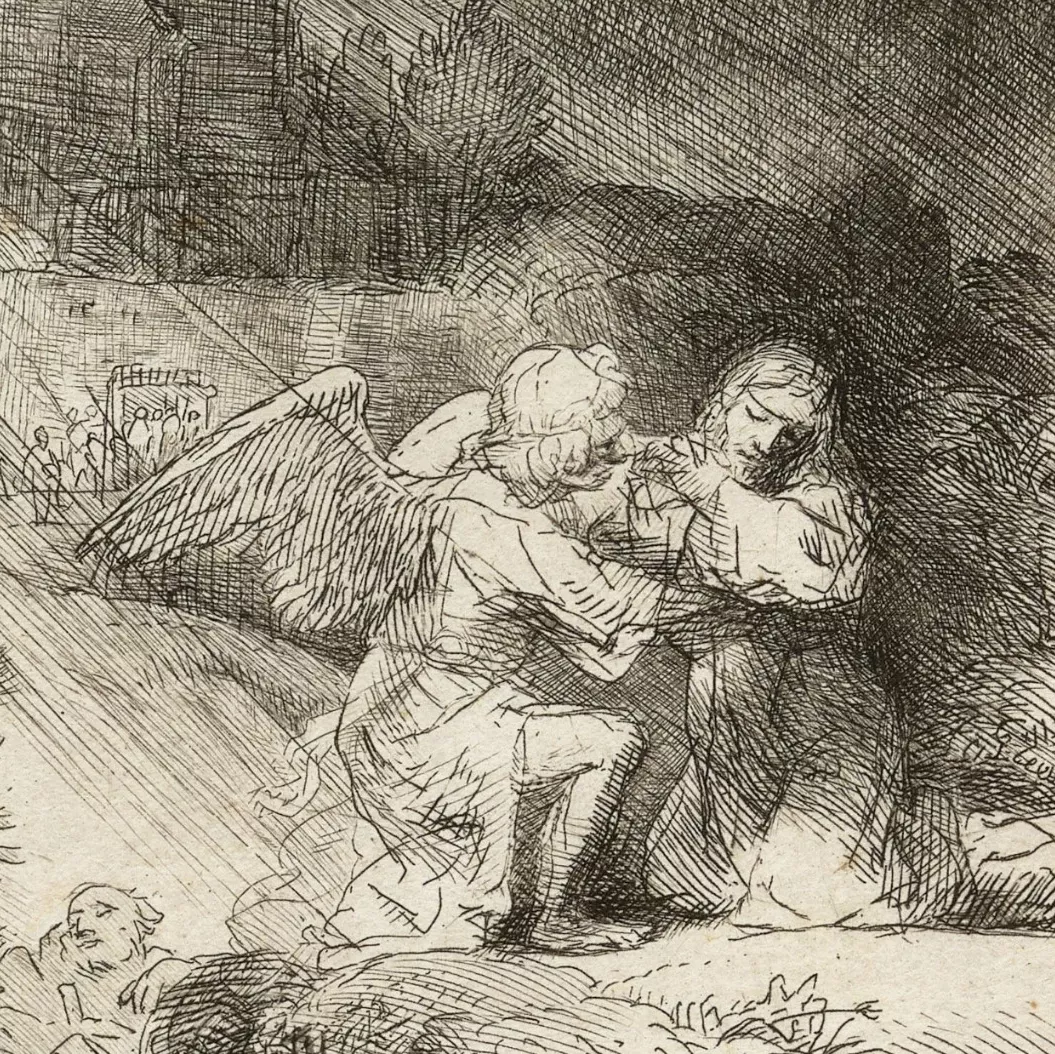
In biblical scenes, he blends theatrical dramatization with the humanization of sacred figures. Even with religious subjects, he shows a taste for realistic detail, with textile materials and metallic reflections in dialogue with the freedom of broad brushstrokes.
With etching, he indulges in virtuoso exploitation of the mordant, combined with drypoint highlights. He masters successive states, and each print can present deliberate variations, transforming etching into a field of experimentation.
He creates effects of depth and light thanks to the density of hatching and the contrast between full and white reserves. His engravings had a lasting influence on European art, from Goya to Picasso.
In terms of aesthetic positioning, Rembrandt is distinguished by a constant tension between raw realism and spiritual elevation. His style breaks with classical academicism, favoring expressiveness, pictorial matter and human intimacy.
Rembrandt thus marks the transition between Caravaggesque Baroque and a pictorial modernity heralding Courbet or Van Gogh.
The life of Rembrandt
Rembrandt van Rijn (1606 - 1669) was born in Leiden, into a family of well-to-do millers. He received a solid education and enrolled at Leiden University, but soon turned to painting. He trained with Jacob van Swanenburgh (1619 - 1622), then with Pieter Lastman in Amsterdam, a specialist in historical and biblical scenes.
From the outset, he developed a personal approach, marked by chiaroscuro and realism. In 1625, he opened his own studio in Leiden. He joined forces with Jan Lievens, another promising young painter, and specialized in small-format, highly detailed biblical and historical scenes, which earned him early recognition.
Indirect influence can be seen in his work through the Utrecht Caravaggesque masters. In 1631, he moved to Amsterdam, then the economic and cultural center of the United Provinces.
He enjoyed rapid success as a portraitist, acquiring a bourgeois and patrician clientele. In 1634, he married Saskia van Uylenburgh, who came from a wealthy family, and brought him fortune and fame.
Rembrandt then carried out major public commissions, including the famous Night Watch (1642), a masterpiece of Dutch Baroque. By the 1630s - 1640s, he was considered one of the greatest painters of his time, alongside Frans Hals and Vermeer.
He developed a powerful, freer style, with thick, expressive brushstrokes and more dramatic light. His wife Saskia died in 1642, leaving him alone with their son Titus. He then began a relationship with Hendrickje Stoffels, who became his companion and model.
He led a lavish lifestyle and mismanaged his finances, leading to bankruptcy in 1656, and an auction of his possessions and house. Despite this, he continued to produce works of exceptional intensity, more interiorized and somber.
His style evolved towards a thicker, darker and more spiritual painting, at odds with the academism and fashion of the time. His later works are marked by inner strength and simplicity, particularly in his self-portraits.
He died in Amsterdam in 1669, in relative poverty, buried in an anonymous grave. He quickly became known as a genius of the Dutch Golden Age, although challenged by some of his contemporaries.
His work crosses all genres (painting, engraving, drawing, with an integrated mastery of light and human expression. His influence is considerable on generations of artists, from Goya to Van Gogh, and on pictorial modernity.
Rembrandt is now considered one of the greatest painters in the history of Western art.
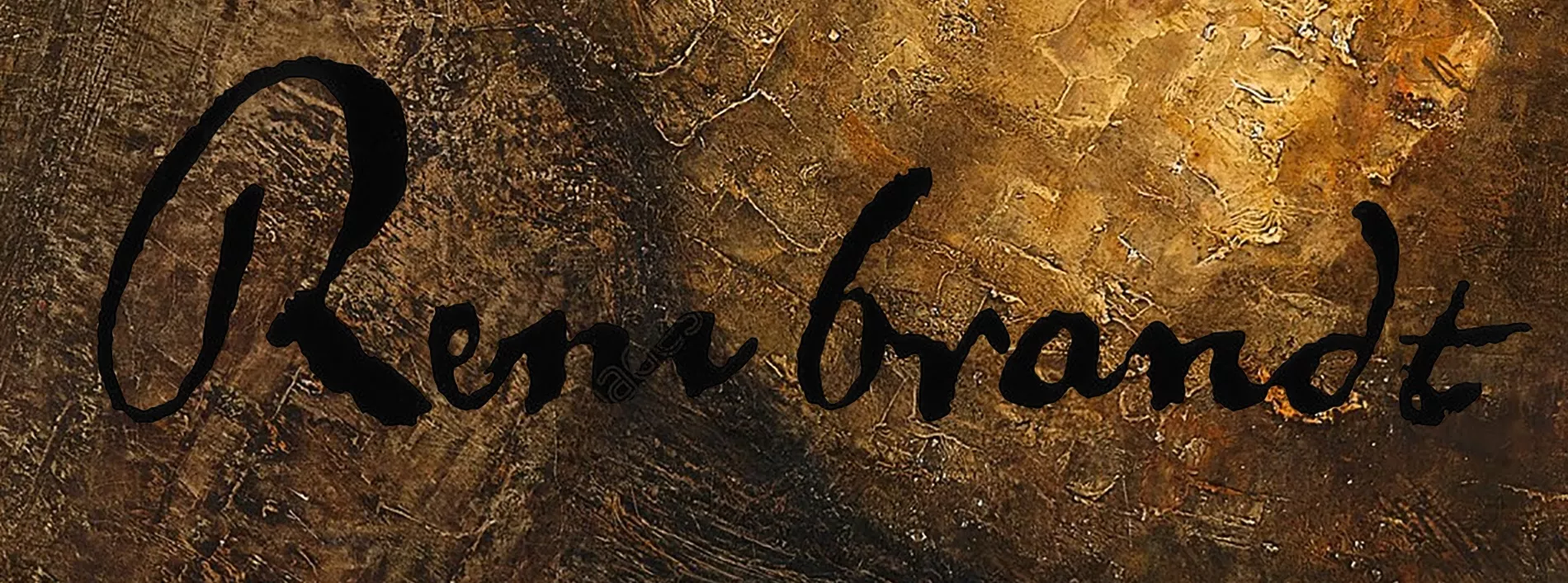
Recognizing the artist's signature
Rembrandt van Rijn doesn't always sign his paintings, and many on the market are attributed to his followers (this doesn't mean the paintings have no value). Whatever the case, for this artist, the intervention of a dedicated expert is mandatory.
Knowing the value of a work
If you happen to own a work by Rembrandt van Rijn, request a free appraisal without delay via our form on our website.
A member of our team of experts and auctioneers will contact you promptly to provide you with an estimate of the value of your work, as well as ad hoc information about it.
If you are considering selling your work, you will also be accompanied by our specialists in order to benefit from alternatives for selling it at the best possible price.
.Estimate in less than 24h
Discover in the same theme

Rating and value of paintings by Anthony II Claesz
Anthony II Claesz is a Dutch painter of floral still lifes. He has produced a number of highly-rated and valuable works.
Learn more >

Rating and value of paintings by Abraham Govaerts
Abraham Govaerts was a painter of the Antwerp school who produced numerous landscapes, which are highly valued at auction.
Learn more >

Rating and value of drawings and paintings by Salomon de Bra...
Salomon de Bray was a painter of the Dutch Golden Age who produced numerous works that command high prices at auction.
Learn more >
Nos records d'enchères à l'hôtel Drouot

Estimated 10.000 - 15.000 €
Ebridge Ayer BURBANK(1858-1949), Young African-American boy, Oil on panel.

Estimated 20.000 - 30.000
EXCEPTIONAL LARGE OVAL DISH IN VINCENNES SOFT PASTE PORCELAIN FROM THE "BLEU CÉLESTE" SERVICE OF KING LOUIS XV AT THE CHÂTEAU DE VERSAILLES

Estimated 20.000 - 30.000
MANUFACTURE ROYALE DE SÈVRES, 18th century "L'Empereur de la Chine" - Portrait of the Emperor Qianlong, Hard porcelain bisque, 1775

Estimated 1.500 - 3.000
HERMÈS, "Kelly" 32 saddle bag in black box calf

Estimated Between €5,000 and €8,000
KRACHKOWSKY (1854-1914), Before the storm, oil on canvas

Estimated 40.000 - 80.000
Alexandre ROUBTZOFF (1884-1949), Portrait of Arbia, oil on canvas

Secure site, anonymity preserved

Auctioneer approved by the State

Free and certified estimates
Frequently asked questions
-
Who was Rembrandt van Rijn, and what impact did he have on art history?Rembrandt van Rijn (1606–1669) was a 17th-century Dutch painter, a leading figure of the Dutch Golden Age, and one of the greatest artists in the history of Western art. A master of chiaroscuro and psychological realism, he profoundly influenced generations of artists, from Goya to Van Gogh, by emphasizing expressiveness, human intensity, and technical innovation in painting, drawing, and printmaking.
-
What are the price ranges for Rembrandt's works based on the medium used?Rembrandt prints range in price from €5 to €2,485,000, drawings and watercolors from €1,700 to €3,439,000, and paintings from €330 to €29,618,800. Paintings that are authenticated without dispute can fetch over 20 to 30 million euros at auction, while rare engravings of exceptional quality can reach several hundred thousand euros.
-
How can a work attributed to Rembrandt be authenticated?Authentication of a Rembrandt work is mandatory and must be conducted by a specialized expert due to the complexity of his body of work and the numerous reattributions. Auctie's offers a free, no-obligation appraisal: contact us via our online form, and a certified expert or auctioneer will respond within 48 hours with an accurate estimate and the necessary authentication information.
-
What factors influence the value of a Rembrandt painting?Authentication is the key criterion: the Rembrandt Research Project has refined the body of work and reclassified several pieces. The condition of the work is a decisive factor, particularly for prints (print quality, inking) and paintings. Provenance plays a crucial role: a work from royal or aristocratic collections sees its value multiply. A reattribution can transform a modest valuation into tens of millions of euros.
-
How do you sell a Rembrandt painting?Auctie's, an auction house, supports you every step of the way: after a free appraisal by our experts, we guide you toward the best sales approach to achieve the highest possible price. Our specialists advise you throughout the entire process, from appraisal to the final auction bid.
