



Rating and value of drawings and paintings by Léon Gustave Ravanne

Key takeaways
- Léon Gustave Ravanne’s paintings sell for up to €15,000 at auction, while his watercolor drawings fetch between €500 and €1,300.
- The artist (1854–1904) was part of the moderate Post-Impressionist movement, specializing in seascapes and naturalistic landscapes with a focus on the effects of light.
- The most sought-after works are his oil-on-canvas paintings of sailboats and landscapes; their value depends on the quality of the composition and documented provenance.
Léon Gustave Ravanne’s paintings and drawings sell for up to €15,000 at auction. An appraisal allows us to accurately determine the current market value of your Léon Gustave Ravanne artwork and, if applicable, optimize the sale of the piece.
If you own a work by Léon Gustave Ravanne and would like to know its value, our state-certified auctioneers will provide a free appraisal based on authenticity, market rating, and recent market results.
Artist’s Market Value and
Reputation
Léon Gustave Ravanne made a name for himself on the art scene thanks to his seascapes. His paintings were sold and appreciated during his lifetime. Since then, the artist’s market value has shown steady growth.
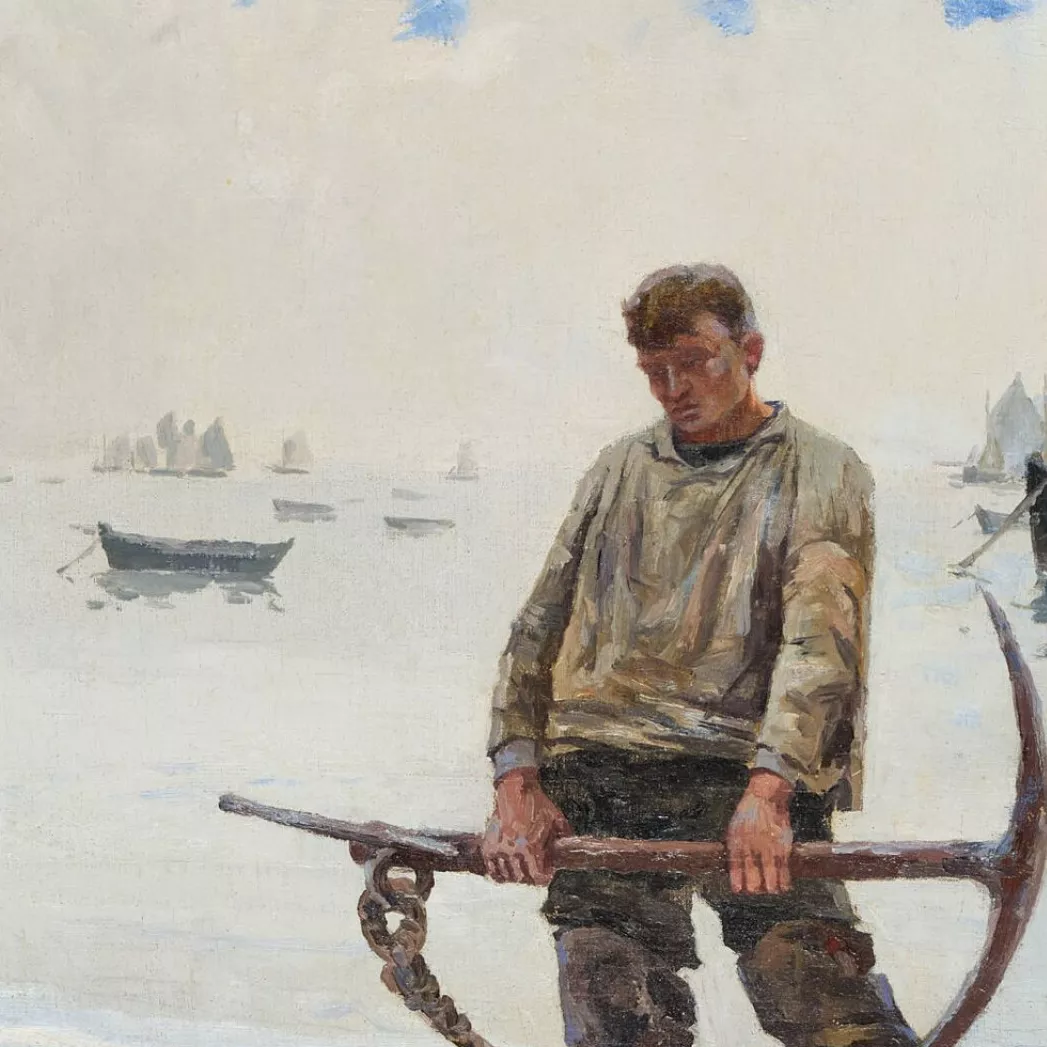
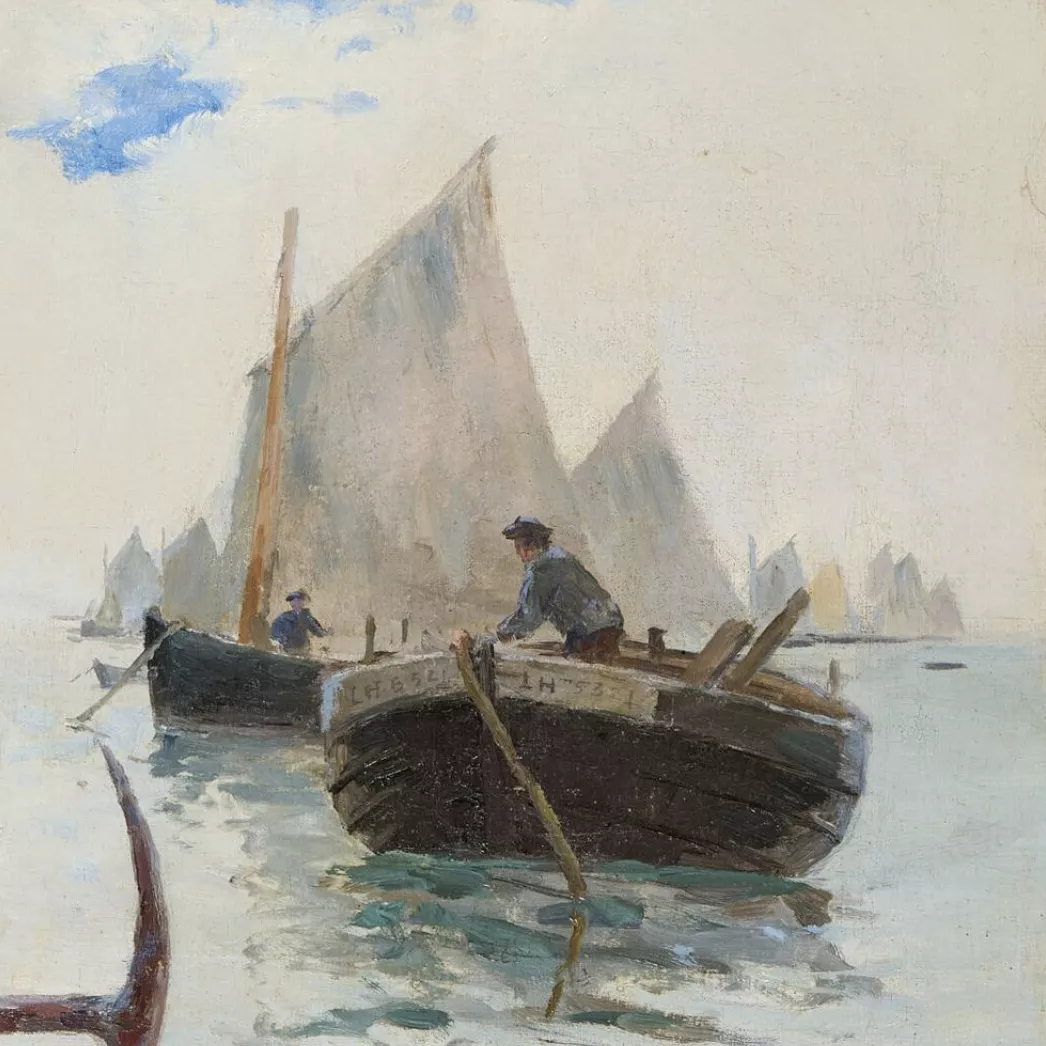
Among Ravanne’s works, the most sought-after are paintings depicting sailboats and landscapes, often oil-on-canvas pieces.
For example, a work signed by the artist can fetch tens of thousands of euros at auction, as evidenced by his painting *Le Havre, Return from Fishing, dating from 1894, which sold for €15,000 despite an estimate of €9,000 to €15,000.
Ranking from the most basic to the most prestigious
Technique used | Result |
|---|---|
Drawing - watercolor | From €500 to €1,300 |
Painting | From €290 to €15,000 |
Estimate in less than 24h
Placing the Artist in Context
Period
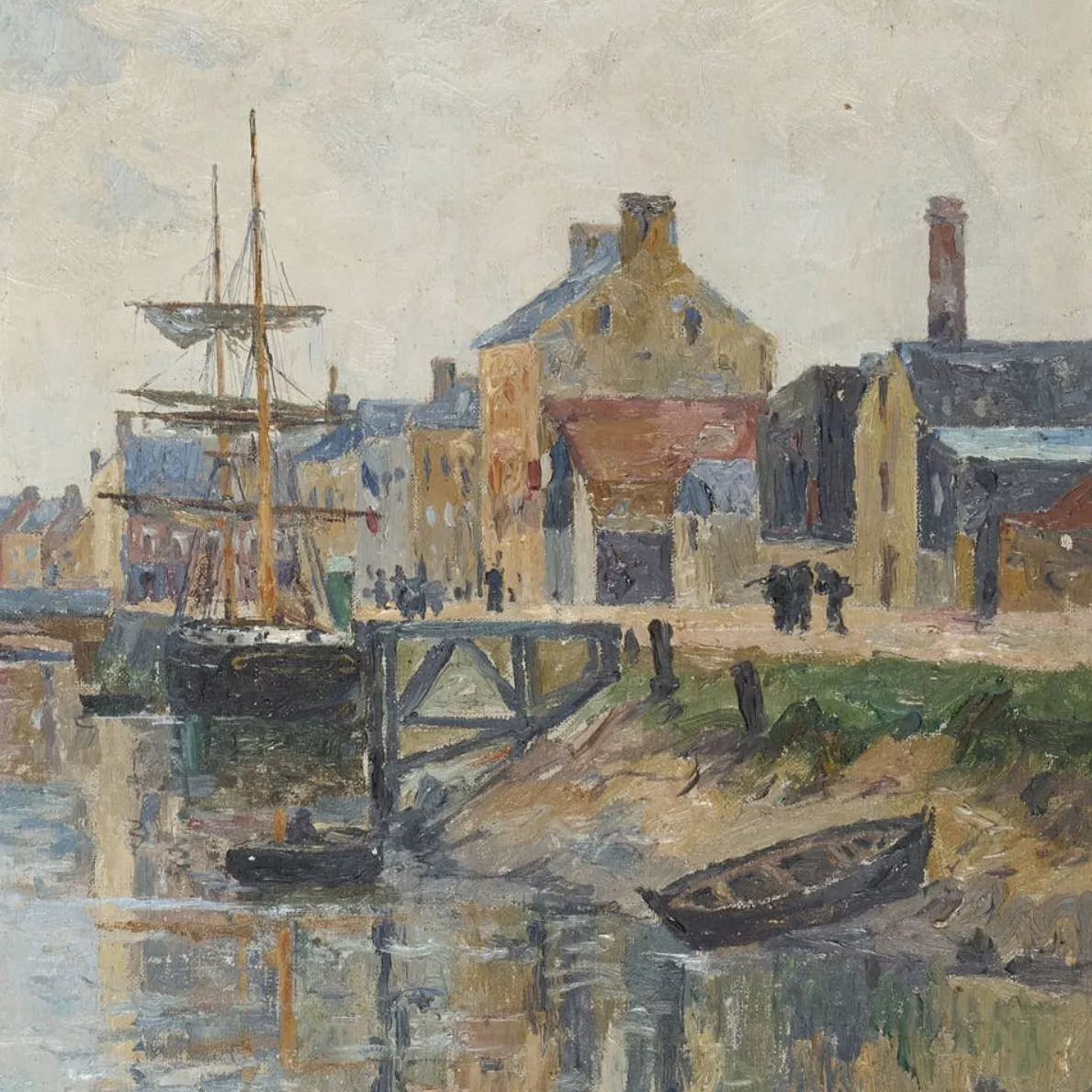
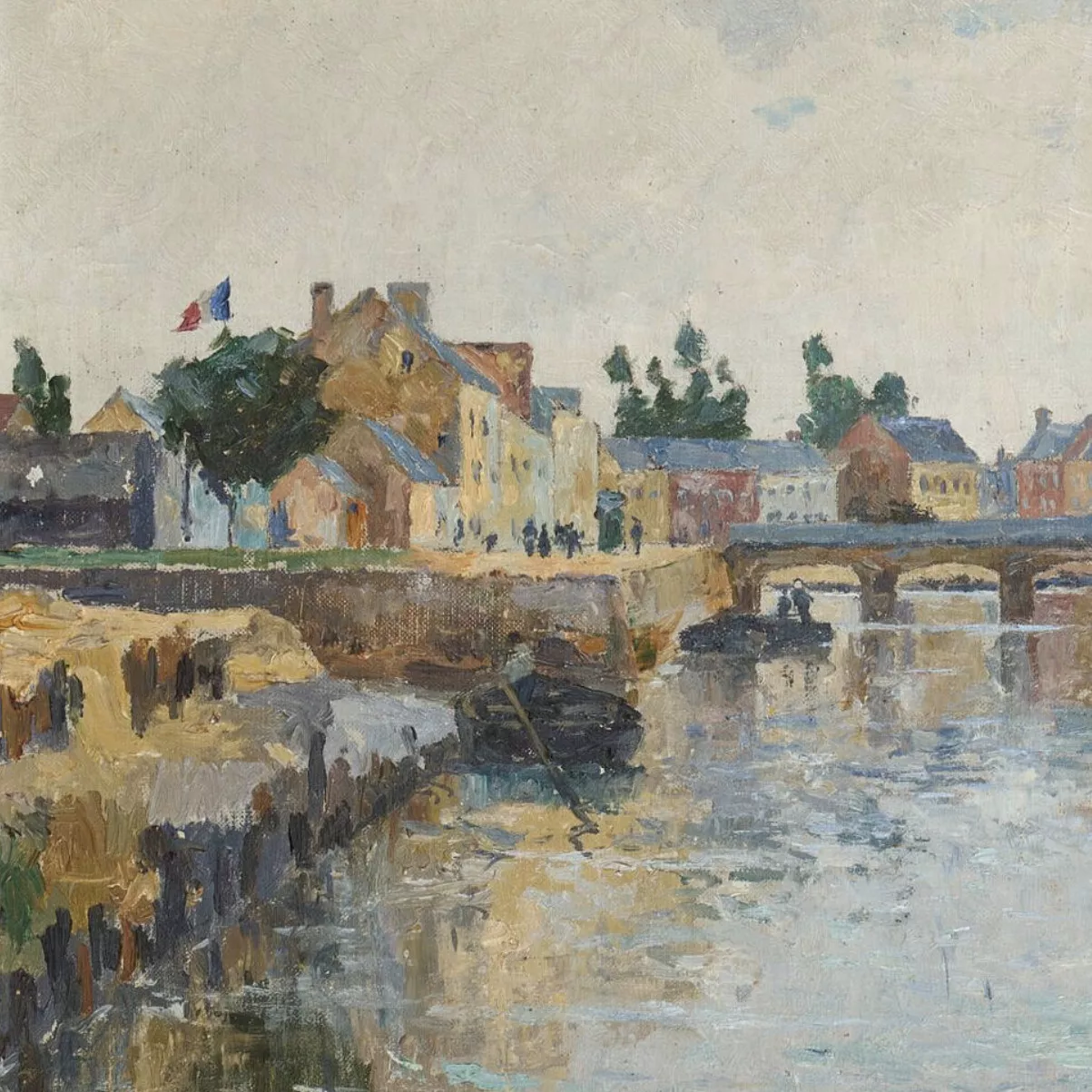
Léon Gustave Ravanne (1854–1904) was an artist who worked amid the transformations in French painting following Impressionism. His career spanned a period marked by the coexistence of Naturalism, Post-Impressionism, and the continued development of the traditional French landscape tradition.
His career spanned a transitional period between the achievements of Impressionist modernity and the more structured approaches to landscape painting at the turn of the century.
Artistic Movements
Ravanne is associated with a moderate form of Post-Impressionism, characterized by a simplification of forms, a more deliberate organization of space, and a structuring use of color.
In his naturalist landscapes, he pays particular attention to the subject matter, the observation of the landscape, and atmospheric variations, in keeping with the legacy of 19th-century French landscape painting. He maintains a closeness to late Impressionism, with a sensitivity to light effects and a vibrant application of brushstrokes, without the radicalism of Divisionism.
His body of work demonstrates a balance between descriptive fidelity and the gradual stylization of masses and lines. In this respect, he is akin to artists such as Pissarro, Armand Guillaumin, and Adolphe Louis Gaussen, though in a more measured and continuity-oriented vein.
The Life of Léon Gustave Ravanne
Cultural Context
Léon Gustave Ravanne was part of the French art scene of the late 19th century, a period marked by the interplay between academic tradition, naturalism, and early Impressionist experiments.
He was trained in a tradition focused on landscape and genre painting, and developed a body of work attentive to the observation of reality, with a particular focus on rural scenes and landscapes. His work is characterized by an exploration of light effects, a sensitive brushwork, and a balanced composition of pictorial space, placing his work within the tradition of landscape naturalism.
Artistic and Intellectual Circle
His career followed in the footsteps of the landscape traditions inherited from Jean-Baptiste Camille Corot, whose influence remains decisive in his treatment of light and atmosphere. He developed his art within an artistic milieu shaped by the combined legacies of the Barbizon School and early Impressionist experiments.
The salons and official exhibitions served as the primary channels for disseminating his work, placing him within the institutional networks of late-19th-century French painting.

The Artist's Techniques
The Style of Léon Gustave Ravanne
Léon Gustave Ravanne focused on landscape painting and rural scenes, based on direct observation of nature. His color palette is harmonious and dominated by natural tones (greens, ochres, bluish grays), emphasizing atmospheric unity.
His compositions are balanced, often structured by masses of vegetation and stable horizons. One can see the influence of the Barbizon School and later landscape movements, particularly in his attention to the effects of light. He sought a poetic rendering of the landscape, situated between naturalism and Impressionist sensibility.
Focus on a Key Work
Path in the Forest (late 19th century)
This composition is organized around a path that structures the depth and guides the viewer’s gaze. He renders the foliage and tree masses with a fluid touch, prioritizing an overall sense of unity. The nuanced palette captures the shifting light in the undergrowth.
The artist’s visible brushstrokes contribute to the atmospheric vibrancy of the surface. A natural perspective is created through the succession of planes and variations in light. This work is representative of a naturalistic landscape in which observation of the subject is combined with poetic sensibility.
FAQ – How do you appraise a work by Léon Gustave Ravanne?
1) What stylistic criteria specific to Léon Gustave Ravanne are key?
For Ravanne, the analysis focuses on the quality of the landscape rendering, the composition, and the atmospheric lighting effects—characteristics of plein air painting that pays close attention to chromatic variations.
2) How important is the landscape theme in the valuation?
Rural landscapes, countryside views, and naturalistic compositions form the core of his body of work. The quality of their execution, their formal balance, and their consistency with the artist’s body of work directly influence the indicative value.
3) What role do provenance and documentation play?
A clearly established provenance, along with the work’s inclusion in exhibitions, art fairs, or specialized publications, helps confirm the artist’s attribution and enhances the work’s value.
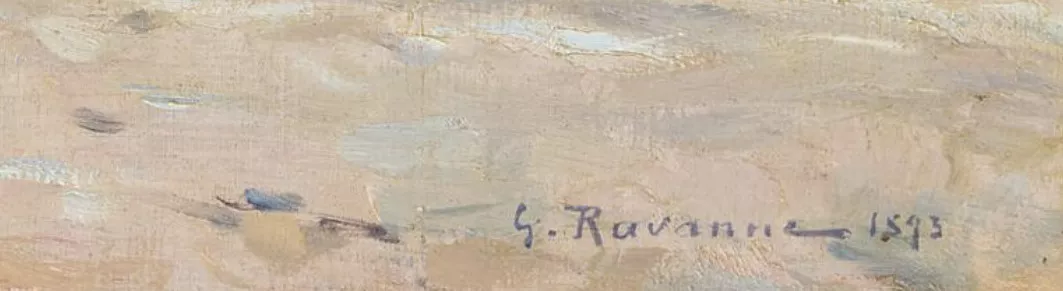
His Signature
Not all of Léon Gustave Ravanne’s works are signed. Here is an example of his signature:
Get Your Léon Gustave Ravanne Artwork Appraised
If you own a work by Léon Gustave Ravanne, an appraisal will help you determine its current market value.
Using our online form, our experts and certified auctioneers will conduct a free appraisal and provide you with a reliable estimate of your artwork’s market value.
If you’re considering selling it, we’ll guide you through the process to ensure you get the best possible price.
Estimate in less than 24h
Discover in the same theme

Rating and value of paintings by Louis Van Engelen
Louis Van Engelen is a 19th-century Flemish artist who produced paintings that are highly regarded and valued on the auction market.
Learn more >

Rating and value of paintings by Alexei Savrassov
Alexei Savrassov was a 19th-century Russian landscape painter who produced many highly-rated and valuable paintings.
Learn more >

Rating and value of paintings by Vasily Polenov
Vassili Polenov is a painter of religious subjects and Russian landscapes who has produced many works of great value.
Learn more >
Nos records d'enchères à l'hôtel Drouot

Estimated 10.000 - 15.000 €
Ebridge Ayer BURBANK(1858-1949), Young African-American boy, Oil on panel.

Estimated 20.000 - 30.000
EXCEPTIONAL LARGE OVAL DISH IN VINCENNES SOFT PASTE PORCELAIN FROM THE "BLEU CÉLESTE" SERVICE OF KING LOUIS XV AT THE CHÂTEAU DE VERSAILLES

Estimated 20.000 - 30.000
MANUFACTURE ROYALE DE SÈVRES, 18th century "L'Empereur de la Chine" - Portrait of the Emperor Qianlong, Hard porcelain bisque, 1775

Estimated 1.500 - 3.000
HERMÈS, "Kelly" 32 saddle bag in black box calf

Estimated Between €5,000 and €8,000
KRACHKOWSKY (1854-1914), Before the storm, oil on canvas

Estimated 40.000 - 80.000
Alexandre ROUBTZOFF (1884-1949), Portrait of Arbia, oil on canvas

Secure site, anonymity preserved

Auctioneer approved by the State

Free and certified estimates
Frequently asked questions
-
Who was Léon Gustave Ravanne, and what was his artistic movement?Léon Gustave Ravanne (1854–1904) was a French landscape painter associated with a moderate form of Post-Impressionism, a heir to the Barbizon School and influenced by Corot. His work is characterized by a careful observation of nature, a poetic treatment of the landscape, and a particular sensitivity to light and atmospheric effects, occupying a middle ground between Naturalism and late Impressionism.
-
What is the price range for Léon Gustave Ravanne's paintings and drawings?Ravanne's works sell for up to 15,000€ at auction. Drawings and watercolors generally range from €500 to €1,300, while paintings range from €290 to €15,000 depending on quality, technique, and subject matter—particularly for seascapes and landscapes featuring sailboats.
-
How can I have a work by Léon Gustave Ravanne appraised and authenticated?To authenticate and appraise a work by Ravanne, we recommend submitting your painting or drawing via our online form. Our state-certified auctioneers will conduct a free, no-obligation appraisal, analyzing the work’s authenticity, provenance, and recent market results, and will provide a response within 48 hours.
-
What factors influence the value of a work by Léon Gustave Ravanne?The value of a work by Ravanne depends on the quality of the landscape rendering, the compositional structure, the atmospheric lighting effects, the medium (oil on canvas, watercolor), the presence of a signature, and, above all, its documented provenance as well as its appearance in historic art salons or exhibitions.
-
Is this the right time to sell a work by Léon Gustave Ravanne?Yes, the market for Ravanne’s work has shown steady growth since his death. His seascapes and landscapes continue to be in steady demand, particularly his high-quality oil-on-canvas paintings. Auctie’s, an auction house, will guide you through the process—from a free appraisal to the final sale—to help you get the best possible price for your artwork.
