



Rating and value of sculptures, busts and marbles by Prosper d'Épinay

Key takeaways
- Prosper d'Épinay's works sell for between €160 and €1,079,000, with his marble sculptures being particularly sought-after on the auction market.
- His bust of the Princess of Wales (1896) showcases his talent as a Belle Époque portraitist, demonstrating his mastery of fine detail and the texture of marble.
- A French sculptor (1836–1914) who specialized in animal bronzes and academic portraits, his value has recently been rising among French and European collectors.
If you own a work of art by or after Prosper d'Épinay, and would like to know its value, our state-approved experts and auctioneers will offer you their appraisal services.
Our specialists will carry out a free appraisal of your work, and provide you with a precise estimate of its value on the current market.
Then, if you'd like to sell your work, we'll direct you to the best possible arrangement to get the best price for it.
Rating and value of the artist Prosper d'Épinay
The artist Prosper d'Épinay leaves in his wake a very singular body of work, composed mostly of animal bronzes. A talented artist, he created numerous sculptures that are particularly sought-after at auction.
The prices of his works are now skyrocketing under the auctioneer's hammer. They are particularly prized by French and European buyers.
The price at which they sell on the art market ranges from 160 to 1,079,000€, a significant delta but one that speaks volumes about the value that can be attributed to Prosper d'Épinay's works.
In 2015, his marble sculpture, Bonne renommée, dating from 1880, sold for €1,079,000, while it was estimated at between €134,900 and €269,780.
Order of value from a simple work to the most prestigious
Technique used | Result |
|---|---|
Bronze | From 700 to 2 100€ |
Drawing | From 160 to 2 200€ |
Marble | From €400 to €1,079,000 |
Estimate in less than 24h
Style and technique of the artist Prosper d'Épinay
Prosper d'Épinay mastered the bronze technique, in order to produce a large number of sculptures in the stylistic vein of the Second Empire - thus working the artistic genre of the portrait, which constitutes the major part of his work.
He also produced a large number of marble sculptures, which are currently among the most highly-valued on the auction market.
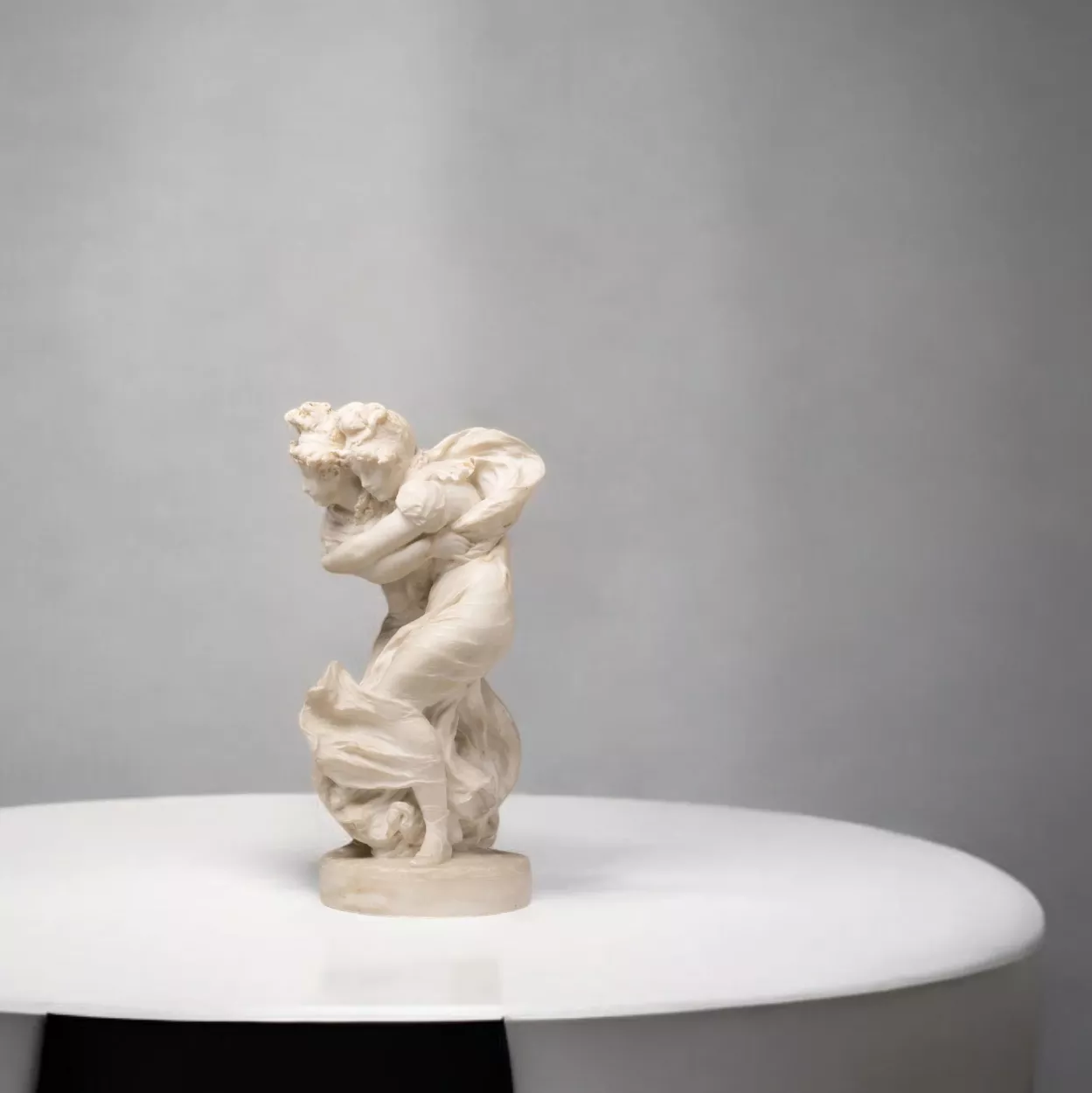
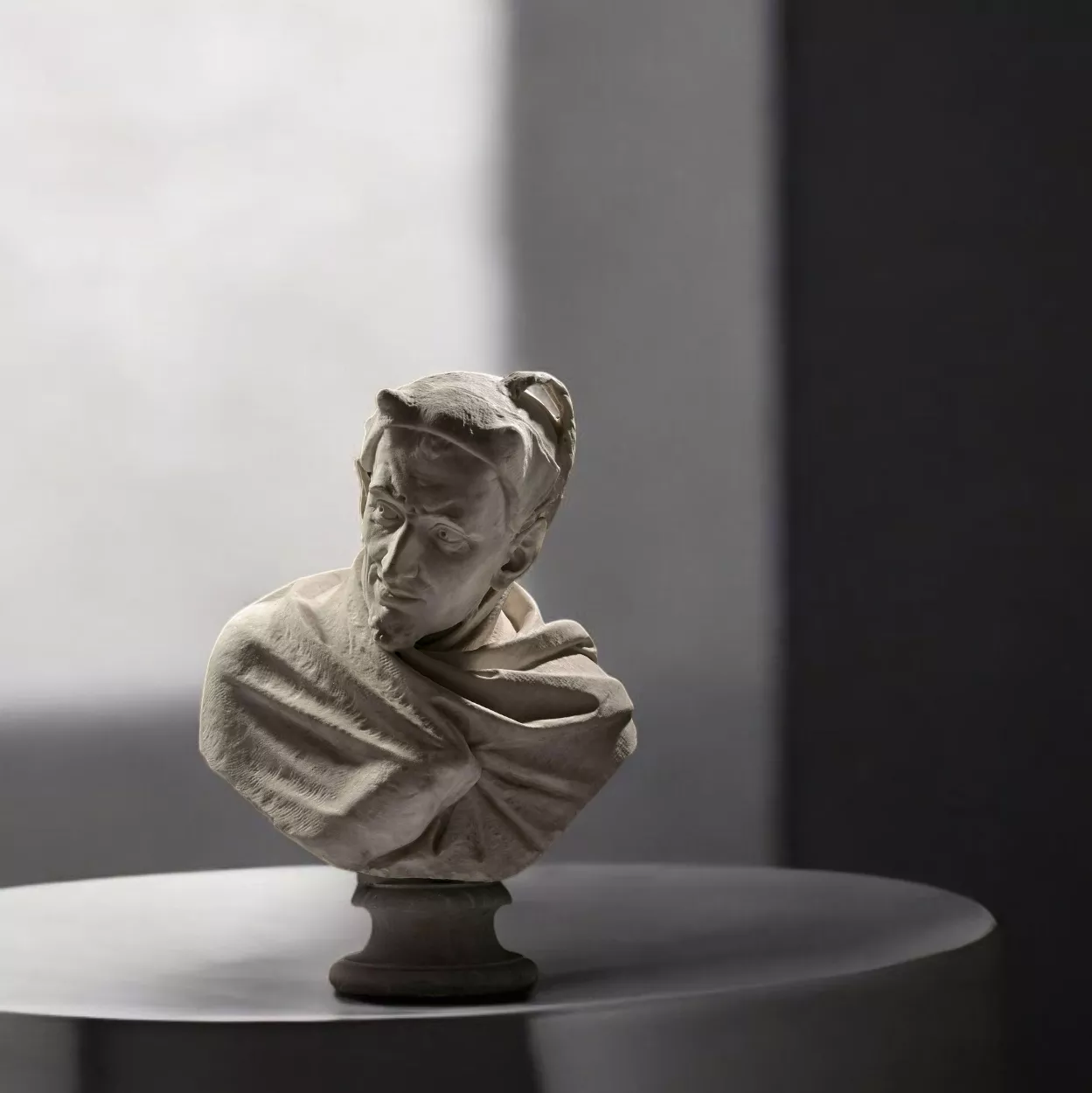
The career of Prosper d'Épinay
Charles Adrien Prosper d'Épinay (1836-1914), was a French sculptor born in Pamplemousses, Mauritius.
From a family of Mauritian politicians, he arrived in France at the age of three, his father dying some time later. He was educated in Port-Louis, the capital of Mauritius. From then on, he worked in ébauchoir and terre-glaise.
He continued his studies in Paris from 1851, studying sculpture in the workshops of Jean-Pierre Dantan. He produced numerous caricatures and took a keen interest in 18th-century art.
Like many 19th-century artists - in line with neoclassicism, a return to Antiquity was taking place, Prosper d'Épinay was captivated by sculptures from the ancient period and particularly those from Italy, which he had the opportunity to study during his stay at the Villa Medici.
There, he studied under Luigi Amici, sculptor of the tomb of Pope Gregory XVI. In Rome, he founded a workshop on via Sistina, which he ran from 1864 to 1912, two years before his death.
Beyond sculpture proper, the artist specialized in caricature, and it was through this artistic genre that he achieved his first success. In London, he presented the caricature group Entente cordiale, depicting Napoleon III and Lord Palmerston.
There are many bronze prints from this group on the market today. His statue L'Innocence, commissioned for a château, confirmed his success. During the same period, he sculpted the bust of Alexandra of Denmark, Princess of Wales.
This commission gave him legitimacy and ensured his support from the princess, who would commission his work again.
He executed funeral monuments, for his father as well as for other politicians in Mauritius. He joined the Union Artistique center in Paris, and married a painter in 1869.
He commissioned a bust of Maria Fortuny for the Madrid museum and settled in London for some time, becoming closer to the English aristocracy while also being close to the French legitimists and the Comte de Chambord.
In 1874, he exhibited works at the Salon, which marked a real turning point in his career; it was at this time that he produced the largest number of statues in Carrara marble, creating busts of Emperor Napoleon III and Empress Eugénie in particular.
During the final years of his career, he turned more to religious subjects, and notably produced a statue of Joan of Arc, which he exhibited at the Salon des artistes français in 1902. Today, it is housed in Reims Cathedral - where, according to legend, it was placed during the coronation of Charles VII.
He took under his wing the young sculptor Alexandre Falguière, himself a pupil of Ernest Carrier-Belleuse. At the same time, he produced engravings for Vanity Fair.
He died in 1914, in Saint Cyr sur Loire. He is buried in the Montparnasse cemetery.
Portrait of Sarah Bernhardt, Prosper d'Epinay
Focus on the bust of the Princess of Wales, Prosper d'Épinay
In 1896, Prosper d'Épinay created the bust of the Princess of Wales, a work that testifies to his exceptional talent for capturing not only the physical likeness, but also the spiritual essence of his subjects.
A renowned sculptor of the Belle Époque, d'Épinay established himself as one of the most sought-after portraitists of his time, and this bust is a striking example.
The bust of the Princess of Wales is distinguished by the finesse of its detail and the elegance of its execution.
D'Épinay, true to his academic training, perfectly masters the texture of the marble, rendering with striking precision the softness of the skin, the delicate drape of the fabric, and the subtle expression of serenity that emanates from the princess's face.
Every stroke and curve seems the fruit of meticulous observation, but also of a sensitive interpretation of the royal personality.
In this work, d'Épinay pays particular attention to the interplay of light and shadow. The white tones of the marble are exploited to create subtle contrasts that accentuate the volumes of the face and bust.
The light glides over the polished surfaces, revealing the softness of the contours and the harmony of the proportions. This work on light and texture brings the sculpture to life, giving the princess an almost tangible presence.
Beyond the physical resemblance, d'Épinay succeeds in capturing the aura of dignity and grace that characterized the Princess of Wales. The bust, while rooted in academic tradition, transcends simple portraiture to become an idealized representation of aristocratic femininity.
The pose is dignified, but not rigid, suggesting both the nobility and accessibility of the princess. This subtle balance between majesty and humanity is the real tour de force of this work.
The bust of the Princess of Wales also fits into the broader context of late 19th-century art, a time when portrait sculpture was undergoing a revival, marked by a return to classical precision combined with modern sensibility.
D'Épinay, in keeping with this tradition, nevertheless manages to stand out for the accuracy of his approach and the delicacy of his style.
With this bust, Prosper d'Épinay affirms not only his technical skill, but also his ability to interpret and magnify his subjects.
The work remains an eloquent testament to his talent, as well as a lasting tribute to the Princess of Wales, whose beauty and dignity continue to be celebrated through this sculptural portrait.
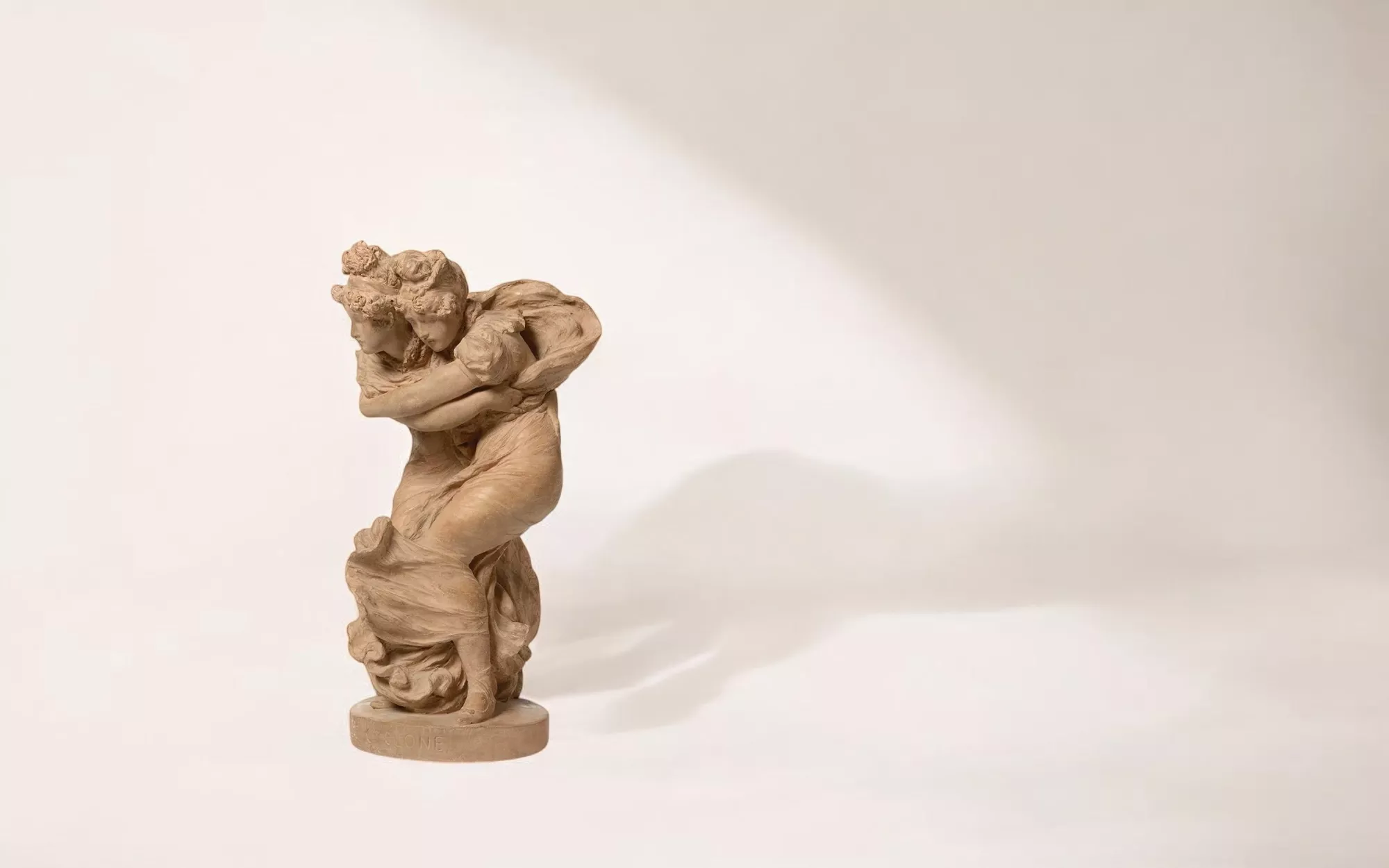
Prosper d'Épinay's imprint on his period
Some of Prosper d'Épinay's works are visible and scattered around various cities in Europe and France, but relatively few: most of his output is in private collections. Lately, his market value has been rising.
The artist made a lasting impression on his era through his talent and the diversity of the works he produced, but also through the quality of the materials he used.
During his long career, he had the opportunity to forge relationships with important leaders and aristocrats of his time, including Napoleon III, Empress Eugenie, the Princess of Wales, and certain lords, among others.
At the same time, thanks to his finesse of wit, he managed to caricature the same characters without incurring their wrath, creating sculptures imbued with lightness and elegance, while managing to convey a great deal of emotion.
He made a lasting mark on 19th-century sculpture alongside artists such as Ernest Carrier-Belleuse, Jean-Baptiste Carpeaux or James Pradier.
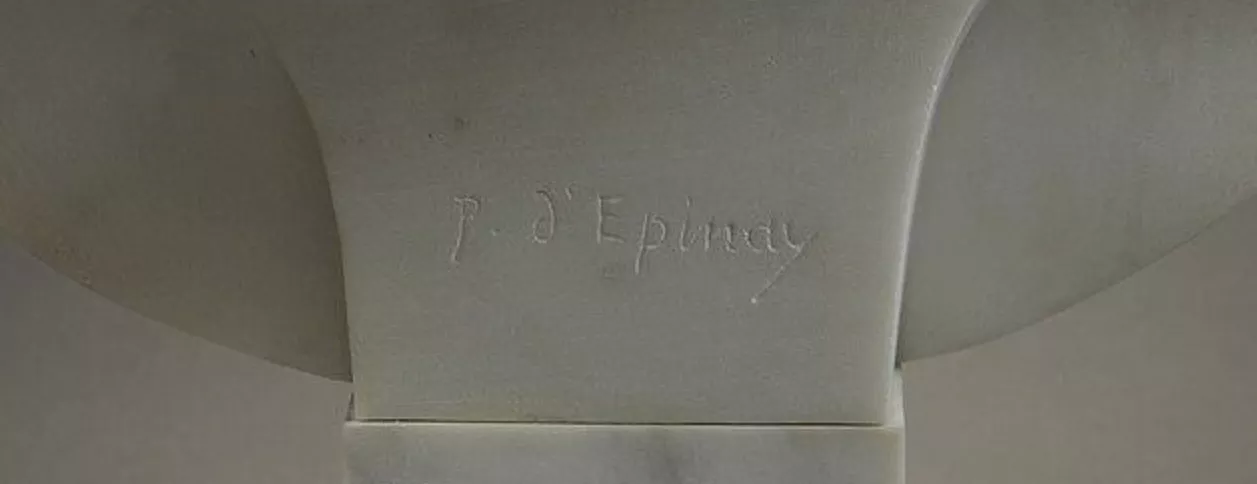
Recognizing the artist's signature
Not all works by Prosper d'Épinay are signed, and various variants exist. This is why, if you think you own a work by or after the artist, it is essential to have it appraised by an expert who will be able to authenticate it.
Knowing the value of a work
If you happen to own a work by or after Prosper d'Épinay, don't hesitate to request a free appraisal using our form on our website.
A member of our team of experts and chartered auctioneers will contact you promptly to provide you with an estimate of the market value of your work, as well as ad hoc information about it.
If you wish to sell your work, you will also be accompanied by our specialists in order to benefit from alternatives for selling it at the best possible price, taking into account the inclinations of the market.
.Estimate in less than 24h
Discover in the same theme

Rating and value of works, drawings, paintings by Jules Émil...
Jules Émile Saintin is a realized painter of the 19th century who produced drawings and oils on canvas that are valued at auction.
Learn more >

Cote and value of paintings by Louis Garneray
Louis Garneray is a 19th-century marine painter who produced paintings whose value and price are rising at auction.
Learn more >

Rating and value of paintings by Charles Euphrasie Kuwasseg
Charles Euphrasie Kuwasseg was a 19th-century figurative painter whose landscapes and seascapes are highly valued.
Learn more >
Similar sculptures sold at auction


Secure site, anonymity preserved

Auctioneer approved by the State

Free and certified estimates
Frequently asked questions
-
Who is Prosper d'Épinay, and what is his historical context?Charles Adrien Prosper d'Épinay (1836–1914) was a French sculptor born in Mauritius. Trained in Paris under Jean-Pierre Dantan and in Rome at the Villa Medici, he established himself as one of the leading portraitists of the Belle Époque. His Roman studio (1864–1912) became the center of his creative work, where he produced sculptures, busts, and caricatures for the European aristocracy, notably Napoleon III, Empress Eugénie, and the Princess of Wales.
-
What are the prices and price ranges for works by Prosper d'Épinay?Market prices for works by Prosper d'Épinay range from €160 to €1,079,000. Bronze sculptures sell for between €700 and €2,100, drawings between €160 and €2,200, and marble sculptures (the most highly valued) from €400 to €1,079,000. In 2015, his marble sculpture “Bonne renommée” (1880) sold for €1,079,000, significantly exceeding its initial estimate.
-
How can you authenticate a work by Prosper d'Épinay?Since not all of Prosper d'Épinay's works are signed and various versions exist, we recommend requesting a free, no-obligation appraisal from our state-certified experts and auctioneers. Our team will contact you within 48 hours to provide you with an authentication report and a precise valuation of your artwork.
-
Is this a good time to sell a sculpture by Prosper d'Épinay?Yes, now is a good time to sell. Prosper d'Épinay's market value is rising steadily in the art market, particularly for his marble sculptures, which are highly sought after by French and European collectors. The growing interest in 19th-century academic sculpture is reinforcing this trend.
-
How does the sales process work at Auctie's?The process begins with a request for a free estimate via our online form. A certified expert or auctioneer will contact you within 48 hours to appraise your artwork with no obligation. If you decide to sell, we’ll guide you through the best options and support you from the appraisal through the auction to help you achieve the best possible price.
